Tag: evolution
-

PBS Eons: The Extinct Human Species Found In Remote Cave Chambers
There's a new episode of PBS Eons over on Youtube. This one is about human evolution… the discovery of Homo naledi in a cave in Africa back in 2013. Deep in the Rising Star Cave system lies a mystery of paleoanthropology: a chamber filled with the bones of Homo naledi.
-
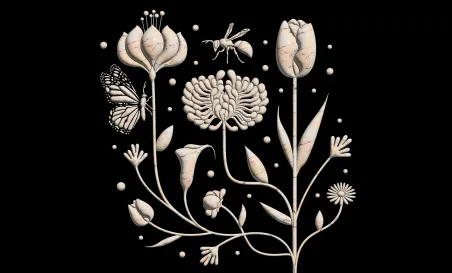
The Fossil Flowers That Rewrote the History of Life
The New Yorker has an interesting piece about some special flower fossils. When and where did the flowering plant evolve? It’s a question that been pursued by paleobotanists for a long time. Even Charles Darwin called it the “abominable mystery” due to how flowers seems to spring fully formed in the fossil record. The centerpiece…
-
PBS Eons: How Did Lucy Live and Die?
There's a new episode of PBS Eons on Youtube, The live and death of Lucy, who is the Australopithecus discovered in Ethiopia in 1974, says much about human evolution. She lived about 3.2 million years ago. Did our most famous fossil ancestor, Lucy, die by falling out of a tall tree? The answer is…
-
PBS Eons: We Met Neandertals Way Earlier Than We Thought
PBS Eons has a new episode. This one is about the missing Neandertal Y chromosome. My cousin did a DNA test the other month and was embarrassed about having a much higher amount of Neandertal DNA than the average European, but I told them about all the cool things I learned about them on this…
-
PBS Eons: How Plate Tectonics Gave Us Seahorses
PBS Eons has a new episode on Youtube. This one is about the evolution of the seahorse. How did seahorses — one of the ocean’s worst swimmers — spread around the globe? And where did they come from in the first place? Thanks to Franz Anthony (http://franzanth.com) for the incredible syngnathid reconstructions used in this…
-
PBS Eons: Are We All Actually Archaea?
PBS Eons has a new episode over on Youtube. This one is about the Tree of Life and our (Eukarya) placement in it. The unexpected discovery of an entirely new domain of life was pretty huge and surprising – even if archaea do just look like bacteria. But, in recent years, it’s been their connection…
-
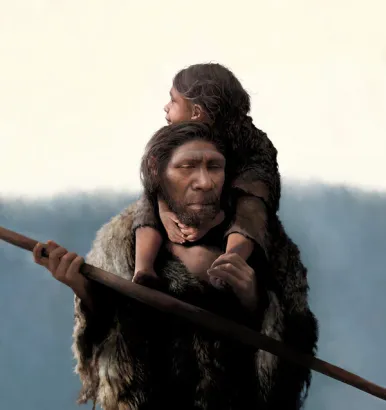
NYT: First Known Family of Neanderthals Found in Russian Cave
Carl Zimmer’s Matter column over at the New York Times has an interesting article about Neanderthals. Analysis of ancient DNA of Neanderthal bones from a cave in Siberia has led researchers to believe they have found a family unit consisting of a father, daughter, and multiple cousins. The bones were discovered in 2007 with a…
-
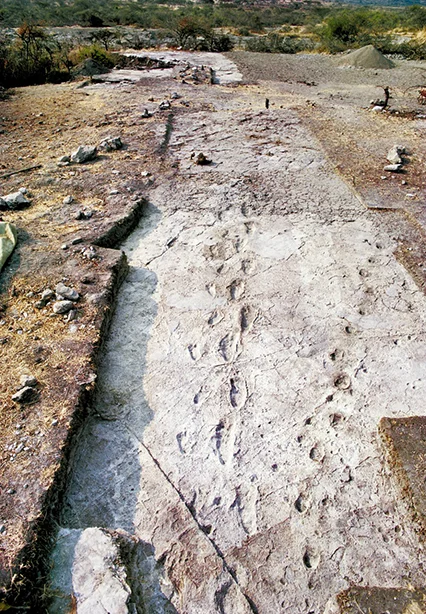
Fossils Upend Conventional Wisdom about Evolution of Human Bipedalism
Scientific American has a story about the evolution of human bipedalism. Paleontologists have long wondered when humans stood up and walked on two legs. There are skeletal adaptions in the fossils of the oldest hominins, which date to as much as seven million years ago. In the iconic representation of human evolution, a procession of…
-
PBS Eons: Darwin Missed An Example of Evolution Right Under His Nose
PBS Eons has a new episode. This one discusses some evidence of evolution that was missed by Charles Darwin. Charles Darwin encountered a tiny fox-like creature during his famous voyage but instead of discovering its fascinating evolutionary story, he just knocked it on the head with his geology hammer.
-

Fossils Reveal Pterosaur Relatives Before They Evolved Wings
The New York Times Trilobites column has a story about pterosaur origins. Paleontologists have long wondered about the evolutionary ancestors of pterosaurs as the animals were most likely small and thus less likely to fossilize. A paper in the journal Nature proposes that Scleromochlus taylori is one of the missing ancestors. It lived about 237 million years ago in what is…
-
PBS Eons: Our Ancient Relative That Said ‘No Thanks’ to Life on Land
PBS Eons has a new episode on Youtube. This one is about a particular tetrapod that seems to have returned to the ocean after venturing onto land. Around the time that some of our fishapod relatives were crawling out of the water, others were turning around and diving right back in.
-
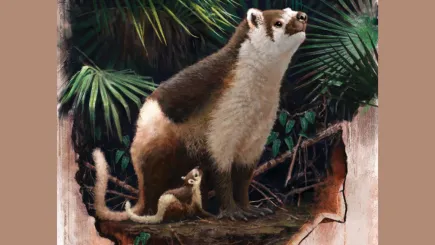
Living fast may have helped mammals like ‘ManBearPig’ dominate
Science News has a story about early mammals. A mammal nicknamed the ManBearPig” that emerged after the K-Pg mass extinction may help explain how mammals came do dominate the world when the dinosaurs disappeared. The animal was described in a recent paper in the journal Nature. During the age of the dinosaurs, mammals “only got…
-
PBS Eons: The Fungi That Turned Ants Into Zombies
PBS Eons has a new episode on Youtube. This one is about a fungus that can control ants. This fungus was actually manipulating ants’ movements, forcing them to do something they’d never ordinarily do, something strange, yet specific…
-
PBS Eons: How Whale Evolution Kind of Sucked
PBS Eons has a new episode. This one is about the evolution of whales and how and when baleen appeared. Mystacodon is the earliest known mysticete, the group that, today, we call the baleen whales. But if this was a baleen whale, where was its baleen? Where did baleen come from? And how did…
-
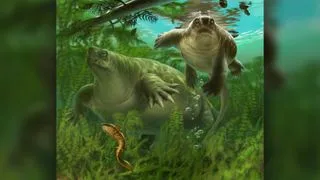
Mammal ancestor looked like a chubby lizard with a tiny head and had a hippo-like lifestyle
Live Science has a article about an mammal ancestor. Lalieudorhynchus gandi lived about 265 million years ago in what is now the Lodève Basin in southern France. At that time, southern France was part of northeastern Pangaea. Mammals had not evolved as a group yet. L. gandi was described in a paper in the journal Paleo…
-
PBS Eons: Did An Ancient Pathogen Reshape Our Cells?
PBS Eons has a new episode over on Youtube. This one is about the evolution of mammals and how we came to not have alpga-gal. There is one – and only one – group of mammals that doesn’t have alpha-gal: the catarrhine primates, which are the monkeys of Africa and Asia, the apes, and…
-
PBS Eons: Why Does Caffeine Exist?
PBS Eons has a new episode. This one is about the origins of caffeine and why it evolved. Today, billions of people around the world start their day with caffeine. But how and why did the ability to produce this molecule independently evolve in multiple, distantly-related lineages of flowering plants, again and again?
-

Sharks are older than the dinosaurs. What’s the secret to their success?
Live Science has a shark story just in time for Shark Week. Yes, you read that correctly… sharks are much older than dinosaurs. Sharks evolved way back during the Ordovician Period, some 450 million years ago, while dinosaurs are relative youngsters at about 235 million years old. Sharks have made it though all the major…
-

A Canine Companion So Nice It (Maybe) Evolved Twice
The New York Times has a story about man’s (and woman’s) best friend. For a long time, we’ve wondered “where did dogs come from?”. Now, after research that has looked at 72 ancient wolf genes, we might finally know. It seems that two different lineages of ancient wolves contributed to the DNA of modern dogs. …
-
PBS Eons: Giant Viruses Blur the Line Between Alive and Not
PBS Eons has a new episode. This one is about the evolution of giant viruses. In 2003, microbiologists made a huge discovery. One that would force us to reconsider a lot of what we thought we knew about the evolution of microbial life: giant viruses.
-
PBS Eons: How to Build a Woolly Mammoth (But Should We?)
There's a new episode of PBS Eons. This one is about Woolly Mammoths. Could and should we bring them back… In the quest to understand how evolution basically built the woolly mammoth, we may have found the blueprints for building them ourselves.
-
PBS Eons: When Ants Domesticated Fungi
There's a new episode of PBS Eons. This one is about one of Earth's first farmers… ants! While we’ve been farming for around 10,000 to 12,000 years, the ancestors of ants have been doing it for around 60 million years. So when, and how, and why did ants start … farming?
-
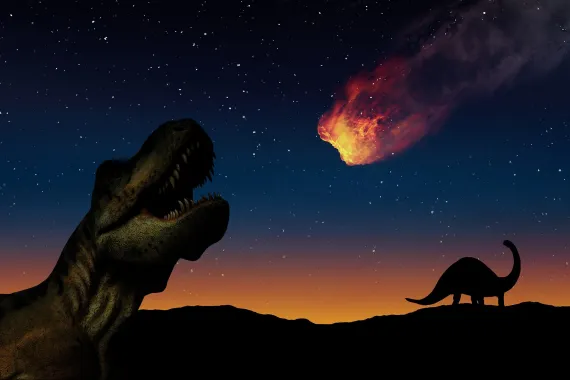
How the dinosaur extinction changed plant evolution
Phys.org has a story about plant evolution after the K-Pg mass extinction. Mass extinction always have irreversible effects on the evolution of life on Earth. The end Cretaceous extinction took out about 75% of species, including non-avian dinosaurs, pterosaurs, ammonites, and other countless others. The Plant Kingdom isn’t always discussed, but it suffered heavy losses,…
-
PBS Eons: Why Sour May Be the Oldest Taste
There's a new episode of PBS Eons. It's about the evolution of sour taste. While sour taste's original purpose was to warn vertebrates of danger, in a few animal groups, including us, its role has reversed. The taste of danger became something it was dangerous for us to avoid.
-
PBS Eons: How the Smallest Animal Got So Simple
PBS Eons has a new episode. This one is about mxyozoans, the simplest known animals. They are an example of how the process of evolution can produce some big (or small in this case) surprises.
-
PBS Eons: Why We Only Have Ten Toes (It’s a Long Story)
PBS Eons has a new episode. This one discusses the evolution of vertebrate limbs, especially hands and feet. So, how did we get to fix fingers and toes? Today, all mammals from humans to bats have five fingers or fewer. Yes, even whales, whose finger bones are hidden in their fins. Birds have four…
-
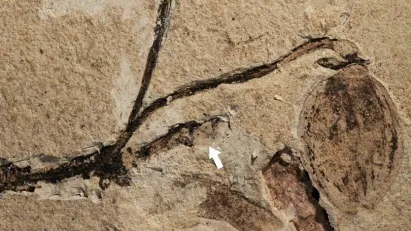
164 million-year-old plant fossil is the oldest example of a flowering bud
LiveScience has a story about the oldest known example of a flower bud. Researchers in China have discovered a fossil flower bud from 164 million years ago. The new plant species, Florigerminis jurassica, was found in Inner Mongolia. The description was published in the journal Geological Society of London. There are two main types of…
-
PBS Eons: Primates vs Snakes (An Evolutionary Arms Race)
There’s a new episode of PBS Eons. This one is about the “Snake Detection Hypothesis”. The Snake Detection Hypothesis proposes that the ability to quickly spot and avoid snakes is deeply embedded in primates, including us – an evolutionary consequence of the danger snakes have posed to us over millions of years.
-

Roy Plotnick: I found a fossil!! (or did I?)
Roy Plotnick has a new post over on Medium. In this one, he gives some great tips for those occasions when you’re out on a walk and find a rock and hope it’s a fossil. You are walking along a creek bed when you see an oddly shaped and colored rock. You pick it up…
-
PBS Eons: When It Was Too Hot for Leaves
There is a new episode of PBS Eons. This one is about environmental change the evolution of early plants. Plants first made their way onto land at least 470 million years ago but for their first 80 million years, leaves as we know them today didn’t exist. What held them back?
