Tag: evolution
-
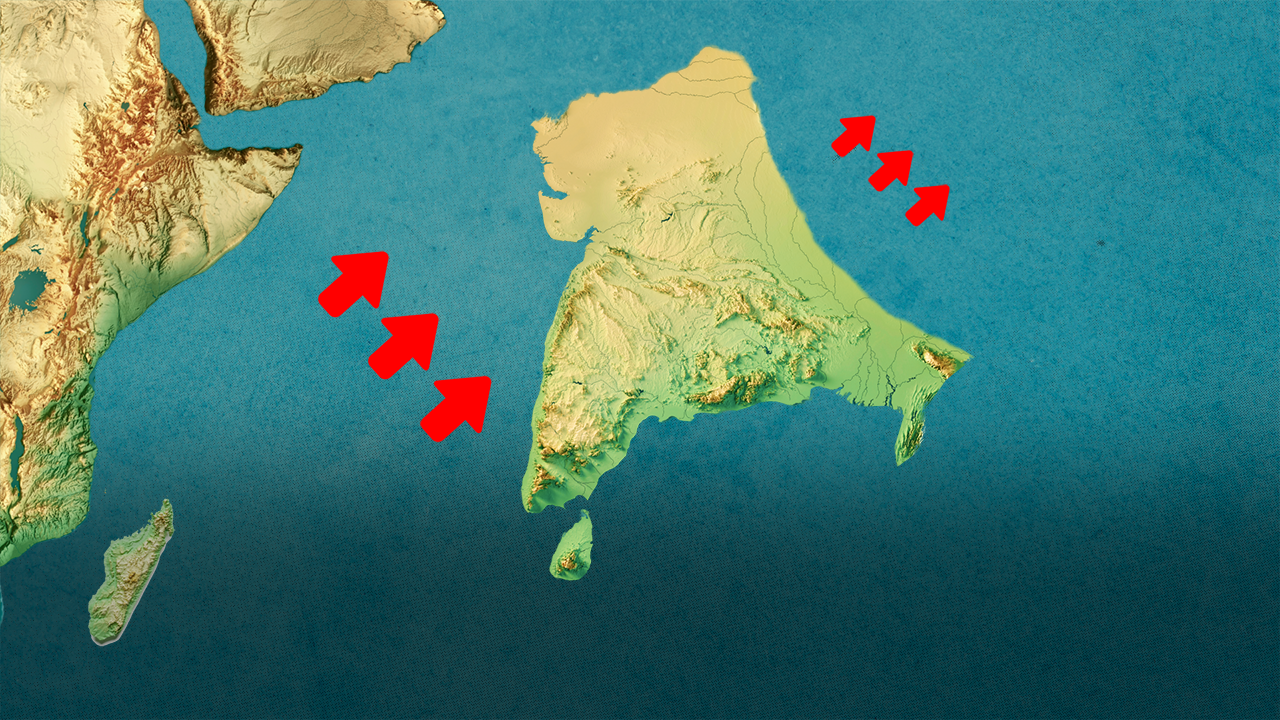
PBS Eons: When India Was An Island
PBS Eons has a new episode. This one is about the island isolation and how it affects evolution. We see that in the paleontological record of India. We need to talk about the biggest break-up of all-time: the break-up of the supercontinent Pangea, and how, ultimately, when India smashed back into Asia, it traded one…
-
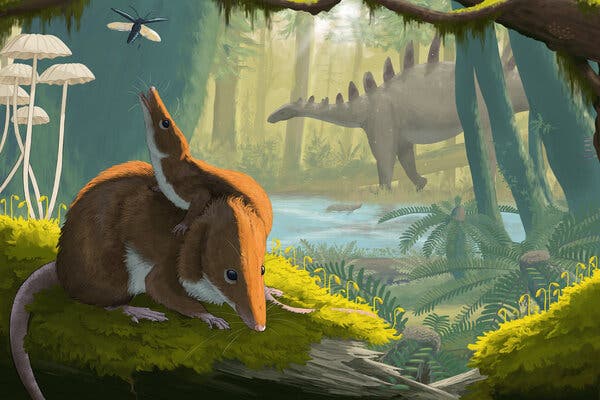
Fossil Hints That Jurassic Mammals Lived Slow and Died Old
A life reconstruction of Krusatodon. Not only are the specimens remarkably complete, but one belongs to a juvenile — making it the oldest known juvenile mammal fossil.Credit…Maija Karala The Trilobites column at the New York Times has a post about some unexpected discovery in some Jurassic mammals. Small mammals usually live fast and die young. …
-
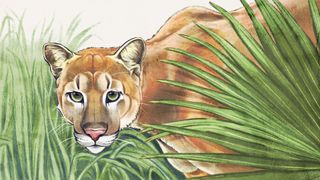
What defines a species? Inside the fierce debate that’s rocking biology to its core
Scientists have long debated whether the Florida panther is a North American cougar (Puma concolor couguar) or its own unique subspecies (P. c. coryi), ultimately settling on the former. The debate is part of a growing crisis in how scientists classify species. (Image credit: Maria Klos for Live Science) LiveScience has an interesting article about a…
-
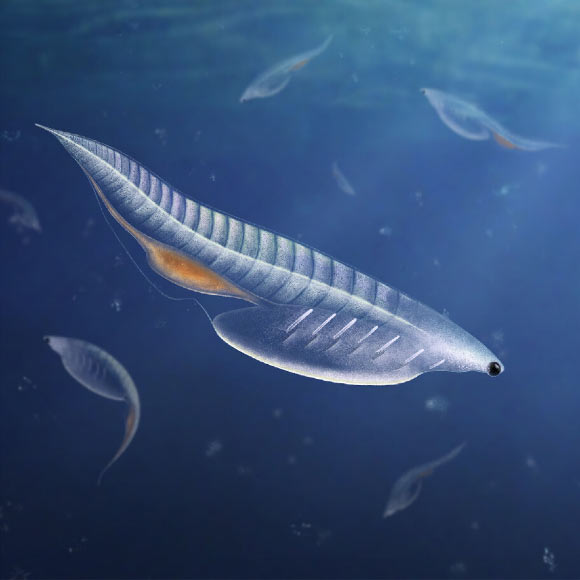
Fossil of Cambrian Long-Headed Chordate Unearthed in Utah
Nuucichthys rhynchocephalus was a pelagic organism with limited swimming abilities. Image credit: Franz Anthony. SciNews has an article about the discovery of the first chordate from the Great American Basin. Nuucichthys rhynchocephalus is a chordate and an animal that sheds light on early vertebrate evolution. N. rhynchocephalus lived during the Cambrian Period, about 505 million years ago. …
-

Throwback Thursday #224: Stephen J. Gould at the Field Museum
On Thursday, September 14, 2000. ESCONI co-sponsored a Steven J. Gould lecture with the Field Museum. This was a huge event for ESCONI, with about 700 people attending. By all accounts, it was very successful. Too bad, Steven isn’t still with us, I’m sure that was a very interesting lecture. If you get a chance,…
-
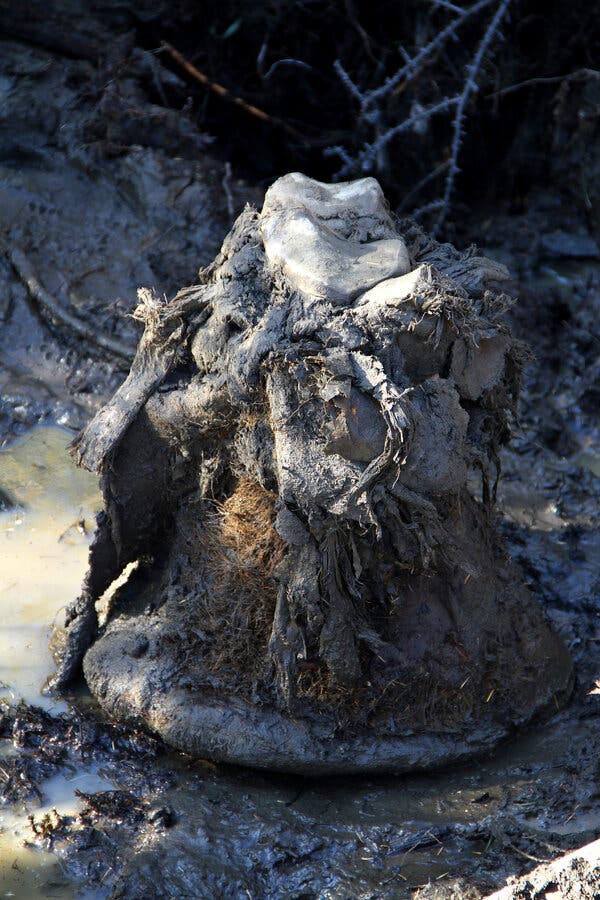
A Mammoth First: 52,000-Year-Old DNA, in 3-D
The New York Times has a fascinating article about woolly mammoth DNA. A 52,000 year old chunk of mammoth skin from the permafrost of Siberia as been used to generate a three-dimensional model of their genome. The research was published recently in the journal Cell. The experimental method used in this study could be used…
-

The Last Stand of the Woolly Mammoths
Mammoths remained on Wrangel Island, about 80 miles from the Siberian coast, for about 6,000 years after they vanished from the rest of Asia, Europe and North America.Credit…Beth Zaiken Carl Zimmer has an article about the last of the Woolly Mammoths over on the New York Times. A small population of mammoths on Wrangel Island…
-

Did Australia’s extinct giant kangaroos hop or stride? Fossils suggest they walked on two legs
Mainland Australia’s biggest kangaroos went extinct 40,000 years ago, but scientists are still figuring out how these big beasts moved.(ABC TV: Catalyst) ABC News in Australia has an article about extinct giant kangaroos. Giant kangaroos like Procoptodon goliah lived in Australia until about 40,000 years ago. It weighed about 240 kilograms (> 500 lbs). Did…
-

Was This Sea Creature Our Ancestor? Scientists Turn a Famous Fossil on its Head
The fossil of Pikaia, a creature that lived 508 million years ago and may have been a close relative of vertebrates.Credit…Mussini et al., Current Biology 2024 Carl Zimmer writes about Pikaia in his ORIGINS column in the New York Times. Discovered in 1909 by Charles Walcott in the Burgess Shale, Pikaia gracilens, which lived during…
-
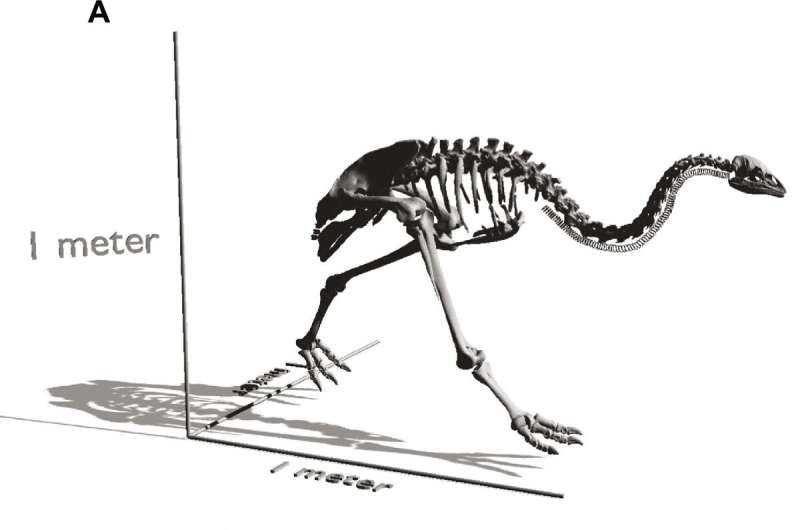
Researchers reconstruct genome of extinct species of flightless bird that once roamed the islands of New Zealand
Phys.org has a story about an extinct flightless bird from New Zealand. The genome of Anomalopteryx didiformis, the little bush moa, has been sequenced by a team of researchers that included scientists from Harvard University, the Max Planck Institute for Biological Intelligence, East Carolina University, Osaka University and the University of Toronto. A. didiformis went…
-

New fossil brings us a step closer to unravelling the mystery of feather evolution
The Conversation has an interesting article about research into the evolution of feathers. Feathers were originally used for display and thermoregulation. It was only later when they were co-opted for flight. A new paper “Cellular structure of dinosaur scales reveals retention of reptile-type skin during the evolutionary transition of feathers”, published in the journal Nature,…
-

PBS Eons: The Second Time Sponges Took Over The World
PBS Eons has a new episode. This one is about the Late Ordovician mass extinction and the animals that survived it. Was Sponge Bob king? Researchers have discovered a piece of a weird, but critical, time in the deep past…a time when the first-ever mass extinction may have turned Planet Earth into Sponge World.
-
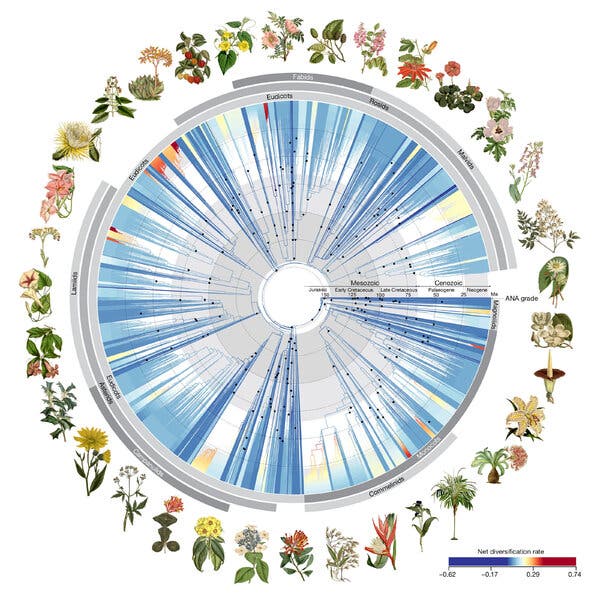
A New Tree of Flowering Plants? For Spring? Groundbreaking.
The New York Times’ Trilobites column has a story about work to understand how plants fit into the tree of life. New research detailed in the journal Nature suggests that more than 80% of major plant lineages evolved in a sudden burst during the Jurassic Period some 150 million years ago. This new study used…
-
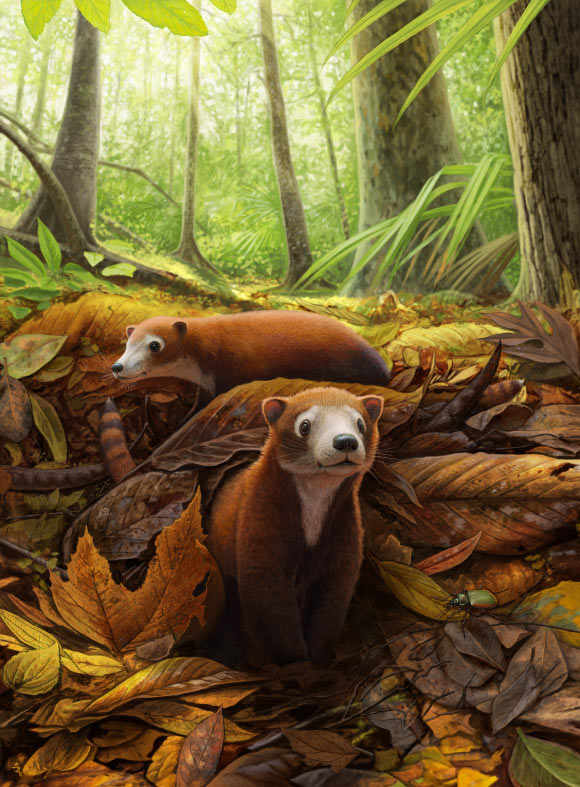
Newly-Discovered Species of Mammal Lived 610,000 Years after Dinosaur Extinction
SciNews has a story about the discovery of a new mammal from just after the end Cretaceous mass extinction. Militocodon lydae was found in the Corral Bluffs east of Colorado Spings, Colorado, within the Denver Basin. M. lydae was about the size of a chinchilla and likely omnivorous. It belongs to a group of mammals…
-
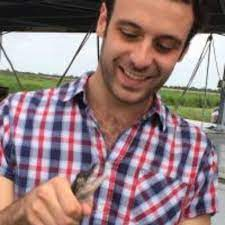
ESCONI May 2024 General Meeting – Friday, May 10th, 2024 at 8:00 PM via Zoom – “Endless Forms Most Beautiful: Evolution of Development”
The ESCONI General Meeting for May 2024 will be held on May 10th, 2024 at 8:00 PM vis Zoom. The topic is “Endless Forms Most Beautiful: Evolution of Development” by Matteo Fabbri of the Field Museum. The details are below. Matteo Fabbri is an Evolutionary Biologist. Here’s his page. I had the privilege to be…
-
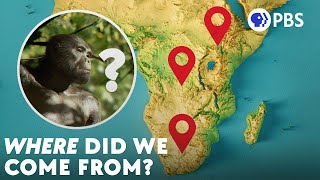
PBS Eons: There’s No Single Cradle of Humankind
PBS Eons has a new episode. This one is about human origins. Where did our ancestors evolve? It would take decades for paleontologists to realize that maybe there wasn’t just one so-called “cradle of humankind,” and realize that maybe they’d been asking the wrong question all along.
-

PBS Eons: The Hazy Evolution of Cannabis
PBS Eons has a new episode. This one is about the origin of Cannabis. How did such a strange plant like cannabis come to be in the first place? When and where did we first domesticate it? And why oh why does it get us high?
-
New Jurassic Shuotheriid Species Sheds Light on Early Evolution of Mammaliaforms
Live Science has a story about a new Jurassic mammaliaform. Feredocodon chowi lived during the Jurassic in what is now China. It’s a Shuotheriid, which is a group of mammal-like animals that have long been problematic as to where they fit into the mammalian family tree. Their unique dental characteristics make them hard to classify. …
-

PBS Eons: How Long Have We Been Caring For Each Other?
PBS Eons has another interesting video. This one is about the development of medical care. When did practicing medicine – in its varied, complex forms (from sharing medicinal plants to the earliest surgeries) – become something that we actually started doing? While it’s a hard question to answer, it’s possible that our tendency to heal…
-
PBS Eons: How Snake Venom Sparked An Evolutionary Arms Race
PBS Eons has a new episode over on Youtube. This one is about the co-evolution of venomous snakes and the rest of the animal kingdom. For some, the rise and spread of venomous elapids was just another challenge to adapt to. For others, it was a catastrophe of almost apocalyptic proportions. And we humans are…
-
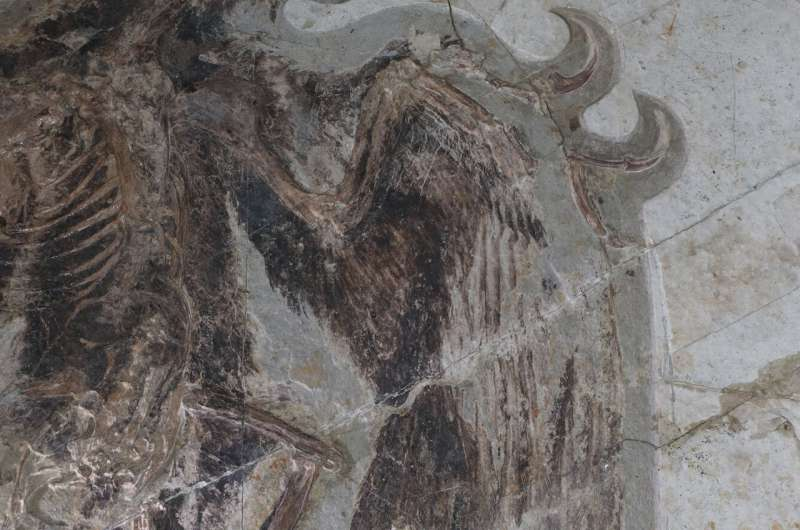
The hidden rule for flight feathers and how it could reveal which dinosaurs could fly
Phys.org has a story about flying dinosaurs. A new paper in the journal PNAS looked at hundreds of feathers in museum collections to determine which feather characteristics were common to flying birds. These characteristics were then used to create “rules”, which when applied to fossil dinosaur feathers might predict which dinosaurs were able to fly. …
-
PBS Eons: Why Is It So Hard to Tell the Sex of a Dinosaur?
PBS Eons has a new episode over on Youtube. How do you hold a gender reveal for dinosaurs. While we think we know a lot about dinosaurs – like how they moved and what they ate – for a long time, we haven’t been able to ID one seemingly basic thing about their biology… Which…
-

When Whales Could Walk | Full Documentary | NOVA | PBS
PBS Nova has posted the full documentary "When Whales Could Walk" on Youtube. Whales had legs… What?!? In Egypt’s Sahara Desert, massive skeletons with strange skulls and gigantic teeth jut out from the sandy ground. This fossil graveyard, millions of years old, is known as the “Valley of the Whales.” Now, paleontologists have unearthed a…
-
PBS Eons: Animals Might Be Much Older Than We Thought
PBS Eons has a new episode. This interesting video is about the origin of complex life. When did animals first show up? How long before the Cambian Explosion did complex life arrive on Earth. What are animal-like fossils doing in rocks a billion years old, and what does that mean for our understanding of their…
-
PBS Eons: Our Most Mysterious Extinct Cousins
There's a new episode of PBS Eons. Paranthropus robustus and related species lived and evolved along side of us around 1 – 2 million years ago. What happened to them? There was a group of hominins, those creatures more closely related to us than to chimpanzees, that did take a different, parallel journey from our…
-
PBS Eons: How Ancient Microbes Rode Bug Bits Out to Sea
PBS Eons has a new episode. This one is about the evolution of microbes and how it might be connected to the evolution of the chiton exoskeletons of arthropods. Tiny exoskeleton fragments may have allowed some of the most important microbes in the planet’s history to set sail out into the open ocean and change…
-
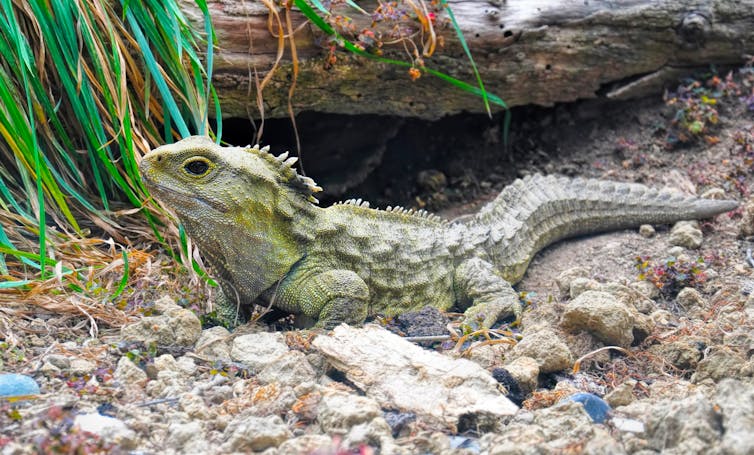
Could dinosaurs be the reason humans can’t live for 200 years?
The Conversation has an interesting post about the evolution of mammals. Did being small during the time of dinosaurs lead to limitations on how long mammals live? Mollusks, reptiles, and Greenland Sharks have been found to live 100’s of years. Actually, many animals don’t age and continue to grow throughout their lifetimes. All human beings…
-

Netflix “Life on Our Planet”: Watch ancient, giant millipede the size of a car brought back to life in remarkable reconstruction
LiveScience has a post about Netflix’s “Life on Our Planet”. It’s a nature show narrated by Morgan Freeman. They take a look at the history of life on planet Earth with clips of current animals and plants. The show became available in late October 2023. It has stunning graphics and special effects. There’s a great…
-
PBS Eons: Beans & Bees (Not Bats) Gave Us Butterflies
PBS Eons has a new episode. This one is about the origin of butterflies. Turns out, instead of having bats to thank for the existence of butterflies, the groups we should actually be thanking are…bees and beans.
-
PBS Eons: The Huge Extinctions We Are Just Now Discovering
PBS Eons has a new episode. This one is about ocean extinctions during the Silurian Period. It wasn't the quiet time that was once thought. What graptolites tell us is a story of incredible changes in the ocean, of periods where the oceans became poisonous and suffocating before eventually clearing up again. They unlock extinctions…
