Tag: evolution
-
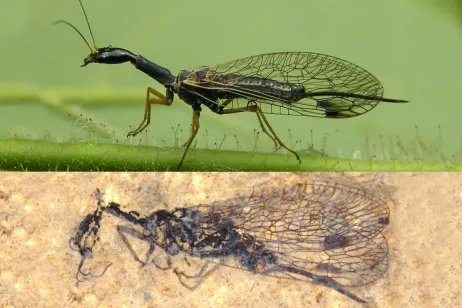
Fossil discovery deepens snakefly mystery
Phys.org has an interesting story about some unique insects. Snakeflies are slender, predatory insects that are native to the northern hemisphere and absent from tropical regions. It had been thought the animals needed cold winters to trigger development into adults. However, some new fossil discoveries from British Columbia and Washington state contradict that theory. These…
-

PBS Eons: How Weasels Got Skinny
PBS Eons has a new episode. This one is about weasels and how they got their skinny body plan. Weasels have an extreme body plan that may push the boundaries of what’s metabolically possible. So when and how did this happen? Why’d the weasels get so skinny?
-
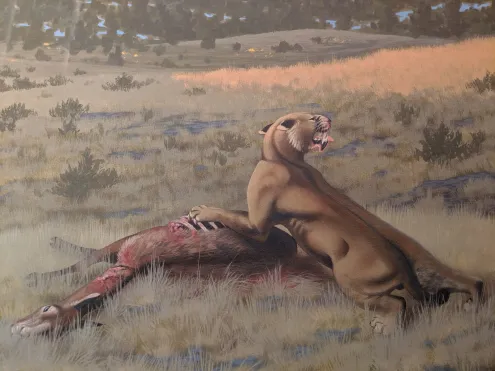
Nature: Newly Identified Species of Saber-Toothed Cat Was So Big It Hunted Rhinos in America
Nature as an article about the identification of a new species of large saber-toothed cat. The animal, Machairodus lahayishupup, lived between 5 and 9 million years ago in North America. It’s larger than its ancient relative Smilodon, weighing in around 600 pounds or larger. The research has been published in the Journal of Mammalian Evolution. A…
-

Throwback Thursday #57: Loch Ness Outdone: Rediscovery of the Coelacanth
This is Throwback Thursday #57. In these, we look back into the past at ESCONI specifically and Earth Science in general. If you have any contributions, (science, pictures, stories, etc …), please send them to esconi.info@gmail.com. Thanks! Youtube has many good videos. Some are regular series. One of my favorites to watch during my workout…
-
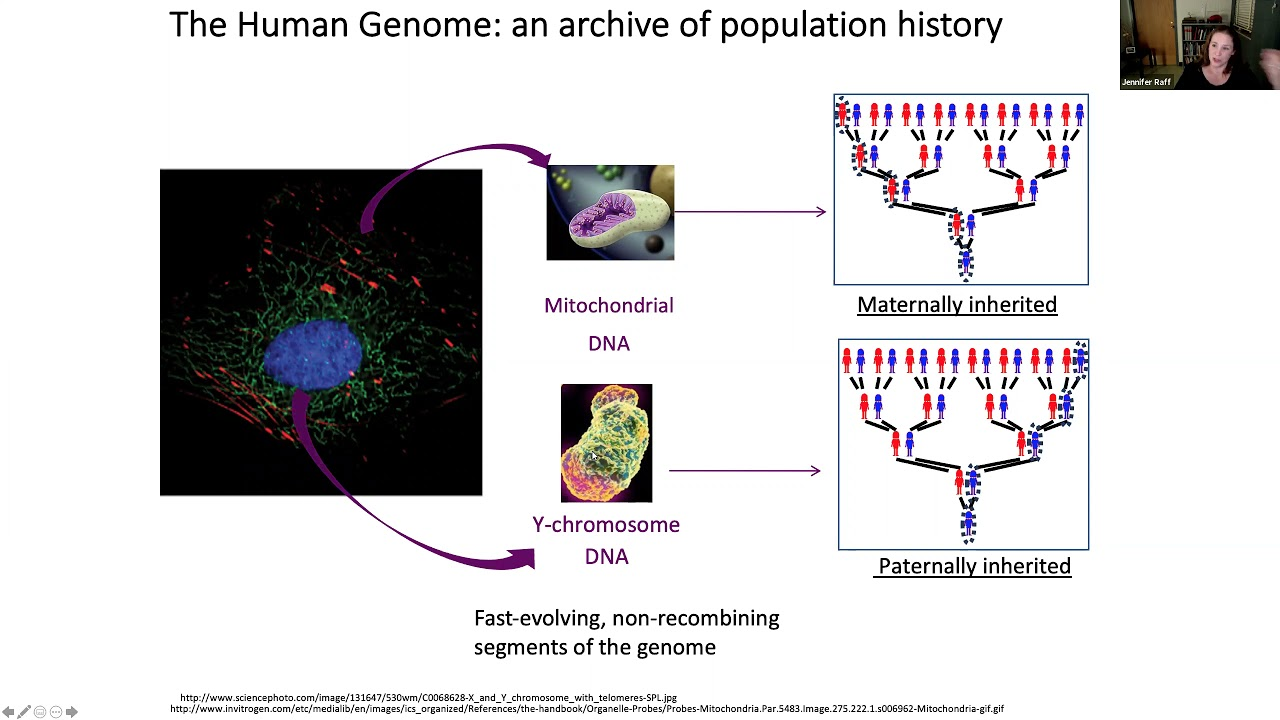
Video: ESCONI December 2020 General Meeting – “What Genetics Tells Us About the Peopling of the Americas”
The title for our Dec 4th program is “What Genetics Tells Us About the Peopling of the Americas” by Dr. Jennifer Raff, of the University of Kansas. Dr. Raff’s research includes ancient DNA, anthropological genetics, human evolution and population history, migration, bioarchaeology, and scientific literacy. You can find more about her on her page…
-
PBS Eons: How Humans Became (Mostly) Right-Handed
PBS Eons has a new episode over on Youtube. Why are the majority of humans right-handed? What evolutionary pressures led to it? No other placental mammal that we know of prefers one side of the body so consistently, not even our closest primate relatives. But being right-handed may have deep evolutionary roots in our…
-
PBS Eons: The Genes We Lost Along the Way
PBS Eons has a new episode. This one is about fossil genes. Our DNA holds thousands of dead genes and we’ve only just begun to unravel their stories. But one thing is already clear: we’re not just defined by the genes that we’ve gained over the course of our evolution, but also by the…
-
PBS Eons: When We First Talked
PBS Eons has a new episode which talks about talking. When did humans first speak? The evolution of our ability to speak is its own epic saga and it’s worth pausing to appreciate that. It’s taken several million years to get to this moment where we can tell you about how it took several…
-
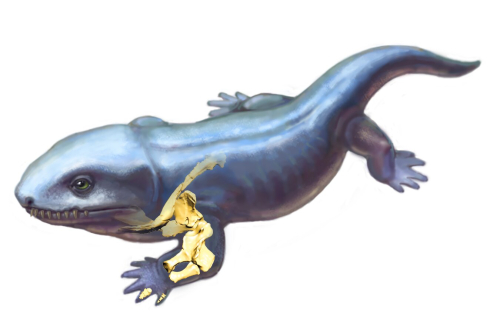
How did forelimb function change as vertebrates acquired limbs and moved onto land?
Phys.org has a piece about some new research that explored how early tetrapods used they newly acquired legs. It’s generally accepted that tetrapods migrated from water to land about 390 million years ago, during the Devonian Period. And, while the stages in the transition are understood, this research was about function…. How did the animals…
-
PBS Eons: What Happened to the World’s Biggest Beaver?
There’s a new episode of PBS Eons. This one is about Casteroides, which lived in North America up to about 10,000 years ago. It’s important to us that you understand how big this beaver was. Just like modern beavers, it was semiaquatic — it lived both on the land and in the water. The…
-
PBS Eons: The Triassic Reptile With “Two Faces”
PBS Eons has a new episode. This one is about a strange reptile called Adapodentatus “unusual teeth” from the Triassic Lagerstätte of Luoping in China. It’s one of the rare animals that changed its diet from meat to plants. Figuring out what this creature’s face actually looked like would take paleontologists years. But understanding…
-
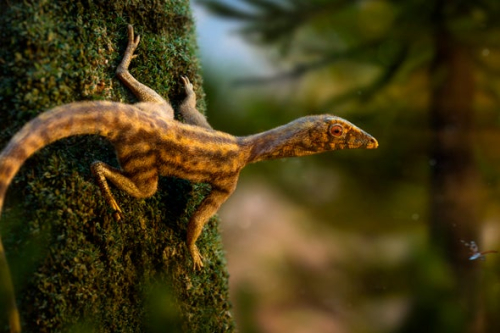
SciAm: Pterosaur Origins Flap into Focus
Scientific American has a piece on the origins of pterosaurs. A group of animals called lagerpetids are now thought to e the ancestors of pterosaurs. These animals lived between 237 and 201 million years ago during the Triassic Period. The details are in a paper in the journal Nature, which was published by Sterling Nesbitt,…
-
PBS Eons: How Humans Lost Their Fur
There’s a new episode of PBS Eons on Youtube. This one is about humans and how we lost our fur. We’re the only primate without a coat of thick fur. It turns out that this small change in our appearance has had huge consequences for our ability to regulate our body temperature, and ultimately,…
-
The Big Hill Lagerstätte
The University of Michigan has an interesting post about a new Lagerstatte, which was discovered in the Upper Peninsula of Michigan back in 2013. This fossil deposit dates to the Silurian Period about 430 million years ago. Over 40 species of animals have been discovered at the locality, including soft bodied animals like Jellyfish.…
-

Growth Rings From Fossil Bones Reveals T. rex Had Huge Growth Spurts, but Other Dinosaurs Grew “Slow and Steady”
SciTechDaily has a story about Tyrannosaurs rex and how it grew. A new study, published in the journal Proceedings of the Royal Society B, discusses diverse growth strategies in dinosaurs and how that relates to body size. The paper’s authors include Tom Cullen of the North Carolina Museum of Natural History and Peter Makovicky of…
-
Washington Post: How to dissect your Thanksgiving dinosaur
Happy Thanksgiving from ESCONI! The Washington Post has a story and video that does a good job explaining why birds are dinosaurs and how you can see that in your turkey’s skeleton this Thanksgiving. On Thanksgiving, people will gather with their loved ones to share their gratitude for one another over a lavish meal.…
-
PBS Eons: The Rise and Fall of the Tallest Mammal to Walk the Earth
PBS Eons has a new episode over on Youtube. This one is about the tallest land mammal that every lived – Paraceratherium. It arose from rhino ancestors that were a lot smaller, but Paraceratherium would take a different evolutionary path. Believe it or not, it actually became so big that it probably got close…
-
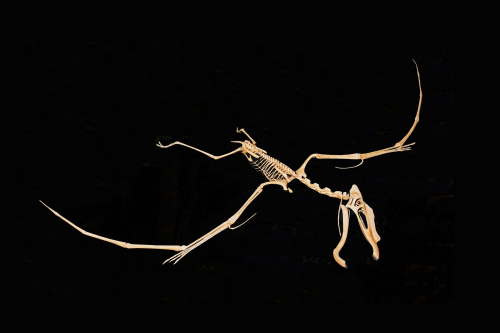
What Did Pterosaurs Eat? Look Very Closely at Their Teeth
Wired.com has a story about pterosaurs. Want to know what an animal eats… look at its teeth! That’s exactly what a paper published in Nature Communications did. The researcher imaged teeth of pterosaurs using a method called infinite focus microscopy. This allowed them to compare the teeth with modern animals, whose diets we know. THE…
-
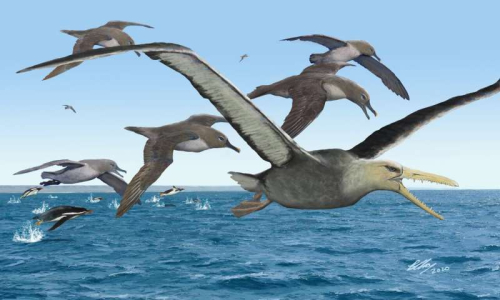
Phys.org: Antarctica yields oldest fossils of giant birds with 6.4-meter wingspans
Phys.org has an interesting story about some truly giant birds. The bird fossils, discovered in the 1980s, show that an extinct group of birds, the pelagornithids, had some large members not long after the mass extinction that killed off the dinosaurs, 65 million years ago. One specimen, which lived about 50 million years ago, had…
-
PBS Eons: Why Do Things Keep Evolving Into Crabs?
There’s a new episode of PBS Eons. This one is about all things crab and why animals keep evolving into the crab shapes. For some reason, animals keep evolving into things that look like crabs, independently, over and over again. What is it about the crab’s form that makes it so evolutionarily successful that non-crabs…
-
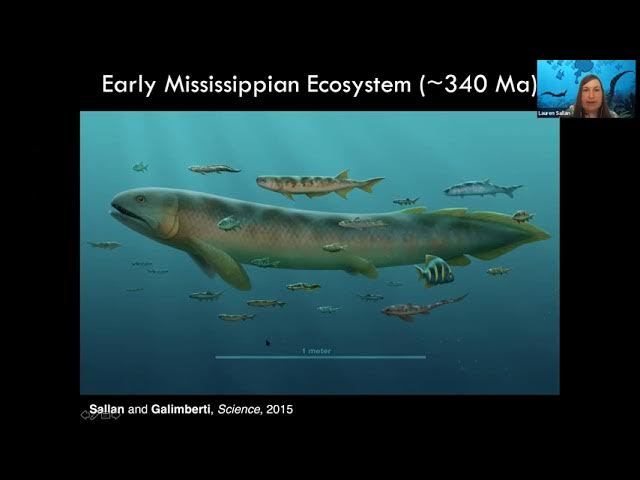
Video: ESCONI General Meeting, September 2020 – “Carboniferous Fossils Reveal How Fishes Evolve, and How They Don’t”
“Carboniferous Fossils Reveal How Fishes Evolve, and How They Don’t” The speaker at our September 11th, 2020 general meeting was Dr. Lauren Sallan from the University of Pennsylvania. Her presentation was done via Zoom and started at 8:00 PM. Dr. Sallan received her PhD from the University of Chicago in 2012. She was a co-author…
-
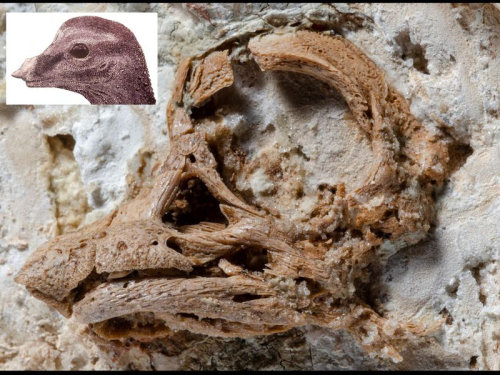
Smithsonian: Why This ‘Unicorn Baby Dinosaur’ Is the ‘Cutest,’ ‘Weirdest’ Ever
Smithsonian Magazine has a piece about the “cutest”, “weirdest” baby dinosaur ever. The embryo dinosaur is thought to be a Tapuiasaurus, a sauropod that grew to about 43 feet long. The egg was smuggled illegally out of Argentina about 20 years ago. Research published in the journal Current Biology has revealed some insights into the…
-
PBS Eons: How the Walrus Got Its Tusks
There’s a new episode of PBS Eons. This one is about the walrus, where they came from and how they got their tusks. The rise and fall of ancient walruses, and how modern ones got their tusks, is a story that spans almost 20 million years. And while there are parts of the story that…
-
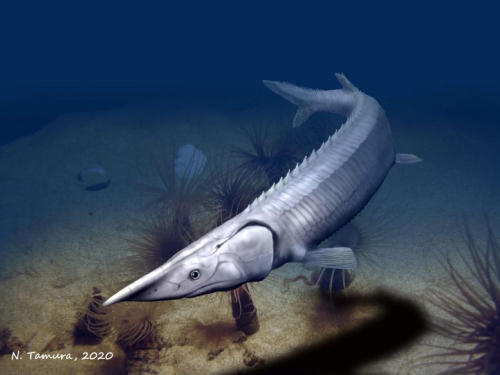
“Enigmatic and Strange” – 300-Million-Year-Old Fish Resembles a Sturgeon, but With Key Differences
SciTechDaily has a piece about an interesting fossil fish. Called Tanyrhinichthys mcallisteri, it lived about 300 million years ago in what is now New Mexico. The new study, published in the journal Zoological Journal of the Linnean Society, found the species’ lifestyle was more like bottom-dwelling sturgeon, rather than the stealthy pike, as previously believed. Sturgeon,…
-
PBS Eons: The Risky Paleo Diets of Our Ancestors
PBS Eons has a new episode. This one is about the “paleo” diet of Homo erectus. We can track our history of eating just about anything back through the fossil record and see the impact it’s had on our evolution. Throughout time, part of the secret to our success as a species has been…
-
PBS Eons: How the Egg Came First
There’s a new episode of PBS Eons. This one is about eggs, the platypus, and of course birds! They tackle the endless question “What came first the Chicken or the egg?”. The story of the egg spans millions of years, from the first vertebrates that dared to venture onto land to today’s mammals, including…
-
PBS Eons: When Penguins Went From The Sky To The Sea
There’s a new episode of PBS Eons. This one is about penguins and how they evolved from sea birds. Today, we think of penguins as small-ish, waddling, tuxedo-birds. But they evolved from a flying ancestor, were actual giants for millions of years, and some of them were even dressed a little more casually.
-
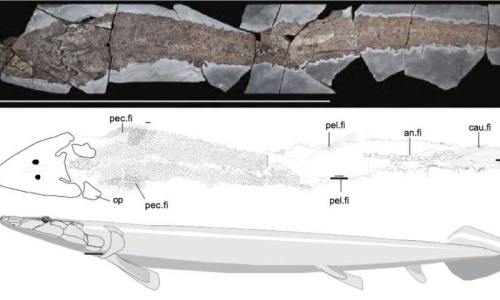
Phys.org: Ancient fish fossil reveals evolutionary origin of the human hand
Phys.org has a story about the evolution of the human hand. A new complete specimen of a tetrapod-like fish, Elpistostege, reveals new clues in the evolution of the human hand from fish fins. The paper describing this discovery can be found in the journal Nature. An ancient Elpistostege fish fossil found in Miguasha, Canada has…
-
PBS Eons: When the Sahara Was Green
There’s a new PBS Eons episode. This one is about the “Green Sahara” only a few thousand years ago. The climate of the Sahara was completely different thousands of years ago. And we’re not talking about just a few years of extra rain. We’re talking about a climate that was so wet for so…
-
PBS Eons: How South America Made the Marsupials
PBS Eons has a new video. This one is about the marsupials of South America. Throughout the Cenozoic Era — the era we’re in now — marsupials and their metatherian relatives flourished all over South America, filling all kinds of ecological niches and radiating into forms that still thrive on other continents.
