Tag: evolution
-

The Big Hill Lagerstätte
The University of Michigan has an interesting post about a new Lagerstatte, which was discovered in the Upper Peninsula of Michigan back in 2013. This fossil deposit dates to the Silurian Period about 430 million years ago. Over 40 species of animals have been discovered at the locality, including soft bodied animals like Jellyfish.…
-

Growth Rings From Fossil Bones Reveals T. rex Had Huge Growth Spurts, but Other Dinosaurs Grew “Slow and Steady”
SciTechDaily has a story about Tyrannosaurs rex and how it grew. A new study, published in the journal Proceedings of the Royal Society B, discusses diverse growth strategies in dinosaurs and how that relates to body size. The paper’s authors include Tom Cullen of the North Carolina Museum of Natural History and Peter Makovicky of…
-
Washington Post: How to dissect your Thanksgiving dinosaur
Happy Thanksgiving from ESCONI! The Washington Post has a story and video that does a good job explaining why birds are dinosaurs and how you can see that in your turkey’s skeleton this Thanksgiving. On Thanksgiving, people will gather with their loved ones to share their gratitude for one another over a lavish meal.…
-
PBS Eons: The Rise and Fall of the Tallest Mammal to Walk the Earth
PBS Eons has a new episode over on Youtube. This one is about the tallest land mammal that every lived – Paraceratherium. It arose from rhino ancestors that were a lot smaller, but Paraceratherium would take a different evolutionary path. Believe it or not, it actually became so big that it probably got close…
-
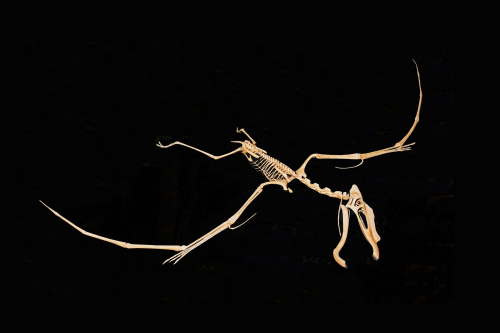
What Did Pterosaurs Eat? Look Very Closely at Their Teeth
Wired.com has a story about pterosaurs. Want to know what an animal eats… look at its teeth! That’s exactly what a paper published in Nature Communications did. The researcher imaged teeth of pterosaurs using a method called infinite focus microscopy. This allowed them to compare the teeth with modern animals, whose diets we know. THE…
-
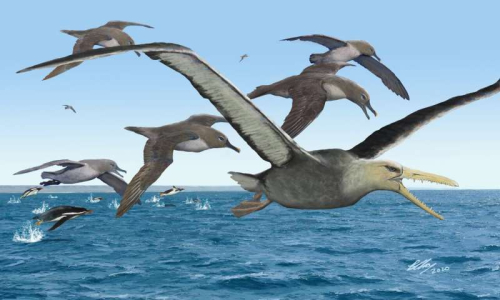
Phys.org: Antarctica yields oldest fossils of giant birds with 6.4-meter wingspans
Phys.org has an interesting story about some truly giant birds. The bird fossils, discovered in the 1980s, show that an extinct group of birds, the pelagornithids, had some large members not long after the mass extinction that killed off the dinosaurs, 65 million years ago. One specimen, which lived about 50 million years ago, had…
-
PBS Eons: Why Do Things Keep Evolving Into Crabs?
There’s a new episode of PBS Eons. This one is about all things crab and why animals keep evolving into the crab shapes. For some reason, animals keep evolving into things that look like crabs, independently, over and over again. What is it about the crab’s form that makes it so evolutionarily successful that non-crabs…
-
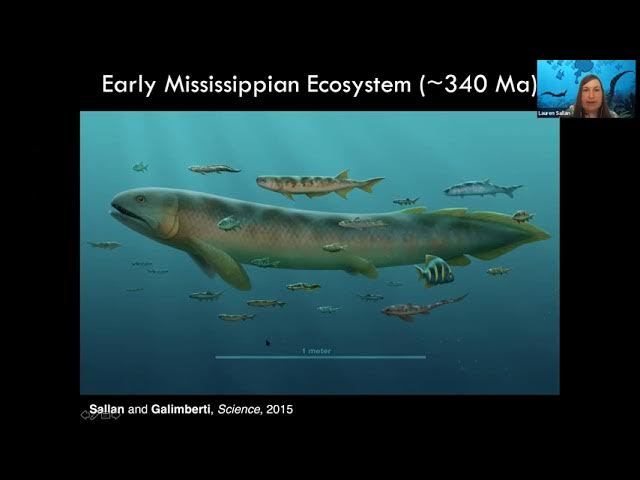
Video: ESCONI General Meeting, September 2020 – “Carboniferous Fossils Reveal How Fishes Evolve, and How They Don’t”
“Carboniferous Fossils Reveal How Fishes Evolve, and How They Don’t” The speaker at our September 11th, 2020 general meeting was Dr. Lauren Sallan from the University of Pennsylvania. Her presentation was done via Zoom and started at 8:00 PM. Dr. Sallan received her PhD from the University of Chicago in 2012. She was a co-author…
-
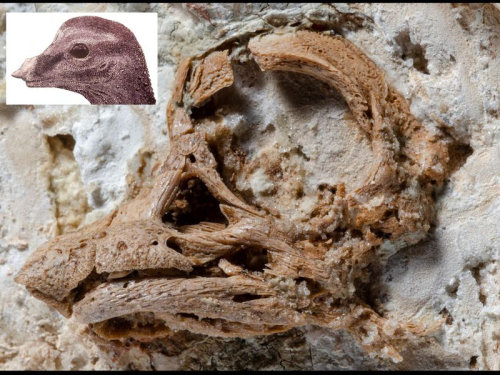
Smithsonian: Why This ‘Unicorn Baby Dinosaur’ Is the ‘Cutest,’ ‘Weirdest’ Ever
Smithsonian Magazine has a piece about the “cutest”, “weirdest” baby dinosaur ever. The embryo dinosaur is thought to be a Tapuiasaurus, a sauropod that grew to about 43 feet long. The egg was smuggled illegally out of Argentina about 20 years ago. Research published in the journal Current Biology has revealed some insights into the…
-
PBS Eons: How the Walrus Got Its Tusks
There’s a new episode of PBS Eons. This one is about the walrus, where they came from and how they got their tusks. The rise and fall of ancient walruses, and how modern ones got their tusks, is a story that spans almost 20 million years. And while there are parts of the story that…
-
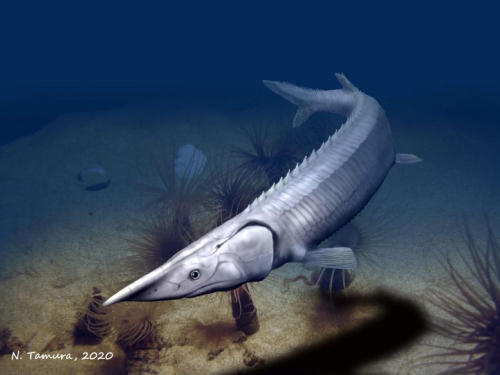
“Enigmatic and Strange” – 300-Million-Year-Old Fish Resembles a Sturgeon, but With Key Differences
SciTechDaily has a piece about an interesting fossil fish. Called Tanyrhinichthys mcallisteri, it lived about 300 million years ago in what is now New Mexico. The new study, published in the journal Zoological Journal of the Linnean Society, found the species’ lifestyle was more like bottom-dwelling sturgeon, rather than the stealthy pike, as previously believed. Sturgeon,…
-
PBS Eons: The Risky Paleo Diets of Our Ancestors
PBS Eons has a new episode. This one is about the “paleo” diet of Homo erectus. We can track our history of eating just about anything back through the fossil record and see the impact it’s had on our evolution. Throughout time, part of the secret to our success as a species has been…
-
PBS Eons: How the Egg Came First
There’s a new episode of PBS Eons. This one is about eggs, the platypus, and of course birds! They tackle the endless question “What came first the Chicken or the egg?”. The story of the egg spans millions of years, from the first vertebrates that dared to venture onto land to today’s mammals, including…
-
PBS Eons: When Penguins Went From The Sky To The Sea
There’s a new episode of PBS Eons. This one is about penguins and how they evolved from sea birds. Today, we think of penguins as small-ish, waddling, tuxedo-birds. But they evolved from a flying ancestor, were actual giants for millions of years, and some of them were even dressed a little more casually.
-
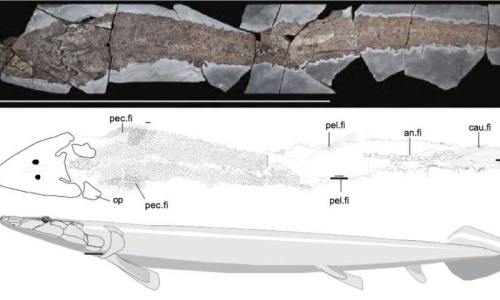
Phys.org: Ancient fish fossil reveals evolutionary origin of the human hand
Phys.org has a story about the evolution of the human hand. A new complete specimen of a tetrapod-like fish, Elpistostege, reveals new clues in the evolution of the human hand from fish fins. The paper describing this discovery can be found in the journal Nature. An ancient Elpistostege fish fossil found in Miguasha, Canada has…
-
PBS Eons: When the Sahara Was Green
There’s a new PBS Eons episode. This one is about the “Green Sahara” only a few thousand years ago. The climate of the Sahara was completely different thousands of years ago. And we’re not talking about just a few years of extra rain. We’re talking about a climate that was so wet for so…
-
PBS Eons: How South America Made the Marsupials
PBS Eons has a new video. This one is about the marsupials of South America. Throughout the Cenozoic Era — the era we’re in now — marsupials and their metatherian relatives flourished all over South America, filling all kinds of ecological niches and radiating into forms that still thrive on other continents.
-
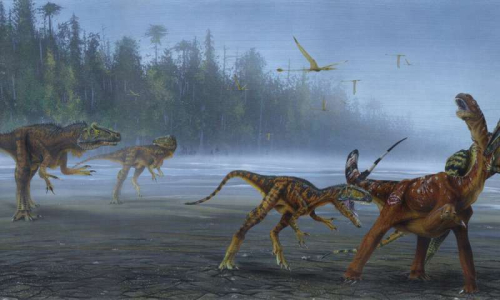
New species of Allosaurus discovered in Utah
Phys.org has a story about a new Allosaurus species discovered in Utah. The first specimen of the new species of Allosaur, called Allosaurus jimmadseni, was discovered back in the early 1990s in Dinosaur National Monument in northeastern Utah. It lived between 152 and 175 million years ago, during the Jurassic Period. It differs from the…
-

SciNews: 305-Million-Year-Old Fossil Shows Parent Caring for Its Offspring
SciNews has a piece about an ancient synapsid with evidence that it cared for its young. The animal, called Dendromaia unamakiensis, lived about 305 million years ago in what is now Cape Breton Island, Nova Scotia. This find consists of both an adult and an associated juvenile which were found inside a fossilized tree stump. …
-

New Eocene-Period Whale Unearthed in Egypt
SciNews has a story about a recently discovered whale from the Eocene of Egypt. Called Aegicetus gehennae, this ancient mammal give important clues in the evolution of whale locomotion. A team of paleontologists, including Professor Philip Gingerich of the University of Michigan, published the details in a recent paper in the journal PLoS ONE. Protocetidae (protocetids)…
-
PBS Eons: The Forgotten Story of the Beardogs
PBS Eons has a new eposide and it’s about Beardogs, otherwise known as Amphicyonids. Because of their strange combination of bear-like and dog-like traits, they’re sometimes confusingly called the beardogs. And even though you’ve never met one of these animals, the beardogs are key to understanding the history of an important branch of the…
-
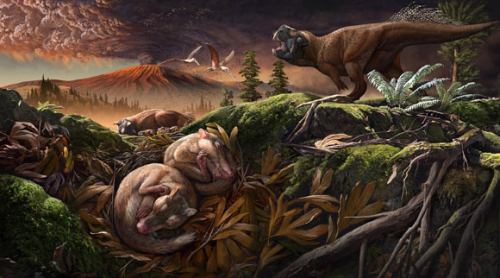
New Cretaceous-Period Mammal Unveiled
Sci-News has a story about a new mammal that lived along side the dinosaurs during the Mesozoic Era. The animal, named Origolestes lii, is part of the famous Jehol Biota, which dates to the Cretaceous Period 133 to 120 million years ago. This biota was a terrestrial and freshwater ecosystem found across the Chinese provinces…
-
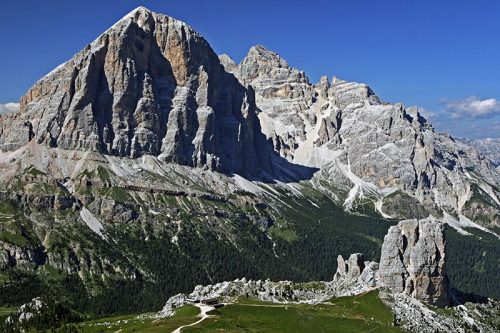
Did a million years of rain jump-start dinosaur evolution?
Nature has an interesting post about a spell of wet weather in the middle Triassic that may have spurred the evolution of the dinosaurs. This wet spell occurred for about a million years about 232 million years ago. The evidence for the very wet period (pluvial episode) is contained in Triassic rocks from the Carnian…
-
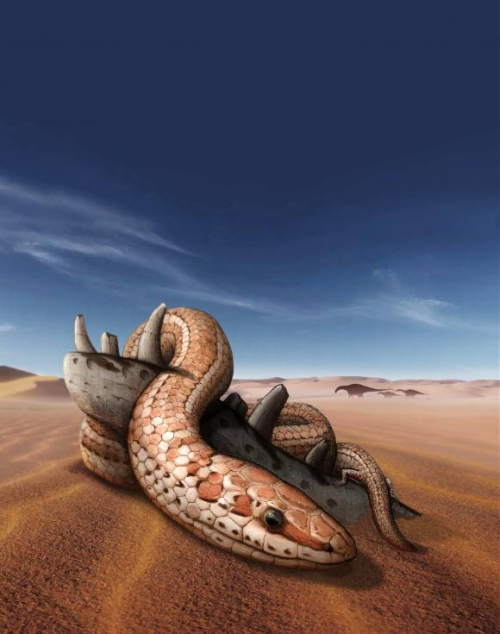
Cretaceous Legged Snake Fossils Shed New Light on Evolution of Modern Snake Body Plan
Sci-News has a story about the evolution of snakes. A 3-D preserved snake fossil from about 100 million years ago shows compelling clues as to the evolution of snake. This animal, called Najash rionegrina, still had legs and jugal (cheek) bones. The specimens were found in northern Patagonia, Argentina. Details can be found in a…
-
PBS Eons: When Giant Hypercarnivores Prowled Africa
There’s a new episode of PBS Eons. This one is about the giant carnivores of Africa. These hyaenodonts gave the world some of its largest terrestrial, carnivorous mammals ever known. And while these behemoths were the apex predators of their time, they were no match for a changing world.
-
PBS Eons: When Hobbits Were Real
A new episode of PBS Eons is out. And, this one is about Homo floresiensis, otherwise known as the “hobbit”. Its discoverers named it Homo floresiensis, but it’s often called “the hobbit” for its short stature and oddly proportioned feet. And it’s been at the center of a major controversy in the field ever…
-

Ancient ‘Cockroaches of the Sea’ Fossilized While Playing ‘Follow the Leader’
LiveScience has a piece on a new trilobite discovery in Morocco. Morocco is famous for fossils and one particularly notable animal from there is the trilobite. In this case, a whole line of these animals died and were preserved together in line. Behavior is rarely fossilized, but this window into the past, shows collective…
-
Roy Plotnick: Forehead Aliens, Rishathra, and the Ecology of Alien Worlds
Roy Plotnick has another insightful post on Medium. This one is about evolutionary biology. As a Star Trek fan, I appreciate the writers attempt to explain within their universe what were actually constraints produced by the need to use human actors and save on CGI. Personally, I don’t think it was necessary (don’t get me…
-
PBS Eons: When Bats Took Flight
PBS Eons has a new episode about bats. Bats are very rare in the fossil record and thus we still have much to learn about their evolutionary history. What came first flight or echo-location? Bats pretty much appear in the fossil record as recognizable, full-on, flying bats. And they show up on all of…
-
PBS Eons: The Missing Link That Wasn’t
A new episode of PBS Eons is out. It is about the Piltdown Man and how our understanding of Evolution has changed since. The myth of the Missing Link–the idea that there must be a specimen that partly resembles an ape but also partly resembles a modern human–is persistent. But the reality is that…
