Tag: paleontology
-

PBS Eons: Were These Monsters Inspired by Fossils?
PBS Eons has a new episode. This one is about monsters, more specifically the Cyclops. People have been discovering the traces and remains of prehistoric creatures for thousands of years. And they’ve also probably been telling stories about fantastic beasts since language became a thing. So, is it possible that the monsters that populate our…
-
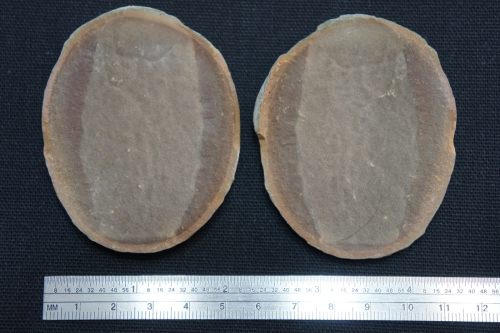
ESCONI Flashback Friday #25: Ode to a Blob
As part of the run up to ESCONI’s 70th Anniversary, here is Flashback Friday post #25. If you have pictures or stories to contribute, please send them over to esconi.info@gmail.com. Thanks! Rob Sula wrote this poem back in 2002. Rob as 1st Vice-President from 2008-2014. The poem is about Essexella asherae, the iconic Mazon Creek…
-
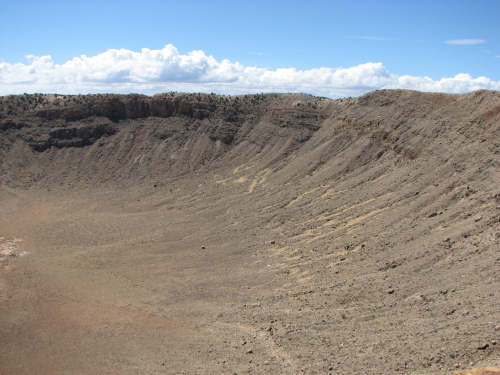
Roy Plotnick: The First Day of the Rest of Life
Roy Plotnick has a great post about of the last day of the Mesozoic Era (or the first day of the Cenozoic Era). It would have been a very bad day, indeed! On a day some sixty-six million years ago, life was Earth was suddenly and irreversibly altered. An enormous asteroid or comet struck the…
-

‘A scientific goldmine’: U of A paleontologists discover complete skeleton of small, carnivorous dino
The Edmonton Journal has a story about a recent dinosaur find. In 2014, a remarkablely complete, small, carnivorous dinosaur in “exquisitely preserved” condition was discovered by University of Alberta paleontologist Clive Coy. The animal, called Saurornitholestes, lived about 76 million years ago. Saurornitholestes is a small, feathered carnivorous dinosaur part of the dromaeosaurid family —…
-
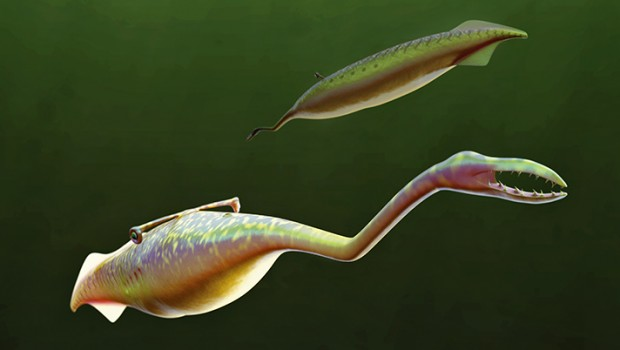
ScienceMag: 300-million-year-old ‘Tully Monster’ may not be the creature scientists thought it was
Science Magazine has a story about the Tully Monster. A paper, which appeared in the Proceedings of the Royal Society B, calls into question whether Tullymonstrum is a vertebrate. The new research found melanosomes in extant invertebrate eyes (Octopus and Squid). That was a key part of the previous argument as it was widely believed…
-
PBS Eons: When Hobbits Were Real
A new episode of PBS Eons is out. And, this one is about Homo floresiensis, otherwise known as the “hobbit”. Its discoverers named it Homo floresiensis, but it’s often called “the hobbit” for its short stature and oddly proportioned feet. And it’s been at the center of a major controversy in the field ever…
-
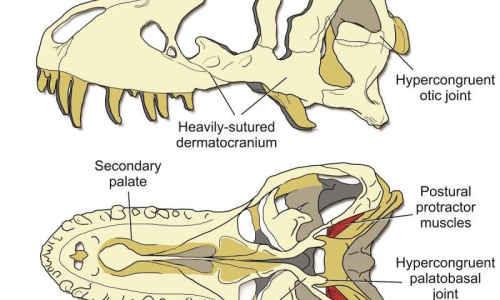
T. rex used a stiff skull to eat its prey
Phys.org has a story about the strength of a Tyrannosaurus rex bite. This story describes research which appeared in a paper published in the journal The Anatomical Record. A Tyrannosaurus rex could bite hard enough to shatter the bones of its prey. But how it accomplished this feat without breaking its own skull bones has…
-

The Dinosaur-Killing Asteroid Acidified the Ocean in a Flash
New York Times has a story about the K-Pg mass extinction event. A recently published paper in The Proceedings of the National Academy of Sciences finds that the meteor at the end of the Cretaceous had an immediate and catastrophic effect on the ocean. What happened to the dinosaurs when an asteroid about six miles wide struck…
-

Ancient ‘Cockroaches of the Sea’ Fossilized While Playing ‘Follow the Leader’
LiveScience has a piece on a new trilobite discovery in Morocco. Morocco is famous for fossils and one particularly notable animal from there is the trilobite. In this case, a whole line of these animals died and were preserved together in line. Behavior is rarely fossilized, but this window into the past, shows collective…
-
PBS Eons: The Case of the Dinosaur Egg Thief
There’s a new PBS Eons episode. This one’s about Oviraptor. The would be “Egg Thief” is now a caring mother… Paleontologists found a small theropod dinosaur skull right on top of a nest of eggs that were believed to belong to a plant-eating dinosaur. Instead of being the nest robbers that they were originally…
-
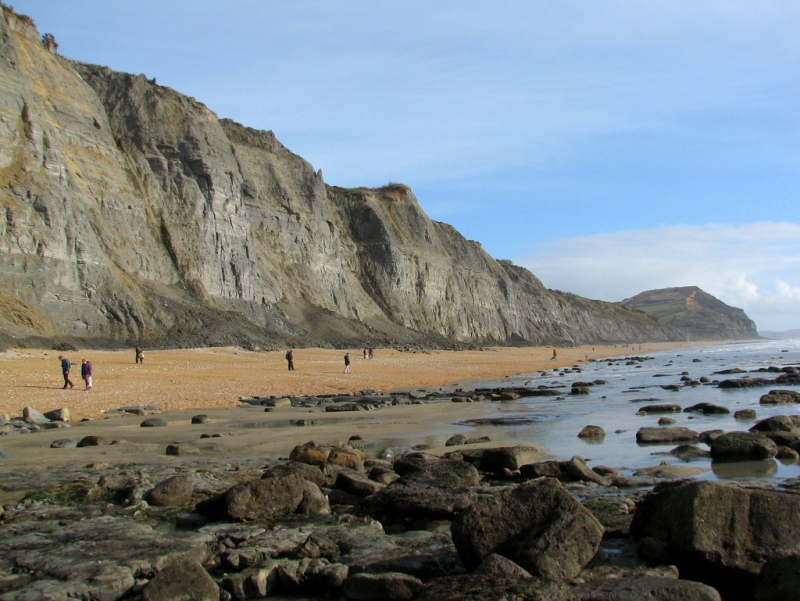
Reminder: ESCONI October Paleontology Study Group Meeting October 19th, 2019 – Waves, Winds, and Tides: Fossil Collecting on the West Dorset Coast of Southern England
Waves, Winds, and Tides: Fossil Collecting on the West Dorset Coast of Southern England. Presentation by: Andrew Young, with Marie Angkuw, Jann Bergsten, Rhonda Gates, and Deborah Lovely. For the last several years, a group of ESCONI members have traveled to England in winter to collect fossils on its famous Jurassic Coast. Contrary to the…
-
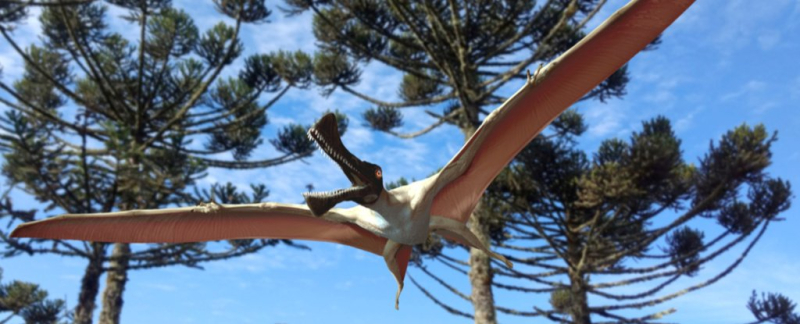
ScienceAlert: A Fossil of a Ginormous Flying Reptile Has Just Been Discovered in Australia
Science Alert has a story about a huge pterosaur discovery in Australia. Pterosaurs seem to be in the news lately and this one is called “Iron Dragon”, Ferrodraco lentoni. Discovered in the Winton area of central western Queensland, it had a wingspan of about 4 meters (13 feet). This animal lived about 96 million years…
-

NBC5: Smell Sue the T. Rex’s Breath at New Field Museum Exhibit
NBC5 has a segment on some new features in SUE exhibit at the Field Museum. You can feel her skin, hear her rumble, even smell her breath… it’s a whole day in the life of a T-rex! What did Sue the T. Rex’s breath smell like back in the day (i.e. the late Cretaceous Period)?…
-

NatGeo: Inside the homes (and minds) of fossil collectors
National Geographic has a story about fossil collectors – professional, commercial, and amateur. There’s a good discussion of the pros and cons to commercial fossil collecting. The conclusion is great… I hope it comes to pass! But the gold rush never quite materialized. There’s a glut of Tyrannosaurus specimens on the market now, and other prize specimens…
-
PBS Eons: When Antarctica Was Green
PBS Eons has a new episode. This one discusses when Antarctica was green and had a population of animals. Before the start of the Eocene Epoch about 56 million years ago–Antarctica was still joined to both Australia and South America. And it turns out that a lot of what we recognize about the southern hemisphere…
-

UChicago: Fish story for the ages: High schooler unearths rare fossil
The University of Chicago has a post about a recent Green River find. A very interesting gar fish skull was found this summer by a high school student in Lance Grande’s “Stones and Bones” program at the University of Chicago this last summer. The specimen comes from a fish estimated to be 8 feet long! …
-

The Forgotten Paleontologist: A Commentary by Keith Robitschek
The discovery: Paleontological events are based on theory and evidence is required to prove that an event actually occurred. Today, the event that occurred sixty-six million years ago at the Yucatan peninsula has been proven through scientific research based on core samples at the impact site and iridium analyses in the K-Pg boundary that was…
-
PBS Eons: When Giant Lemurs Ruled Madagascar
PBS Eons has a new episode. It is about the history of lemurs on Madagascar. How did they get there? In what ways did they evolve? What happened to the giants? Just a few thousand years ago, the island of Madagascar was inhabited by giant lemurs. How did such a diverse group of primates…
-
ESCONI October Paleontology Study Group Meeting October 19th, 2019 – Waves, Winds, and Tides: Fossil Collecting on the West Dorset Coast of Southern England
Waves, Winds, and Tides: Fossil Collecting on the West Dorset Coast of Southern England. Presentation by: Andrew Young, with Marie Angkuw, Jann Bergsten, Rhonda Gates, and Deborah Lovely. For the last several years, a group of ESCONI members have traveled to England in winter to collect fossils on its famous Jurassic Coast. Contrary to the…
-

SciAm: Pterosaurs Were Monsters of the Mesozoic Skies
Scientific American has an article about pterosaurs. It seems that they not the birds, which are dinosaurs, ruled the skies. Pterosaurs were the first vertebrates to evolve powered flight. They ranged in size from the size of a small plane to the size of a modern sparrow. Many had heads larger than their bodies… they…
-

Roy Plotnick: Where Late the Sweet Birds Sang
Roy Plotnick has an insightful post over on Medium. It’s about the 6th mass extinction. News flash, just in case you’ve been hiding in a hole somewhere, it’s happening now. He is commenting on a recent paper in the journal science. This past summer, my wife and I took a lovely walk around Echo Lake…
-

ESCONI Field Trip Report – Braceville Fall 2019
The Fall 2019 trip to Braceville was on September 14th and 15th this year. The weather was great on Saturday, maybe a little hot for digging. On Sunday, the day started out wet, with a steady down pour in early morning, but a few hardy souls went in right from the beginning! It was two…
-
PBS Eons: How Pterosaurs Got Their Wings
PBS Eons has another episode. This one is about the origins of pterosaurs. Although the evidence is pretty sparse, we aren’t sure of their ancestors. Scleromochlus, or something like it, is a likely candidate. Watch the episode for more details… When pterosaurs first took flight, you could say that it marked the beginning of…
-

New Jurassic World Short Shows Just How Screwed the Humans Are Now
Gizmodo has a piece about the new Jurassic World short “Battle at Big Rock”. Check it out! The Jurassic Park/World franchise has long flirted with the idea that humanity’s hubris in reviving dino-kind would inevitably lead to said dinosaurs wreaking havoc on the whole world, not just a remote island park and/or research facility. Now, in the…
-
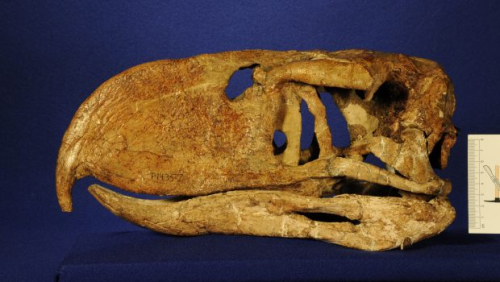
Palaeocast Episode 103: Terror birds
A new episode of Palaeocast is out. This one is about Terror birds. These are large flightless birds that evolved after the K-Pg extinction event. They originated in South America and migrated up to North America when the Isthmus of Panama formed almost 3 million years ago. Personally, I’ve always found these animals fascinating! Terror…
-
Roy Plotnick: Forehead Aliens, Rishathra, and the Ecology of Alien Worlds
Roy Plotnick has another insightful post on Medium. This one is about evolutionary biology. As a Star Trek fan, I appreciate the writers attempt to explain within their universe what were actually constraints produced by the need to use human actors and save on CGI. Personally, I don’t think it was necessary (don’t get me…
-
ESCONI Flashback Friday #18: So, Where’s The Shrimp? By Andy Jansen
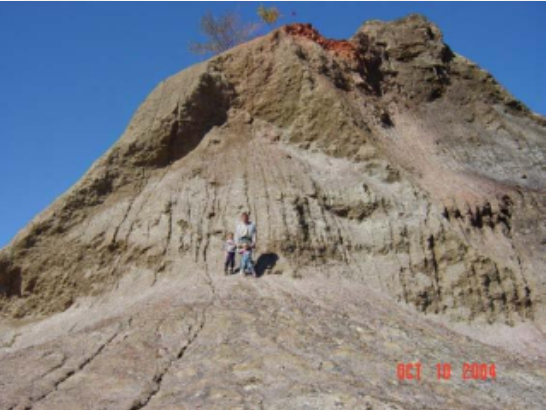
As part of the run up to ESCONI’s 70th Anniversary, here is Flashback Friday post #18. If you have pictures or stories to contribute, please send them over to esconi.info@gmail.com. Thanks! We have our Fall Braceville Field Trip coming up next weekend – September 14th and 15th, 2019. Here is an article about Braceville collecting…
-
PBS Eons: When Bats Took Flight
PBS Eons has a new episode about bats. Bats are very rare in the fossil record and thus we still have much to learn about their evolutionary history. What came first flight or echo-location? Bats pretty much appear in the fossil record as recognizable, full-on, flying bats. And they show up on all of…
-

The Brain Scoop: Recommended Reading: 2019!
The Brain Scoop has an episode which highlights some good books. So, if you are looking to read something interesting and science related, these are some really good suggestions! Hi! I’m on the road filming PREHISTORIC ROAD TRIP, a 3-part series that will premiere nationally on PBS in 2020! We’ll get back to our…
-
Letters From Gondwana: The Great Female Scientists of the Victorian Era
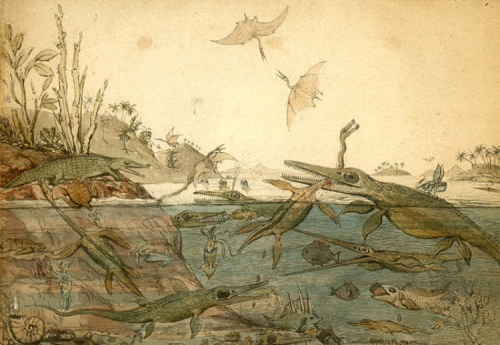
The blog Letters From Gondwana has a great post about the great female scientists of the Victorian Era. Of course, there’s Mary Anning and the Philpot sisters. Also included are Barbara Hastings, Etheldred Bennet, Mary Buckland née Morland, Charlotte Murchinson, Elizabeth Cobbold, Mary Buckland née Morland, Charlotte Murchinson, Mary Sommerville, Jane Marcet, Delvalle Lowry, and…
