Tag: paleontology
-
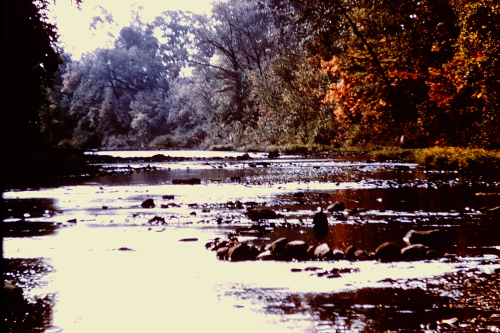
ESCONI Flashback Friday #32: Collecting Mazon Creek Concretions In The 1950s and 1960s
As part of the celebration of ESCONI’s 70th Anniversary, here is Flashback Friday post #32. If you have pictures or stories to contribute, please send them over to esconi.info@gmail.com. Thanks! Enjoy some old photos of the Coal City, Braidwood, and Wilmington area spoil piles in the 1950s and 1960s. It’s too bad some of those…
-
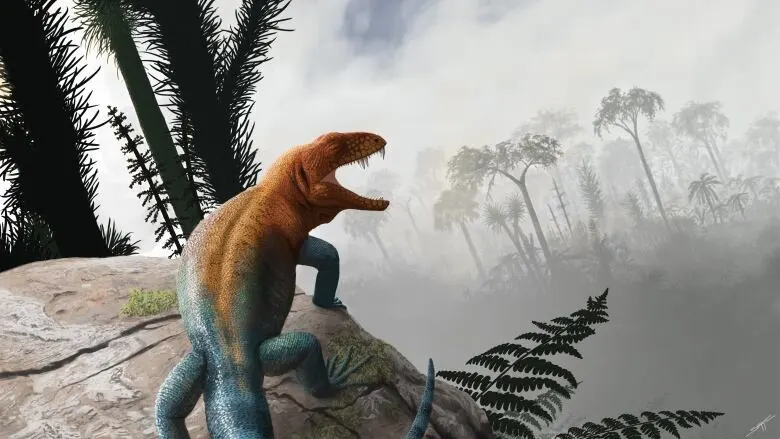
Ancient ‘coal dragon’ is now the oldest parareptile ever found
CBC has a story about an interesting new species of ancient parareptile. Named Carbonodraco lundi, this animal lived about 306 million years ago in what is now Linton, Ohio. This is the same time period as the famous fossils from Illinois’ Mazon Creek biota. The details were recently published in the journal Royal Society Open…
-

New Eocene-Period Whale Unearthed in Egypt
SciNews has a story about a recently discovered whale from the Eocene of Egypt. Called Aegicetus gehennae, this ancient mammal give important clues in the evolution of whale locomotion. A team of paleontologists, including Professor Philip Gingerich of the University of Michigan, published the details in a recent paper in the journal PLoS ONE. Protocetidae (protocetids)…
-

Roy Plotnick: Existence Locates a Path
Roy Plotnick has a new post over on Medium. The post is about extinction… mass extinction. We have a roll in the current and a past extinction. Time for action! Mass extinctions and their causes are topics of intense interest. Nearly forty years after the 1980 paper on the end-Cretaceous impact, significant new research on…
-

PBS Eons: The Forgotten Story of the Beardogs
PBS Eons has a new eposide and it’s about Beardogs, otherwise known as Amphicyonids. Because of their strange combination of bear-like and dog-like traits, they’re sometimes confusingly called the beardogs. And even though you’ve never met one of these animals, the beardogs are key to understanding the history of an important branch of the…
-
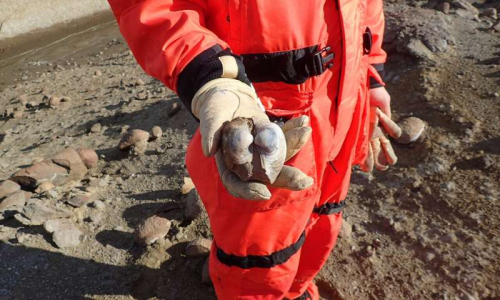
Earth was stressed before dinosaur extinction
Phys.org has an interesting story about the extinction of the dinosaurs. A new study, led by researchers from Northwestern University, shows that the chemistry of fossilized clam and snail shells changed greatly in the years leading up to the K-Pg mass extinction event. This change is likely due to a large influx of carbon into…
-

480-million-year-old fossils reveal sea lilies’ ancient roots
Phys.org has a story about the origin of crinoids. Tom Guensburg, research associate at the Field Museum in Chicago, is the lead author of a paper in the Journal of Paleontology, that describes Athenacrinus browneri. This new fossil shows evidence that is key to how sea lilies evolved from the earliest known echinoderms, which lived…
-

Early meat-eating dinosaur revealed via spectacular fossil
National Geographic has a story about a new dinosaur discovery. This new dinosaur, named Gnathovorax cabreirai, dates to about 230 million years ago during the Triassic Period. It represents one of the earliest dinosaurs ever found. This discovery was made near the town of Sao Joao do Polesine in southern Brazil. Details can be found…
-
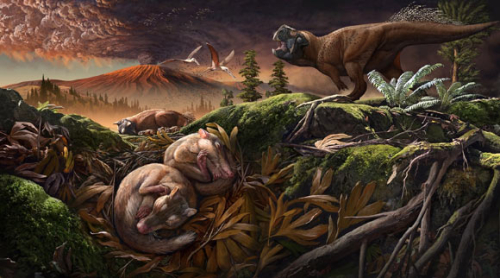
New Cretaceous-Period Mammal Unveiled
Sci-News has a story about a new mammal that lived along side the dinosaurs during the Mesozoic Era. The animal, named Origolestes lii, is part of the famous Jehol Biota, which dates to the Cretaceous Period 133 to 120 million years ago. This biota was a terrestrial and freshwater ecosystem found across the Chinese provinces…
-
Did a million years of rain jump-start dinosaur evolution?
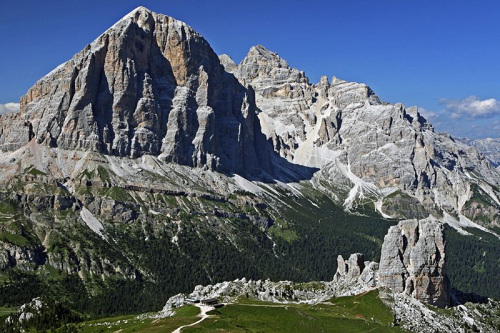
Nature has an interesting post about a spell of wet weather in the middle Triassic that may have spurred the evolution of the dinosaurs. This wet spell occurred for about a million years about 232 million years ago. The evidence for the very wet period (pluvial episode) is contained in Triassic rocks from the Carnian…
-
ESCONI Flashback Friday #30: Jim and Sylvia Konecny
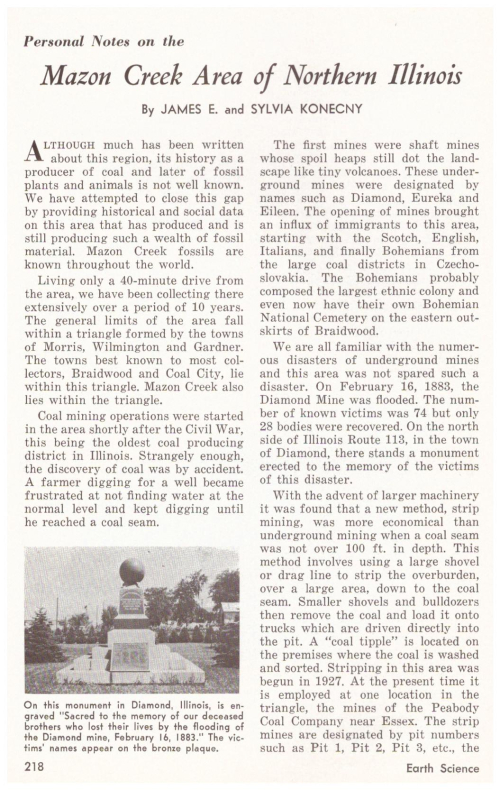
Jim and Sylvia Konecny were very active in the early days of ESCONI. Jim held a few posts on the ESCONI board, including president from 1966 to 1968. Eventually, they moved to Arizona. A few years ago, they donated a large portion of their collection of Mazon Creek, Ordovician, and Silurian fossils to the Field…
-
Paleontologists Find Fossils of Six New Dragonfly Species
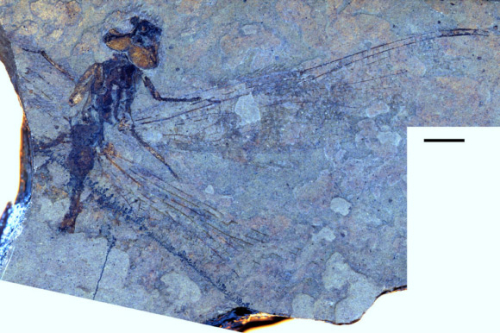
Sci-News has a post about the discovery of 6 new species of fossil dragonflies. These animals lived about 50 million years ago during the Eocene epoch. The fossils were found in the Okanagan Highlands, whih is an elevated hilly plateau area in British Columbia, Canada and the state of Washington. All the details are in…
-
A Kansas Find Reveals A 17-foot, Previously Unknown, Long-Extinct Shark Species
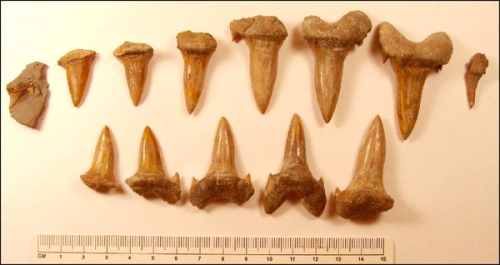
NPR has a story about the discovery of a new species of shark from Kansas. This animal, Cretodus, lived about 91 million years ago in the Western Interior Seaway. It measured about 17 feet long. Read all the details in a paper published in the Journal of Vertebrate Paleontology. GARDEN CITY, Kansas — Paleontologist Mike Everhart…
-
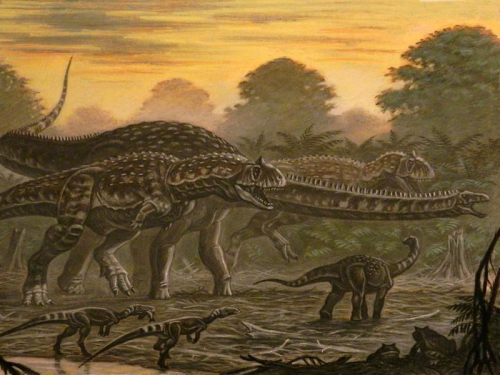
Flesh-Ripping Dinosaurs Replaced Their Teeth Multiple Times a Year
The Smithsonian has a story about tooth replacement in theropod dinosaurs. A new study published in the journal PLOS ONE has found that Majungasaurus probably replaced its teeth every 56 days. This is faster than the previous highest tooth replacement rate which was about 100 days in Jurassic carnivores Allosaurus and Ceratosaurus. This new rate…
-
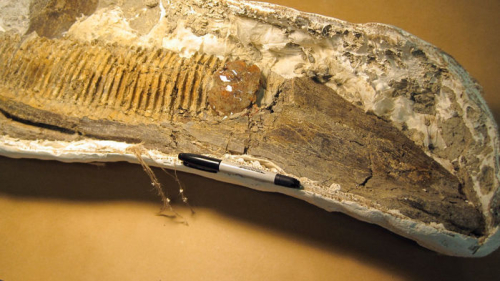
‘Remarkable’ fossil features an insect trapped in amber, stuck to a dinosaur jaw
Science has a post about a special fossil insect. The ‘remarkable’ fossil consists of sap-sucking aphids trapped in amber and stuck to the jawbone of a duck-billed dinosaur. It was discovered in 2010 in Dinosaur Provincial Park in Alberta, Canada. All the detail are in a paper publish in the journal Science. The “remarkable” two-for-one…
-
PBS Eons: Why Male Mammoths Lost the Game
There’s a new episode of PBS Eons. This one is about male mammoths and their dangerous and mostly solitary existence. Woolly mammoths, our favorite ice age proboscidean, disappeared from Europe and North America at the end of the last ice age, about 10,000 years ago. Today, we’ve teamed up with TierZoo to solve one…
-
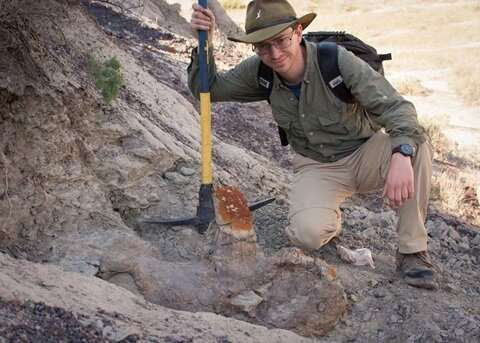
Dinosaur skull turns paleontology assumptions on their head
Phys.org has a piece about a well-preserved Styracosaurus skull which is enlightening paleontologist to the morphological variability of the species. The skull was not symmetrical and has implications as to how we should identify new (and currently known) species of dinosaurs, especially ceratopsians. Details are in a paper published in the journal Cretaceous Research. The skull was…
-
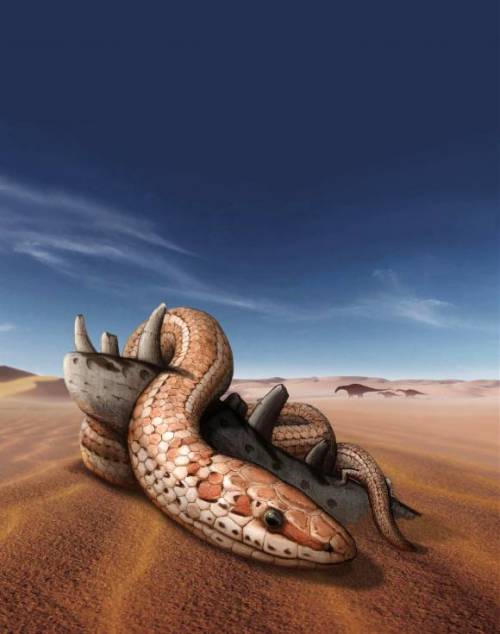
Cretaceous Legged Snake Fossils Shed New Light on Evolution of Modern Snake Body Plan
Sci-News has a story about the evolution of snakes. A 3-D preserved snake fossil from about 100 million years ago shows compelling clues as to the evolution of snake. This animal, called Najash rionegrina, still had legs and jugal (cheek) bones. The specimens were found in northern Patagonia, Argentina. Details can be found in a…
-
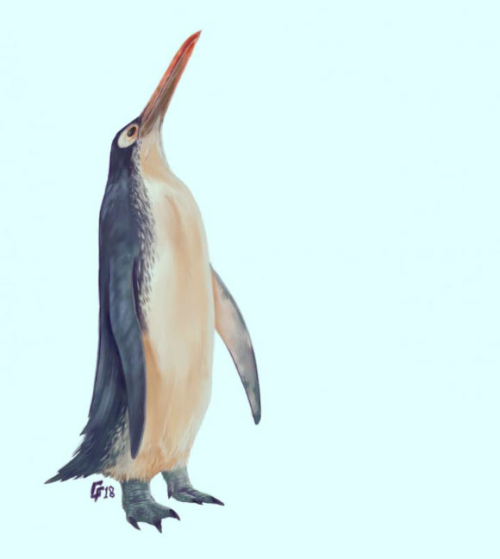
Paleontologists Unearth Another Giant Penguin in New Zealand
Sci-News has a story about a new giant penguin from New Zealand. The animal, which lived around 27 million years ago during the Oligocene Period, joins a growing list of giant penguins from New Zealand. This list include the genera Kairuku, Pachydyptes, Palaeeudyptes, and Kumimanu. This new one belongs to the genus Kauruku. The details…
-
PBS Eons: When Giant Hypercarnivores Prowled Africa
There’s a new episode of PBS Eons. This one is about the giant carnivores of Africa. These hyaenodonts gave the world some of its largest terrestrial, carnivorous mammals ever known. And while these behemoths were the apex predators of their time, they were no match for a changing world.
-

ESCONI Flashback Friday #28: Mazon Creek Open House Report 2002
Here is the announcement of the 2002 Mazon Creek Project Open House. From the sound of the report that follows, it very surely an interesting event! The Burgess Shale, The Solnhofen, and Mazon Creek mention in one lecture! Wow, you know that had to be good!
-

Palaecast Episode 105: Ferrodraco
There’s a new episode of Palaeocast. This one is about the new Australian pterosaur, Ferrodraco lentoni, which was recently described in a paper that appeared in Scientific Reports. Discovered in the Winton area of central western Queensland, it had a wingspan of about 4 meters (13 feet). This animal lived about 96 million years ago,…
-
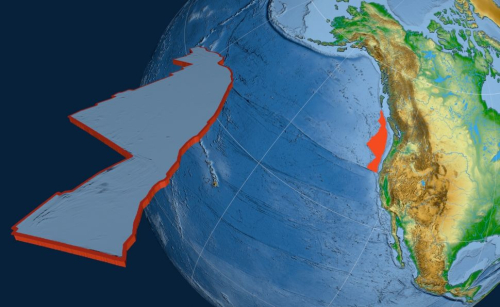
We Could Be Witnessing the Death of a Tectonic Plate, Says Earth Scientist
Live Science has a story about the tectonic plates along the West Coast of the United States. The plate named Juan de Fuca (pronounced “wahn de fyoo-kuh”), which is about the size of Michigan, has a large tear. The plate is located off the coast of Northern California extending north past Oregon, Washington, up to…
-

First evidence of feathered polar dinosaurs found in Australia
Phys.org has a story about the first polar dinosaurs with feathers. Fossilized dinosaur and bird feathers have been found in what are fine muddy sediments in Australia. The deposit was once the bottom of a shallow lake that was close to the South Pole during the Cretaceous. The feathers date to about 118 million years…
-
ESCONI November Paleontology Study Group Meeting – Saturday, November, 16th, 2019 at 7:30 PM.
The November Paleontology Study Group Meeting will be Saturday, November, 16th, 2019 at 7:30 PM. The topic is "Pontiac Crinoids". The presentation is by ESCONI Member Tom Williams. Come on out!
-

David Bardack, Professor Emeritus, Biological Sciences at the University of Illinois at Chicago
David Bardack, Professor Emeritus, Biological Sciences at the University of Illinois at Chicago has passed away. He was a specialist on fishes and was responsible for naming and describing many of the fishes of the Mazon Creek biota, including early hagfish and lamprey. He was 87. Here is a partial list of his papers.
-
PBS Eons: How We Domesticated Cats (Twice)
PBS Eons has a new episode and it’s a great one for cat lovers! It seems that cats have been domesticated twice and this is the story of Felis silvestris lybica. A 9,500 year old burial in Cyprus represents some of the oldest known evidence of human/cat companionships anywhere in the world. But when…
-
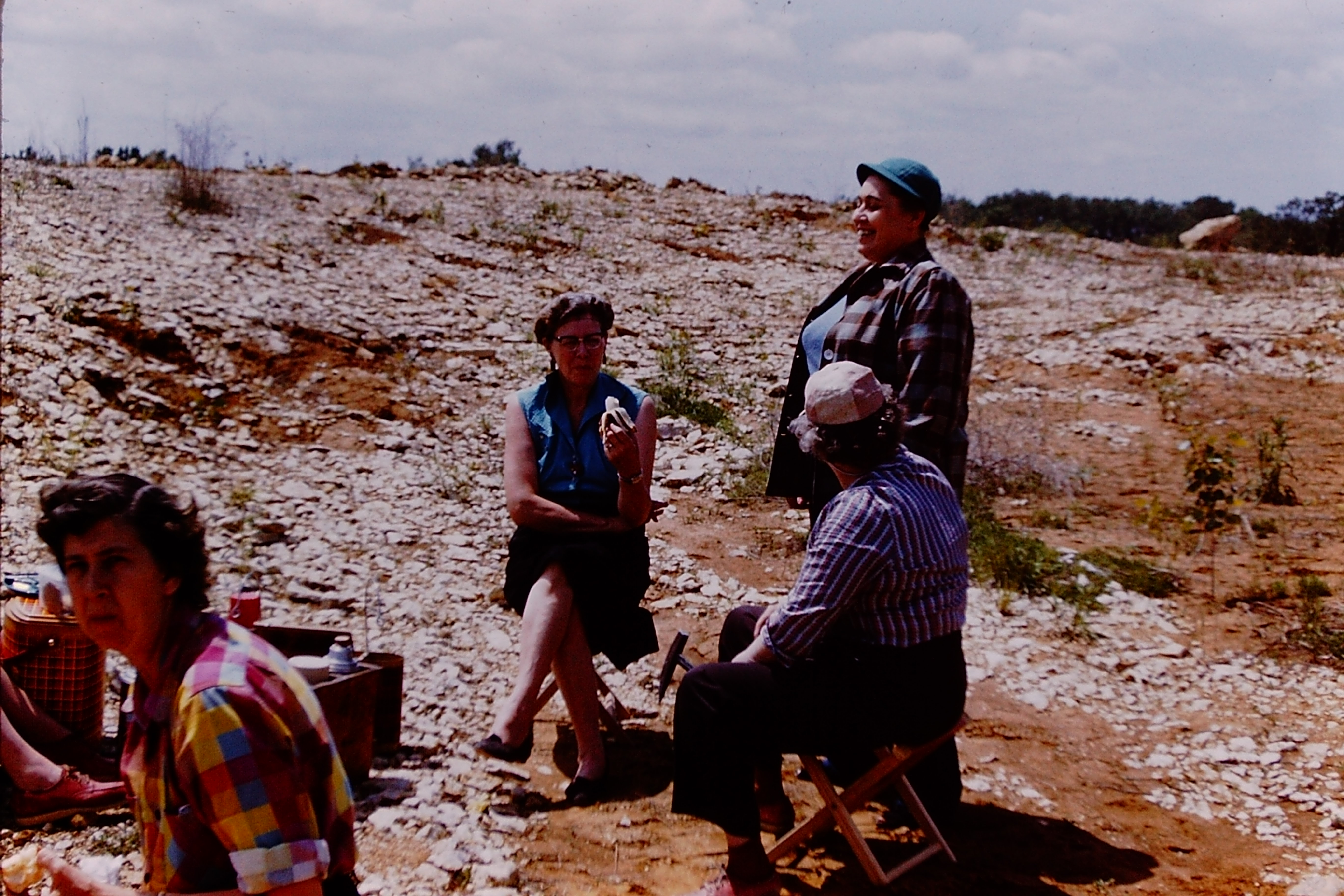
ESCONI Flashback Friday #26: Field Trip to Dixon, IL 05-24-1959
As part of the run up to ESCONI’s 70th Anniversary, here is Flashback Friday post #26. If you have pictures or stories to contribute, please send them over to esconi.info@gmail.com. Thanks! Here are some pictures from a field trip to Dixon, IL on May 24th, 1958. Field trips in the past were much more of…
-

Phys.org: New way to date rocks
Phys.org has a post about a new way to date rocks. Scientists at the University of Queensland have developed a way to date rocks by analyzing a silicate mineral known as garnet. The method is detailed in a paper which appeared in the Journal GSA Bulletin. A new way to date a common mineral could…
-
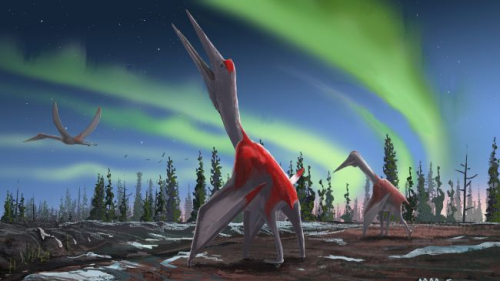
LiveScience: Meet ‘Cold Dragon of the North Winds,’ the Giant Pterosaur That Once Soared Across Canadian Skies
Live Science has a story about a new giant pterosaur. The animal, Cryodrakon boreas (cold dragon of the north winds), was discovered in Dinosaur Provincial Park in Alberta, Canada. It is thought to have lived between 77 million to 74 million years ago. The bones were originally found decades ago and were thought to be…
