Tag: MazonMonday
-
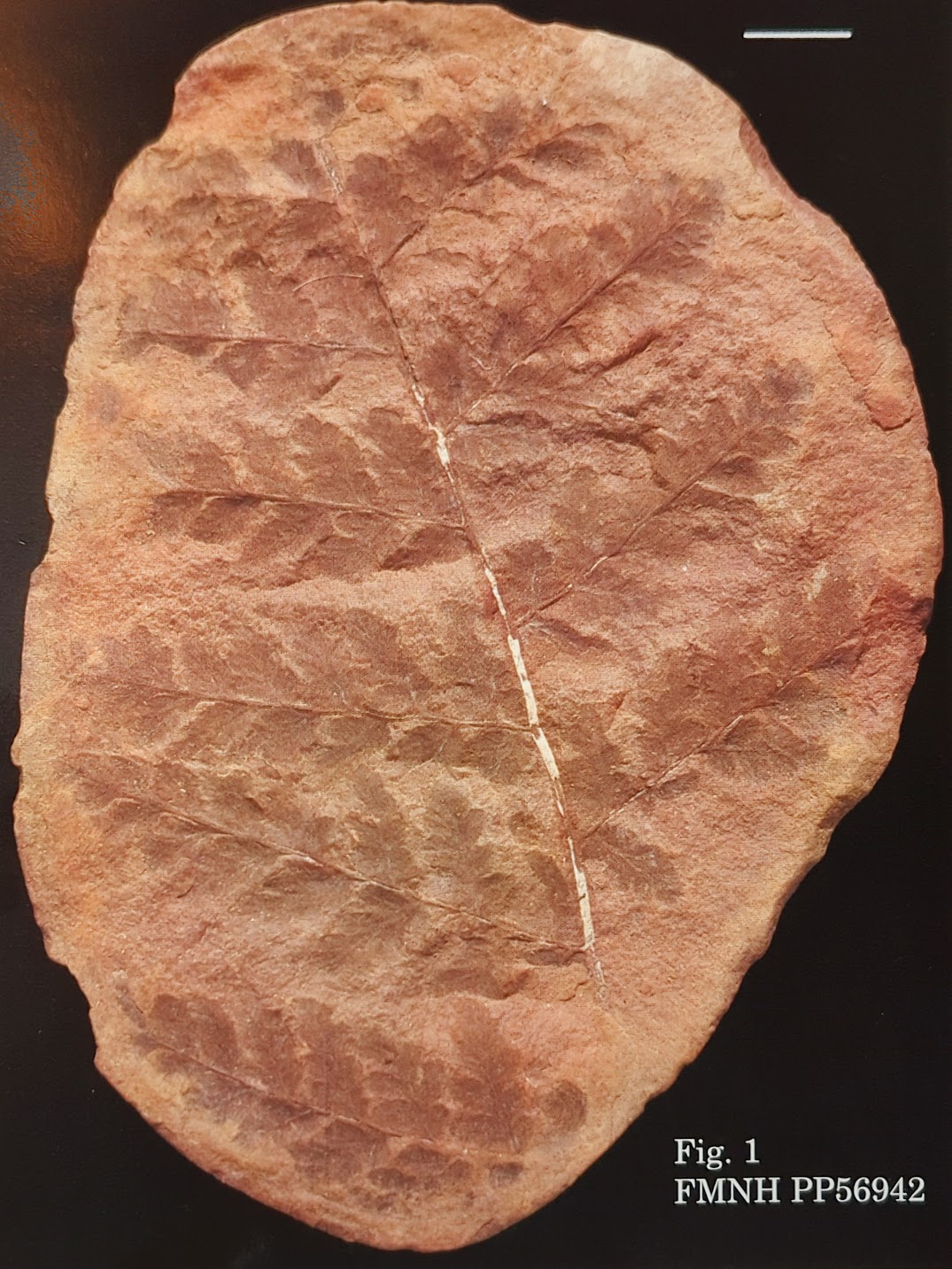
Mazon Monday #183: Sphenopteris plicata
This is Mazon Monday post #183. What’s your favorite Mazon Creek fossil? Tell us at email:esconi.info@gmail.com. Sphenopteris plicata was described by Leo Lesquereux in 1858. Lesquereux (1806 – 1889) described much of the North American Carboniferous flora in the mid 1800’s as a consultant to various US state geological surveys. His book “Atlas to the…
-

Mazon Monday #182: Braceville Fall 2023 Report
This is Mazon Monday post #182. What’s your favorite Mazon Creek fossil? Tell us at email:esconi.info@gmail.com. The Fall 2023 Braceville Field Trip is in the books… is is that on the web? It was a enjoyable, but somewhat wet, weekend. We had rain at the very end of the day on Saturday and most of…
-
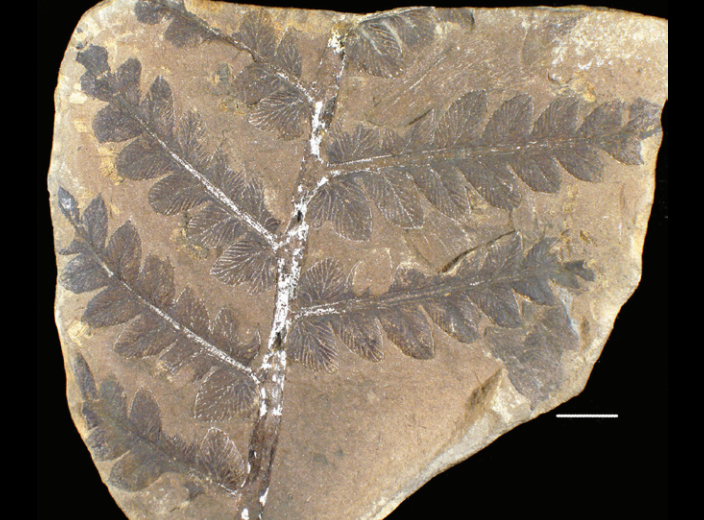
Mazon Monday #181: Mariopteris nervosa
This is Mazon Monday post #181. What’s your favorite Mazon Creek fossil? Tell us at email:esconi.info@gmail.com. Mariopteris nervosa is the most common species of Mariopteris found in the Mazon Creek fossil biota. It was named by Adolphe-Theodore Brongniart in 1879. He was a French botanist, who is widely considered the father of Paleobotany. He lived…
-

Mazon Monday #180: Grundy County Historical Society Museum
This is Mazon Monday post #180. What’s your favorite Mazon Creek fossil? Tell us at email:esconi.info@gmail.com. The Grundy County Historical Society Museum is a hidden gem in Morris, IL. Their mission is to house, preserve, and exhibit objects pertaining to Grundy County’s history: cultural, social, geological, and anthropological. Established in 1923, they had a centennial celebration…
-

Fossil Friday #176: Aphlebia crispa
This is the “Fossil Friday” post #176. Expect this to be a somewhat regular feature of the website. We will post any fossil pictures you send in to esconi.info@gmail.com. Please include a short description or story. Check the #FossilFriday Twitter hash tag for contributions from around the world! —————————————————– Fossil Friday has become a family…
-
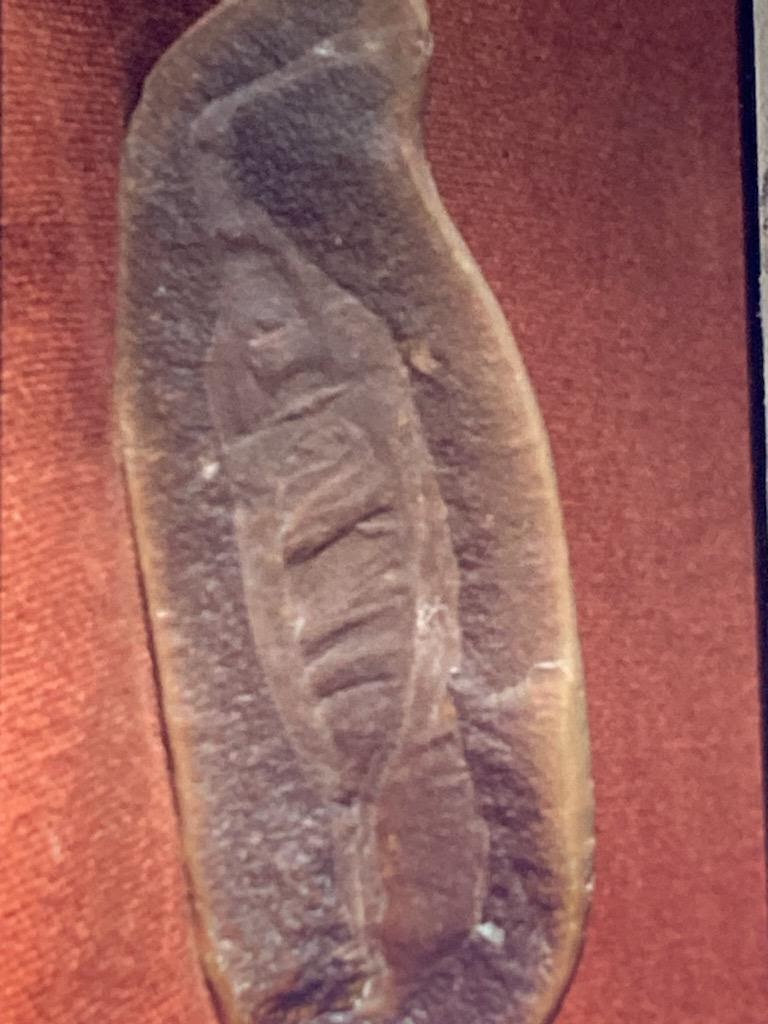
Mazon Monday #179: Mr Tully’s Tullys
This is Mazon Monday post #179. What’s your favorite Mazon Creek fossil? Tell us at email:esconi.info@gmail.com. The Tully Monster was designated Illinois’ State Fossil in 1989. Unfortunately, Francis Tully (yes! an ESCONI member!) didn’t live to see it as he died in 1987. While much is still uncertain, we know quite a bit more about…
-

Mazon Monday #178: Investigating Mazon Creek fossil plants using computed tomography and microphotography
This is Mazon Monday post #178. What’s your favorite Mazon Creek fossil? Tell us at email:esconi.info@gmail.com. Fabiany Herrera, Assistant Curator of Paleobotany at the Field Museum of Natural History, was the lead author of a new paper about Mazon Creek plant research. The paper is entitled “Investigating Mazon Creek fossil plants using computed tomography and…
-
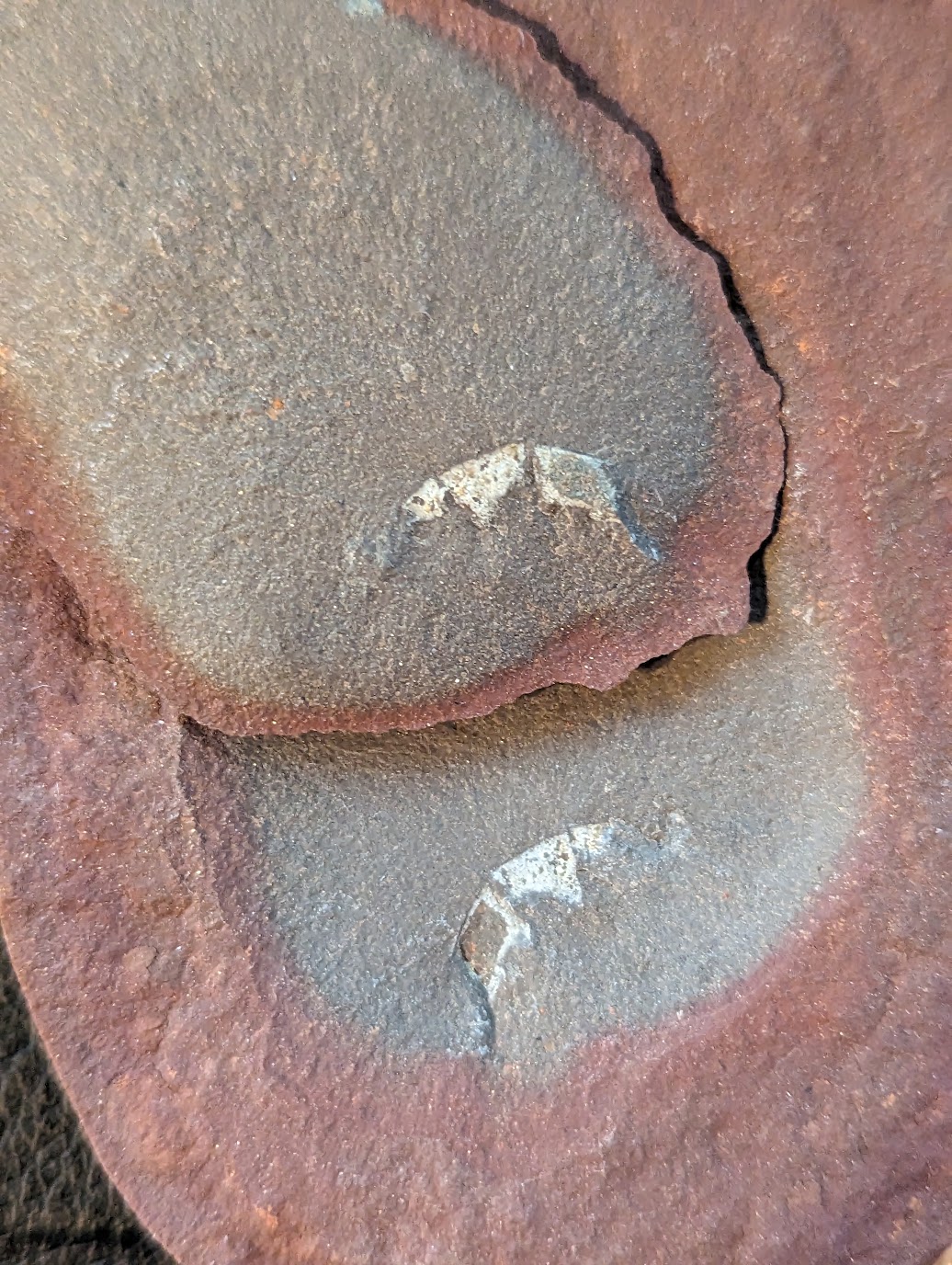
Fossil Friday #174: A Jellyfish with a Secret
This is the “Fossil Friday” post #174. Expect this to be a somewhat regular feature of the website. We will post any fossil pictures you send in to esconi.info@gmail.com. Please include a short description or story. Check the #FossilFriday Twitter hash tag for contributions from around the world! —————————————————– Mazon Creek concretions come in many…
-
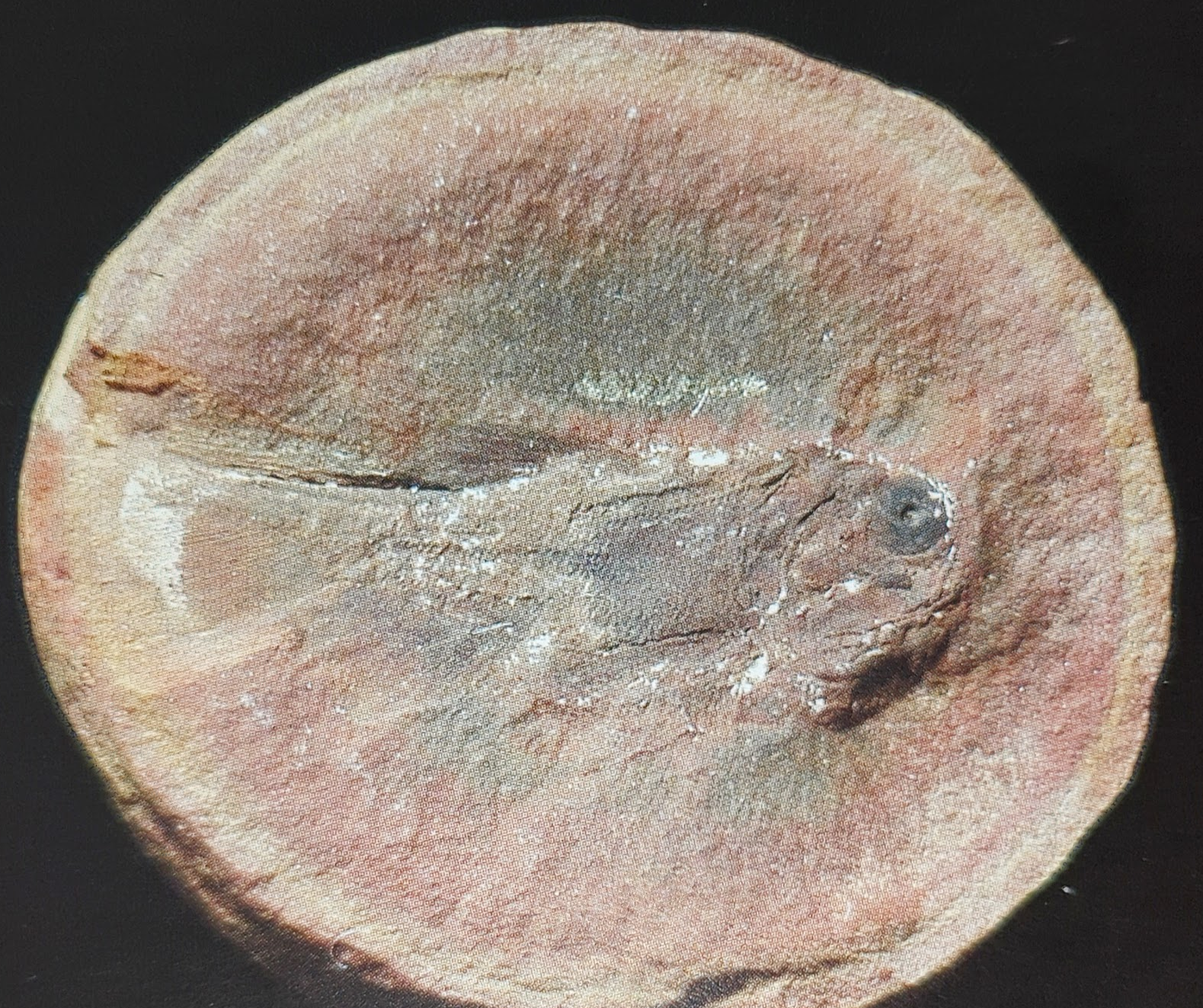
Mazon Monday #177: Elonichthys hypsilepus
This is Mazon Monday post #177. What’s your favorite Mazon Creek fossil? Tell us at email:esconi.info@gmail.com. Elonichthys hypsilepus was described in 1900 by Oliver Perry Hay (1846 – 1930) in the paper “Descriptions of some vertebrates of the Carboniferous age, Proceedings American Philosophical Society, Philadelphia”. Hay was an American herpetologist, ichthyologist, and paleontologist. He worked…
-
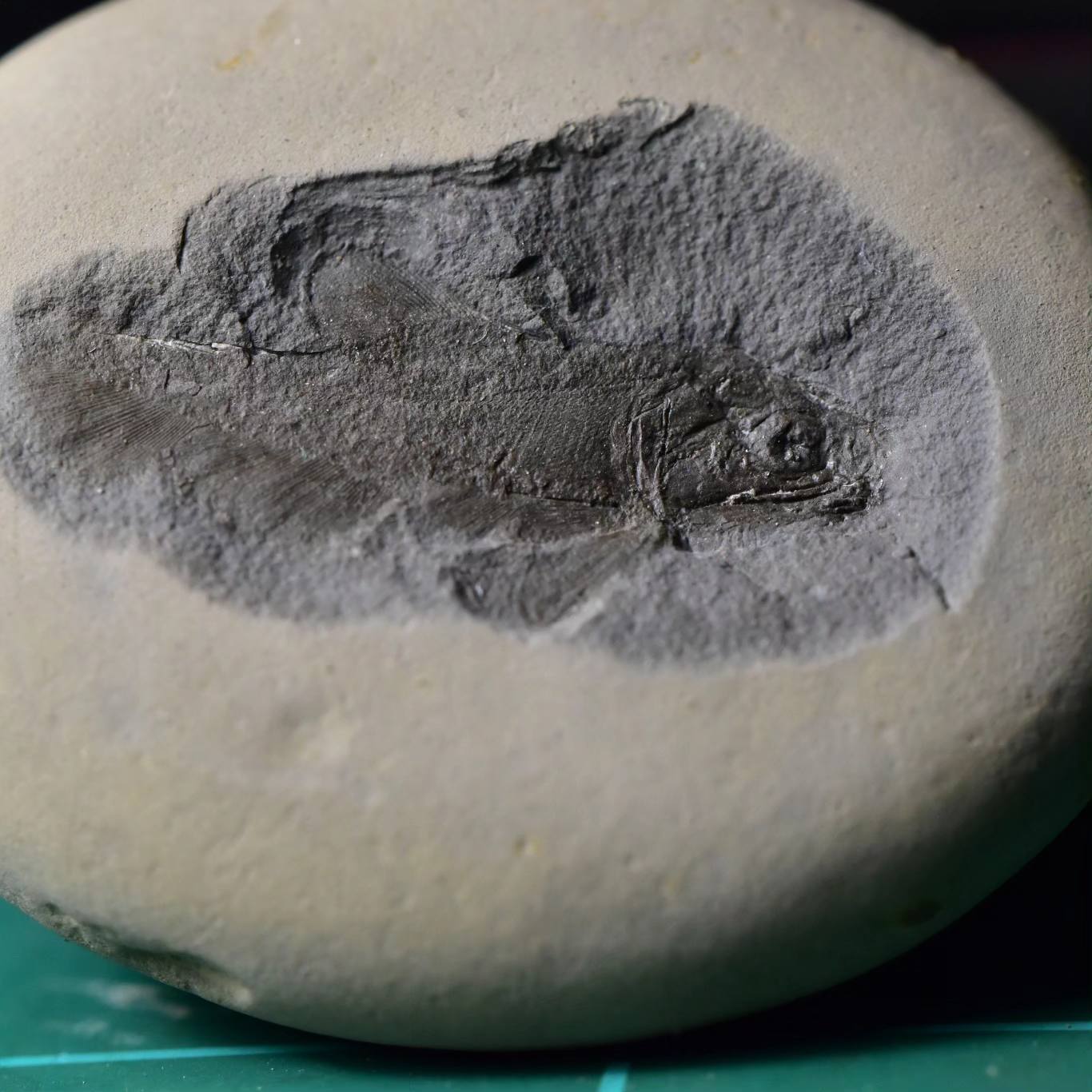
Fossil Friday #173: Elonichthys hypsilepus from Mazon Creek
This is the “Fossil Friday” post #173. Expect this to be a somewhat regular feature of the website. We will post any fossil pictures you send in to esconi.info@gmail.com. Please include a short description or story. Check the #FossilFriday Twitter hash tag for contributions from around the world! —————————————————– Today, we have a gorgeous Mazon…
-
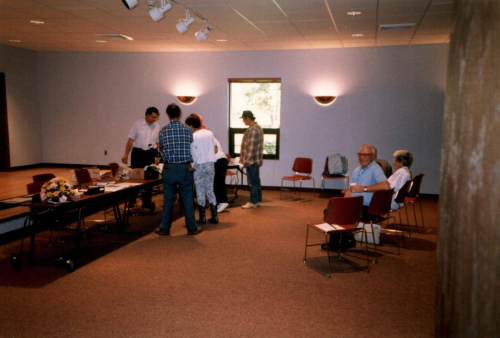
Mazon Monday #176: “Please, try for more fossil insects!”
Today’s post is an update to Mazon Monday #172, which was entitled “Fossil Insect Symposium 1990”. Long time ESCONI member Marty Houdek read that post and sent us some information about the event, because he was there! Actually, he’s in the last photo framed in the window, wearing the flannel shirt.
-
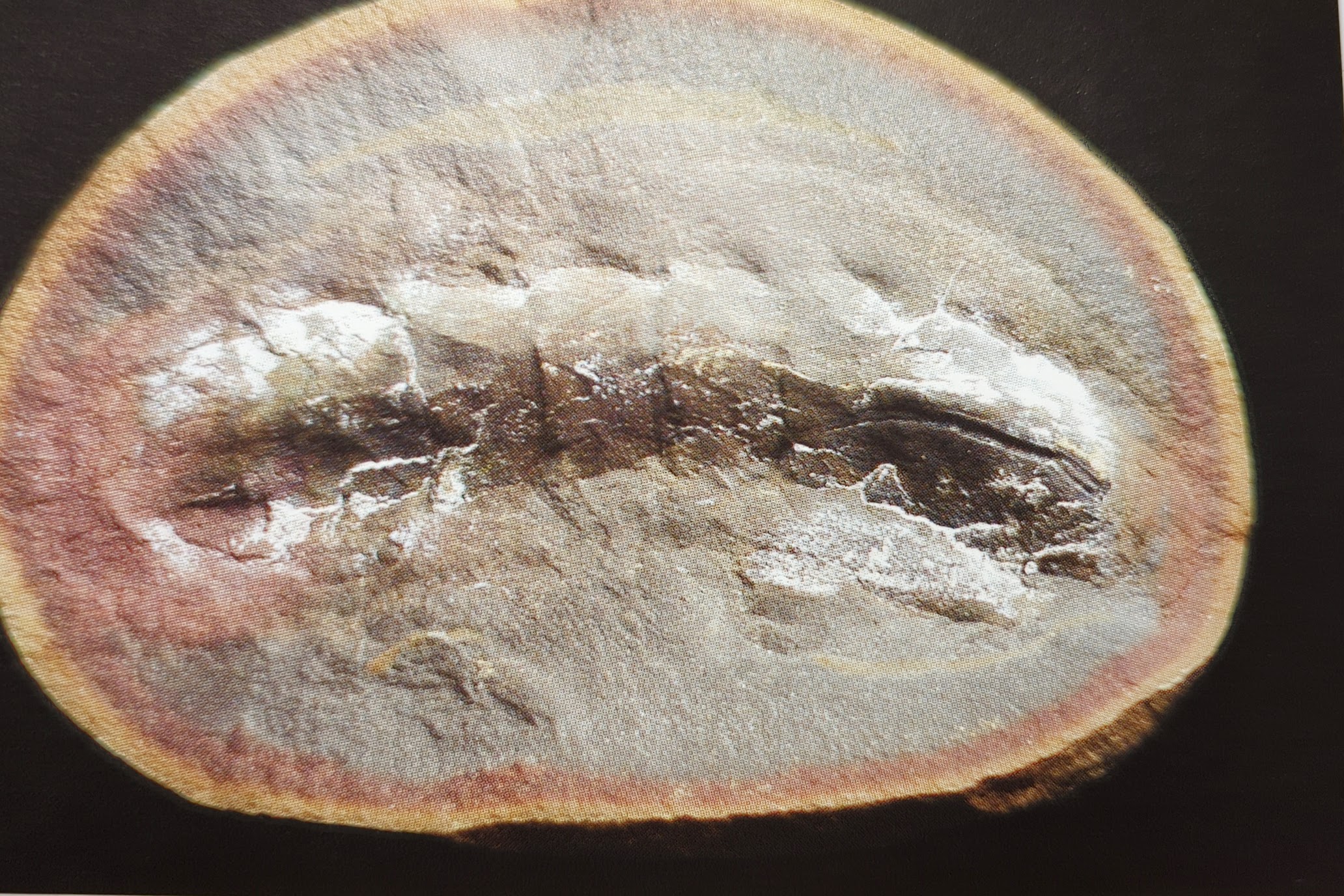
Mazon Monday #175: Glaphurochiton concinnus
This is Mazon Monday post #175. What’s your favorite Mazon Creek fossil? Tell us at email:esconi.info@gmail.com. Chitons are rare in the Mazon Creek biota. They are Mollusks, belonging to the same Phylum as oysters, clams, cephalopods, snails, and gastropods. Classified as polyplacophorans, they always have eight ornamented segments or valves. Glaphurochiton concinnus was one of…
-
Mazon Monday #174: Flea Shrimp
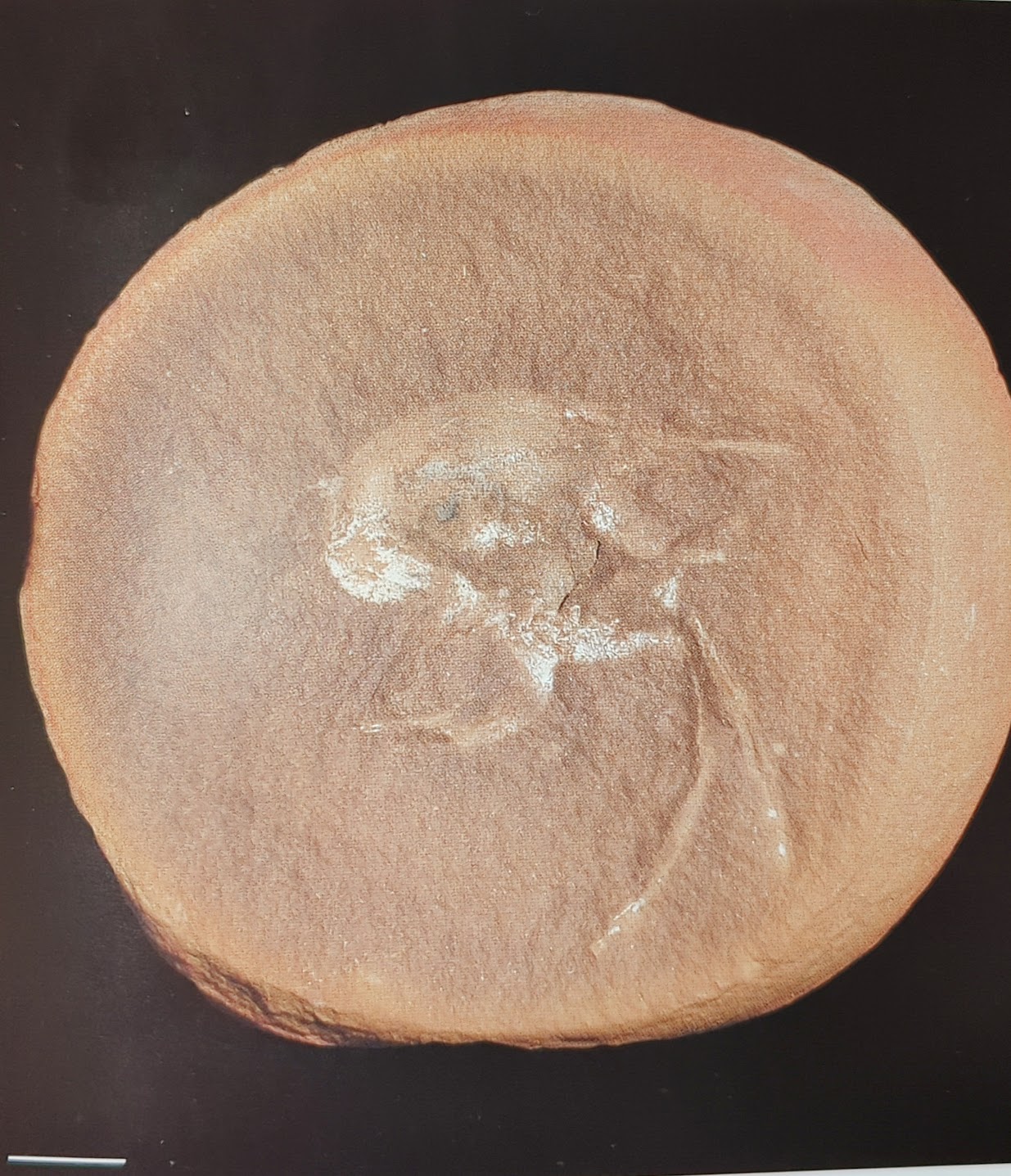
This is Mazon Monday post #174. What’s your favorite Mazon Creek fossil? Tell us at email:esconi.info@gmail.com. Thylacocephala are considered problematic. They are known from some species in the Paleozoic and a few more from Mesozoic, with no known extant forms. There are two species of Thylacocephala, often referred to as “flea shrimp”, from Mazon Creek…
-

Mazon Monday #173: Halicyne max
This is Mazon Monday post #173. What’s your favorite Mazon Creek fossil? Tell us at email:esconi.info@gmail.com. Halicyne max is a species of Cycloidea from Mazon Creek. Other Cycloidea species known from Mazon Creek are Cyclus americanus, Cyclus obesus, and Apionicon apiodes. Of these, the most commonly known is Cyclus americanus. Halicyne max was described in…
-

Mazon Monday #172: Fossil Insect Symposium 1990
On May 18th, 1990, ESCONI was part of a symposium on Mazon Creek fossil insects from Pit 11. Unfortunately, there aren’t many details. However, we recently ran across some photos from the event at the Carbon Hill School Museum in their Tom Testa collection. Tom donated the photos and other miscellaneous materials. His Mazon Creek…
-
Mazon Monday #171: Tullies at CGMA
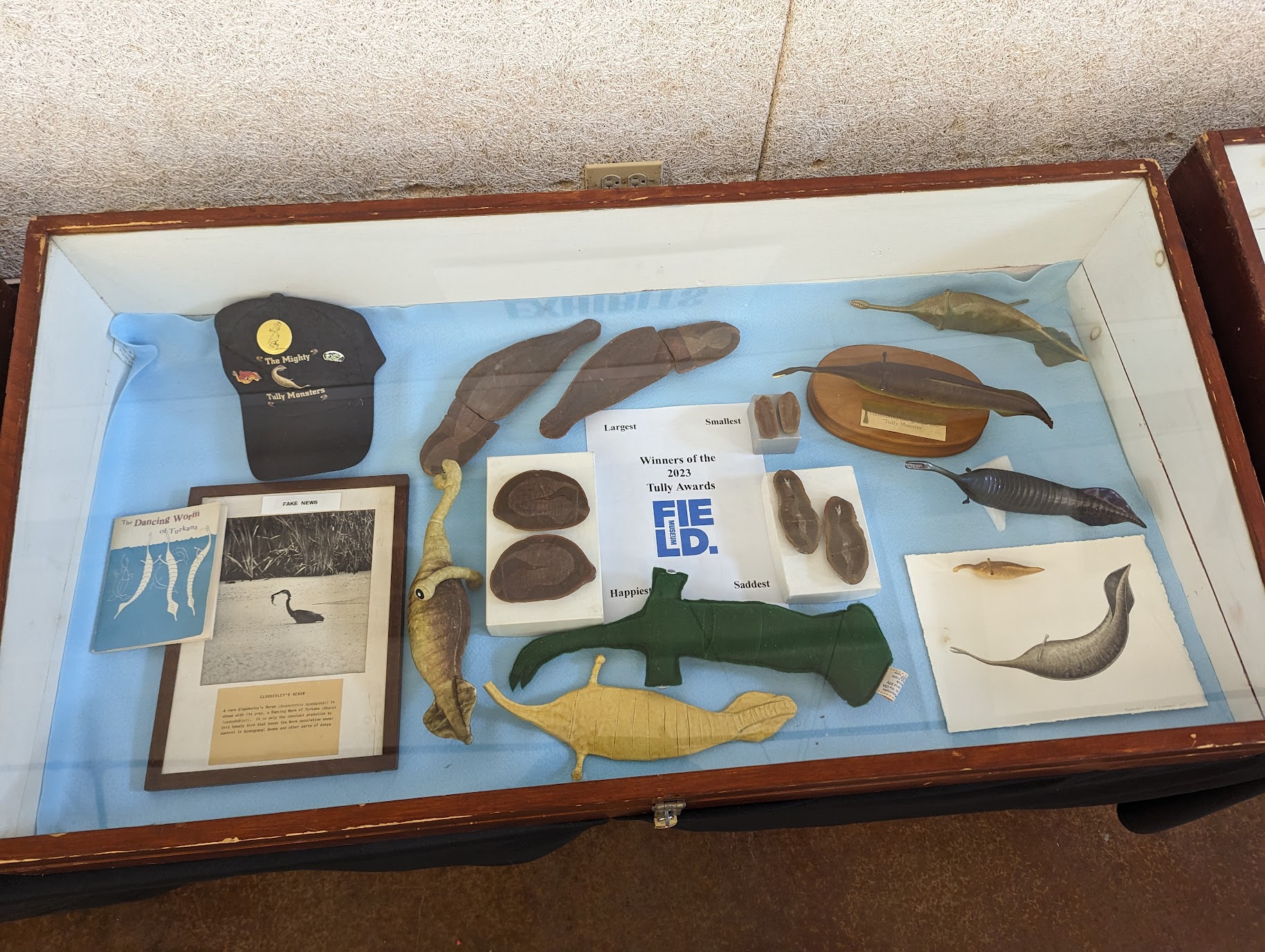
This is Mazon Monday post #171. What’s your favorite Mazon Creek fossil? Tell us at email:esconi.info@gmail.com. Back at the CGMA show in late May, Jack Wittry brought a very nice Tully Monster display from the Field Museum. Jack brings a nice display every year to CGMA. Last year’s topic was sharks of Mazon Creek. This…
-
Mazon Monday #170: Rhacophyllum clarkii
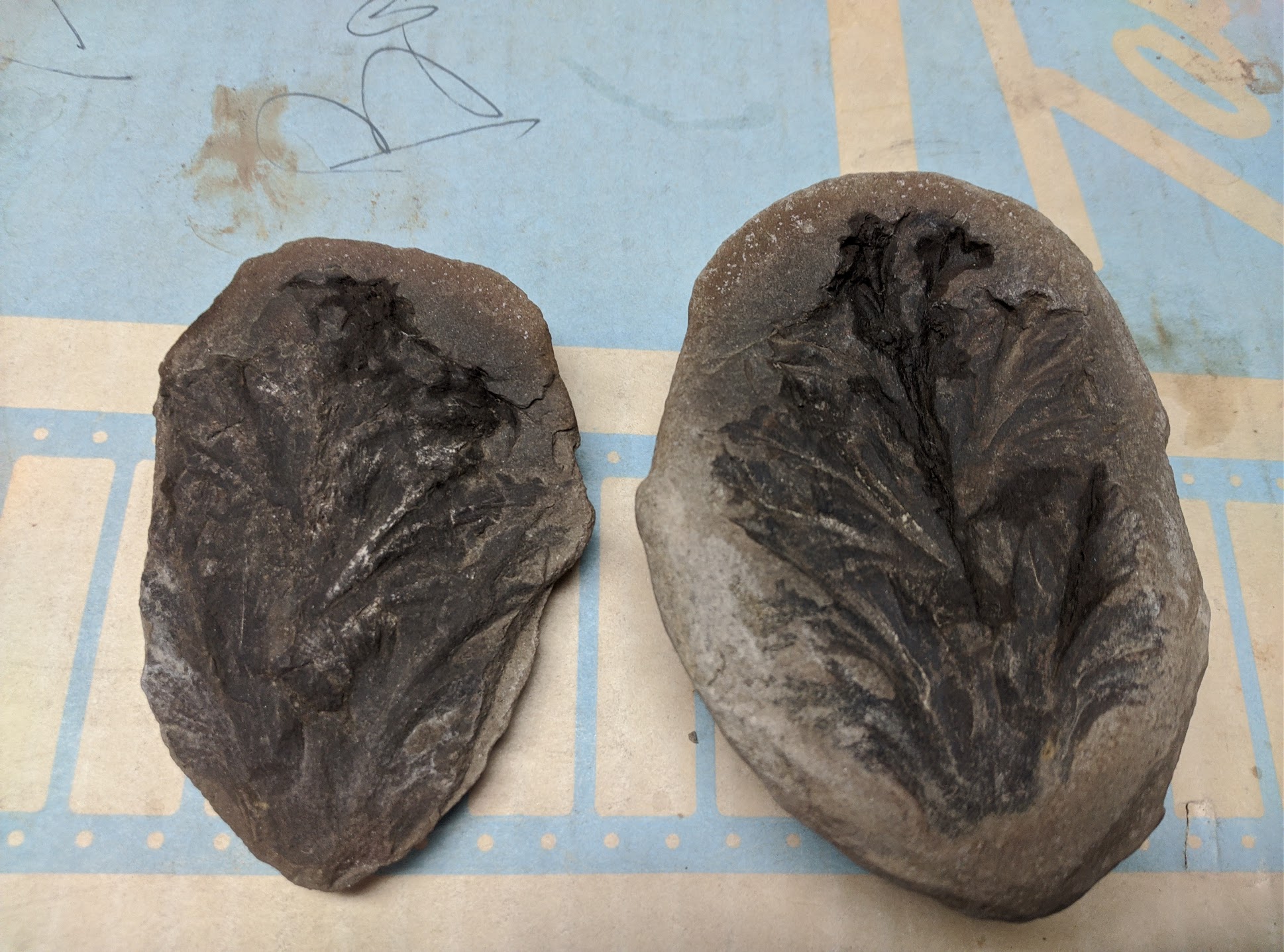
This is Mazon Monday post #170. What’s your favorite Mazon Creek fossil? Tell us at email:esconi.info@gmail.com. Several species of Aphlebia and Rhacophyllum have been identified in the Mazon Creek fossil deposit, though all are considered rare—and some exceptionally so. Their classification is somewhat uncertain, with some specimens grouped with aquatic plants and others with ferns.…
-
Mazon Monday #169 – Mazoscolopendra richardsoni
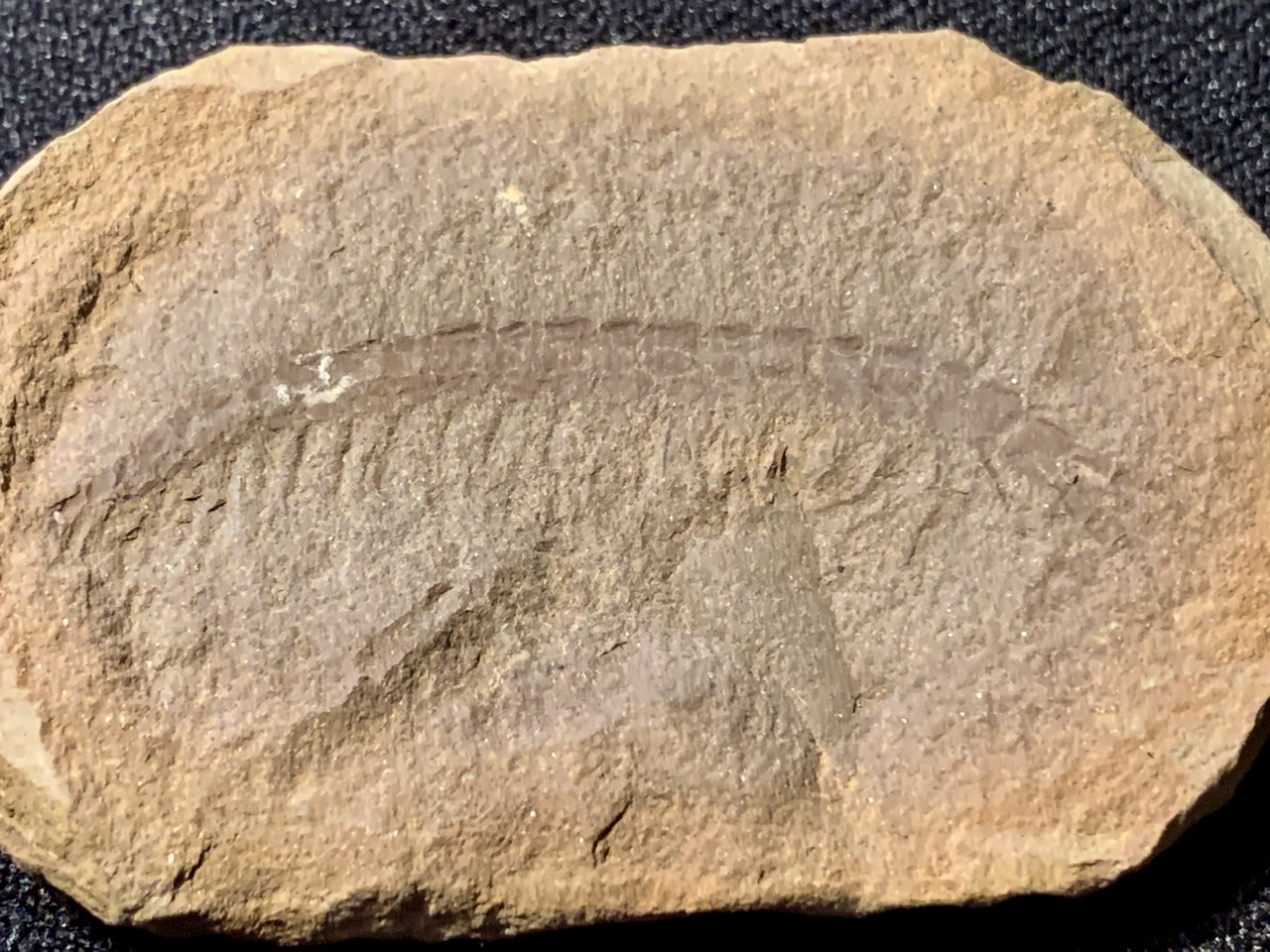
This is Mazon Monday post #169. What’s your favorite Mazon Creek fossil? Tell us at email:esconi.info@gmail.com. Way back in Mazon Monday #47, we discussed Mazon Creek centipedes, however Mazoscolopendra richardsoni (Richardson’s Mazonian centipede) wasn’t mentioned. M. richardsoni is the second most common centipede known from Mazon Creek, but centipedes are exceedingly rare in the Mazon Creek…
-
Mazon Monday #168: Miamia bronsoni
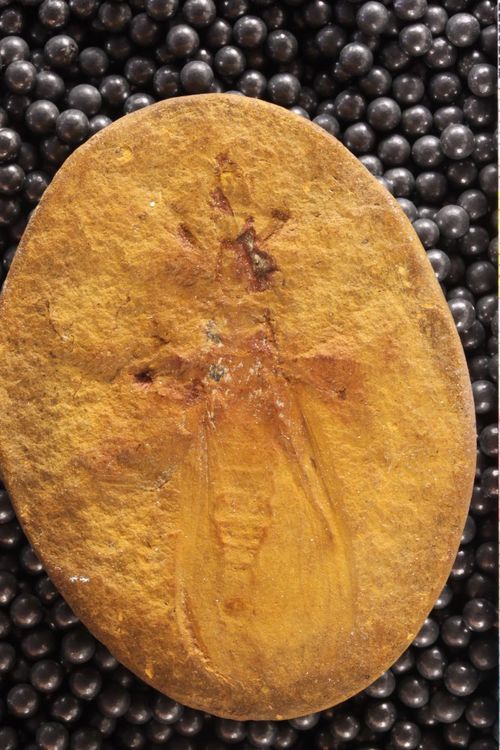
This is Mazon Monday post #168. What’s your favorite Mazon Creek fossil? Tell us at email:esconi.info@gmail.com. Insects are some of the most highly sought after Mazon Creek fossils. While very common in the modern world, insects are very rare in the fossil record. Mazon Creek has played a vital part in the understanding of insect…
-
Mazon Monday #167: Phlegethontia longissima
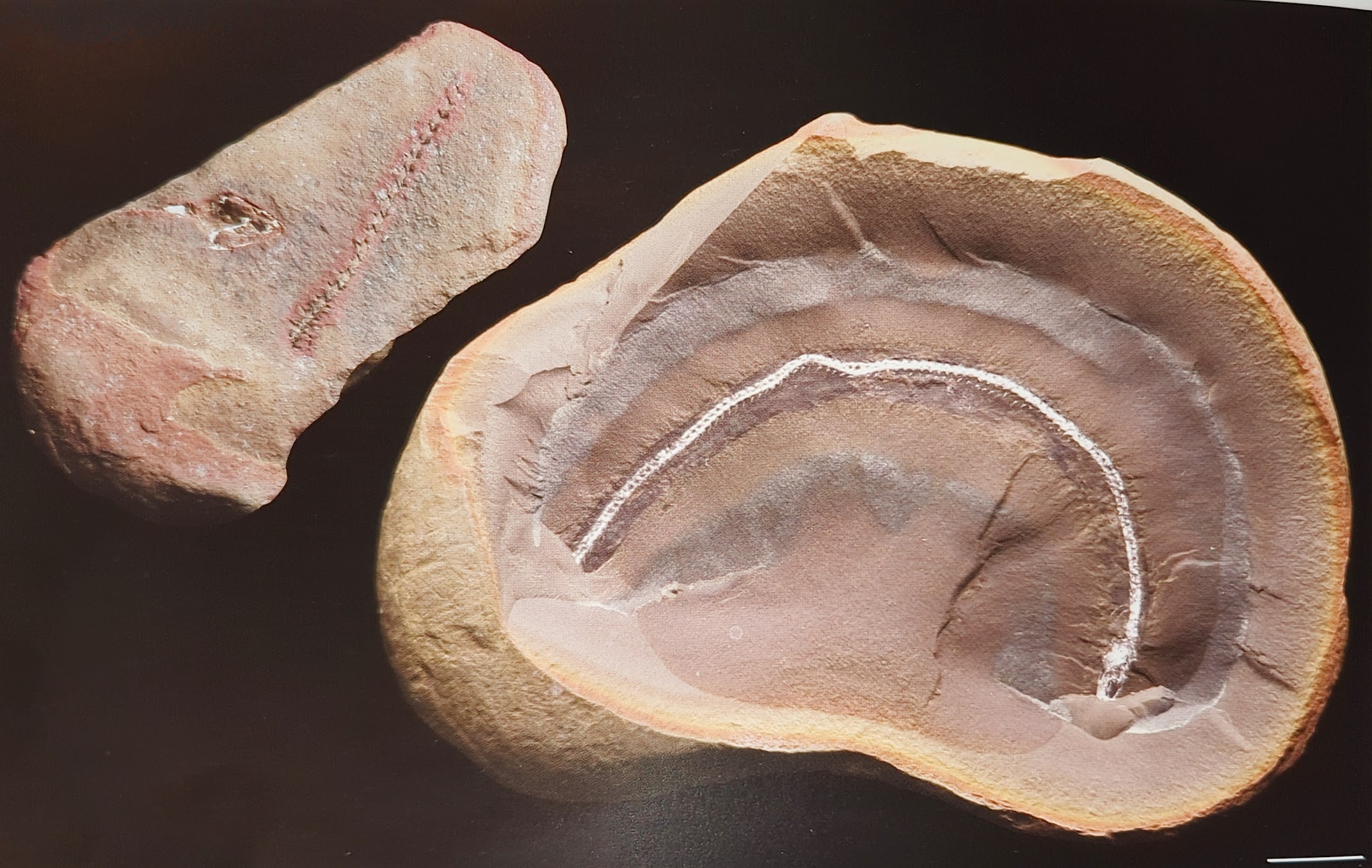
This is Mazon Monday post #167. What’s your favorite Mazon Creek fossil? Tell us at email:esconi.info@gmail.com. Phlegethontia longissima is a leg-less animal, often incorrectly called an amphibian. It is a vertebrate, which is classified as an aistopod from the Carboniferous and Permian periods. It has been found in Europe and North America. As with any…
-

Mazon Monday #166: Langford Book 2nd Edition – June 1963
This is Mazon Monday post #166. What’s your favorite Mazon Creek fossil? Tell us at email:esconi.info@gmail.com. June 1963 saw the first copies of George Langford’s second book “The Wilmington Coal Fauna and Additions to the Wilmington Coal Flora From a Pennsylvanian Deposit in Will County, Illinois”. This book detailed the animals of Mazon Creek and…
-

Mazon Monday #165: Braceville Spring 2023 Report
This is Mazon Monday post #165. What’s your favorite Mazon Creek fossil? Tell us at email:esconi.info@gmail.com. The ESCONI Braceville field trips for spring of 2023 were well attended. We had 50+ people for both Saturday, May 6th and Sunday, May 7th. The weather was great. Saturday started overcast with light sprinkles, but turned into a…
-

Mazon Monday #164: The Mazon Creek Fossil Fauna – Book Review
This is Mazon Monday post #164. What’s your favorite Mazon Creek fossil? Tell us at email:esconi.info@gmail.com. Jack Wittry is a long time ESCONI member, who has written three books on the fossils of Mazon Creek “The Mazon Creek Fossil Flora” in 2006, “The Mazon Creek Fossil Fauna” in 2012, and “A Comprehensive Guide to the…
-
Mazon Monday #163: Neuropteris flexuosa
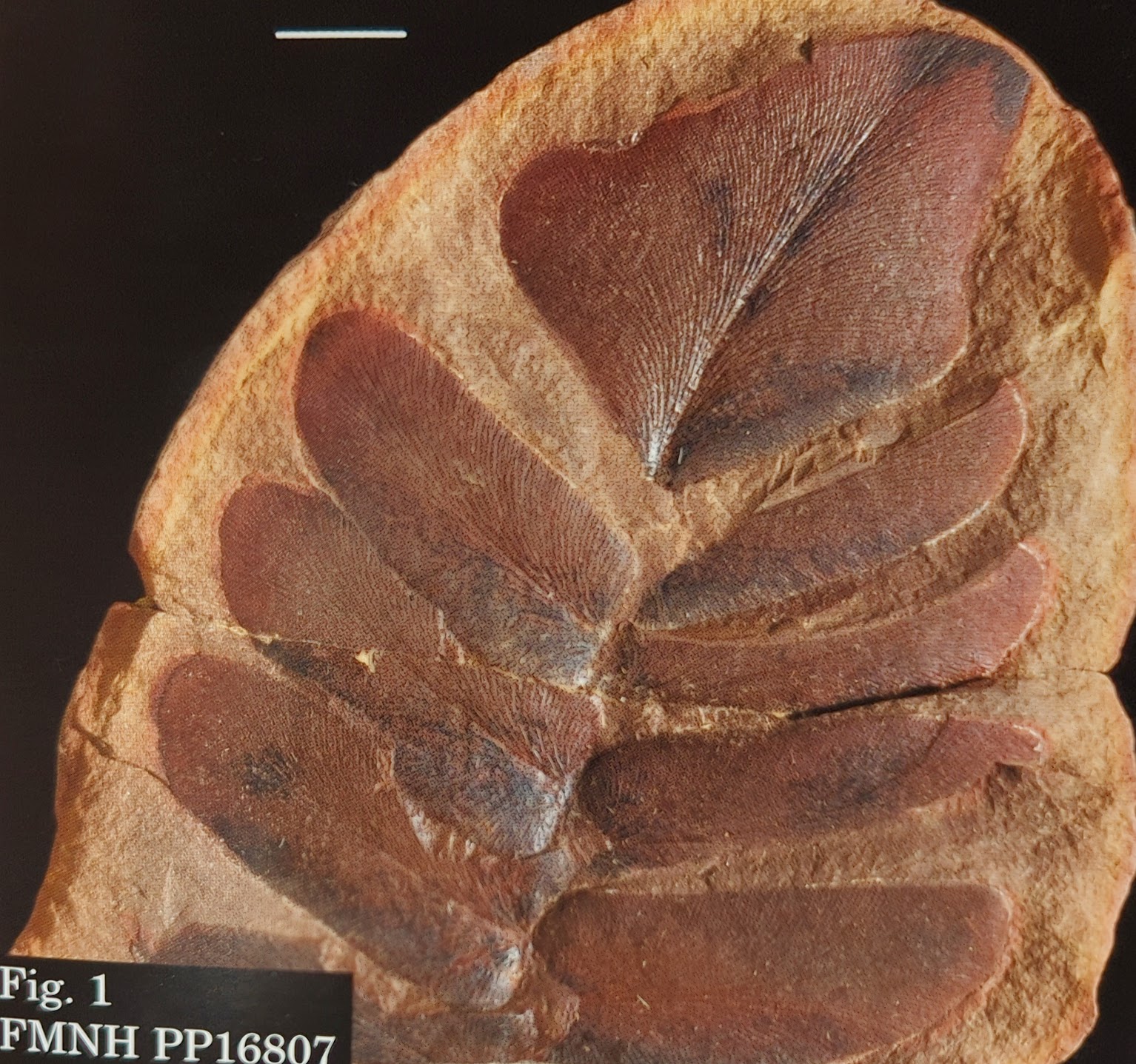
This is Mazon Monday post #163. What’s your favorite Mazon Creek fossil? Tell us at email:esconi.info@gmail.com. Today, we have a different variety of Neuropteris – Neuropteris flexuosa. N. flexuosa is more rare than N. vermicularis. One distinguishing feature is a very large terminal pinnule. It also tends to have denser veins than N. vermicularis. This…
-

Mazon Monday #162: Field Trip Report for Danville Spoil Pile
This is Mazon Monday post #162. What’s your favorite Mazon Creek fossil? Tell us at email:esconi.info@gmail.com. This was our fifth field trip to the Danville spoil pile. It’s been a very productive locality over the last couple years. The trips have been very popular, with every trip filling up quickly, even though the site is…
-
Mazon Monday #161: Is the Tully Monster a vertebrate?
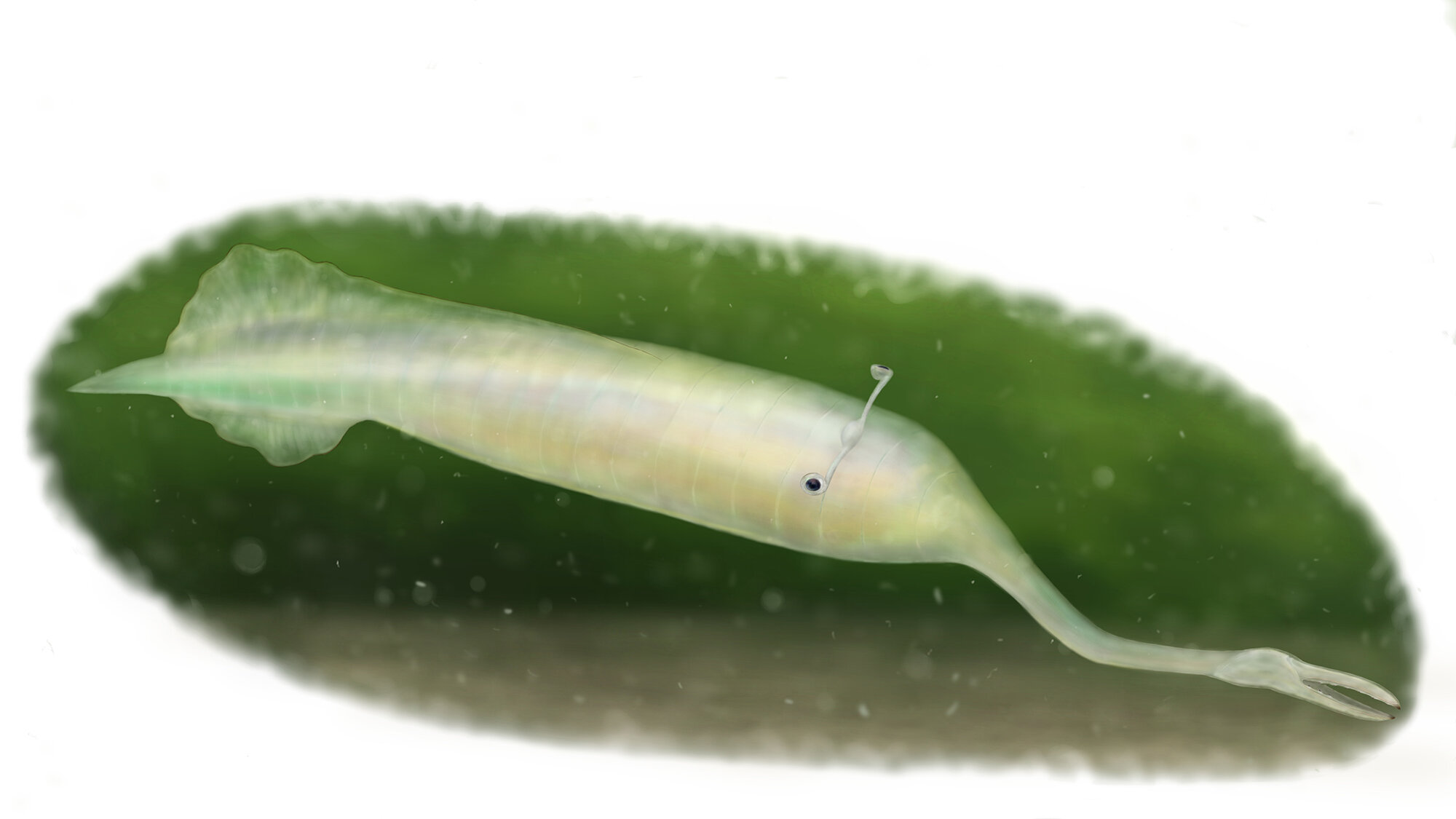
Phys.org has a story about the new Tully Monster paper that was published in the journal Paleontology last week. The Tully Monster is the State Fossil of Illinois. And, although it is a popular animal, its evolutionary ancestry has been problematic. Since it’s discovery in 1958 by Francis Tully, numerous theories of its evolutionary affinity…
-
Mazon Monday #160: Braidwood’s Buried Treasures
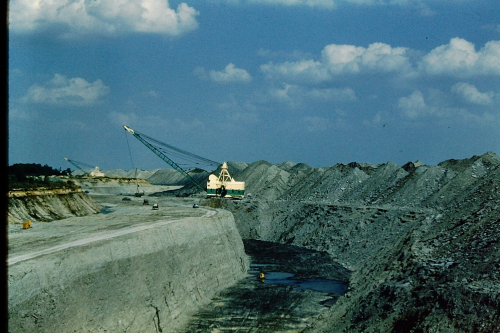
This is Mazon Monday post #160. What’s your favorite Mazon Creek fossil? Tell us at email:esconi.info@gmail.com. The following article appeared in Commonwealth Edison Company’s Employee Bulletin in February 1979. It was later published in the West Suburban Lapidary Club bulletin The Opal in November 1982, and the ESCONI Newsletter in January 1983. There’s much to…
-
Mazon Monday #159: A new Carboniferous edaphosaurid and the origin of herbivory in mammal forerunners
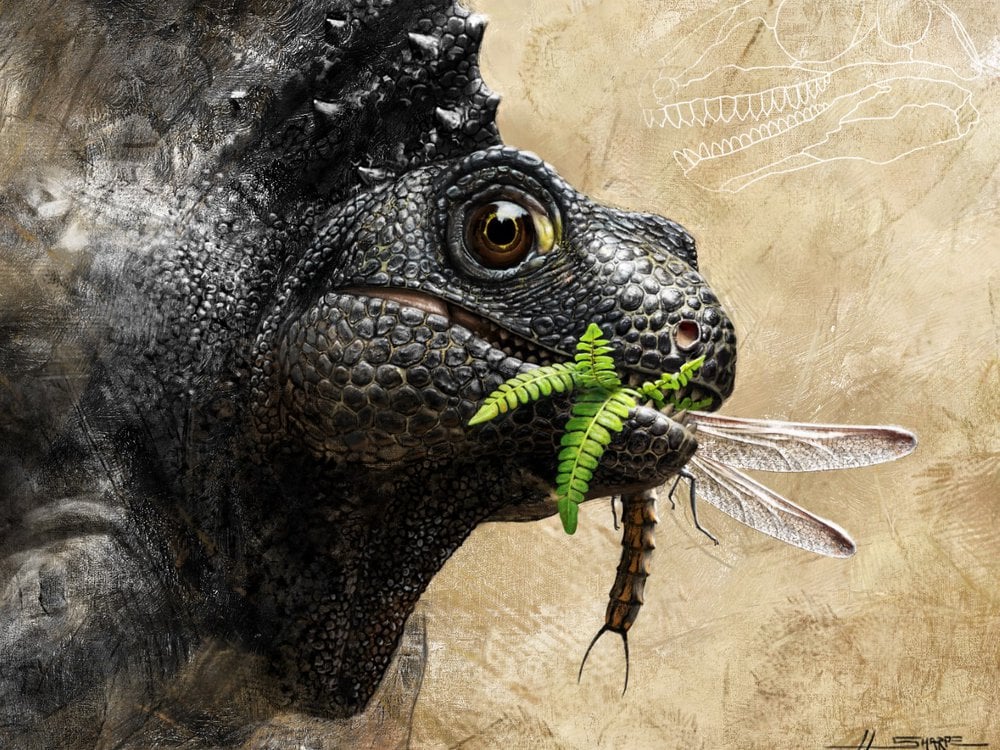
This is Mazon Monday post #159. What’s your favorite Mazon Creek fossil? Tell us at email:esconi.info@gmail.com. Arjan Mann is lead author of a paper that describes a new edaphosaurid, Melanedaphodon hovaneci, from the late Pennsylvanian Period around 310 million years ago. The paper appeared in the in the journal Nature. The animal is a ancestor…
-

Mazon Monday #158: Jellyfish in them thar hills
This is Mazon Monday post #158. What’s your favorite Mazon Creek fossil? Tell us at email:esconi.info@gmail.com. This week, we have an article that appeared in the Field Museum’s Bulletin for October 1968. It’s titled “Jellyfish in them thar hills” and was written by Eugene Richardson, Jr., Curator, Fossil Invertebrates. This article predates the description of…
-

Mazon Monday #157: Platysomus circularis
This is Mazon Monday post #157. What’s your favorite Mazon Creek fossil? Tell us at email:esconi.info@gmail.com. The list of truly rare, desirable Mazon Creek animals is long. It includes spiders, scorpions, insects, tetrapods, cephalopods, and fish. Of the fish, one of the holy grail species is Platysomus circularis. Many refer to it as the “panfish”…
