
-

Throwback Thursday #162: Field & Street Archaeopteryx
Read more: Throwback Thursday #162: Field & Street ArchaeopteryxThis is Throwback Thursday #162. In these, we look back into the past at ESCONI specifically and Earth Science in general. If you have any contributions, (science, pictures, stories, etc …), please send them to esconi.info@gmail.com. Thanks! Back in Throwback Thursday #137, we looked at the traveling Archaeopteryx exhibit back in 1997. Althiough it was only at the Field Museum from October 4th to the 19th, actual Archaeopteryx fossils were on display for the first time in the United States, ESCONI was there for a field trip on the last day, October 19th, 1997. About 10 years earlier on April…
-
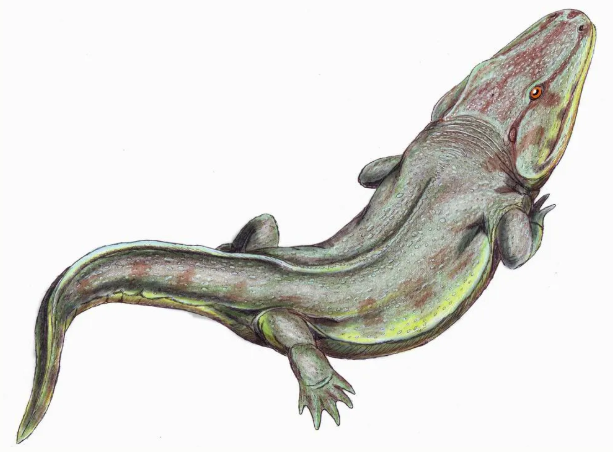
Smithsonian: Paleontologists Uncover Fossil Impressions of Giant, Alligator-Like Amphibians
Read more: Smithsonian: Paleontologists Uncover Fossil Impressions of Giant, Alligator-Like AmphibiansSmithsonian Magazine has a story about the discovery of alligator-like amphibians from the Permian Period. The animals, Rhinesuchus, were found in the Karoo Basin in South Africa. They lived more than 255 million years ago. They are thought to be salamander-like, but the size of modern day alligators. The rhinesuchid temnospondyls were described in the paper “Unique trackway on Permian Karoo shoreline provides evidence of temnospondyl locomotory behaviour”, which was published in the journal PLOS One. Determining what sort of organism made a trace fossil, including those on the Dave Green paleosurface, can be a challenging task. Body fossils, such…
-
ESCONI Paleontology Meeting Saturday, May 20th, 2023 at 7:30 PM Hybrid “Echinoderms of the Platteville and Galena Formations”
Read more: ESCONI Paleontology Meeting Saturday, May 20th, 2023 at 7:30 PM Hybrid “Echinoderms of the Platteville and Galena Formations”A starfish (Hudsonaster) from the Ordovician Platteville Limestone, Wisconsin. Photo of YPM IP 538069 by Jessica Utrup (Yale Peabody Museum of Natural History on GBIF.org, CC0 1.0 Universal/public domain dedication). The May 2023 ESCONI Paleontology Study Group Meeting will be held on May 20th, 2023 at 7:30 via Zoom and at the College of DuPage Tech Ed (TEC) Building (Map) Room 1038B. The topic of the meeting is “Echinoderms of the Platteville and Galena Formations” . The presentation is by ESCONI member and Paleontology Study Group chairman John Catalani. Please bring any Ordovician echinoderms you may have. The program begins with Ordovician…
-

Mazon Monday #164: The Mazon Creek Fossil Fauna – Book Review
Read more: Mazon Monday #164: The Mazon Creek Fossil Fauna – Book ReviewThis is Mazon Monday post #164. What’s your favorite Mazon Creek fossil? Tell us at email:esconi.info@gmail.com. Jack Wittry is a long time ESCONI member, who has written three books on the fossils of Mazon Creek “The Mazon Creek Fossil Flora” in 2006, “The Mazon Creek Fossil Fauna” in 2012, and “A Comprehensive Guide to the Fossil Flora of Mazon Creek” in 2020. These books are excellent resources for anyone with any interest in the fossils from this amazing locality, which has been called one of the most important fossil sites in the world, due to the richness in variety and…
-

Giants of the Jurassic seas were twice the size of a killer whale, says study
Read more: Giants of the Jurassic seas were twice the size of a killer whale, says studyPhys.org has a story about the size of the large marine reptiles that swam the seas of the Jurassic Period. Just how big was Liopleurodon, a large pliosaur from that time? The BBC’s “Walking with Dinosaurs” TV documentary series showed it as 25-meters-long, which was deemed vastly overestimated. New evidence, from the rediscovery of a similar species in the Oxfordshire museum, puts the length at around 14.4 meters, about twice the size of a modern killer whale. The research, led by to University of Portsmouth paleontologists, was published in the journal Proceedings of the Geologist’s Association. Professor David Martill from…
-

PBS Eons: A Natural History of Mars
Read more: PBS Eons: A Natural History of MarsPBS Eons has a new episode on Youtube. This one is about Mars… how has it changed over the year? While Earth’s natural history has been playing out over the last few billion years, another epic planetary saga has also been unfolding right next door.
-

Fossil Friday #160: Texas Starfish Fossils
Read more: Fossil Friday #160: Texas Starfish FossilsThis is the “Fossil Friday” post #160. Expect this to be a somewhat regular feature of the website. We will post any fossil pictures you send in to esconi.info@gmail.com. Please include a short description or story. Check the #FossilFriday Twitter hash tag for contributions from around the world! For this week, we have something a little different. ESCONI member Alan Keith sent us some photos of some fossil starfish he found on a field trip with the Austin Paleontological Society recently. Here is the story Alan sent… While on a field trip with the Austin Paleontological society, I found a…
-

Throwback Thursday #161: Looking Back at ESCONI for May 2023
Read more: Throwback Thursday #161: Looking Back at ESCONI for May 2023This is Throwback Thursday #161. In these, we look back into the past at ESCONI specifically and Earth Science in general. If you have any contributions, (science, pictures, stories, etc …), please send them to esconi.info@gmail.com. Thanks! 25 Years Ago – May 1998 50 Years Ago – May 1973 70 Years Ago – May 1953
-
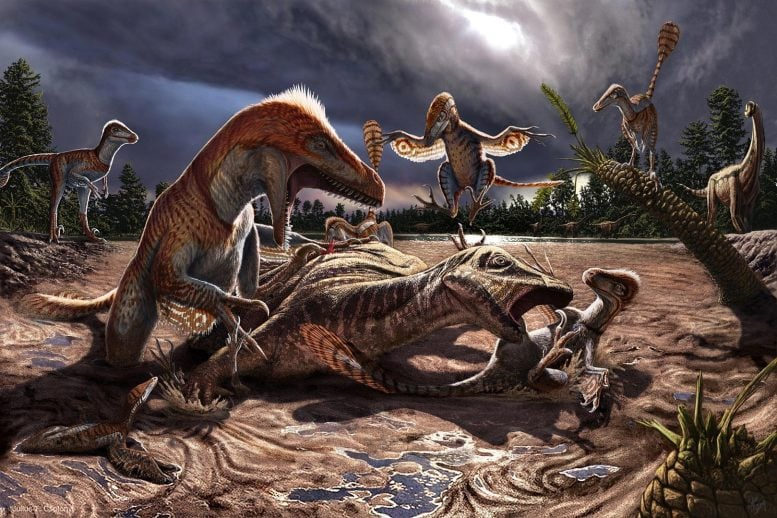
Worlds Largest “Raptor” Dinosaurs Lived 10 Million Years Earlier Than Thought
Read more: Worlds Largest “Raptor” Dinosaurs Lived 10 Million Years Earlier Than ThoughtSciTechDaily has a story about Utahraptor. New research by paleontologists (one at the University of Kansas) shows that Utahraptor actually lived about 135 million years ago, not 125 million years as previously thought. Utahraptor is the largest known “raptor” dinosaur at 4.9–5.5 m (16–18 ft) long and weighing 280–300 kg (620–660 lb). It’s also one of the oldest members of the family Dromaeosauridae. It was discovered in October 1991 by James Kirkland, Robert Gaston, and Donald Burge uncovered further remains of Utahraptor in 1991 in the Gaston Quarry in Grand County, Utah, within the Yellow Cat and Poison Strip members of the Cedar Mountain Formation. Read…
-
ESCONI May 2023 General Meeting – May 12th, 2023 at 8:00 PM Via Zoom – “About the Falls of the Ohio State Park”
Read more: ESCONI May 2023 General Meeting – May 12th, 2023 at 8:00 PM Via Zoom – “About the Falls of the Ohio State Park”The title of the presentation at the May 2023 General Meeting is “About the Falls of the Ohio State Park”. It will be given by Dr. Alan Goldstein. As a Park Paleontologist and Interpretive naturalist, Dr. Goldstein has worked at the Falls of the Ohio State Park’s Interpretive Center since it opened in January 1994. Additionally, Dr. Goldstein has also been the curator of the Gerald Troost collection at the Louisville Science Center. He has been investigating, collecting, and writing about the Illinois-Kentucky fluorspar district since 1982. His article on the fluorspar district published in 1997 won the Friends of Mineralogy…
-
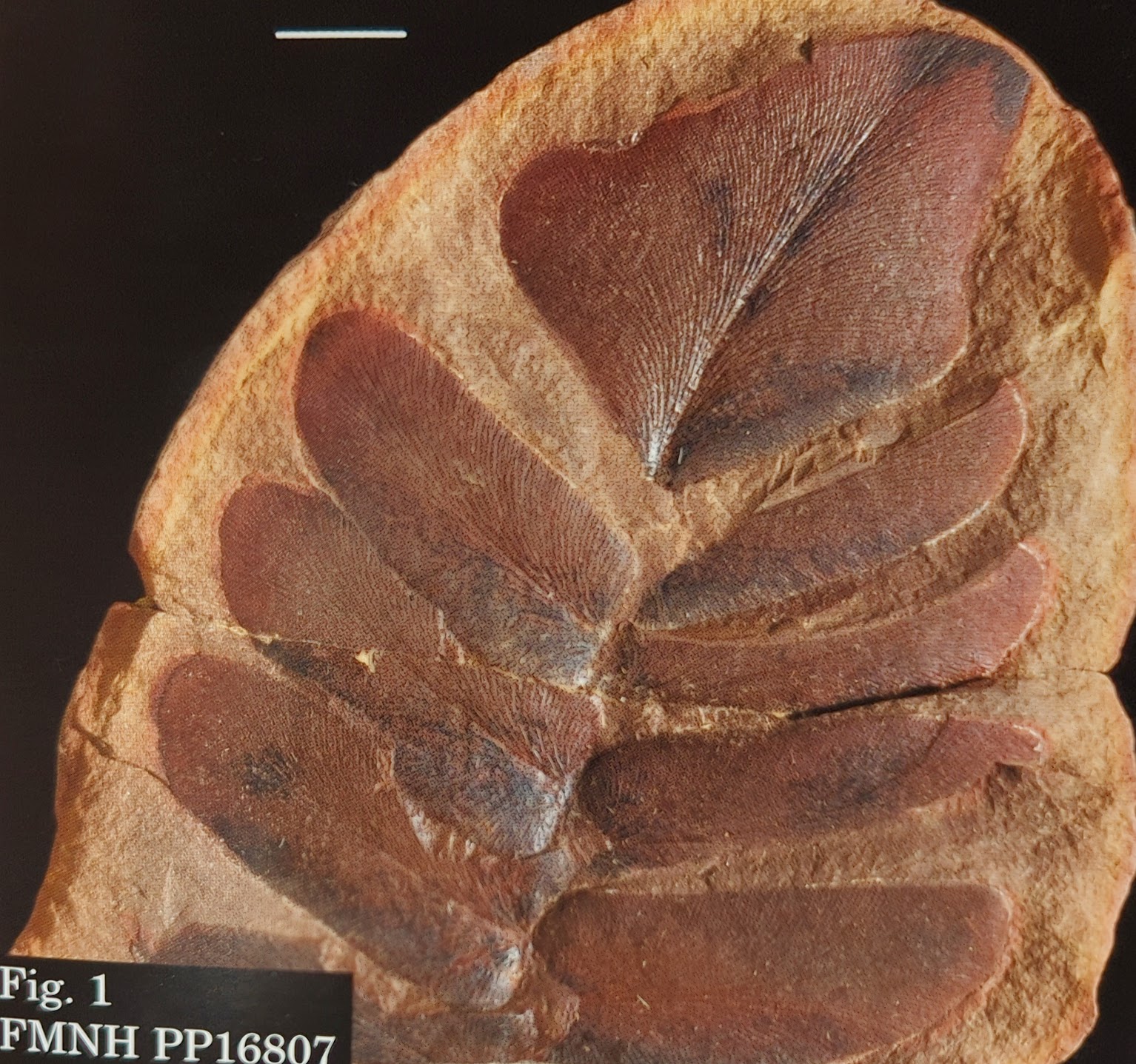
Mazon Monday #163: Neuropteris flexuosa
Read more: Mazon Monday #163: Neuropteris flexuosaThis is Mazon Monday post #163. What’s your favorite Mazon Creek fossil? Tell us at email:esconi.info@gmail.com. Today, we have a different variety of Neuropteris – Neuropteris flexuosa. N. flexuosa is more rare than N. vermicularis. One distinguishing feature is a very large terminal pinnule. It also tends to have denser veins than N. vermicularis. This species has been found in other localities, including Okmulgee, Oklahoma, Alabama, and its type locality in Germany. N. vermicularis was described by Kaspar Maria von Sternberg (1761-1838) in 1826. He was a leading scientist in Europe during the early 1800’s, who knew and worked with Alexander von Humboldt. …
-
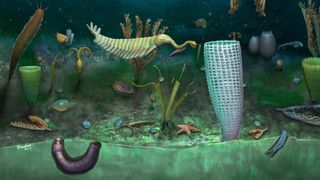
462 million-year-old fossilized eyes and brains uncovered in ‘secret’ Welsh fossil site
Read more: 462 million-year-old fossilized eyes and brains uncovered in ‘secret’ Welsh fossil siteLive Science has an article about the exciting discovery of a new fossil site in Wales, UK. The locality is being called “Castle Bank” and could rank among the world’s most important. It dates to the Ordovician Period about 462 million years ago. “Castle Bank” preserves a variety of soft bodied animals with exquisite preservation, including internal organs. Many of the new animals were described in a recent paper in the journal Nature Ecology and Evolution. Hosting a myriad of soft-bodied marine creatures and their organs, which are scarcely preserved in the fossil record, the site resembles the world-renowned Cambrian…
-
PBS Eons: The Invisible Barrier Keeping Two Worlds Apart
Read more: PBS Eons: The Invisible Barrier Keeping Two Worlds ApartPBS Eons has a new episode on Youtube. This one is about the Wallace Line, named for its discoverer… Alfred Russel Wallace. In between two of the islands of Indonesia, there’s an ancient line that is both real and…not real.
-
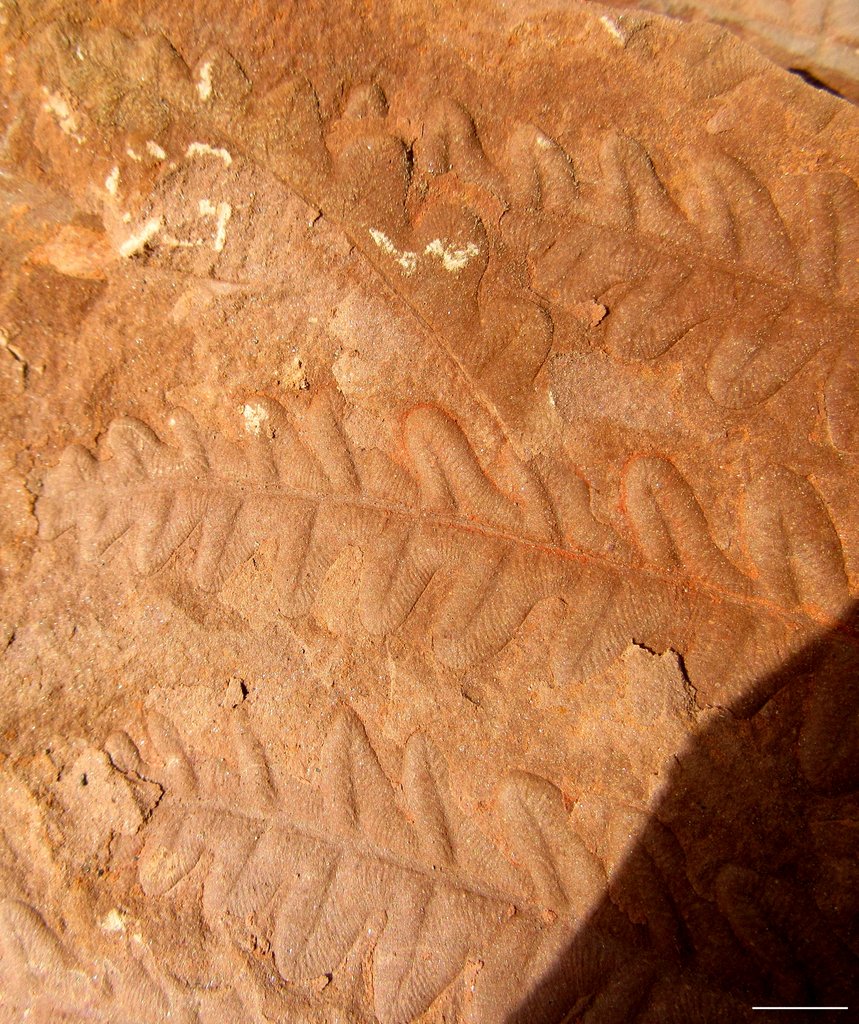
Fossil Friday #159: Danville Callipteridium
Read more: Fossil Friday #159: Danville CallipteridiumThis is the “Fossil Friday” post #159. Expect this to be a somewhat regular feature of the website. We will post any fossil pictures you send in to esconi.info@gmail.com. Please include a short description or story. Check the #FossilFriday Twitter hash tag for contributions from around the world! For this week’s Fossil Friday, we have an absolutely gorgeous plate of Callipteridium sp. plate from our Danville spoil pile field trip back on April 15th. Callipteridium is a extinct genus of seed fern. It is known from Mazon Creek, but is considered very rare. This beauty was found by Steve Buss. …
-

Throwback Thursday #160: Hey, Field Museum… Happy 102nd Birthday!
Read more: Throwback Thursday #160: Hey, Field Museum… Happy 102nd Birthday!This is Throwback Thursday #160. In these, we look back into the past at ESCONI specifically and Earth Science in general. If you have any contributions, (science, pictures, stories, etc …), please send them to esconi.info@gmail.com. Thanks! On May 2nd, 1921, the Field Museum opened its doors to the public at its current home. Happy 102nd Birthday! Originally, it was called the Columbian Museum of Chicago, as much of the initial collection came from the 1893 World Columbian Exposition. The museum was established by Marshall Field, its later namesake. It occupied the former Palace of Fine Arts Building in Jackson…
-
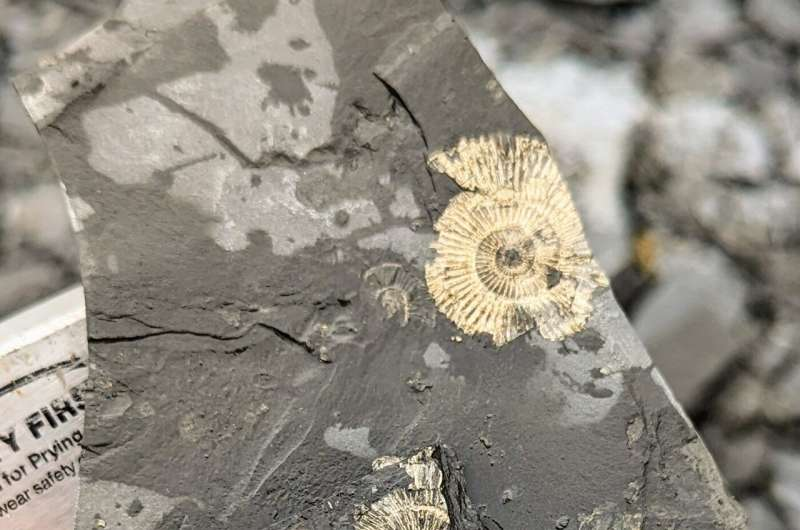
‘Golden’ fossils reveal origins of exceptional preservation
Read more: ‘Golden’ fossils reveal origins of exceptional preservationPhys.org has an article about “golden” fossils. Germany’s Posidonia shale, which dates to the early Jurassic, was thought to contain pyritized fossils of sea life. New research by a team at the University of Texas at Austin have found that the golden shine actually comes from phosphate minerals with yellow calcite. Additionally, the chemical composition hints at how the fossils were formed. The research was published in the journal Earth Science Reviews. The fossils of the Posidonia Shale date back to 183 million years ago, and include rare soft-bodied specimens such as ichthyosaur embryos, squids with ink-sacs, and lobsters. To…
-
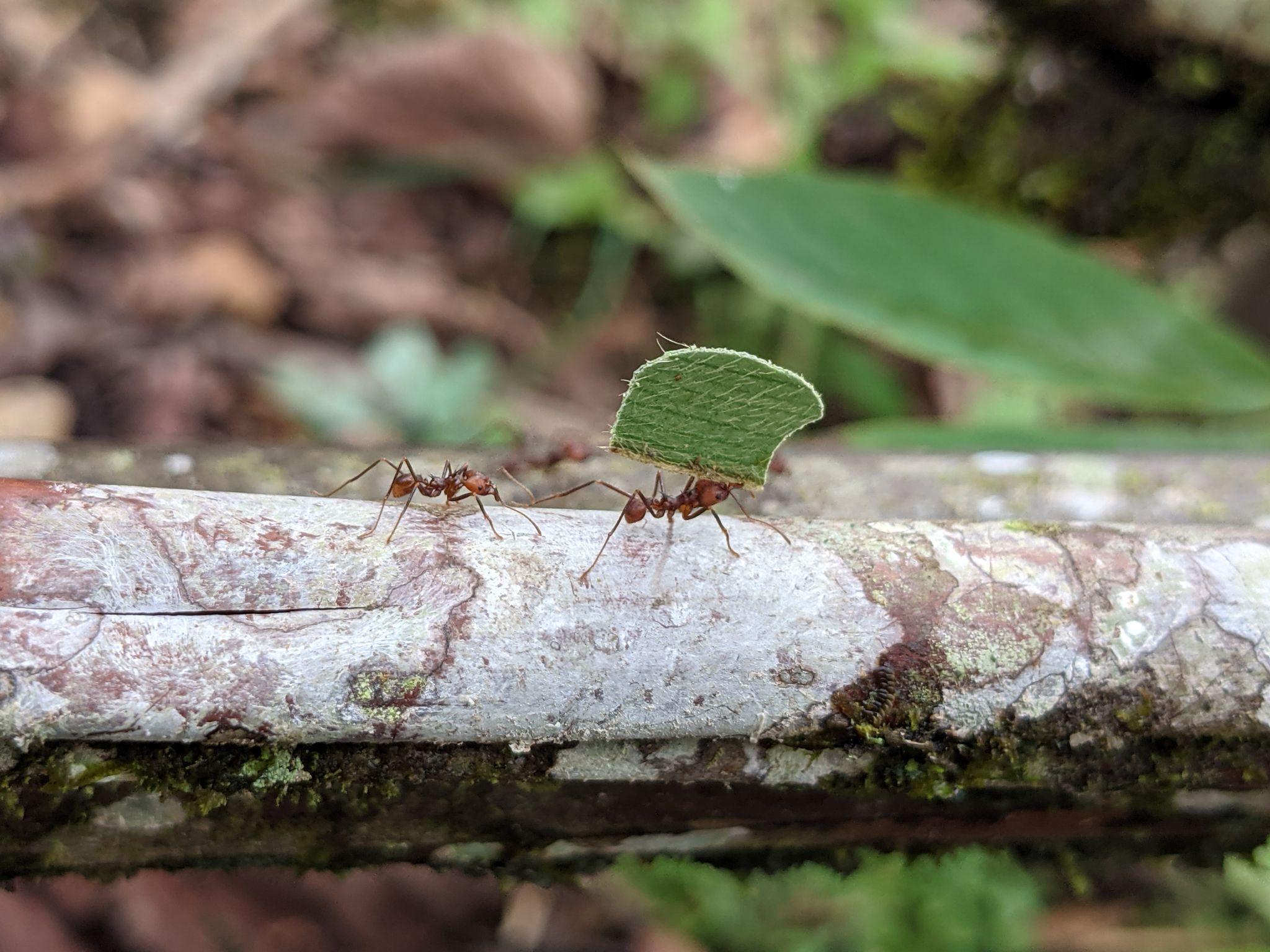
Ants took over the world by following flowering plants out of prehistoric forests
Read more: Ants took over the world by following flowering plants out of prehistoric forestsThe Field Museum has a press release about research performed at the museum. The research looked at the evolutionary relationship of ants and flowering plants. Ants took advantage of the diversification of flowering plants, which led to the thousands of species of modern ants which exist today. A paper detailing the research can be found in the journal Evolutionary Letters. Ants are pretty much everywhere. There are more than 14,000 different species, spread over every continent except Antarctica, and researchers have estimated that there are more than four quadrillion individual ants on Earth– that’s 4,000,000,000,000,000. But how ants evolved to take over…
-

Mazon Monday #162: Field Trip Report for Danville Spoil Pile
Read more: Mazon Monday #162: Field Trip Report for Danville Spoil PileThis is Mazon Monday post #162. What’s your favorite Mazon Creek fossil? Tell us at email:esconi.info@gmail.com. This was our fifth field trip to the Danville spoil pile. It’s been a very productive locality over the last couple years. The trips have been very popular, with every trip filling up quickly, even though the site is a 3 hour drive from the Chicago area. Not much information is available about the Herrin coal fossils, but thankfully Jack Wittry compiled a handy “Herrin Coal Fossil Guide, which we posted for Mazon Monday #86. Here is a list of prior trips. Saturday, April…
-
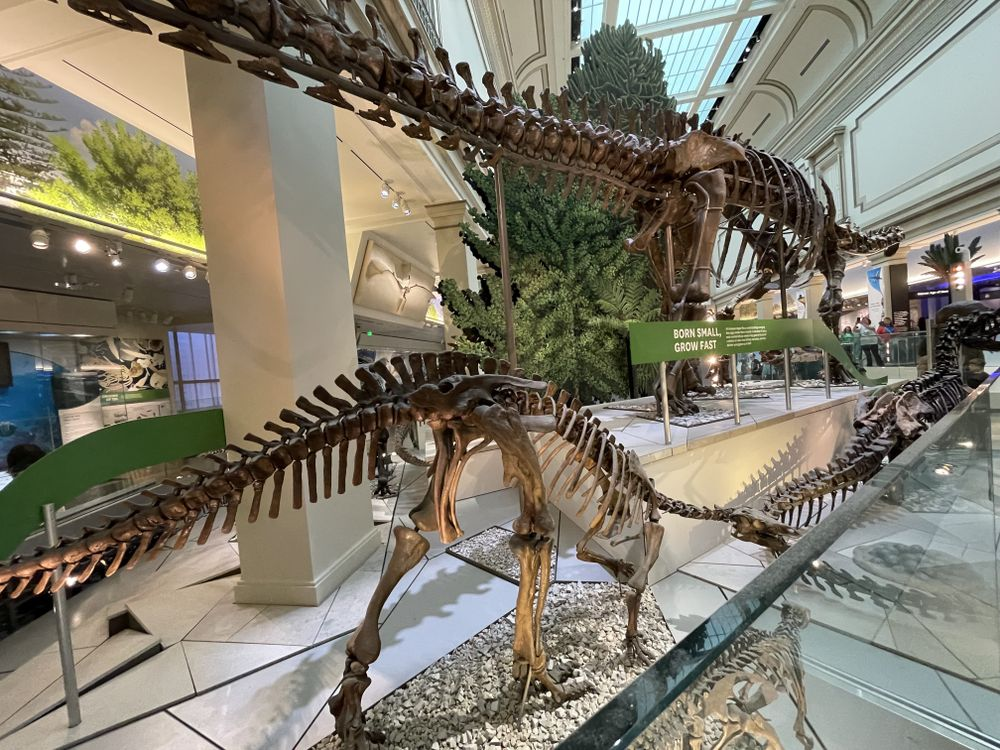
Dino-Sore: Smithsonian Paleontologist Diagnoses Ancient Ailments in the Museum’s Dinosaurs
Read more: Dino-Sore: Smithsonian Paleontologist Diagnoses Ancient Ailments in the Museum’s DinosaursSmithsonian Magazine has an interesting post about dinosaur injuries. Not injuries to humans, although getting dinosaur bones out of the ground can be physically challenging, but injuries to dinosaurs evident in their bones long after they have died. SUE, the T. rex at the Field Museum in Chicago, has numerous bone pathologies including broken ribs, arthritic vertebrae, a fibula that probably suffered from infection, and much more. Sometimes time doesn’t heal all wounds. Between mangled shoulder blades, fused vertebrae and hollowed out hips, several of the National Museum of Natural History’s dinosaur specimens still display the signs of diseases and injuries that…
-
PBS Eons: It’s Becoming Very Clear That Birds Are Not Normal
Read more: PBS Eons: It’s Becoming Very Clear That Birds Are Not NormalPBS Eons has a new video over on Youtube. Birds are wierd. A new discovery raises an important question: from an evolutionary perspective, who really has the stranger wings?

ESCONI Gem, Mineral, and Fossil Show
Most Recent Post
- Throwback Thursday #313: Who Was DuPage? How the River and County Were Named
 The BeHistoric channel on Youtube has a fascinating video about the history behind the name of the DuPage River and DuPage County.
- About ESCONI
- Around the Web
- Calendar of Events
- Code of Ethics and Conduct
- ESCONI Books for Sale
- ESCONI Gem, Mineral, and Fossil Show
- ESCONI in the News
- ESCONI Videos
- Field Trips
- Flashback Friday
- Fossil Friday
- Mazon Creek
- Mazon Monday
- Member Spotlight
- Membership Information
- Reference Material
- Throwback Thursday
- Trilobite Tuesday
Field trips require membership, but visitors are welcome at all meetings!
| Friday, April 10th | General Meeting – 8:00 PM via Zoom. Jessica Hull will present “Life in the Devonian Period, The Age of Fishes.” |
| Saturday, April 11th | Junior Study Group Meeting – 2:00 PM, in person at the College of DuPage Technical Education Center (TEC) Building – Room 1038A (Map). Katherine Howard will present on Sand and Sediment Collecting. Specifics of this meeting are available from Scott Galloway, 630-670-2591, gallowayscottf@gmail.com. |
| Saturday, April 18th | Paleontology Study Group – 7:30 PM via Zoom and in person at the College of DuPage, TEC, Room 1038B (Map). Keith Robitschek will present “Digging the Marl of the Lance Formation.” |
| Friday, April 24th | MAPS Expo XLVII – Springfield, IL. |
| Saturday, April 25th | MAPS Expo XLVII – Springfield, IL. |
| Sunday, April 26th | MAPS Expo XLVII – Springfield, IL. |
| No meeting this month | Mineralogy Study Group |