
-
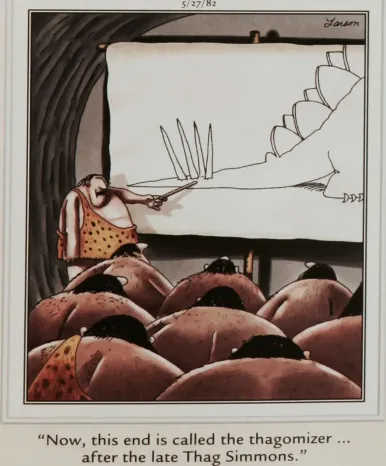
10 Best Far Side Comics About Dinosaurs
Read more: 10 Best Far Side Comics About DinosaursScreenRant has a post about some Far Side comic strips that feature dinosaurs. My favorite (and theirs) features the “Thagomizer”. Apparently, there wasn’t a name for the spikes on a Stegosaur’s tail at the time. It’s now the preferred name by paleontologists “in the know”. Gary Larson loved to feature dinosaurs in his Far Side comic strips. Whether creating absurd backstories for the dinos or placing them in modern, traditional settings, the dinosaur Far Side comics are some of the strip’s fan favorites. While many are familiar with the iconic Thagomizer comic, there is a slew of dinosaur Far Side strips that tend to go under…
-
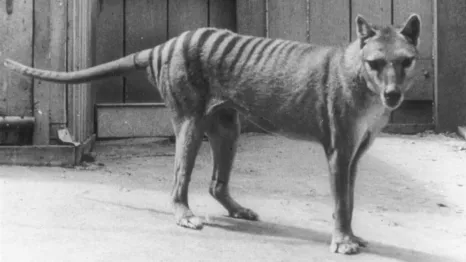
Long-extinct Tasmanian tiger may still be alive and prowling the wilderness, scientists claim
Read more: Long-extinct Tasmanian tiger may still be alive and prowling the wilderness, scientists claimLiveScience has a story about the Tasmanian Tiger. Some scientists think that the thylacine (Thylacinus cynocephalus) survived much longer in the wild that previously thought. Thylacines were wolf-like marsupials that lived on the island of Tasmania. The last known animal died in the Hobart Zoo on September 7th, 1936. It filled an important ecological niche as the apex predator on Tasmania. There has much talk of “de-extinction” and the thylacine is considered a prime candidate by some. But now, scientists say thylacines probably survived in the wild until the 1980s, with a “small chance” they could still be hiding somewhere…
-
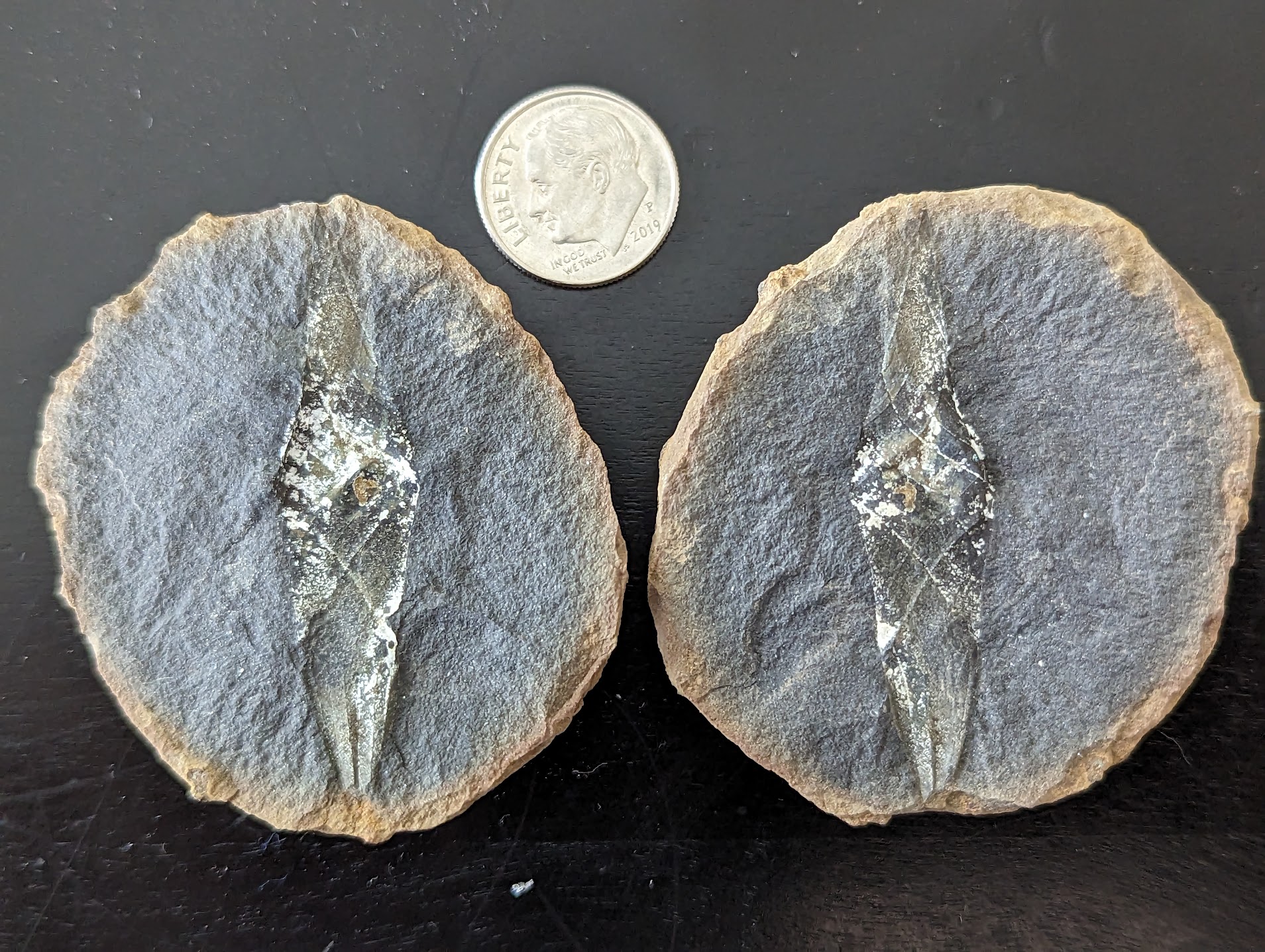
Fossil Friday #163: Mazon Creek Shark Egg Case
Read more: Fossil Friday #163: Mazon Creek Shark Egg CaseThis is the “Fossil Friday” post #163. Expect this to be a somewhat regular feature of the website. We will post any fossil pictures you send in to esconi.info@gmail.com. Please include a short description or story. Check the #FossilFriday Twitter hash tag for contributions from around the world! We have another Mazon Creek fossil today. There are a few species of shark egg cases known from Mazon Creek. Palaeoxyris prendelli is the most common species. P. prendelli was described by Leo Lesquereux in 1870 from fossils found in Lancashire, England. Lesquereux was a Swiss born bryologist and a pioneer in American…
-
Throwback Thursday #164: Looking Back At ESCONI for June 2023
Read more: Throwback Thursday #164: Looking Back At ESCONI for June 2023This is Throwback Thursday #164. In these, we look back into the past at ESCONI specifically and Earth Science in general. If you have any contributions, (science, pictures, stories, etc …), please send them to esconi.info@gmail.com. Thanks! 25 Years Ago – June 1998 50 Years Ago – June 1973 70 Years Ago – June 1953
-

ESCONI Events June 2023
Read more: ESCONI Events June 2023Field trips require membership, but visitors are welcome at all meetings! Fri, June 9th ESCONI General Meeting 8:00 PM – Topic: “Using geophysics to capture Earth burps and other processes during flow through karst conduits” by Andrew Luhmann, Department of Earth and Environmental Science, Wheaton College Zoom link Sat, June 10th ESCONI Junior Meeting – 6:30 PM at College of DuPage – Topic: Lystrosaurus Specifics of this meeting are available from Scott Galloway, 630-670-2591, gallowayscottf@gmail.com. The meeting will be in person at the College of DuPage Tech Ed (TEC) Building, Room 1038A (Map). ESCONI Paleontology Meeting No meeting… see…
-

Field Museum: Spinosaurus is arriving on June 2!
Read more: Field Museum: Spinosaurus is arriving on June 2!Just in case you didn’t hear, the Field Museum is getting a new dinosaur on June 2nd…. It’s a spinosaurus! Witness the unveiling of Spinosaurus as it prowls overhead at the Field Museum. Stretching 46 feet long, this fearsome fossil is one of the largest carnivorous dinosaurs ever discovered, even longer than SUE the T. rex. Learn how this semi-aquatic predator hunted and swam through the water. This fish-eating dinosaur lived during the Cretaceous Period, about 95 million years ago. Spinosaurus swam in rivers thanks to its crocodile-shaped body and paddle-like tail. Plan your visit to catch Spinosaurus, the only skeleton on display anywhere outside of Asia,…
-

The World’s Newest National Park Protects 550-Million-Year-Old Fossils
Read more: The World’s Newest National Park Protects 550-Million-Year-Old FossilsSmithsonian Magazine has an article about the world’s newest national park in the world. Nilpena Ediacara National Park in South Australia opened to the public in on Thursday, April 27th, 2023. It’s a huge area, 148,000 acres. In 1946, Reg Sprigg found the fossil bed that housed fossils that would later be referred to as the Ediacaran biota. These strange lifeforms lived around 550 million years ago. The state government is currently working to get the Flinders Ranges area designated as a Unesco World Heritage site. “This is a journey 550 million years in the making, a region that has…
-

Mazon Monday #166: Langford Book 2nd Edition – June 1963
Read more: Mazon Monday #166: Langford Book 2nd Edition – June 1963This is Mazon Monday post #166. What’s your favorite Mazon Creek fossil? Tell us at email:esconi.info@gmail.com. June 1963 saw the first copies of George Langford’s second book “The Wilmington Coal Fauna and Additions to the Wilmington Coal Flora From a Pennsylvanian Deposit in Will County, Illinois”. This book detailed the animals of Mazon Creek and added a few plants missing in the first book. Both books were published by Esconi Associates. The membership was excited as evidenced by four interesting outtakes in the May 1963 edition of the newsletter. The outtakes interspersed with the other text of the newsletter were…
-
ESCONI at CGMA 2023
Read more: ESCONI at CGMA 2023Today is the last day of the 2023 Chicagoland Gems and Minerals Association show. It’s at the Kane County Fairgrounds in St. Charles, IL. There’s lots of vendors, interesting displays, and good friends…. See you there!
-
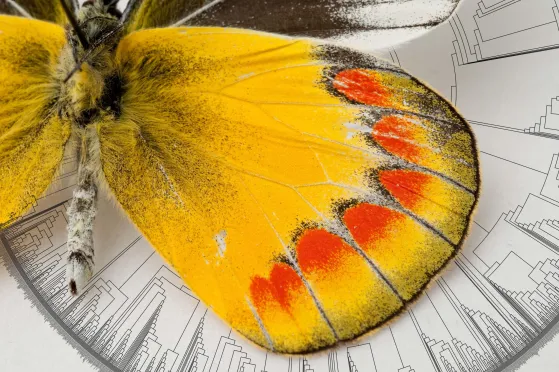
The Origin of Butterflies: A 100 Million-Year-Old Mystery Unraveled
Read more: The Origin of Butterflies: A 100 Million-Year-Old Mystery UnraveledSciTechDaily has an article about the evolution of butterflies. A paper in the journal Nature Ecology and Evolution details new evidence about the origin of butterflies about 100 million years ago. Until recently, the order lepidoptera was thought to have arisen as a result of predation by bats after the extinction of the non-avian dinosaurs. Roughly 100 million years ago, a pioneering group of moths began to venture out during the day instead of night, seizing the opportunity presented by flowers abundant in nectar that had evolved alongside bees. This single event sparked the evolution of the entire butterfly species.…
-
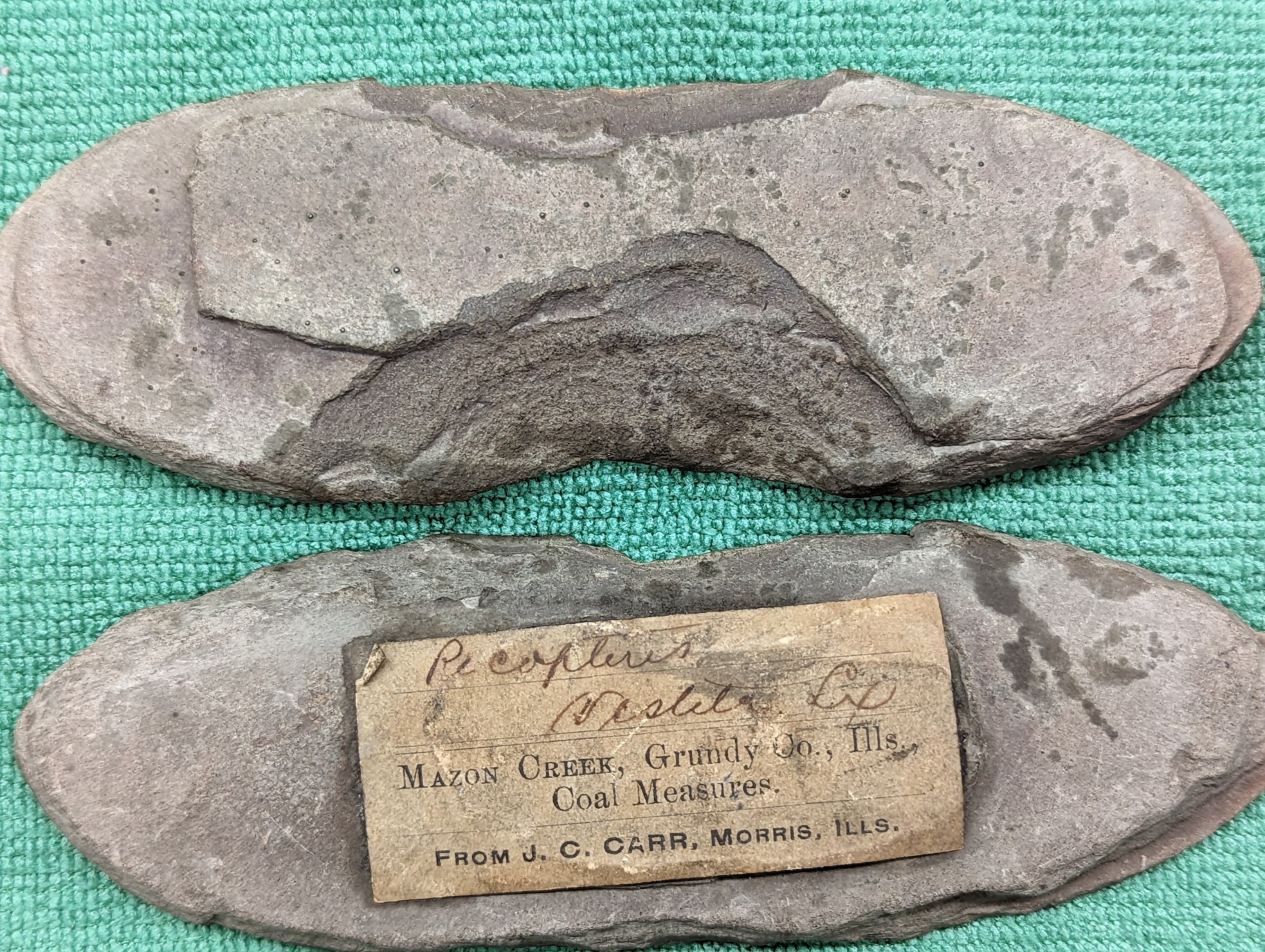
Fossil Friday #162: J.C. Carr Mazon Creek Fern
Read more: Fossil Friday #162: J.C. Carr Mazon Creek FernThis is the “Fossil Friday” post #162. Expect this to be a somewhat regular feature of the website. We will post any fossil pictures you send in to esconi.info@gmail.com. Please include a short description or story. Check the #FossilFriday Twitter hash tag for contributions from around the world! For this week, we have a fossil specimen from long time ESCONI member Jim Alann, who has shared quite a few fossils with us in the past, including a spider (Arthrolycola), a Helen Asher jelly, and a eurypterid. Now, he’s back with another very nice historically significant piece. J.C. Carr was a…
-

Throwback Thursday #163: Scenes from the 2000 Chicagoland Gem & Mineral Association Show
Read more: Throwback Thursday #163: Scenes from the 2000 Chicagoland Gem & Mineral Association ShowThis is Throwback Thursday #163. In these, we look back into the past at ESCONI specifically and Earth Science in general. If you have any contributions, (science, pictures, stories, etc …), please send them to esconi.info@gmail.com. Thanks! Don’t forget that the 46th Annual CGMA – Chicagoland Gem & Mineral Association is this weekend May 27th and May 28th, 2023. It’s at Kane County Fairgrounds in St. Charles. All the information is available at the website: cgmashow.com. There will be an ESCONI table at the Show, so stop by and say hello and introduce yourself as an ESCONI member! It’s always great…
-
Video for ESCONI May 2023 General Meeting – “About the Falls of the Ohio State Park”
Read more: Video for ESCONI May 2023 General Meeting – “About the Falls of the Ohio State Park”The title of the presentation at the May 2023 General Meeting was “About the Falls of the Ohio State Park”. It was given by Dr. Alan Goldstein. As a Park Paleontologist and Interpretive naturalist, Dr. Goldstein has worked at the Falls of the Ohio State Park’s Interpretive Center since it opened in January 1994. Additionally, Dr. Goldstein has also been the curator of the Gerald Troost collection at the Louisville Science Center. He has been investigating, collecting, and writing about the Illinois-Kentucky fluorspar district since 1982. His article on the fluorspar district published in 1997 won the Friends of Mineralogy paper…
-
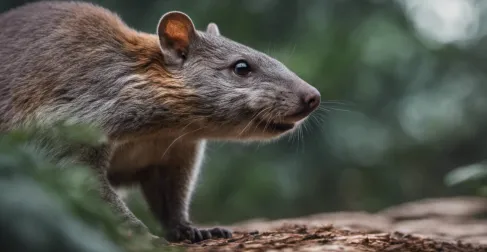
Marsupials might be the more evolved mammals
Read more: Marsupials might be the more evolved mammalsPhys.org has an interesting article about mammal evolution. A new paper in the journal Current Biology claims that marsupial mammals are more evolutionarily derived than placental mammals. This discovery is very surprising as marsupial mammals have long been thought to be an intermediate state between egg laying and placental birth. The study, published in Current Biology, analyzed skulls during different stages of development in 22 living mammal species. Micro-CT scans of 165 specimens helped the research team reconstruct the changes of the skull for these species during this early phase. Using this data, they estimated how the common ancestor of marsupials and…
-

Mazon Monday #165: Braceville Spring 2023 Report
Read more: Mazon Monday #165: Braceville Spring 2023 ReportThis is Mazon Monday post #165. What’s your favorite Mazon Creek fossil? Tell us at email:esconi.info@gmail.com. The ESCONI Braceville field trips for spring of 2023 were well attended. We had 50+ people for both Saturday, May 6th and Sunday, May 7th. The weather was great. Saturday started overcast with light sprinkles, but turned into a nice day, with highs in the low 70’s. Sunday was hot! It was sunny all day with highs in the upper 80’s. Many concretions were collected. Not only is Braceville an event for beginners to experience fossil collecting out in nature. It has also become…
-
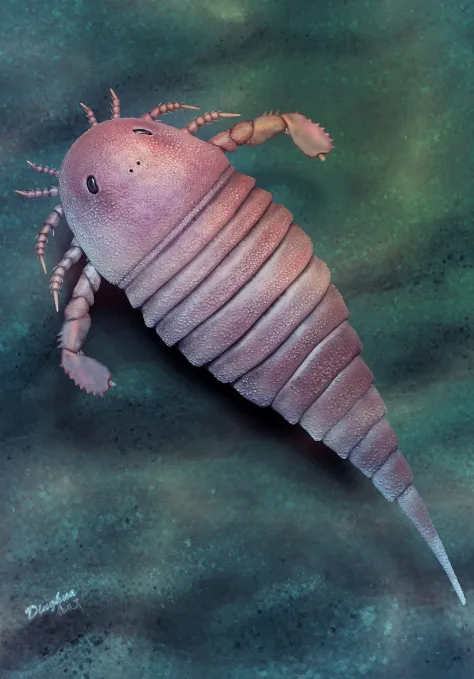
Earliest sea scorpion from China found in end-Ordovician Anji Biota in Zhejiang
Read more: Earliest sea scorpion from China found in end-Ordovician Anji Biota in ZhejiangPhys.org has a story about sea scorpions. Eurypterids are iconic animals of the Paleozoic. They first show up in the fossil record during the Darrowillian stage of the Ordovician 467 million year ago and go extinct at the end Permian mass extinction event about 250 million years ago. Now, a new paper published in the Journal of Paleontology sheds light on their presence in China during the Ordovician. These new animals also represent the first Eurypterids from China and their evolution on the ancient continent of Gondwana. Eurypterids (Arthropoda: Chelicerata), normally known as sea scorpions, are an important extinct group…
-

Never Get Poison Ivy Again! The Science Explained
Read more: Never Get Poison Ivy Again! The Science ExplainedWhen out collecting fossils in the spring, summer, and fall, I always seem to come across poison ivy…. usually when I’m not paying attention or least expecting it. A video by StoneAgeMan over on Youtube claims to show you how you’ll never get poison ivy again. Check it out and happy hunting this summer! I poured poison ivy on myself to show you how to never get it yourself!
-

Fossil Friday #161: Seeds from Danville
Read more: Fossil Friday #161: Seeds from DanvilleThis is the “Fossil Friday” post #161. Expect this to be a somewhat regular feature of the website. We will post any fossil pictures you send in to esconi.info@gmail.com. Please include a short description or story. Check the #FossilFriday Twitter hash tag for contributions from around the world! On April 15th, 2023, ESCONI held a field trip to a coal mine spoil pile near Danville, IL. Everyone found something, and there were numerous nice fossil specimens. Caroline Davis found not one, but two seed fossils. One was a well preserved Trigonocarpus sp. (Mazon Monday #67), while the other was unidentified. …
-

Throwback Thursday #162: Field & Street Archaeopteryx
Read more: Throwback Thursday #162: Field & Street ArchaeopteryxThis is Throwback Thursday #162. In these, we look back into the past at ESCONI specifically and Earth Science in general. If you have any contributions, (science, pictures, stories, etc …), please send them to esconi.info@gmail.com. Thanks! Back in Throwback Thursday #137, we looked at the traveling Archaeopteryx exhibit back in 1997. Althiough it was only at the Field Museum from October 4th to the 19th, actual Archaeopteryx fossils were on display for the first time in the United States, ESCONI was there for a field trip on the last day, October 19th, 1997. About 10 years earlier on April…
-
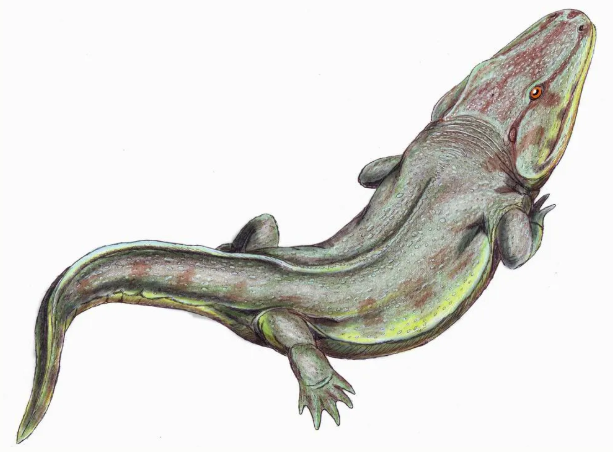
Smithsonian: Paleontologists Uncover Fossil Impressions of Giant, Alligator-Like Amphibians
Read more: Smithsonian: Paleontologists Uncover Fossil Impressions of Giant, Alligator-Like AmphibiansSmithsonian Magazine has a story about the discovery of alligator-like amphibians from the Permian Period. The animals, Rhinesuchus, were found in the Karoo Basin in South Africa. They lived more than 255 million years ago. They are thought to be salamander-like, but the size of modern day alligators. The rhinesuchid temnospondyls were described in the paper “Unique trackway on Permian Karoo shoreline provides evidence of temnospondyl locomotory behaviour”, which was published in the journal PLOS One. Determining what sort of organism made a trace fossil, including those on the Dave Green paleosurface, can be a challenging task. Body fossils, such…

ESCONI Gem, Mineral, and Fossil Show
Most Recent Post
- 49th Annual CGMA Show – May 23rd and 24th, 2026
 The 49th Annual CGMA Show will be held May 23rd and 24th, 2026 at the Expo Center of the Kane County Fairgrounds.
- About ESCONI
- Around the Web
- Calendar of Events
- Code of Ethics and Conduct
- ESCONI Books for Sale
- ESCONI Gem, Mineral, and Fossil Show
- ESCONI in the News
- ESCONI Videos
- Field Trips
- Flashback Friday
- Fossil Friday
- Mazon Creek
- Mazon Monday
- Member Spotlight
- Membership Information
- Reference Material
- Throwback Thursday
- Trilobite Tuesday
Field trips require membership, but visitors are welcome at all meetings!
| Friday, April 10th | General Meeting – 8:00 PM via Zoom. Jessica Hull will present “Life in the Devonian Period, The Age of Fishes.” |
| Saturday, April 11th | Junior Study Group Meeting – 2:00 PM, in person at the College of DuPage Technical Education Center (TEC) Building – Room 1038A (Map). Katherine Howard will present on Sand and Sediment Collecting. Specifics of this meeting are available from Scott Galloway, 630-670-2591, gallowayscottf@gmail.com. |
| Saturday, April 18th | Paleontology Study Group – 7:30 PM via Zoom and in person at the College of DuPage, TEC, Room 1038B (Map). Keith Robitschek will present “Digging the Marl of the Lance Formation.” |
| Friday, April 24th | MAPS Expo XLVII – Springfield, IL. |
| Saturday, April 25th | MAPS Expo XLVII – Springfield, IL. |
| Sunday, April 26th | MAPS Expo XLVII – Springfield, IL. |
| No meeting this month | Mineralogy Study Group |