
-
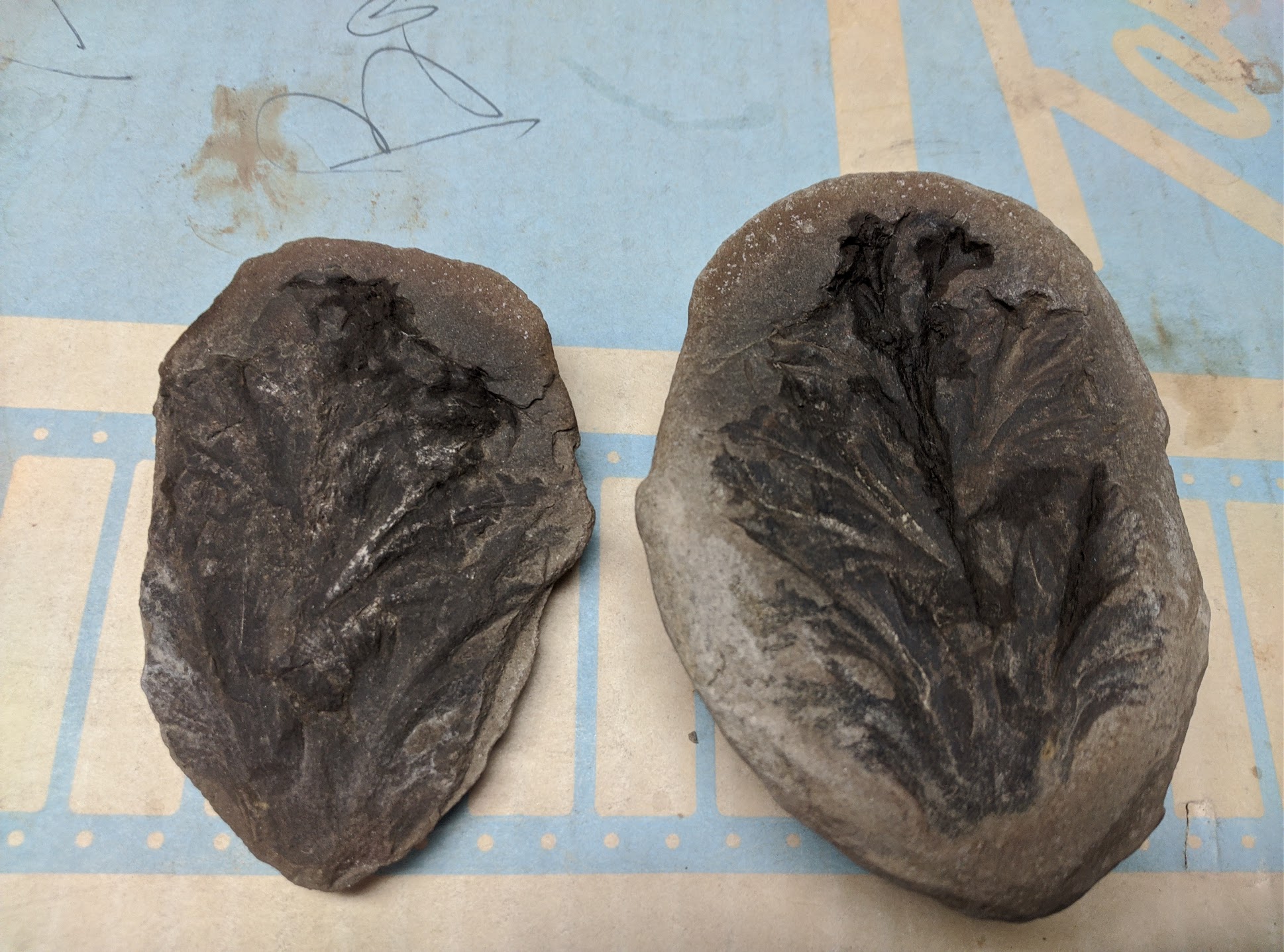
Mazon Monday #170: Rhacophyllum clarkii
Read more: Mazon Monday #170: Rhacophyllum clarkiiThis is Mazon Monday post #170. What’s your favorite Mazon Creek fossil? Tell us at email:esconi.info@gmail.com. Several species of Aphlebia and Rhacophyllum have been identified in the Mazon Creek fossil deposit, though all are considered rare—and some exceptionally so. Their classification is somewhat uncertain, with some specimens grouped with aquatic plants and others with ferns. These genera are known from numerous Pennsylvanian Period fossil sites across both Europe and the United States, including locations in Illinois, Missouri, Indiana, Pennsylvania, and New Hampshire. Rhacophyllum clarkii was originally described as Hymenophyllites clarkii by Leo Lesquereux in 1866. Noe and Langford called it…
-
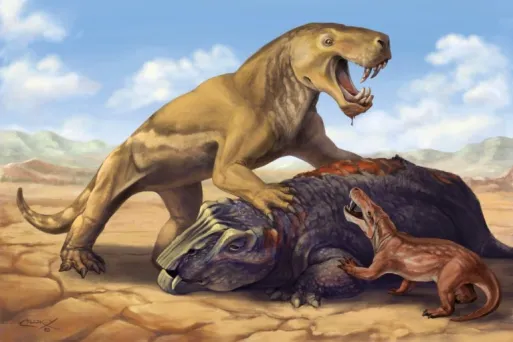
Fossil of sabre-toothed mammal ancestor discovered
Read more: Fossil of sabre-toothed mammal ancestor discoveredNature has a story about a sabre-toothed mammal. Fossils of a new large protomammal have been discovered in South Africa. Inostrancevia africana lived about 251.9 million years ago in what is now the Karoo Basin. This gorgonopsid was described in a paper recently published in the journal Current Biology. Jennifer Botha, professor at the Evolutionary Studies Institute, University of the Witwatersrand, South Africa, is co-author of the study, published in Current Biology. She says “this new species of gorgonopsian, Inostrancevia africana, is the most recent to be identified. Our study shows extreme instability in the top predator niches around the extinction, with four…
-

They were looking for fossils at Penn Dixie. What they found has shocked the paleontology world
Read more: They were looking for fossils at Penn Dixie. What they found has shocked the paleontology worldThe Buffalo News has a story about a rare find at the Penn Dixie Fossil Park & Nature Reserve in Blasdell, NY, which is near Buffalo in western New York. Carpoids were found while splitting the Devonian shale in the park. Carpoids are rarely found in fossil deposits. They are distant relatives of starfish, sea urchins, and sand dollars. The 54-acre Penn Dixie Fossil Park in Hamburg is the site of a former quarry filled with fossils from the Devonian Period, nearly 400 million years ago. Carpoids had been thought to be extinct 25 million years before the Devonian Period,…
-

Fossil Friday #166: Annularia sphenophylloides
Read more: Fossil Friday #166: Annularia sphenophylloidesThis is the “Fossil Friday” post #166. Expect this to be a somewhat regular feature of the website. We will post any fossil pictures you send in to esconi.info@gmail.com. Please include a short description or story. Check the #FossilFriday Twitter hash tag for contributions from around the world! We have a gorgeous little Annularia sphenophylloides for this week’s Fossil Friday. We highlighted A. sphenophylloides back in Mazon Monday #123. Annularia is the extinct form genera given to the leaves of Calamites. August von Gutbier (1798-1866), a German paleontologist, described it way back in 1837 from fossils found near Germany. This particular specimen…
-

Throwback Thursday #167: Tom Testa Winter Freeze/Thaw
Read more: Throwback Thursday #167: Tom Testa Winter Freeze/ThawThis is Throwback Thursday #167. In these, we look back into the past at ESCONI specifically and Earth Science in general. If you have any contributions, (science, pictures, stories, etc …), please send them to esconi.info@gmail.com. Thanks! In case you didn’t notice, summer is here. It’s been hot the last few days and it’s getting even hotter. Here’s a scene that will surely cool you off … frozen Mazon Creek concretions. Although, the thoughts of hidden treasures might get your blood boiling! These are Tom Testa’s buckets at his house in Carbon Hill, IL – not sure of the year. …
-
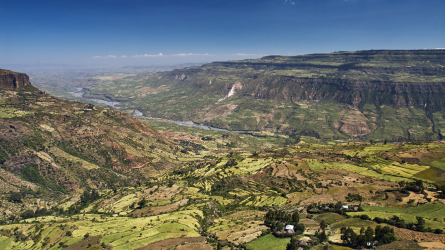
Is Africa splitting into two continents?
Read more: Is Africa splitting into two continents?LiveScience has a story about plate tectonics and Africa. A rift in eastern Africa might be tearing it into two pieces. The rift is known as the East African Rift. It stretches for over 2,000 miles and consists of a system of valleys from the Red Sea to Mozambique. So will Africa rip apart completely, and if so, when will it split? To answer this question, let’s look at the region’s tectonic plates, the outer parts of the planet’s surface that can collide with each other, making mountains, or pull apart, creating vast basins. Along this colossal tear in eastern Africa,…
-
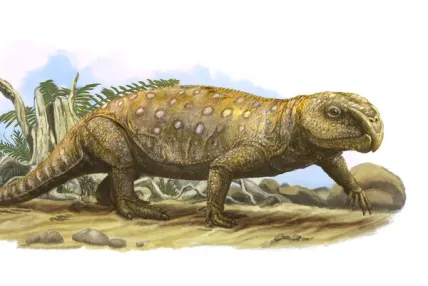
The Sad Story Behind a Fossil’s ‘Grin’
Read more: The Sad Story Behind a Fossil’s ‘Grin’The New York Times “Trilobite” column has a story about animals that dominated the world before dinosaurs. A new study in the journal Palaeontology by Michael Benton, a paleontologist at the University of Bristol in England, looked at how rhynchosaurs ate. He found they chewed by grinding tough plant matter between a row of teeth and bare bone. This strange way of feeding would have ground their teeth down to nothing as they aged, which would have caused old rhynchosaurs to starve as they would have been unable to eat in old age. All of which may have led to…
-
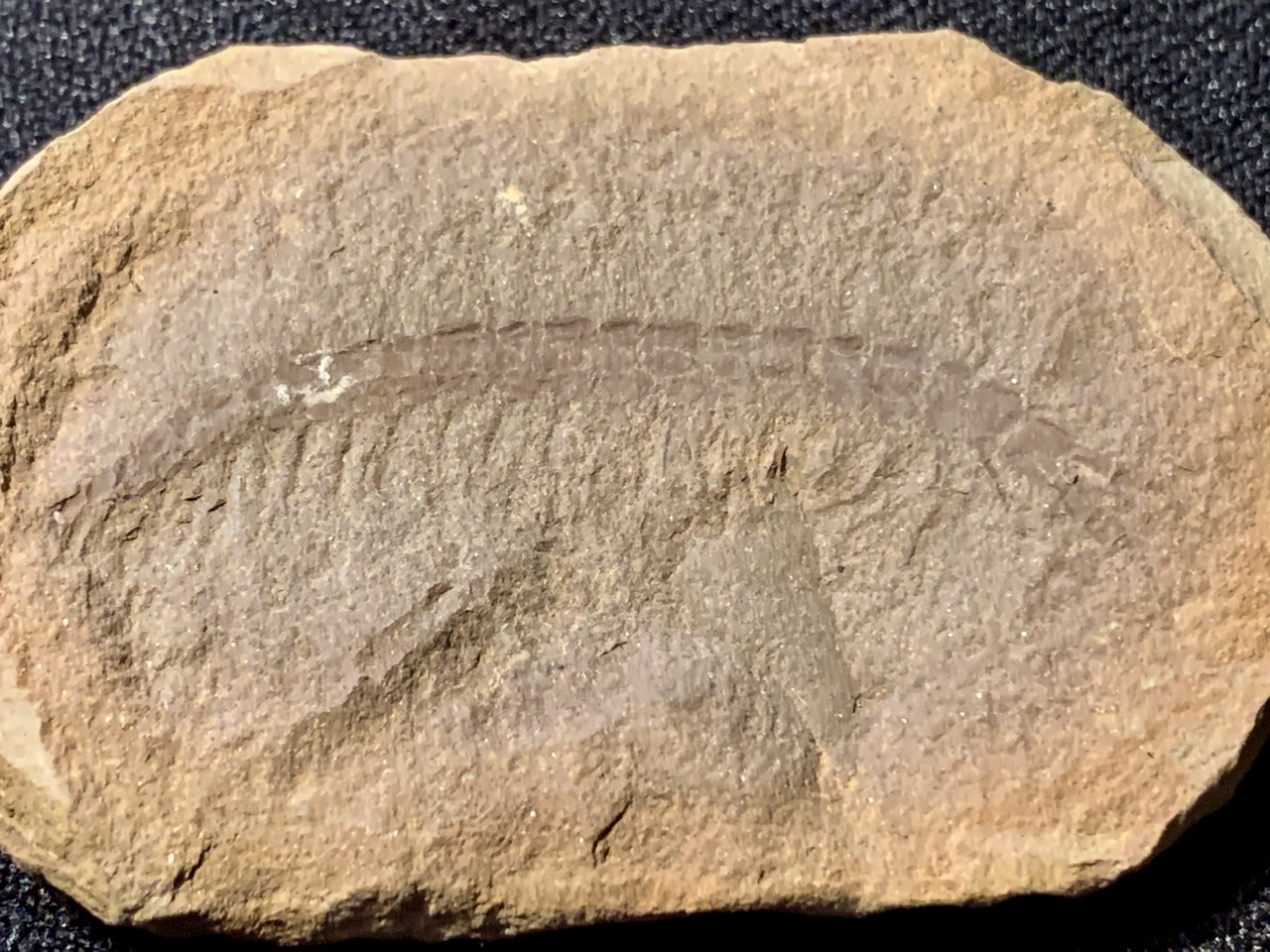
Mazon Monday #169 – Mazoscolopendra richardsoni
Read more: Mazon Monday #169 – Mazoscolopendra richardsoniThis is Mazon Monday post #169. What’s your favorite Mazon Creek fossil? Tell us at email:esconi.info@gmail.com. Way back in Mazon Monday #47, we discussed Mazon Creek centipedes, however Mazoscolopendra richardsoni (Richardson’s Mazonian centipede) wasn’t mentioned. M. richardsoni is the second most common centipede known from Mazon Creek, but centipedes are exceedingly rare in the Mazon Creek fossil deposit. M. richardsoni was described by Peter Mundel of the University of Wisconsin in 1979 in “The centipedes (Chilopoda) of the Mazon Creek”, which appeared in Matthew Nitecki’s “Mazon Creek Fossils”. Jack Wittry writes about Mazoscolopendra richardsoni on page 56 of The Mazon Creek…
-

5 Common Tick Myths Debunked: How to Stay Protected from Ticks
Read more: 5 Common Tick Myths Debunked: How to Stay Protected from TicksThe “Tick Guy” from the University of Rhode Island discusses tick myths. He has some tips for protecting yourself while hunting fossils this summer. Remember, spray and check all your crevasses! Learn how to stay protected from ticks with these debunked tick myths! Don’t believe the misconception that ticks fall out of trees or that all ticks carry diseases. Discover the truth about ticks and how to protect yourself with effective tick prevention methods, such as using permethrin-treated clothing and doing a tick check when you come home. Explore the Equip-4-Ticks Resource Center: https://bit.ly/equip-4-ticks Tick repellent clothing: https://bit.ly/shop-isTick repellent socks:…
-
Fossil Gorge, uncovered 30 years ago, preserves a 375 million-year-old ocean floor in eastern Iowa
Read more: Fossil Gorge, uncovered 30 years ago, preserves a 375 million-year-old ocean floor in eastern IowaLittle Village Magazine has a story about Fossil Gorge in Corralville, Iowa. Fossil Gorge is a fossil locality about four hours from Chicago in central Iowa. The deposit dates to the Devonian Period about 375 million years ago… that’s more than 300 million years before the non-avian dinosaurs go extinct at the end of the Cretaceous Period. The site features many Paleozoic favorites like trilobites, crinoids, brachiopods, and cephalopods. It was uncovered by large floods in 1993 and has been preserved for research and education. If you are looking for a place to see fossils this summer, give this place…
-
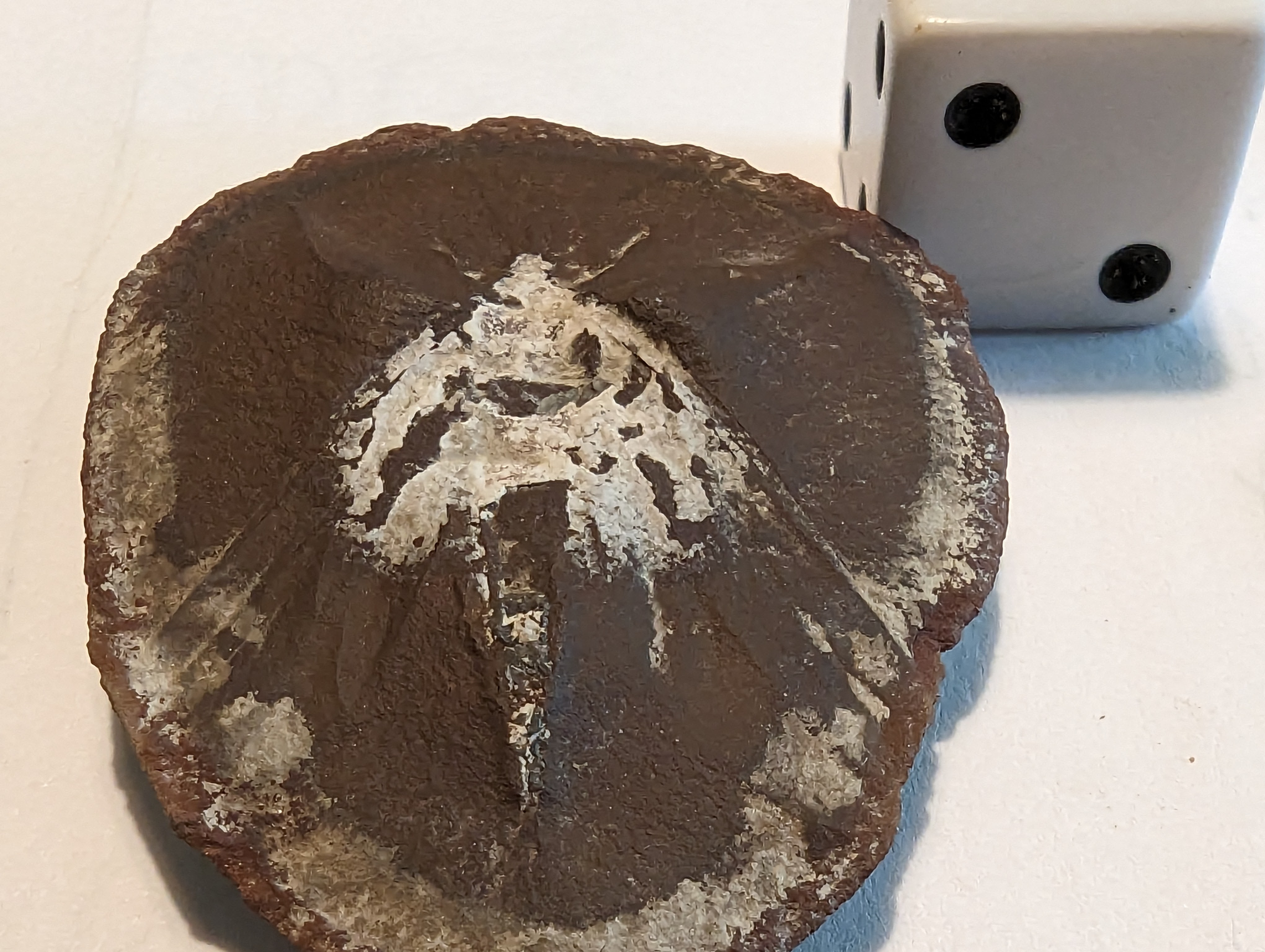
Fossil Friday #165: “Take ALL Fragments Home With You!!!”
Read more: Fossil Friday #165: “Take ALL Fragments Home With You!!!”This is the “Fossil Friday” post #165. Expect this to be a somewhat regular feature of the website. We will post any fossil pictures you send in to esconi.info@gmail.com. Please include a short description or story. Check the #FossilFriday Twitter hash tag for contributions from around the world! Another Fossil Friday, another Miamia bronsoni… insect fossils are seemingly falling from the sky… err.. rising from the Earth. This beautiful specimen comes from ESCONI member George Witaszak. George let us know that he found this gorgeous fossil at home, while cleaning up his finds for the day. He’s been collecting for…
-

Throwback Thursday #166: Spring – Illinois
Read more: Throwback Thursday #166: Spring – IllinoisThis is Throwback Thursday #166. In these, we look back into the past at ESCONI specifically and Earth Science in general. If you have any contributions, (science, pictures, stories, etc …), please send them to esconi.info@gmail.com. Thanks! Bill Kelly and his wife Wylma were active in ESCONI for many years. Both of them wrote articles for the newsletter. Today, we have an article by Bill entitled “Spring – Illinois”. This article appeared in the May 1963 edition of the newsletter, but the content is still very relative today. Bill mentions the 1945 Geologic map of Illinois, which can be found…
-

Aussie Farmers Unleash Dinosaur Rush as Fossil Findings Rewrite History
Read more: Aussie Farmers Unleash Dinosaur Rush as Fossil Findings Rewrite HistoryThe New York Times has a story about dinosaurs in Australia. For a long time, dinosaur fossils were strangely rare in Australia. Now, with discoveries near Winston, Australia, dinosaur bone is seemingly everywhere! It took a moment to spot the fragment, initially: fist-size and unnaturally smooth, nestled between shrubs teeming with burrs in an endless expanse of arid plains. But after the first, the others were easier to pick out, gleaming dirty white against the red earth and run through with a honeycomb texture. Dinosaur bones. “They’re bloody everywhere,” marveled Matt Herne, curator of the Australian Age of Dinosaurs Museum. About an hour’s…
-
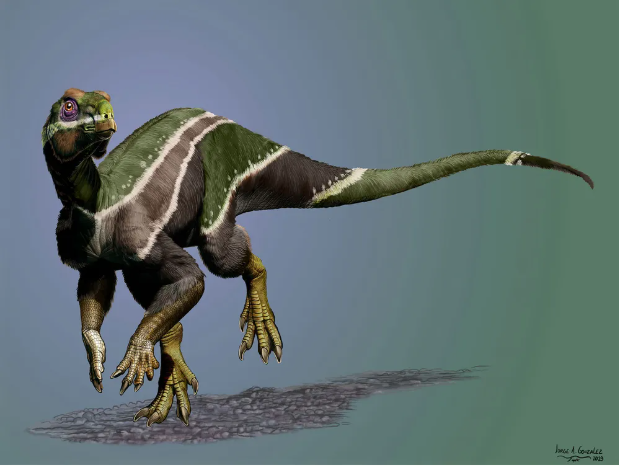
New Beaked Dinosaur Species Found in Utah
Read more: New Beaked Dinosaur Species Found in UtahSmithsonian Magazine has a story about a newly discovered dinosaur. The beaked dinosaur is called Iani smithi after the Roman god Ianus and paleontologist Joshua Aaron Smith. It lived about 99 million years ago in Utah and adds detail to a fossil gap in the middle Cretaceous. The animal was described by North Carolina Museum of Natural Sciences paleontologist Lindsay Zanno and her colleagues. Lindsay spoke to ESCONI a few times while she worked at the Field Museum. At a glance, the dinosaur might seem somewhat plain. Iani lacks any horns, plates, spikes or other outstanding features that we often associate with dinosaurs.…
-
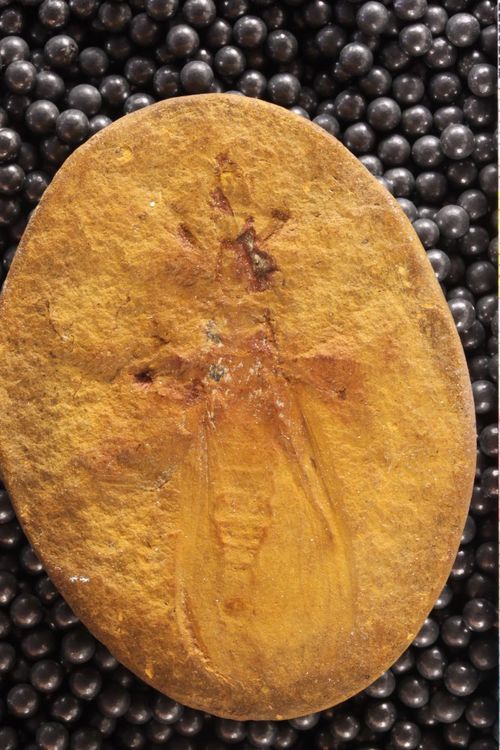
Mazon Monday #168: Miamia bronsoni
Read more: Mazon Monday #168: Miamia bronsoniThis is Mazon Monday post #168. What’s your favorite Mazon Creek fossil? Tell us at email:esconi.info@gmail.com. Insects are some of the most highly sought after Mazon Creek fossils. While very common in the modern world, insects are very rare in the fossil record. Mazon Creek has played a vital part in the understanding of insect evolution as it has produced more evidence than most other deposits. At one time, there were nearly 150 species belonging to 30 families and 102 genera known from the concretions of the Francis Creek Shale. That number as come down a little as more fossils…
-

1.7 billion Tyrannosaurus rexes walked the Earth before going extinct, new study estimates
Read more: 1.7 billion Tyrannosaurus rexes walked the Earth before going extinct, new study estimatesAn artist’s interpretation of what Tyrannosaurus rex may have looked like. (Image credit: Shutterstock) LiveScience has a story about how many Tyrannosaurus rex individuals ever lived. Back in April 2021, a paper in the journal Science estimated that 2.5 billion T. rex had existied from 68 to 65 million years ago. Now a new paper by Eva Griebeler, an evolutionary ecologist at the Johannes Gutenberg University of Mainz in Germany, had adjusted that number down by 8 billion to 1.7 billion. She published her analysis in the journal Palaeontology recently. Both models estimate that each T. rex generation included about…
-
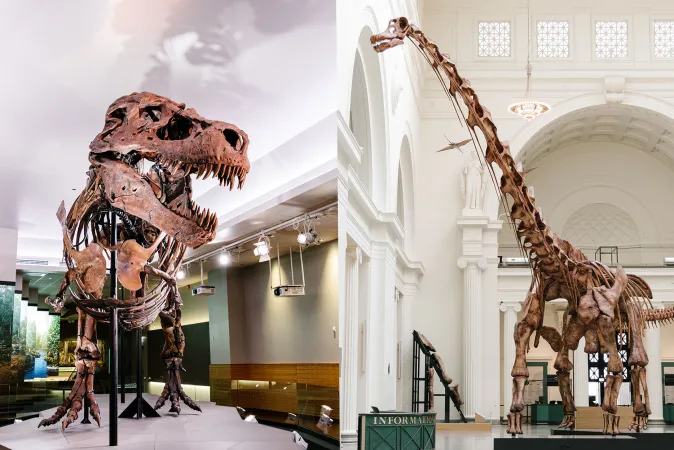
Dino Fest at the Field Museum – Saturday, June 10, 2023 11am-3pm
Read more: Dino Fest at the Field Museum – Saturday, June 10, 2023 11am-3pmThe Field Museum is holding “Dino Fest” on Saturday, June 10, 2023 from 11am – 3pm. There are many activities planned! Dino Fest is the official start of summer at the Field Museum, not only to welcome our newest dinosaur friend hailing all the way from the Cretaceous but also to celebrate SUE the T. rex, Máximo the Titanosaur, and all the other dinos that make the Field so special. The event will feature dinosaur trivia games, a poetry station, a book fair, and presentations from the Field’s dinosaur curator Jingmai O’Connor, PhD, and paleoartist Ted Rechlin as they share fun…
-

Fossil Friday #164: A Miamia bronsoni with a story…
Read more: Fossil Friday #164: A Miamia bronsoni with a story…This is the “Fossil Friday” post #164. Expect this to be a somewhat regular feature of the website. We will post any fossil pictures you send in to esconi.info@gmail.com. Please include a short description or story. Check the #FossilFriday Twitter hash tag for contributions from around the world! Or… “A Mazon Creek Story 39 Years in the Making”. Long time ESCONI member Ralph Jewell has quite the Mazon Creek insect and (if possible) an even better story of how he came to possess it. He posted the whole story over on the Fossil Forum. Here is an excerpt, head over…
-
Throwback Thursday #165: Summer Collecting Poem
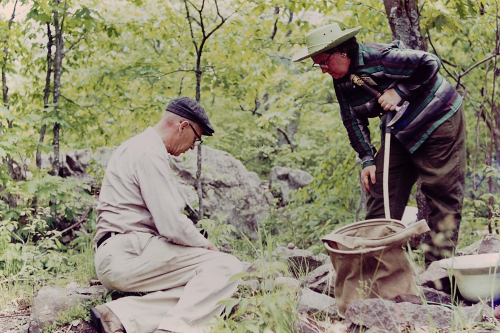
Read more: Throwback Thursday #165: Summer Collecting PoemThis is Throwback Thursday #165. In these, we look back into the past at ESCONI specifically and Earth Science in general. If you have any contributions, (science, pictures, stories, etc …), please send them to esconi.info@gmail.com. Thanks! Howard and Olive Knight were early members of ESCONI. They were both very active members for many years. This was back when clubs like ESCONI provided a social network for people with like interests. In Throwback Thursday #95, we posted a newsletter article from 1968 called “Who Were Howard and Olive Knight?”. It discussed some of their many contributions and accomplishments up until…
-

Newly described species of dome-headed dinosaur may have sported bristly headgear
Read more: Newly described species of dome-headed dinosaur may have sported bristly headgearPhys.org has a story about a pachycephalosaur with interesting headgear. A newly described species of pachycephalosaur called Platytholus clemensi, who lived around 68 million years ago, seems to sport a bristly head ornament made of keratin. The animal was described in a paper in the Journal of Vertebrate Paleontology. The new species is based on a partial pachycephalosaur skull, including its bowling-ball shaped dome, that was unearthed in 2011 in the Hell Creek Formation in Montana, which are layers of Upper Cretaceous rock from which paleontologists have collected dinosaur fossils for decades. Based on CT scans and microscopic analyses of slices through the fossilized…

ESCONI Gem, Mineral, and Fossil Show
Most Recent Post
- Throwback Thursday #313: Who Was DuPage? How the River and County Were Named
 The BeHistoric channel on Youtube has a fascinating video about the history behind the name of the DuPage River and DuPage County.
- About ESCONI
- Around the Web
- Calendar of Events
- Code of Ethics and Conduct
- ESCONI Books for Sale
- ESCONI Gem, Mineral, and Fossil Show
- ESCONI in the News
- ESCONI Videos
- Field Trips
- Flashback Friday
- Fossil Friday
- Mazon Creek
- Mazon Monday
- Member Spotlight
- Membership Information
- Reference Material
- Throwback Thursday
- Trilobite Tuesday
Field trips require membership, but visitors are welcome at all meetings!
| Friday, April 10th | General Meeting – 8:00 PM via Zoom. Jessica Hull will present “Life in the Devonian Period, The Age of Fishes.” |
| Saturday, April 11th | Junior Study Group Meeting – 2:00 PM, in person at the College of DuPage Technical Education Center (TEC) Building – Room 1038A (Map). Katherine Howard will present on Sand and Sediment Collecting. Specifics of this meeting are available from Scott Galloway, 630-670-2591, gallowayscottf@gmail.com. |
| Saturday, April 18th | Paleontology Study Group – 7:30 PM via Zoom and in person at the College of DuPage, TEC, Room 1038B (Map). Keith Robitschek will present “Digging the Marl of the Lance Formation.” |
| Friday, April 24th | MAPS Expo XLVII – Springfield, IL. |
| Saturday, April 25th | MAPS Expo XLVII – Springfield, IL. |
| Sunday, April 26th | MAPS Expo XLVII – Springfield, IL. |
| No meeting this month | Mineralogy Study Group |