
-
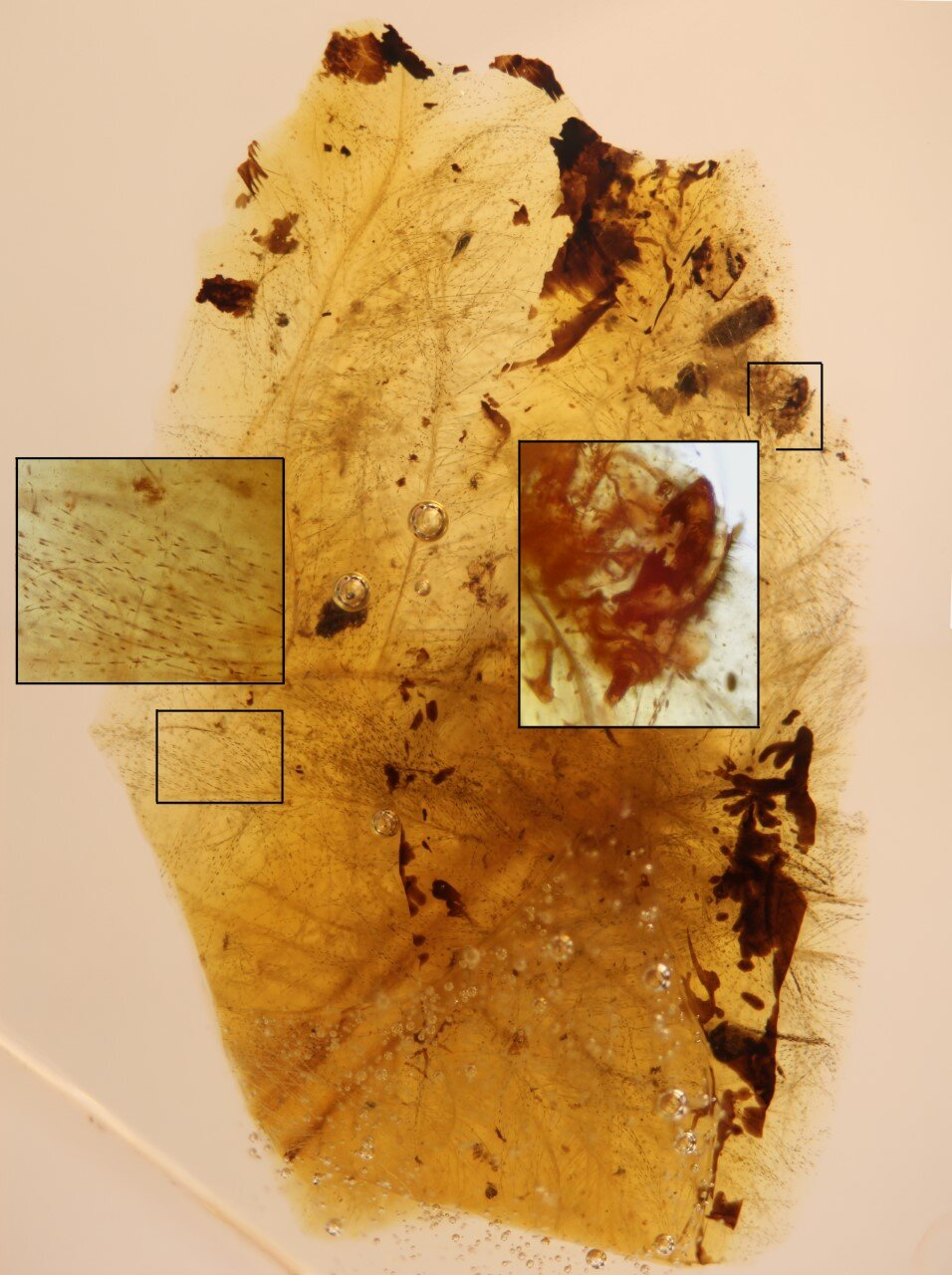
Fossils reveal the long-term relationship between feathered dinosaurs and feather-feeding beetles
Read more: Fossils reveal the long-term relationship between feathered dinosaurs and feather-feeding beetlesPhys.org has a story about an discovery in Mesozoic amber. The amber reveals a parasitic beetle feeding on some feathers. The researchers were unable to determine if the relationship was one of mutual benefit or one-sided. The amber is about 105 million years old from a Spanish locality near San Just. The paper was published in the journal PNAS. The main amber fragments studied, from the Spanish locality of San Just (Teruel), contain larval molts of small beetle larvae tightly surrounded by portions of downy feathers. The feathers belonged to an unknown theropod dinosaur, either avian (a term referring to…
-
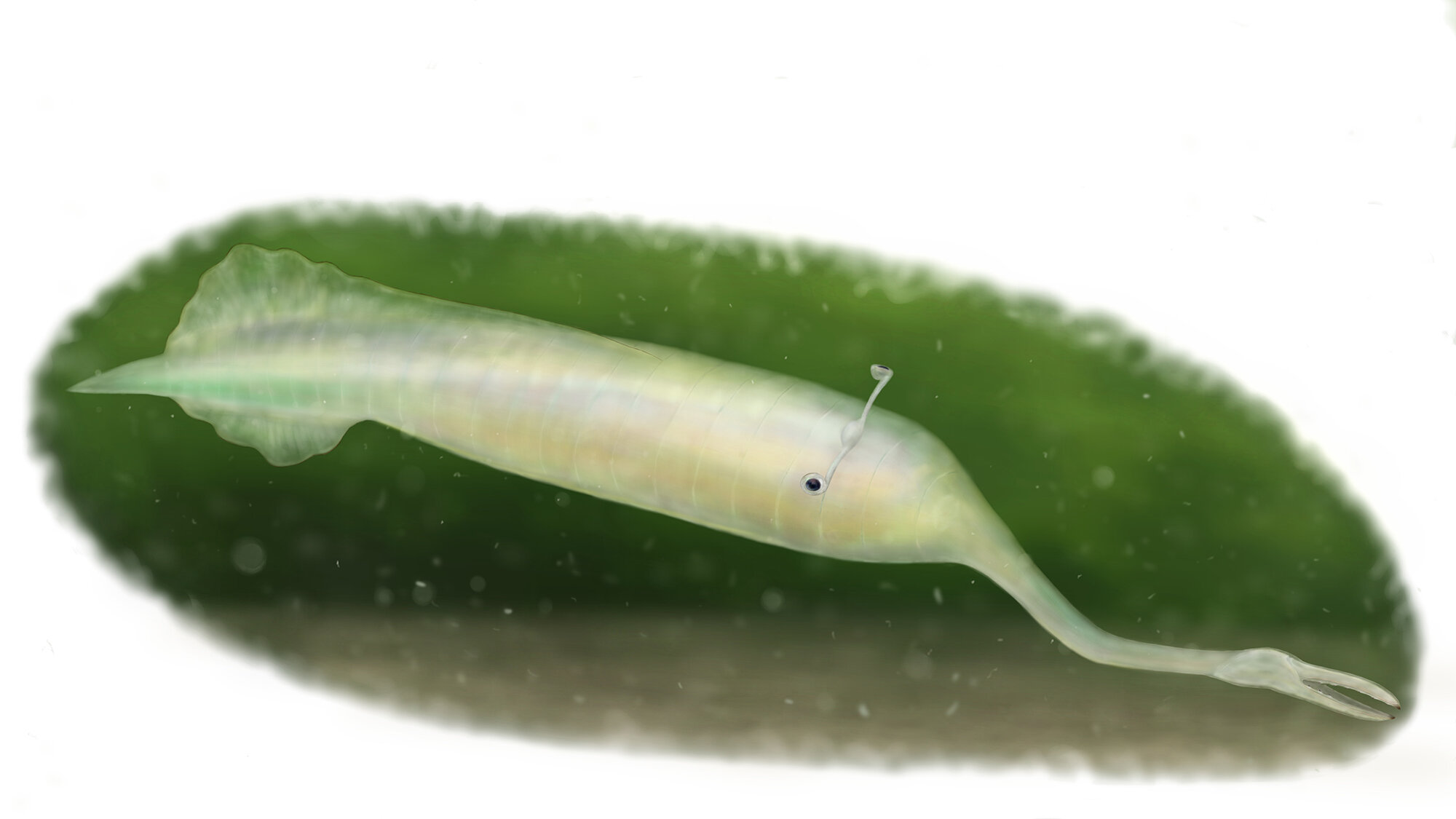
Mazon Monday #161: Is the Tully Monster a vertebrate?
Read more: Mazon Monday #161: Is the Tully Monster a vertebrate?This is Mazon Monday post #161. What’s your favorite Mazon Creek fossil? Tell us at email:esconi.info@gmail.com. Phys.org has a story about the new Tully Monster paper that was published in the journal Paleontology last week. The Tully Monster is the State Fossil of Illinois. And, although it is a popular animal, its evolutionary ancestry has been problematic. Since it’s discovery in 1958 by Francis Tully, numerous theories of its evolutionary affinity have been proposed including arthropods, worms, vertebrates, mollusks, even conodonts. For more than half a century, the Tully monster (Tullimonstrum gregarium), an enigmatic animal that lived about 300 million…
-
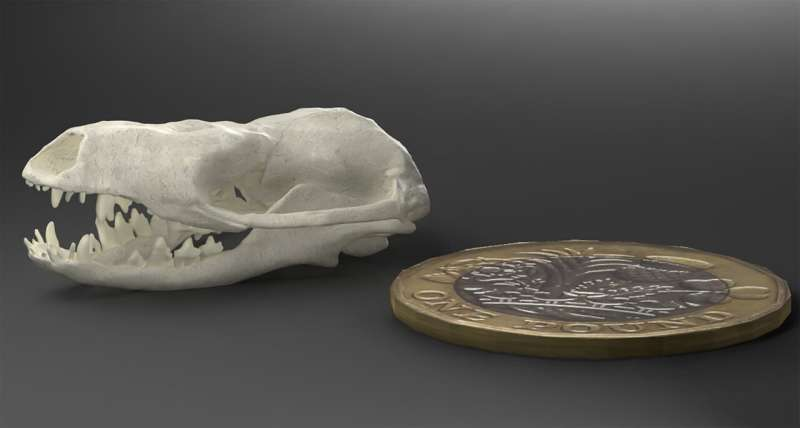
Starting small and simple was key to success for evolution of mammals, reveals new study
Read more: Starting small and simple was key to success for evolution of mammals, reveals new studyPhys.org has a story about the evolution of mammals. A new paper in the journal Communications Biology, found that being small led to more efficient feeding, The international team of paleontologists used computer analysis and stress analysis to understand the process of skull simplification in early mammals. In mamy vertebrate groups, like fish and reptiles, the skull and lower jaw is comprised of numerous bones. Mammals reduced the number of skull bones during the Mesozoic from around 150 to 100 million years ago. Lead author Dr. Stephan Lautenschlager, Senior Lecturer for Palaeobiology at the University of Birmingham, commented, “Reducing the…
-

Happy Earth Day 2023
Read more: Happy Earth Day 2023Happy Earth Day 2023! Earth day is the culmination of a week long celebration. The first Earth Day was held in 1970. Since the, over 1 billion people in 190+ countries modilize for action every year on Earthday. The Field Museum and other Chicago area museums are free today!
-
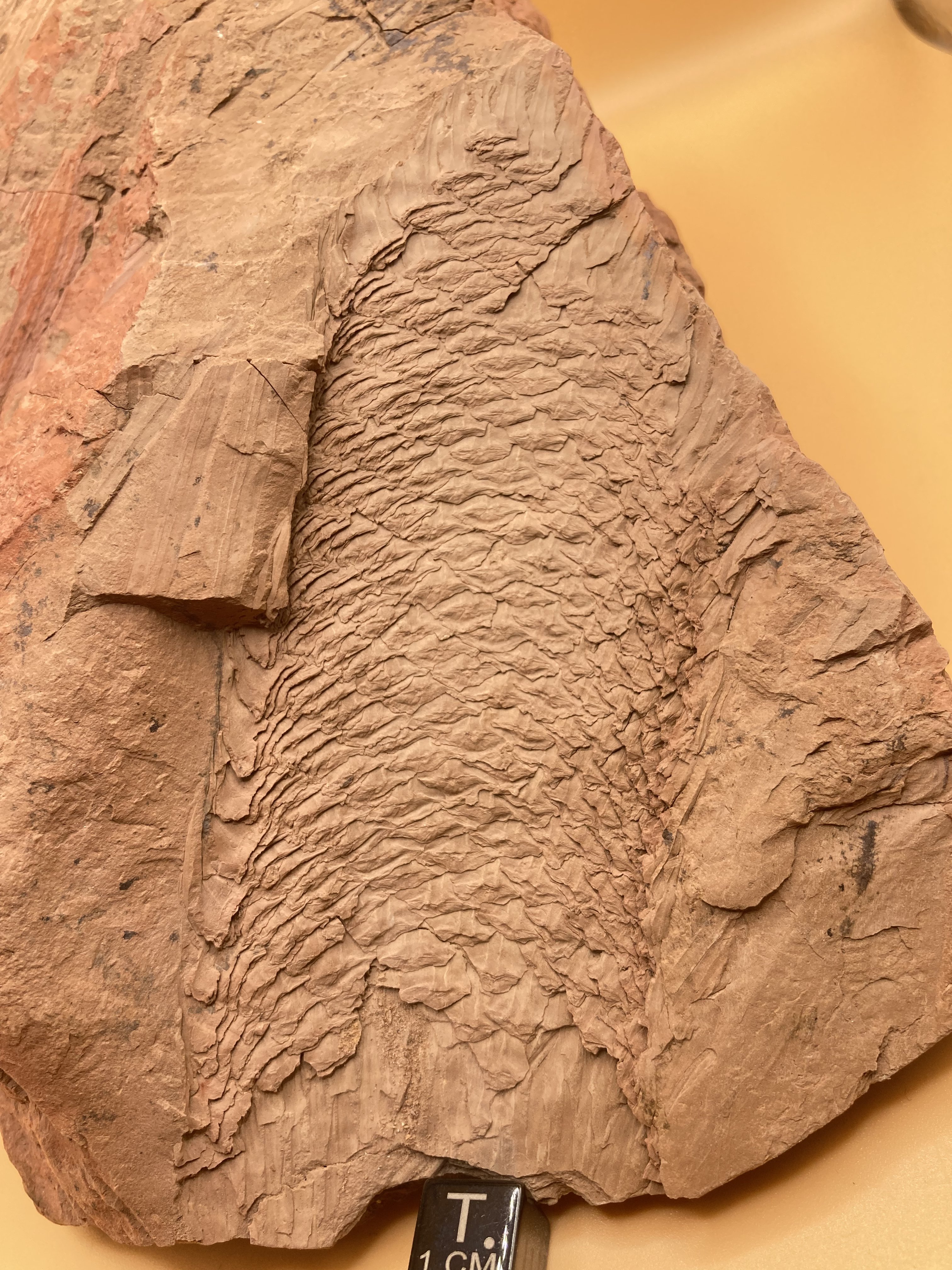
Fossil Friday #157: Danville Cone
Read more: Fossil Friday #157: Danville ConeThis is the “Fossil Friday” post #157. Expect this to be a somewhat regular feature of the website. We will post any fossil pictures you send in to esconi.info@gmail.com. Please include a short description or story. Check the #FossilFriday Twitter hash tag for contributions from around the world! Last Saturday, April 15th, 2023, ESCONI had a field trip to a coal mine spoil pile near Danville, IL. The deposit is about 1.5 million years earlier than Mazon Creek. We’ve found quite a few nice fossils at this locality over the 6 field trips we’ve had there. For Mazon Monday #86,…
-
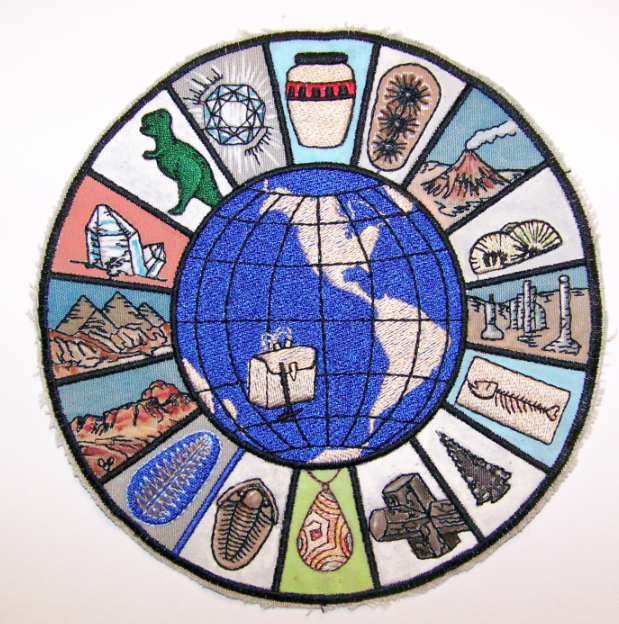
Throwback Thursday #158: ESCONI Logo
Read more: Throwback Thursday #158: ESCONI LogoThis is Throwback Thursday #158. In these, we look back into the past at ESCONI specifically and Earth Science in general. If you have any contributions, (science, pictures, stories, etc …), please send them to esconi.info@gmail.com. Thanks! ESCONI was established in November 1949. For the first few editions of the newsletter, the cover featured various drawings and prospective logos. The cover of the January newsletter was a shield showing a fossil fern, a diamond, a dinosaur, a crystal, and an arrowhead. In the January 1950 newsletter, there was an announcement of a contest to choose a logo. A WORD ABOUT…
-

A rare, 95-million-year-old titanosaur skull found in Australia
Read more: A rare, 95-million-year-old titanosaur skull found in AustraliaPopular Science has a story about the discovery of a sauropod skull. The animal, called Diamantinasaurus matildae, lived during the Cretaceous Period nearly 100 million years ago in what is now Australia. This skull represents the fourth specimen ever found. A paper in the journal Royal Society Open Science describes the 19.6 inch long skull. Dinosaur fossils, especially well preserved bones, are rare in Australia, which makes this an exciting find! The dinosaur. nicknamed ‘Ann,’ was discovered by the Australian Age of Dinosaurs Museum in 2018 near Winston in central Queensland. Ann is the third fossil specimen of D. matildae to have been discovered…
-
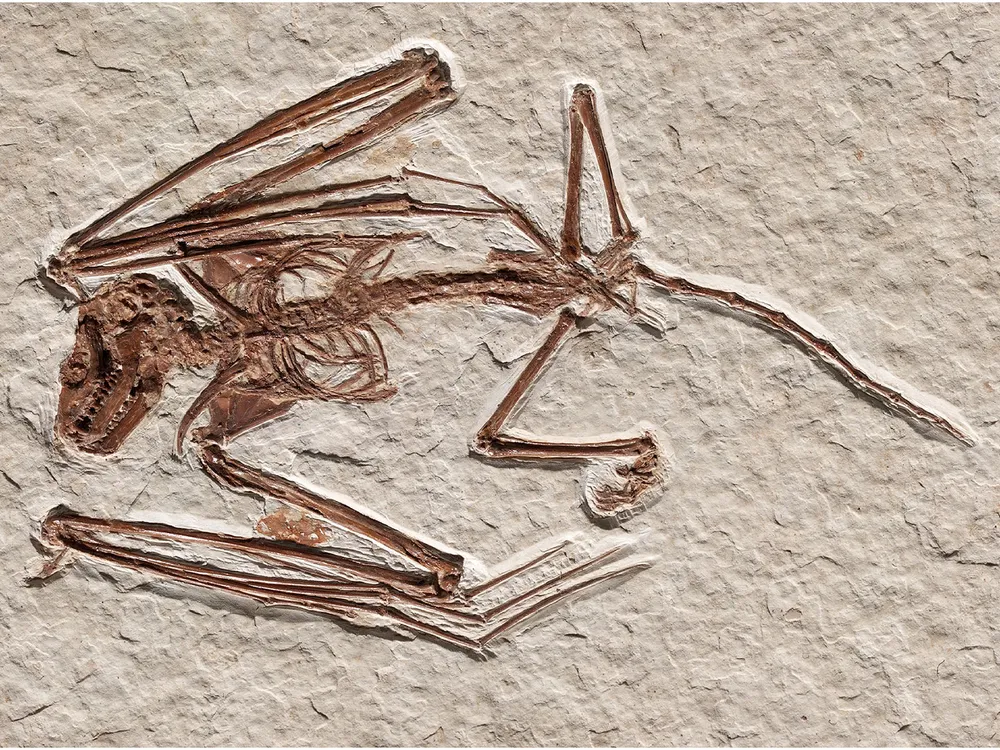
Smithsonian: Paleontologists Discover 52-Million-Year-Old Bat
Read more: Smithsonian: Paleontologists Discover 52-Million-Year-Old BatSmithsonian Magazine has a story about a fossil bat from Wyoming. Bats are underrepresented in the fossil record due their small size and even smaller bones. Unfortunately, they also live in areas that don’t usually form fossils. The Green River Formation in Wyoming, which dates to the Eocene about 52 million years ago, has yield a few examples of fossil bats. This specimen, which was spotted for sale online, represents a new species – Icaronycteris gunnelli. It was described in a paper in the journal PLOS One. The fossil record is biased against bats. The flying mammals are small, making…
-
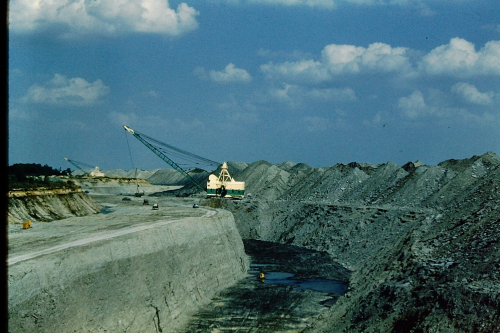
Mazon Monday #160: Braidwood’s Buried Treasures
Read more: Mazon Monday #160: Braidwood’s Buried TreasuresThis is Mazon Monday post #160. What’s your favorite Mazon Creek fossil? Tell us at email:esconi.info@gmail.com. The following article appeared in Commonwealth Edison Company’s Employee Bulletin in February 1979. It was later published in the West Suburban Lapidary Club bulletin The Opal in November 1982, and the ESCONI Newsletter in January 1983. There’s much to note here… BRAIDWOOD’S BURIED TREASURES Stamps, beer cans, coins and antiques-each satisfy mankind’s penchant for collecting in its own special way. But according to Mrs. Helen Piecko, one of the country’s most renowned fossil collectors, her hobby outshines the rest. “Stumbling across a rare fossil…
-
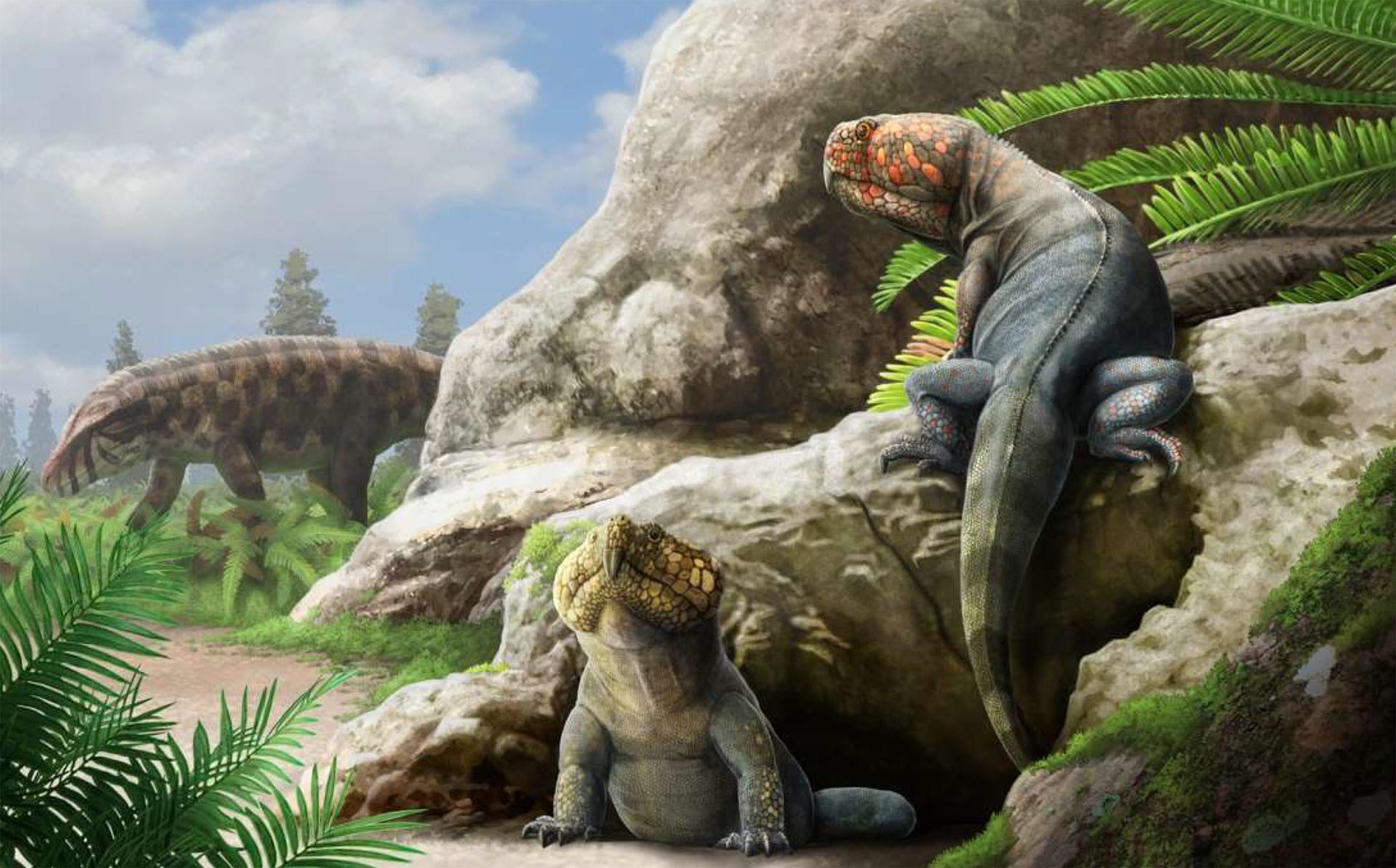
New Species of Rhynchosaur Unearthed in Wyoming
Read more: New Species of Rhynchosaur Unearthed in WyomingSciNews has a story about a the discovery of a new species of Rhynchosaur. The animal, Beesiiwo cooowuse, lived around 230 million years ago during the Triassic Period. It was found in the Popo Agie Formation in central Wyoming, in the United States. Rhynchosaurs are archosaurs, which makes it a cousin to dinosaurs. This new species was described in a paper in the journal Diversity. “The Late Triassic Carnian age is a critical interval in the diversification of many lineages that will play a prominent role throughout the Mesozoic (e.g., Mammaliaformes, Crocodylomorpha, Dinosauria),” said Adam Fitch, a paleontologist at Virginia Tech…
-

PBS Eons: How (Some) Plants Survived The K-Pg Extinction
Read more: PBS Eons: How (Some) Plants Survived The K-Pg ExtinctionPBS Eons has a new video over on Youtube. This one is about Angiosperm plants and how many of them survived the K-Pg mass extinction. Perhaps for plants in times of great stress and ecological upheaval, the more DNA the better. Thanks to Franz Anthony (https://franzanth.com) for the incredible reconstruction of plants in the aftermath of the K-Pg extinction.
-

Fossil Friday #156: The Origin of the English Poundstone
Read more: Fossil Friday #156: The Origin of the English PoundstoneThis is the “Fossil Friday” post #156. Expect this to be a somewhat regular feature of the website. We will post any fossil pictures you send in to esconi.info@gmail.com. Please include a short description or story. Check the #FossilFriday Twitter hash tag for contributions from around the world! For this weeks Fossil Friday, we have an article written by ESCONI member Marie Angkuw. You might remember her sad tale about pyritized ammonites in Fossil Friday #93. This piece is about her fossil trip to England back in February 2023. The Origin of the English Poundstone by Marie Angkuw Imagine living…
-
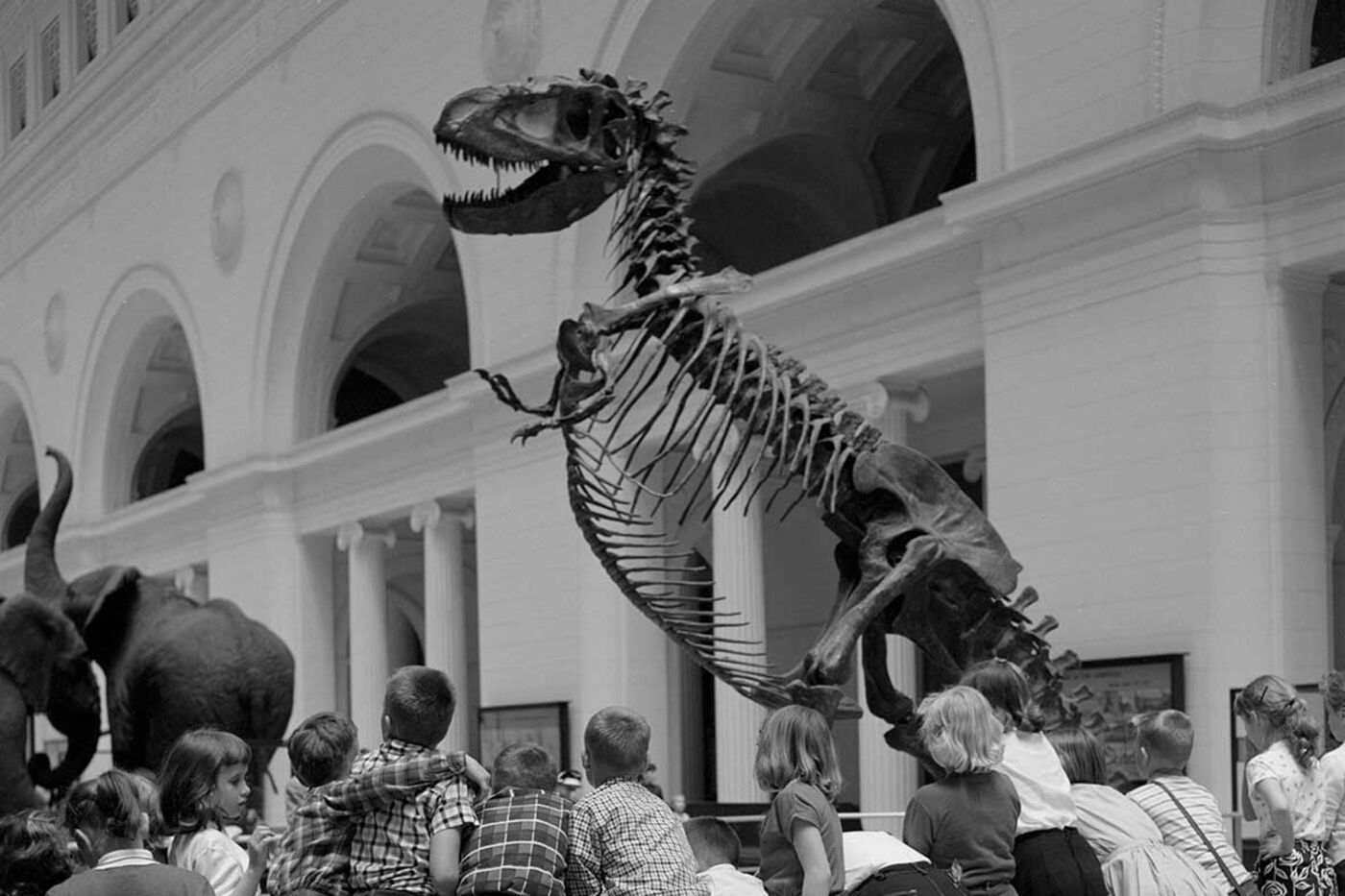
Throwback Thursday #157: Self-supporting Dinosaur
Read more: Throwback Thursday #157: Self-supporting DinosaurThis is Throwback Thursday #157. In these, we look back into the past at ESCONI specifically and Earth Science in general. If you have any contributions, (science, pictures, stories, etc …), please send them to esconi.info@gmail.com. Thanks! Here is a poem written by Eugene Richardson Jr, about “Gorgeous George”, the Field Museum’s Daspletosaurus. We posted about George back in Throwback Thursday #93. “George” was the centerpiece of Stanley Field Hall in the Field Museum from 1956 to 1992. He was incorrectly called a Gorgosaurus for most of his “life”. That was corrected in 1999 and he is now known as…
-
Video for ESCONI Paleontology Meeting January 2023 “The Devonian Period”
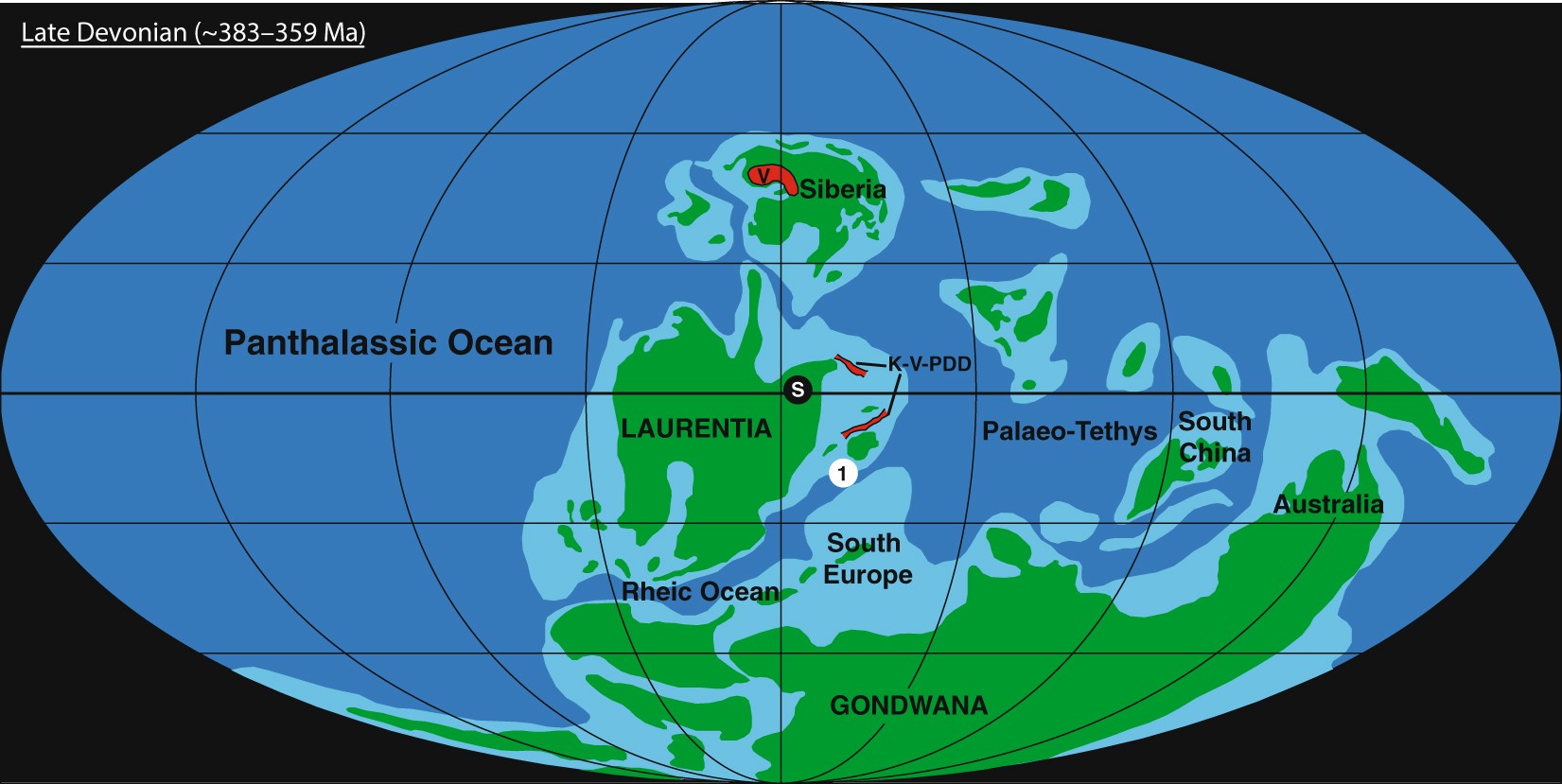
Read more: Video for ESCONI Paleontology Meeting January 2023 “The Devonian Period”The ESCONI Paleontology Sttudy Group Meeting was held on Saturday, January 21st, 2023. The topic was “The Devonian Period”. The presentation was given by ESCONI member and Field Trip Chairman John Catalani. Palaeogeographic map of the Late Devonian world, based on ref.77. The location of Steinbruch Schmidt(1), the Siljan impact crater (S), the Viluy Traps (V), and the Kola, Vyatka, and Pripyat–Dniepr–Donets rift systems (K-V-PDD) are indicated.
-
New DNA Analysis Reveals an Untold Story of Horses in America
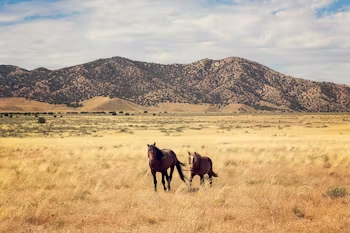
Read more: New DNA Analysis Reveals an Untold Story of Horses in AmericaInverse has an article about the history of horses in America. It’s not commonly known, but horses evolved in North America about 4 million years ago. They went extinct around 10,000 years ago with many other species of North American mega fauna. The causes of the extinction are still being studied. Horses were reintroduced by European colonists. Check out the link to read about the important role horses played in the lives of early and later Native Americans. Few places in the world are more closely linked with horses in the popular imagination than the Great Plains of North America.…
-
Mazon Monday #159: A new Carboniferous edaphosaurid and the origin of herbivory in mammal forerunners
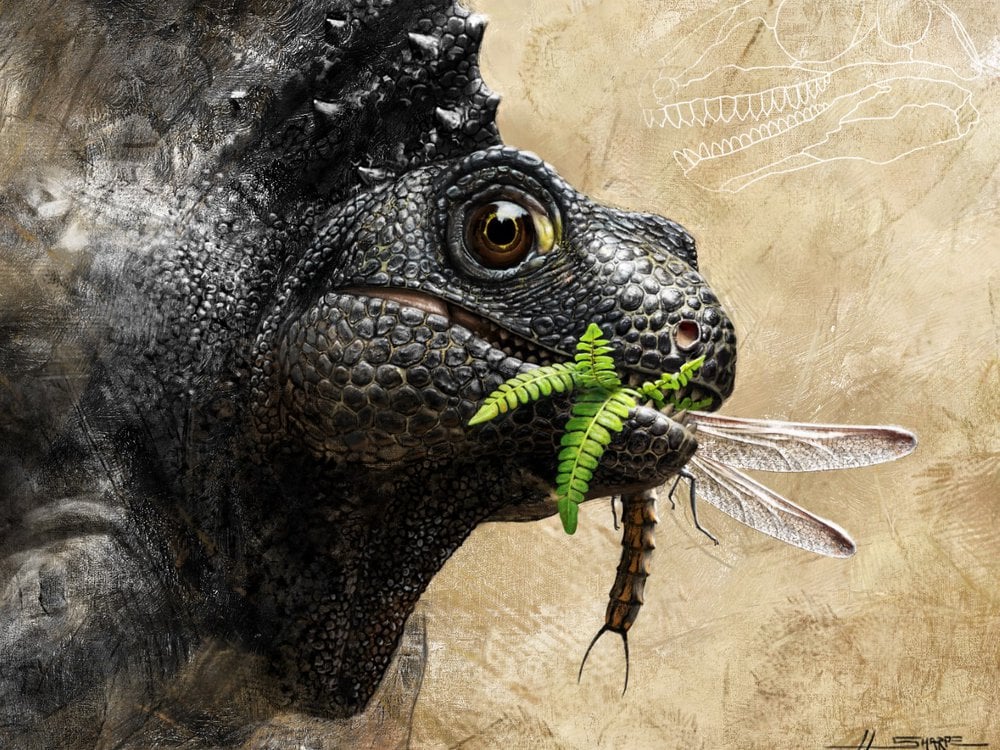
Read more: Mazon Monday #159: A new Carboniferous edaphosaurid and the origin of herbivory in mammal forerunnersThis is Mazon Monday post #159. What’s your favorite Mazon Creek fossil? Tell us at email:esconi.info@gmail.com. Arjan Mann is lead author of a paper that describes a new edaphosaurid, Melanedaphodon hovaneci, from the late Pennsylvanian Period around 310 million years ago. The paper appeared in the in the journal Nature. The animal is a ancestor to mammals that provides clues to the origin of herbivory in the mammal lineage. It was described from a few specimens found at famous Diamond Coal Mine in Linton, Ohio, which was in operation from 1855 to 1921. Fossils from the site are found in…
-
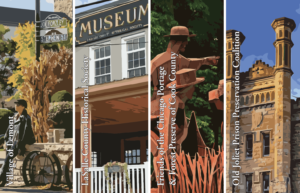
CCA: 26th Annual Boat Captain’s Luncheon on April 14th, 2023 in Bolingbrook
Read more: CCA: 26th Annual Boat Captain’s Luncheon on April 14th, 2023 in BolingbrookThe Illinois Canal Corridor Association is holding its 26th Annual Boat Captain’s Luncheon on April 14th, 2023 at the Bolingbrook Golf Club. You might remember the CCA from their annual Mazon Creek fossil trips every August, where you get a chance to collect fossils from the actual Mazon River. The Mazon Creek Fossil Crew is one of the honorees. Come on out and have a tasty lunch and celebrate an organization that cares deeply about the history of the Chicago area! All the details are here… registration link. The Boat Captain’s Luncheon is an annual gathering of canal supporters from…
-
PBS Eons: The Real Story Of The Dodo Bird’s (Current) Extinction
Read more: PBS Eons: The Real Story Of The Dodo Bird’s (Current) ExtinctionPBS Eons has a new episode. This one tells the whole story of the dodo bird. How did it evolve and how did it disappear? What’s the real story of the dodo? How did such a unique bird even evolve in the first place? And are we really responsible for its extinction?
-

Fossil Friday #155: Isotelus From Illinois
Read more: Fossil Friday #155: Isotelus From IllinoisThis is the “Fossil Friday” post #155. Expect this to be a somewhat regular feature of the website. We will post any fossil pictures you send in to esconi.info@gmail.com. Please include a short description or story. Check the #FossilFriday Twitter hash tag for contributions from around the world! Isotelus is a trilobite from the middle and upper Ordovician period. It’s been found in the northeastern US and Canada. One specimen, an Isotelus rex, found in Manitoba is the largest complete trilobite fossil ever found. In 1985, the state of Ohio designated Isotelus as its State Fossil. Today, we have an…
-

Trip FULL! ESCONI Field Trip to Braceville, IL for Mazon Creek Fossils – Saturday, May 6th and Sunday May 7th, 2023
Read more: Trip FULL! ESCONI Field Trip to Braceville, IL for Mazon Creek Fossils – Saturday, May 6th and Sunday May 7th, 2023Unfortunately, this trip is FULL! Braceville Field Trip Rules May 2023 The ESCONI field trips to Braceville for Mazon Creek fossils are set for May 6 and 7, 2023 from 9 AM to 3 PM. You can attend one or the other, but not both days. There is an attendance limit of 50 people each day. You must register to go on this trip. See rule 6 below for instructions. This is the only way to register. If you are sick, have any symptoms of Covid-19 or have recently tested positive, DO NOT COME. Meet at 9 AM at the…

ESCONI Gem, Mineral, and Fossil Show
Most Recent Post
- Ancient bees found nesting inside fossil bones in rare cave discovery
 Science Daily has a post about a recent paper that looked at novel bee nesting behavior. Researchers working on the Caribbean island of Hispaniola discovered a rare and unusual fossil interaction in a cave, ancient bees used fossilized bones as nesting sites.
- About ESCONI
- Around the Web
- Calendar of Events
- Code of Ethics and Conduct
- ESCONI Books for Sale
- ESCONI Gem, Mineral, and Fossil Show
- ESCONI in the News
- ESCONI Videos
- Field Trips
- Flashback Friday
- Fossil Friday
- Mazon Creek
- Mazon Monday
- Member Spotlight
- Membership Information
- Reference Material
- Throwback Thursday
- Trilobite Tuesday
Field trips require membership, but visitors are welcome at all meetings!
| Friday, April 10th | General Meeting – 8:00 PM via Zoom. Jessica Hull will present “Life in the Devonian Period, The Age of Fishes.” |
| Saturday, April 11th | Junior Study Group Meeting – 2:00 PM, in person at the College of DuPage Technical Education Center (TEC) Building – Room 1038A (Map). Katherine Howard will present on Sand and Sediment Collecting. Specifics of this meeting are available from Scott Galloway, 630-670-2591, gallowayscottf@gmail.com. |
| Saturday, April 18th | Paleontology Study Group – 7:30 PM via Zoom and in person at the College of DuPage, TEC, Room 1038B (Map). Keith Robitschek will present “Digging the Marl of the Lance Formation.” |
| Friday, April 24th | MAPS Expo XLVII – Springfield, IL. |
| Saturday, April 25th | MAPS Expo XLVII – Springfield, IL. |
| Sunday, April 26th | MAPS Expo XLVII – Springfield, IL. |
| No meeting this month | Mineralogy Study Group |