
-
The Mysterious Origins of Sapphires Have Finally Been Deciphered
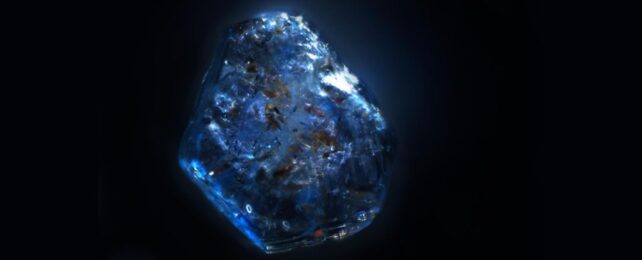
Read more: The Mysterious Origins of Sapphires Have Finally Been DecipheredOne of the sapphires, just 0.9 millimeters across, from the Volcanic Eifel. (Sebastian Schmidt) ScienceAlert has an article that discusses the origin of sapphires. For many years, scientists have wondered about the origin of sapphires. Does their origin involve volcanism or something else? Sapphires are made of predominantly of aluminum oxide in the form of corundum. The various colors come from mineral impurities. Scientists looked a 223 specimens of sapphire from volcanic deposits near Eifel, which is located between Germany, Belgium, and Luxembourg. They were able to determine that the sapphires formed at the same time as the volcanism. The research was pubiished…
-

Mazon Monday #230: Konecnys in Earth Science Magazine
Read more: Mazon Monday #230: Konecnys in Earth Science MagazineThis is Mazon Monday post #230. What’s your favorite Mazon Creek fossil? Tell us at email:esconi.info@gmail.com. Over the years, we’ve shared numerous articles about Jim and Sylvia Konecny, highlighting their significant contributions to ESCONI. Jim served as ESCONI’s president in 1966 and 1967, but both he and Sylvia were involved in much more. They played key roles in ESCONI’s displays at the first North American Paleontological Conference (NAPC) in 1969. Even after relocating to Prescott, AZ in 1974, they continued to collaborate on articles for the ESCONI newsletter and related magazines. In their later years, they made a lasting impact…
-
‘My jaw just dropped’: 500 million-year-old larva fossil found with brain preserved
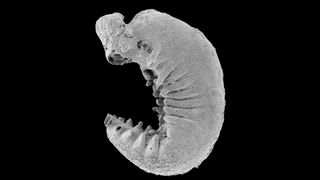
Read more: ‘My jaw just dropped’: 500 million-year-old larva fossil found with brain preservedA scan of the Youti yuanshi larva fossil. (Image credit: Yang Jie/Zhang Xiguang) LiveScience has a story about an amazingly preserved Cambrian larva. A fossilized arthropod from the Yu’anshan rock formation in the Yunnan Province of China reveals critical details of its brain and circulatory system, including traces of nerves serving the larva’s legs and eyes. This specimen is important as it gives clues to the evolution of the largest animal group, which includes modern arthropods like insects, spiders and crabs. The description of this amazing fossil were published in the journal Nature. “When I used to daydream about the one fossil I’d most…
-
Midwest Federation of Mineralogical & Geological Societies (MWF) – August 24 and 25, 2024 in East Peoria, Illinois
Read more: Midwest Federation of Mineralogical & Geological Societies (MWF) – August 24 and 25, 2024 in East Peoria, IllinoisThe Midwest Federation of Mineralogical & Geological Societies (MWF) is holding their 2024 convention in East Peoria on August 24 and 25, 2024. Welcome to the 2024 PAS Geology Gem Show in conjunction with the Midwest Federation’s Convention. This will be our 60 th Gem and Mineral Show and as such our theme is Diamond’s! We look forward to hosting the Midwest Federation. Our show is located at the East Peoria Eastside Centre. We expect to host approximately 20 venders selling mineral specimens, handcrafted jewelry, fossils, and more. Activities will include a silent auction, children’s activities, a fluorescent rock tent,…
-
Fossil Friday #226: Acanthotelson stimpsoni from Pit 11
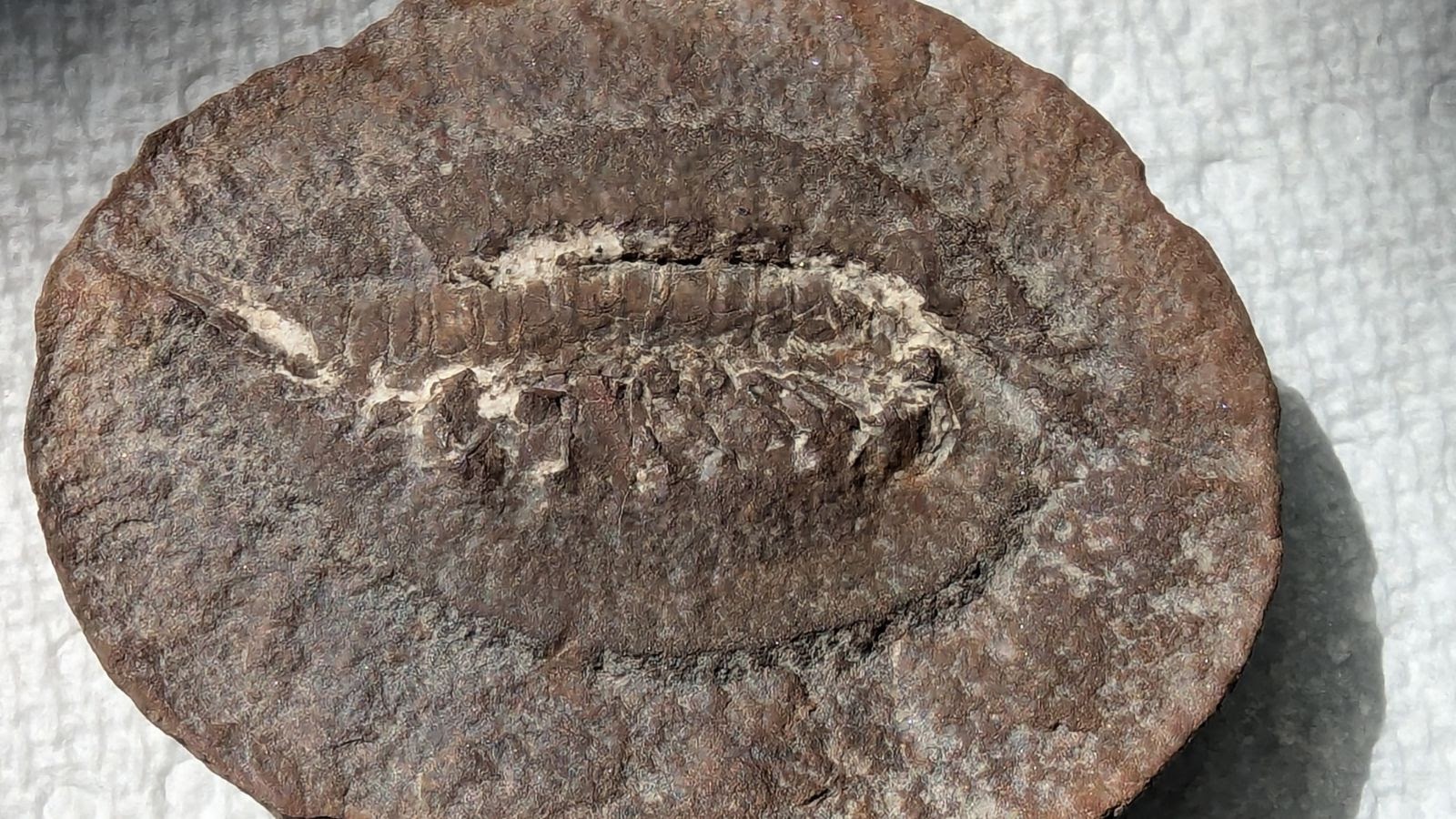
Read more: Fossil Friday #226: Acanthotelson stimpsoni from Pit 11This is the “Fossil Friday” post #226. Expect this to be a somewhat regular feature of the website. We will post any fossil pictures you send in to esconi.info@gmail.com. Please include a short description or story. Check the #FossilFriday Twitter hash tag for contributions from around the world! For this week’s installment of Fossil Friday, we have a sweet little Acanthotelson stimpsoni (Mazon Monday #52). A. stimpsoni was a syncarid shrimp. It was named for William Stimpson. Stimpson worked at the Smithsonian Institution and was later the director of the Chicago Academy of Sciences. This beautiful little guy was found in Pit…
-

Throwback Thursday #227: Stones for Everyone!
Read more: Throwback Thursday #227: Stones for Everyone!This is Throwback Thursday #227. In these, we look back into the past at ESCONI specifically and Earth Science in general. If you have any contributions, (science, pictures, stories, etc …), please send them to esconi.info@gmail.com. Thanks! From the June 1974 edition of the ESCONI newsletter…. “Stones for Everyone”. STONES FOR EVERYONE For laundresses….. The SoapstoneFor architects….. The CornerstoneFor cooks….. The PuddingstoneFor politicians….. The BlarneystoneFor borrowers….. The TouchstoneFor Policemen….. The PavingstoneFor stockholders….. The CurbstoneFor shoemakers….. The CobblestoneFor burglars….. The KeystoneFor tourists….. The YellowstoneFor beauties….. The PeachstoneFor motorists….. The MilestoneFor editors….. The Grindstone
-
Scientists Find Arm Bone of Ancient ‘Hobbit’ Human #fossils
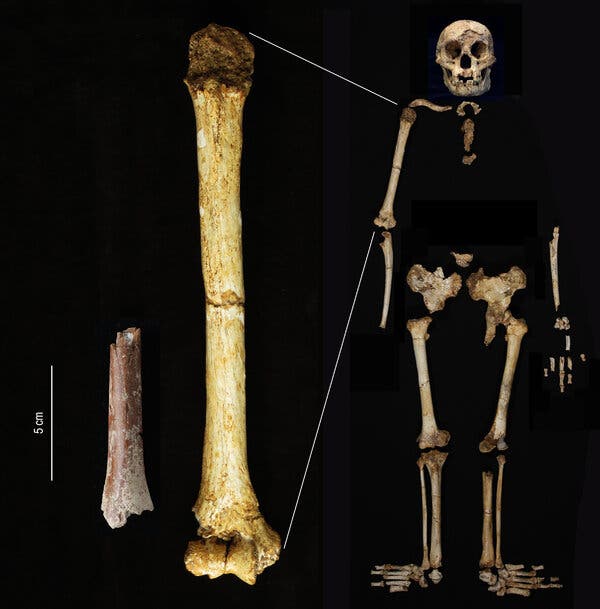
Read more: Scientists Find Arm Bone of Ancient ‘Hobbit’ Human #fossilsThe Mata Menge humerus fragment, left, shown to scale with the humerus of another Homo floresiensis specimen from Liang Bua.Credit…Yousuke Kaifu The New York Times has a new Carl Zimmer column about the “Hobbits” of Indonesia. New research into Homo floresiensis, a species of ancient humans sometimes referred to as “hobbits”, has uncovered toddler-size teeth and arm bones that date to about 700,000 years ago. H. floresiensis was first discovered 20 years ago on the Indonesian island of Flores. The study appeared in the journal Nature. Based on those bones, the researchers estimated that Homo floresiensis stood 106 centimeters tall…
-
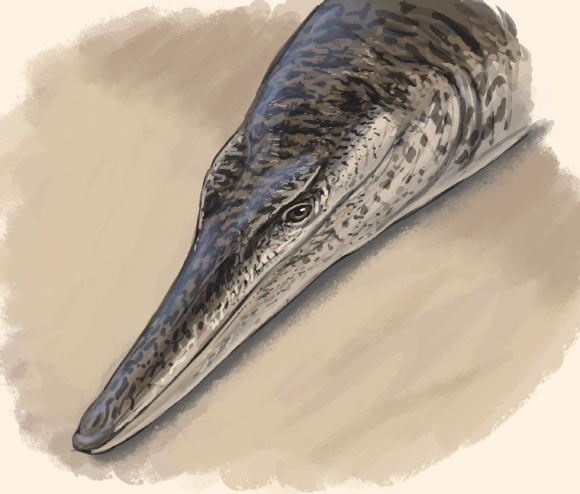
New Species of Ancient Marine Crocodile Discovered in Germany
Read more: New Species of Ancient Marine Crocodile Discovered in GermanyAn artist’s impression of Enalioetes schroederi. Image credit: Joschua Knüppe. SciNews has a story about the discovery of a new species of ancient marine reptile. Enalioetes schroederi lived during the Cretaceous Period, some 140 to 132 million years ago. This fossil specimen, which includes a “perfect” skull, was found in the Stadthagen Formation of northwestern Germany about 100 years ago in a quarry near Hannover. It’s said to be the best preserved metriorhynchid crocodylomorph known from the Cretaceous period. The description was published in the Journal of Systematic Palaeontology. “The specimen is remarkable as it is one very few metriorhynchids that is…
-
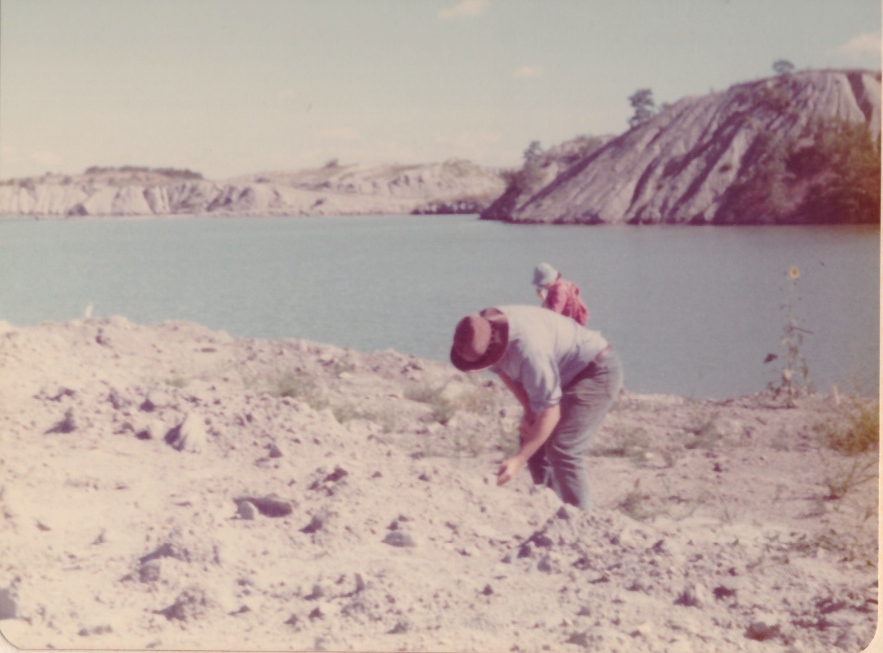
Mazon Monday #229: Pit 11 Field Trip in September 1976
Read more: Mazon Monday #229: Pit 11 Field Trip in September 1976This is Mazon Monday post #229. What’s your favorite Mazon Creek fossil? Tell us at email:esconi.info@gmail.com. —————————————————– The hills of Pit 11 have changed quite a bit over the years. Pit 11 was and active mine until 1974, so these photos are from just two years afterwards. Notice the lack of vegetation! If you’ve been there anytime recently, you know how much different it looks today… especially in later summer. These photos come from Kathy Dedina who was president of ESCONI in the late 1990s. She took some great photos of ESCONI events. These photos date to September 1976.
-
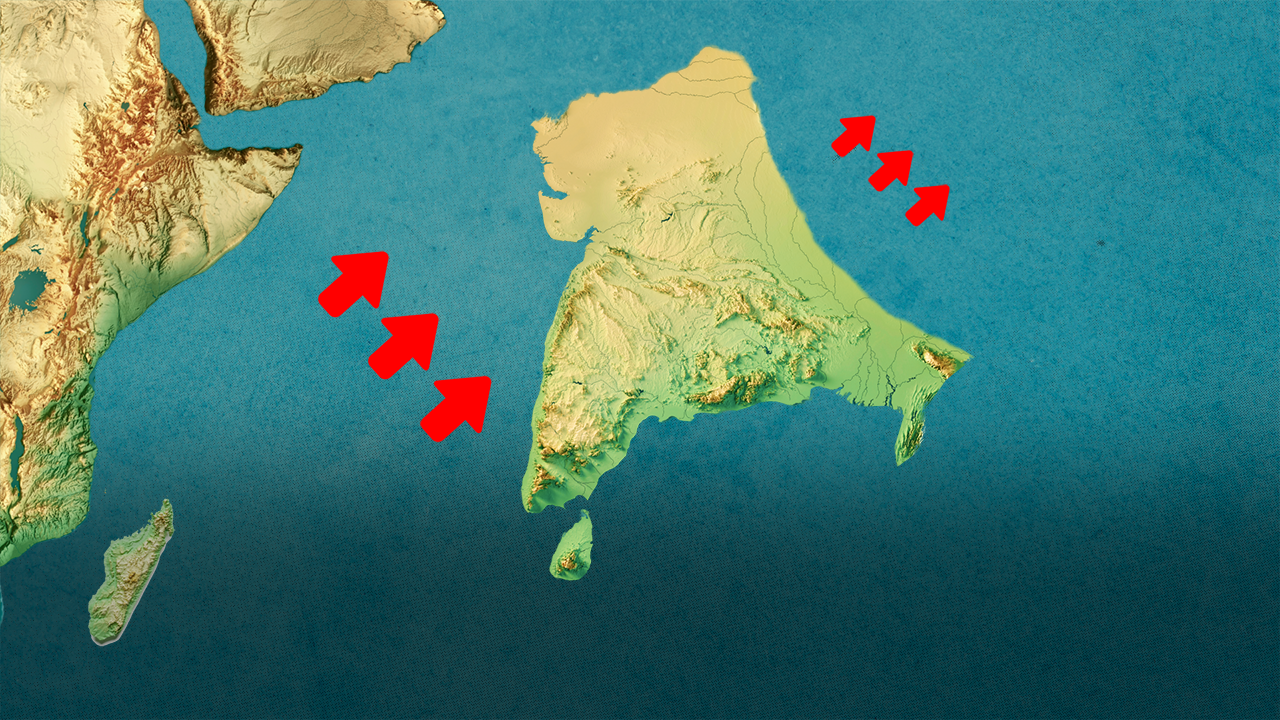
PBS Eons: When India Was An Island
Read more: PBS Eons: When India Was An IslandPBS Eons has a new episode. This one is about the island isolation and how it affects evolution. We see that in the paleontological record of India. We need to talk about the biggest break-up of all-time: the break-up of the supercontinent Pangea, and how, ultimately, when India smashed back into Asia, it traded one form of evolutionary isolation for another.
-
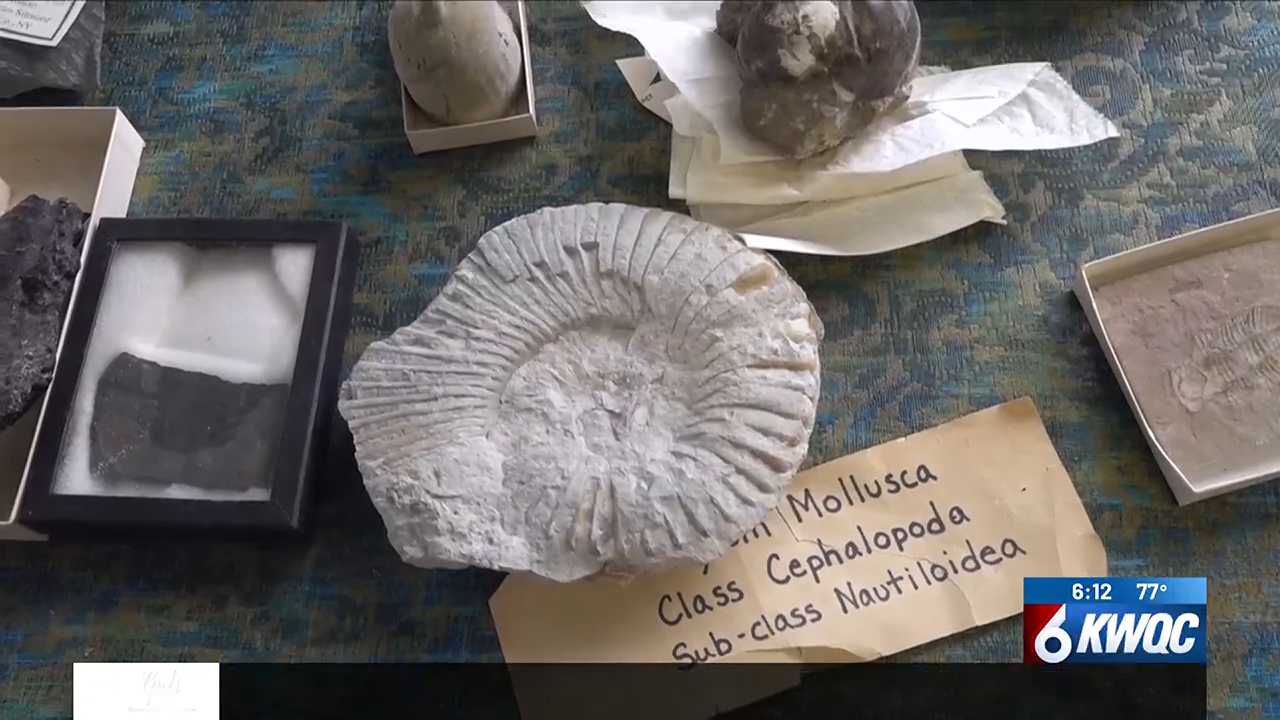
Grand Opening of the Cambridge Natural History Museum
Read more: Grand Opening of the Cambridge Natural History MuseumCambridge Illinois has a new museum… the Cambridge Natural History Museum. It opened up August 10th, 2024 from 10:00 AM to 2:00 PM. Cambridge Natural History Museum will hold a grand opening celebration Saturday, August 10th, 2024 from 10:00 AM to 2:00 PM. Located at 132 W Center Street, Cambridge, IL, the museum will showcase a captivating collection of fossils, minerals, and Native American artifacts, all curated by a remarkable young paleontologist. Guests will even have a chance to touch a real dinosaur fossil. Anderson Taylor, a 9 year-old Cambridge resident, is very excited to see his dream of opening…
-
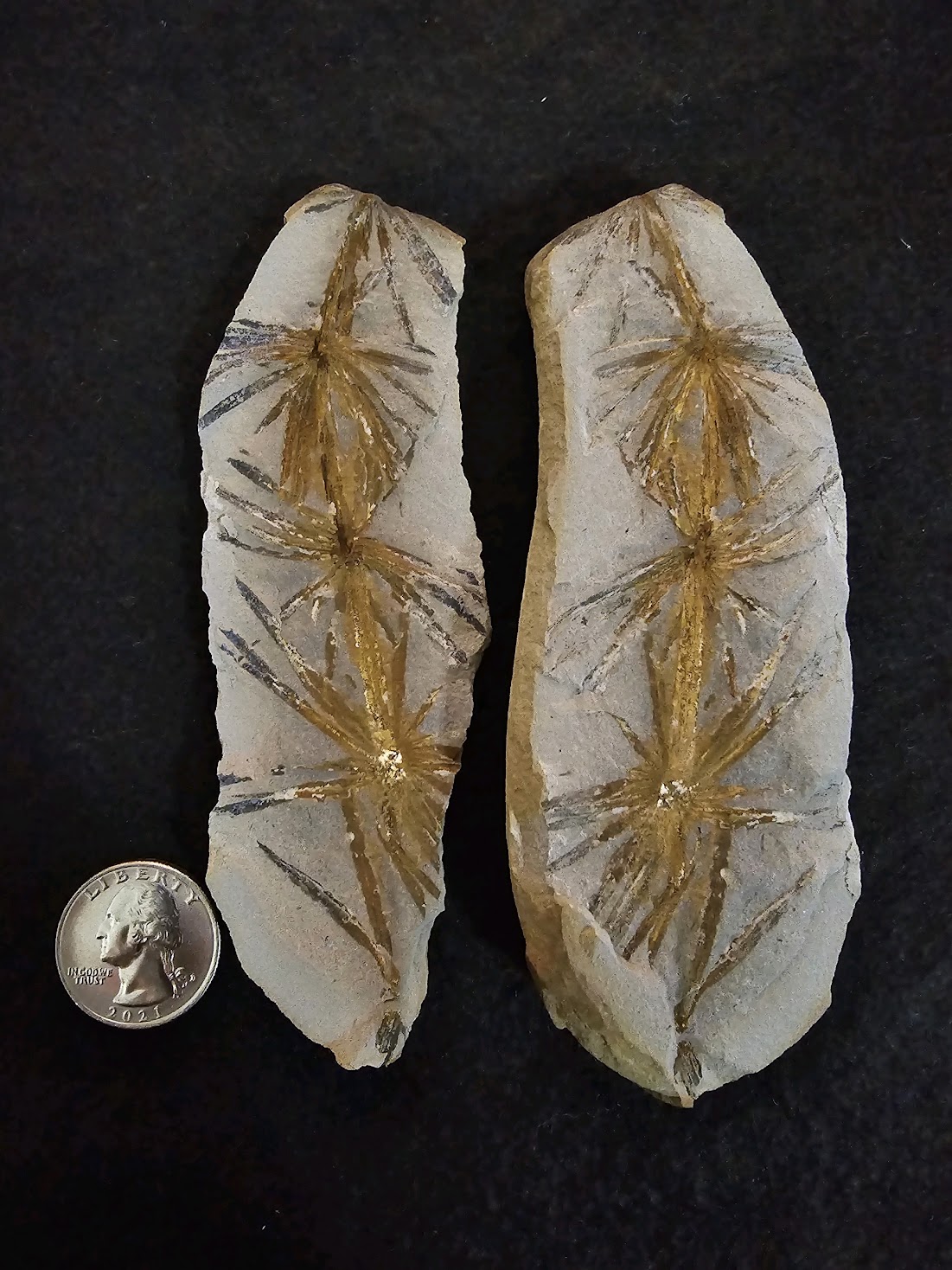
Fossil Friday #225: Annularia inflata
Read more: Fossil Friday #225: Annularia inflataThis is the “Fossil Friday” post #225. Expect this to be a somewhat regular feature of the website. We will post any fossil pictures you send in to esconi.info@gmail.com. Please include a short description or story. Check the #FossilFriday Twitter hash tag for contributions from around the world! —————————————————– Today, we have a very colorful Annularia inflata from the Mazon River. Annularia is some of the foliage from Calamites. It was described by Leo Lesquereux in 1870. For more information, see Mazon Monday #60. This beautiful specimen was collected from the Mazon River by Jeremy Zimmerman. Thanks for sharing, Jeremy!
-

Throwback Thursday #226: Poem “Rockitis”
Read more: Throwback Thursday #226: Poem “Rockitis”This is Throwback Thursday #226. In these, we look back into the past at ESCONI specifically and Earth Science in general. If you have any contributions, (science, pictures, stories, etc …), please send them to esconi.info@gmail.com. Thanks! The author of the poem below was Winifred Reutter (1909 – 1998) of White River, South Dakota. She is a noted on the South Dakota Hall of Fame as an author of books and poems. One of her books is “Prairie Poetry”. Winifred Reutter, of White River, SD, is one of the outstanding people who helped preserve the heritage of her area in…
-

ESCONI Field Trip to Braceville, IL for Mazon Creek Fossils – Saturday, September 7th and Sunday September 8th, 2024
Read more: ESCONI Field Trip to Braceville, IL for Mazon Creek Fossils – Saturday, September 7th and Sunday September 8th, 2024Braceville Field Trip Rules Sept 2024 The ESCONI field trips to Braceville for Mazon Creek fossils are set for Sept 7 and 8, 2024 from 9 AM to 3 PM. You can attend one or the other, but not both days. There is an attendance limit of 50 people each day. You must register to go on this trip. See rule 6 below for instructions. This is the only way to register. If you are sick, have any symptoms of Covid-19 or have recently tested positive, DO NOT COME. Meet at 9 AM at the entrance to the collecting site…
-

Mazon Monday #228: Eubleptus danielsi
Read more: Mazon Monday #228: Eubleptus danielsiThis is Mazon Monday post #228. What’s your favorite Mazon Creek fossil? Tell us at email:esconi.info@gmail.com. Eubleptus danielsi belongs to the Palaeodictyoptera an extinct order of medium-sized to very large, primitive Palaeozoic paleopterous insects. Palaeodictyoptera give many clues to the evolution of wings in insects. E. danielsi was described by Anton Handlirsch in 1906. Handlirsch (1865 – 1935) was an Austrian entomologist, who worked extensively on many insect orders. He did significant work studying of fossil insects. Handlirsch described E. danielsi in “Revision of American Paleozoic insects. Proceedings of the United States National Museum“. E. danielsi was named for L.E. Daniels…
-
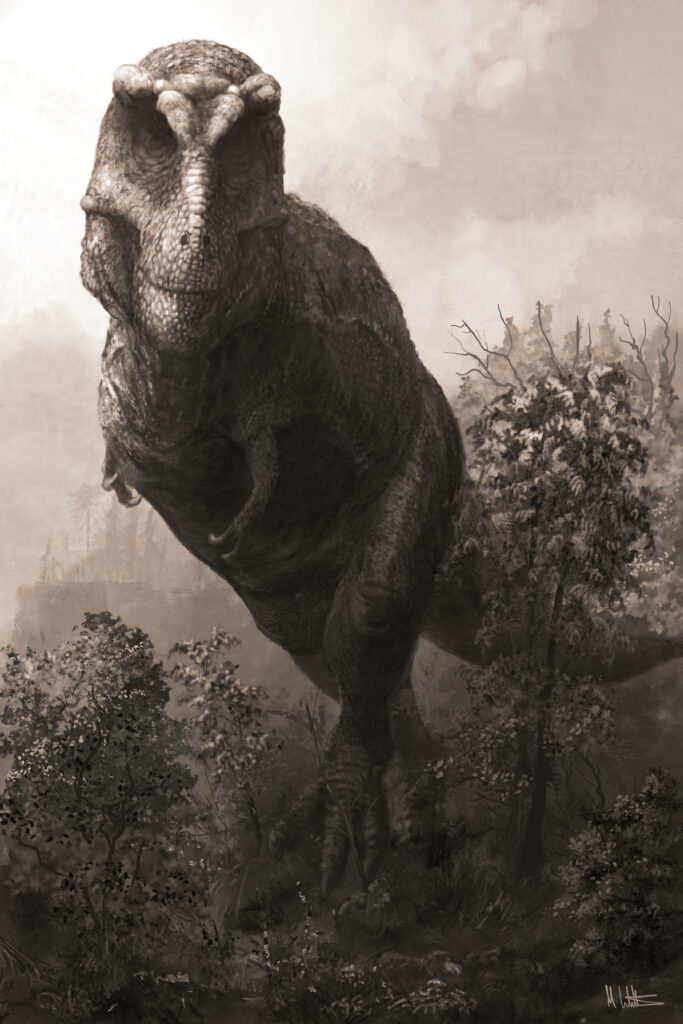
Scientists assess how large dinosaurs could really get
Read more: Scientists assess how large dinosaurs could really getA giant T. rex emerges from the shadows of a forest. Mark Witton © Mark Witton. Science Daily has a post from the Canadian Museum of Nature that looks at the maximum size of dinosaurs. New research published in the journal Ecology and Evolution found that Tyrannosaurs rex might have been 70% heavier than currently accepted. A new study published today in the scientific journal Ecology and Evoiution looks at the maximum possible sizes of dinosaurs, using the carnivore, Tyrannosaurus rex, as an example. Using computer modelling, Dr. Jordan Mallon of the Canadian Museum of Nature and Dr. David Hone of Queen Mary University…
-

Open House at Paul Sereno’s Fossil Lab at the University of Chicago – Thursday, August 8, 2024
Read more: Open House at Paul Sereno’s Fossil Lab at the University of Chicago – Thursday, August 8, 2024Paul Sereno’s Fossil Lab at the University of Chicago has moved into a new facility, and they’re having an open house to welcome visitors in to see the new space and observe some of the new specimens they’ve been working on. Thursday, August 8, from 3:30-5:00pm.5437 S. Wabash (just West of the main University of Chicago campus, see map bellow)Free street parking is usually available in front, up the block, and across the street.
-
Fossil Friday #224: Alethopteris serlii
Read more: Fossil Friday #224: Alethopteris serliiThis is the “Fossil Friday” post #224. Expect this to be a somewhat regular feature of the website. We will post any fossil pictures you send in to esconi.info@gmail.com. Please include a short description or story. Check the #FossilFriday Twitter hash tag for contributions from around the world! —————————————————– Alethopteris serlii is always a favorite. They are usually distinctive fossils, quite often preserved in 3-D. A. serlii was a seed fern from the Carboniferous Period. It is fairly common found in the Mazon Creek fossil deposits. It was named by Alexandre Brongniart (1770 – 1847) in 1836. For more information…
-
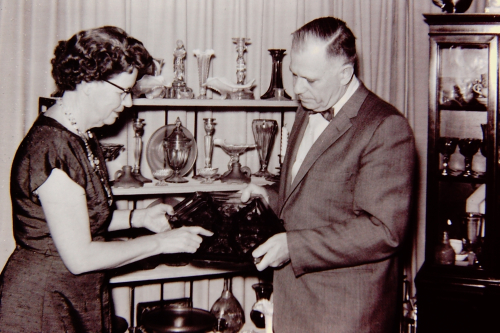
Throwback Thursday #225: Hoffs on Vacation
Read more: Throwback Thursday #225: Hoffs on VacationThis is Throwback Thursday #225. In these, we look back into the past at ESCONI specifically and Earth Science in general. If you have any contributions, (science, pictures, stories, etc …), please send them to esconi.info@gmail.com. Thanks! The June 1951 edition of the newsletter had a couple pages of charming artwork that detailed Wilbur and Donnafred Hoff’s plans during the summer of 1951. We’ve posted previously on the Hoff’s, with a favorite being “Mid-century Mazon Creek” in Mazon Monday #104. In that post, we discover just how cheap and plentiful Mazon Creek fossils were back in the day. The following…
-
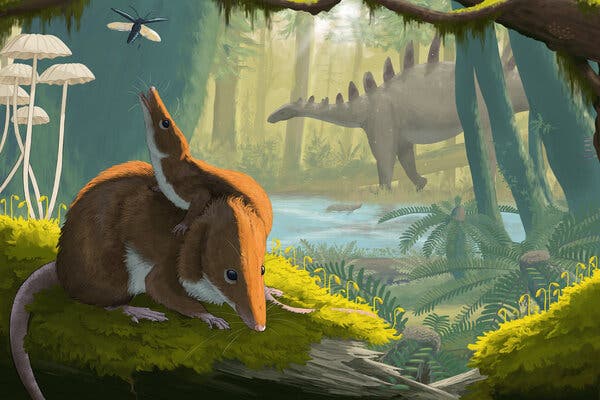
Fossil Hints That Jurassic Mammals Lived Slow and Died Old
Read more: Fossil Hints That Jurassic Mammals Lived Slow and Died OldA life reconstruction of Krusatodon. Not only are the specimens remarkably complete, but one belongs to a juvenile — making it the oldest known juvenile mammal fossil.Credit…Maija Karala The Trilobites column at the New York Times has a post about some unexpected discovery in some Jurassic mammals. Small mammals usually live fast and die young. However, recent research published in the journal Nature found that a pair of mouse-sized mammal fossils from the island of Skye grew more slowly and lived much longer than their modern day counterparts. Krusatodon kirtlingtonensis lived near swampy and thick forests about 166 million years…

ESCONI Gem, Mineral, and Fossil Show
Most Recent Post
- Throwback Thursday #312: Ron Schinderle Donation
 Barb Schinderle stopped by ESCONI Show last month to drop off a donation of her late husband Ron’s fossils. Ron passed away in 2021. He was a long time ESCONI member and an avid fossil collector . He went on many ESCONI field trips. A group of us remember him fondly from our many trips to Pit 11 and Fossil Rock Campgrounds to collect Mazon Creek fossils.
- About ESCONI
- Around the Web
- Calendar of Events
- Code of Ethics and Conduct
- ESCONI Books for Sale
- ESCONI Gem, Mineral, and Fossil Show
- ESCONI in the News
- ESCONI Videos
- Field Trips
- Flashback Friday
- Fossil Friday
- Mazon Creek
- Mazon Monday
- Member Spotlight
- Membership Information
- Reference Material
- Throwback Thursday
- Trilobite Tuesday
Field trips require membership, but visitors are welcome at all meetings!
| Friday, April 10th | General Meeting – 8:00 PM via Zoom. Jessica Hull will present “Life in the Devonian Period, The Age of Fishes.” |
| Saturday, April 11th | Junior Study Group Meeting – 2:00 PM, in person at the College of DuPage Technical Education Center (TEC) Building – Room 1038A (Map). Katherine Howard will present on Sand and Sediment Collecting. Specifics of this meeting are available from Scott Galloway, 630-670-2591, gallowayscottf@gmail.com. |
| Saturday, April 18th | Paleontology Study Group – 7:30 PM via Zoom and in person at the College of DuPage, TEC, Room 1038B (Map). Keith Robitschek will present “Digging the Marl of the Lance Formation.” |
| Friday, April 24th | MAPS Expo XLVII – Springfield, IL. |
| Saturday, April 25th | MAPS Expo XLVII – Springfield, IL. |
| Sunday, April 26th | MAPS Expo XLVII – Springfield, IL. |
| No meeting this month | Mineralogy Study Group |