
-

Throwback Thursday #224: Stephen J. Gould at the Field Museum
Read more: Throwback Thursday #224: Stephen J. Gould at the Field MuseumThis is Throwback Thursday #224. In these, we look back into the past at ESCONI specifically and Earth Science in general. If you have any contributions, (science, pictures, stories, etc …), please send them to esconi.info@gmail.com. Thanks! This post originally appeared as Flashback Friday #17 back in the run-up to ESCONI’s 70th anniversary. On Thursday, September 14, 2000. ESCONI co-sponsored a Steven J. Gould lecture with the Field Museum. This was a huge event for ESCONI, with about 700 people attending. By all accounts, it was very successful. Too bad, Steven isn’t still with us, I’m sure that was a…
-

ESCONI Events July/August 2024
Read more: ESCONI Events July/August 2024Field trips require membership, but visitors are welcome at all meetings! Sat, August 10th ESCONI Field Trip to Hamilton, IL for Railroad Creek Geodes Details can be found here. ESCONI General Meeting – no meeting ESCONI Junior Meeting – no meeting ESCONI Paleontology Study Group – no meeting. See you in September for “Brag Night” ESCONI Mineralogy Study Group – no meeting. Stay tuned for exciting news soon!
-
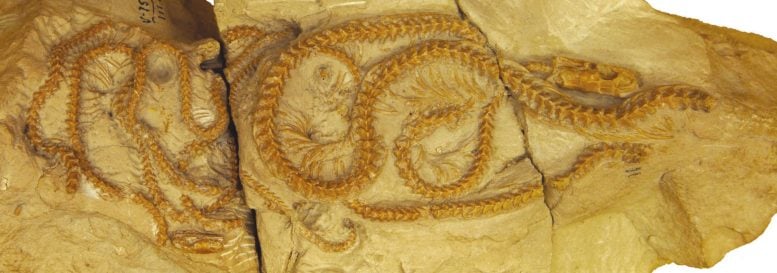
34-Million-Year-Old Snake Discovered in Wyoming Changes Our Understanding of Evolution
Read more: 34-Million-Year-Old Snake Discovered in Wyoming Changes Our Understanding of EvolutionThe fossilized skeleton of the newly discovered snake species Hibernophis breithaupti, which lived 34 million years ago in what is now western Wyoming, reveals insights into the evolution and social behavior of its modern descendants. Credit: Jasmine Croghan SciTechDaily has a story about a newly discovered fossil snake species. Hibernophis breithaupti, was discovered in western Wyoming. It lived about 34 million years ago. This new snake was described in the paper “Morphology and systematics of a new fossil snake from the early Rupelian (Oligocene) White River Formation, Wyoming”, which was published in the journal Zoological Journal of the Linnean Society. The…
-

RRVGMS Rock Swap – Saturday, September 14, 2024 in Rockford, IL
Read more: RRVGMS Rock Swap – Saturday, September 14, 2024 in Rockford, ILROCK MINERAL FOSSIL JEWELRY SWAP MEET Saturday, September 14, 2024 1665 Elmwood Rd. Rockford, IL 61103-1211 A-American Companies Bring it, Swap it, Buy it, and Sell it 9:30 am to 3:30 pm $25 for 10ft by 10ft space Rain or Shine Public Admission Free Sponsored by the Rock River Valley Gem & Mineral Society Contact rrvgms@gmail.com
-

Mazon Monday #226: Historic Collectors – Jerry Herdina
Read more: Mazon Monday #226: Historic Collectors – Jerry HerdinaThis is Mazon Monday post #226. What’s your favorite Mazon Creek fossil? Tell us at email:esconi.info@gmail.com. In January 1975 edition of the Field Museum Bulletin, there was a small blurb about the donation of a “Huge Coal Age Fossil Collection” to the Field Museum. It was vastly understated. Jerry Herdina (1905-1974) was a retired construction engineer with a love for Mazon Creek fossils. Jerry was a long time member of the Field Museum. He amassed his collection between 1928 and 1973. His collection included fossil insects, spiders, amphibians, shrimp, and scorpions… all the good stuff! A cephalopod (yes, a cephalopod!)…
-

T. rex’s Distant Relative Lived in Thailand 145 Million Years Ago
Read more: T. rex’s Distant Relative Lived in Thailand 145 Million Years AgoIsolated teeth of basal tyrannosauroid dinosaur from the Phu Noi locality, Thailand. Image credit: Chowchuvech et al. SciNews has a story about basal tyrannosaurs in Thailand durng the late Jurassic Period. Three isolated tyrannosaur teeth have been found in the Phu Noi locality, Kham Muang district, Kalasin province, northeastern Thailand. While other dinosaurs are known from the area, these teeth represent the first evidence of tyrannosaurs in Southeast Asia. The discovery greatly expands the paleobiogeographical distribution of tyrannosauroids. Read all about the exciting implications of this find in a paper published in the journal Tropical Natural History. The specimens date back…
-
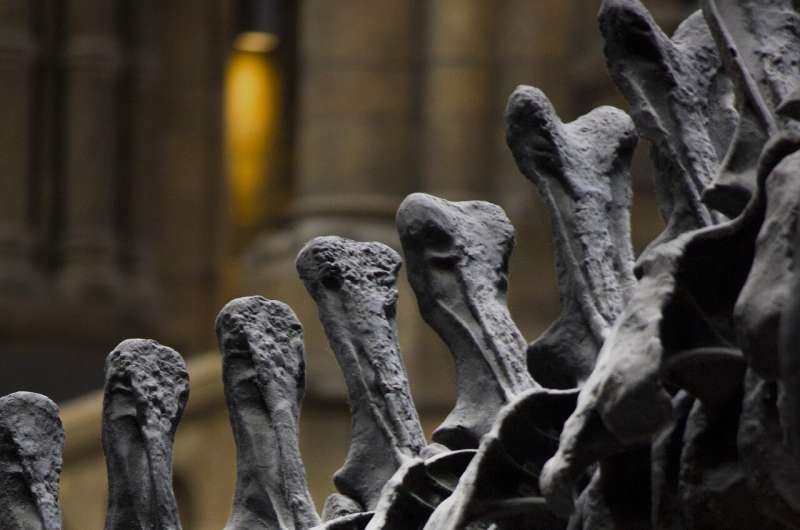
Brazilian researchers discover dinosaur fossil after heavy rains in Rio Grande do Sul
Read more: Brazilian researchers discover dinosaur fossil after heavy rains in Rio Grande do SulCredit: Pixabay/CC0 Public Domain Phys.org brings news of the discovery of what may be one of the most ancient dinosaurs. The specimen was found near a reservoir in the municipality of Sao Joao do Polesine in the southern state of Rio Grande do Sul after heavy rains in May 2024. The bones are thought to be around 233 million years old and belong to an apex predator of the group known as Herrerasauridae. The animal was about 8 feet (2.5 meters) long. The fossil found next to a reservoir in the municipality of Sao Joao do Polesine is around 233…
-

Fossil Friday #222: Macroneuropteris scheuchzeri
Read more: Fossil Friday #222: Macroneuropteris scheuchzeriThis is the “Fossil Friday” post #222. Expect this to be a somewhat regular feature of the website. We will post any fossil pictures you send in to esconi.info@gmail.com. Please include a short description or story. Check the #FossilFriday Twitter hash tag for contributions from around the world! —————————————————– Today, we have a Macroneuropteris scheuchzerii from the Mazon River at the Kodat Farm locality. M. scheuchzeri is extremely common is some localities, such as the Mazon River in Morris. It was named for Johann Jakob Scheuchzer, a Swiss physician and natural scientist in the 1700’s. The genus was changed from…
-

Throwback Thursday #223: Eugene Richardson – Fossil Localities Old and New
Read more: Throwback Thursday #223: Eugene Richardson – Fossil Localities Old and NewThis is Throwback Thursday #223. In these, we look back into the past at ESCONI specifically and Earth Science in general. If you have any contributions, (science, pictures, stories, etc …), please send them to esconi.info@gmail.com. Thanks! ——————————————————————————————- Eugene Richardson, Jr. wrote a nice little article for the May 1952 edition of the Chicago Natural History Museum’s Bulletin. At the time, the Field Museum was called to as the Chicago Natural History Museum from 1943 to 1966. Richardson was Curator of Fossil invertebrates from 1946 until he retired in 1982. Richardson’s article is called “Fossil Localities Old and New”. FOSSIL…
-
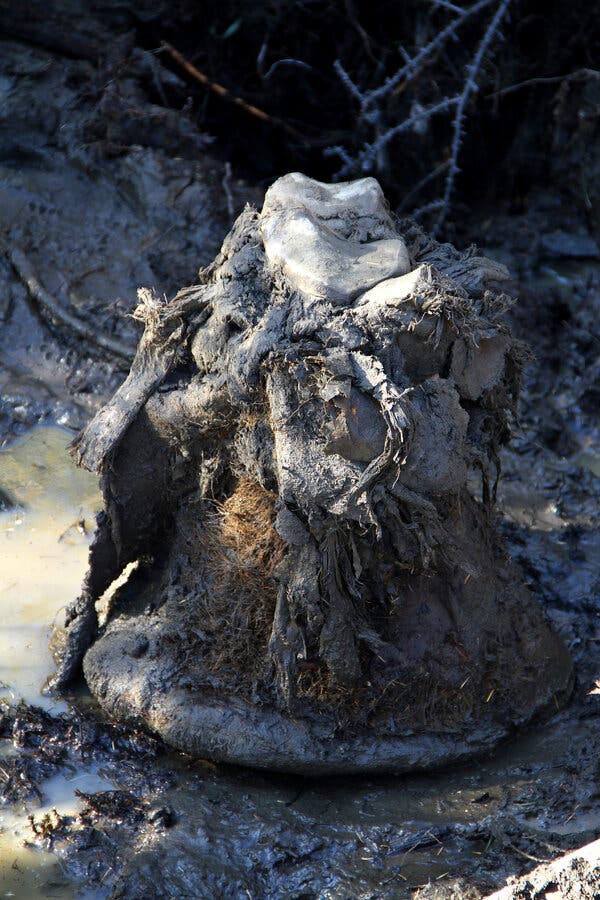
A Mammoth First: 52,000-Year-Old DNA, in 3-D
Read more: A Mammoth First: 52,000-Year-Old DNA, in 3-DThe New York Times has a fascinating article about woolly mammoth DNA. A 52,000 year old chunk of mammoth skin from the permafrost of Siberia as been used to generate a three-dimensional model of their genome. The research was published recently in the journal Cell. The experimental method used in this study could be used in the efforts to resurrect animals like the woolly mammoth. Hendrik Poinar, an evolutionary geneticist at McMaster University in Canada, was “floored” — the technique had successfully captured the original geometry of long stretches of DNA, a feat never before accomplished with an ancient DNA…
-
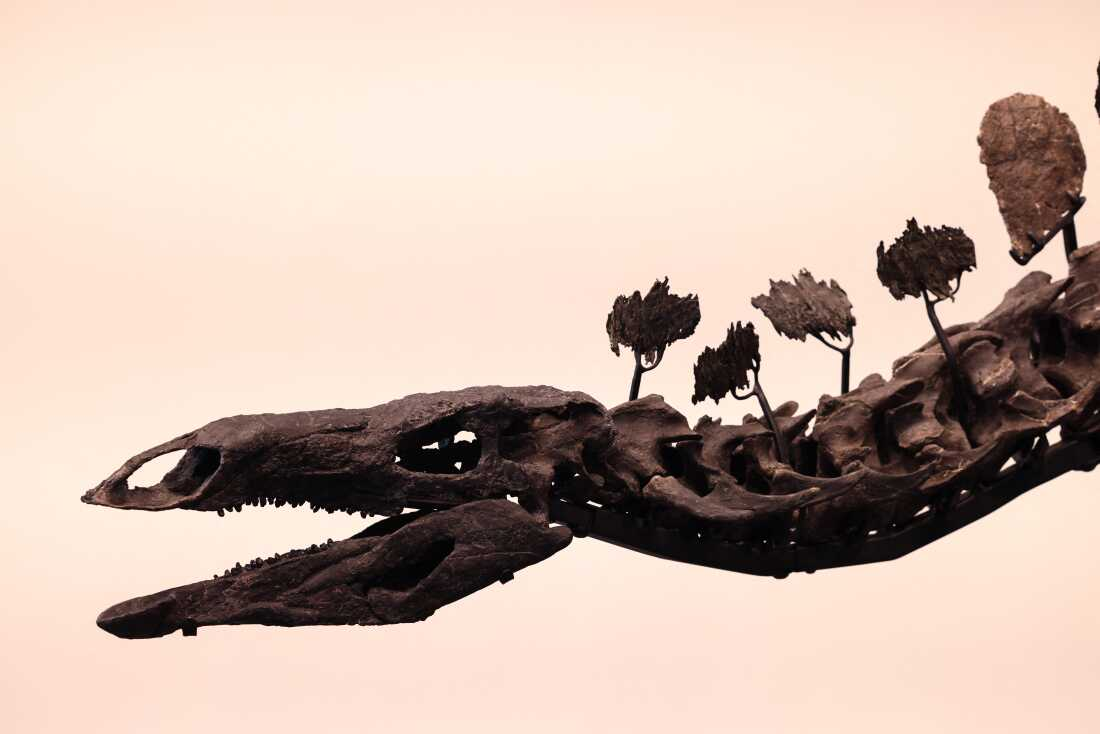
NPR: A stegosaurus fossil could fetch $6 million at Sotheby’s. Should they be auctioned?
Read more: NPR: A stegosaurus fossil could fetch $6 million at Sotheby’s. Should they be auctioned?NPR has a story about a Stegasaurus going up for auction at Sotheby’s on Wednesday, July 17th, 2024. The animal has been named “Apex”. At 11 feet tall and 27 feet long, it’s considered one of the most complete specimens of Stegosaurus ever found. The specimen was discovered in Colorado and is expected to fetch between 4 and 6 million dollars. NPR’s Andrew Mambo talked with Woodruff, who is also a curator at the Phillip and Patricia Frost Museum of Science in Miami. Cary Woodruff: The first time I saw the specimen, I was with the individual who had collected it…
-
Mazon Monday #225: Lepidostrobus foliaceus
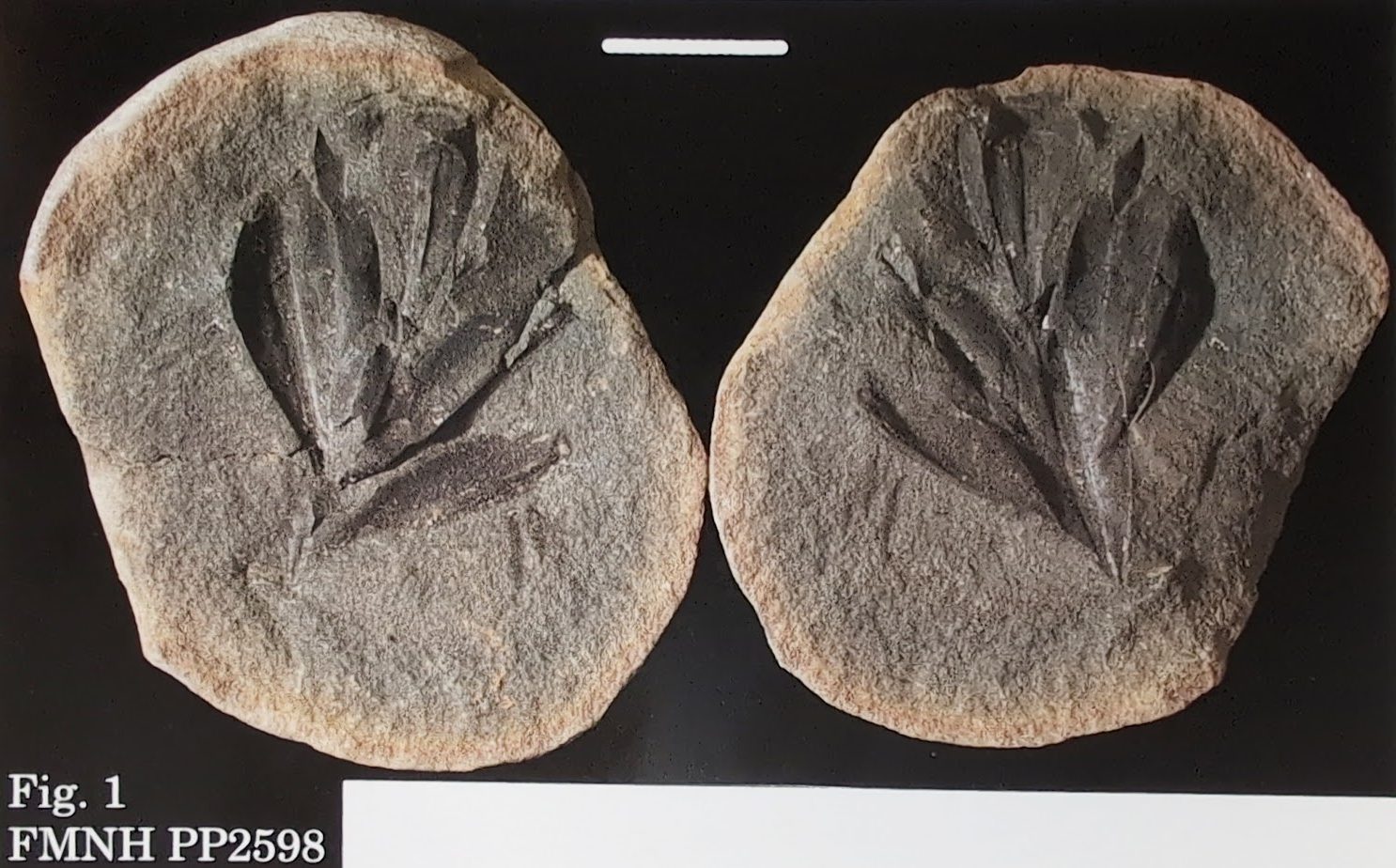
Read more: Mazon Monday #225: Lepidostrobus foliaceusThis is Mazon Monday post #225. What’s your favorite Mazon Creek fossil? Tell us at email:esconi.info@gmail.com. Lepidostrobus foliaceus is one of the rarer forms of Lepidostrobus, which is the cone structure from a lepidodendron tree. L. foliaceus was named by Leo Lesquereux in 1870. Lesquereux (1806-1889) was a Swiss-born bryologist and a pioneer of American paleobotany. He is credited with with naming the Mazon Creek fossil deposit in his 1870 report “Report on the Fossil Plants of Illinois”, where he referred to the Mazon River as Mazon Creek. “At Mazon Creek, the meanders of the stream have dug a broad…
-

Amazing Discovery: Fossil Collector Unearths the Most Complete Dinosaur in the UK Since 1923
Read more: Amazing Discovery: Fossil Collector Unearths the Most Complete Dinosaur in the UK Since 1923An artist’s impression of the dinosaur. Credit: John Sibbick SciTechDaily has a story about a new dinosaur found on the Isle of Wight. The animal, Comptonatus chasei, lived about 125 million years ago during the Cretaceous Period. It was found by fossil collector Nick Chase and named for him. Nick has tragically died of cancer. The description was published in “Comptonatus chasei, a new iguanodontian dinosaur from the Lower Cretaceous Wessex Formation of the Isle of Wight, southern England”, which appeared in the Journal of Systematic Paleontology. A new paper describes the most complete dinosaur discovered in this country in the…
-
ESCONI Field Trip to Hamilton, IL for Railroad Creek Geodes on August 10th, 2024
Read more: ESCONI Field Trip to Hamilton, IL for Railroad Creek Geodes on August 10th, 2024There will be a field trip to Vickers Geodes in Hamilton, IL on August 10, 2024. Hamilton IL is across the Mississippi River from Keokuk Iowa. The address is 511 South 9th St. The geodes at this location range from golf ball to basketball in size! They are in shale and need to be dug out, so bring big tools like a pickaxe and crowbar, and expect to get dirty. This is a pay-to-dig site and open to the public with no age restriction. The cost to participants is $25 per 5-gallon bucket paid to the landowner. We will meet…
-
Fossil Friday #221: Edestus heinrichi Shark Tooth
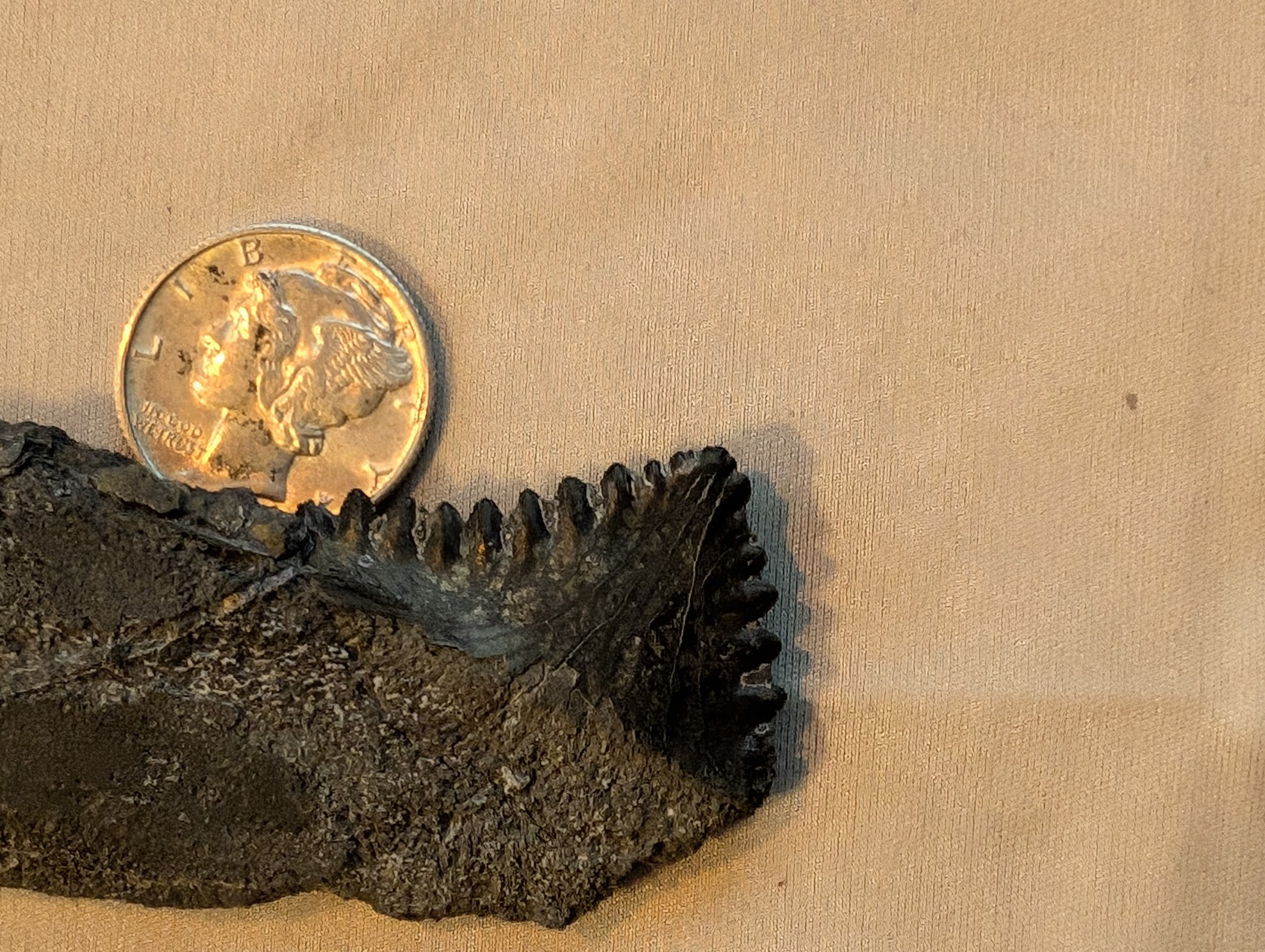
Read more: Fossil Friday #221: Edestus heinrichi Shark ToothThis is the “Fossil Friday” post #221. Expect this to be a somewhat regular feature of the website. We will post any fossil pictures you send in to esconi.info@gmail.com. Please include a short description or story. Check the #FossilFriday Twitter hash tag for contributions from around the world! Another contribution to Shark Week…. an Edestus heinrichi shark fossil jaw with a tooth. Edestus sharks are known from the Pennsylvanian Period. The genus was established by Joseph Leidy in 1856, when he described Edestus vorax. Edestus is one of the sharks known for its strange tooth whorl, which consisted of a…
-
Throwback Thursday #222: Matthew Galloway’s Exciting Discovery June 2000
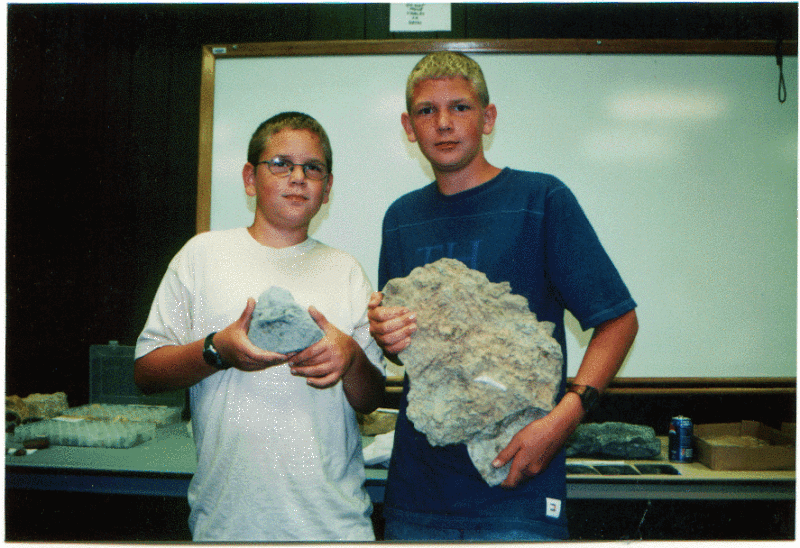
Read more: Throwback Thursday #222: Matthew Galloway’s Exciting Discovery June 2000This is Throwback Thursday #222. In these, we look back into the past at ESCONI specifically and Earth Science in general. If you have any contributions, (science, pictures, stories, etc …), please send them to esconi.info@gmail.com. Thanks! This was originally posted as part of the run up 70th Anniversary as Flashback Friday #7. We are now in the midst of our 75th Anniversary. Lone Star Quarry in Oglesby, IL was always a popular field trip site. It has a rich deposit of marine fossils. The site is about the same age as Mazon Creek, late Pennsylvanian, but had a marine,…
-

Field Museum: Sixty-million-year-old grape seeds reveal how the death of the dinosaurs may have paved the way for grapes to spread
Read more: Field Museum: Sixty-million-year-old grape seeds reveal how the death of the dinosaurs may have paved the way for grapes to spreadLithouva – the earliest fossil grape from the Western Hemisphere, ~60 million years old from Colombia. Top figure shows fossil accompanied with CT scan reconstruction. Bottom shows artist reconstruction. Photos by Fabiany Herrera, art by Pollyanna von Knorring. The Field Museum scientists have been busy… first a giant salamander-like creature and now finely aged wine, or at least finely aged grapes. Fabiany Herrera, assistant curator of paleobotany at the Field Museum in Chicago’s Negaunee Integrative Research Center, is the lead author on a paper in the journal Nature Plants. The paper contains the description of nine species of fossil grapes…
-

The Last Stand of the Woolly Mammoths
Read more: The Last Stand of the Woolly MammothsMammoths remained on Wrangel Island, about 80 miles from the Siberian coast, for about 6,000 years after they vanished from the rest of Asia, Europe and North America.Credit…Beth Zaiken Carl Zimmer has an article about the last of the Woolly Mammoths over on the New York Times. A small population of mammoths on Wrangel Island held on until about 4,000 years ago. Wrangel Island is a large island, about the size of the US state of Delaware, just off the northern coast of Siberia. A recent paper in the journal Cell reconstructed the genetic history of this isolated herd of…
-
Mazon Monday #224: Holmacanthus keithi
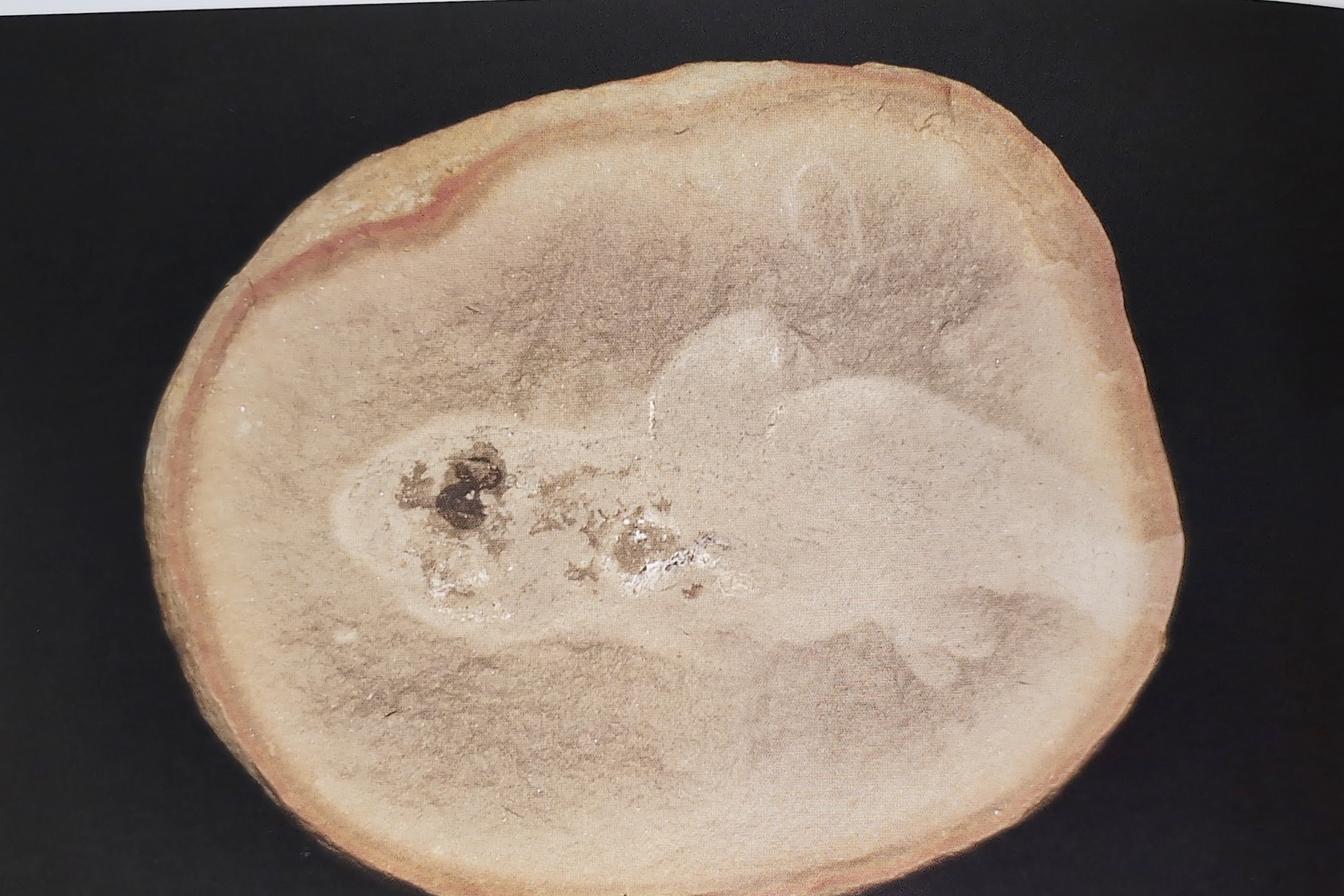
Read more: Mazon Monday #224: Holmacanthus keithiThis is Mazon Monday post #224. What’s your favorite Mazon Creek fossil? Tell us at email:esconi.info@gmail.com. In keeping with Shark Week on the Discovery Channel, we have a Mazon Creek shark… Holmacanthus keithi for this week’s Mazon Monday. Holmacanthus keithi was named for Keith Holm, who found the holotype in Pit 11 in the early 1990s. H. keithi was described by David Bardack and Ranier Zangerl in Chapter 18 of the “Richardson’s Guide to the Fossil Fauna of Mazon Creek”. Both Bardack (1932-2019) and Zangerl (1912-2004) worked on fossil fish together for many years, naming more than a few Mazon…
-

The Poozeum in Williams, Arizona
Read more: The Poozeum in Williams, ArizonaAtlas Obscura has a story about the opening of a new museum in Williams, Arizona. It’s dedicated to the study of coprolites, which is fossilized poop. Dinosaurs did it, birds do it, bees do it, fish do it… even we do it, all animals do it. Mazon Creek coprolites are fairly common. So, what does it tell us? It turns out the waste of yesteryear is very valuable when it comes to understanding animal’ behavior and, of course, its diet. They were noticed by Mary Anning as early as 1824, when she found bezoar stones in the abdominal region of…

ESCONI Gem, Mineral, and Fossil Show
Most Recent Post
- PBS Eons: The Chaotic Race to Name T. rex
 PBS Eons has a new episode. This one is about the controversial history of the name Tyrannosaurus rex.
- About ESCONI
- Around the Web
- Calendar of Events
- Code of Ethics and Conduct
- ESCONI Books for Sale
- ESCONI Gem, Mineral, and Fossil Show
- ESCONI in the News
- ESCONI Videos
- Field Trips
- Flashback Friday
- Fossil Friday
- Mazon Creek
- Mazon Monday
- Member Spotlight
- Membership Information
- Reference Material
- Throwback Thursday
- Trilobite Tuesday
Field trips require membership, but visitors are welcome at all meetings!
| Friday, April 10th | General Meeting – 8:00 PM via Zoom. Jessica Hull will present “Life in the Devonian Period, The Age of Fishes.” |
| Saturday, April 11th | Junior Study Group Meeting – 2:00 PM, in person at the College of DuPage Technical Education Center (TEC) Building – Room 1038A (Map). Katherine Howard will present on Sand and Sediment Collecting. Specifics of this meeting are available from Scott Galloway, 630-670-2591, gallowayscottf@gmail.com. |
| Saturday, April 18th | Paleontology Study Group – 7:30 PM via Zoom and in person at the College of DuPage, TEC, Room 1038B (Map). Keith Robitschek will present “Digging the Marl of the Lance Formation.” |
| No meeting this month | Mineralogy Study Group |
| No meeting this month | Junior Study Group |