Tag: dinosaurs
-

LiveScience: ‘Tiny bug slayer’ relative of dinosaurs and pterosaurs would have fit in the palm of your hand
LiveScience has a story about a cousin to both dinosaurs and pterosaurs. Kongonaphon kely, meaning “tiny bug slayer”, lived about 237 million years ago, during the Triassic period, in what is now Madagascar. It was discovered in 1998, but just recently described in a paper that appeared in the journal Proceedings of the National Academy…
-

PBS Eons: The Story of the Dino Stampede
There’s a new episode of PBS Eons. It’s about trace fossils and the how we can use them to understand what happened in the past. To try to solve the puzzle of Lark Quarry, experts have turned to a special subfield of paleontology — paleoichnology, or the study of trace fossils — to reconstruct…
-
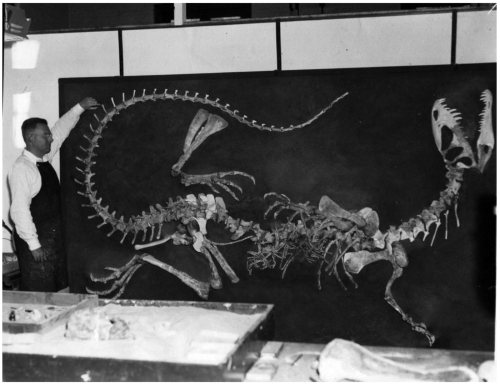
NatGeo: ‘Jurassic Park’ got almost everything wrong about this iconic dinosaur
National Geographic has a post about the “best worst-known” dinosaur – Dilophosaurus. Adam Marsh, a paleontologist at the Petrified Forest National Park in Arizona, led an effort to redescribe Dilophosaurus. That paper was published recently in the Journal of Paleontology. Now, the new analysis includes two previously unstudied fossil specimens from Arizona, providing the first…
-
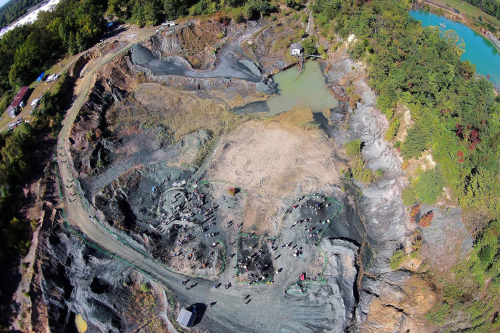
Behind a New Jersey Hardware Store, a Paleontological Bonanza
Atlas Obscura has an interesting story about a fossil site in southern New Jersey. The site dates to the extinction of the non-avian dinosaurs about 66 million years ago. There is an episide of TED’s pindrop, that also tells the story. Learn about Ken Lacovara, discoverer of Dreadnoughtus in 2005 and dinosaurs in New Jersey!…
-
New Dinosaur Podcast: “Terrible Lizards” With Dr. David Hone
If you like dinosaurs (who doesn’t?) and are looking for a new interesting podcast (sure, why not?), checkout the new Terrible Lizards podcast. It features hosts Dr. David Hone and Iszi Lawrence discussing dinosaurs. The podcast is aimed at adults but is clean, so kids can enjoy it too. Episode 1 is “Tyrannosaurus”, with subsequent titles…
-
PBS Eons: When Dinosaurs Chilled in the Arctic
Check out the new PBS Eons episode over on Youtube. This one is about dinosaurs in the Arctic. All told, the Arctic in the Cretaceous Period was a rough place to live, especially in winter. And yet, the fossils of many kinds of dinosaurs have been discovered there. So how were they able to…
-
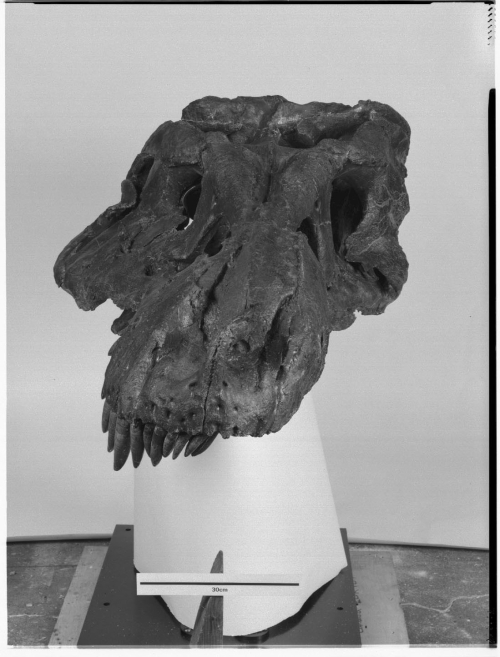
Throwback Thursday #13: Field Museum Photo Archives
This is Throwback Thursday #13. In these, we look back into the past at ESCONI specifically and Earth Science in general. If you have any contributions, (science, pictures, stories, etc …), please send them to esconi.info@gmail.com. Thanks! I recently found a Field Museum Tumblr blog called “Field Museum Photo Archives”. It has many great photos…
-
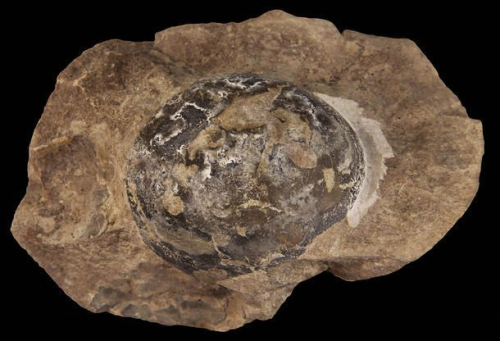
First Soft-Shelled Dinosaur Egg Fossils Found
Smithsonian Magazine has a story about dinosaur eggs. Nature had two articles that found evidence that dinosaur eggs were soft-shelled. The first study found evidence of soft-shelled eggs by analyzing fossilized Protoceratops and Mussaurus egg shells. The evidence suggests eggs similar to those of turtles. The second paper identified an enigmatic fossil, commonly referred to…
-
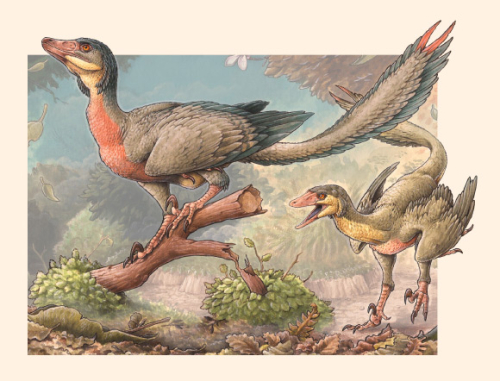
New Bird-Like Dinosaur Discovered: Overoraptor chimentoi
SciNews has a story about a new bird-like dinosaur. Discovered in Argentina, Overoraptor chimentoi lived about 90 million years ago, during the Cretaceous Period, in what is now Patagonia. All the details on this dinosaur can be read in a paper published in the journal Nature. The fossilized remains of Overoraptor chimentoi were recovered from the beds…
-
PBS Eons: When Dinosaur Look-Alikes Ruled the Earth
There’s a new episode of PBS Eons. This one is about the crocodilians that evolved along side the dinosaurs during the Triassic Period. There were a huge number of croc-like animals that flourished during the Triassic Period. Dinosaurs had just arrived on the scene but it was these animals that truly ruled the Earth,…
-
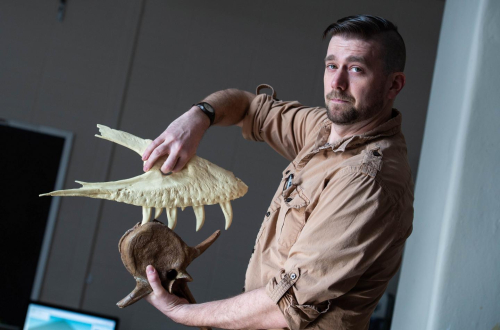
ESCONI June 2020 General Meeting – “Dino-Sores: Injury and Behavior in Cretaceous Dinosaurs” on June 12th, 2020
We have a remote speaker for our June meeting. He is Dr. Joe Peterson from the University of Wisconsin – Oshkosh. Joe earned a BS Geology at SIU-C and an MS/PhD Geology from NIU. Since, then, he worked and volunteered at Burpee for many years. The title of his program is “Dino-Sores: Injury and Behavior…
-

Dinosaur-dooming asteroid struck earth at ‘deadliest possible’ angle
Phys.org has a story about the asteroid that took out the dinosaurs. A study at Imperial College London did simulations and found that the angle of attack for the asteroid that struck the Earth at the end of the Cretaceous Period hit at the “deadliest possible” angle. All the details are in a paper published…
-
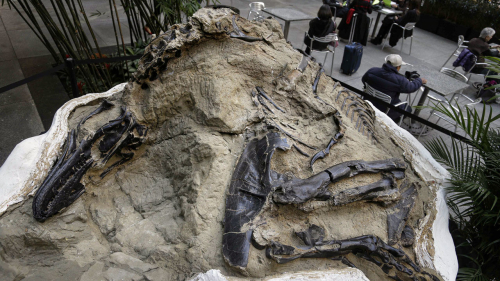
Court rules “Dueling Dinos” belong to landowners, in a win for science
Science Magazine has a story about the “Dueling Dinos”. Discovered in 2006, the “Dueling Dinos” is a specimen that consists of two dinosaurs, a ceratopsian and a tyrannosaur, lying next to each other in what seems like mortal combat. Over the last few years, a court battle has tried to determine who owns these priceless…
-

New Dinosaur Unearthed in Australia
SciNews has an article about a new dinosaur discovery in Australia. This new dinosaur lived around 110 million years ago during the Cretaceous Period. It’s a rare type of dinosaur that belongs to the group Elaphrosaurinae, which are odd ceratosaurians known from fossils from Africa, Asia, and Argentina. The fossils were discovered by Dinosaur Dreaming volunteer…
-
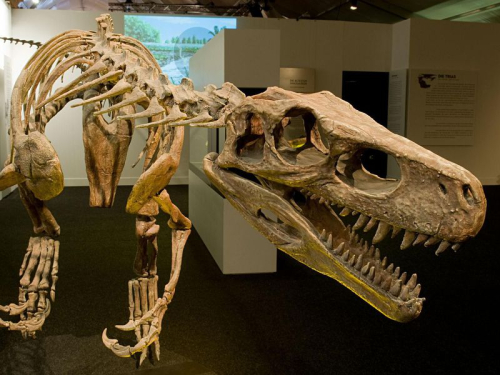
The Rise of Meat-Eating Dinosaurs Is More Complicated Than We Thought
Smithsonian Magazine has an interesting piece about carnivorous dinosaurs. The evolution of large meat eating dinosaurs is a long and complicated story. Dinosaurs evolved around 235 million years ago. At that time, they were lanky and small. One of the largest early meat eaters was Herrerasaursus. It was about 16 feet long and lived in…
-
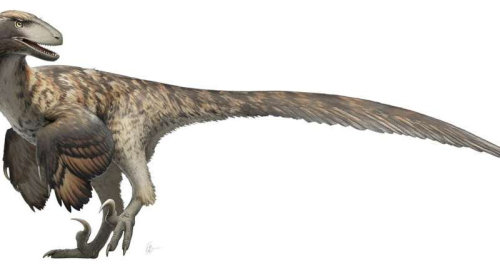
Phys.org: Jurrassic Park got it wrong: Research indicates raptors didn’t hunt in packs
Phys.org has a story about one the most favorite raptor dinosaurs. Raptors became popular after appearing in the 1993 blockbuster movie Jurassic Park. In that movie, where they were incorrectly called Velociraptors instead of Deinonychus antirrhopos, they are portrayed as hunting in packs similar to wolves. Because behavior doesn’t fossilize, there has been little evidence…
-
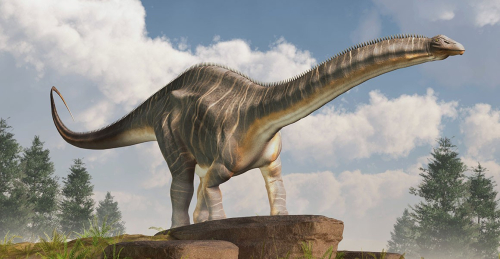
Brontosaurus : reinstating a prehistoric icon
The NHM in London has an article about the reinstatement of Brontosaurus as a valid species name. Both animals we discovered in the American west in the 1970, during a period of time referred to as the “Bone Wars” or the “Great Dinosaur Rush”. Apatosaurus ajax was named by Othniel Charles Marsh in 1877 from…
-
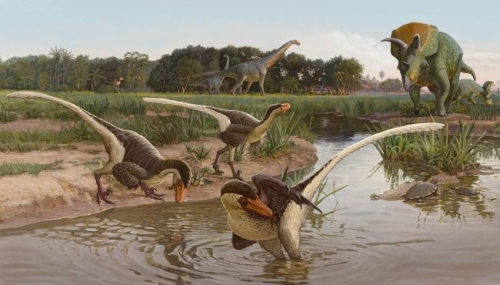
LiveScience: ‘Warrior’ dinosaur with nasty gouge mark on claw uncovered in New Mexico
LiveScience has a story about a new species of carnivorous dinosaur. This new animal is called Dineobellator notohesperus and is a cousin to Velociraptors. It lived about 70 million years ago in what is now New Mexico. This particular specimen has a couple injuries, a nasty rib injury and a gash on its sickle-shaped claw,…
-

Three Ferocious Dinosaurs Featured on New U.K. Coins
Smithsonian Magazine has a story about some new coins in the U.K. There are three new coins that have Megalosaurus, Iguanodon, and Hylaeosaurus, which were the first dinosaurs discovered in modern-day Britain. Over the years, the United Kingdom’s 50 pence coin has paid tribute to an array of intriguing figures who have made an important…
-
PBS Eons: A Short Tale About Diplodocus’ Long Neck
PBS Eons has a new episode up over on Youtube. This one is about Diplodocus and its long neck. Long necks gave sauropods a huge advantage when it came to food, but not in the way you think. And this benefit would allow them to become the biggest terrestrial animals of all time!
-
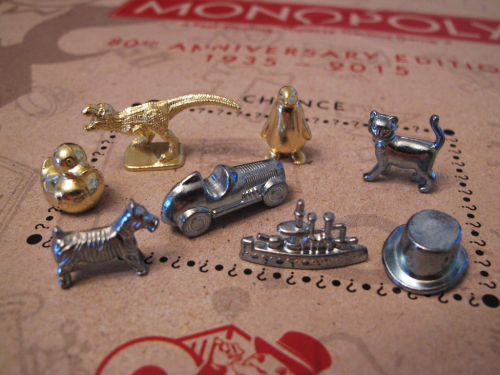
Meet the New Monopoly Tokens: A Rubber Ducky, a T-rex and a Penguin
Apparently, I don’t pay attention to events in the board game world… even when they touch the paleontology world. A co-worker recently made me aware that there is now a T-rex piece in every Monopoly game, which is very cool! This change happened about 3 years ago in 2017. The NY Times even did a…
-
PBS Eons: The Giant Dinosaur That Was Missing a Body
PBS Eons has a new video. This one is about Deinonychus, whose name means horrible hand. From end to end, its forelimbs alone measured an incredible 2.4 meters long and were tipped with big, comma-shaped claws. But other than its bizarre arms, very little material from this dinosaur had been found: no skull, no…
-
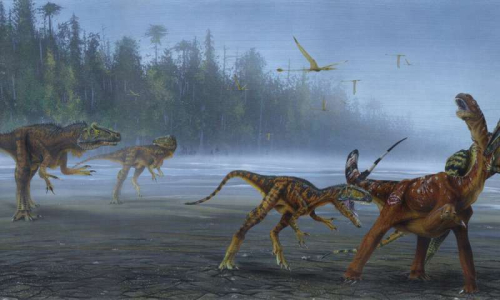
New species of Allosaurus discovered in Utah
Phys.org has a story about a new Allosaurus species discovered in Utah. The first specimen of the new species of Allosaur, called Allosaurus jimmadseni, was discovered back in the early 1990s in Dinosaur National Monument in northeastern Utah. It lived between 152 and 175 million years ago, during the Jurassic Period. It differs from the…
-
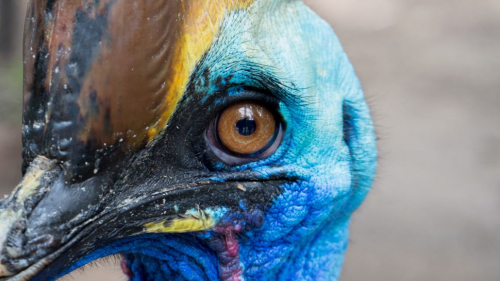
LiveScience: Are Birds Dinosaurs?
LiveScience has an interesting story that explains how and why birds are dinosaurs. What do sparrows, geese and owls have in common with a velociraptor or the mighty Tyrannosaurus rex? All can trace their origins to a bipedal, mostly meat-eating group of dinosaurs called theropods (“beast-footed”) that first appeared around 231 million years ago, during the…
-
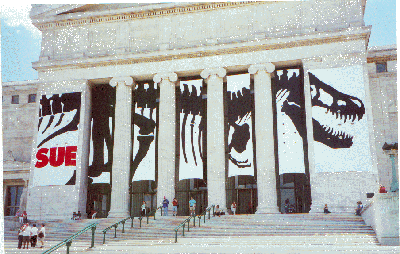
ESCONI Flashback Friday #36: SUE at the Field Museum
As part of the celebration of ESCONI’s 70th Anniversary, here is Flashback Friday post #36. If you have pictures or stories to contribute, please send them over to esconi.info@gmail.com. Thanks! SUE had her Grand Opening at the Field Museum on May 17th, 2000. Here is a link to the ESCONI page to document the event. …
-

World Atlas: What Is The Difference Between Paleontology And Archeology?
Check out this article in the World Atlas. I hear this all the time when I mention fossil hunting… quite often they say something like “I love archeology” or “When did you get interested in archeology” or even “Where do archeologists find dinosaur bones?” Hopefully, this will clear up the concepts, paleontologists study dinosaurs and…
-
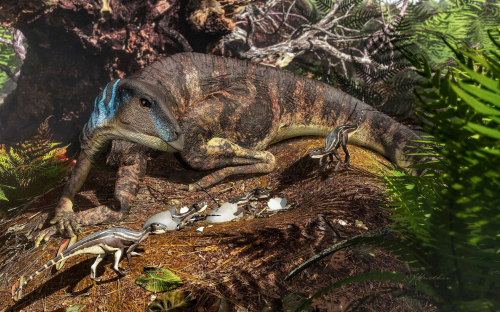
SciNews: Paleontologists Uncover Fossilized Remains of Baby Ornithopod Dinosaurs in Australia
SciNews has a story about the fossils of baby Ornithopod dinosaurs discovered in Australia. The animals are baby Weewarrasaurus pobeni dinosaurs, that lived about 100 million years ago during the middle Cretaceous period. Southeastern Australia, where these dinosaurs lived, was much closer to the South Pole at the time. These specimens reveal important insights into…
-
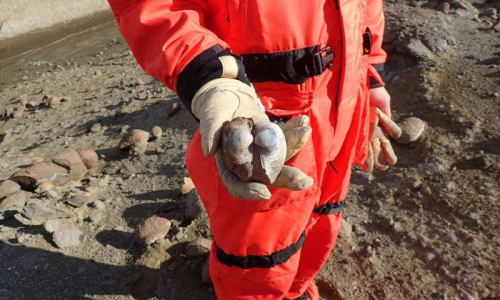
Earth was stressed before dinosaur extinction
Phys.org has an interesting story about the extinction of the dinosaurs. A new study, led by researchers from Northwestern University, shows that the chemistry of fossilized clam and snail shells changed greatly in the years leading up to the K-Pg mass extinction event. This change is likely due to a large influx of carbon into…
-

Early meat-eating dinosaur revealed via spectacular fossil
National Geographic has a story about a new dinosaur discovery. This new dinosaur, named Gnathovorax cabreirai, dates to about 230 million years ago during the Triassic Period. It represents one of the earliest dinosaurs ever found. This discovery was made near the town of Sao Joao do Polesine in southern Brazil. Details can be found…
-
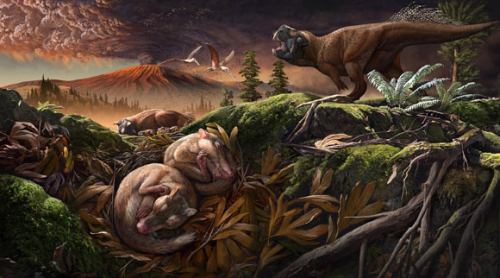
New Cretaceous-Period Mammal Unveiled
Sci-News has a story about a new mammal that lived along side the dinosaurs during the Mesozoic Era. The animal, named Origolestes lii, is part of the famous Jehol Biota, which dates to the Cretaceous Period 133 to 120 million years ago. This biota was a terrestrial and freshwater ecosystem found across the Chinese provinces…
