Tag: dinosaurs
-
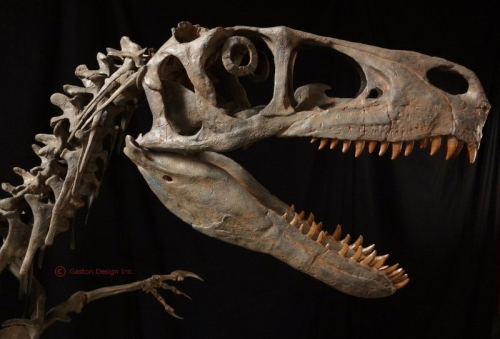
NPR: Utah Considers State Park Named For Utahraptor Dinosaur
NPR Morning Edition has a story about a new proposed State Park in Utah. The park, called Utahraptor State Park, would commemorate the discovery of a large block of Utahraptor fossils found back in 2001. The animals lived about 136 million years ago and would have looked similar to Deinonychus, but larger. Utah State paleontologist…
-
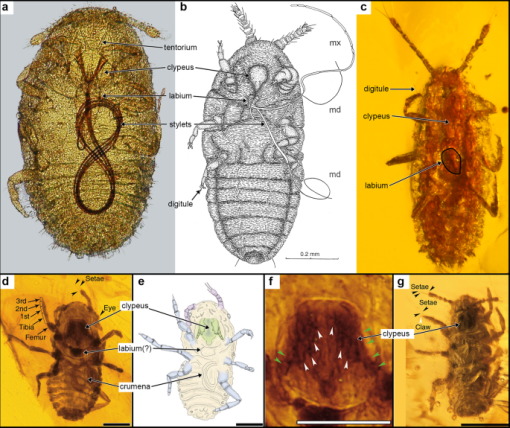
Nature: Insects with 100 million-year-old dinosaur feathers are not ectoparasites
Nature has an open access paper which looked deeper into the discovery of insects found on dinosaur feathers preserved in amber. The amber was found in the Myanmar and dates to the mid-Cretaceous Period about 100 million years ago. The original paper “New insects feeding on dinosaur feather in mid-Cretaceous amber” was published in 2019.…
-
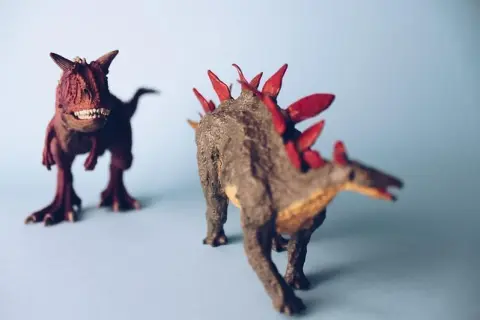
All Dinosaurs Considered: Looking Back at Prehistoric Illinois
NPR’s All Things Considered The 21st Show has a look back at prehistoric Illinois. They interview Paleontologists Joe Devera, Senior Paleontologist at the Illinois State Geological Survey and Jingmai O’Connor, Vertebrate Paleontologist and associate curator of Fossil Reptiles at the Field Museum in Chicago about what might Illinois looked like during the time of the…
-

Terrible Lizards Podcast: Spinosaurus Megasode!
The Terrible Lizards podcast has an episode about all things Spinosaur. One of the hosts, David Hone, is a co-author of a recent paper in the journal Palaeontologia Electronica. That paper is entitled “Evaluating the ecology of Spinosaurus: Shoreline generalist of aquatic pursuit specialist?”. It challenges some of the theories in other recent papers that…
-
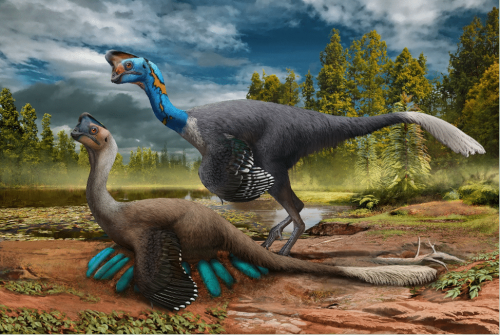
Researchers Announce World’s First Dinosaur Preserved Sitting On Nest of Eggs With Fossilized Babies
The Carnegie Museum of Natural History has announced an amazing dinosaur find. The fossils are of an adult oviraptorid theropod dinosaur sitting on a nest of eggs, The eggs include fossilized baby dinosaurs. This specimen was found in the Jiangxi Providence of southern China. The animal lived about 70 million years ago. Ironically, oviraptors, whose…
-

Throwback Thursday #39: Paleontological Ditty
This is Throwback Thursday #39. In these, we look back into the past at ESCONI specifically and Earth Science in general. If you have any contributions, (science, pictures, stories, etc …), please send them to esconi.info@gmail.com. Thanks! Today we have poem from the July – August 1977 edition of the ESCONI newsletter. It’s called “Paleontological…
-

Terrible Lizards Podcast Season 2
Season 2 of the Terrible Lizards podcast is up over on libsyn.com. There’s eight plus a bonus episode. It’s a good way to spend your time during these winter Covid months. Terrible lizards is a podcast about dinosaurs with Dr David Hone and Iszi Lawrence. The podcast is aimed at grown ups but it is…
-
Smithsonian: The Top Ten Dinosaur Discoveries of 2020
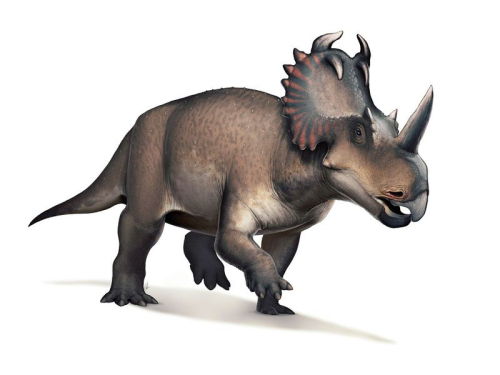
Smithsonian Magazine has a list of the top 10 dinosaur discoveries of 2020. What with the pandemic and all, 2020 has been a horrible year for most of us. However, science matches on and while the vaccine is the biggest scientific advance of 2020, there were a handful of important dinosaur discoveries this year.
-
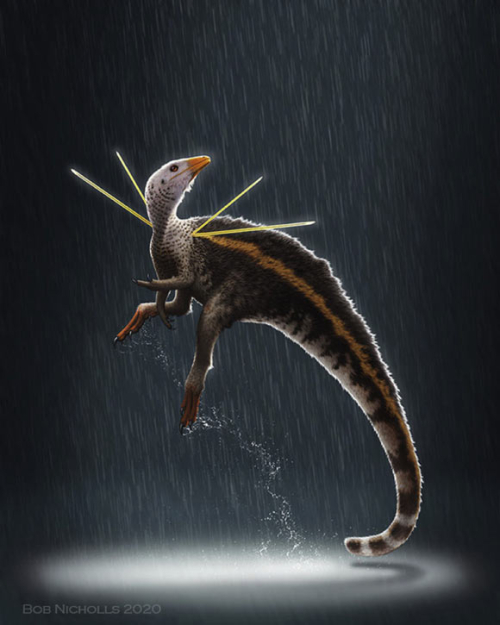
SciNews: Cretaceous Dinosaur Had Impressive Mane and Shoulder Ribbons
SciNews has a story about a new dinosaur from Brazil. The animal, named Ubirajara jubatus, lived about 110 million years ago during the Cretaceous Period in what is now Brazil. It was about the size of a chicken. This dinosaur was collected from the famous Crato Formation in Northeastern Brazil. It has been described in a…
-
SciNews: Non-Avian Dinosaurs Were Not in Decline Prior to Their Extinction
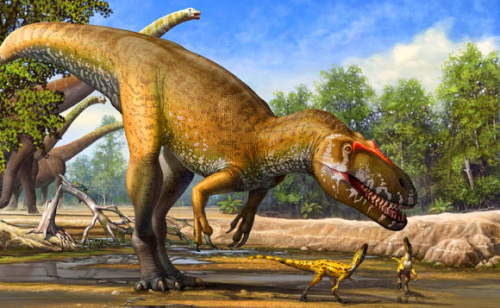
SciNews has a story about the extinction of the dinosaurs. One long controversial point around the K-Pg mass extinction, which took out the non-avian dinosaurs about 65 million years ago, has been whether their diversity was in decline before the meteor struck in Chicxulub. This is often sited in arguments about whether the volcanic…
-
We’ve Rarely Seen a Dinosaur Brain Like This Before
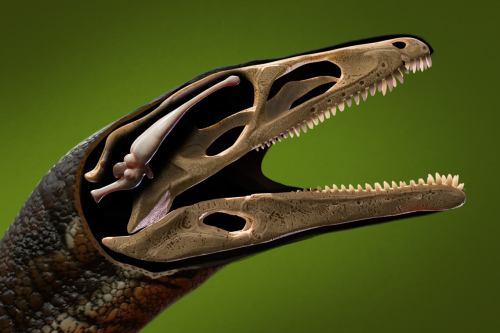
The New York Times Trilobites column has a story about a dinosaur brain. The dinosaur in the article is Buriolestes schultzi. It lived about 230 million years ago in what is now modern-day Brazil. This small bipedal animal is distantly related to the large sauropod dinosaurs of the Jurassic. In the paper, which was published…
-

Throwback Thursday #35: Holiday Party 2018 With Dr. Peter Makovicky
This is Throwback Thursday #35. In these, we look back into the past at ESCONI specifically and Earth Science in general. If you have any contributions, (science, pictures, stories, etc …), please send them to esconi.info@gmail.com. Thanks! The 2018 Holiday Party featured Dr. Peter Makovicky then from the Field Museum speaking about the new Antarctic…
-

Growth Rings From Fossil Bones Reveals T. rex Had Huge Growth Spurts, but Other Dinosaurs Grew “Slow and Steady”
SciTechDaily has a story about Tyrannosaurs rex and how it grew. A new study, published in the journal Proceedings of the Royal Society B, discusses diverse growth strategies in dinosaurs and how that relates to body size. The paper’s authors include Tom Cullen of the North Carolina Museum of Natural History and Peter Makovicky of…
-

Washington Post: How to dissect your Thanksgiving dinosaur
Happy Thanksgiving from ESCONI! The Washington Post has a story and video that does a good job explaining why birds are dinosaurs and how you can see that in your turkey’s skeleton this Thanksgiving. On Thanksgiving, people will gather with their loved ones to share their gratitude for one another over a lavish meal.…
-
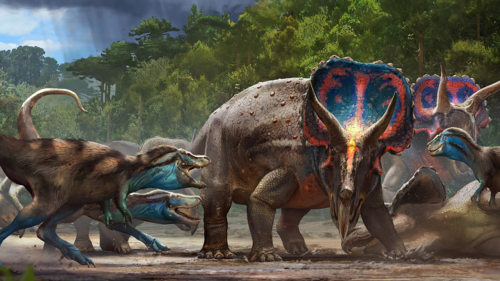
LiveScience: Cretaceous cold case of ‘dueling’ T. rex and Triceratops may finally be solved
LiveScience has a story about the “Dueling Dinosaurs”. This extraordinary fossil specimen of two of the most complete dinosaurs skeletons ever discovered. One is a Triceratops and the other is a Tyrannosaurs rex and they may possibly be locked in 67 million year old mortal combat. These fossils are heading to North Carolina State University to undergo some extensive study. …
-
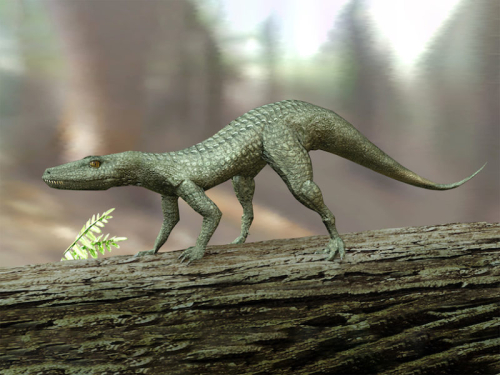
Eos: A Little-Known Mass Extinction and the “Dawn of the Modern World”
Eos has a story about a little known mass extinction that led to the rise of the dinosaurs. New research published in the journal Science Advances shows that climate change driven by volcanic eruptions in western Canada brought about the dinosaurs and eventually the modern world. The event is called Carnian Pluvial Episode. It occurred…
-
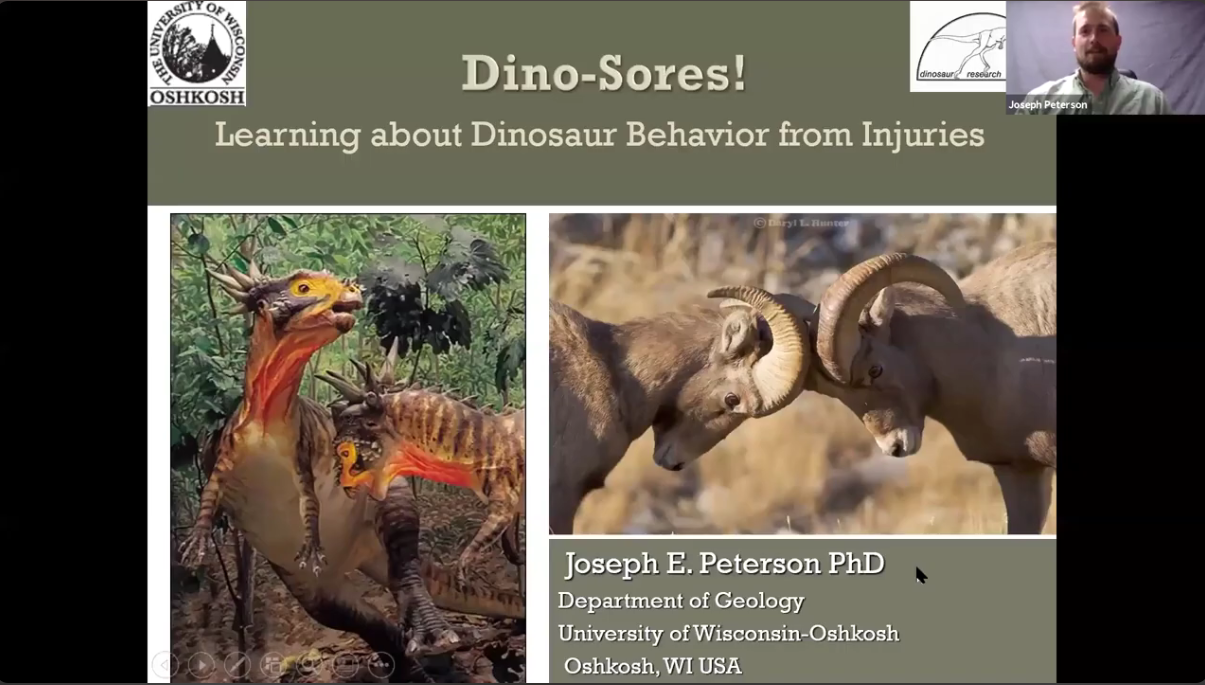
Video: ESCONI General Meeting, June 2020 – “Dino-Sores: Injury and Behavior in Cretaceous Dinosaurs”
We are pleased to present to you the video of our first zoom general meeting. It was held on June 12th, 2020. We had a remote speaker. He was Dr. Joe Peterson from the University of Wisconsin – Oshkosh. Joe earned a BS Geology at SIU-C and an MS/PhD Geology from NIU. Since, then, he…
-
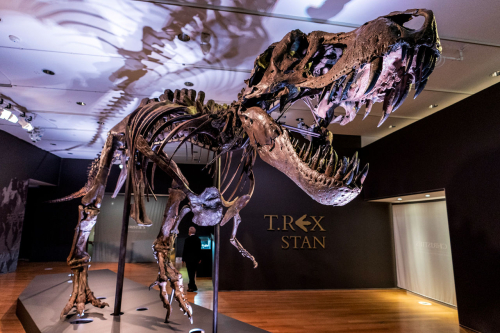
Stan the T. rex just became the most expensive fossil ever sold
LiveScience has a story about the sale of Stan the T-rex on October 6th, 2020. Stan sold for $32 million and set a new record for the sale of a fossil. SUE the T-rex, which went on sale back in 1997, had the previous record as it sold for $8.36 million. Many paleontologists are dismayed…
-

NatGeo: This small dinosaur had a marvelous sense of touch, detailed fossils reveal
National Geographic has a story about Juravenator starki. This animal lived about 150 million years ago, during the Jurassic Period, in what is now Germany. A new paper, in the journal Current Biology, proposes that it might have used sensory scales on its tail to sense fish when it foraged at night. A CHICKEN-SIZE DINOSAUR that lived in what is now…
-

National Geographic goes big on dinosaurs — and big on Yale paleontology
YaleNews has a story about the latest issue of National Geographic. The cover has a Deinonychus, discovered in the 1960 by Yale paleotologist John Ostrom. This web page on the National Geographic site has links to numerous stories about recent dinosaur discoveries. It includes the lead story in this issue of the magazine… “Reimagining Dinosaurs“.…
-
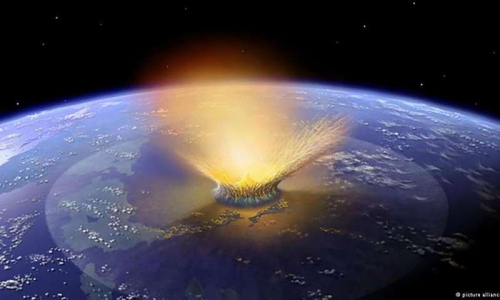
Phys.org: New evidence suggests it was matter ejected from the Chicxulub crater that led to impact winter
Phys.org has a story on new research about the extinction of the non-avian dinosaurs. Since it’s discovery 40 years ago by Walter and Luis Alvarez, this mass extinction, which occurred approximately 66 million years ago, has been a source for much research. The cause is generally thought to be the large meteor that struck the…
-
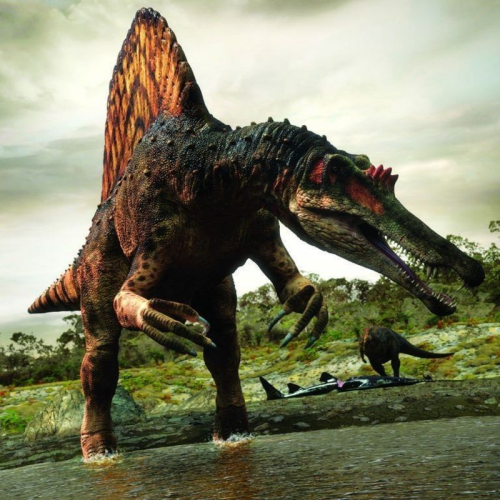
BBC: Spinosaurus dinosaur was ‘enormous river-monster’, researchers say
BBC has a story about Spinosaurus. Some researchers believe they have settled the argument around Spinosaurus being an aquatic. This new evidence, which appeared in the journal Cretaceous Research, stems from over 1200 teeth discovered in a prehistoric river deposit. And it backs up another paper which was published in April. That research looked at…
-
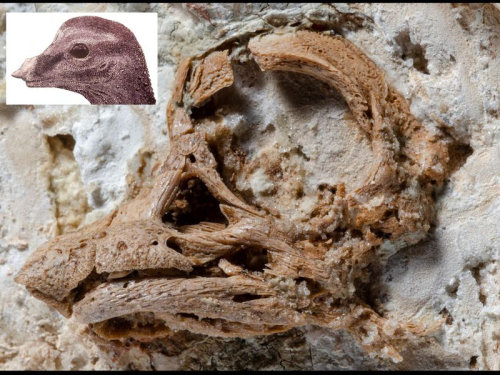
Smithsonian: Why This ‘Unicorn Baby Dinosaur’ Is the ‘Cutest,’ ‘Weirdest’ Ever
Smithsonian Magazine has a piece about the “cutest”, “weirdest” baby dinosaur ever. The embryo dinosaur is thought to be a Tapuiasaurus, a sauropod that grew to about 43 feet long. The egg was smuggled illegally out of Argentina about 20 years ago. Research published in the journal Current Biology has revealed some insights into the…
-
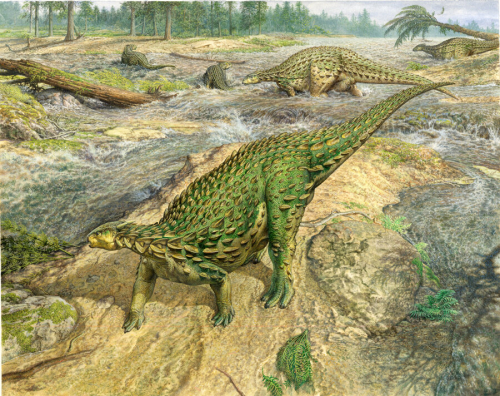
First complete dinosaur skeleton ever found is ready for its closeup at last
Phys.org has a story about a complete dinosaur found on west Dorset’s Jurassic Coast. The skeleton was collected 160 years ago was sent to Richard Owen at the British Museum. The animal lived around 193 million years ago during the early Jurassic Period. The new research was published in the journal Zoological Journal of the…
-
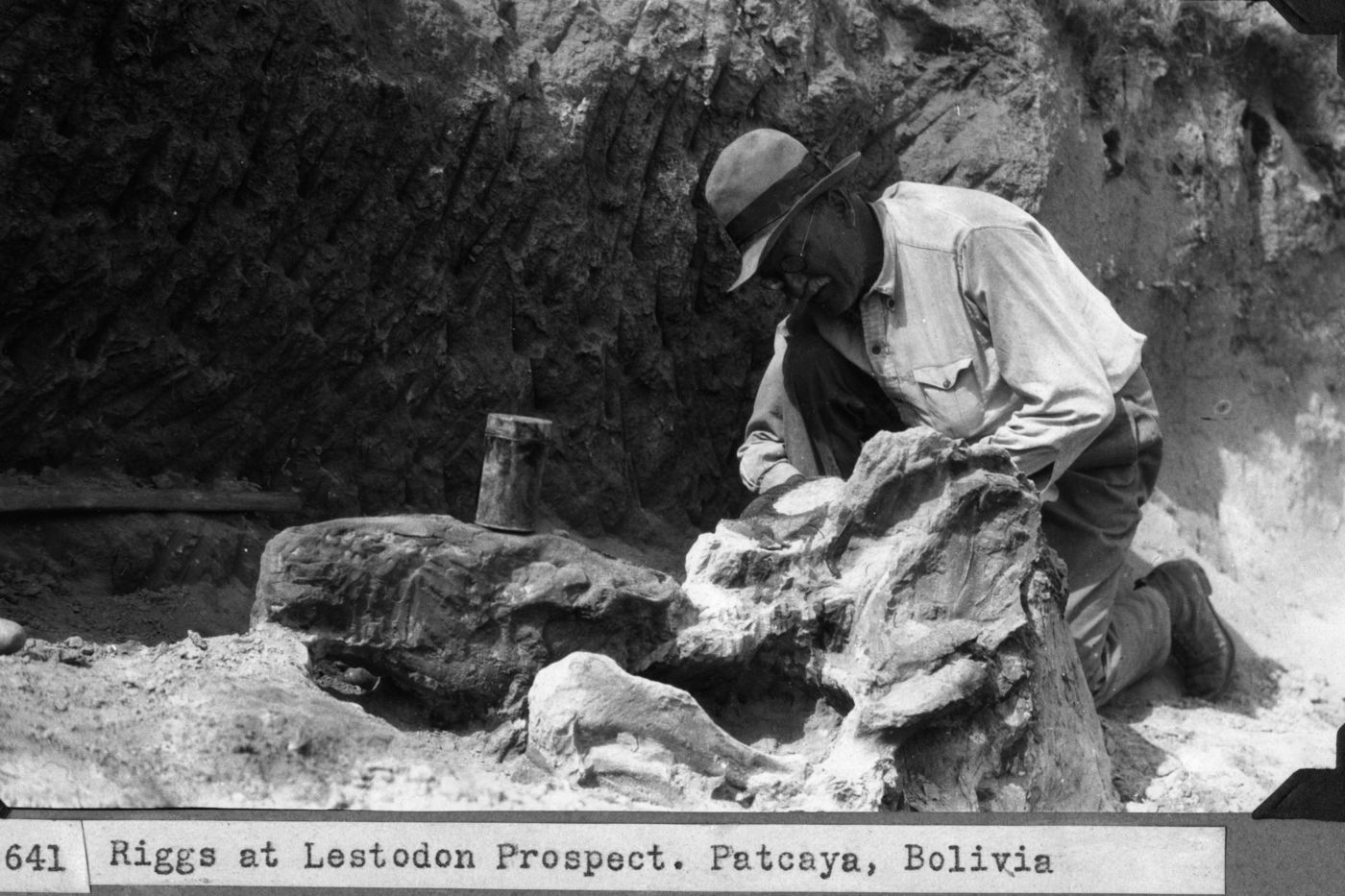
Throwback Thursday #20: Rediscovering a Dinosaur Named Elmer
The Field Museum has a blog post about a dinosaur named for Elmer Riggs. Elmer the man, was the Field Museum’s first field paleontologist. He collected fossils on multiple continents (North and South America). He was employed by the Field Museum from 1899 until he retired in 1942. Although he found countless specimens for the…
-
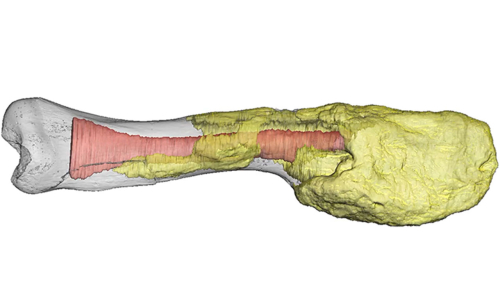
Doctors diagnose advanced cancer—in a dinosaur
Science Magazine has an article out of the Royal Ontario Museum about a malignant dinosaur bone. The dinosaur, Centrosaurus, lived about 76 million years ago in what is now Dinosaur Park in southern Alberta, Canada. It suffered from osteosarcoma of the fibula, which is a lower leg bone. In humans, osteosarcoma primarily attacks teens and…
-
PBS Eons: The Dinosaur Who Was Buried at Sea
There’s a new episode of PBS Eons. This one is about an amazing specimen of Nodosaur discovered in Canada in 2011. It was found in a siderite concretion which formed in the ocean. Paleontologists have been studying nodosaurs since the 1830s, but nobody had ever found a specimen like Borealopelta before. The key to…
-

Sue the T. Rex gets life-like model to match skeleton
The SunTimes has a piece about a new exhibit at the Field Museum. It’s called “SUE in the Flesh” and features a life size model of SUE with a baby Edmontosaurus in her mouth. For two decades, Sue has drawn dinosaur lovers to the Field Museum so they can catch a glimpse of the largest…
-
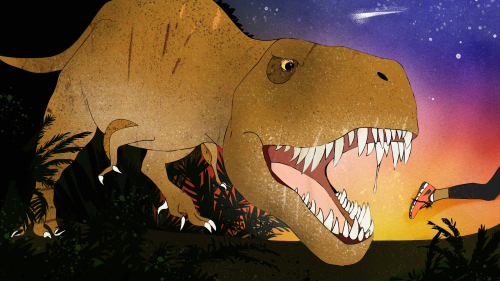
How to Outrun a Dinosaur
Wired has an informative article about how to outrun a dinosaur. It goes to the heart of the issue… allometry, which is the study of the relationship of body size to shape, anatomy, physiology and ultimately behavior. And, partial spoiler, we’d probably be safer than you think against the likes of T-rex and similarly sized…
-
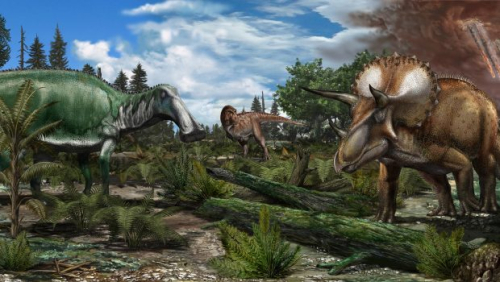
Palaeocast Episode 112: Extinction of the dinosaurs
Palaeocast has an episode on the extinction of the dinosaurs. The episode is an interview with Dr Alessandro Chiarenza about some very thorough analysis that compares the Chicxulub asteroid event with the volcanic eruptions at the Deccan Traps. The paper detailing this analysis can be found in the journal Proceedings of the National Academy of…
