Tag: dinosaurs
-
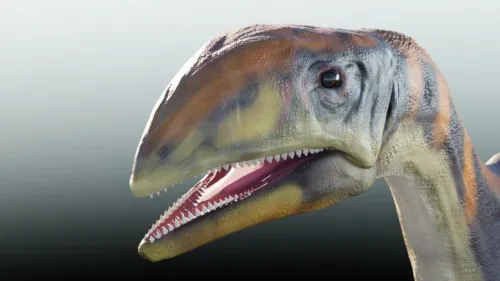
“Cold Bone”: New Dinosaur Species Discovered That Lived on Greenland 214 Million Years Ago
SciTechDaily has a story about a new dinosaur. Called Issi saaneq, which means “Cold Bone”, this animal lived about 214 million years ago during the late Triassic Period in what is now Greenland. Believed to be an ancestor to sauropods, it was medium sized with a long neck, however, it walked on its hind legs. …
-

PBS Eons: How Dinosaurs Coupled Up
There’s a new episode of PBS Eons. Birds do it… bees do it, even dinosaurs do it! Remember birds are dinosaurs, so…. Dinosaur mating behavior has been the subject of a lot of speculation, but what can we actually say about it from the fossil record?
-
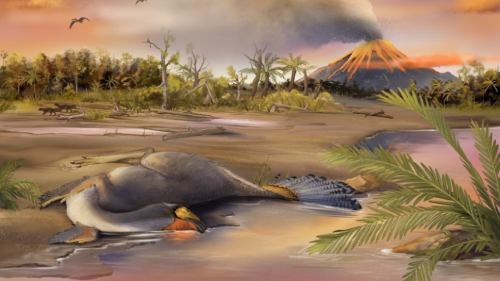
These 125 million-year-old fossils may hold dinosaur DNA
LiveScience has an article about the potential discovery of the remnants of dinosaur DNA. A study published in the journal Communications Biology looked at fossilized cartilage from a Caudipteryx, which was a feathered, peacock-like dinosaur that lived about 125 million years ago in what is now China. The study’s researchers found what appears to be…
-
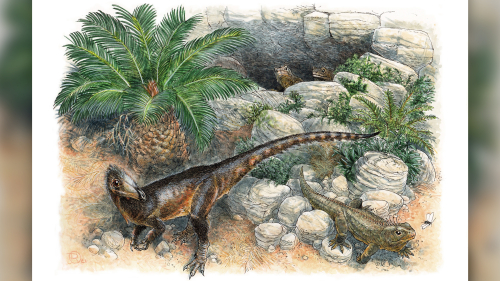
Newfound ‘chief dragon’ dinosaur species was actually the size of a chicken
LiveScience has an article about a newly discovered “dragon”. This animal’s name, Pendraig milnerae, means “chief dragon”, but in reality it was about the size of a chicken. It lived about 215 million years ago during the late Triassic Period in what is now modern day Wales and is one of the oldest known dinosaurs…
-
PBS Eons: When Mammals Only Went Out At Night
There’s a new episode of PBS Eons over on Youtube. This one is about mammal evolution and our adaptations for being active at night. For decades, scientists believed dinosaurs were diurnal and tiny mammals were nocturnal. But as researchers have uncovered more mammalian fossils and studied the biology of different dinosaur species, they’ve found…
-

Volcanic Eruptions Helped Dinosaurs Dominate Planet Earth
The New York Times Trilobites column has an article about volcanic eruptions during the Triassic Period. Recently, a paper published in the Proceedings of the National Academy of Sciences describes striking evidence that volcanoes helped dinosaurs spread across the globe during the Triassic Period about 234 million years ago. It has long been debated what…
-
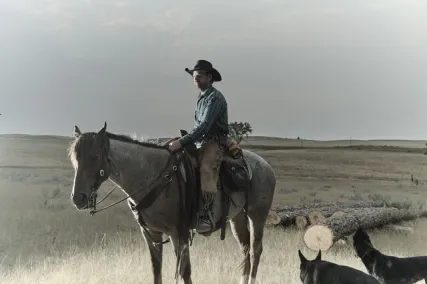
Dinosaur Cowboys Are Hunting for the Next $32 Million T. Rex
Bloomberg has a story about the Dinosaur Cowboy. Known for discovering the “Dueling Dinosaurs”, Clayton Phipps is a rancher and an amateur paleontologist. The story does a great job describing the controversy around the commercial exploitation of fossils, mainly dinosaurs. On a sunny, 99-degree day in northern Montana, Clayton Phipps grabs a backpack and heads…
-
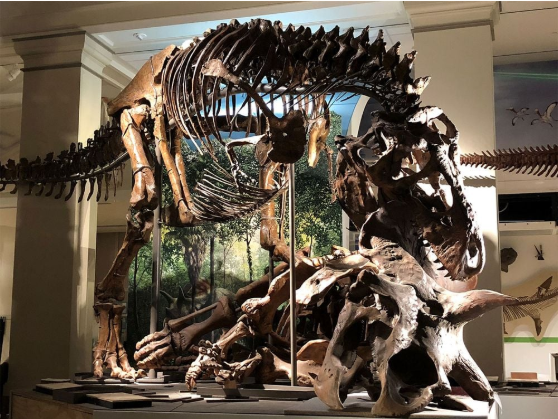
What We’ve Discovered About the ‘Tyrant Lizard King’ Since the Nation’s T. rex Was Unearthed
Smithsonian Magazine has a post about Tyrannosaurus rex. To date, about 50 T. rexes have been found, quite a few of those have been fragmentary. The Nation’s T. rex was discovered in 1988 in Montana by local rancher Kathy Wankel. It is often referred to as the “Wankel Rex”. Since then, we have learned so…
-
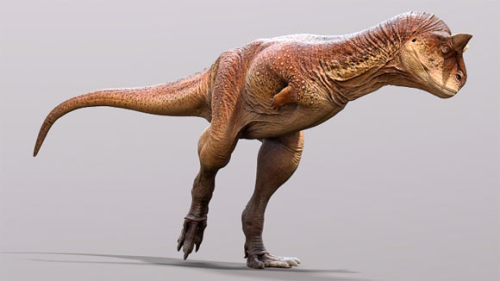
Carnotaurus Had Scaly Skin with No Feathers, Paleontologists Say
SciNews has an article about a reexamined dinosaur discovery in Argentina. Carnotaurus sastrei, a name that means “meat eating bull”, is a dinosaur that lived in what is now Argentina during the late Cretaceous period about 70 to 72 million years ago. A specimen, which was discovered in 1984 by famed Argentine paleontologist Jose Bonaparte,…
-
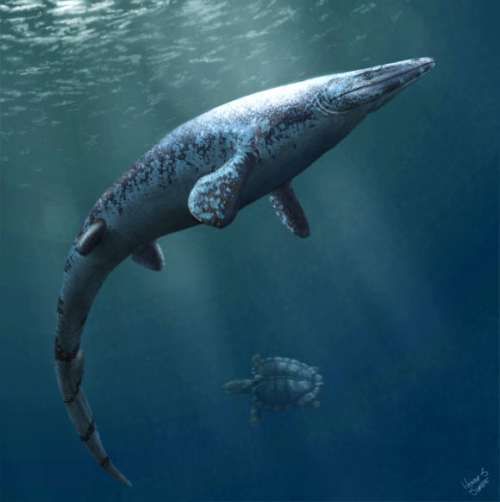
New Mosasaur Species Uncovered in Kansas
SciNews has a story about a new Mosasaur found in Kansas. The animal, named Ectenosaurus clidastoides, lived during the Cretaceous Period about 80 million years ago in what is now western Kansas. Details were published in a paper in the journal Canadian Journal of Earth Sciences. The newly-identified mosasaur species lived during the Late Cretaceous…
-
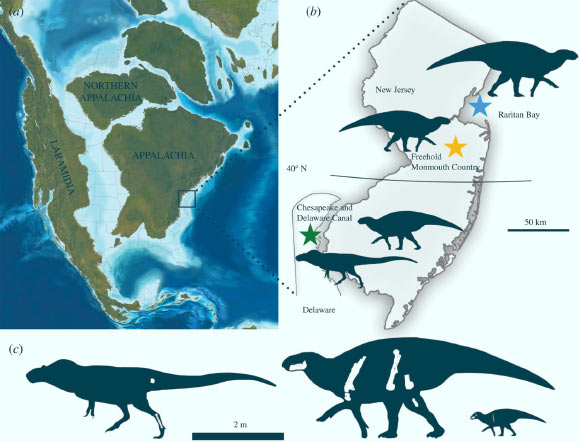
Two New Appalachian Dinosaurs Discovered
SciNews has a post about two new dinosaurs from Allalachia during the Cretaceous Period. Back in the Cretaceous Period, North America was bisected by the Western Interior Seaway. In the west was Laramidia for which the fossil record is very rich. The land mass to the east is called Appalachia. Much less is know about…
-

Reconstruction of Tyrannosaur Braincases Shows More Variation Than Previously Thought
SciTechDaily has a story about tyrannosaur skulls. Researchers in Canada and Argentina scanned the skulls to reconstruct the braincase of two well-preserved Daspletosaurs. Their research, which found more variation than expected, was published in the Canadian Journal of Earth Sciences. Among the fierce carnivores that lived during the late Cretaceous was a predator named Daspletosaurus. The massive tyrannosaur,…
-
PBS Eons: Where Are All the Medium-Sized Dinosaurs?
PBS Eons has a new episode. This one is about T. rex and the other carnivores that lived (or didn’t live) along side them. The remains of medium-sized predatory dinosaurs are pretty rare in places where giant predators like T. rex existed. Which is weird, because that’s just not how ecosystems work today.
-
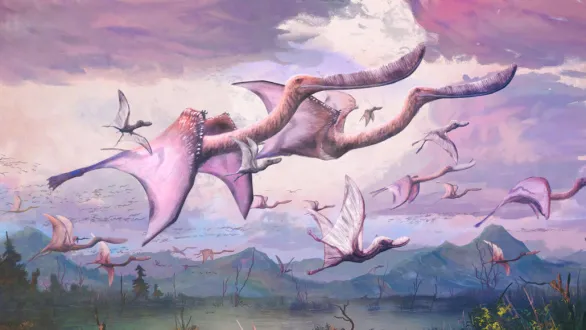
Pterosaurs may have been able to fly as soon as they hatched
ScienceNews has a story about pterosaurs. New research suggests that pterosaur hatchlings might have been able to fly right after hatching. This study was published in the journal Scientific Reports. Pterosaur hatchlings may have been able to fly right out of the shell — although the flight of those ancient baby reptiles might have looked…
-
ScienceMag: Giant tsunami from dino-killing asteroid impact revealed in fossilized ‘megaripples’
Science Magazine has a piece about some “megaripples” found in central Louisiana. These fossilized trace fossils are thought to be from the tsunami caused by the meteor which brought about the KPg mass extinction at the end of the Cretaceous Period about 66 million years ago. A new paper in the journal Earth and Planetary…
-

Virtual: Dinosaurs of the West, with J.P. Cavigelli, Paleontologist, Thursday, July 15th, 2021
The Woodridge Public Library is have a lecture via Zoom on Thursday, July 15th, 2021. The topic is “Dinosaurs of the West” with J.P. Cavigelli, Paleontologist. Here is the annoucement… sounds very interesting! Register on their website at https://www.woodridgelibrary.org/virtual-dinosaurs-west-jp-cavigelli-paleontologist. Virtual: Dinosaurs of the West, with J.P. Cavigelli, Paleontologist Are you fascinated by the dinosaurs of…
-
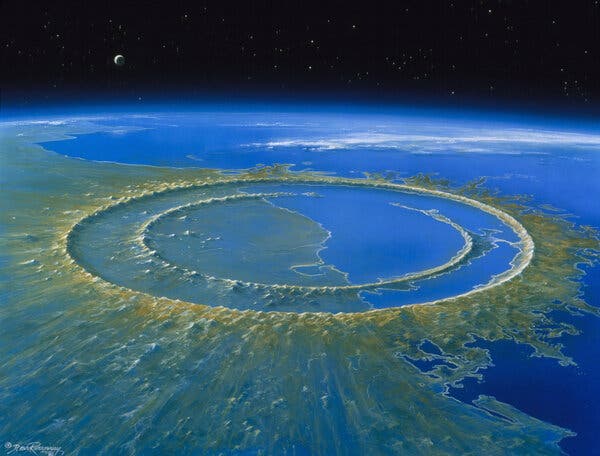
A Mysterious Crater’s Age May Add Clues to the Dinosaur Extinction
The New York Times Trilobites column has a story about a mysterious crater in Ukraine. Scientists have long questioned when the 15 mile wide Boltysh crater was formed, either before or after the Chicxulub crater in the Yucatan Peninsula, which caused the extinction of the non-avian dinosaurs at the end of the Cretaceous Period. A…
-

Cretaceous Dinosaurs Lived in Warm and Variable Greenhouse Climate, Study
SciNews has a piece about the climate during the end of the Cretaceous Period. Researchers looked at various data, including oyster and rudist shells, to reconstruct a picture of the paleo climate during the Campanian (late Cretaceous Period) about 78 million years ago in what is now modern day Sweden. They found that the climate…
-

NYT: New Dinosaur Species Is Australia’s Largest, Researchers Say
The New York Times has a story about a new dinosaur… from Australia. Australotitan cooperensis is a titanosaur, which is a type of sauropod. It weighted about 70 tons and lived about 90 million years ago during the Cretaceous Period. It’s the largest dinosaur known from Australia. The dinosaur was described in a paper in…
-
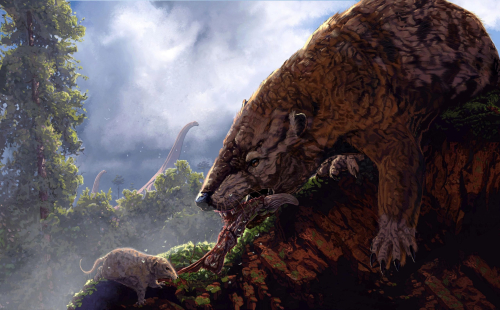
Extraordinary Evolution Research Reveals Mammals in the Time of Dinosaurs Held Each Other Back
SciTechDaily has an article about mammals during the age of dinosaurs. A new study published in Current Biology looked at how mammals evolved before and after the extinction that took out the non-avian dinosaurs at the end of the Cretaceous. The study found that it wasn’t the dinosaurs that out competed the mammals, it was…
-
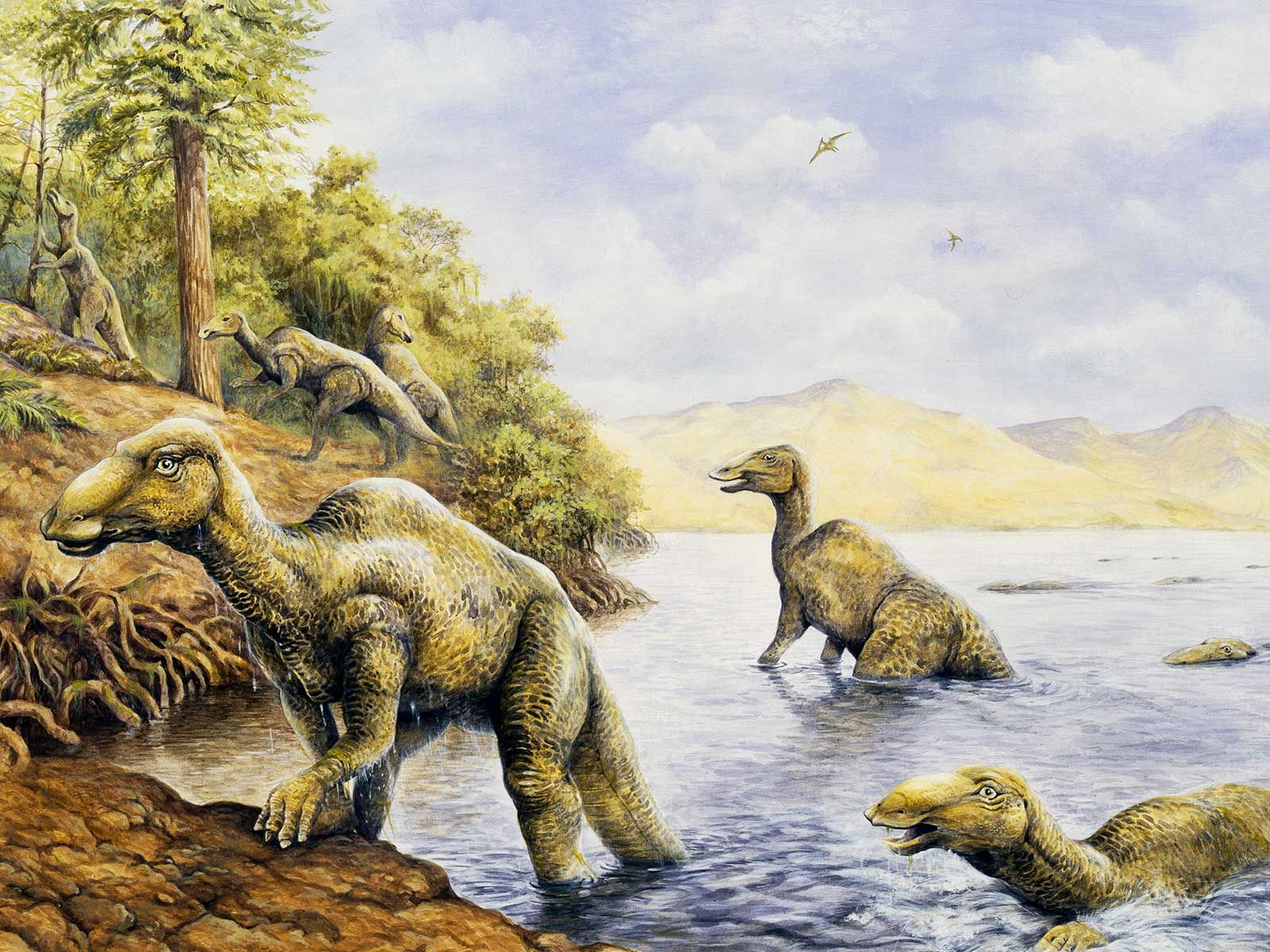
Smithsonian: An Ode to the World’s Most Average Dinosaurs
Smithsonian Magazine has a story about the appreciation for the average dinosaur – a duckbilled dinosaur like Edmontosaurus. To truly understand the dinosaurs, one needs to look past the flashy and embrace the average as that is where the true clues to what life was like back in the Mesozoic. Out of all these impressive…
-
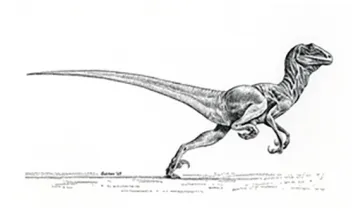
Deinonychus Changed Our Understanding of Dinosaurs
SciTechDaily has an interesting story about how the discovery of Deinonychus changed our view of dinosaurs. John Ostrom found the first Deinonychus back in 1960’s. In 1969, he published a paper describing Deinonychus, which means “terrible claw”. That paper raised many questions about current assumptions about dinosaurs and refueled the debate on which animals birds…
-
PBS Eons: When Crocs Thrived in the Seas
There’s a new episode of PBS Eons. This one is about some ferocious crocodiles that lived in the oceans during the Jurassic and Cretaceous. Check out Animal IQ: https://youtu.be/BXqGkPhU2VE While dinosaurs were dominating the land, the metriorhynchids were thriving in the seas. But taking that plunge wasn’t easy because it takes a very special…
-
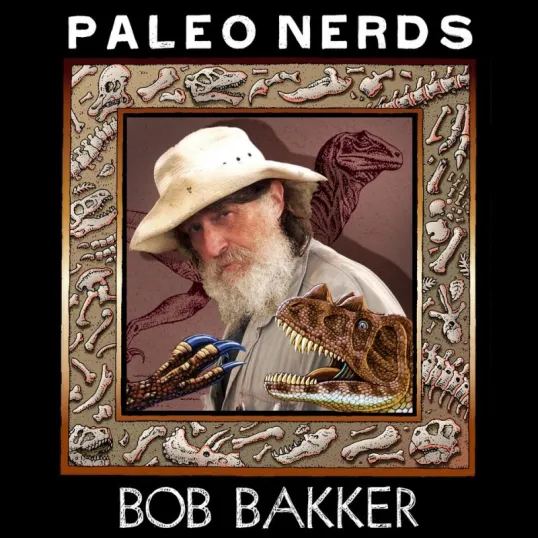
Paleo Nerds #32: The Hot Blooded Dinosaur Revolutionary with Bob Bakker
The podcast Paleo Nerds has the last show the their second season up. Their guest is “Dinosaur Heretic” Bob Bakker. Bob is always interesting! I heard him in person at Paleofest a number of years ago and really enjoyed it. We saved the best for last! Would you like to spend over an hour with…
-

SciNews: New Species of Duck-Billed Dinosaur Unearthed in New Mexico
SciNews has an article about a new dinosaur discovery. The animal, a duck-billed dinosaur called Ornatops incantatus, lived about 80 million years ago during the Cretaceous Period in what is now modern day New Mexico. A paper in the journal PeerJ has all the details. Its partial skeleton, including part of the skull, was found…
-
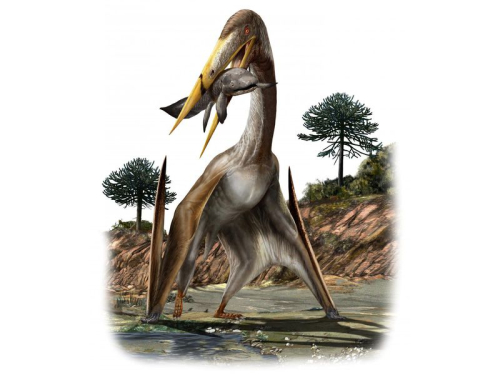
Unique Bone Structure Helped Long-Necked Pterosaurs Fly
Smithsonian Magazine has an interesting article about the largest pterosaurs. These animals were very large with the wingspans of small plaines (8 meters) and necks as long as a giraffe (1.5 meters). A recent paper (April 14th, 2021) in Science Magazine details how these animals supported their large head and necks with a novel spoke…
-
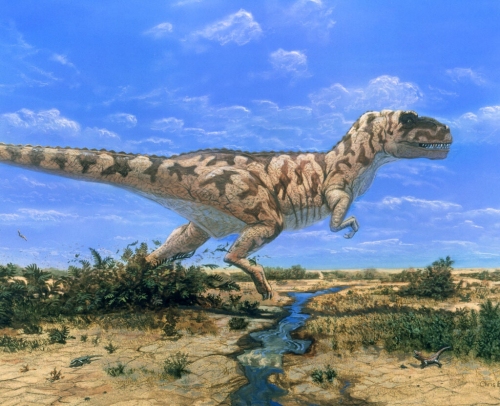
NYT: How Many Tyrannosaurus Rexes Ever Lived on Earth? Here’s a New Clue
The New York Tmes has a story about how many Tyrannosaurus rex ever lived. Actually, this story showed up in numerous places.. SciTechDaily, USA Today, NBC, etc. Apparently, it’s big news that about 2.5 billion total T rex roamed the Earth during the time their species existed! The original paper appeared in the journal Science.…
-
Tate Geological Museum: Tuesday April 6th, 2021 8:00 PM CDT – Zoom Lecture – “The Laramida Project: New Dinosaurs from the American West”
ESCONI members have been invited by the Tate Geological Museum (Casper, Wyoming) for a fun paleo-lecture tomorrow evening (Tuesday April 6th) featuring Joe Sertich of the Denver Museum of Nature and Science. Joe will be speaking about Cretaceous Dinosaurs of Laramida. Laramidia Project: https://www.dmns.org/science/earth-sciences/projects/laramidia-project/ Zoom Link: https://caspercollege.zoom.us/j/99958974301?pwd=SFJranNySGdBZjNFdGhBMEZYRFJNUT09&fbclid=IwAR3I9TPGK3uShHYhO1DNygSVHEgVhkuugdhk71eEVboqQQ7rT5xn_I4flzE#success Next month, Jim Kirkland will be speaking about…
-

Inverse: What Did Dinosaurs Look Like? An Unlikely Team Is Debunking Old Beliefs
Inverse has an interesting story about an effort to recreate models that show what dinosaurs really looked like. The effort is a combination of paleontology and paleoart. The work is based on a special fossil of Psittacosarurs discovered in China decades ago. That specimen had very fine preservation, included preserved soft tissues like skin and…
-

NPR: Dinosaur-Killing Impact Came From Edge Of Solar System, New Theory Suggests
NPR has a story about the extinction of the non-avian dinosaurs. New research from Harvard University proposes that a comet and not a meteor impacted in the Yucatan peninsula. The research is detailed in a paper that was published in the journal Scientific Reports. For decades, the prevailing theory about the extinction of the…
