Tag: dinosaurs
-

Hollow bones that let dinosaurs become giants evolved at least three times independently, shows study
Phys.org has an interesting story about dinosaur evolution. Dinosaurs had hollow bones, which made it possible for them to grow as large as they did. A new study published in the journal Scientific Reports looked at three Brazilian specimens from the late Triassic and found they had hollow places in their vertebra similar to later…
-

‘Extremely rare’ fossilized dinosaur voice box suggests they sounded birdlike
Live Science has a story about the discovery of a dinosaur voice box. So, did T-rex sound like tweety bird? Probably not, but with the discovery of a larynx from a Pinacosaurus grangeri, we have a few clues of how they made sounds. This dinosaur was a armor plated ankylosaur that lived about 80 million…
-

Throwback Thursday #151: Looking Back at ESCONI for March 2023
This is Throwback Thursday #151. In these, we look back into the past at ESCONI specifically and Earth Science in general. If you have any contributions, (science, pictures, stories, etc …), please send them to esconi.info@gmail.com. Thanks! 25 Years Ago – March 1998 50 Years Ago – March 1973 70 Years Ago – March 1953
-
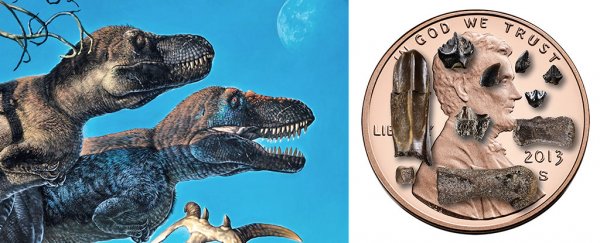
Video for ESCONI February 2023 General Meeting – “Baby Dinosaurs of the Arctic: Discovery and Research of a Dinosaur Nursery North of the Arctic Circle”
The February 2023 General Meeting was held on February 10th. The program “Baby Dinosaurs of the Arctic: Discovery and Research of a Dinosaur Nursery north of the Arctic Circle” was presented by Dr. Patrick Druckenmiller. Dr. Druckenmiller is Professor of Geology and Director of the University of Alaska Museum of the North. He is a…
-

PBS Eons: Is This A Theropod? A Sauropod? A Third Thing?
PBS Eons has a new episode on Youtube. This one is about therizinosaurs and where they fit into the dinosaur family tree. How the therizinosaurs lived and evolved ended up being just as weird as their mixed-up anatomy.
-

Throwback Thursday #148: Johnny Cash and Dinosaurs?!? Yes!
This is Throwback Thursday #148. In these, we look back into the past at ESCONI specifically and Earth Science in general. If you have any contributions, (science, pictures, stories, etc …), please send them to esconi.info@gmail.com. Thanks! OK, so who knew that Johnny Cash had a dinosaur song? Written by Johnny and his wife June,…
-
ESCONI February 2023 General Meeting – February 10th, 2023 at 8:00 PM via Zoom – “Baby Dinosaurs of the Arctic: Discovery and Research of a Dinosaur Nursery North of the Artic Circle”
At our General Meeting (via Zoom) on February 10th, the program “Baby Dinosaurs of the Arctic: Discovery and Research of a Dinosaur Nursery north of the Arctic Circle” will be presented by Dr. Patrick Druckenmiller. Dr. Druckenmiller is Professor of Geology and Director of the University of Alaska Museum of the North. He is a…
-

A Unique Discovery: Researchers Have Uncovered an Ultra-Rare Piece of Evidence That Dinosaurs Ate Mammals
SciTechDaily has a story about the diet of dinosaurs. Microraptor zhaoianus was a small bird like dinosaur that lived between 120 and 125 million years ago in the early Cretaceous Period in what is now northeastern China. A particular specimen, described in a recent study in the journal Vertebrate Paleontology, was found to have eaten a…
-

Fossils reveal prehistoric Patagonian dinosaurs
Phys.org has a story about fossils from Chile. Much like western North American, Patagonia, in South America, has a rich dinosaur history. Now, a new study led by researchers at the University of Texas at Austin is providing a deeper look. The research, published in the Journal of South American Earth Sciences, looked at the…
-

Throwback Thursday #146: Happy Birthday, Elmer Riggs!
This is Throwback Thursday #146. In these, we look back into the past at ESCONI specifically and Earth Science in general. If you have any contributions, (science, pictures, stories, etc …), please send them to esconi.info@gmail.com. Thanks! Actually, it’s a few days late as his birthday was January 23rd, 1869. Elmer Riggs was an American…
-
ESCONI January 2023 General Meeting – January 13th, 2023 at 8:00 PM via Zoom – “New Evidence for Cretaceous Ornithomimosaurs (dinosaurs) from Mississippi”
The speaker at our meeting (via Zoom) on the evening of January 13, 2023 will be Dr. Thomas Cullen. He is currently a postdoc at Carleton University in Ottawa, Ontario. The topic of his talk will be new evidence for Cretaceous ornithomimosaurs (dinosaurs) from Mississippi. Here is a link to the article on this material,…
-

“Exceptionally” Wide and Flat-Headed – New Species of Dinosaur Discovered
SciTechDaily has a post about the discovery of a new ornithopod dinosaur. The animal, Transylvanosaurus platycephalus, lived about 70 million years ago during the Cretaceous Period. Its name means “flat-headed reptile from Transylvania”. It was discovered in Transylvania, which was part of an island archipelago during the Cretaceous. Because it was an island, many of…
-
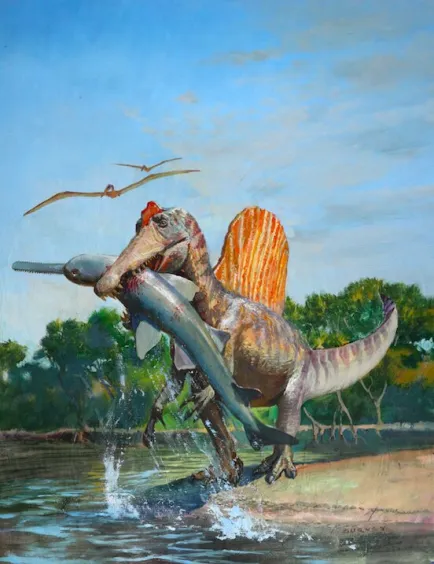
Mega-predator likely wasn’t underwater hunter, researchers argue
Phys.org has an article about the on-going controversy on whether Spinosaurus aegyptiacus was fully aquatic. S. aegyptiacus was discovered in 1915 in Egypt by Ernst von Stromer. It lived during the Cretaceous Period about 99 to 93.5 million years ago. The original skeleton was destroyed during WW II. A new specimen was found in 2014,…
-
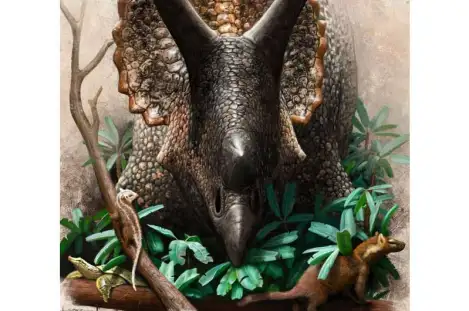
Dinosaurs were on the up before asteroid downfall, study finds
Phys.org has a story about the state of the non-avian dinosaurs just before the K-Pg mass extinction about 66 million years ago. For a while, it was thought they were in decline before the asteroid strike. A new study published in the journal Science Advances found that the non-avian dinosaurs were actually thriving, entrenched in…
-
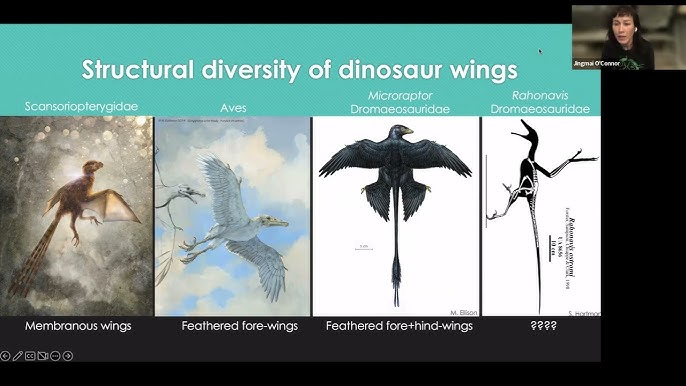
Video for the ESCONI December 2022 General Meeting – “The early diversification of birds: evidence from the Jehol avifauna”
December’s General Meeting was held on December 2nd, 2022. The presenter was Dr. Jingmai O’Connor Associate Curator of Fossil Reptiles at the Field Museum. The topic of her talk was “The early diversification of birds: evidence from the Jehol avifauna”. She calls herself a paleontologista aka a punk rock paleontologist. Her research includes work on birds, dinosaurs,…
-
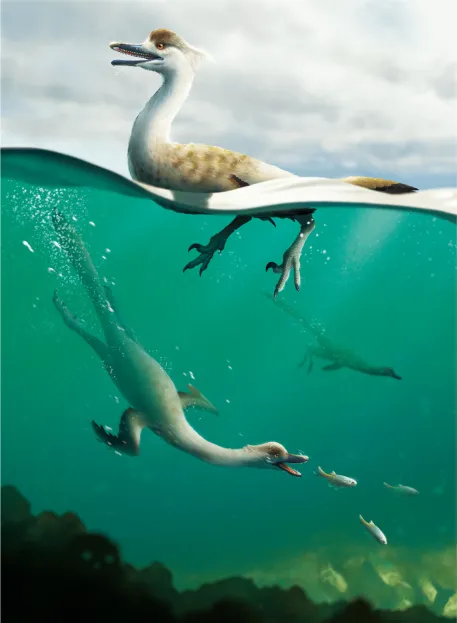
Mongolian fossil is first known species of streamlined non-avian theropod dinosaur to walk on two legs
Phys.org has a story about a new Cretaceous bird. The animal, named Natovenator polydontus, a non-avian theropod dinosaur was discovered in the Hermiin Tsav fossil formation in Mongolia back in 2008. It lived during the Cretaceous Period roughly 100 million to 66 million years ago. N. polydontus had teeth, which implies it had a varied…
-
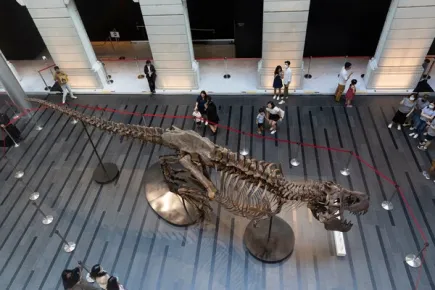
As Dinosaur Fossils Fetch Millions, There’s Many a Bone to Pick
The New York Times has an article about the canceled auction of Shen a Tyrannosaurus rex. Christie’s was scheduled to auction the dinosaur in November 2022, but canceled the event when questions emerged about how it had been described. Shen’s skeleton consists of 79 original bones, which was described as “54% complete by bone density”. …
-
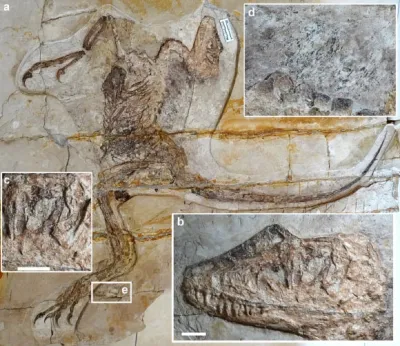
New Bird-Like Dinosaur Species Found with Remains of Frog in Its Stomach
SciNews has an article about the discovery of a new bird-like dinosaur. Daurlong wangi lived between 130 and 120 million years ago during the Cretaceous Period in what in now China. It was a dromaeosaur of medium size bird-like dinosaur. The animal, part of the famous Jehol Biota, was described in a paper, which appeared…
-
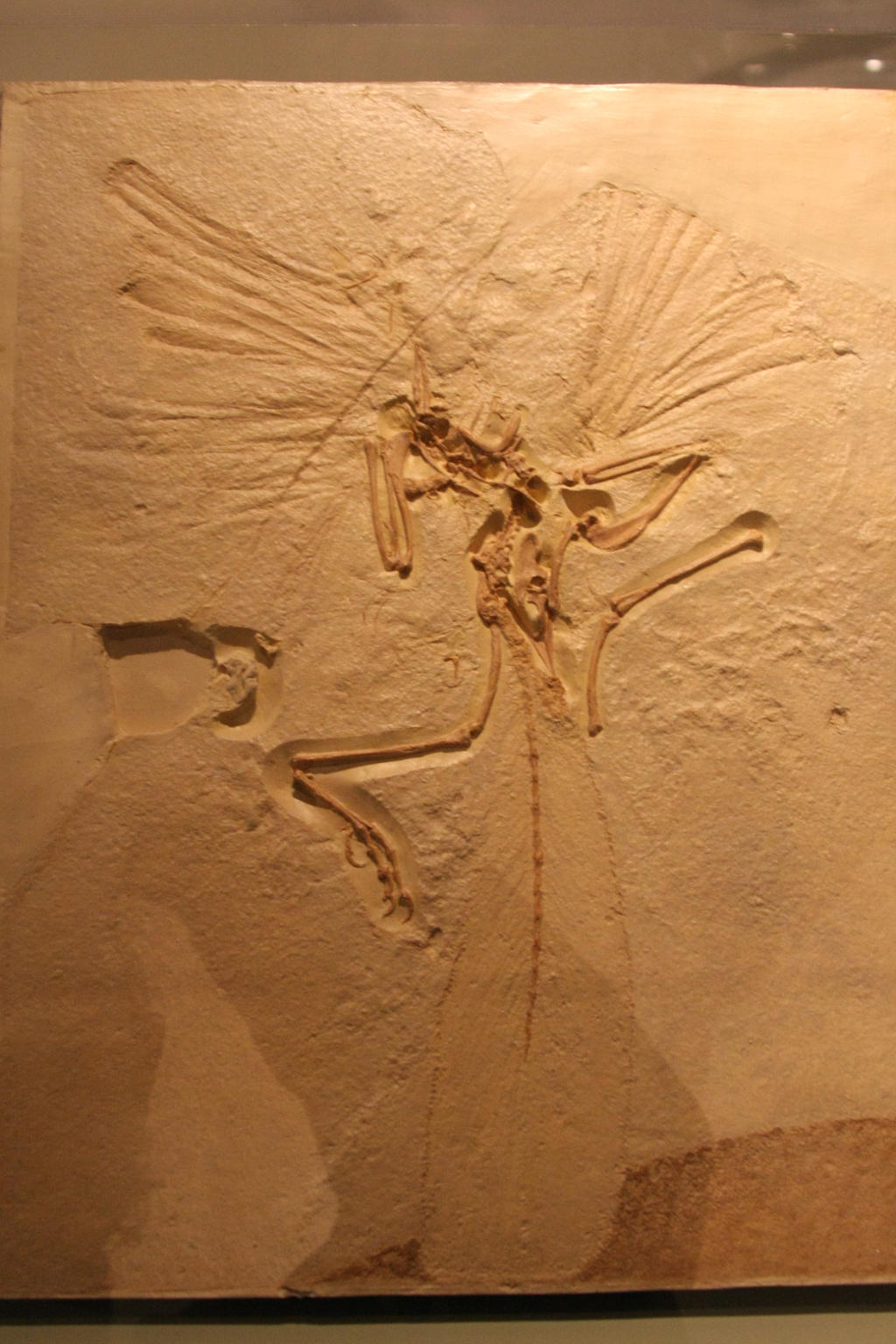
Throwback Thursday #137: Archaeopteryx in Chicago!
This is Throwback Thursday #137. In these, we look back into the past at ESCONI specifically and Earth Science in general. If you have any contributions, (science, pictures, stories, etc …), please send them to esconi.info@gmail.com. Thanks! October 1997 was a huge month for the Field Museum. The annual meeting of the Society of Vertebrate…
-
New Plant-Eating Dinosaur Species Uncovered in Nevada
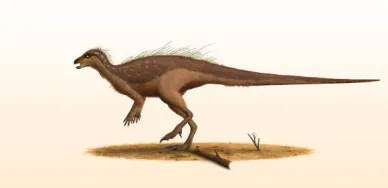
SciNews has a piece about the discovery of a new dinosaur. Nevadadromeus schmitti lived between 100 and 94 million years ago during the Cretaceous Period in what is now Nevada. It seems to be related to Thescelosaurinae, but also has features of Orodrominae. It is an Ornithiscian dinosaur, a group that includes hadrosaurs, cerotapsian, and…
-

BBC: The 120-year search for the purpose of T. rex’s arms
The BBC has a story about that looks into how Tyrannosaurus rex used it’s small arms. T. rex and it’s close relatives had notoriously small arms for their size. Since its discovery in 1902 by Barnum Brown, paleontologists have wondered how they used their puny arms. The end of the season was approaching rapidly –…
-
Astonishing dinosaur mummy has ‘glittering’ skin that was punctured and ripped by ancient crocs
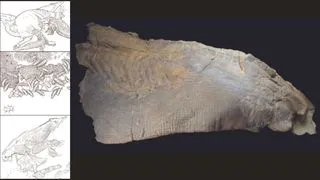
LiveScience has a story about “Dakota” a dinosaur mummy from North Dakota. “Dakota”, a duck-billed dinosaur that lived about 67 million years ago in what is now North Dakota, is a mummified dinosaur which exhibits evidence of predatory behavior in its remains. A paper in the journal PLOS One describes this evidence and proposes that…
-
Dino death due to volcano-asteroid double whammy
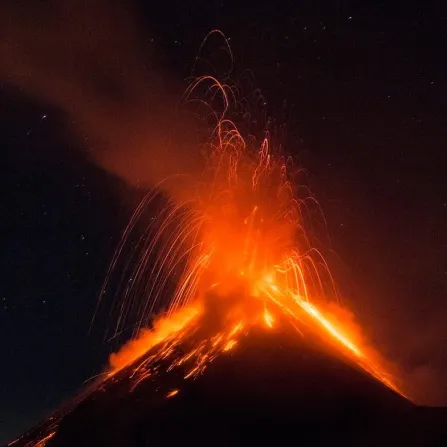
EarthSky has a story about the K-Pg mass extinction. The Big Five Mass Extinctions all involved multiple events or conditions to bring about the destruction they wrought. Volcanoes were usually a part of it. A recent paper in the journal Proceedings of the National Academy of Sciences proposes that it was both the flood basalt…
-
‘Dinosaur mummy’: Researchers believe they’ve found one of the best preserved dinosaurs ever
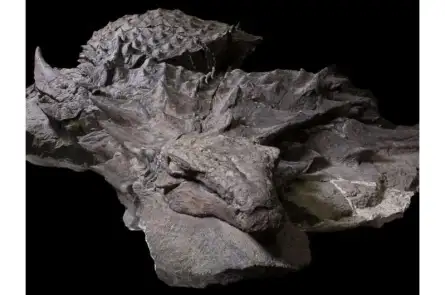
Credit: Royal Tyrrell Museum, Drumheller, Canada Phys.org has a story about the discovery of another “dinosaur mummy”. A few years ago, a nodosaur found in Alberta, Canada was said to be the best preserved dinosaur ever. Now, researchers say they may have found an even better one. This specimen is a hadrosaur found in Dinosaur…
-

Scientists shine light on 66-million-year-old meteorite wildfire mystery
Phys.org has a story about the K-Pg mass extinction event. It’s well established science that a meteorite struck the Yucatan peninsula about 66 million years ago. An event that brought about the extinction of the non-avian dinosaurs, pterosaurs, ammonites, and many other animals that lived alongside them. There have been many theories and debates about…
-

CBC News: Rare dinosaur skin fossil discovered in Alberta
CBC News has a story about the discovery of fossilized dinosaur skin. A dinosaur fossil recently discovered in Alberta’s badlands was so well preserved its skin was still in tact. The rare find is spreading excitement among paleontologists.
-
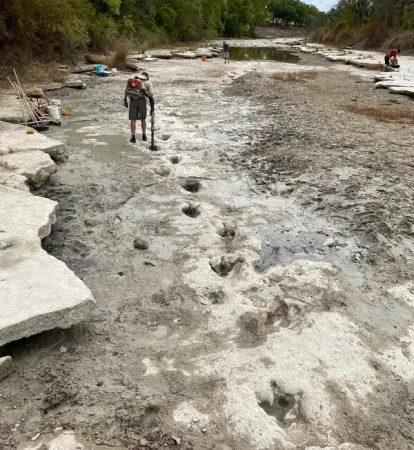
The Latest Find as Water Levels Fall: Dinosaur Tracks in Texas
The New York Times has a story about the discovery of dinosaur footprints. Severe drought conditions across the world are revealing secrets long covered by water. Just outside of Fort Worth, Texas lies Dinosaur Valley State Park, where dinosaur footprints were recently found after the Paluxy River dried up. The footprints date to about 113 million years…
-
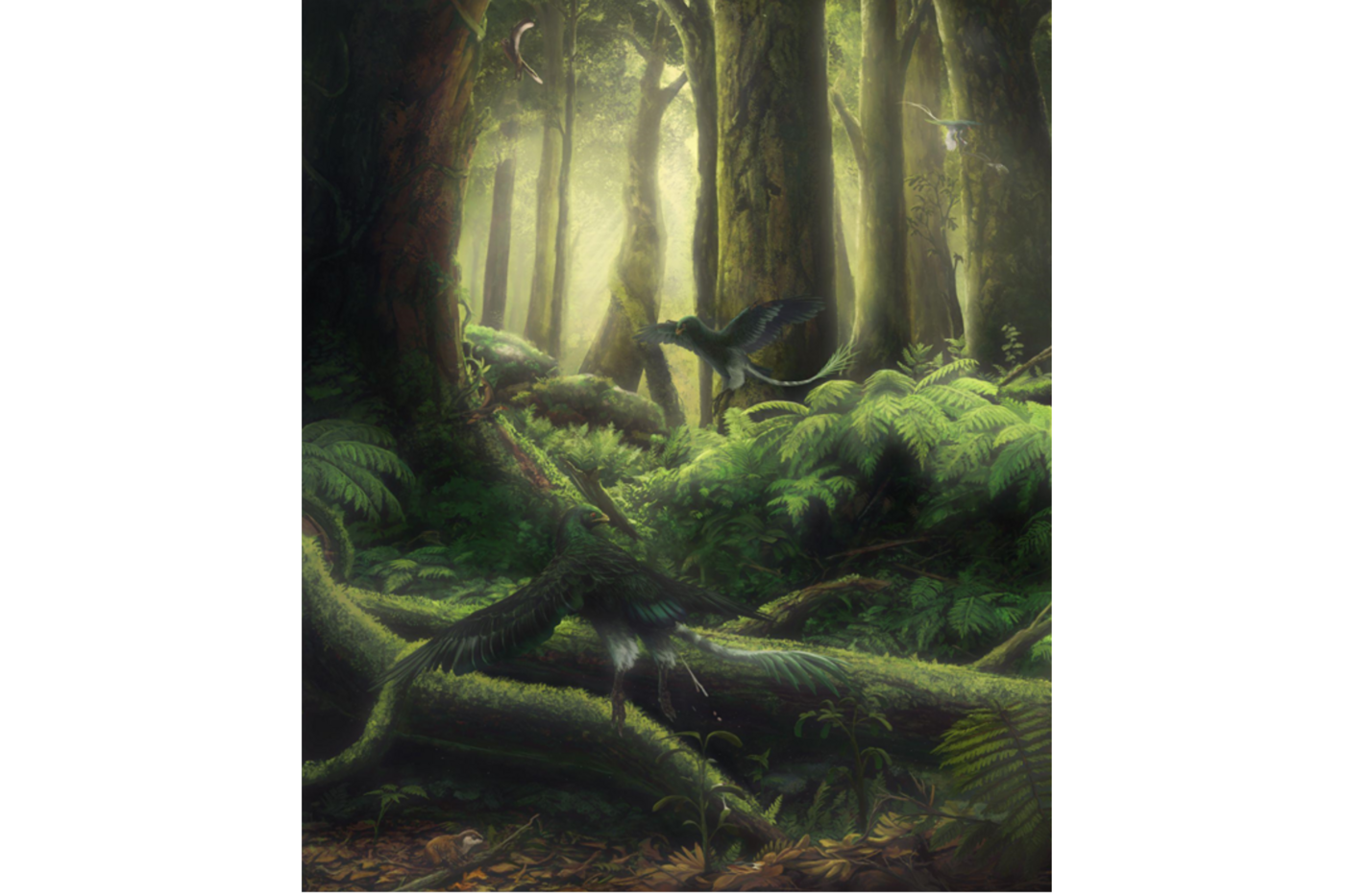
The early bird gets the fruit: Fossil provides earliest evidence of fruit-eating by any animal
The Field Museum has a press release about some recently published research about birds. Associate Curator of Fossil Reptiles Jingmai O’Connor co-authored a paper called “Earliest evidence for fruit consumption and potential seed dispersal by birds”, which has been published in the journal eLife. The paper looks at an exquisitely preserved new skull of Jeholornis. Previously,…
-
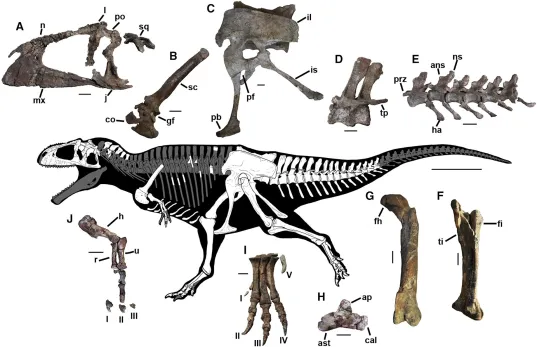
Big head, small arms: A newly discovered gigantic dinosaur evolved in a similar manner to Tyrannosaurus rex
The Conversation has a story about the evolution of meat-eating dinosaurs. Meraxes gigas is a recently named theropod dinosaur from Argentina. It was found near Villa El Chocon in the Huincul Formation and lived about 95 million years ago. Meraxes is a large theropod, the group of bipedal, often meat-eating, dinosaurs which also includes birds, and…
-

All the better to better eat you with: Dinosaurs evolved different eye socket shapes to allow stronger bites
Phys.org has a story about the strength of a T-rex bite. A new study, published in the journal Communications Biology, looked at the shape of eye sockets to determine how it affected bite force. The skulls of about 500 different dinosaurs were analyzed and the researchers found that a circular eye socket was prone to…
