Tag: dinosaurs
-
Throwback Thursday #218: Karen’s Komments
This is Throwback Thursday #218. In these, we look back into the past at ESCONI specifically and Earth Science in general. If you have any contributions, (science, pictures, stories, etc …), please send them to esconi.info@gmail.com. Thanks! This was originally posted as Flashback Friday #16. It was part of the run up to ESCONI’s 70’s Anniversary…
-

Field Museum – Dinopalooza Returns! Saturday, June 8 | 10am-2pm
The Field Museum is holding Dinopalooza today from 10 AM to 2 PM. Dinopalooza is today! Join us in celebrating the newest member of our flock, the Chicago Archaeopteryx, before it takes off for the rest of the summer. Find out how our new fossil friend shows scientists where past and present collide and understand…
-
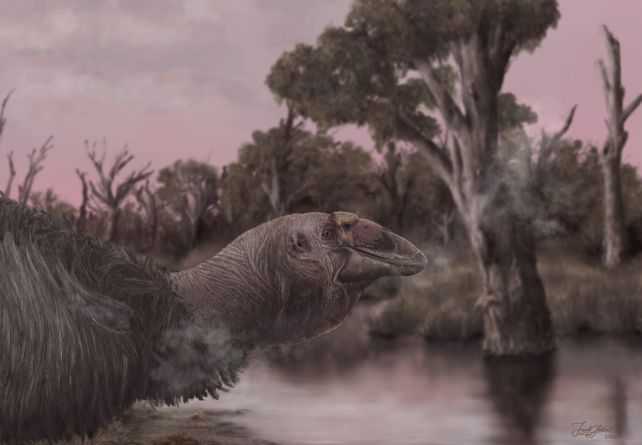
Giant ‘Giga-Goose’ Once Thundered Across Prehistoric Australia
Nature’s Science Alert has a story about a large flightless bird from Australia. Genyornis newtoni was first described in 1913. It lived around 45,000 years ago in what is now Australia. G. newtoni stood about 2.25 meters tall (7.4 feet) and weighed around 230 kilograms (510 pounds). New research published in the journal Historical Biology…
-

New fossil brings us a step closer to unravelling the mystery of feather evolution
The Conversation has an interesting article about research into the evolution of feathers. Feathers were originally used for display and thermoregulation. It was only later when they were co-opted for flight. A new paper “Cellular structure of dinosaur scales reveals retention of reptile-type skin during the evolutionary transition of feathers”, published in the journal Nature,…
-

We’ve Probably Been Wrong About T. Rex Again, New Study Says
Nature’s Science Alert has a post about Tyrannosaurs rex. Ok, just how smart was T. rex? Back in 2023, when a controversial paper postulated that T. rex was about as intelligent as modern monkeys, most researchers were skeptical. Now, a new study “How smart was T. rex? Testing the claims of exceptional cognition in dinosaurs…
-
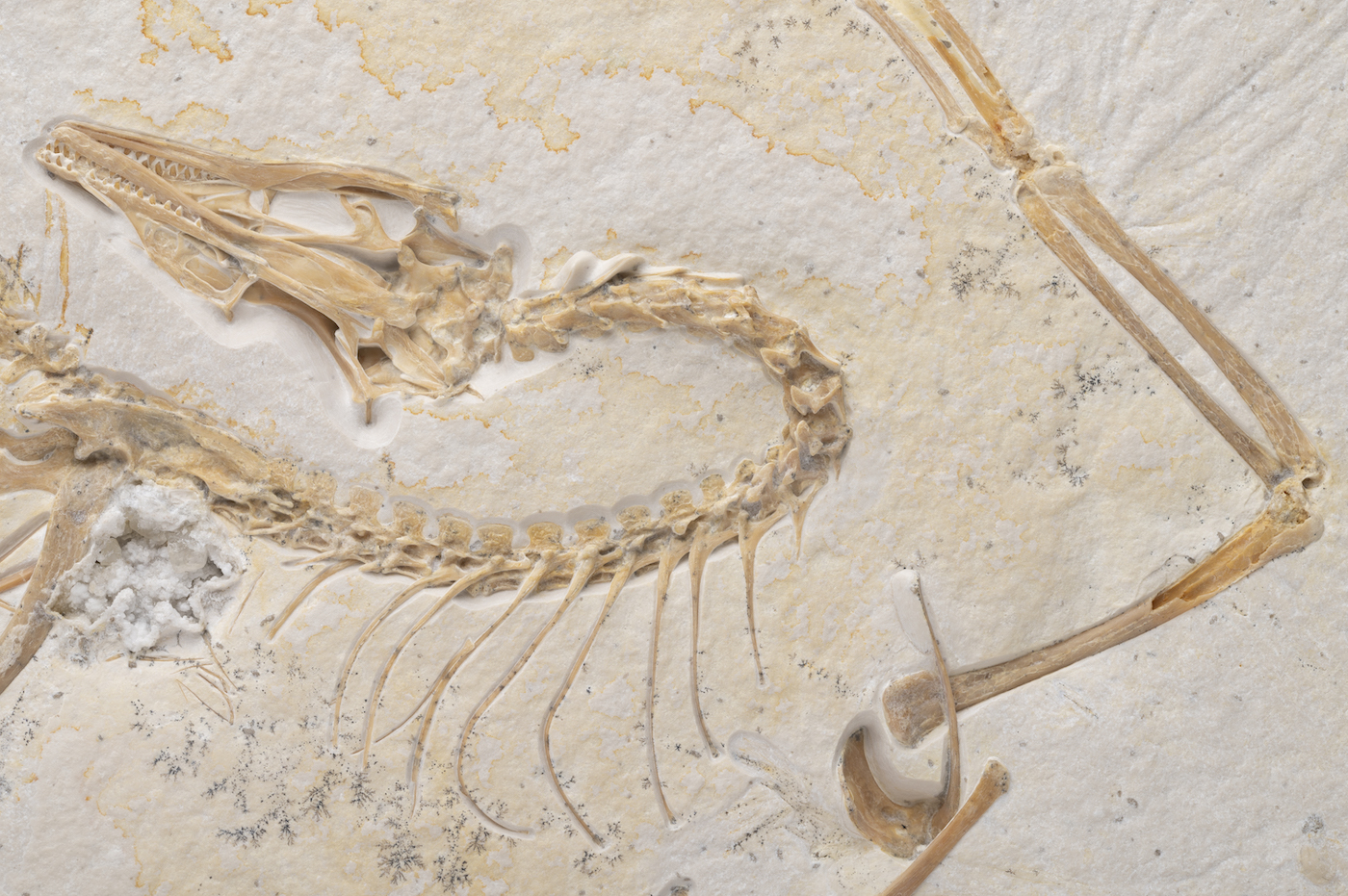
More on the Chicago Archaeopteryx
More about the new Chicago Archaeopteryx, This is the unveiling which happened on May 7th, 2024. It includes a great video of Paleornithologist Jingmai O’Connor describing the animal and its acquisition. More links…
-
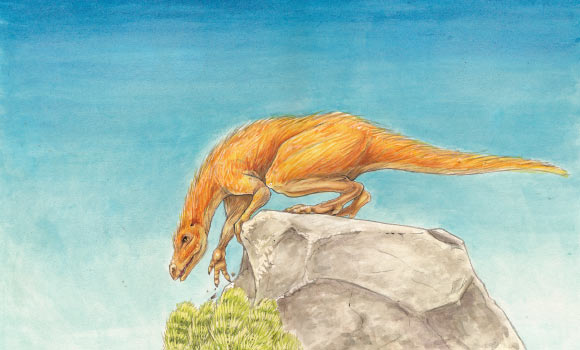
New Species of Jurassic Theropod Dinosaur Identified in England
SciNews brings word of a new dinosaur discovered in England. Dornraptor normani lived about 200 million years ago in the early Jurassic Period, near what is now Dorset, England. The animal belongs to a group called the averostrans, which includes most theropod dinosaurs. The discovery was published in the paper “A new name for old…
-
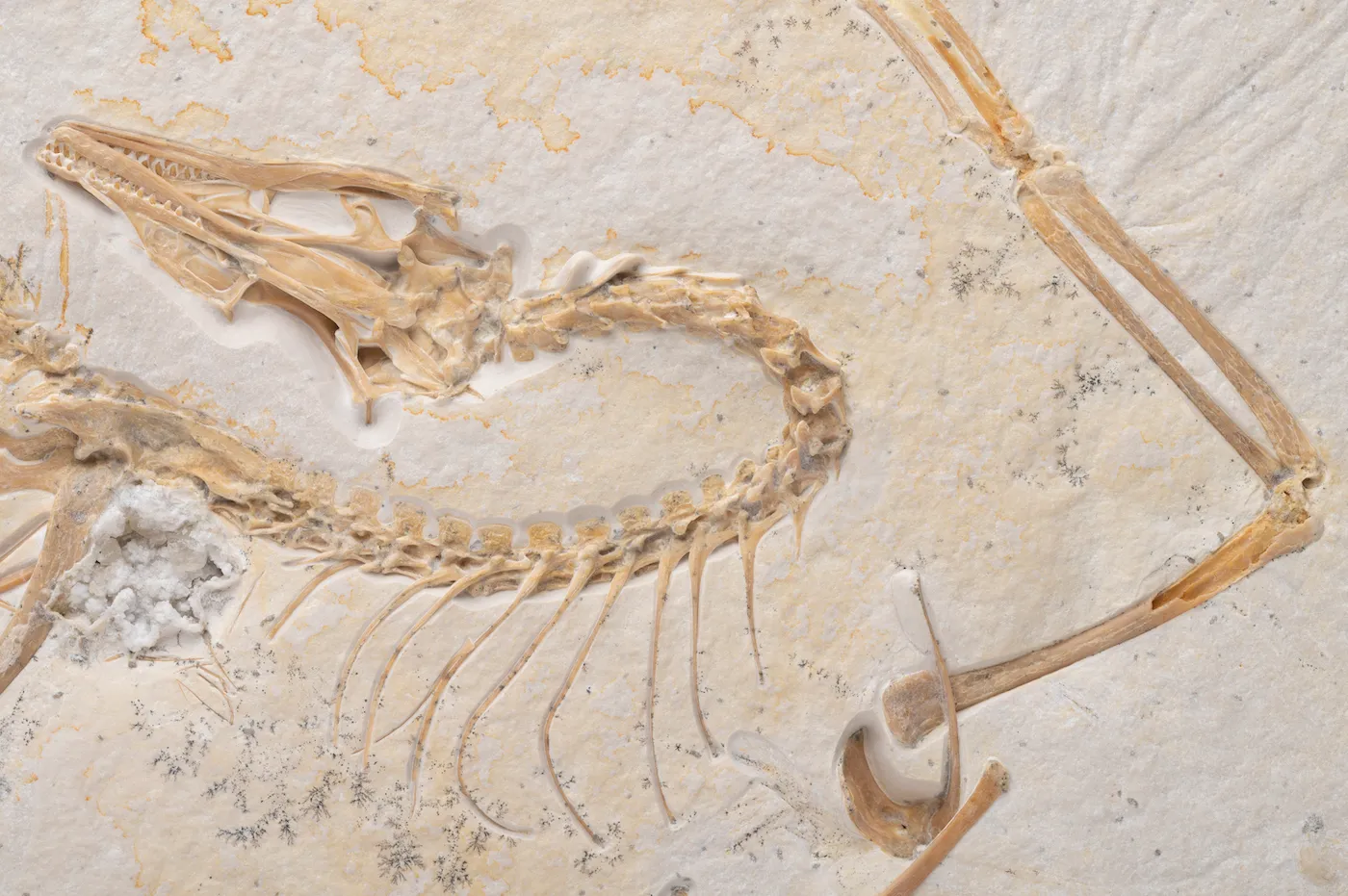
Field Museum: The Chicago Archaeopteryx!
The Field Museum is debuting its latest blockbuster specimen, the Chicago Archaeopteryx! With its first appearance in the Jurassic period 151 million years ago, Archaeopteryx is immensely significant due to it being the first “missing link” or transitional fossil that supported the Theory of Evolution. This small fossil also forged the link connecting dinosaurs and…
-

PBS Eons: There’s No Single Cradle of Humankind
PBS Eons has a new episode. This one is about human origins. Where did our ancestors evolve? It would take decades for paleontologists to realize that maybe there wasn’t just one so-called “cradle of humankind,” and realize that maybe they’d been asking the wrong question all along.
-
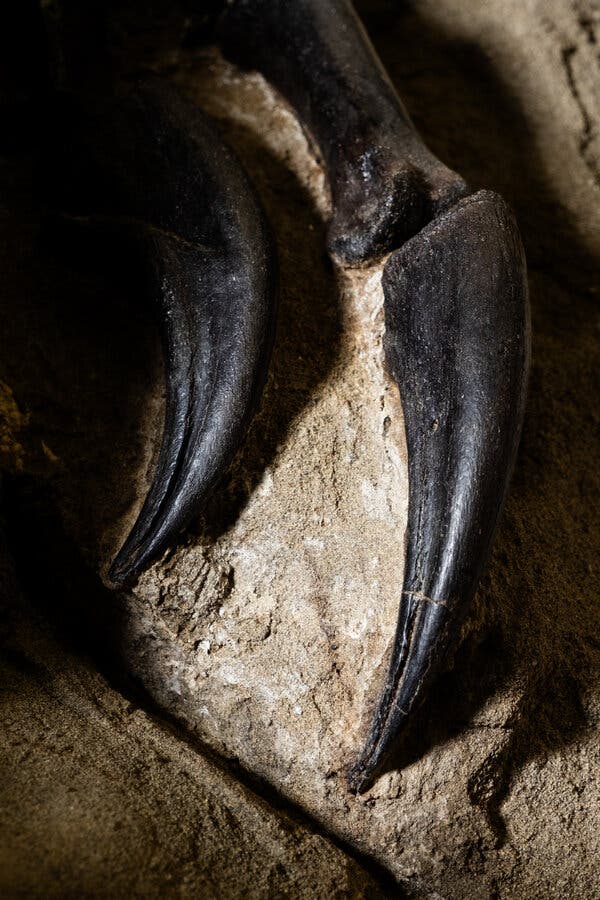
Can the Best Fossils Ever Found Answer the Biggest Dinosaur Question?
The New York Times has a story about the “Dueling Dinosaurs”. This amazing fossil of a tyrannosaur and a Triceratops entangled in a block of sandstone by ranchers in 2006. After a protracted legal battle, the dinosaurs were purchased by the North Carolina Museum of Natural Sciences in Raleigh, North Carolina. They are the centerpiece…
-

Paleontologists Discover Massive Dinosaur Tracks in China, Hinting at One of the Largest Known Raptors
Smithsonian Magazine has a post about fossil tracks of one of the largest known raptors. The tracks were found on what was once a muddy river plain in what is now southwestern China. The dinosaur, named Fujianipus (meaning “foot of Fujian”) yingliangi, lived about 96 million years ago during the middle Cretaceous Period. The footprints were discovered during…
-
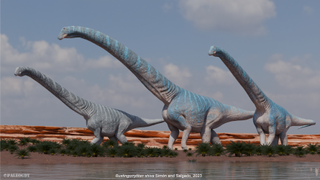
Enormous dinosaur dubbed Shiva ‘The Destroyer’ is one of the biggest ever discovered
LiveScience has a story about a new dinosaur discovery. A huge titanosaur, Bustingorrytitan shiva, one of the largest land animals ever, has been found in Argentina. B. shiva had an estimated weight of 74 tons. It lived about 90 million years ago during the middle Cretaceous Period. The animal was described in a paper in the journal Acta Palaeontologica Polonica. The B. shiva discovery in…
-

You Can Visit the World’s Largest Continuous Dinosaur Trackway, Now on Protected Public Land
Smithsonian Magazine has an article about a dinosaur trackway in Colorado. The track dates to about 150 million years ago during the Jurassic Period. 134 consecutive footprints trace out a sauropod dinosaur walking for a bit and then changing direction in a loop. The West Gold Hill Dinosaur Track site dates is located just west of…
-
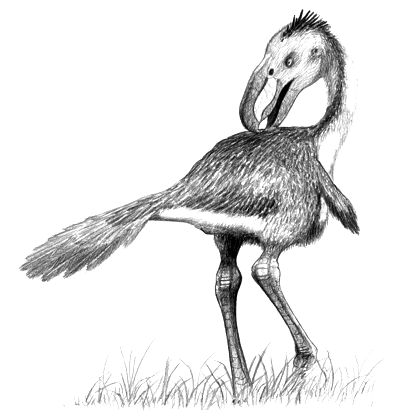
ESCONI April 2024 Paleontology Meeting – Saturday, April 20th, 2024 at 7:30 PM Zoom – “Terror Birds”
The April 2024 will be held on April 20th, 2024 at 7:30 via Zoom. The presentation will be given by John Catalani. Abstract We begin with an explanation of the “Terror Birds” and their position in Geologic Time. The two major groups of these large cursorial birds are the Phorusrhacidae and the Gastornithidae. The first…
-

Titanosaurs were the biggest land animals Earth’s ever seen − these plant-powered dinos combined reptile and mammal traits
The Conversation has an interesting article about Titanosaurs. It’s written by Kristina Curry Rogers a Professor of Biology and Geology at Macalester College in Saint Paul, Minnesota. She studies titanosaurs, which are a group of sauropod dinosaurs. Titanosaurs originated by the Early Cretaceous Period, nearly 126 million years ago, at a time when many of the Earth’s…
-
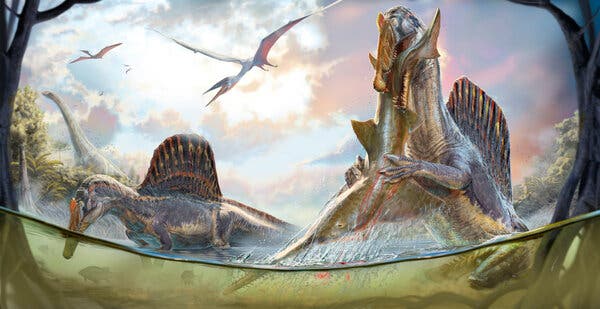
A Swimming Dinosaur? Maybe Not, Study Says
The New York Times has an interesting article about Spinosaurus. Was Spinosaurus a swimming dinosaur? That question is controversial in the world of dinosaur paleontologists. A new paper recently published in the journal Nature extends the discussion. The new research led by Nathan Myhrvold, a former chief technology officer at Microsoft and an amateur paleontologist and…
-

Throwback Thursday #206: Field Museum’s Apatosaurus
This is Throwback Thursday #206. In these, we look back into the past at ESCONI specifically and Earth Science in general. If you have any contributions, (science, pictures, stories, etc …), please send them to esconi.info@gmail.com. Thanks! If you visit the Field Museum of Natural History in Chicago, chances are you’ll venture up to the…
-
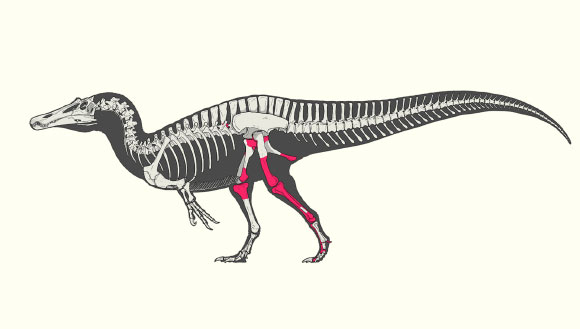
New Spinosaurid Dinosaur Species Identified in Spain
SciNews has a story about the discovery of a new dinosaur species. Riojavenatrix lacustris, a spinosaur, was discovered in Spain. It lived about 120 million years ago during the Cretaceous Period. The animal was 7-8 meters long and weight about 1.5 tons. R. lacustris was found by paleontologist Erik Isasmendi and his colleagues at the…
-

Throwback Thursday #203: They Crawled Out of the Swamps to Save the Mets
This is Throwback Thursday #202. In these, we look back into the past at ESCONI specifically and Earth Science in general. If you have any contributions, (science, pictures, stories, etc …), please sent them to esconi.info@gmail.com. Thanks! To commemorate the start of Major League Baseball’s Spring Training, we are taking a look at a fun little…
-
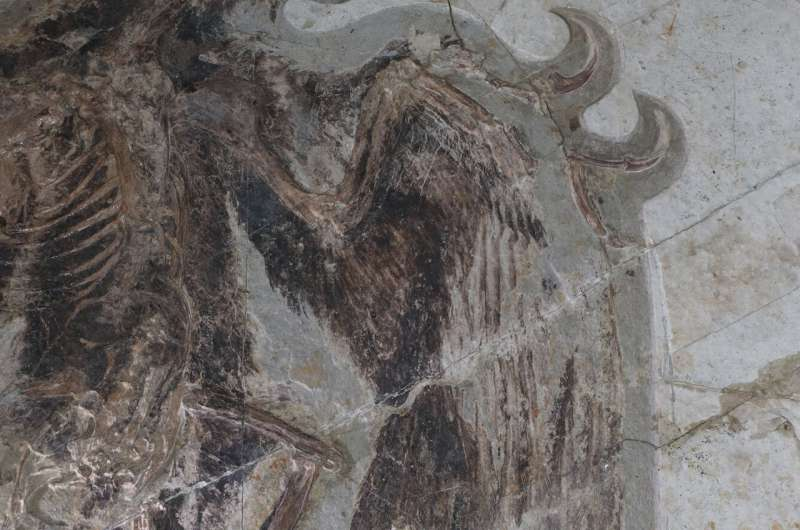
The hidden rule for flight feathers and how it could reveal which dinosaurs could fly
Phys.org has a story about flying dinosaurs. A new paper in the journal PNAS looked at hundreds of feathers in museum collections to determine which feather characteristics were common to flying birds. These characteristics were then used to create “rules”, which when applied to fossil dinosaur feathers might predict which dinosaurs were able to fly. …
-

PBS Eons: Why Is It So Hard to Tell the Sex of a Dinosaur?
PBS Eons has a new episode over on Youtube. How do you hold a gender reveal for dinosaurs. While we think we know a lot about dinosaurs – like how they moved and what they ate – for a long time, we haven’t been able to ID one seemingly basic thing about their biology… Which…
-
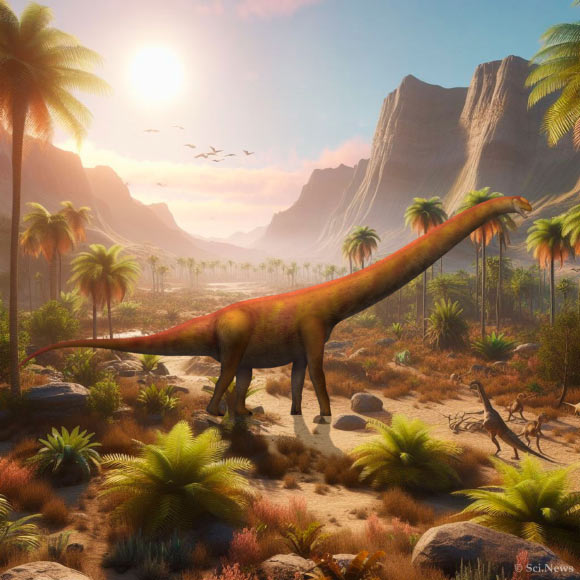
New Species of Titanosaur Unearthed in China
SciNews has a story about the discovery of a new Titanosaur. The animal, Jiangxititan ganzhouensis, lived between 72 and 66 million years ago during the Cretaceous Period. The fossils were found in the Nanxiong Formation near Tankou Town in Ganzhou City, the Chinese province of Jiangxi, which is commemorated in the name. J. ganzhouensis is…
-

Meet Bustingorrytitan shiva, New Gigantic Titanosaur from Argentina
SciNews has a story about the discovery of yet another titanosaur from Argentina. This one is called Bustingorrytitan shiva and it lived about 95 million years ago in what is now Patagonia during the Late Cretaceous Period. This particular discovery consists of a fairly complete specimen and three other partial skeletons. Read more about it…
-
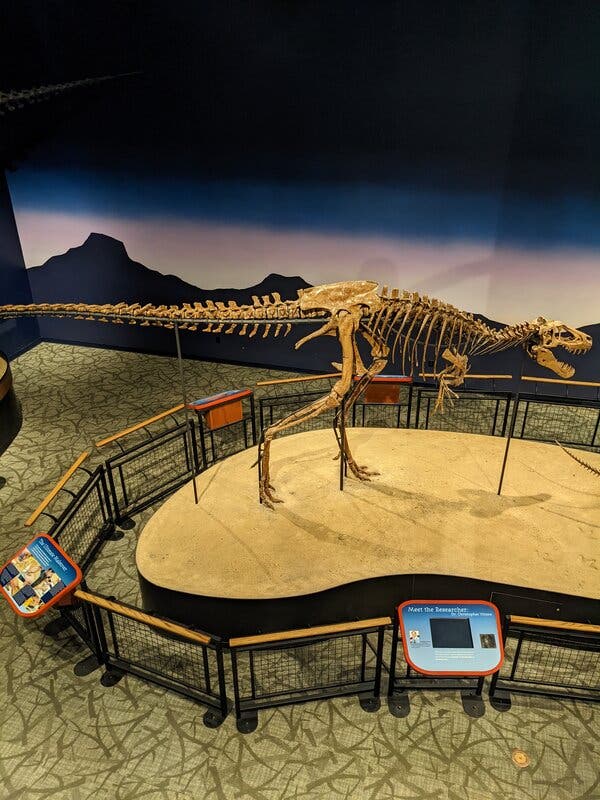
What’s in a Name? The Battle of Baby T. Rex and Nanotyrannus
The New York Times has a story about the debate of juvenile Tyrannosaurus rex vs Nanotyrannus. The debate has continued for years but was recently revived by the potential sale of a “rare juvenile Tyrannosaurus rex skeleton” by the David Aaron gallery. The dispute has produced reams of scientific research and decades of debate, polarizing paleontologists along the way. Now, with dinosaur…
-

Dinosaur World Thrilled Over Allosaurus Found In Wyoming’s Jurassic Mile
Cowboy State Daily has a story about the discovery of an Allosaurs. Paleontologists from the Children’s Museum of Indianapolis have been digging in the Jurassic Mile near Shell, WY since 2017. Back in 2020, while clearing overburden from a quarry that had bones from two giant long-necked sauropods, they discovered a chunk of dinosaur bone…
-

New Species of Giant Tyrannosaur Discovered in New Mexico
SciNews has news of a new species of Tyrannosaur. This one is called Tyrannosaurs mcraeensis. It was described from fossils found in the Hall Lake Formation of New Mexico. This is most likely a sister species of Tyrannosaurus rex. which existed about 3 to 5 million years before T. rex. The paper “A giant tyrannosaur…
-

New research shows ‘juvenile’ T. rex fossils are a distinct species of small tyrannosaur
Phys.org has an article about Nanotyrannus lancensis. A paper in the journal Fossil Studies proposes that N. lancensis is a distinct species of tyrannosaur and not a juvenile T. rex. The first skull of Nanotyrannus was found in Montana in 1942, but for decades, paleontologists have gone back and forth on whether it was a…
-

New Herbivorous Dinosaur Species Identified in Canada
SciNews has a post about a new dinosaur from Canada. Gremlin slobodorum lived about 77 million years ago during the late Cretaceous Period. It’s a leptoceratopsid, which is a hornless dinosaur related to Triceratops. The animal lived what is now southern Alberta, Canada. The dinosaur was described in “A new Late Cretaceous leptoceratopsid (Dinosauria: Ceratopsia)…
-
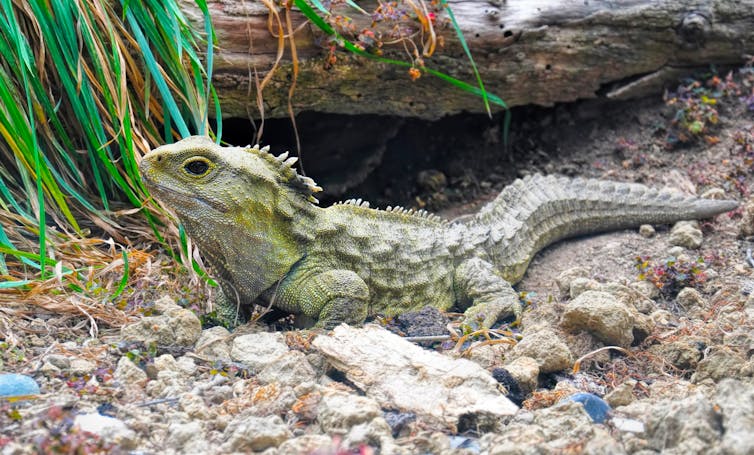
Could dinosaurs be the reason humans can’t live for 200 years?
The Conversation has an interesting post about the evolution of mammals. Did being small during the time of dinosaurs lead to limitations on how long mammals live? Mollusks, reptiles, and Greenland Sharks have been found to live 100’s of years. Actually, many animals don’t age and continue to grow throughout their lifetimes. All human beings…
-
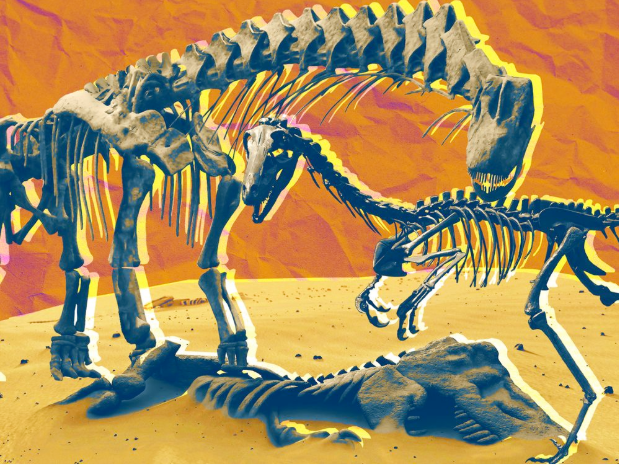
The Top Ten Dinosaur Discoveries of 2023
Ten big dinosaur discoveries stood out in 2023. Smithsonian Magazine has a list of 10 of the most intriguing dinosaur discoveries in 2023. Check out the link for the details.
