Tag: Cretaceous
-

Tiny pterosaurs dominated cretaceous skies
Phys.org had a story about pterosaus during the Cretaceous. A new study looked at competition between birds and pterosaurs and found the babies of the largest pterosaurs out-competed the adults of smaller species. Previously, it was thought that birds had out-competed the smaller species. The paper appeared in the journal Cretaceous Research. New research has…
-
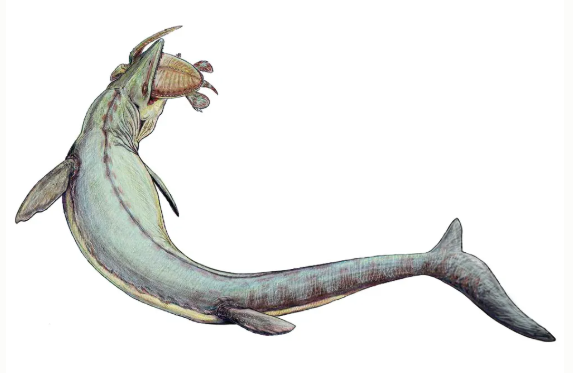
Giant Sea Lizards Ruled the Waves While T. Rex Roamed on Land
Smithsonian Magazine has a post about mosasaurs. A new paper in the journal PaleoBios finds that mosasaurs ruled the oceans up until the mass extinction event at the end of the Cretaceous some 66 million years ago. It had been theorized they went extinct millions of years before the impact. Fossil vertebra from the Hell…
-

PBS Eons: How a Mass Extinction Event Created the Amazon
There’s a new episode of PBS Eons over on Youtube. This one is about the mass extinction event at the end of the Cretaceous and how it helped to create the Amazon rain forest. The Amazon rainforest of South America is a paradise for flowering plants. But long ago, the landscape that we now…
-
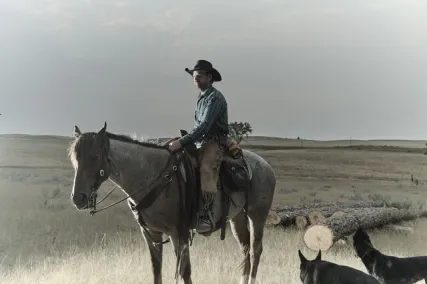
Dinosaur Cowboys Are Hunting for the Next $32 Million T. Rex
Bloomberg has a story about the Dinosaur Cowboy. Known for discovering the “Dueling Dinosaurs”, Clayton Phipps is a rancher and an amateur paleontologist. The story does a great job describing the controversy around the commercial exploitation of fossils, mainly dinosaurs. On a sunny, 99-degree day in northern Montana, Clayton Phipps grabs a backpack and heads…
-
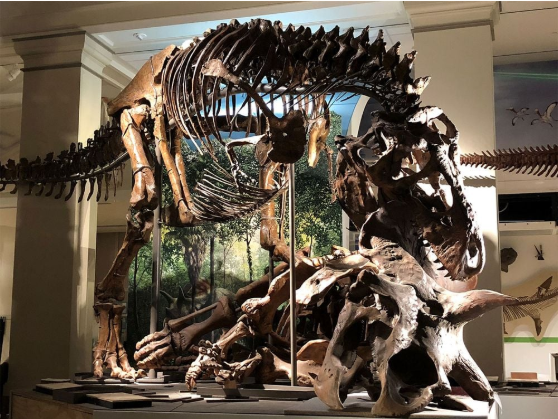
What We’ve Discovered About the ‘Tyrant Lizard King’ Since the Nation’s T. rex Was Unearthed
Smithsonian Magazine has a post about Tyrannosaurus rex. To date, about 50 T. rexes have been found, quite a few of those have been fragmentary. The Nation’s T. rex was discovered in 1988 in Montana by local rancher Kathy Wankel. It is often referred to as the “Wankel Rex”. Since then, we have learned so…
-
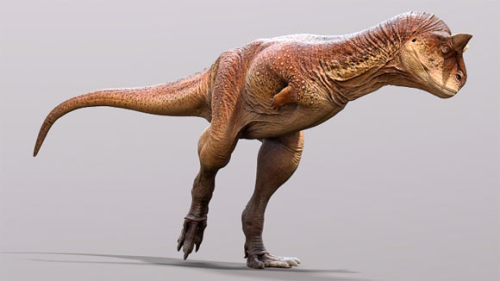
Carnotaurus Had Scaly Skin with No Feathers, Paleontologists Say
SciNews has an article about a reexamined dinosaur discovery in Argentina. Carnotaurus sastrei, a name that means “meat eating bull”, is a dinosaur that lived in what is now Argentina during the late Cretaceous period about 70 to 72 million years ago. A specimen, which was discovered in 1984 by famed Argentine paleontologist Jose Bonaparte,…
-
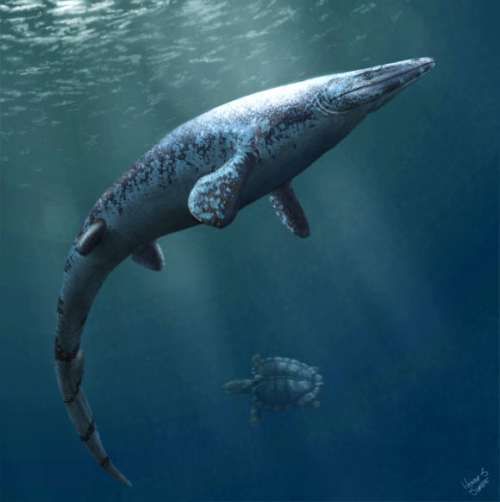
New Mosasaur Species Uncovered in Kansas
SciNews has a story about a new Mosasaur found in Kansas. The animal, named Ectenosaurus clidastoides, lived during the Cretaceous Period about 80 million years ago in what is now western Kansas. Details were published in a paper in the journal Canadian Journal of Earth Sciences. The newly-identified mosasaur species lived during the Late Cretaceous…
-
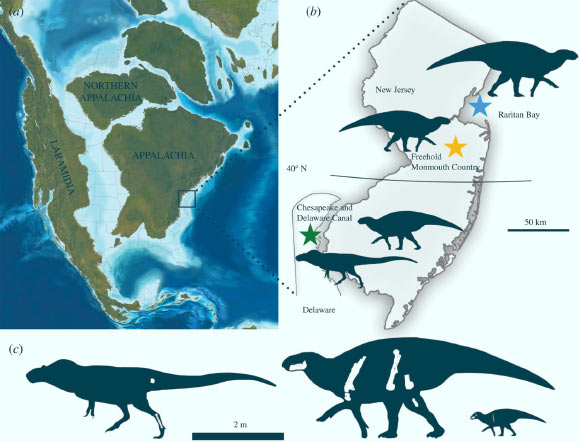
Two New Appalachian Dinosaurs Discovered
SciNews has a post about two new dinosaurs from Allalachia during the Cretaceous Period. Back in the Cretaceous Period, North America was bisected by the Western Interior Seaway. In the west was Laramidia for which the fossil record is very rich. The land mass to the east is called Appalachia. Much less is know about…
-

Reconstruction of Tyrannosaur Braincases Shows More Variation Than Previously Thought
SciTechDaily has a story about tyrannosaur skulls. Researchers in Canada and Argentina scanned the skulls to reconstruct the braincase of two well-preserved Daspletosaurs. Their research, which found more variation than expected, was published in the Canadian Journal of Earth Sciences. Among the fierce carnivores that lived during the late Cretaceous was a predator named Daspletosaurus. The massive tyrannosaur,…
-

Thick-shelled turtle egg with embryo still inside from the Cretaceous period found in China
Phys.org has a story about the discovery of a turtle embryo in a fossilized egg. The fossil egg was found in China’s Henan Province and dates to the Cretaceous Period. The egg was described in a paper in the journal Proceedings of the Royal Society B. A team of researchers affiliated with several institutions in…
-
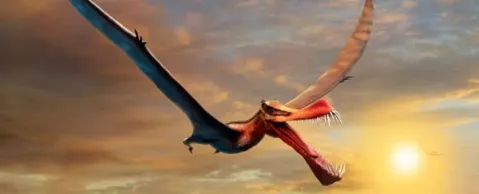
A Terrifying ‘Dragon’ Was The Largest Known Flying Reptile of Ancient Australia
Science Alert has a story about a terrifying new pterosaur recently described from Australia. It had a seven-meter wingspan, bristling teeth in its jaws, and it flew through the air! That’s how a new pterosaur from Australia has been described. Named Thapunngaka shawi, it lived about 110 million years ago during the Cretaceous Period. The…
-
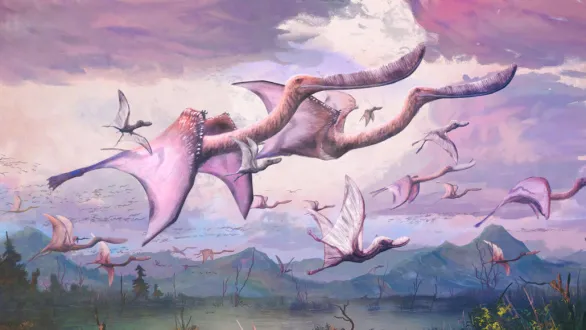
Pterosaurs may have been able to fly as soon as they hatched
ScienceNews has a story about pterosaurs. New research suggests that pterosaur hatchlings might have been able to fly right after hatching. This study was published in the journal Scientific Reports. Pterosaur hatchlings may have been able to fly right out of the shell — although the flight of those ancient baby reptiles might have looked…
-

A Mysterious Crater’s Age May Add Clues to the Dinosaur Extinction
The New York Times Trilobites column has a story about a mysterious crater in Ukraine. Scientists have long questioned when the 15 mile wide Boltysh crater was formed, either before or after the Chicxulub crater in the Yucatan Peninsula, which caused the extinction of the non-avian dinosaurs at the end of the Cretaceous Period. A…
-

Cretaceous Dinosaurs Lived in Warm and Variable Greenhouse Climate, Study
SciNews has a piece about the climate during the end of the Cretaceous Period. Researchers looked at various data, including oyster and rudist shells, to reconstruct a picture of the paleo climate during the Campanian (late Cretaceous Period) about 78 million years ago in what is now modern day Sweden. They found that the climate…
-

NYT: New Dinosaur Species Is Australia’s Largest, Researchers Say
The New York Times has a story about a new dinosaur… from Australia. Australotitan cooperensis is a titanosaur, which is a type of sauropod. It weighted about 70 tons and lived about 90 million years ago during the Cretaceous Period. It’s the largest dinosaur known from Australia. The dinosaur was described in a paper in…
-
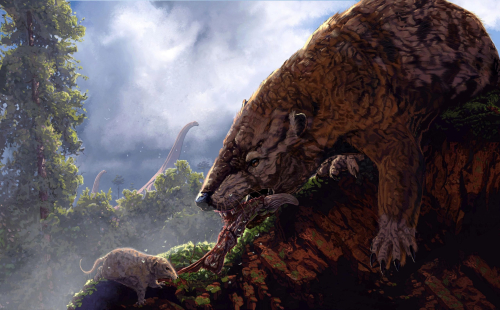
Extraordinary Evolution Research Reveals Mammals in the Time of Dinosaurs Held Each Other Back
SciTechDaily has an article about mammals during the age of dinosaurs. A new study published in Current Biology looked at how mammals evolved before and after the extinction that took out the non-avian dinosaurs at the end of the Cretaceous. The study found that it wasn’t the dinosaurs that out competed the mammals, it was…
-
PBS Eons: When Crocs Thrived in the Seas
There’s a new episode of PBS Eons. This one is about some ferocious crocodiles that lived in the oceans during the Jurassic and Cretaceous. Check out Animal IQ: https://youtu.be/BXqGkPhU2VE While dinosaurs were dominating the land, the metriorhynchids were thriving in the seas. But taking that plunge wasn’t easy because it takes a very special…
-

Casper College: The Cedar Mountain Formation, Utah: North America’s Most Complete Early Cretaceous Record – May 4th, 2021
Casper College has been holding a Spring Lecture Series called “Cretaceous Dinosaurs”. The last in the series will be given by James Kirkland, State Paleontologist with the Utah Geologic Survey. His talk is titled “The Cedar Mountain Formation, Utah: North America’s Most Complete Early Cretaceous Record“. It will be held via Zoom at 7:00 MDT,…
-

SciNews: New Species of Duck-Billed Dinosaur Unearthed in New Mexico
SciNews has an article about a new dinosaur discovery. The animal, a duck-billed dinosaur called Ornatops incantatus, lived about 80 million years ago during the Cretaceous Period in what is now modern day New Mexico. A paper in the journal PeerJ has all the details. Its partial skeleton, including part of the skull, was found…
-
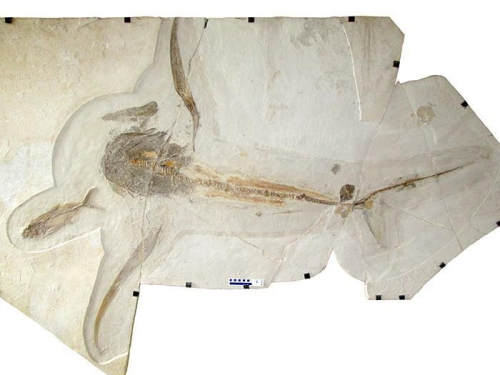
Smithsonian: Discovery of a 95-Million-Year-Old ‘Eagle Shark’ Fossil Makes Waves
Smithsonian Magazine has a story about an interesting new shark fossil. The eagle shark, Aquilolomna milarcae, lived about 95 million years ago during the Cretaceous Period in what is now northeastern Mexico. It was found in 2012 by a quarry worker in the Vallecillo limestone quarry. The animal was about 5.4 feet long and 6…
-
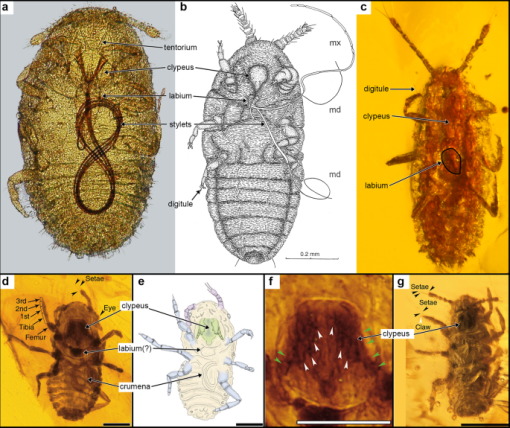
Nature: Insects with 100 million-year-old dinosaur feathers are not ectoparasites
Nature has an open access paper which looked deeper into the discovery of insects found on dinosaur feathers preserved in amber. The amber was found in the Myanmar and dates to the mid-Cretaceous Period about 100 million years ago. The original paper “New insects feeding on dinosaur feather in mid-Cretaceous amber” was published in 2019.…
-

Phys.org: Enormous ancient fish fossil discovered in search of pterodactyl remains
Phys.org has a post about an absolutely enormous fish fossil. A paper published in the journal Cretaceous Research describes a coelacanth from the Cretaceous Period that may have measured 5 meters in length. Compared to modern day coelacanth, which rarely grow to 2 meters, this specimen is a giant. The animal lived about 66 million…
-
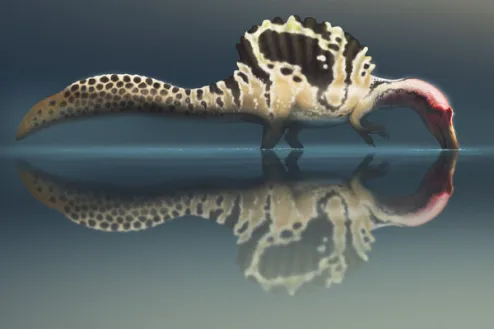
NYT: Was This Dinosaur More Subaquatic Killer or Giant Wading Bird?
The New York Times’ Science column Trilobites has a story about a new theory as to how Spinosaurus made a living. Spinosaurus lived about 100 million years ago, during the Cretaceous Period, in what is now North Africa. Its bones were first discovered in 1915. Ever since, due to some bizarre features, there have debates…
-
SciNews: 99-Million-Year-Old Fossil Flower Found Encased in Burmese Amber
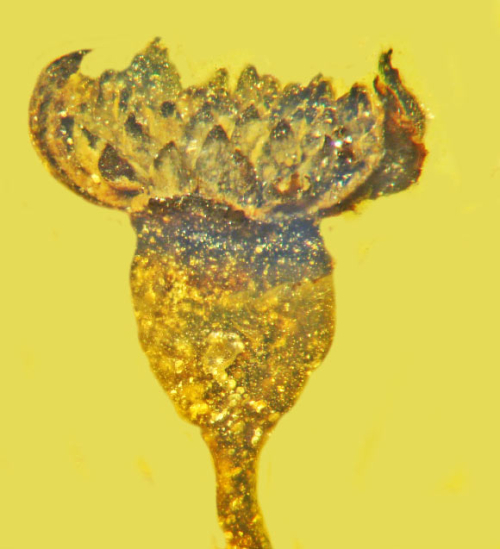
SciNews has a story about a flower preserved in amber. The fossil flower is called Valviloculus pleristaminis. It lived about 99 miliion years ago during the Cretaceous Period in what is now Myanmar. Myanmar has amber deposits that have yielded some amazing finds, including dinosaur tails, feathers, wings, and even a skull. The discovery is…
-
SciNews: Cretaceous Dinosaur Had Impressive Mane and Shoulder Ribbons
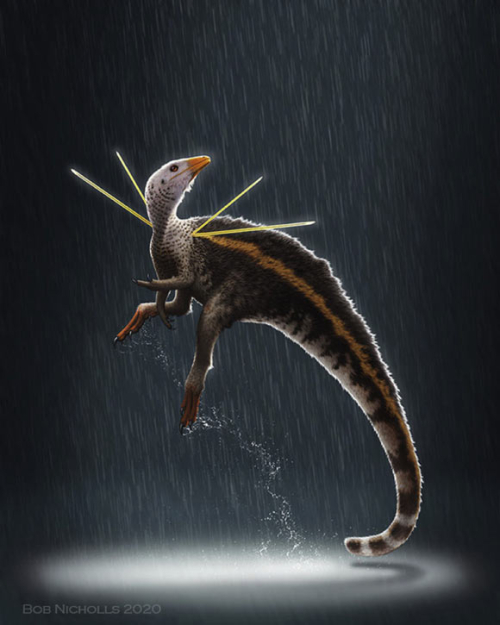
SciNews has a story about a new dinosaur from Brazil. The animal, named Ubirajara jubatus, lived about 110 million years ago during the Cretaceous Period in what is now Brazil. It was about the size of a chicken. This dinosaur was collected from the famous Crato Formation in Northeastern Brazil. It has been described in a…
-
SciNews: Non-Avian Dinosaurs Were Not in Decline Prior to Their Extinction
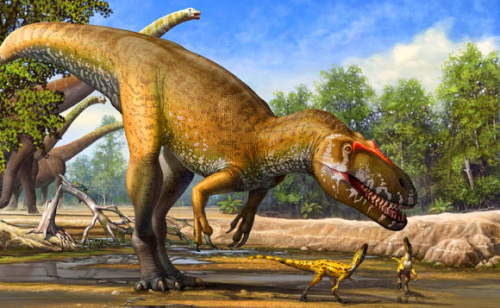
SciNews has a story about the extinction of the dinosaurs. One long controversial point around the K-Pg mass extinction, which took out the non-avian dinosaurs about 65 million years ago, has been whether their diversity was in decline before the meteor struck in Chicxulub. This is often sited in arguments about whether the volcanic…
-
Fossil Reveals Weird, Toothed ‘Toucan’ That Lived Alongside The Dinosaurs
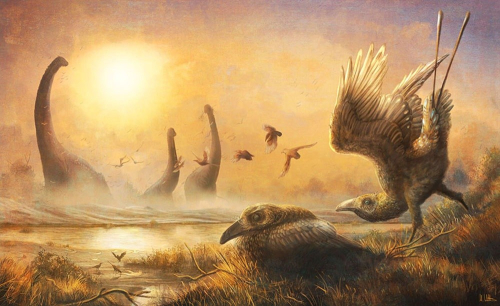
ScienceAlert has a story about a “buck-toothed toucan”. The animal, Falcatakely forsterae, lived about 68 million years ago during the late Cretaceous in what is now modern Madagascar. It was described in a paper in the journal Nature. At less than nine centimetres (3.5 inches) long, the delicate skull of the bird scientists have dubbed Falcatakely forsterae might…
-
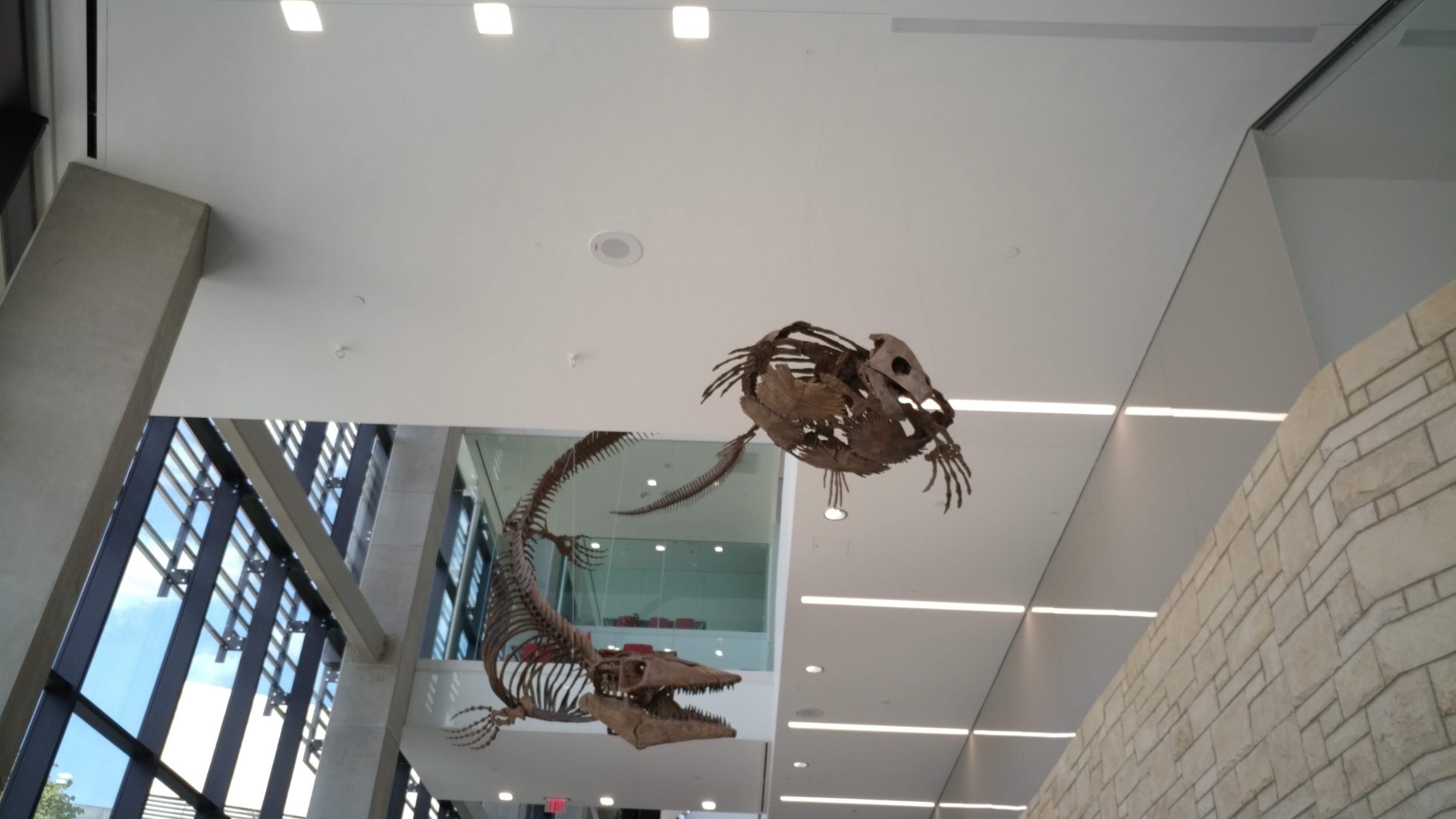
Fossil Friday #33: Tylosaurus and Turtle at KU
This is the “Fossil Friday” post #33. Expect this to be a somewhat regular feature of the website. We will post any fossil pictures you send in to esconi.info@gmail.com. Please include a short description or story. Check the #FossilFriday Twitter hash tag for contributions from around the world! If you get a chance to check…
-
LiveScience: Cretaceous cold case of ‘dueling’ T. rex and Triceratops may finally be solved
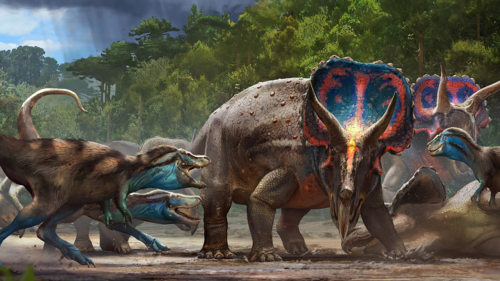
LiveScience has a story about the “Dueling Dinosaurs”. This extraordinary fossil specimen of two of the most complete dinosaurs skeletons ever discovered. One is a Triceratops and the other is a Tyrannosaurs rex and they may possibly be locked in 67 million year old mortal combat. These fossils are heading to North Carolina State University to undergo some extensive study. …
-

SciNews: New Pterosaur Species Unearthed in China
Sci-News has a story about a new pterosaur discovery in China. This new species is called Ordosipteris planignathus. It lived about 110 -120 million years ago during the Cretaceous Period in what is now Inner Mongolia, China. A paper describing this animal appeared the journal China Geology.
