Tag: Cretaceous
-
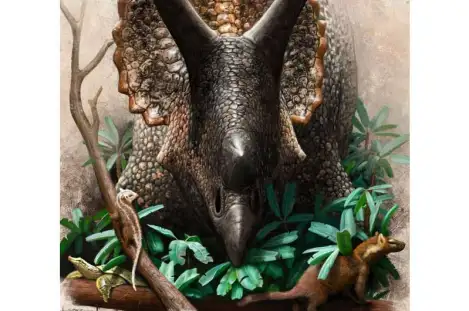
Dinosaurs were on the up before asteroid downfall, study finds
Phys.org has a story about the state of the non-avian dinosaurs just before the K-Pg mass extinction about 66 million years ago. For a while, it was thought they were in decline before the asteroid strike. A new study published in the journal Science Advances found that the non-avian dinosaurs were actually thriving, entrenched in…
-
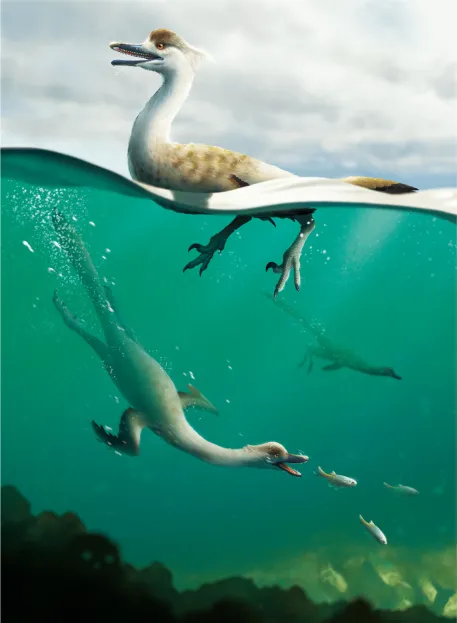
Mongolian fossil is first known species of streamlined non-avian theropod dinosaur to walk on two legs
Phys.org has a story about a new Cretaceous bird. The animal, named Natovenator polydontus, a non-avian theropod dinosaur was discovered in the Hermiin Tsav fossil formation in Mongolia back in 2008. It lived during the Cretaceous Period roughly 100 million to 66 million years ago. N. polydontus had teeth, which implies it had a varied…
-
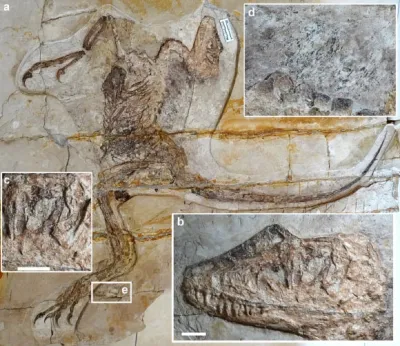
New Bird-Like Dinosaur Species Found with Remains of Frog in Its Stomach
SciNews has an article about the discovery of a new bird-like dinosaur. Daurlong wangi lived between 130 and 120 million years ago during the Cretaceous Period in what in now China. It was a dromaeosaur of medium size bird-like dinosaur. The animal, part of the famous Jehol Biota, was described in a paper, which appeared…
-
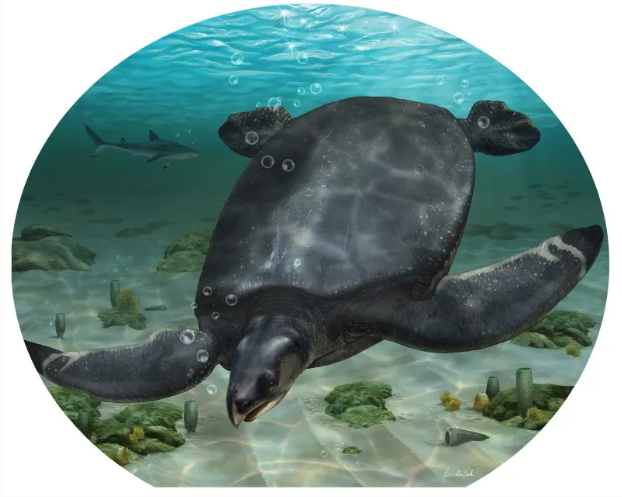
Scientists Unearth a Prehistoric Marine Turtle the Size of a Car
Smithsonian Magazine has an article about a new fossil turtle. The animal, Leviathanochelys aenigmatica, lived during the Cretaceous Period about 72 million years ago in what is now Spain. It was discovered by a hiker in the Pyrenes mountains. The new species was described in a new paper, which appeared in the journal Scientific Reports.…
-
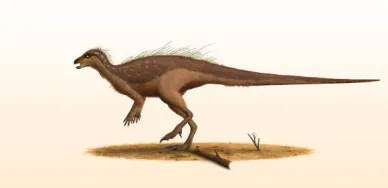
New Plant-Eating Dinosaur Species Uncovered in Nevada
SciNews has a piece about the discovery of a new dinosaur. Nevadadromeus schmitti lived between 100 and 94 million years ago during the Cretaceous Period in what is now Nevada. It seems to be related to Thescelosaurinae, but also has features of Orodrominae. It is an Ornithiscian dinosaur, a group that includes hadrosaurs, cerotapsian, and…
-
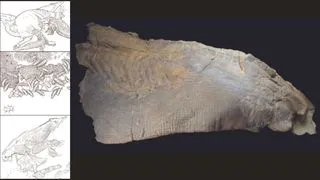
Astonishing dinosaur mummy has ‘glittering’ skin that was punctured and ripped by ancient crocs
LiveScience has a story about “Dakota” a dinosaur mummy from North Dakota. “Dakota”, a duck-billed dinosaur that lived about 67 million years ago in what is now North Dakota, is a mummified dinosaur which exhibits evidence of predatory behavior in its remains. A paper in the journal PLOS One describes this evidence and proposes that…
-
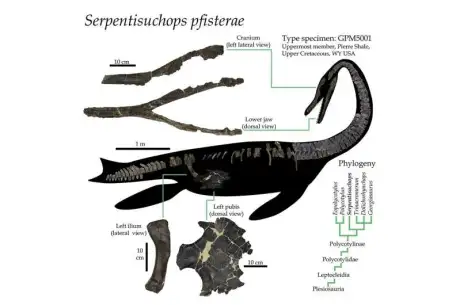
Plesiosaur unearthed in 1995 found to have been long-necked marine reptile
Phys.org has a story about a recently described plesiosaur. Discovered back in 1995, Serpentisuchops pfisterae, which means roughly “creature with a snaky crocface”, has been described as a plesiosaur. Plesiosaurs generally come in two varieties, those with a long, snake-like neck and a small head, and those with a shorter neck and a head with…
-
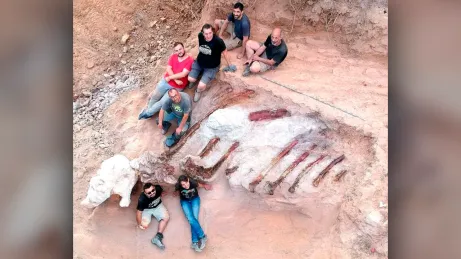
Ginormous Jurassic fossil in Portugal may be the biggest dinosaur ever found in Europe
Live Science has a story about the discovery of a truly large dinosaur. The sauropod dinosaur has a gigantic rib cage and is possibly a brachiosaurid. It lived about 150 million years ago in what is now Pombal, Portugal, which is north of Lisbon and near the Atlantic coast. By the size of the already…
-

Scientists shine light on 66-million-year-old meteorite wildfire mystery
Phys.org has a story about the K-Pg mass extinction event. It’s well established science that a meteorite struck the Yucatan peninsula about 66 million years ago. An event that brought about the extinction of the non-avian dinosaurs, pterosaurs, ammonites, and many other animals that lived alongside them. There have been many theories and debates about…
-

CBC News: Rare dinosaur skin fossil discovered in Alberta
CBC News has a story about the discovery of fossilized dinosaur skin. A dinosaur fossil recently discovered in Alberta’s badlands was so well preserved its skin was still in tact. The rare find is spreading excitement among paleontologists.
-
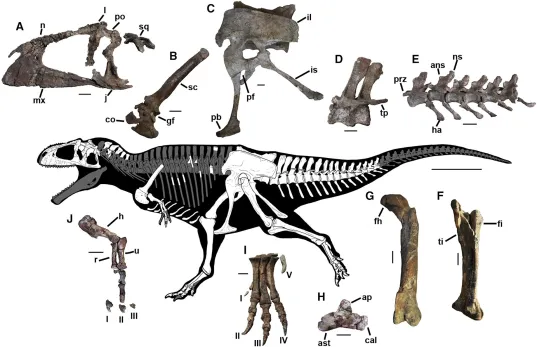
Big head, small arms: A newly discovered gigantic dinosaur evolved in a similar manner to Tyrannosaurus rex
The Conversation has a story about the evolution of meat-eating dinosaurs. Meraxes gigas is a recently named theropod dinosaur from Argentina. It was found near Villa El Chocon in the Huincul Formation and lived about 95 million years ago. Meraxes is a large theropod, the group of bipedal, often meat-eating, dinosaurs which also includes birds, and…
-

Scientists discover fossils of giant sea lizard that ruled the oceans 66 million years ago
Phys.org has a story about the discovery of a huge mosasaur in Morocco. It’s been named Thalassotitan atrox, and it probably preyed on other large marine reptiles like plesiosaurs, sea turtles, and even other mosasaurs. Mosasaurs are not dinosaurs, but actually are distant relatives of modern iguanas and monitor lizards. The research was published in…
-

Eighty million years ago, western Kansas was ‘hell’s aquarium.’ Here’s what it can teach us today
High Plains Public Radio (HPPR) has a story about Kansas during the Cretaceous Period. Eight million years ago, a good part of Kansas was covered by the Western Interior Seaway – a “shallow” sea. That sea teamed with life, including large mosasaurs, fish like Xyphactinus, sharks, and even giant clams. Circling above were pterosaurs like…
-
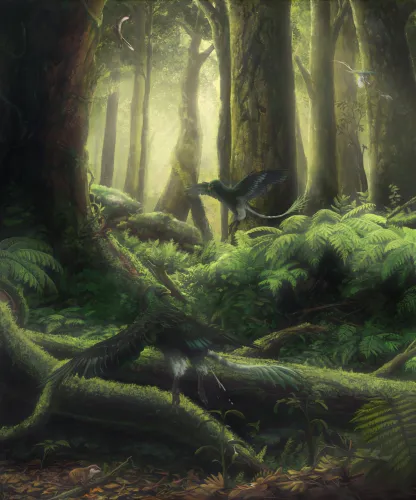
The early bird gets the fruit: Fossil provides earliest evidence of fruit-eating by any animal
Phys.org has a story about birds and fruit. Jingmai O’Connor of the Field Museum is co-writer of a paper (in the journal eLife) about the early bird Jeholornis, which is believed to lived on a diet of fruit about 120 million years ago during the Cretaceous Period. Jeholornis fossils have been found in China. “This is…
-
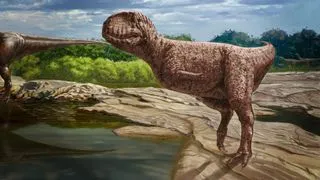
Massive bulldog-faced dinosaur was like a T. rex on steroids
Live Science has a post about a new dinosaur discovery. This new dinosaur is still unnamed and is known to be a meat-eater, which belonging to a group called the abelisaurids. This dinosaur lived during the Cretaceous Period about 98 million years ago in the famous Bahariya Formation in what’s now Egypt’s Sahara Desert. From…
-
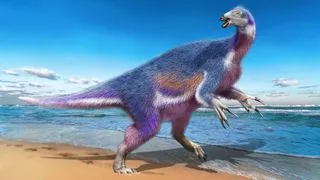
Dinosaur ‘reaper’ with massive claws found in Japan
Live Science has a post about a new dinosaur discovery in Japan. The animal is a therizinosaur and is called Paralitherizinosaurus japonicus. The genus means “reptile by the sea”. The large Edward Scissorhands-like claws were probably primarily used to slash vegetation not other animals as the animal was a herbivore. P. japonicus lived about 80…
-
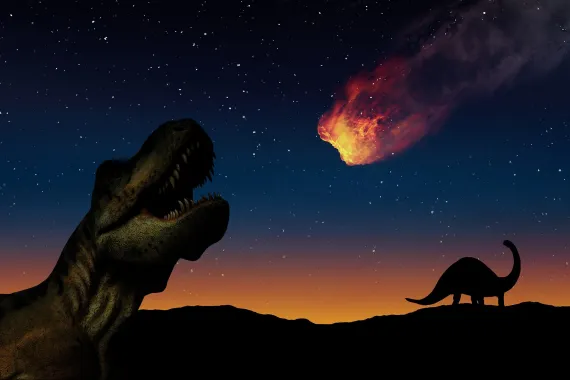
How the dinosaur extinction changed plant evolution
Phys.org has a story about plant evolution after the K-Pg mass extinction. Mass extinction always have irreversible effects on the evolution of life on Earth. The end Cretaceous extinction took out about 75% of species, including non-avian dinosaurs, pterosaurs, ammonites, and other countless others. The Plant Kingdom isn’t always discussed, but it suffered heavy losses,…
-
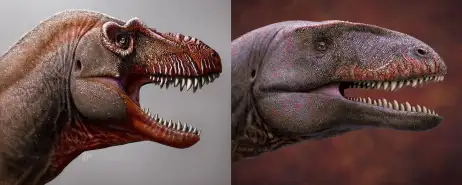
The discovery of two giant dinosaur species solves the mystery of missing apex predators in North America and Asia
The Conversation has a piece about the discovery of a couple “missing” apex predators during the Cretaceous. The animals, Thanatotheristes degrootorum, a tyrannosaur from North America and Ulughbegsaurus uzbekistanensis, a carcharodontosaur from Uzbekistan, were found languishing in museum collections where they had sat for at least a decade. Both fill in gaps of our knowledge…
-
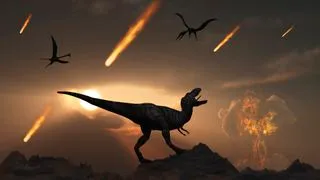
How did cockroaches survive the dino-killing asteroid strike?
Live Science has an article that discusses the heartiness of roaches. Three quarters of all plant and animal species went extinct after the meteor struck Chicxulub at the end of the Cretaceous Period, how is that roaches made it through the extinction that followed? When the rock now known as the Chicxulub impactor plummeted from outer space…
-
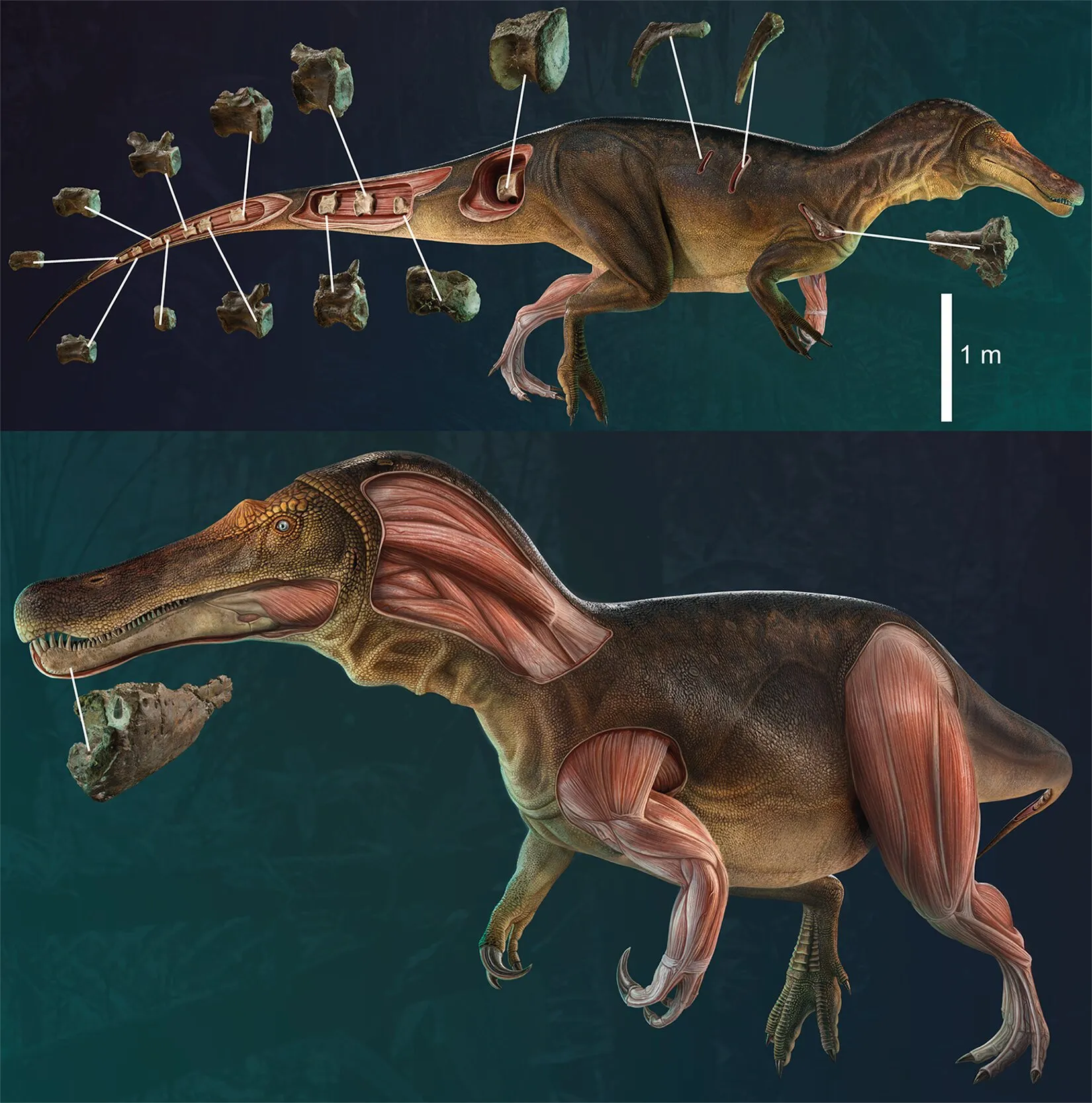
New species of spinosaurid dinosaur discovered in Portugal
Phys.org has a story about a new species of spinosaur. A paper published in PLOS ONE looks at some dinosaur fossils discovered 23 years ago in Portugal. The authors from both the NOVA School of Science and Technology and Museu da Lourinhã describe the bones as Iberospinus natarioi, a new species of spinosaur. Spinosaurids are…
-
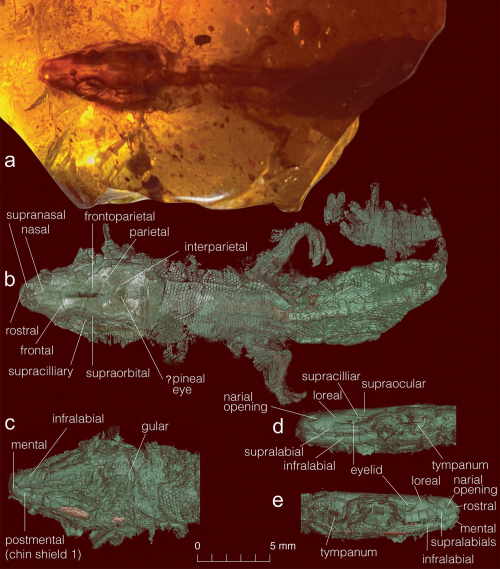
110-Million-Year-Old Lizard Found in Burmese Amber
General view of Retinosaurus hkamtiensis: (a) photograph of the specimen — a well-preserved skull, including the mandible, part of the hyoid (ceratobranchial), and a partial postcranial skeleton, as well as well-preserved skin tissues — within the amber resin in dorsal view; (b-d) high resolution computerized scan (HRCT) rendering of the integument surface; note that the integument…
-
“I Know Dino” podcast
Roy Plotnick, long time ESCONI member and friend appears in a recent episode (#377) of the podcast “I Know Dino”. They usually discuss dinosaurs, but with Roy, they discuss paleontology in general and his book “Explorers of Deep Time: Paleontologists and the History of Life”. Roy gives ESCONI and rock clubs in general a very…
-
Cretaceous Crocodiles Ate Ornithopod Dinosaurs, Fossil Evidence Shows
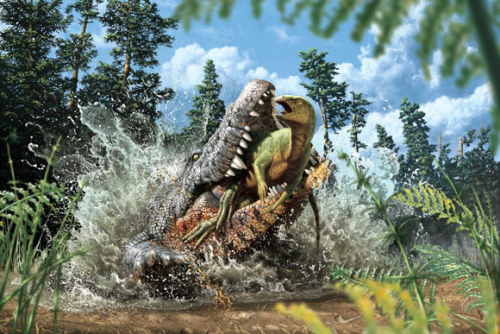
SciNews has a story about a new Cretaceous crocodile. The animal, Confractosuchus saurokonos, lived about 95 million years ago in what is now Queensland, Austrailia. As part of the skeletal remains, well preserved gut contents were found. With some analysis, those contents were found to be parts of a juvenile ornithopod dinosaur. This discovery was…
-

CBC Quirks and Quarks: Darkness doomed the dinosaurs
The CBC Radio show/Podcast Quirks and Quarks has a segment entitled “Darkness doomed the dinosaurs — the extinction asteroid turned out the lights on Earth”. They speak with Peter Roopnarine from the California Academy of Sciences about the after effects of the meteor strike that took out the non-avian dinosaurs at the end of the Cretaceous.…
-
Surprising Dinosaur Discovery: Ankylosaur Was Sluggish and Deaf
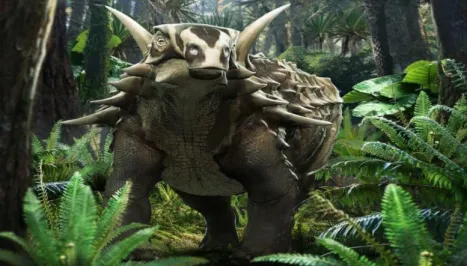
SciTechDaily has a story about Ankylosaurs. A CT scan of a braincase of an Ankylosaur, Struthiosaurus austriacus, which lived about 80 million years ago in what is now modern day Austria, has led to some surprising new details: it was sluggish and deaf. The research was published recently in the journal Scientific Reports. Ankylosaurs could…
-

Human-size ammonites swam the Atlantic Ocean 80 million years ago
LiveScience has a story about some truly large ammonites. About 80 million years ago during the Cretaceous Period, six foot ammonites lived in the Atlantic Ocean. A new study published in the journal PLOS One looked at the evolutionary history of these massive cephalopods. They looked at 154 specimens (!), including 100 newly found specimens…
-
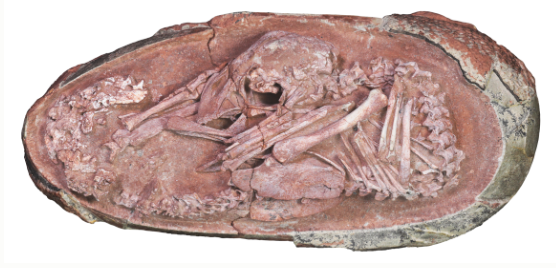
Breathtaking Fossil of Baby Dinosaur Tucked in Its Egg Yields New Evolutionary Clues
Nature’s Science Alert has a story about a stunning dinosaur fossil. Found in China, a oviraptor egg has a baby dinosaur preserved in breathtaking detail. The egg dates to between 72 and 66 million years ago. The fossil was described in a paper in the journal iScience. A rare and exquisitely preserved dinosaur embryo tucked…
-

Weird Tracks in Texas Indicate Giant Sauropods Walking on Their Front Feet Only
Nature Science Alert has a story about sauropods. Some strange footprints, found near Bandera, Texas back in the 1930’s, could show swimming behavior in sauropods. That theory dates to a letter written by Roland T. Bird in 1940 about front foot only prints made by sauropods. A paper in 2019 reexamined the question, but at…
-

Jurassic World “Dominion” Trailer
Screen Rant has a new movie trailer for Jurassic World 3, schedule for release in June 2022. Say what you will about the science, but the special effects are stunning! This trailer shows scenes from the Cretaceous through the present day in Jurassic World. This one has both the required fight scene between large…
-
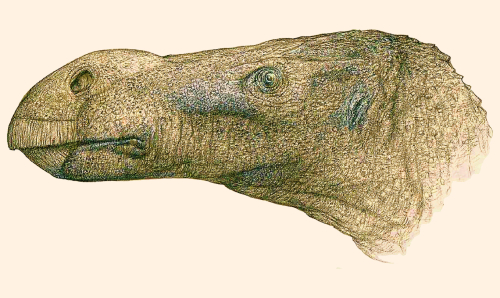
Paleontologists Unearth New Species of Iguanodontian Dinosaur
SciNews has a story about a newly-identified dinosaur. Named Brightstoneus simmondsi, the animal lived about 127 million years ago during the early Cretaceous Period in what is now the Isle of Wight. It weighted about 900 kg (1980 lbs) and measured about 8 meters (26 feet) long. The description was published in the journal Systematic…
