Tag: Cretaceous
-

Roy Plotnick: Existence Locates a Path
Roy Plotnick has a new post over on Medium. The post is about extinction… mass extinction. We have a roll in the current and a past extinction. Time for action! Mass extinctions and their causes are topics of intense interest. Nearly forty years after the 1980 paper on the end-Cretaceous impact, significant new research on…
-
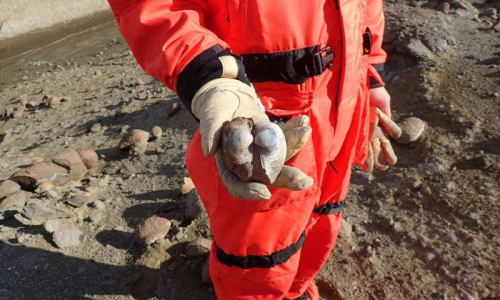
Earth was stressed before dinosaur extinction
Phys.org has an interesting story about the extinction of the dinosaurs. A new study, led by researchers from Northwestern University, shows that the chemistry of fossilized clam and snail shells changed greatly in the years leading up to the K-Pg mass extinction event. This change is likely due to a large influx of carbon into…
-
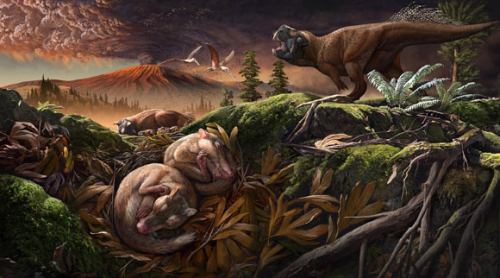
New Cretaceous-Period Mammal Unveiled
Sci-News has a story about a new mammal that lived along side the dinosaurs during the Mesozoic Era. The animal, named Origolestes lii, is part of the famous Jehol Biota, which dates to the Cretaceous Period 133 to 120 million years ago. This biota was a terrestrial and freshwater ecosystem found across the Chinese provinces…
-

Did a million years of rain jump-start dinosaur evolution?
Nature has an interesting post about a spell of wet weather in the middle Triassic that may have spurred the evolution of the dinosaurs. This wet spell occurred for about a million years about 232 million years ago. The evidence for the very wet period (pluvial episode) is contained in Triassic rocks from the Carnian…
-
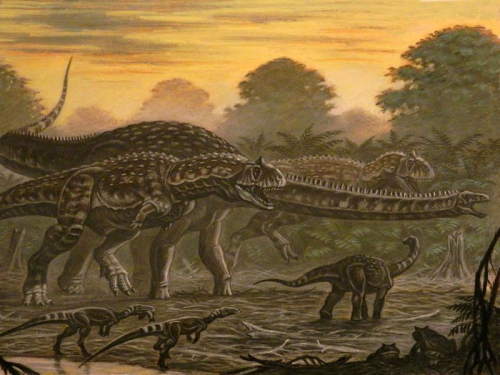
Flesh-Ripping Dinosaurs Replaced Their Teeth Multiple Times a Year
The Smithsonian has a story about tooth replacement in theropod dinosaurs. A new study published in the journal PLOS ONE has found that Majungasaurus probably replaced its teeth every 56 days. This is faster than the previous highest tooth replacement rate which was about 100 days in Jurassic carnivores Allosaurus and Ceratosaurus. This new rate…
-
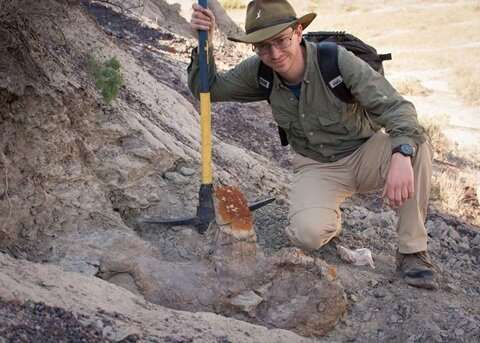
Dinosaur skull turns paleontology assumptions on their head
Phys.org has a piece about a well-preserved Styracosaurus skull which is enlightening paleontologist to the morphological variability of the species. The skull was not symmetrical and has implications as to how we should identify new (and currently known) species of dinosaurs, especially ceratopsians. Details are in a paper published in the journal Cretaceous Research. The skull was…
-
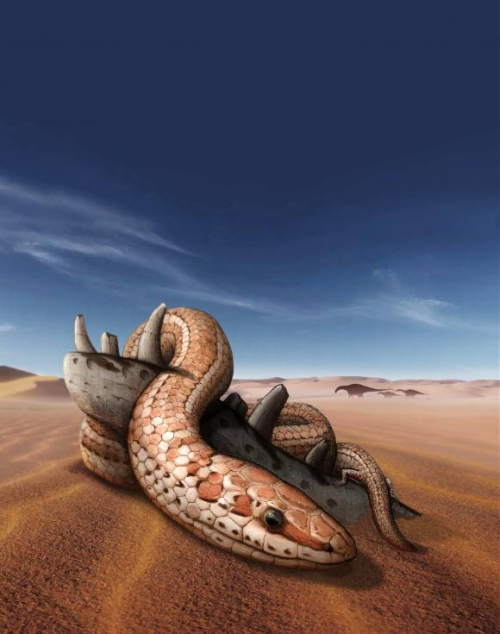
Cretaceous Legged Snake Fossils Shed New Light on Evolution of Modern Snake Body Plan
Sci-News has a story about the evolution of snakes. A 3-D preserved snake fossil from about 100 million years ago shows compelling clues as to the evolution of snake. This animal, called Najash rionegrina, still had legs and jugal (cheek) bones. The specimens were found in northern Patagonia, Argentina. Details can be found in a…
-

Palaecast Episode 105: Ferrodraco
There’s a new episode of Palaeocast. This one is about the new Australian pterosaur, Ferrodraco lentoni, which was recently described in a paper that appeared in Scientific Reports. Discovered in the Winton area of central western Queensland, it had a wingspan of about 4 meters (13 feet). This animal lived about 96 million years ago,…
-

First evidence of feathered polar dinosaurs found in Australia
Phys.org has a story about the first polar dinosaurs with feathers. Fossilized dinosaur and bird feathers have been found in what are fine muddy sediments in Australia. The deposit was once the bottom of a shallow lake that was close to the South Pole during the Cretaceous. The feathers date to about 118 million years…
-
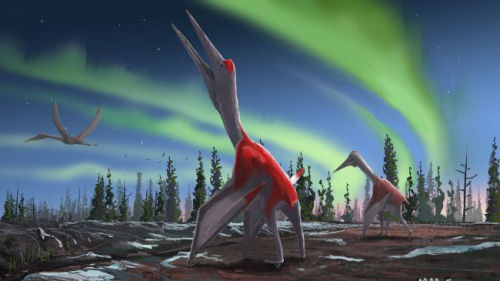
LiveScience: Meet ‘Cold Dragon of the North Winds,’ the Giant Pterosaur That Once Soared Across Canadian Skies
Live Science has a story about a new giant pterosaur. The animal, Cryodrakon boreas (cold dragon of the north winds), was discovered in Dinosaur Provincial Park in Alberta, Canada. It is thought to have lived between 77 million to 74 million years ago. The bones were originally found decades ago and were thought to be…
-

The Dinosaur-Killing Asteroid Acidified the Ocean in a Flash
New York Times has a story about the K-Pg mass extinction event. A recently published paper in The Proceedings of the National Academy of Sciences finds that the meteor at the end of the Cretaceous had an immediate and catastrophic effect on the ocean. What happened to the dinosaurs when an asteroid about six miles wide struck…
-
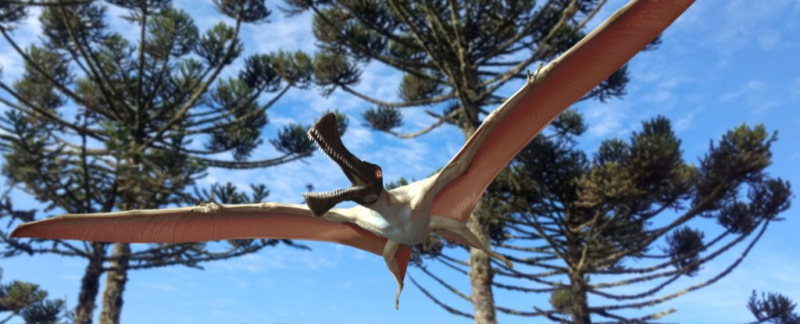
ScienceAlert: A Fossil of a Ginormous Flying Reptile Has Just Been Discovered in Australia
Science Alert has a story about a huge pterosaur discovery in Australia. Pterosaurs seem to be in the news lately and this one is called “Iron Dragon”, Ferrodraco lentoni. Discovered in the Winton area of central western Queensland, it had a wingspan of about 4 meters (13 feet). This animal lived about 96 million years…
-
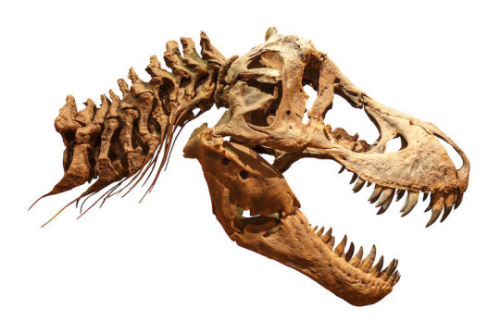
ScienceDaily: T. Rex had an air conditioner in its head, study suggests
Science Daily has a post about Tyrannosaurs rex and how it might have handled the heat of the Cretaceous. As an animal gets bigger, it gets harder and harder to dump heat. That’s because the volume of its body grows faster than surface area as the body gets bigger. Researchers at the University of Missouri,…
-
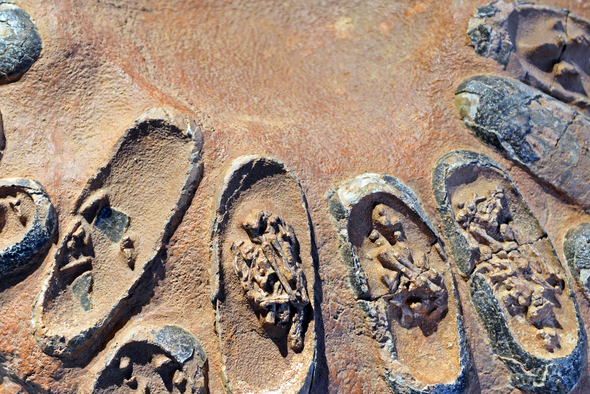
Scientific American: Ancient Mongolian Nests Show Dinosaurs Protected Their Eggs
Scientific American has an article about fossil dinosaur eggs. A new find, which consisted of about 15 nests and more than 50 eggs, was found in what is now the Gobi Desert. It dates to the late Cretaceous, about 80 million years ago and shows evidence of gregarious behavior. All the details appeared in a…
-
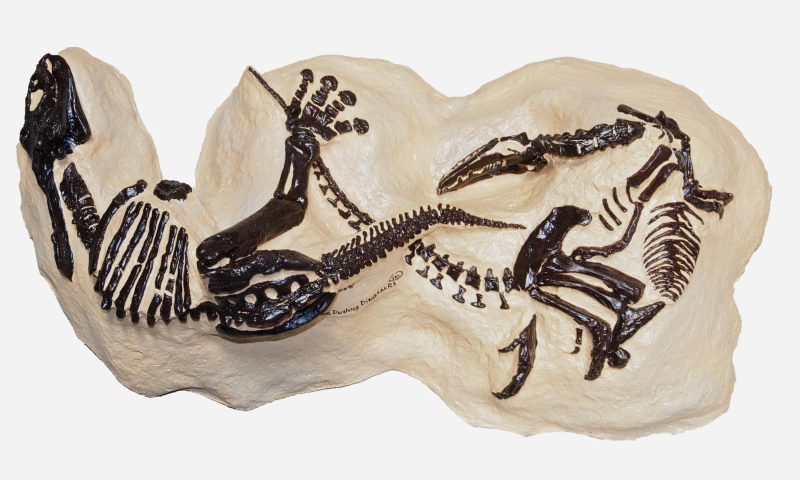
The Guardian: Perhaps the best dinosaur fossil ever discovered. So why has hardly anyone seen it?
The Guardian has an article about the so called “Dueling Dinosaurs”. The “Dueling Dinosaurs” are a large fossil plate that consists of both a 28 foot long ceratoptian (probably Triceratops horridus) and a 22 foot long theropod (possibly Tyrannosaurus rex or the controversial Nanotyrannus lancensis). Both skeletons are fairly complete, with exceptional preservation, fully articulated,…
-
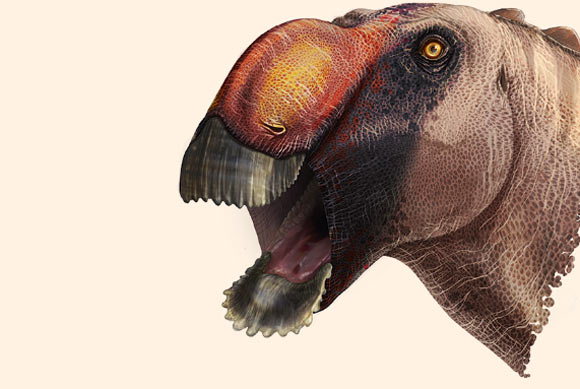
SciNews: ‘Shovel-Billed’ Dinosaur Roamed Texas 80 Million Years Ago
SciNews has an article about the discovery of a primitive hadrosaur. The specimen was found and collected in the 1980s and 1990s in Texas and is called Aquilarhinus palimentus. It belongs to Hadrosauridae (duck-billed dinosaurs) a group of plant-eating dinosaurs from the Cretaceous period. The original paper appeared in the Journal of Systematic Paleontology. “Hadrosaurids…
-

Mammals and their relatives thrived, diversified during so-called ‘Age of Dinosaurs’
Phys.org has an article about Mammals during the “Age of Dinosaurs”. In a paper in Trends & Evolution, a review paper summarizes the latest fossil evidence of the state of Mammals and their relatives during the Jurassic and Cretaceous periods. It seems that Mammals were flourishing and experienced a couple ecological radiations during this time.…
-
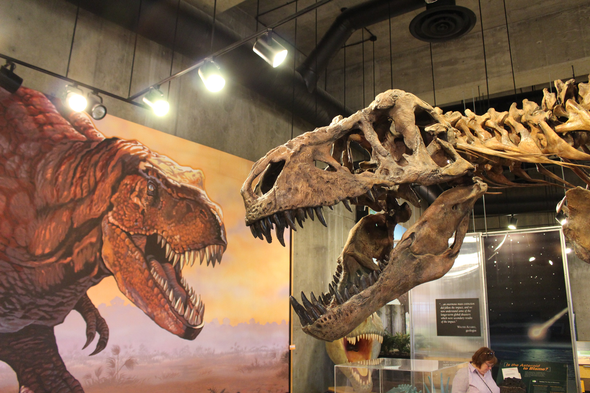
Is “Scotty” the Biggest T. rex? Maybe Not!
Brian Switeck on his Laelaps blog has a great post that discusses why “Scotty” may NOT be the biggest T.rex. Our local favorite, “SUE” of the Field Museum has long been billed as the largest, oldest, and most complete T.rex ever found. There isn’t any doubt in the “most complete” title. But, largest and oldest…
-
USPS: T-rex Postage Stamps Coming Soon To A Post Office Near You!
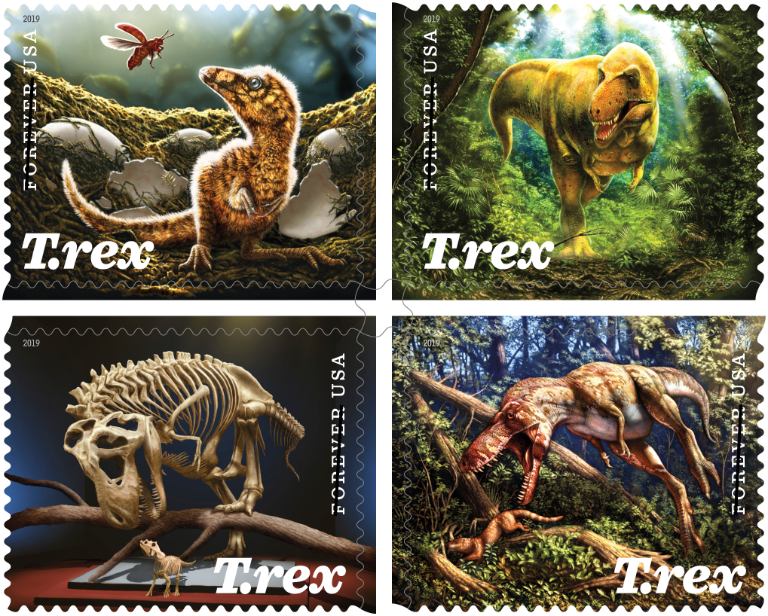
The USPS will be releasing a pane of T-rex postage stamps starting June 28th, 2019. Details are here. With this pane of 16 stamps, the Postal Service brings Tyrannosaurus rex to life — some 66 million years after its demise. One design illustrates a face-to-face encounter with a T. rex approaching through a forest clearing; another shows the same…
-
Quicks & Quarks: Tiny tyrannosaur fossil helps scientists understand how T-rex grew so large
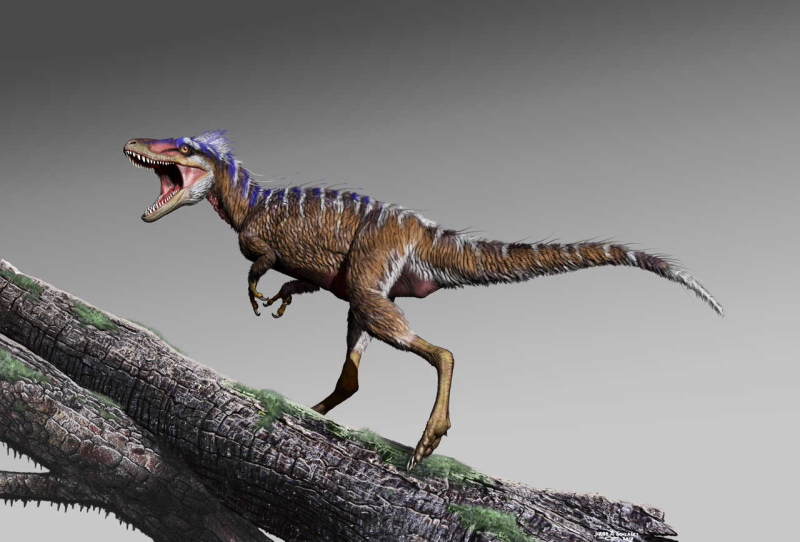
CBC’s Quirks & Quarks has a segment about a tiny tyrannosaur that helps shed light on how T-rex grew so large. The animal, Moros intrepodus, was found by Dr. Lindsay Zanno. She’s head of paleontology at the North Carolina Museum of Natural Sciences and research professor at N.C. State University in Raleigh. You might remember…
-

Sparkly, opal-filled fossils reveal new dinosaur species
National Geographic has a story about an opalized dinosaur fossil discovered in Australia’s Lightning Ridge. The fossils were found from a mine near Wee Warra in New South Wales and belong to a newly named dinosaur species called Weewarrasaurus pobeni. The animal was a herbivore about the size of a Labrador retriever. It lived about…
-
What Is a Shark Tooth Doing in the Neck of a Flying Pterosaur?
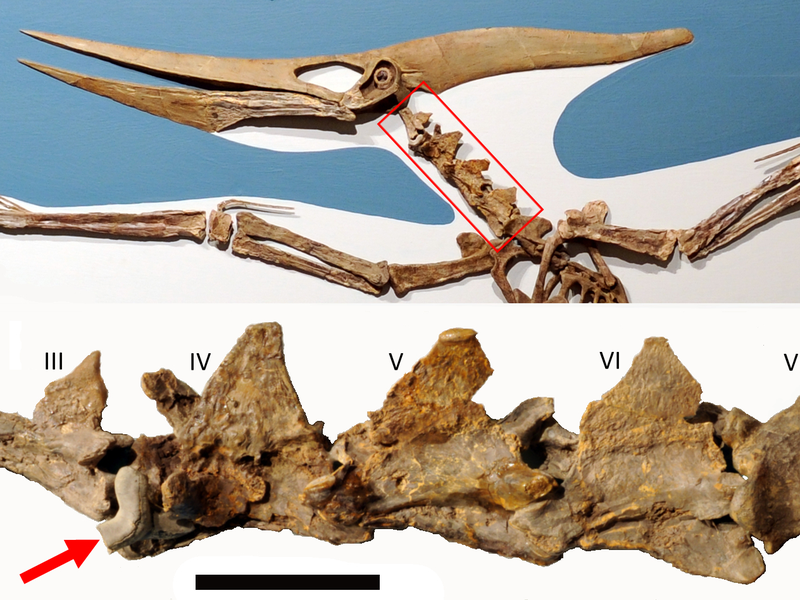
LiveScience has an article about the curious discovery of a shark tooth. Back in 1965, the fossil of a large pterosaur, a Pteranodon, was discovered in the Smoky Hill Chalk formation in Kansas. The animal lived between about 86 and 83 million years ago. It had a wingspan of about 16 feet. It seems that…
-

This Dino-Era Bird Was as Advanced as Modern Species. So Why Did It Disappear?
The Smithsonian has a piece about a recently rediscovered 70 million year old fossil bird from the Cretaceous Period. The specimen was originally found 25 years ago in the Kaiparowits Formation of the Grand Staircase-Escalante National Monument. It’s called Miracre eatoni, and it was about the size of a turkey vulture. It has been described…
-
Reminder: ESCONI General Meeting on November 9th, 2018
The ESCONI General Meeting for November 2018 will be held on November 9th, 2018. The presentation will be given by Dr. Rex Hanger of the University of Wisconsin – Whitewater. His presentation is entitled “Cretaceous Reef Paleoecology of Central Texas”. Don’t miss it!
-
Paleontologists Are Still Digging Into the Origins of the ‘Chinese Pompeii’
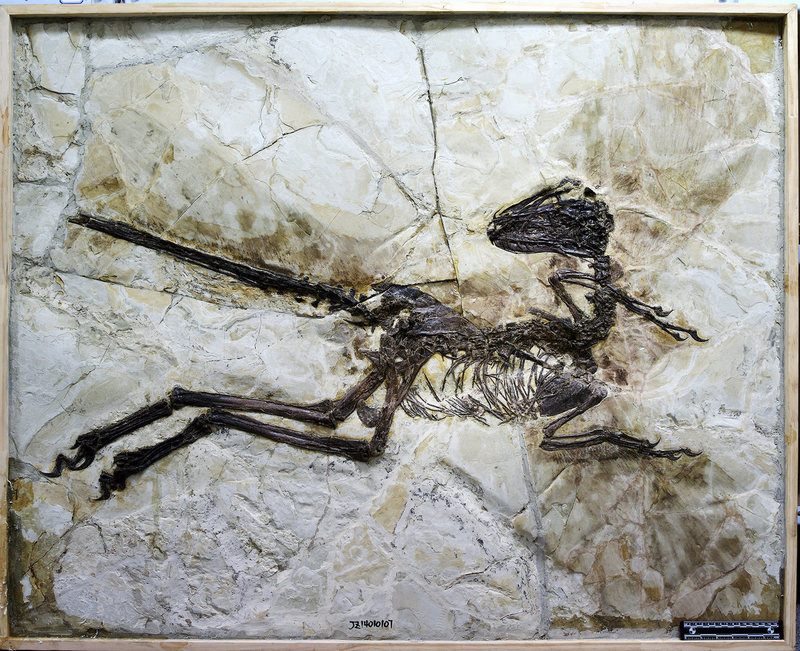
AtlasObscura has an interesting story about the “Chinese Pompeii”. The Jehol Biota has long been known for its amazing preservation. WHEN SOMETHING DIES, NATURE ENSURES that its remains won’t stay intact. Microbes eat away at the soft tissue, and wind, rain, rivers, oceans, and scavengers shuffle around the hard segments of the corpse. As eons…
-
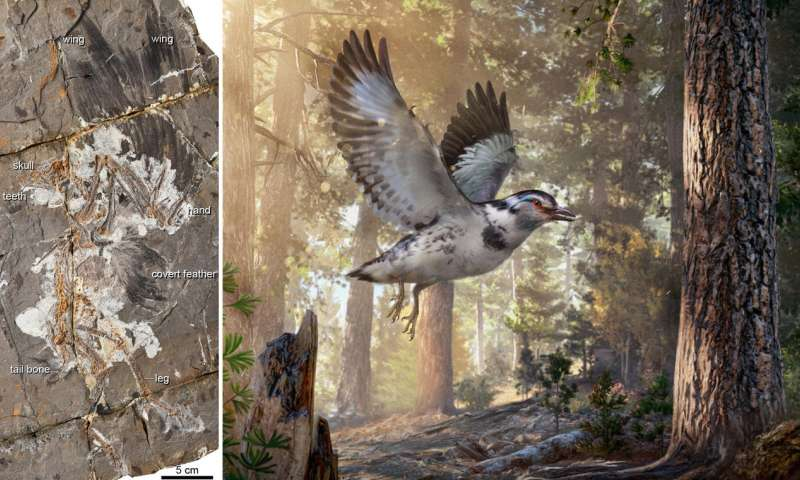
Chinese Cretaceous fossil highlights avian evolution
Phys.org has a story about a newly identified extinct bird species. The 127 million year old bird lived in what is now northeastern China. Its name is Jinguoforis perplexus and it provides new information about avian development during the early evolution of flight. Details are provided in a paper published in PNAS. Drs. Wang Min,…
-
The Nastiest Feud in Science
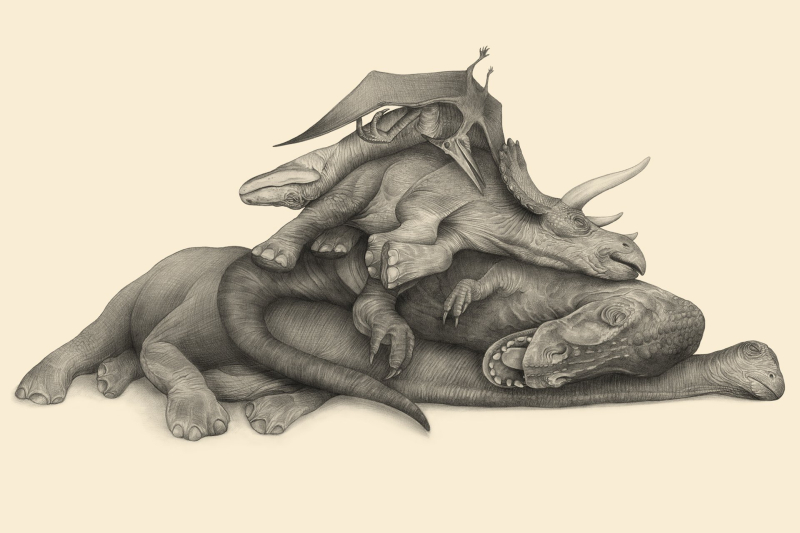
The Atlantic has an article about Gerta Keller and her differences with the consensus view on the causes of the K-Pg mass extinction. It’s a good read, but there are some errors. Gerta’s position is that the meteor strike was just a bit player in the whole event. There are many good books on either…
-
Scientists May Have Wildly Underestimated the Giant Dinosaurs of the Ancient World
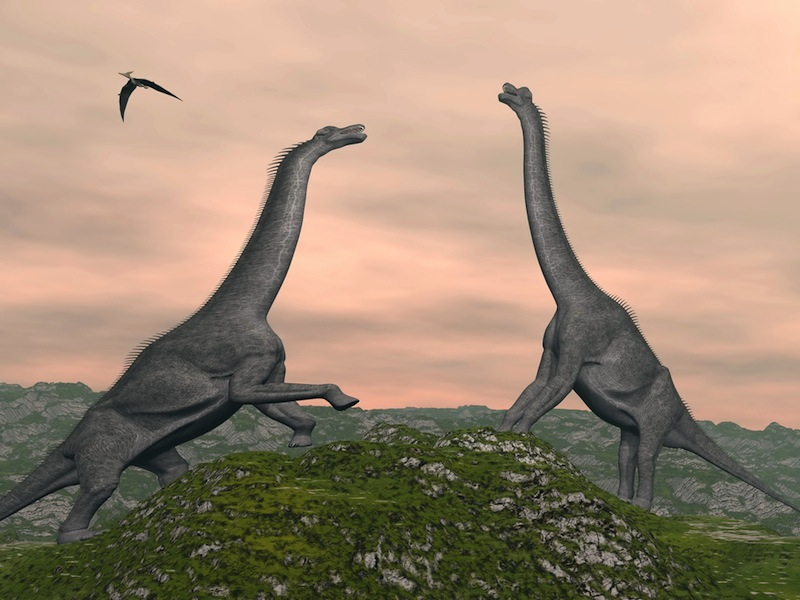
LiveScience has an interesting story about sauropod dinosaurs. It seems that their leafy meals were probably a whole lot more hearty, wholesome, and nutrient packed than previously thought. This research appeared in the journal Palaeontology. The conventional wisdom about the big plant-eating dinosaurs, like Brachiosaurus and Argentinosaurus, is that they had to eat huge…
-
We Have Probably Been Imagining Pterosaurs All Wrong
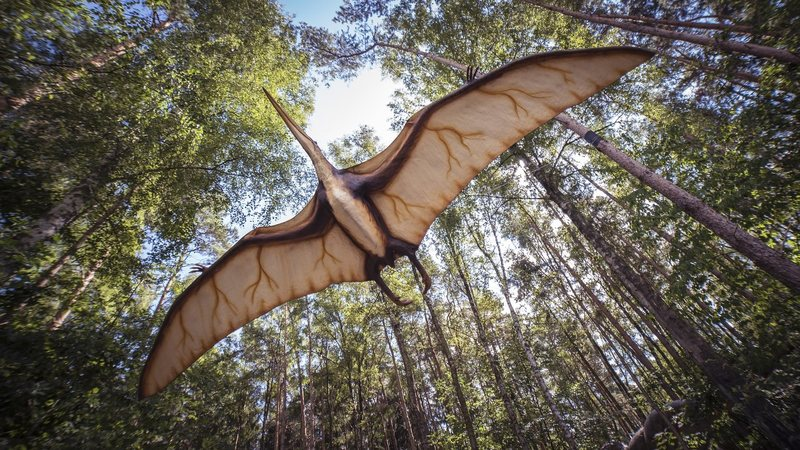
Atlas Obscura has an article about pterosaurs. Good background information and a discussion of a paper in the Proceedings of the Royal Society B. It seems someone(s), Armita R Manafzadeh and Kevin Padian, mapped the ligament constraints on hip mobility of extinct ornithodirans (pterosaurs). It seems that it is very unlikely that pterosaurs flew with…
-
Reminder: June General Meeting is on Friday, June 8th, 2018 – Dr. Rex Hanger from the University of Wisconsin
The June 2018 General Meeting is on Friday, June 8th, 2018. The speaker will be Dr. Rex Hanger from the University of Wisconsin – Whitewater. His program is entitled “Cretaceous Reef Paleoecology of Central Texas”. Don’t miss it!
