
-

TRIP FULL! – ESCONI Field Trip to the St. Paul Quarry in St. Paul, IN – Friday, May 27th, 2022, 8:30 AM – 3:00ish PM
Read more: TRIP FULL! – ESCONI Field Trip to the St. Paul Quarry in St. Paul, IN – Friday, May 27th, 2022, 8:30 AM – 3:00ish PMTrip full! A waiting list will be kept. Please let us know if you can’t make it. On Friday, May 27, there will be a ESCONI Field Trip to the St. Paul quarry , St. Paul, Indiana. We have been instructed to meet at the quarry office just south of the town of St. Paul at 8:30 a.m. EASTERN time to sign waiver forms. The ending time for the trip has been variable over the years but 3:00-4:00 p.m. is reasonable. You will need to sign out at the quarry office when you leave. This quarry exposes the fossiliferous shales…
-

Burgess Shale Fossil Hunting in Walcott Quarry, Yoho National Park
Read more: Burgess Shale Fossil Hunting in Walcott Quarry, Yoho National ParkOff Track Travel has a piece about the Burgess Shale. Located in Yoho National Park in British Columbia, Canada, the Burgess Shale is one of the most important fossil localities ever discovered. The post is a guide to taking a tour of the famous site.
-

Mazon Monday #110: Trip Report: Danville Shale Pile April 23rd, 2022
Read more: Mazon Monday #110: Trip Report: Danville Shale Pile April 23rd, 2022This is Mazon Monday post #110. What’s your favorite Mazon Creek fossil? Tell us at email:esconi.info@gmail.com. Back on April 23rd, 2022, ESCONI held our 4th field trip to a shale pile just outside of Danville, IL. The trip was a huge success, although a little hot at nearly 87 degrees. We were honored by the presence of four researchers of Carboniferous flora and fauna – ESCONI’s own Jack Wittry of the Field Museum, Dr. Arjan Mann from the Smithsonian, Dr. Jason Pardo from the Field Museum, and Dr. Victoria Mccoy from the University of Wisconsin – Milwaukee. The following field…
-

Giant ichthyosaur’s huge tooth points to sea creatures with robust bite
Read more: Giant ichthyosaur’s huge tooth points to sea creatures with robust biteThe Guardian has a story about giant ichthyosaurs. A couple ichthyosaurs found in the Swiss Alps are shedding light on the feeding processes of these giant animals. The specimens, which lived during the Triassic Period, have enormous teeth. Large enough to help capture giant squid. A team of researchers have described their research about the two specimens of Shastasaurus sikkanniensis, which were discovered between 1976 and 1990, in the Journal of Vertebrate Paleontology. The remains of a huge sea creature with enormous teeth that could have helped it capture giant squid have been found in the Swiss Alps. Ichthyosaurs were…
-

PBS Eons: The Ancient Human Species With A Missing Body
Read more: PBS Eons: The Ancient Human Species With A Missing BodyThere's a new episode of PBS Eons. This one is about the Denisovans, a group of ancient humans from Asia during the Lower and Middle Paleolithic. Only a handful of Denisovan fossils have been identified. In the absence of actual body fossils, it’s impossible for us to reconstruct their morphology, right? Listen to Eons: Mysteries of Deep Time: https://podcasts.apple.com/us/podcast…
-
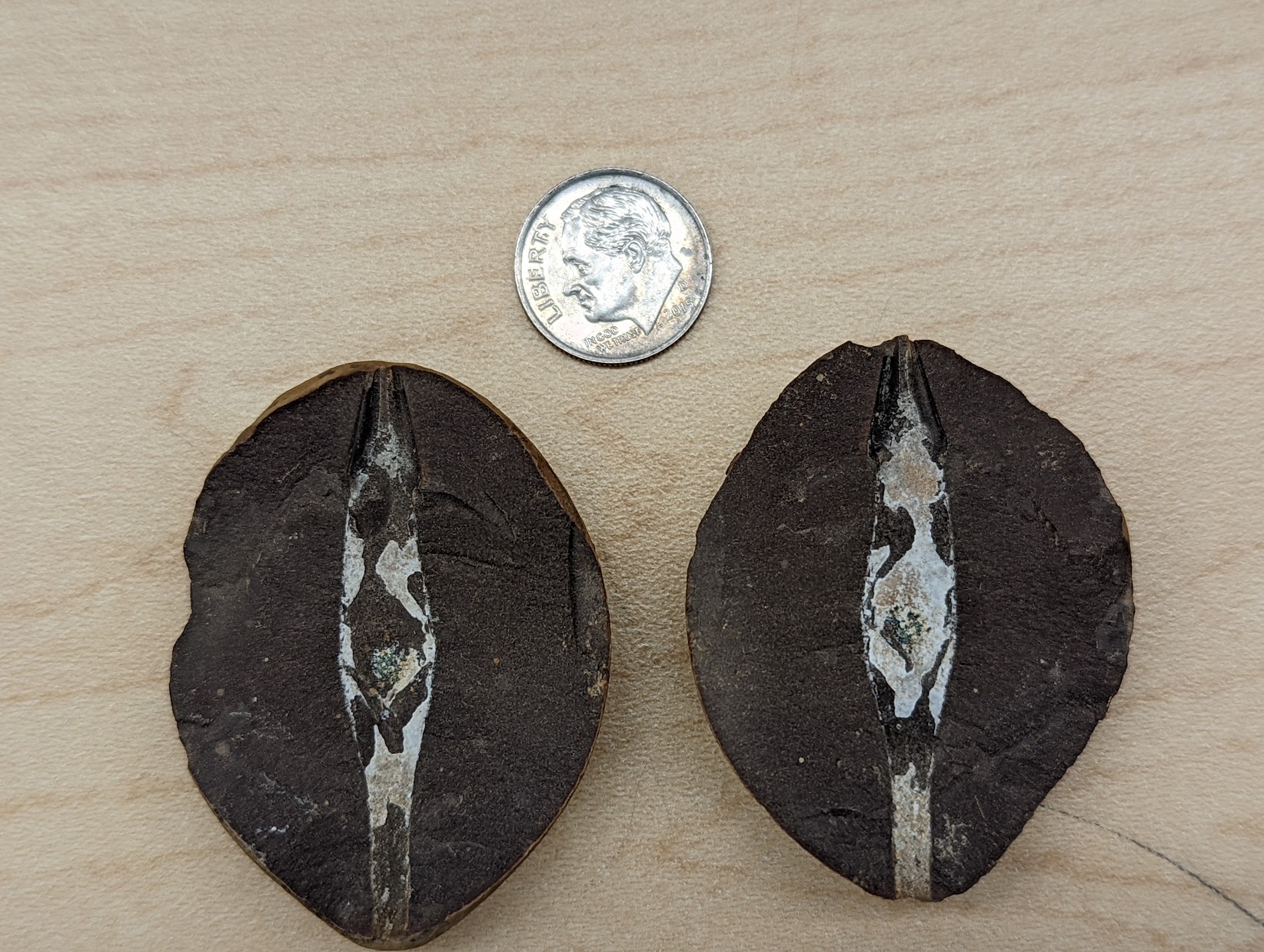
Fossil Friday #106: Palaeoxyris prendeli from Central Illinois
Read more: Fossil Friday #106: Palaeoxyris prendeli from Central IllinoisThis is the “Fossil Friday” post #106. Expect this to be a somewhat regular feature of the website. We will post any fossil pictures you send in to esconi.info@gmail.com. Please include a short description or story. Check the #FossilFriday Twitter hash tag for contributions from around the world! This week’s Fossil Friday is a twofer… two very beautiful shark egg cases from central Illinois. These are not from Mazon Creek, but are from central Illinois, near a famous Little Vermillion Carboniferous locality. This contribution comes from long time ESCONI member Rich Kerrill. The species name is Palaeoxyris prendeli. Jack Wittry…
-
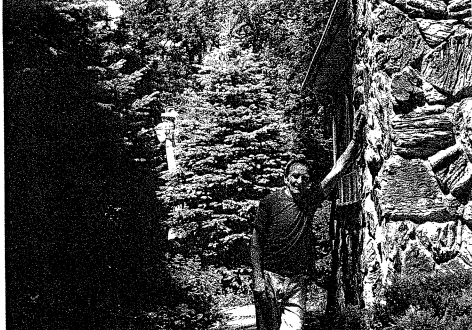
Throwback Thursday #108: Field Trips Poem
Read more: Throwback Thursday #108: Field Trips PoemThis is Throwback Thursday #108. In these, we look back into the past at ESCONI specifically and Earth Science in general. If you have any contributions, (science, pictures, stories, etc …), please send them to esconi.info@gmail.com. Thanks! We are currently deep into field trip season, so to celebrate, for our throwback this week, we have a poem that appeared twice in the ESCONI newsletter. Gene Falada, a long time ESCONI member, was looking through some old newsletters back around 2004, when he came across his poem titled “Field Trips” in the October 1965 edition. Back then, he lived in Berwyn,…
-
ESCONI Mazon Creek Open House October 15, 2022
Read more: ESCONI Mazon Creek Open House October 15, 2022Yes, the banner is correct! The Mazon Creek Open House is returning for 2022! If you’ve been a Mazon Creek collector (or even just a passing fan), you may have heard of the Mazon Creek Open House. It was an annual affair, usually held in October at places as varied as the Burpee Museum, the Lizzadro Museum, and even the Elgin Public Library. There were quite a few events in the 1990’s and early 2000’s up until the last one in 2007. For much of that time, it was hosted by the Mazon Creek Project of Northeastern Illinois University with…
-
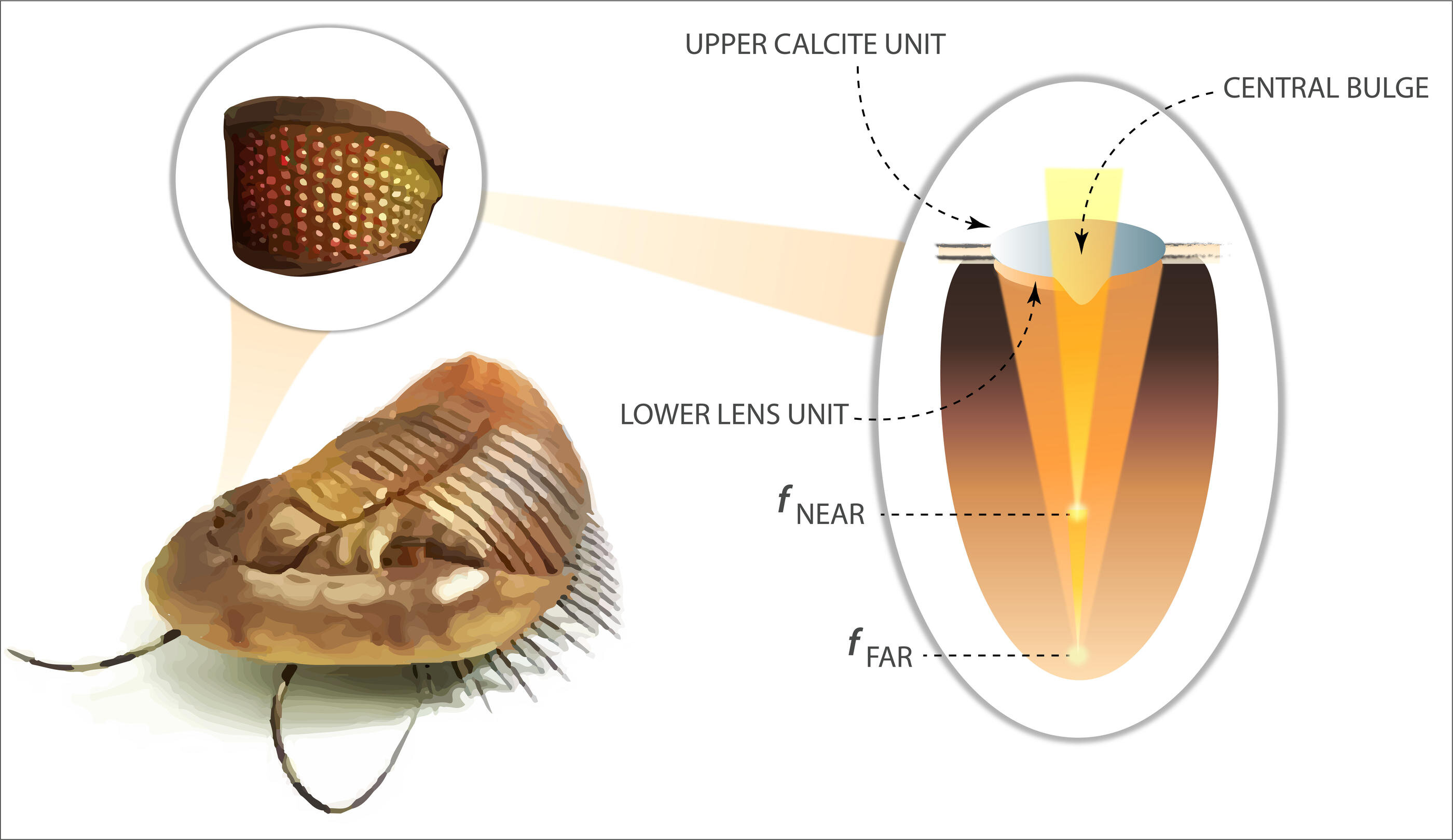
Trilobite Tuesday #38: Inspired by prehistoric creatures, researchers make record-setting lenses
Read more: Trilobite Tuesday #38: Inspired by prehistoric creatures, researchers make record-setting lensesPhys.org has a story about technology derived from fossils. Some researchers at NIST have took inspiration in the eyes of the trilobite Dalmanitina socialis to make special bifocal lenses for a miniature camera. Their work can be found in a recent paper published in the journal Nature Communications. Five hundred million years ago, the oceans teemed with trillions of trilobites—creatures that were distant cousins of horseshoe crabs. All trilobites had a wide range of vision, thanks to compound eyes—single eyes composed of tens to thousands of tiny independent units, each with their own cornea, lens and light-sensitive cells. But one…
-
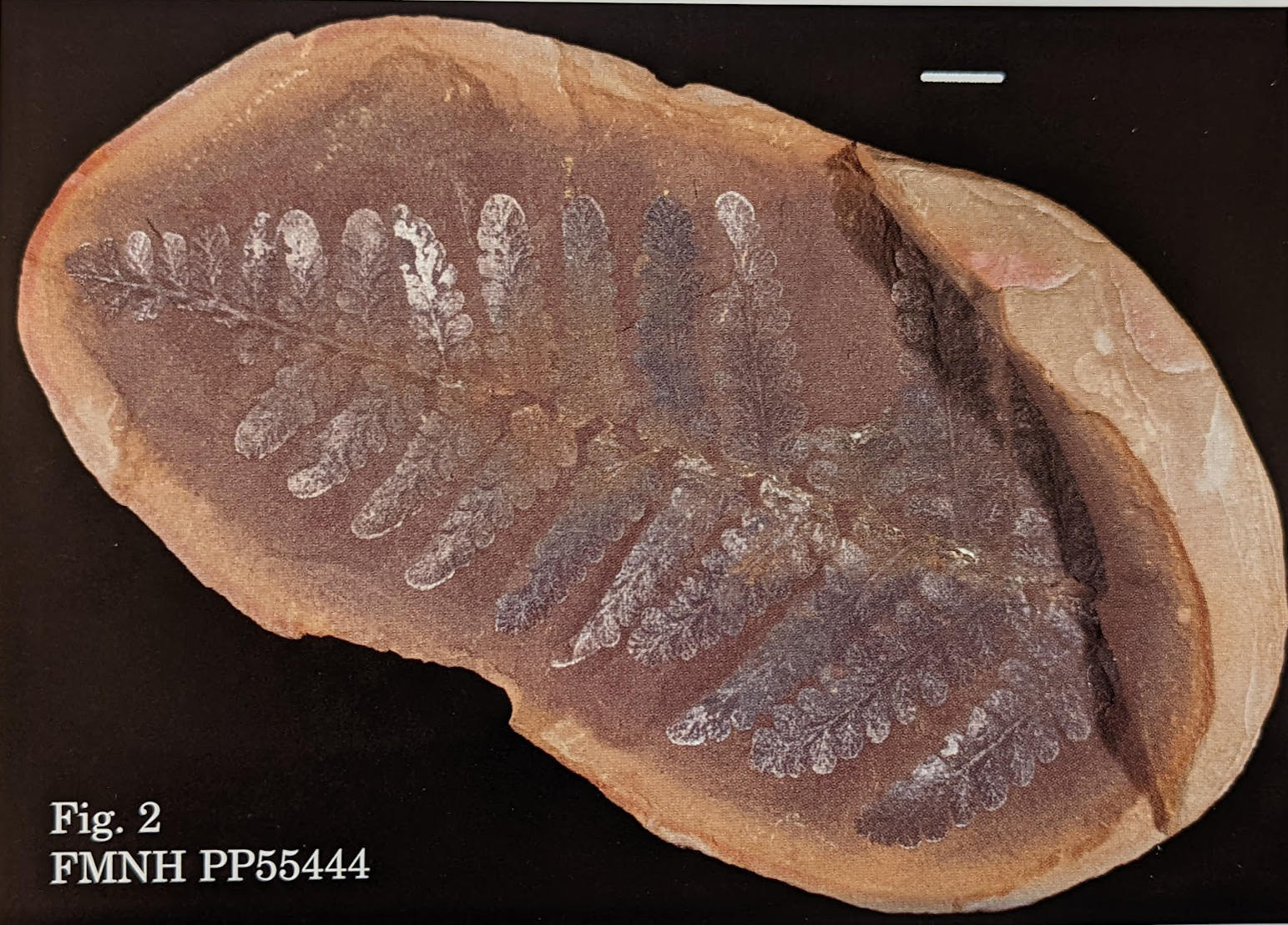
Mazon Monday #109: Pecopteris notata
Read more: Mazon Monday #109: Pecopteris notataThis is Mazon Monday post #109. What’s your favorite Mazon Creek fossil? Tell us at email:esconi.info@gmail.com. Today, we are looking at one of the rarer forms of Pecopteris, namely Pecopteris notata. This variety doesn’t show up in a few of the Mazon Creek plant books, but it can be found in the new “A Comprehensive Guide to the Fossil Flora of Mazon Creek” by Jack Wittry. P. notata was described by Leo Lesquereux in 1858. He described much of the North American Carboniferous flora in the mid 1800’s as a consultant to various US state geological surveys. His book “Atlas…
-
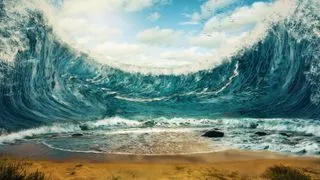
Scientists find evidence for biggest earthquake in human history
Read more: Scientists find evidence for biggest earthquake in human historyLive Science has a story about a very large earthquake 3,800 years ago. It happened in northern Chile and probably measured about 9.5 on the moment magnitude scale. Previously, the largest earthquake was the 1960 Valdivia earthquake in southern Chile. That one had an average slip of 11 m across the Nasca faults, with 25 – 30 m of slip offshore near the epicenter. The details of this ancient earthquake were published in the journal Science Advances. “It had been thought that there could not be an event of that size in the north of the country simply because you could not…
-
PBS Eons: Why Sour May Be the Oldest Taste
Read more: PBS Eons: Why Sour May Be the Oldest TasteThere's a new episode of PBS Eons. It's about the evolution of sour taste. While sour taste's original purpose was to warn vertebrates of danger, in a few animal groups, including us, its role has reversed. The taste of danger became something it was dangerous for us to avoid.
-

Fossil Friday #105: Annularia annulariafolius
Read more: Fossil Friday #105: Annularia annulariafoliusThis is the “Fossil Friday” post #105. Expect this to be a somewhat regular feature of the website. We will post any fossil pictures you send in to esconi.info@gmail.com. Please include a short description or story. Check the #FossilFriday Twitter hash tag for contributions from around the world! A gorgeous Annularia annulariafolius is our Fossil Friday this week. These are fairly rare fossils, which often are preserved in 3-D, which can lead to them breaking into many pieces across multiple planes. This specimen comes from ESCONI board member Andy Jansen. He had to piece it back together. Looks like you…
-

Throwback Thursday #107: G-Shaft Candy
Read more: Throwback Thursday #107: G-Shaft CandyThis is Throwback Thursday #107. In these, we look back into the past at ESCONI specifically and Earth Science in general. If you have any contributions, (science, pictures, stories, etc …), please send them to esconi.info@gmail.com. Thanks! If you grew up anywhere in the area, you may remember G-Shaft Candy. It’s a hard candy, brown in color with a light colored line running through it. It has a unique taste, with hints of anise or peppermint. Currently, you can buy it from Dan’s Homemade Candies in Joliet. They are said to use the original recipe, which they bought from the…
-
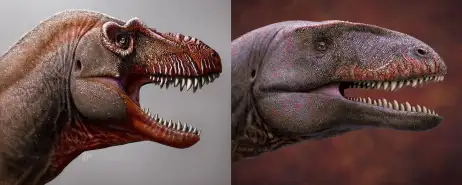
The discovery of two giant dinosaur species solves the mystery of missing apex predators in North America and Asia
Read more: The discovery of two giant dinosaur species solves the mystery of missing apex predators in North America and AsiaThe Conversation has a piece about the discovery of a couple “missing” apex predators during the Cretaceous. The animals, Thanatotheristes degrootorum, a tyrannosaur from North America and Ulughbegsaurus uzbekistanensis, a carcharodontosaur from Uzbekistan, were found languishing in museum collections where they had sat for at least a decade. Both fill in gaps of our knowledge and help to paint a more complete picture of the mid-Cretaceous ecosystems. The Conversation is a place were researchers can report on their work in many fields including paleontology. This article was written by Darla K. Zelenitsky an Associate Professor, Dinosaur Paleobiology at the University of…
-
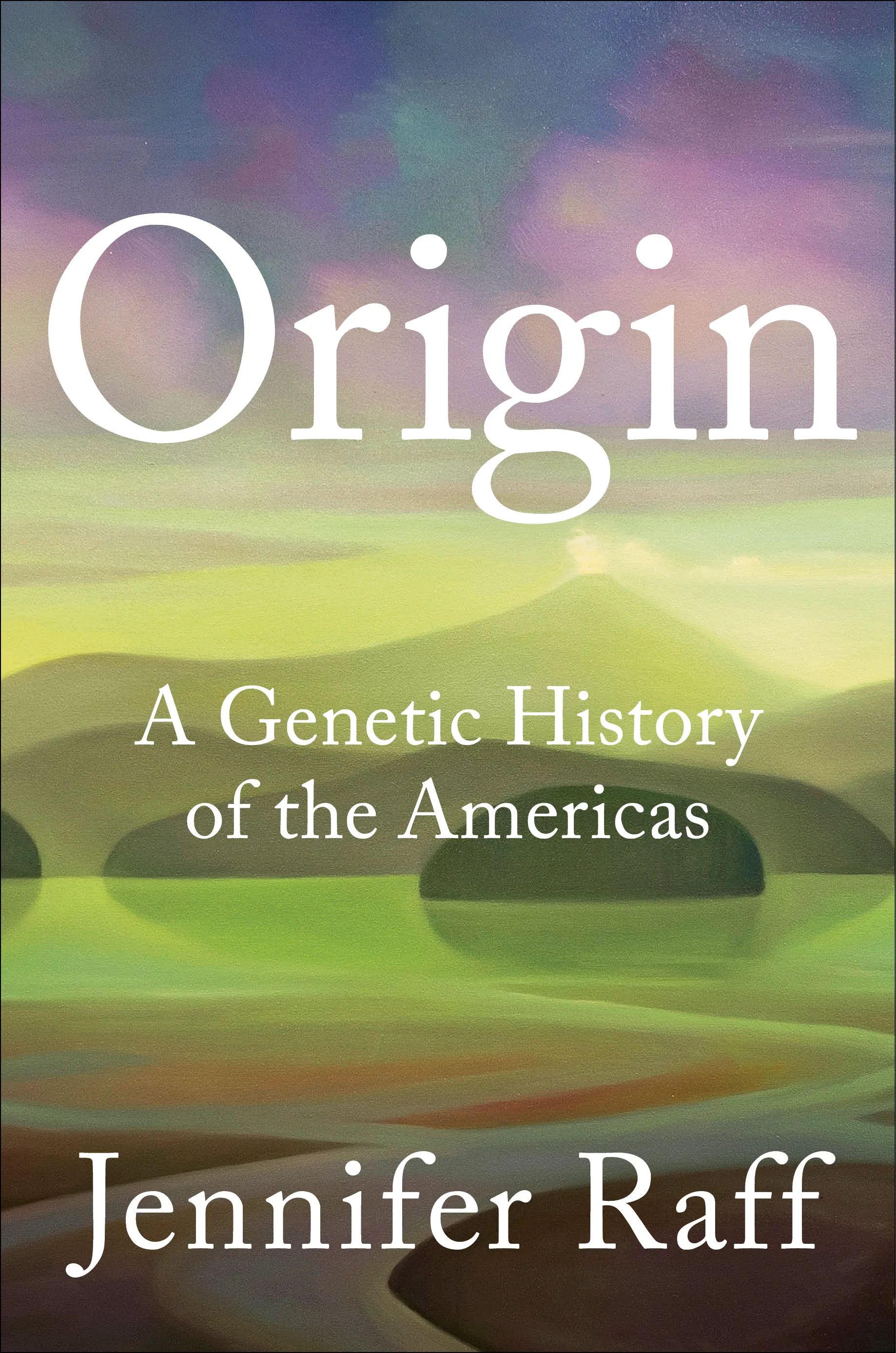
New Book: “Origin, A Genetic History of the Americas” by Jennifer Raff
Read more: New Book: “Origin, A Genetic History of the Americas” by Jennifer RaffBack in December 2020, Dr. Jennifer Raff of the University of Kansas spoke to in our General Meeting. Her program was titled “What Genetics Tells Us About the Peopling of the Americas”. It was an interesting look into what genetics can tell us about the settlement of North America. Now, she has a new book out, “Origin, A Genetic History of the Americas”. AN INSTANT NEW YORK TIMES BESTSELLER! From celebrated anthropologist Jennifer Raff comes the untold story—and fascinating mystery—of how humans migrated to the Americas. ORIGIN is the story of who the first peoples in the Americas were, how and why they made…
-
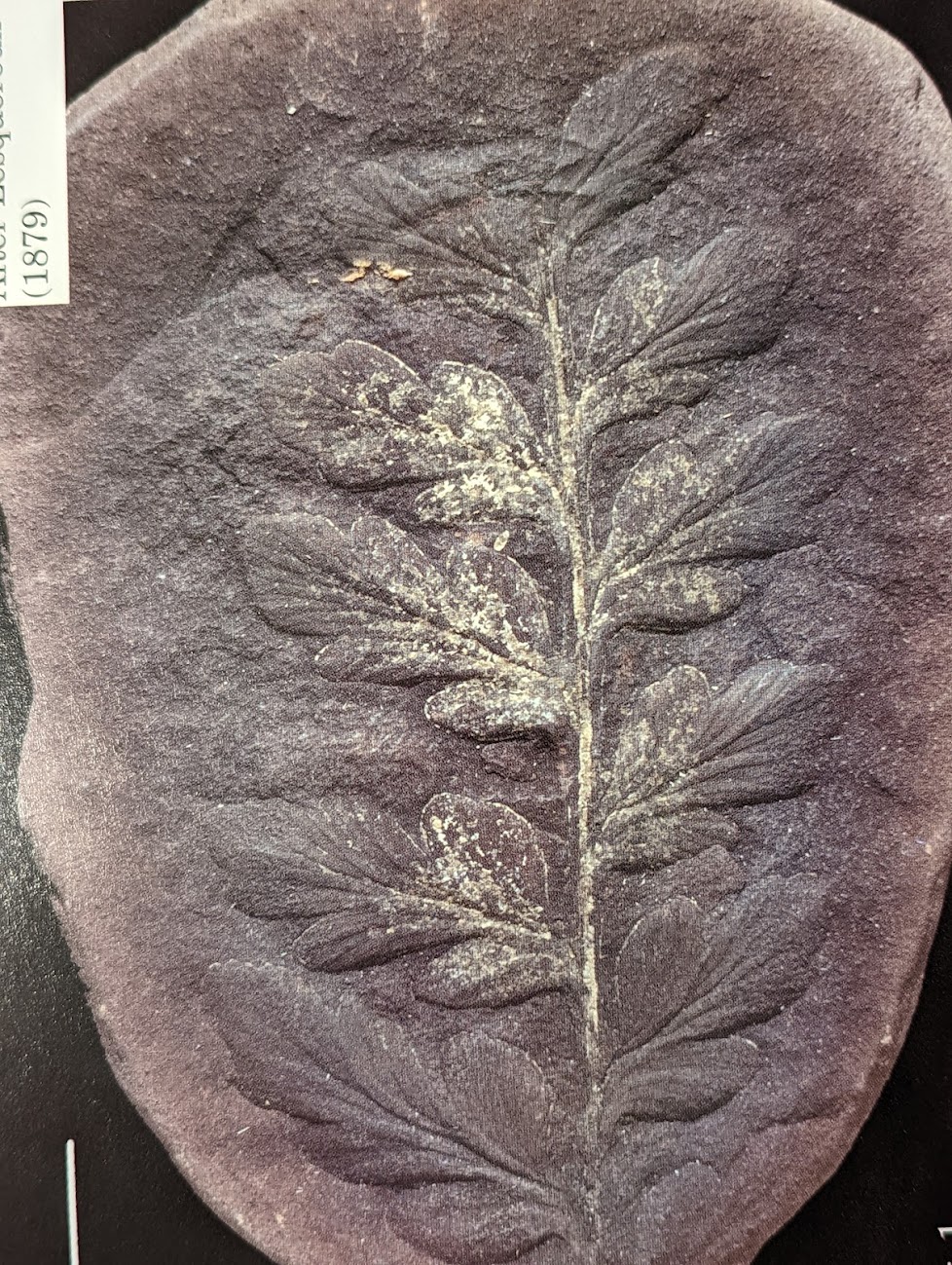
Mazon Monday #108: Mariopteris decipiens
Read more: Mazon Monday #108: Mariopteris decipiensThis is Mazon Monday post #108. What’s your favorite Mazon Creek fossil? Tell us at email:esconi.info@gmail.com. In general, Mariopteris, a seed fern, is fairly rare across all the Mazon Creek terrestrial localities. Mariopteris tends to have ornate pinnules compared to other species of seed feed like Alethopteris, Neuropteris, and Odontopteris. The species we are looking at today, Mariopteris decipiens, was described by Leo Lesquereux in 1858 as Sphenopteris decipiens. In 1883, Charles David White redescribed it as Mariopteris decipiens. White (1862 – 1935) joined the USGS in 1889 and rose all the way to chief geologist. In 1903, he became…
-
PBS Eons: How the Smallest Animal Got So Simple
Read more: PBS Eons: How the Smallest Animal Got So SimplePBS Eons has a new episode. This one is about mxyozoans, the simplest known animals. They are an example of how the process of evolution can produce some big (or small in this case) surprises.
-

TRIP FULL! – ESCONI Field Trip to Braceville, IL for Mazon Creek Fossils – Saturday, May 14th and Sunday May 15th, 2022
Read more: TRIP FULL! – ESCONI Field Trip to Braceville, IL for Mazon Creek Fossils – Saturday, May 14th and Sunday May 15th, 2022The trip is full! It filled up in just a couple of days! We are still accepting requests, which will place you on the waiting list. Please let us know if you can’t make it, as it makes room for those on the waiting list. Thanks! Braceville Field Trip Rules May 2022 The ESCONI field trips to Braceville for Mazon Creek fossils are set for May 14 and 15, 2022 from 9 AM to 3 PM. You can attend one or the other, but not both days. There is an attendance limit of 50 people each day. You must register to…
-
Video for ESCONI April 2022 General Meeting – “Devonian plants from the famous Red Hill location”
Read more: Video for ESCONI April 2022 General Meeting – “Devonian plants from the famous Red Hill location”The April 2022 General Meeting was held on Friday, April 8th, 2022. The presentation was “Seeing the Forest for the Fossil Trees – Plants at Red Hill” by Dr. Walt Cressler of West Chester University in Pennsylvania. Red Hill is known for the First Modern Tree and a bunch of very early vertebrates. For information about Red Hill plants, see this page at the Devonian Times. The First Modern Tree Archaeopteris spp. account for slightly more than half of the identifiable plant fossils collected at the floodplain pond facies of Red Hill; the pre-fern Rhacophyton accounted for most of the rest. Typically, these fossils…

ESCONI Gem, Mineral, and Fossil Show
Most Recent Post
- Throwback Thursday #312: Ron Schinderle Donation
 Barb Schinderle stopped by ESCONI Show last month to drop off a donation of her late husband Ron’s fossils. Ron passed away in 2021. He was a long time ESCONI member and an avid fossil collector . He went on many ESCONI field trips. A group of us remember him fondly from our many trips to Pit 11 and Fossil Rock Campgrounds to collect Mazon Creek fossils.
- About ESCONI
- Around the Web
- Calendar of Events
- Code of Ethics and Conduct
- ESCONI Books for Sale
- ESCONI Gem, Mineral, and Fossil Show
- ESCONI in the News
- ESCONI Videos
- Field Trips
- Flashback Friday
- Fossil Friday
- Mazon Creek
- Mazon Monday
- Member Spotlight
- Membership Information
- Reference Material
- Throwback Thursday
- Trilobite Tuesday
Field trips require membership, but visitors are welcome at all meetings!
| Friday, April 10th | General Meeting – 8:00 PM via Zoom. Jessica Hull will present “Life in the Devonian Period, The Age of Fishes.” |
| Saturday, April 11th | Junior Study Group Meeting – 2:00 PM, in person at the College of DuPage Technical Education Center (TEC) Building – Room 1038A (Map). Katherine Howard will present on Sand and Sediment Collecting. Specifics of this meeting are available from Scott Galloway, 630-670-2591, gallowayscottf@gmail.com. |
| Saturday, April 18th | Paleontology Study Group – 7:30 PM via Zoom and in person at the College of DuPage, TEC, Room 1038B (Map). Keith Robitschek will present “Digging the Marl of the Lance Formation.” |
| Friday, April 24th | MAPS Expo XLVII – Springfield, IL. |
| Saturday, April 25th | MAPS Expo XLVII – Springfield, IL. |
| Sunday, April 26th | MAPS Expo XLVII – Springfield, IL. |
| No meeting this month | Mineralogy Study Group |