
-

Throwback Thursday #111: In Quest of Galena
Read more: Throwback Thursday #111: In Quest of GalenaThis is Throwback Thursday #111. In these, we look back into the past at ESCONI specifically and Earth Science in general. If you have any contributions, (science, pictures, stories, etc …), please send them to esconi.info@gmail.com. Thanks! This week, we are posting the story of a field trip from the March 1952 edition of the newsletter. The story is by Alan D. Kattele, who was a member of ESCONI during the 1950’s. He writes of a trip to find galena in 1950 with his wife and three year old daughter in their 1936 Pontiac. They have mixed luck, which includes…
-
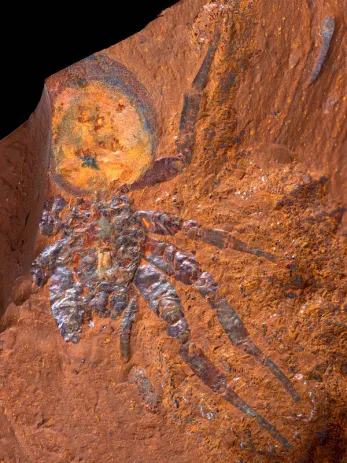
Fossils of a Prehistoric Rainforest Hide in Australia’s Rusted Rocks
Read more: Fossils of a Prehistoric Rainforest Hide in Australia’s Rusted RocksThe New York Times Trilobites column has a story about the discovery of a fossil rain forest in the outback of Australia. The deposit is located hundreds of miles northwest of Sydney in a place called McGraths Flat. The fossils date to the Miocene Epoch when Australia was much wetter. There’s flowers, insects, spiders, and even a feather. The discovery is documented in a paper called “A Lagerstätte from Australia provides insight into the nature of Miocene mesic ecosystems” published in the journal Science Advances. Fifteen million years ago, a river carved through the jungle, leaving an oxbow lake (known…
-
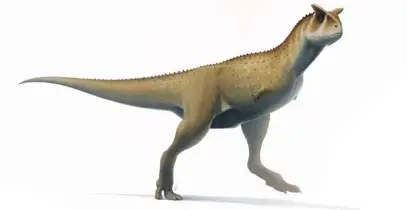
New armless abelisaur dinosaur species discovered in Argentina
Read more: New armless abelisaur dinosaur species discovered in ArgentinaPhys.org has a story about an armless therapod dinosaur. Many of the large predatory dinosaurs had reduced arms and hands with Tyrannosaurs and South American Giganotosaurus and Carnotaurus as prime examples. Now, a new species of abelisaur, Guemesia ochoai, has taken it a step farther. G. ochoai lived about 70 million years ago in what is modern day Argentina. All the details can be found in a paper by Frederico Agnolin et al in the Journal of Vertebate Paleontology. A new dinosaur which formed part of an array of ‘unusual’ creatures has been discovered in Argentina. The new species, Guemesia ochoai,…
-

Mazon Monday #112: Concretion Shape from 1952
Read more: Mazon Monday #112: Concretion Shape from 1952This is Mazon Monday post #112. What’s your favorite Mazon Creek fossil? Tell us at email:esconi.info@gmail.com. Lately, we’ve been getting a bunch of questions about concretion shape, probably due to the Braceville field trip this past weekend. It’s an age old question that repeats again and again. Back in March 1952, Stevens T. Norvell, a founding member of ESCONI and its first treasurer, wrote “Our Fossil Ferns – Why They Occur in Form-Fitting Pebbles” for the newsletter. The information is still mostly relevant today. Our Fossil Ferns – Why They Occur in Form-Fitting “Pebbles” by Stevens T. Norvell Why you…
-
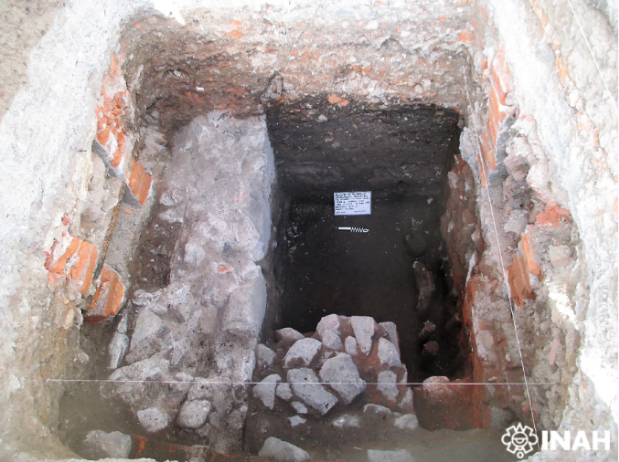
Construction Workers Uncover Massive 800-Year-Old Aztec Dwelling in Mexico City
Read more: Construction Workers Uncover Massive 800-Year-Old Aztec Dwelling in Mexico CitySmithsonian Magazine has a story about an accidental archaeological find in Mexico City. Construction workers unearthed the remains of a large house while renovating an electrical substation. The structure, which measures about 4300 square feet, dates to the late Postclassic period maybe 800 years ago. It is fairly common to uncover Aztec ruins in Mexico City, In 2017, renovations on a historic pawnshop led to the discovery of a palace built by Henan Cortes. The house’s location itself is unique, as it borders two neighborhoods not far from Tenochtitlan, which became the Aztec capital around 1325 C.E. Based on modern-day standards, the…
-

PBS Eons: When Ants Domesticated Fungi
Read more: PBS Eons: When Ants Domesticated FungiThere's a new episode of PBS Eons. This one is about one of Earth's first farmers… ants! While we’ve been farming for around 10,000 to 12,000 years, the ancestors of ants have been doing it for around 60 million years. So when, and how, and why did ants start … farming?
-
TRIP FULL! – ESCONI Field Trip to a Belvidere Quarry Saturday, May 21st, 2022, 9:00 AM – 12:00 PM
Read more: TRIP FULL! – ESCONI Field Trip to a Belvidere Quarry Saturday, May 21st, 2022, 9:00 AM – 12:00 PMTHE TRIP IS FULL! It filled up in less than an hour! We are still accepting requests, which will place you on the waiting list. Please let us know if you can’t make it, as it makes room for those on the waiting list. Thanks! There will be a field trip to a quarry near Belvidere, Illinois on Saturday, May 21, 2022, from 9 AM to 12 noon. The rock is Ordovician, Galena Group. This is a “hard–rock” quarry (dolomite). If you like Hormotoma or Receptaculites, this is the place for you! The quarry has been active so there is…
-
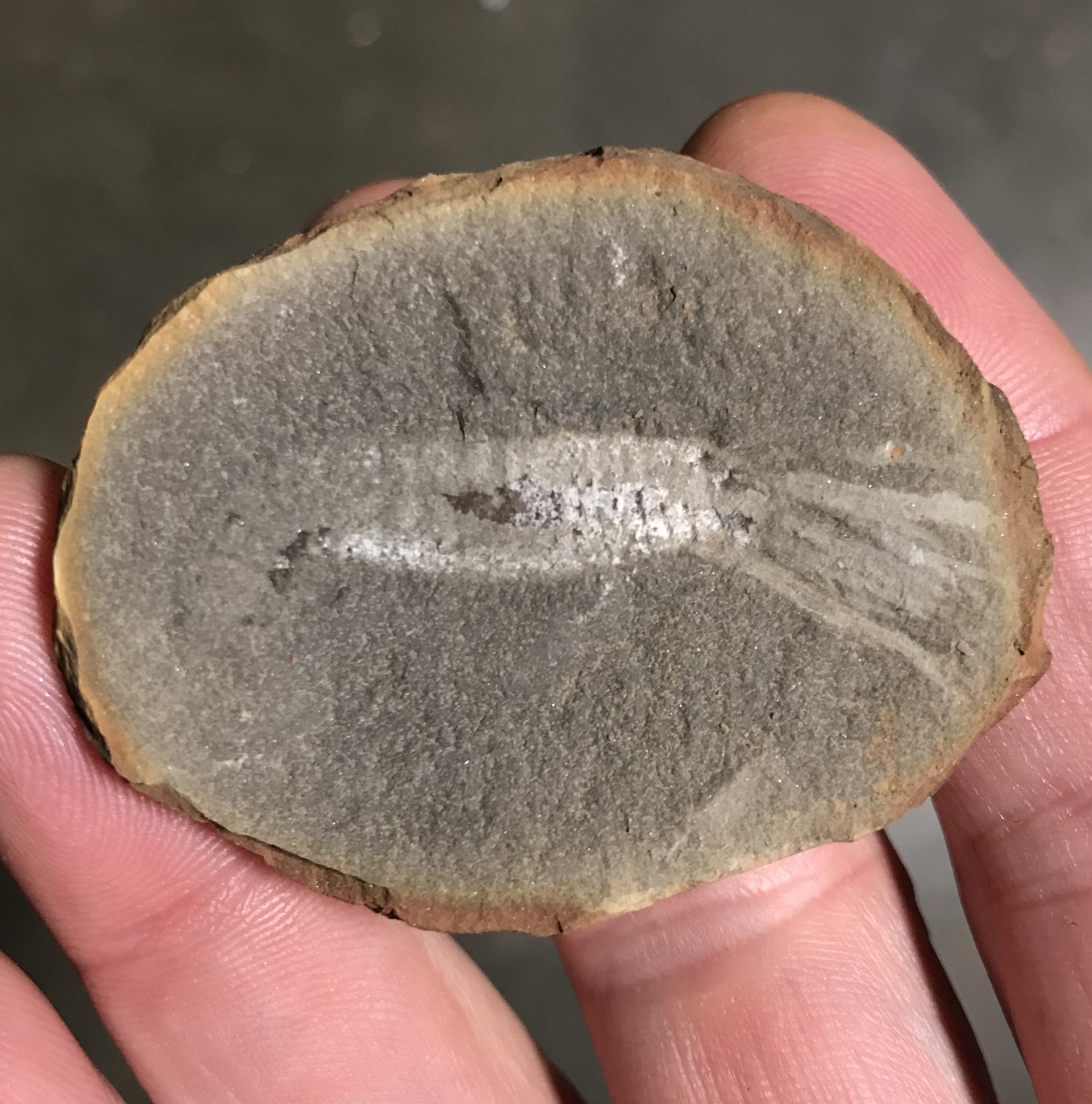
Fossil Friday #108: Mazopherusa prinosi from Braceville
Read more: Fossil Friday #108: Mazopherusa prinosi from BracevilleThis is the “Fossil Friday” post #108. Expect this to be a somewhat regular feature of the website. We will post any fossil pictures you send in to esconi.info@gmail.com. Please include a short description or story. Check the #FossilFriday Twitter hash tag for contributions from around the world! To help lead into the Braceville field trip this weekend, we have one of the iconic species from “Worm Hill”. The Braceville spoil pile is known for jellies, clams, the occasional shrimp, partial plants, and worms… lots of worms. ESCONI member Maarten Vonhof sent us photos of what may be the best…
-
Throwback Thursday #110: A Jurassic Twilight in Colorado from 1952
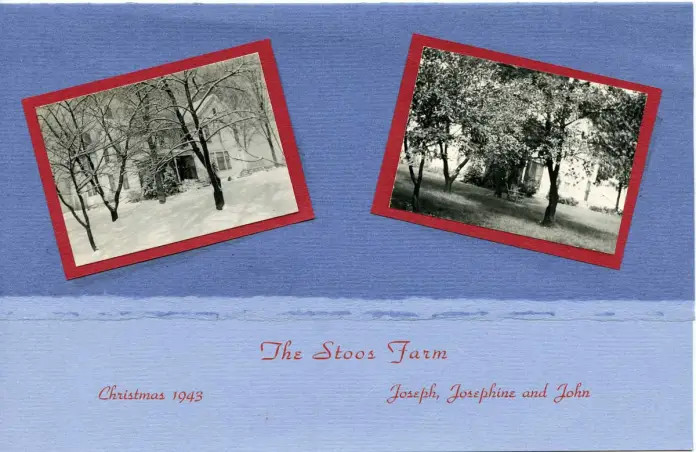
Read more: Throwback Thursday #110: A Jurassic Twilight in Colorado from 1952This is Throwback Thursday #110. In these, we look back into the past at ESCONI specifically and Earth Science in general. If you have any contributions, (science, pictures, stories, etc …), please send them to esconi.info@gmail.com. Thanks! This week, we are posting a puzzle of sorts from the April 1952 edition of the newsletter. The puzzle is in the form of a story describing a scene in the Jurassic Period. The story was credited to Joe Stoos. Positively Naperville had an article by the History Detective about him. He lived in Naperville and was honored with a plaque in the…
-
ESCONI May 2022 General Meeting – May 13th, 2022 at 8:00 PM In-person/Zoom – “Dinosaurs of Appalachia”
Read more: ESCONI May 2022 General Meeting – May 13th, 2022 at 8:00 PM In-person/Zoom – “Dinosaurs of Appalachia”The May 2022 General Meeting will be held on May 13th at 8:00 PM. The presentation will be given by Chase Brownstein, Research Associate of the Stamford (CT) Museum and Nature Center. Chase is a student at Yale. He has 21 peer-reviewed publications to his name, 41 publications on his ResearchGate page, and he’s an undergraduate in his junior year! Here’s a link to his ResearchGate page: https://www.researchgate.net/profile/Chase-Brownstein This ESCONI General Meeting will be hybrid; both via Zoom and in-person at the College of DuPage, Tech Ed (TEC) Building, Room 1038B (Map). Please find the Zoom link below.…
-
Trilobite Tuesday #39: Before There Were Birds or Bees, This Is How Trilobites Made Babies
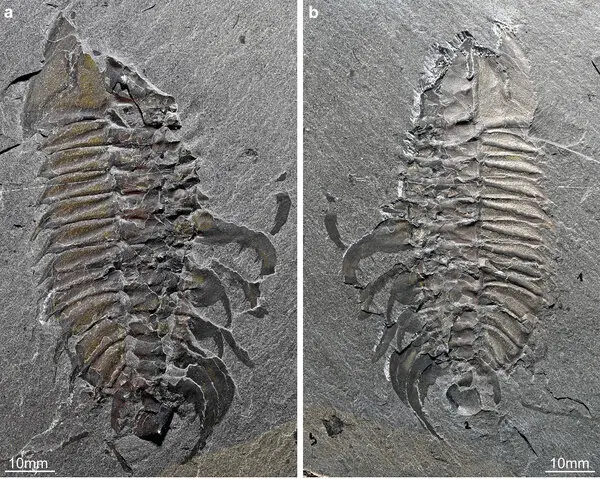
Read more: Trilobite Tuesday #39: Before There Were Birds or Bees, This Is How Trilobites Made BabiesThe New York Times Trilobites column has a story about trilobite reproduction. Trilobites first show up in the fossil record back in the Cambrian Period, some 500 million years ago. Their closest living relative is most likely the horseshoe crab. Now, a team of paleontologists from Harvard have published a paper in the journal Geology that looks into the sex lives of trilobites. They found that they used methods similar to their modern relatives. A recently re-examined fossil from the Burgess Shale is pulling back the shroud of mystery over the ancient arthropods’ sex lives, and revealing that some trilobites most likely sported a loving grip.…
-

Mazon Monday #111: Leaves and Stems with a George Langford Inscription
Read more: Mazon Monday #111: Leaves and Stems with a George Langford InscriptionThis is Mazon Monday post #111. What’s your favorite Mazon Creek fossil? Tell us at email:esconi.info@gmail.com. Back in Mazon Monday #51, we looked at the book “Leaves and Stems” by Raymond E. Janssen. From the time it was published in 1939 by the Illinois State Museum until George Langford’s first book was published by Esconi Associates in 1958, the book was one of the main references used to identify Mazon Creek plants. Its many printings speaks to the popularity. The book was volume 1 of a Popular Science Series published by the museum and can still be purchased from the…
-

Amateur Archaeologist Stumbles Onto Trove of Coins Dated to Constantine the Great’s Reign
Read more: Amateur Archaeologist Stumbles Onto Trove of Coins Dated to Constantine the Great’s ReignThe clay pot contained 1,290 Roman coins. Archäologie Baselland The Smithsonian Magazine website has an interesting story about the discovery of some Roman coins in Switzerland. Dating to the time of Emperor Constantine (306 to 337 CE), the coins were found with a metal detector by amateur archaeologist Daniel Ludin. He made his discovery in September 2021 in forest near Bubendorf, Switzerland, close to Wildenstein Castle. The 1,290 coins were just beneath the surface in in a clay pot. In accordance with proper archaeological protocol, Lüdin reburied the pot and contacted local experts, who dated the cache of coins to the fourth century C.E.,…
-
ESCONI Juniors Rock, Mineral, and Fossil Exhibition – May 14, 2022 at 7:00 PM
Read more: ESCONI Juniors Rock, Mineral, and Fossil Exhibition – May 14, 2022 at 7:00 PMAnnouncing the ESCONI Juniors Rock, Mineral, and Fossil Exhibition All Are Welcome! This is an exhibition show to be held during the regularly scheduled time for the Juniors meeting on Saturday, May 14 from 7:00 to 8:00pm. Setup for the Junior exhibitors is from 6:30 to 7:00pm. Breakdown of exhibits is from 8:00 to 8:30pm. Mark your calendar as a reminder of this event. Anyone can attend whether they are an ESCONI member or not. The Juniors spent the last meeting preparing for this show and will be evaluated on their presentation by a parent who works in education for an…
-
Fossil Friday #107: Annularia from Vigo County, IN
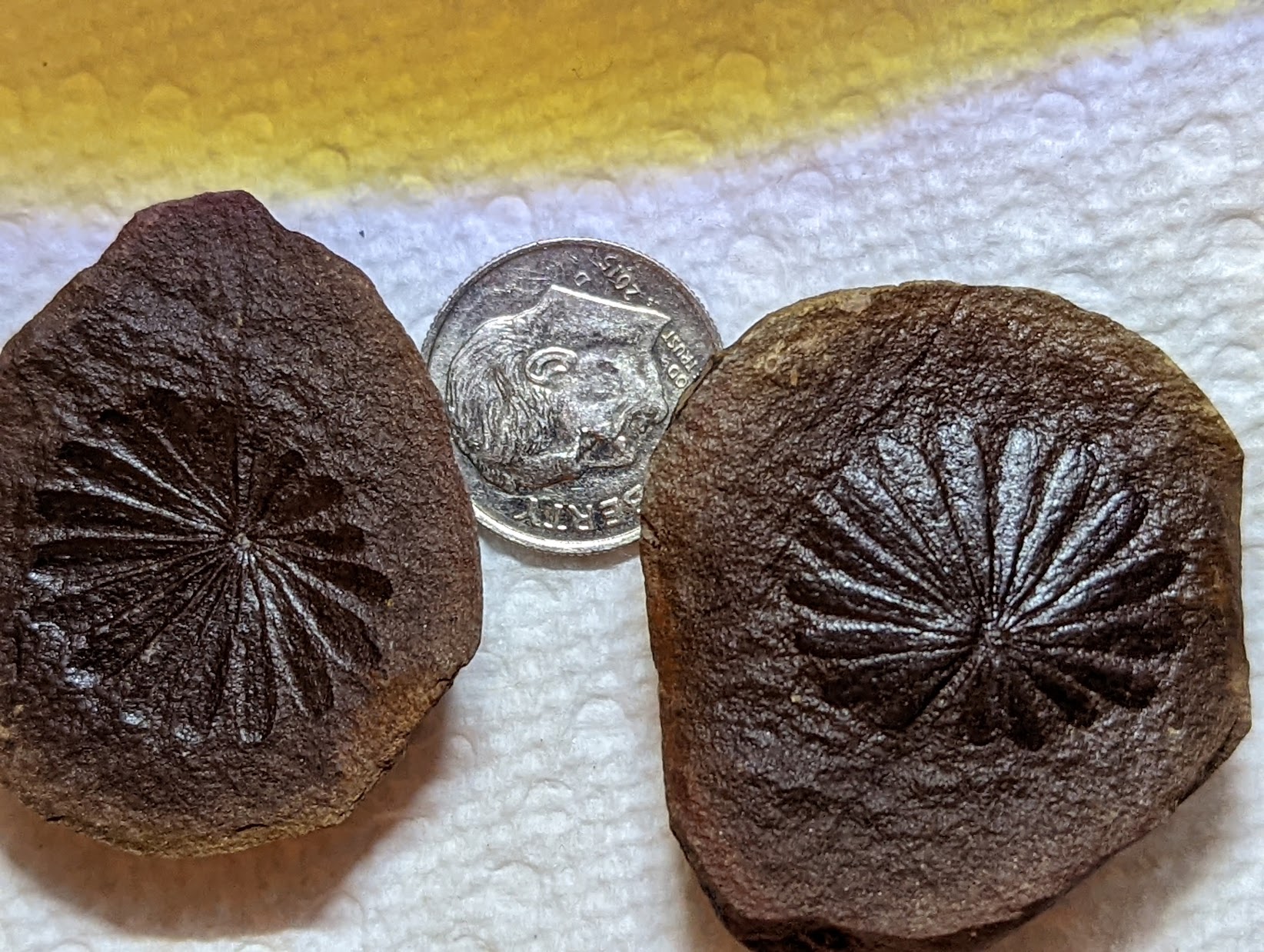
Read more: Fossil Friday #107: Annularia from Vigo County, INThis is the “Fossil Friday” post #107. Expect this to be a somewhat regular feature of the website. We will post any fossil pictures you send in to esconi.info@gmail.com. Please include a short description or story. Check the #FossilFriday Twitter hash tag for contributions from around the world! This week’s Fossil Friday is again Annularia. The difference is this one is from Vigo County, Indiana. The Carboniferous fossils from Indiana are thought to be a few million years younger than Mazon Creek, which dates to about 307 million years ago. The species in Indiana may be different than Mazon Creek,…
-

Throwback Thursday #109: Looking Back at ESCONI May 2022
Read more: Throwback Thursday #109: Looking Back at ESCONI May 2022This is Throwback Thursday #109. In these, we look back into the past at ESCONI specifically and Earth Science in general. If you have any contributions, (science, pictures, stories, etc …), please send them to esconi.info@gmail.com. Thanks! 25 Years Ago – May 1997 50 Years Ago – May 1972 70 Years Ago – May 1952
-
How the dinosaur extinction changed plant evolution
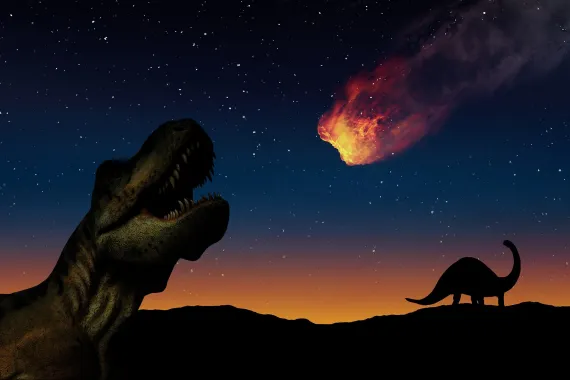
Read more: How the dinosaur extinction changed plant evolutionPhys.org has a story about plant evolution after the K-Pg mass extinction. Mass extinction always have irreversible effects on the evolution of life on Earth. The end Cretaceous extinction took out about 75% of species, including non-avian dinosaurs, pterosaurs, ammonites, and other countless others. The Plant Kingdom isn’t always discussed, but it suffered heavy losses, too. New research in the Proceedings of the Royal Society B looks not at the extinction of plants, but at the effects of the missing megaherbavores on the evolution of plants. With the extinction of large, non-flying dinosaurs 66 million years ago, large herbivores were…
-

ESCONI Events May 2022
Read more: ESCONI Events May 2022Welcome back! Field trips require membership, but visitors are welcome at all meetings! Sat, May 7th ESCONI Field Trip to the Vulcan DeKalb Quarry for Ordovician Fossils See details here. Fri, May 13th ESCONI General Meeting 8:00 PM Zoom – Topic: “Dinosaurs of Appalachia” by Chase Brownstein, Research Associate at the Stamford (CT) Museum and Nature Center. This meeting will be hybrid with both Zoom and in person available at the College of DuPage Tech Ed (TEC) Building, Room 1038B (Map). Zoom link Sat, May 14th ESCONI Junior Meeting – 7:00 PM at College of DuPage – Topic: “Rock, Minerals and…
-

TRIP FULL! – ESCONI Field Trip to the St. Paul Quarry in St. Paul, IN – Friday, May 27th, 2022, 8:30 AM – 3:00ish PM
Read more: TRIP FULL! – ESCONI Field Trip to the St. Paul Quarry in St. Paul, IN – Friday, May 27th, 2022, 8:30 AM – 3:00ish PMTrip full! A waiting list will be kept. Please let us know if you can’t make it. On Friday, May 27, there will be a ESCONI Field Trip to the St. Paul quarry , St. Paul, Indiana. We have been instructed to meet at the quarry office just south of the town of St. Paul at 8:30 a.m. EASTERN time to sign waiver forms. The ending time for the trip has been variable over the years but 3:00-4:00 p.m. is reasonable. You will need to sign out at the quarry office when you leave. This quarry exposes the fossiliferous shales…
-

Burgess Shale Fossil Hunting in Walcott Quarry, Yoho National Park
Read more: Burgess Shale Fossil Hunting in Walcott Quarry, Yoho National ParkOff Track Travel has a piece about the Burgess Shale. Located in Yoho National Park in British Columbia, Canada, the Burgess Shale is one of the most important fossil localities ever discovered. The post is a guide to taking a tour of the famous site.

ESCONI Gem, Mineral, and Fossil Show
Most Recent Post
- ESCONI April 2026 General Meeting via Zoom – “Life in the Devonian Period, The Age of Fishes”
 The April 2026 General Meeting will be held on April 10th, 2026 at 8:00 via Zoom. At the meeting, Jessica Hull will present “Life in the Devonian Period, The Age of Fishes.” The Devonian Period was a crucial moment in the history of life. In this presentation, Jessica Hull will bring fossils to life by describing how they would have lived based on the most up to date research. Dunkleosteus fans won’t want to miss this!
- About ESCONI
- Around the Web
- Calendar of Events
- Code of Ethics and Conduct
- ESCONI Books for Sale
- ESCONI Gem, Mineral, and Fossil Show
- ESCONI in the News
- ESCONI Videos
- Field Trips
- Flashback Friday
- Fossil Friday
- Mazon Creek
- Mazon Monday
- Member Spotlight
- Membership Information
- Reference Material
- Throwback Thursday
- Trilobite Tuesday
Field trips require membership, but visitors are welcome at all meetings!
| Friday, April 10th | General Meeting – 8:00 PM via Zoom. Jessica Hull will present “Life in the Devonian Period, The Age of Fishes.” |
| Saturday, April 11th | Junior Study Group Meeting – 2:00 PM, in person at the College of DuPage Technical Education Center (TEC) Building – Room 1038A (Map). Katherine Howard will present on Sand and Sediment Collecting. Specifics of this meeting are available from Scott Galloway, 630-670-2591, gallowayscottf@gmail.com. |
| Saturday, April 18th | Paleontology Study Group – 7:30 PM via Zoom and in person at the College of DuPage, TEC, Room 1038B (Map). Keith Robitschek will present “Digging the Marl of the Lance Formation.” |
| Friday, April 24th | MAPS Expo XLVII – Springfield, IL. |
| Saturday, April 25th | MAPS Expo XLVII – Springfield, IL. |
| Sunday, April 26th | MAPS Expo XLVII – Springfield, IL. |
| No meeting this month | Mineralogy Study Group |