
-
Throwback Thursday #114: Collect Fossils….. What a waste of time!
Read more: Throwback Thursday #114: Collect Fossils….. What a waste of time!This is Throwback Thursday #114. In these, we look back into the past at ESCONI specifically and Earth Science in general. If you have any contributions, (science, pictures, stories, etc …), please send them to esconi.info@gmail.com. Thanks! For this week, we have an article written by Bill Bode called “Collect Fossils….. What a waste of time!”. At the time it was published, January 1972, Bill was Assistant Paleontology Chairman of the Midwest Federation (MWFED). For those that don’t know, The Midwest Federation of Mineralogical & Geological Societies is a federation of rock and mineral clubs in the midwest, from Ohio to South…
-

Why don’t we have many giant animals anymore?
Read more: Why don’t we have many giant animals anymore?Live Science has an interesting post about the size of extant animals. There were larger animals on Earth in the past. There are theories, but the actual reason is complex and may involve multiple factors. Mammals. being endothermic, may be limited in how large they can get due to energy needs. Prehistoric giants used to populate the Earth. These behemoths included mighty dinosaurs, airplane-size pterosaurs, massive crocodiles and snakes, and even armadillos the size of cars. But today, there are just a few big animals on our planet. What happened? Why aren’t there many giants left anymore? First of all, there’s plenty…
-
Illinois Now Has an Official State Rock. Here’s What It Is
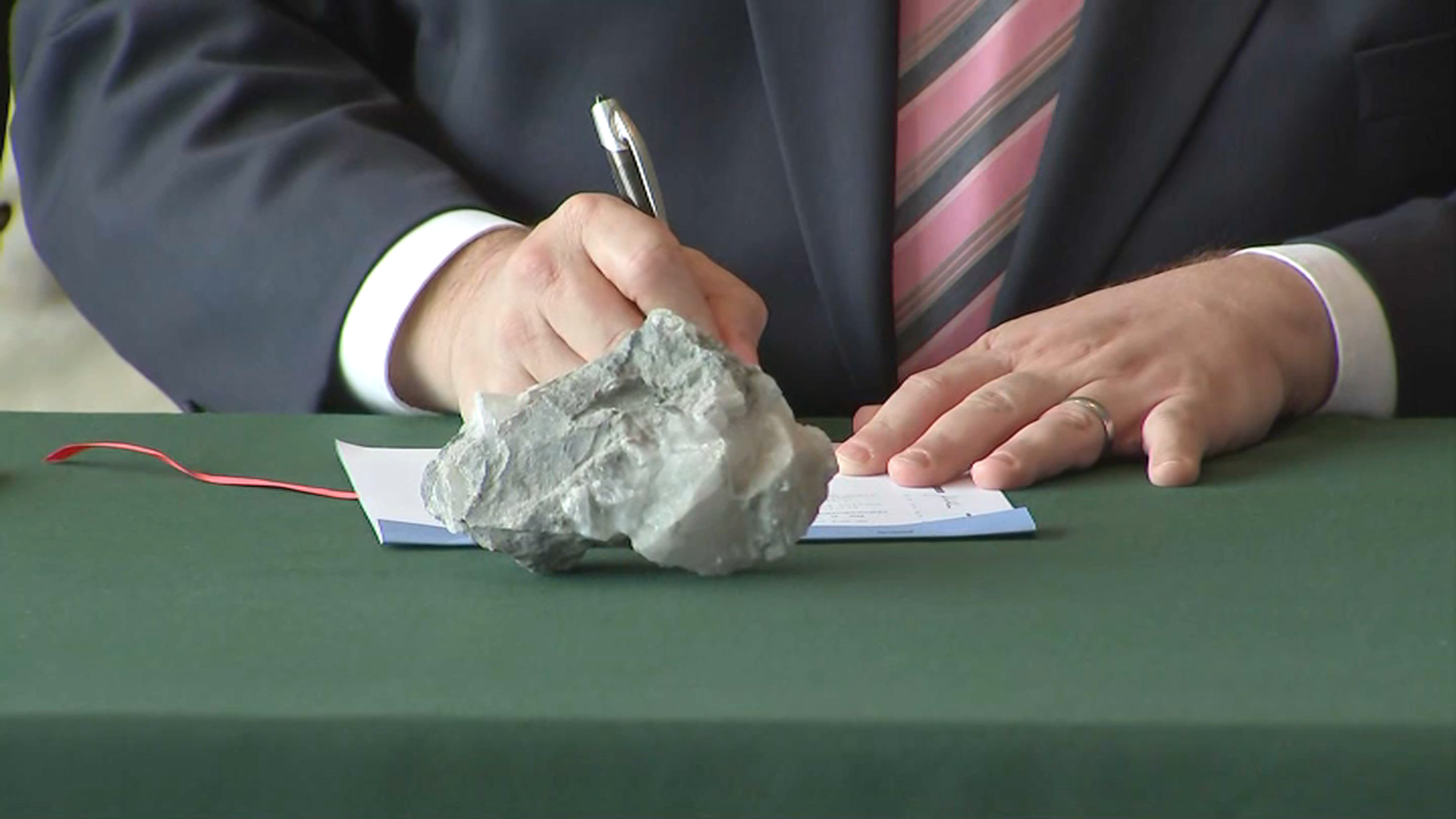
Read more: Illinois Now Has an Official State Rock. Here’s What It IsNBC5 Chicago has a story about the new Illinois state symbol. The Tully Monster is the Illinois State Fossil and we have Fluorite as the State Mineral, now Dolostone is the State Rock. Governor Pritzker signed the bill yesterday – June 6th, 2022! We posted back in 2021 that the Pleasantdale Middle School in Burr Ridge, IL was pushing for this effort. Upon learning Illinois didn’t have a state rock, students at Pleasantdale School in Burr Ridge and Maplebrook Elementary School in Naperville took it upon themselves and decided that needed to change. So, they interviewed regional geology scholars, visited museums,…
-

Mazon Monday #115: Crenulopteris acadica
Read more: Mazon Monday #115: Crenulopteris acadicaThis is Mazon Monday post #115. What’s your favorite Mazon Creek fossil? Tell us at email:esconi.info@gmail.com. —————————————————– Crenulopteris acadica is one of the most common flora fossils found in the Mazon Creek biota. Some of the localities seem to be absolutely full of it. The fossils can range in size from a few inches to over a foot. It is a true fern belonging to the group Filicopsida, which is a subdivision of Pteridophyta. Pteridophyta includes all extant and extinct ferns and first appears in the fossil record during the Devonian Period. George Langford called it Asterotheca lamuriana. ESCONI’s “Keys…
-

NYT: Megalodons vs. Great White Sharks? We Know Which Predator Won.
Read more: NYT: Megalodons vs. Great White Sharks? We Know Which Predator Won.The Trilobites column of the New York Times has a story about sharks… big sharks. Otodus megalodon, commonly referred to as Megalodon, is regarded as one of the largest predators that ever lived. Estimates of its size extrapolated from teeth put it at between 46 and 67 feet (14 – 20.3 meters). A new paper in the journal Nature Communications looks to address what pushed O. megalodon to extinction, was it climate change or competition for food resources. Twenty million years ago, a predator with a mouth like a subway door and teeth the size of your palm roamed the seas.…
-

PBS Eons: Is This the Oldest Dad in the Fossil Record?
Read more: PBS Eons: Is This the Oldest Dad in the Fossil Record?PBS Eons has a new episode. This one is about fossil evidence of early mammals and how they raised their young, Fossil evidence suggests Diictodon used burrows to breed, and that a parent stayed behind to feed and protect their young. And the parent that stayed behind? It might’ve been the male.
-
Fossil Friday #111: Rhabdoderma exiguum
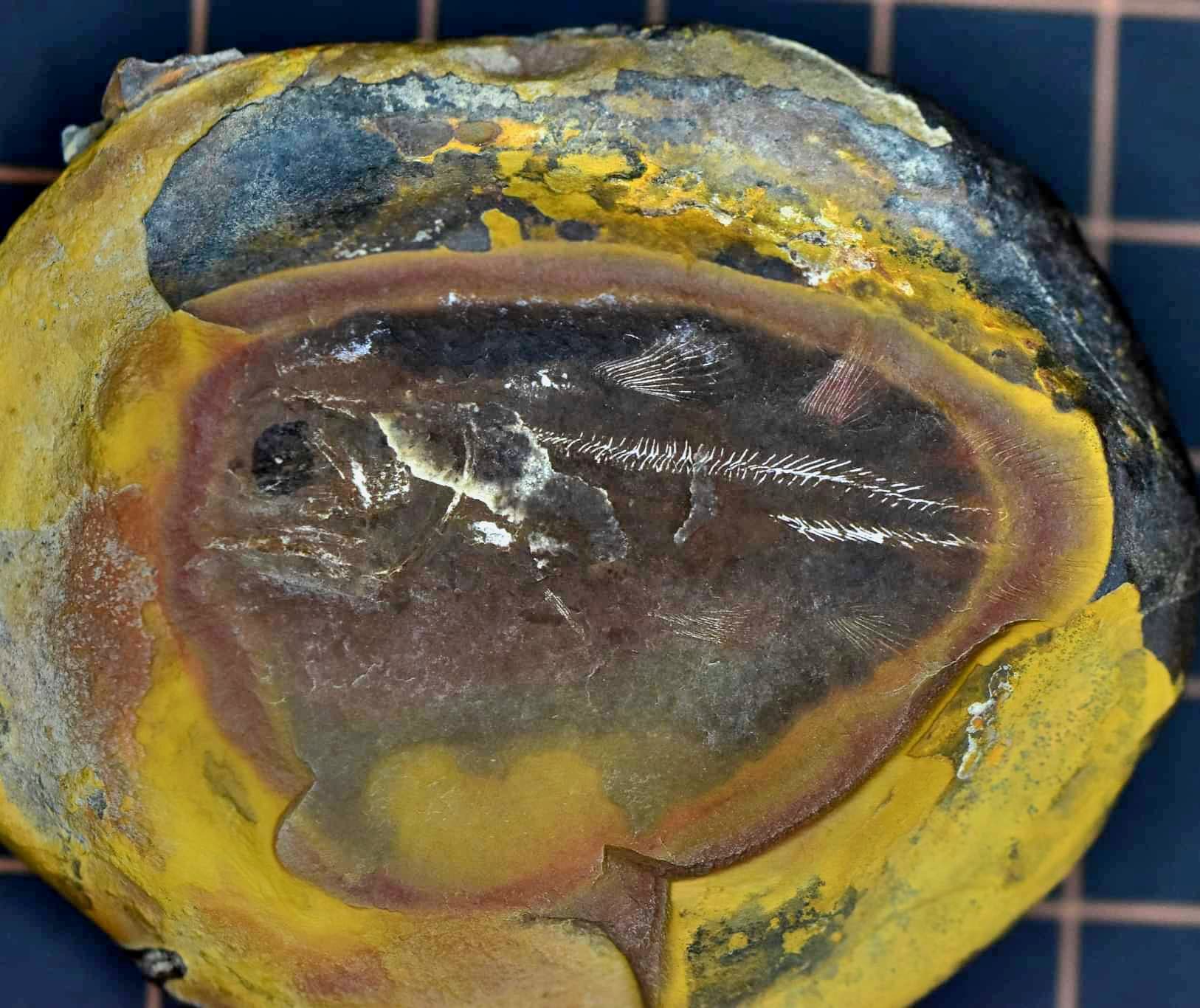
Read more: Fossil Friday #111: Rhabdoderma exiguumThis is the “Fossil Friday” post #111. Expect this to be a somewhat regular feature of the website. We will post any fossil pictures you send in to esconi.info@gmail.com. Please include a short description or story. Check the #FossilFriday Twitter hash tag for contributions from around the world! For this week’s Fossil Friday, we have an absolutely stunning Rhabdoderma exiguum from Pit 11. That’s a coelacanth. This gorgeous specimen was found by ESCONI member Jake Fill earlier this spring. If you’ve been following him on the Facebook Mazon Creek / Carboniferous forums, you know that he has had some extraordinary…
-
Throwback Thursday #113: Looking Back at ESCONI for June 2022
Read more: Throwback Thursday #113: Looking Back at ESCONI for June 2022This is Throwback Thursday #113. In these, we look back into the past at ESCONI specifically and Earth Science in general. If you have any contributions, (science, pictures, stories, etc …), please send them to esconi.info@gmail.com. Thanks! 25 Years Ago – June 1997 50 Years Ago – June 1972 70 Years Ago – June 1952
-
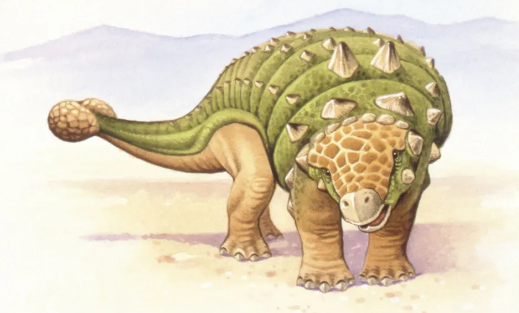
New Fossil Finds Track When Armored Dinosaurs Spread Around the World
Read more: New Fossil Finds Track When Armored Dinosaurs Spread Around the WorldSmithsonian Magazine has a story about armored dinosaurs. Recent discoveries are shedding light on the evolutionary history of the dinosaur group thyreophorans. That group includes dinosaurs favorites like stegasaurs and ankylosaurs. In popular depictions of paleontology, armored dinosaurs are often treated like icing on the Mesozoic cake. No Jurassic floodplain feels quite complete without a dinosaur like the spike-tailed Stegosaurus trundling around in the background somewhere. The same goes for Late Cretaceous forests, where the heavily-armored Ankylosaurus held a club-tipped tail capable of busting T. rex shins, if need be. We’ve known about such creatures for about as long as the word “dinosaur” has existed,…
-

ESCONI Events June 2022
Read more: ESCONI Events June 2022Field trips require membership, but visitors are welcome at all meetings! Fri, June 10th ESCONI General Meeting 8:00 PM Zoom – Topic: “Off-Axis Seamount Investigations at Siqueiros: The OASIS Expedition” by Dr. Patricia Gregg, University of Illinois. This meeting will be held via Zoom. Zoom link Sat, June 11th ESCONI Junior Meeting – 7:00 PM at College of DuPage – Topic: “Our Juniors’ Rock Viewing Microscope” Specifics of this meeting are available from Scott Galloway, 630-670-2591, gallowayscottf@gmail.com. The meeting will be in person at the College of DuPage Tech Ed (TEC) Building, Room 1038A (Map). ESCONI Paleontology Meeting –…
-

Trilobite Tuesday #40: Find the Trilobite!
Read more: Trilobite Tuesday #40: Find the Trilobite!ESCONI recently held a field trip to the St. Paul Quarry in St. Paul, Indiana. As part of that trip, a few of us paid a visit to the famous St. Leon roadcut on Indiana Route 1 just off Interstate 74 at exit 164 for St. Leon. The road cut is huge and loaded in fossils. Head on over to The Fossil Forum for many trip reports. As part of that visit, we went looking for trilobites. Here you can see ESCONI President Keith Robitschek with Phil Anderson looking for interesting fossils. The ground is littered with brachiopods, bryozoans, and…
-
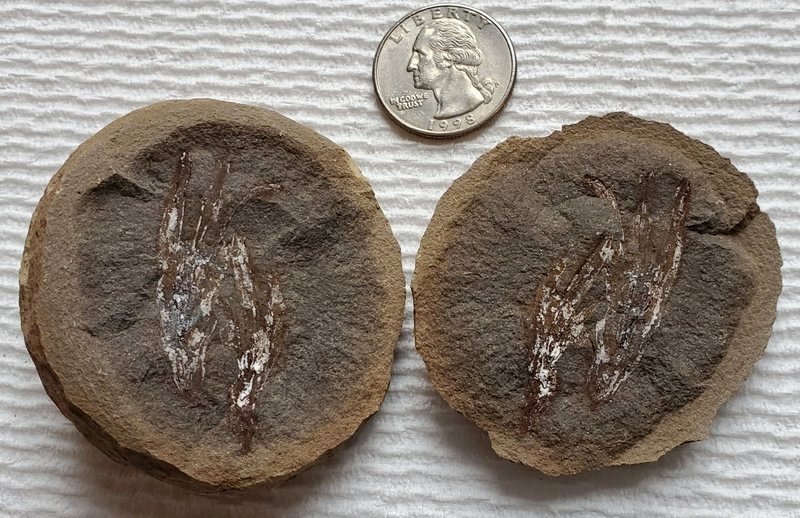
Mazon Monday #114: Codonotheca caduca
Read more: Mazon Monday #114: Codonotheca caducaThis is Mazon Monday post #114. What’s your favorite Mazon Creek fossil? Tell us at email:esconi.info@gmail.com. —————————————————– Codonotheca caduca was named by Elias Howard Sellards (1875 – 1961). He was a paleontologist, geologist, and anthropologist. The Texas State Historical Association has a nice summary of his career, which spanned almost 60 years. SELLARDS, ELIAS HOWARD (1875–1961).Elias Howard Sellards, geologist and paleontologist, was born in Carter City, Kentucky, on May 2, 1875, the son of Wiley W. and Sarah (Menach) Sellards. The family moved to Kansas during Elias’s youth. He attended the University of Kansas, where he received his B.A. and M.A.…
-

ESCONI at CGMA 2022
Read more: ESCONI at CGMA 2022Today is the last day of the 2022 Chicagoland Gems and Minerals Association show. It’s at the Kane County Fairgrounds in St. Charles, IL. There’s lots of vendors, interesting displays, and good friends…. See you there! Here are a few pictures of ESCONI at the show. Juniors Table Display photots
-
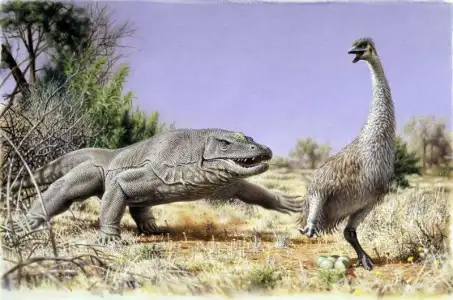
The first Australians ate giant eggs of huge flightless birds, ancient proteins confirm
Read more: The first Australians ate giant eggs of huge flightless birds, ancient proteins confirmPhys.org has a story about the extinction of the large flightless birds in Australia. An international team of scientists have found evidence that the earliest humans to arrive on Australia ate the eggs of the large flightless birds that lived in Australia 47,000 years ago. That evidence suggests humans had direct influence on the extinction. The research was published in a paper in the journal Proceedings of the National Academy of Sciences. Proteins extracted from fragments of prehistoric eggshell found in the Australian sands confirm that the continent’s earliest humans consumed the eggs of a two-meter tall bird that disappeared…
-

Fossil Friday #110: Sea Cucumber from Mazon Creek
Read more: Fossil Friday #110: Sea Cucumber from Mazon CreekThis is the “Fossil Friday” post #110. Expect this to be a somewhat regular feature of the website. We will post any fossil pictures you send in to esconi.info@gmail.com. Please include a short description or story. Check the #FossilFriday Twitter hash tag for contributions from around the world! For this Fossil Friday, we have a very sweet sea cucumber (Achistrum sp.) from Mazon Creek. For more information, we looked at these echinoderms back in Mazon Monday #29. Holothurians appeared in Andy Hay’s Creature Corner in May 1986. Holothurians (sea cucumber) As has been noted previously in these articles, the not…
-

Throwback Thursday #112: April 1990 Field Trip to St. Paul and Brookville, IN
Read more: Throwback Thursday #112: April 1990 Field Trip to St. Paul and Brookville, INThis is Throwback Thursday #112. In these, we look back into the past at ESCONI specifically and Earth Science in general. If you have any contributions, (science, pictures, stories, etc …), please send them to esconi.info@gmail.com. Thanks! ESCONI has been visiting St. Paul, IN for Silurian fossils for a long time. In 1990, there was a rather large field trip to St. Paul. While down there, they decided to visit Brookville, IN and Ohio for some Ordovician fossils. Earl Elliott announced the trip in the April issue of the newsletter… it was a three day affair – April 6th, 7th,…
-
2022 Tate Geological Museum Lecture Series – 6:30 MDT on Mat 26th, 2022
Read more: 2022 Tate Geological Museum Lecture Series – 6:30 MDT on Mat 26th, 2022The next installment of the 2022 Tate Museum Lecture Series will take place Thursday evening, May 26th. Continuing with the ammonites theme, Kathleen Ritterbush of the University of Utah will present: “Adventures in the Jurassic Jet Propulsion Laboratory”. The Zoom will open at about 6:30PM Mountain Savings Time and the talk will start at 7PM. And here is the link: https://caspercollege.zoom.us/j/84334489484?pwd=OFNuVVpmZWtLQ01yVkVNWTRIM2pXdz09 I am sending one email to all groups. Please pass this on to your members. Recordings of the last two talks (David Peterman and Josh Slattery) can be found on the Tate Geological Museum’s YouTube channel: https://www.youtube.com/channel/UCedShZzSLZPCa018d8T_3Jg We failed to record the…
-

BBC: Mary Anning: Lyme Regis fossil hunter’s statue unveiled
Read more: BBC: Mary Anning: Lyme Regis fossil hunter’s statue unveiledThe BBC has a story about the unveiling of a statue of Mary Anning in her home town of Lyme Regis, Dorset, England. The unveiling was done on May 21st, which was her 223rd birthday. She lived her whole life in Lyme Regis and supported her family by collecting and selling fossils from what is now known as the Jurassic coast. She was the first one to discover a complete plesiosaur in 1823. The poem “She sells sea shells by the sea shore” is widely attributed to her. During the ceremony, crowds cheered as Prof Roberts said: “Mary Anning –…
-

Mazon Monday #113: Spring 2022 Braceville Field Trip Report
Read more: Mazon Monday #113: Spring 2022 Braceville Field Trip ReportThis is Mazon Monday post #113. What’s your favorite Mazon Creek fossil? Tell us at email:esconi.info@gmail.com. —————————————————– Braceville Field Trip (Mazon Creek) May 14th and 15th by Keith Robitschek This spring’s field trip to the Braceville spoil pile started on Saturday with a warm cloudy day with a chance of rain. We had about five minutes of a cool light drizzle. To be honest, it was well timed and felt good. Near the end of the field trip, it got uncomfortably hot, reaching 88 degrees and humid. We had 39 members show up which left 11 no-shows. Kids young and…
-
Ancient Tooth From Young Girl Discovered in Cave Unlocks Mystery of Denisovans, a Sister Species of Modern Humans
Read more: Ancient Tooth From Young Girl Discovered in Cave Unlocks Mystery of Denisovans, a Sister Species of Modern HumansSciTechDaily has a story about the Denisovans. The Denisovans are a closely related species of humans who lived in southeastern Asia around 150,000 years ago. Their DNA had only known from the Denisova cave in the Altai Mountains of Siberia (Russia). Now, the discovery of Denisovan DNA in a tooth from Cobra Cave in northern Laos links the modern occurrence of DNA with the ancient fossil DNA. See the detail in a paper in the journal Nature Communications. Lead Author and Assistant Professor of Palaeoanthropology at the University of Copenhagen, Fabrice Demeter, says the cave sediments contained teeth of…

ESCONI Gem, Mineral, and Fossil Show
Most Recent Post
- Throwback Thursday #312: Ron Schinderle Donation
 Barb Schinderle stopped by ESCONI Show last month to drop off a donation of her late husband Ron’s fossils. Ron passed away in 2021. He was a long time ESCONI member and an avid fossil collector . He went on many ESCONI field trips. A group of us remember him fondly from our many trips to Pit 11 and Fossil Rock Campgrounds to collect Mazon Creek fossils.
- About ESCONI
- Around the Web
- Calendar of Events
- Code of Ethics and Conduct
- ESCONI Books for Sale
- ESCONI Gem, Mineral, and Fossil Show
- ESCONI in the News
- ESCONI Videos
- Field Trips
- Flashback Friday
- Fossil Friday
- Mazon Creek
- Mazon Monday
- Member Spotlight
- Membership Information
- Reference Material
- Throwback Thursday
- Trilobite Tuesday
Field trips require membership, but visitors are welcome at all meetings!
| Friday, April 10th | General Meeting – 8:00 PM via Zoom. Jessica Hull will present “Life in the Devonian Period, The Age of Fishes.” |
| Saturday, April 11th | Junior Study Group Meeting – 2:00 PM, in person at the College of DuPage Technical Education Center (TEC) Building – Room 1038A (Map). Katherine Howard will present on Sand and Sediment Collecting. Specifics of this meeting are available from Scott Galloway, 630-670-2591, gallowayscottf@gmail.com. |
| Saturday, April 18th | Paleontology Study Group – 7:30 PM via Zoom and in person at the College of DuPage, TEC, Room 1038B (Map). Keith Robitschek will present “Digging the Marl of the Lance Formation.” |
| Friday, April 24th | MAPS Expo XLVII – Springfield, IL. |
| Saturday, April 25th | MAPS Expo XLVII – Springfield, IL. |
| Sunday, April 26th | MAPS Expo XLVII – Springfield, IL. |
| No meeting this month | Mineralogy Study Group |