
-
New Illinois Supreme Court Decision Regarding Access to the Mazon Rivers
Read more: New Illinois Supreme Court Decision Regarding Access to the Mazon RiversThe Earth Science Club of Northern Illinois (ESCONI) was founded in 1949 with an aim to promote public interest in the earth sciences. In addition to advancing education through publications, scholarly lectures, student research grants, and field trips, the club fosters ethical conduct, especially as it pertains to collecting on private property. Personal safety, respectful cooperation, and adherence to the law are paramount to any successful outing. As a member of ESCONI, one is also a representative of the club. Rule Number 6 of the ESCONI Code of Ethics states specifically, “Members will not collect without appropriate permission on private…
-
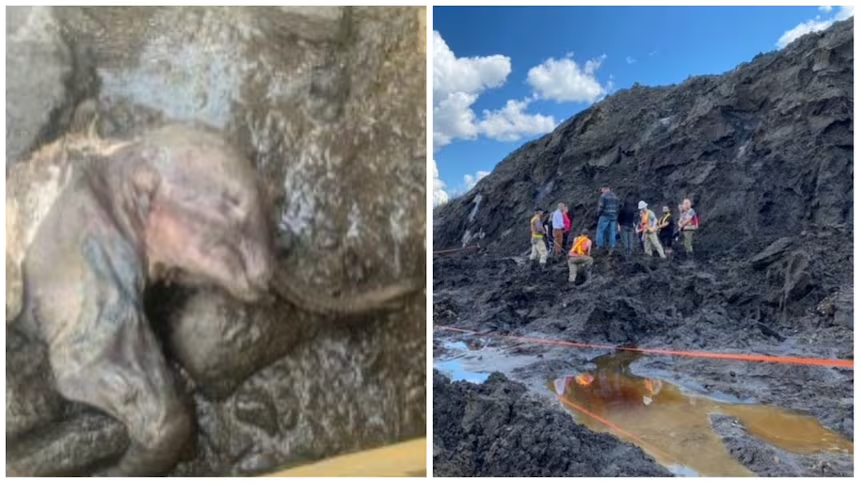
‘She’s perfect and she’s beautiful’: Frozen baby woolly mammoth discovered in Yukon gold fields
Read more: ‘She’s perfect and she’s beautiful’: Frozen baby woolly mammoth discovered in Yukon gold fieldsCBC News has a story about the discovery of a mummified baby woolly mammoth. The animal lived about 35,000 years ago in the Canadian Yukon Territory near Eureka Creek, south of Dawson Creek. A gold miner was digging through muck with a front end loader when he discovered the find of a lifetime. A perfect storm of events has led to a once-in-a-lifetime discovery for a gold miner, a First Nation, a veteran paleontologist and a territory. “I don’t know how to process it all right now, to be honest with you. It’s amazing,” said Dr. Grant Zazula, the Yukon…
-
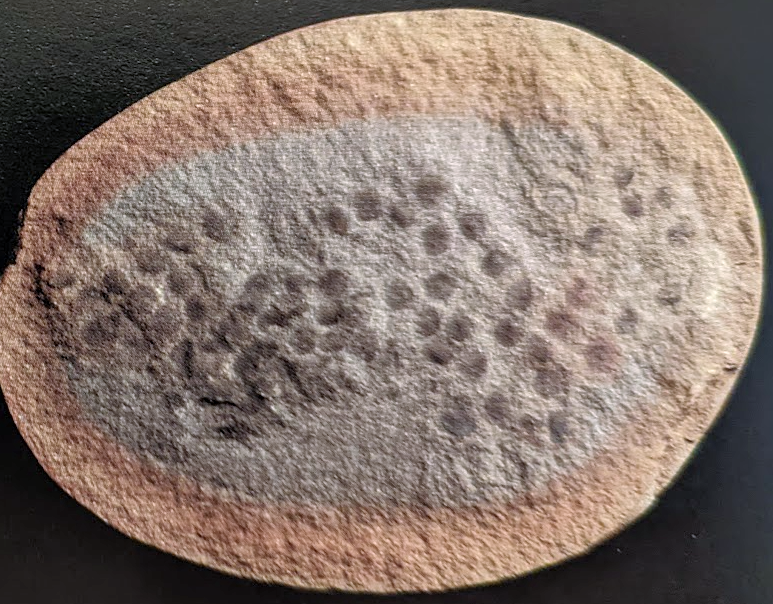
Mazon Monday #118: Mazonova helmichnus
Read more: Mazon Monday #118: Mazonova helmichnusThis is Mazon Monday post #118. What’s your favorite Mazon Creek fossil? Tell us at email:esconi.info@gmail.com. —————————————————– Last Friday (Fossil Friday #114), we featured Mazonova helmichnus, which are eggs – possibly amphibian or lungfish eggs. Here’s a little more information about them. Mazonova helmichnus were classified in 1995 by Stephen Godfrey in the paper “Fossilized eggs from the Pennsylvanian of Illinois“. The paper appeared in the journal Ichnos – an International Journal for Plant and Animal Traces. For more on Dr. Godfrey, see his website – Paleo Skullptures. Nine siderite concretions from the Middle Pennsylvanian, Francis Creek Shale (Carbondale Formation, Desmoinesian Series,…
-
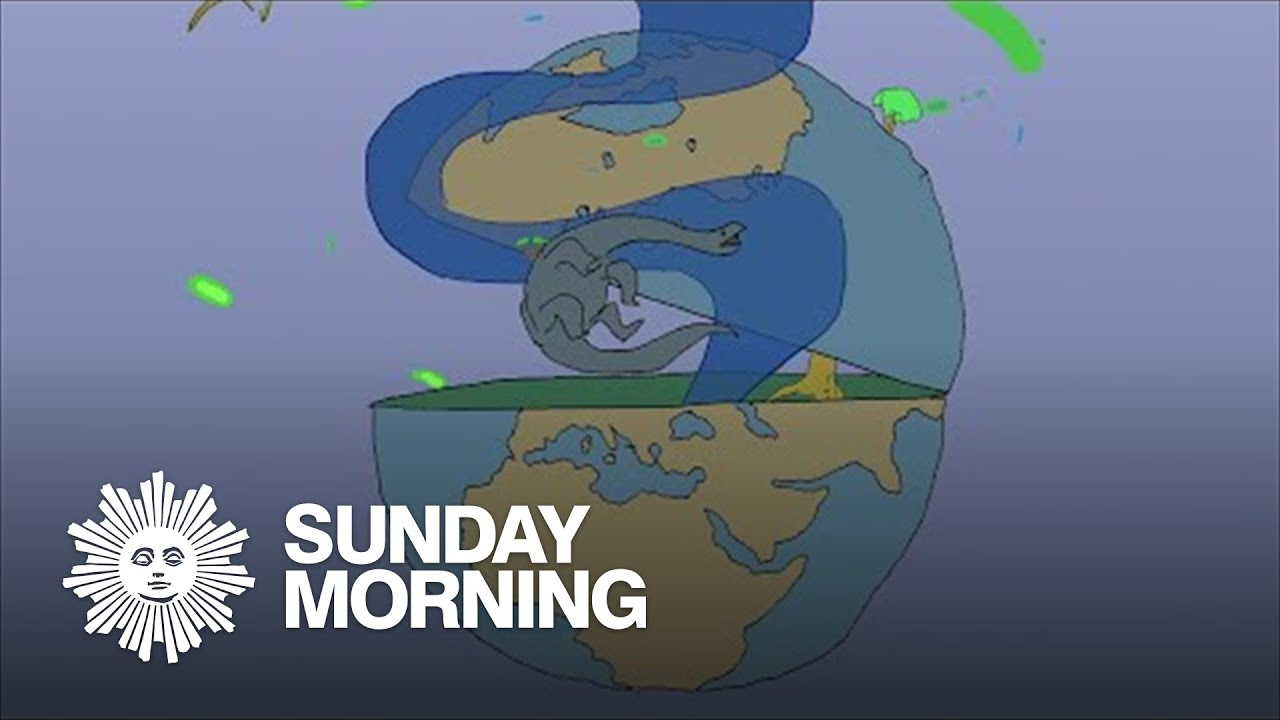
“Meet the Fossils”: Ancient life that powers our world
Read more: “Meet the Fossils”: Ancient life that powers our worldCBS Sunday Morning has a video about fossil fuels… where did they come from? Two Lepidodendron trees a month! When we burn fossil fuels to power our homes and cars, we’re burning the remains of ancient life – plants and animals that were transformed over millions of years into coal or oil. And we are using up that resource at a rapid rate. Writer and narrator Robert Krulwich explains how in this “CBS Sunday Morning” video essay, based on the work of Aatish Bhatia. Animation directed and designed by Nate Milton. Music by Buck St. Thomas.
-

Fossil-finding ants amass huge haul of ancient creatures
Read more: Fossil-finding ants amass huge haul of ancient creaturesNational Geographic has a story about tiny fossil collector. The tiny collectors are harvester ants. They uncovered more than 6000 micro fossils as they built their mounds, The micro fossils included small teeth and jaw fragments – all at most a few millimeter wide. These micro fossils are believed to be parts of ten new mammal species, including nice species of rodent and a new insect eating shrew-like mammal. Across the western United States, the industrious insects known as harvester ants are often cast as pests. These ants gather seeds and live in large sediment mounds, and they can deliver nasty stings…
-

Fossil Friday #114: Basket of Mazon Eggs
Read more: Fossil Friday #114: Basket of Mazon EggsThis is the “Fossil Friday” post #114. Expect this to be a somewhat regular feature of the website. We will post any fossil pictures you send in to esconi.info@gmail.com. Please include a short description or story. Check the #FossilFriday Twitter hash tag for contributions from around the world! For this week, we have some exciting Mazon Creek fossils… I know, I know, we never do Mazon Creek. Well, here is another… These are Mazonova helmichnus, which are eggs. They were classified in 1995 by Stephen Godfrey in the paper “Fossilized eggs from the Pennsylvanian of Illinois”. The paper appeared in…
-

Throwback Thursday #116: Field Museum Photo Archives
Read more: Throwback Thursday #116: Field Museum Photo ArchivesThis is Throwback Thursday #116. In these, we look back into the past at ESCONI specifically and Earth Science in general. If you have any contributions, (science, pictures, stories, etc …), please send them to esconi.info@gmail.com. Thanks! Here’s a few photos from the Field Museum Photo Archives over on Tumbler. Unfortunately, the photo blog hasn’t updated since 2015, but there is still many good photos to browse on it! Fossil Friday, Tully Monster. Check out one of our scientific illustrators working on the model of the Tully Monsters. The Tully Monster is Illinois state fossil. I really imagined it would…
-

CBC Quirks & Quarks: Black Death origins, chicken domestication, the life of a mastodon…
Read more: CBC Quirks & Quarks: Black Death origins, chicken domestication, the life of a mastodon…CBC’s Quirks & Quarks podcast has some interesting stories this week. Origins of the Black Death… it didn’t come from where everyone expected A team of historians, archeologists and geneticists, including Philip Slavin from Stirling University in Scotland, has identified what they believe to be ground zero in the medieval bubonic plague pandemic known as the Black Death. They’ve found a graveyard in Kyrgyzstan where gravestones identify victims of a “pestilence,” dating to just before the plague exploded around the world in the late 1340s. DNA recovered from the victims also has the fingerprint of the tell-tale plague bacteria. Their research was…
-
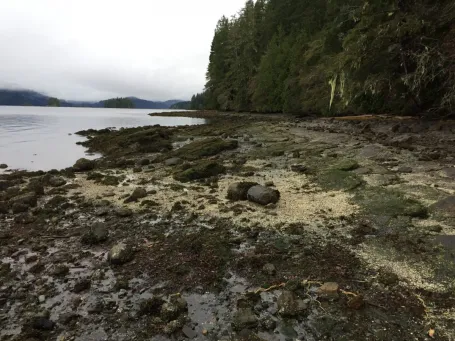
New prehistoric plant discovery highlights the unexpected diversity of non-flowering plants
Read more: New prehistoric plant discovery highlights the unexpected diversity of non-flowering plantsThe Conversation has an interesting post about non-flowering plants. A new genus of non-flowering plants discovered in the Apple Bay fossil locality of northern Vancouver Island is shedding light on the evolutionary relationships between the major lineages of seed plants. The new plant, Xadzigacalix quatsinoensis, probably also represents yet another order of extinct plants. The name is a nod to Kwak̓wala-speaking First Nations — the Apple Bay locality occurs within traditional and unceded territory of the Quatsino First Nation. Xadzigacalix derives from xa̱dziga, a Kwak̓wala word for plant resin, and calix, which is Latin for chalice. The name reflects the resinous, fleshy cupule…
-
Mazon Monday #117: Crenulopteris mazoniana
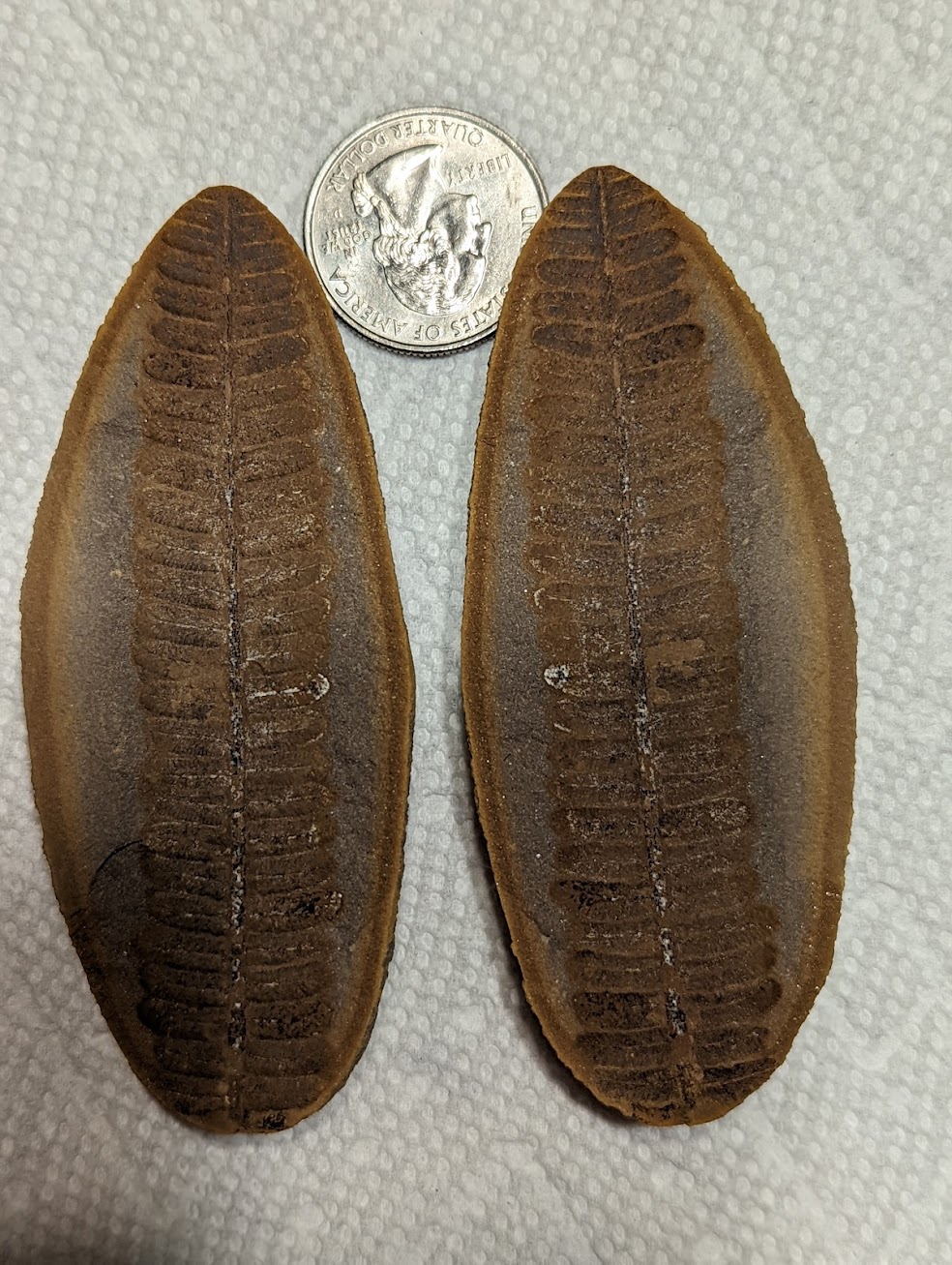
Read more: Mazon Monday #117: Crenulopteris mazonianaThis is Mazon Monday post #117. What’s your favorite Mazon Creek fossil? Tell us at email:esconi.info@gmail.com. —————————————————– Crenulopteris mazoniana is a somewhat uncommon extinct species of fern from the Mazon Creek fossil flora. It was first named by Leo Lesquereux in 1870 as Alethopteris mazoniana. As seen from its fertile form shown in a specimen below, it was a spore fern unlike the seed fern Alethopteris. The names of some of these common fern species have tortured pasts, which only makes them harder to classify. In Jack Wittry’s first book, “The Mazon Creek Fossil Flora”, it was referred to as Pecopteris…
-
Massive bulldog-faced dinosaur was like a T. rex on steroids
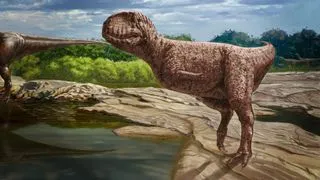
Read more: Massive bulldog-faced dinosaur was like a T. rex on steroidsLive Science has a post about a new dinosaur discovery. This new dinosaur is still unnamed and is known to be a meat-eater, which belonging to a group called the abelisaurids. This dinosaur lived during the Cretaceous Period about 98 million years ago in the famous Bahariya Formation in what’s now Egypt’s Sahara Desert. From previous discoveries, this large predator would have shared the ecosystem with a number of other large predators like Carcharodontosaurus, Bahariasaurus, and Spinosaurus. For more details, you can find the description in the journal Royal Society Open Science. Like other abelisaurids, the newfound dinosaur had a shortened,…
-

PBS Eons: Something has been making this mark for 500-Million-Years
Read more: PBS Eons: Something has been making this mark for 500-Million-YearsPBS Eons has a new episode. This one is a about a fossil mystery… what is Paleodictyon, a hexagonal-patterned fossil? Paleodictyon, a hexagonal-patterned fossil, is a bit of a mystery. We don’t even know if it’s a trace fossil, or the organism itself. So… what could it be?
-

Fossil Friday #113: Alethopteris serlii
Read more: Fossil Friday #113: Alethopteris serliiThis is the “Fossil Friday” post #113. Expect this to be a somewhat regular feature of the website. We will post any fossil pictures you send in to esconi.info@gmail.com. Please include a short description or story. Check the #FossilFriday Twitter hash tag for contributions from around the world! Alethopteris, in its many forms, is a popular favorite among the many Mazon Creek fossil plants. They belong to a group called Pteridospermatophyta, which are commonly called seed ferns. Seed ferns evolved way back during the Devonian Period. Unfortunately, they had largely gone extinct by the late Cretaceous Period with just a…
-
Throwback Thursday #115: Safety Tip from 1972
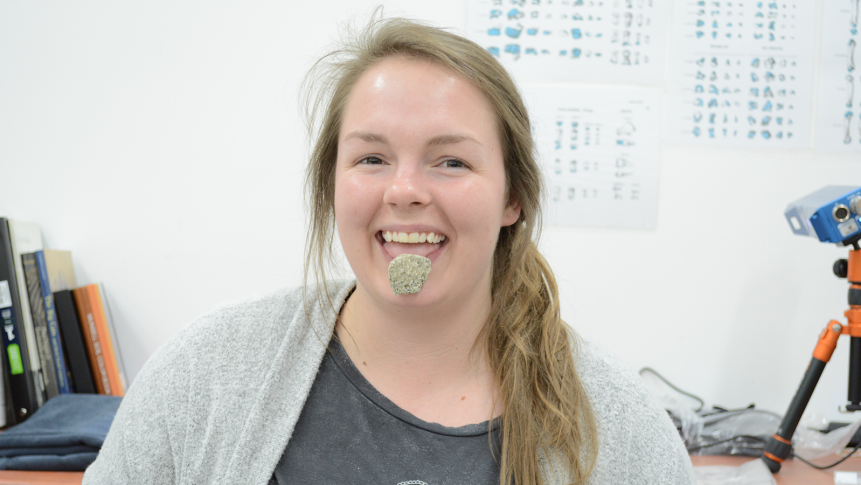
Read more: Throwback Thursday #115: Safety Tip from 1972This is Throwback Thursday #115. In these, we look back into the past at ESCONI specifically and Earth Science in general. If you have any contributions, (science, pictures, stories, etc …), please send them to esconi.info@gmail.com. Thanks! Licking a rock can give you valuable information when trying to identify it. See this story from Discovery.com. Back up. We agree, licking maybe-ancient maybe-fossils doesn’t sound like a thing you should be trying. But for seasoned geologists, licking specimens is an average day on the job. According to The Earth Story, poking your tongue at a sample for taste and consistency can give…
-
How little, furry mammals that scurried under dinosaurs’ feet came to rule the world
Read more: How little, furry mammals that scurried under dinosaurs’ feet came to rule the world“The Rise and Reign of the Mammals: A New History, from the Shadow of the Dinosaurs to Us” explores the wild mammal lineage from the Triassic period to present day. (Image credit: Mariner Books, Courtesy Steve Brusatte) Live Science has a new book review… “The Rise and Reign of the Mammals”. Looking for some summer reading material? Steve Brusatte, who hails from Ottawa, IL, has a new book out. This one tracks the rise of mammals from the synapsids of the Carboniferous (like the sail-backed Dimetrodon) up to modern day mammals. His previous book “The Rise and Fall of the Dinosaurs:…
-
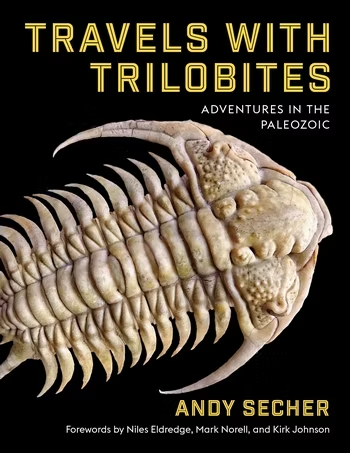
Trilobite Tuesday #41: Travels with Trilobites
Read more: Trilobite Tuesday #41: Travels with TrilobitesThere’s a new trilobite book coming out on June 21st, 2022. It’s called “Travels with Trilobites”. The author is Andy Secher a prolific collector of trilobites. He lives in New York City just a few blocks from the American Museum of Natural History. He’s co-editor of the AMNH’s very informative trilobite website. Trilobites were some of the most successful and versatile organisms ever to exist. Among the earliest forms of complex animal life, these hard-shelled marine invertebrates inhabited the primal seas of the Paleozoic Era. Their march through evolutionary time began in the Lower Cambrian, some 521 million years ago,…
-

Mazon Monday #116: Coprinoscolex elliogimus
Read more: Mazon Monday #116: Coprinoscolex elliogimusThis is Mazon Monday post #116. What’s your favorite Mazon Creek fossil? Tell us at email:esconi.info@gmail.com. —————————————————– Coprinoscolex elliogimus is an animal long referred to by collectors as the “Leech”. More recent research now shows it to be an echiuran, which are commonly called “spoon worms”. They are deposit feeders living in shallow water, in rock cracks and crevices, or even under boulders. Like leeches, they are also Annelid worms. Being a soft-bodied animal, echiurans are rare in the fossil record with C. elliogimus is the earliest known occurrence. C. elliogimus was described in 1977 by Douglas Jones and Ida Thompson…
-
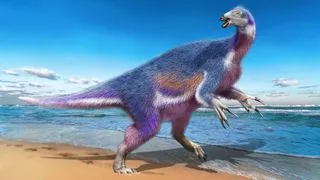
Dinosaur ‘reaper’ with massive claws found in Japan
Read more: Dinosaur ‘reaper’ with massive claws found in JapanLive Science has a post about a new dinosaur discovery in Japan. The animal is a therizinosaur and is called Paralitherizinosaurus japonicus. The genus means “reptile by the sea”. The large Edward Scissorhands-like claws were probably primarily used to slash vegetation not other animals as the animal was a herbivore. P. japonicus lived about 80 million years ago during the Cretaceous Period. More details can be found in a paper published in the journal Scientific Reports. The hook-shaped fossil, which includes a partial vertebra and a partial wrist and forefoot, was discovered by a different team of researchers in 2008;…
-
PBS Eons: How to Build a Woolly Mammoth (But Should We?)
Read more: PBS Eons: How to Build a Woolly Mammoth (But Should We?)There's a new episode of PBS Eons. This one is about Woolly Mammoths. Could and should we bring them back… In the quest to understand how evolution basically built the woolly mammoth, we may have found the blueprints for building them ourselves.
-
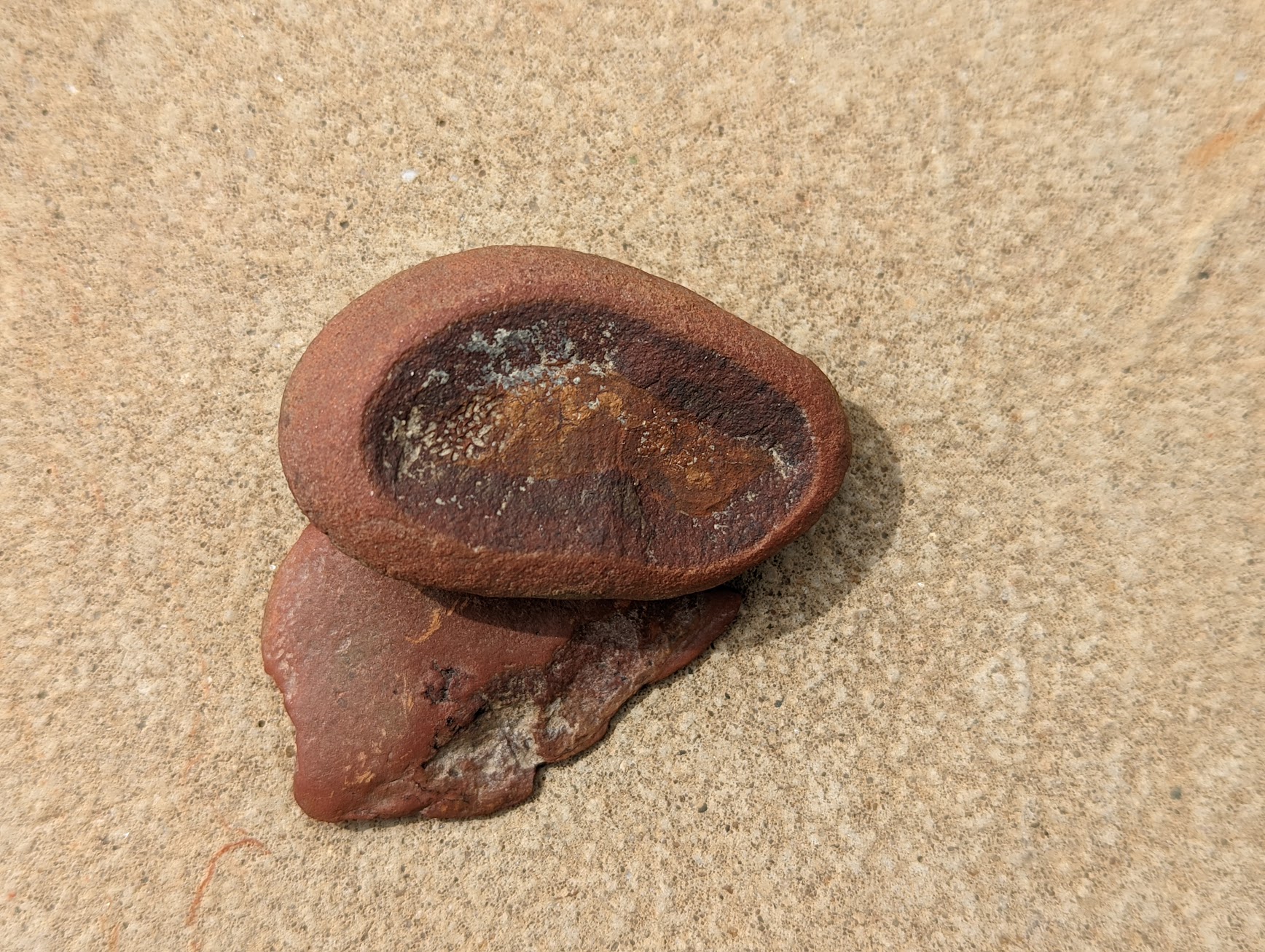
Fossil Friday #112: Coprinoscolex elliogimus!
Read more: Fossil Friday #112: Coprinoscolex elliogimus!This is the “Fossil Friday” post #112. Expect this to be a somewhat regular feature of the website. We will post any fossil pictures you send in to esconi.info@gmail.com. Please include a short description or story. Check the #FossilFriday Twitter hash tag for contributions from around the world! After a long week, it’s time for Fossil Friday. Another Mazon Creek fossil is up today. This time it’s a worm, long called the leech by collectors, it’s now thought to be an echiuran – species name Coprinoscolex elliogimus. The identifying evidence are the oval shaped fecal pellets visible in the fossil. …

ESCONI Gem, Mineral, and Fossil Show
Most Recent Post
- Throwback Thursday #312: Ron Schinderle Donation
 Barb Schinderle stopped by ESCONI Show last month to drop off a donation of her late husband Ron’s fossils. Ron passed away in 2021. He was a long time ESCONI member and an avid fossil collector . He went on many ESCONI field trips. A group of us remember him fondly from our many trips to Pit 11 and Fossil Rock Campgrounds to collect Mazon Creek fossils.
- About ESCONI
- Around the Web
- Calendar of Events
- Code of Ethics and Conduct
- ESCONI Books for Sale
- ESCONI Gem, Mineral, and Fossil Show
- ESCONI in the News
- ESCONI Videos
- Field Trips
- Flashback Friday
- Fossil Friday
- Mazon Creek
- Mazon Monday
- Member Spotlight
- Membership Information
- Reference Material
- Throwback Thursday
- Trilobite Tuesday
Field trips require membership, but visitors are welcome at all meetings!
| Friday, April 10th | General Meeting – 8:00 PM via Zoom. Jessica Hull will present “Life in the Devonian Period, The Age of Fishes.” |
| Saturday, April 11th | Junior Study Group Meeting – 2:00 PM, in person at the College of DuPage Technical Education Center (TEC) Building – Room 1038A (Map). Katherine Howard will present on Sand and Sediment Collecting. Specifics of this meeting are available from Scott Galloway, 630-670-2591, gallowayscottf@gmail.com. |
| Saturday, April 18th | Paleontology Study Group – 7:30 PM via Zoom and in person at the College of DuPage, TEC, Room 1038B (Map). Keith Robitschek will present “Digging the Marl of the Lance Formation.” |
| Friday, April 24th | MAPS Expo XLVII – Springfield, IL. |
| Saturday, April 25th | MAPS Expo XLVII – Springfield, IL. |
| Sunday, April 26th | MAPS Expo XLVII – Springfield, IL. |
| No meeting this month | Mineralogy Study Group |