
-
Wisconsin Rocks and Minerals
Read more: Wisconsin Rocks and MineralsCurious about rock, minerals, and fossils in Wisconsin? There’s a new interactive website by the Wisconsin Geological and Natural History Survey, is something you should check out! There’s explanation of sedimenary, metamorphic, and igneous rocks. And, information about dolomite, granite, sandstone, and more. Oh…. and also some very beautiful pictures. Check it out!
-

Tanis: Fossil of dinosaur killed in asteroid strike found, scientists claim
Read more: Tanis: Fossil of dinosaur killed in asteroid strike found, scientists claimArtwork: The thinking is that a water surge buried all the creatures at Tanis The BBC has an article about a fossil site that preserves a snapshot of what may have been the last day of the non-avian dinosaurs. Nicknamed Tanis and located in North Dakota, the site has fossils of exquisite detail that are seem to have been deposited at the same time. Recently, the site’s primary researcher, Robert DePalma, gave a talk at the NASA’s Goddard Space Center. For more information, see “Shards of Asteroid That Killed the Dinosaurs May Have Been Found in Fossil Site” in the…
-
TRIP FULL! – ESCONI Field Trip to Vulcan DeKalb Quarry Field Trip May 7, 2022
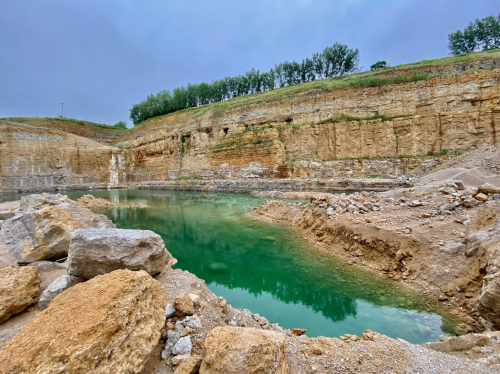
Read more: TRIP FULL! – ESCONI Field Trip to Vulcan DeKalb Quarry Field Trip May 7, 2022The trip is full! It filled up in about a day! We are still accepting requests, which will place you on the waiting list. Please let us know if you can’t make it, as it makes room for those on the waiting list. Thanks! Vulcan DeKalb Quarry Field Trip May 7, 2022 There will be an ESCONI Field Trip to the Vulcan DeKalb (aka Larson) Quarry on Saturday May 7, 2022 from 9:30 AM to 12:30 PM. The quarry is located at 15622 Barber Green Road. The rock at this location is predominantly Ordovician from the Maquoketa and Galena formations.…
-
Fossil Friday #103: Mariopteris sphenopteroides
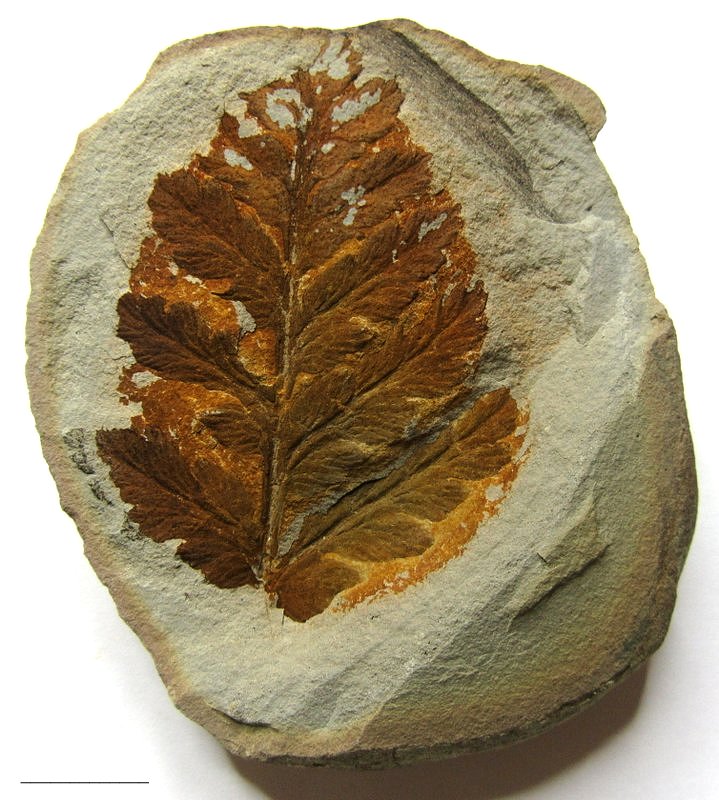
Read more: Fossil Friday #103: Mariopteris sphenopteroidesThis is the “Fossil Friday” post #103. Expect this to be a somewhat regular feature of the website. We will post any fossil pictures you send in to esconi.info@gmail.com. Please include a short description or story. Check the #FossilFriday Twitter hash tag for contributions from around the world! Well, we’ve made it to another Fossil Friday… after a long week, sometimes it feels like we all need a whole lot more Fossils and Fridays in our lives! For this edition, we have a very colorful specimen of the seed fern Mariopteris sphenopteroides from Marie Angkuw. Marie is an avid Mazon…
-
Throwback Thursday #105: Looking Back at ESCONI for April 2022
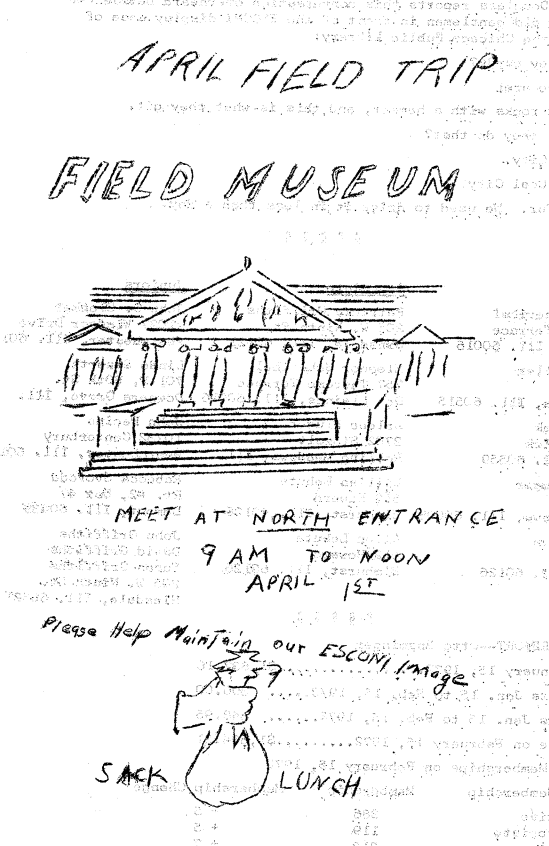
Read more: Throwback Thursday #105: Looking Back at ESCONI for April 2022This is Throwback Thursday #105. In these, we look back into the past at ESCONI specifically and Earth Science in general. If you have any contributions, (science, pictures, stories, etc …), please send them to esconi.info@gmail.com. Thanks! 25 Years Ago – April 1997 50 Years Ago – April 1972 70 Years Ago – April 1952
-
How did cockroaches survive the dino-killing asteroid strike?
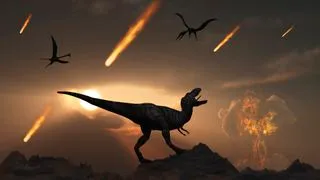
Read more: How did cockroaches survive the dino-killing asteroid strike?Live Science has an article that discusses the heartiness of roaches. Three quarters of all plant and animal species went extinct after the meteor struck Chicxulub at the end of the Cretaceous Period, how is that roaches made it through the extinction that followed? When the rock now known as the Chicxulub impactor plummeted from outer space and slammed into the Earth 66 million years ago, cockroaches were there. The impact caused a massive earthquake, and scientists think it also triggered volcanic eruptions thousands of miles from the impact site. Three-quarters of plants and animals on Earth died, including all dinosaurs, except for some species that were ancestors…
-
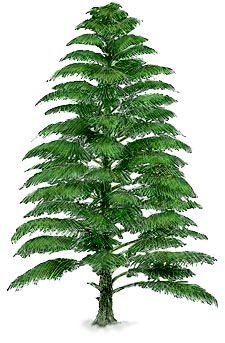
ESCONI April 2022 General Meeting – April 8th, 2022 at 8:00 PM In-person/Zoom – “Devonian plants from the famous Red Hill location”
Read more: ESCONI April 2022 General Meeting – April 8th, 2022 at 8:00 PM In-person/Zoom – “Devonian plants from the famous Red Hill location”The April 2022 General Meeting will be held at 8:00 PM on Friday, April 8th, 2022. We will be meeting both via Zoom and in person at the College of DuPage in Room 1038B of the Tech Ed (TEC) Building (Map). The presentation will be given by Dr. Walt Cressler of West Chester University in Pennsylvania. He will speaking about Devonian plants from the famous Red Hill location. Red Hill is known for the First Modern Tree and a bunch of very early vertebrates. For information about Red Hill plants, see this page at the Devonian Times. The First Modern…
-
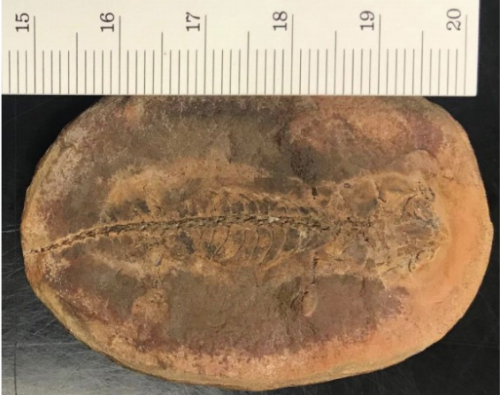
Mazon Monday #106: Video for Arjan Mann’s “Revisiting the exceptional tetrapod fauna of Mazon Creek, Illinois”
Read more: Mazon Monday #106: Video for Arjan Mann’s “Revisiting the exceptional tetrapod fauna of Mazon Creek, Illinois”This is Mazon Monday post #106. What’s your favorite Mazon Creek fossil? Tell us at email:esconi.info@gmail.com. Back in November 2020, Arjan Mann spoke at the ESCONI General Meeting about Mazon Creek tetrapods. Due to some research that had yet to be published, we couldn’t post the video of his excellent presentation, which was entitled “Revisiting the exceptional tetrapod fauna of Mazon Creek, Illinois”. Arjan visited us back in early March 2022 and I had the pleasure of taking him on a tour of Pit 11, Braceville, and the surrounding area. He is planning to return for the trip to Danville…
-

Between a Rock and a Hard Place
Read more: Between a Rock and a Hard PlaceThe Field Museum has an interesting post about Mary Anning. There’s a good summary about her life, her work, and her accomplishments and contributions to paleontology when women couldn’t really participate. Even today, she is inspiring to many of the many talented women in science. It’s quite a testament to her life and achievements that, 223 years after her birth, we’re still talking about Mary Anning. She discovered and collected many fossils of iconic Jurassic reptiles, including the first Plesiosaurus known to science, and the first pterosaur species found in England. Her life is a tale of struggle against poverty and misogyny—particularly…
-

ESCONI Events April 2022
Read more: ESCONI Events April 2022Welcome back! Field trips require membership, but visitors are welcome at all meetings! Fri, Apr 8th ESCONI General Meeting 8:00 PM Zoom – Topic: “Devonian plants from the famous Red Hill location” by Dr. Walt Cressler of West Chester University in Pennsylvania. This meeting will be hybrid with both Zoom and in person available at the College of DuPage Tech Ed (TEC) Building, Room 1038B (Map). Zoom Link Sat, Apr 9th ESCONI Junior Meeting – 7:00 PM at College of DuPage – Topic: “Fossil and Mineral Identification” Specifics of this meeting are available from Scott Galloway, 630-670-2591, gallowayscottf@gmail.com. The meeting…
-

PBS Eons: The Extreme Hyenas That Didn’t Last
Read more: PBS Eons: The Extreme Hyenas That Didn’t LastThere's a new episode of PBS Eons. This one is about how we got the modern hyenas. Did you know they are more closely related to cats than dogs?
-

Fossil Friday #102: Kellibrooksia macrogaster x 3!
Read more: Fossil Friday #102: Kellibrooksia macrogaster x 3!This is the “Fossil Friday” post #102. Expect this to be a somewhat regular feature of the website. We will post any fossil pictures you send in to esconi.info@gmail.com. Please include a short description or story. Check the #FossilFriday Twitter hash tag for contributions from around the world! This week’s Fossil Friday is three specimens of Kellibrooksia macrogaster. We spotlighted K. macrogaster in a recent Mazon Monday. K. macrogaster is an ancestor to modern day Mantis Shrimps. It was named for Harold Kelly Brooks, who published the first well-illustrated modern account of Mazon Creek crustaceans. These photos were sent in by ESCONI…
-
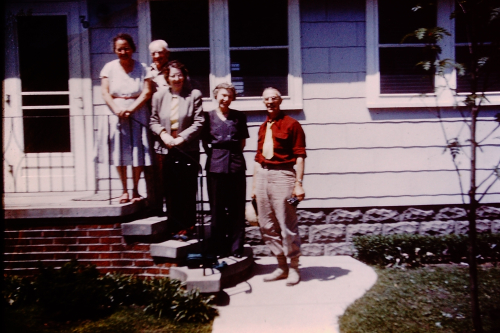
Throwback Thursday #104: McLuckie House from 1952 Newsletter
Read more: Throwback Thursday #104: McLuckie House from 1952 NewsletterThis is Throwback Thursday #104. In these, we look back into the past at ESCONI specifically and Earth Science in general. If you have any contributions, (science, pictures, stories, etc …), please send them to esconi.info@gmail.com. Thanks! John and Lucy McLuckie were both avid collectors of Mazon Creek fossils. They sponsored yearly “combined club” field trips to collect fossils in Braidwood. They were said to be some of the finest and nicest people you’d ever meet. Check this previous edition of Throwback Thursday. From the March 1952 edition of the newsletter… How many of you would love to visit the…
-
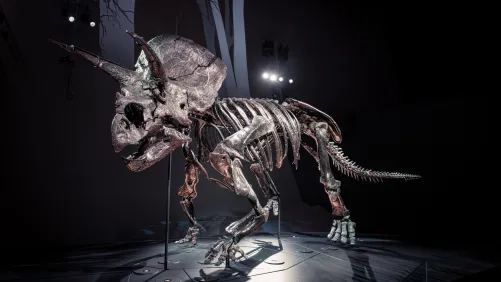
Meet ‘Horridus,’ one of the most complete Triceratops fossils ever found
Read more: Meet ‘Horridus,’ one of the most complete Triceratops fossils ever foundLiveScience has the story of a very large and nearly complete Triceratops in the land down under. A Triceratops, nicknamed “Horridus” after its species name Triceratops horridus, is now on display in a new exhibit “Triceratops: Fate of the Dinosaurs,” at the Melbourne Museum in Australia. The specimen is about 85% complete and died about 67 million years ago in what is now Montana. There is a very interesting 3D digital model of Horridus on the museum’s website. Horridus was an herbivore, or plant-eating dinosaur, that lived during the Cretaceous period (about 145 million to 66 million years ago), and it grew to…
-
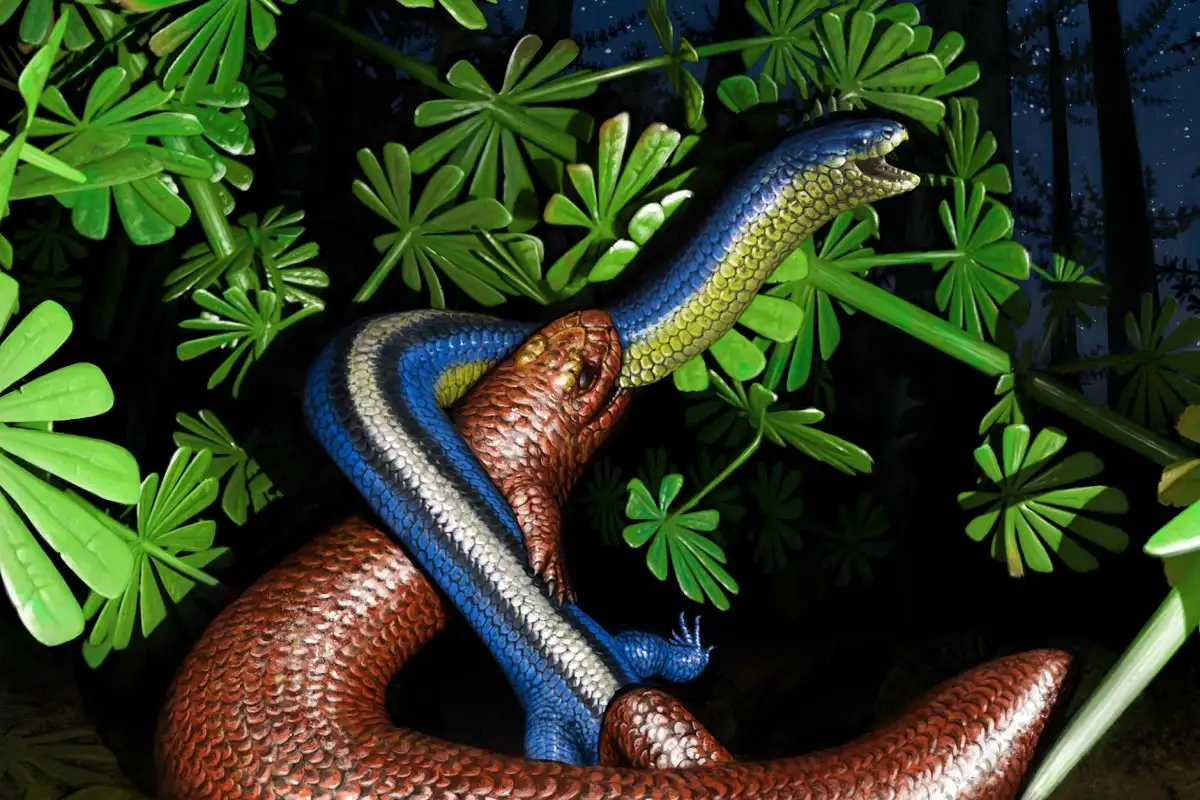
Nature: Snake-like limb loss in a Carboniferous amniote
Read more: Nature: Snake-like limb loss in a Carboniferous amnioteNature Ecology & Evolution has a new paper on Mazon Creek tetrapods. This paper describes snake-like limb loss in an amniote, Nagini mazonense, found in the Mazon Creek fossil deposit. The authors are Arjan Mann of the Smithsonian Institution, Jason Pardo of the Field Museum, and Hillary Maddin of Carleton University in Ottawa, Ontario, Canada. Arjan did a great presentation on Mazon Creek tetrapods back in November 2020. There’s a nice summary of the paper in “Behind the paper” here. Abstract Among living tetrapods, many lineages have converged on a snake-like body plan, where extreme axial elongation is accompanied by reduction…
-
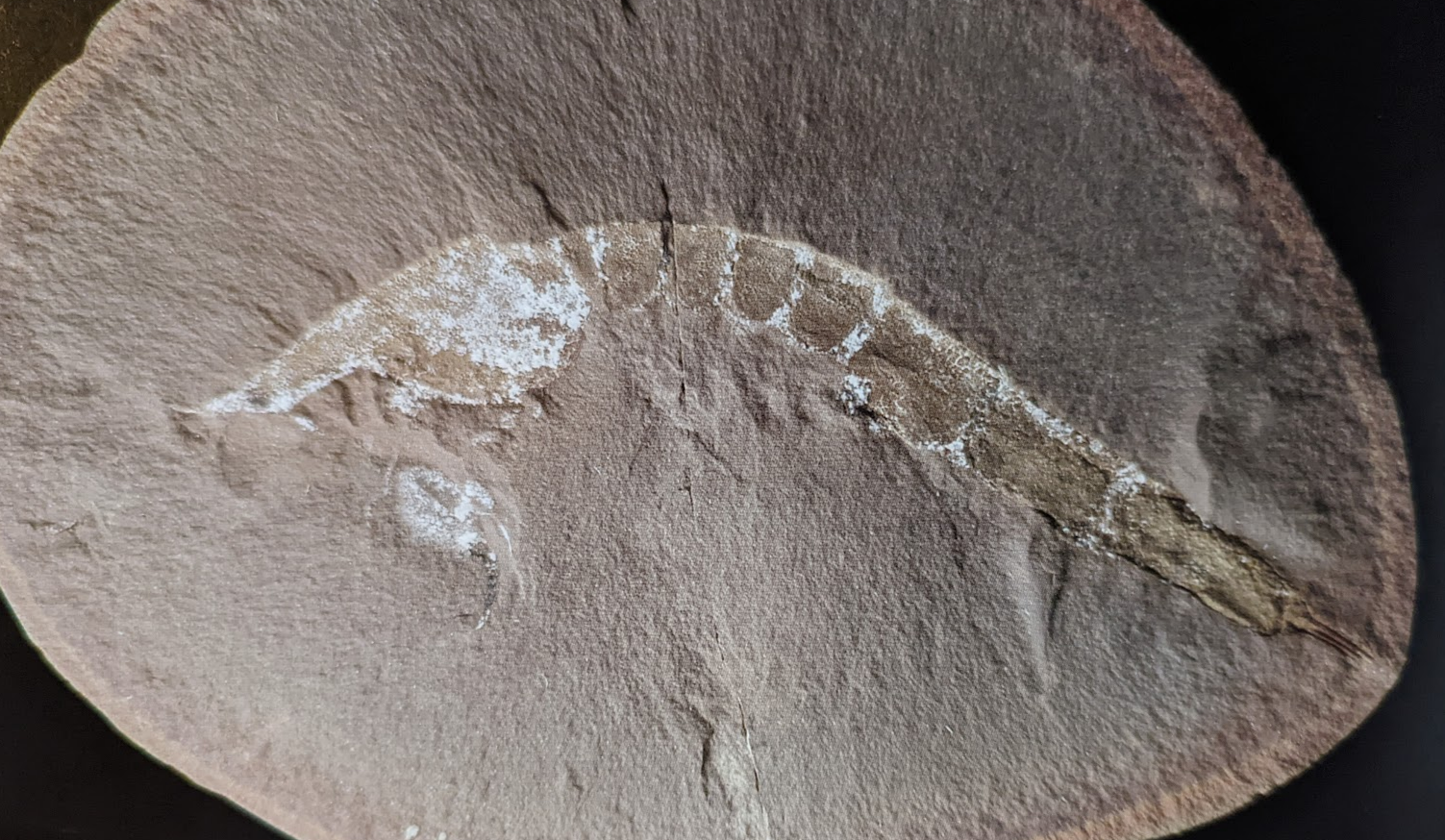
Mazon Monday #105: Kellibrooksia macrogaster
Read more: Mazon Monday #105: Kellibrooksia macrogasterThis is Mazon Monday post #105. What’s your favorite Mazon Creek fossil? Tell us at email:esconi.info@gmail.com. Kellibrooksia macrogaster is a species of mantis shrimp (stomatopods). It was described by Frederick Schram in 1973. Frederick Schram described many of the shrimp of Mazon Creek. We had a nice one for sale at the ESCONI Gem, Mineral, and Fossil show in March 2022. Kellibrooksia is named in honor of Harold Kelly Brooks, who published the first well-illustrated modern account of Mazon Creek crustaceans. A pdf of his work is available. Have a look as it has some amazing illustrations! K. macrogaster appears…
-
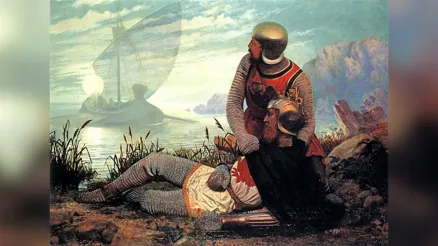
Graves of dozens of kings from the time of King Arthur uncovered in Britain
Read more: Graves of dozens of kings from the time of King Arthur uncovered in BritainLiveScience has an interesting piece about the discovery of the graves of early British royalty. The graves date to the period between the fifth and seventh centuries and provide archaeological evidence from a little-understood period of British history. The new study by Ken Dark, an emeritus professor of archaeology and history at the University of Reading in the United Kingdom, identifies what may be up to 65 graves of post-Roman British kings and their families at about 20 burial sites across the west of England and Wales, including the modern English counties of Somerset and Cornwall. The British continued to…
-
PBS Eons: The Sudden Rise of the First Colossal Animal
Read more: PBS Eons: The Sudden Rise of the First Colossal AnimalThere's a new episode of PBS Eons. This one is about ichthyosaurs, how and why they arose.
-
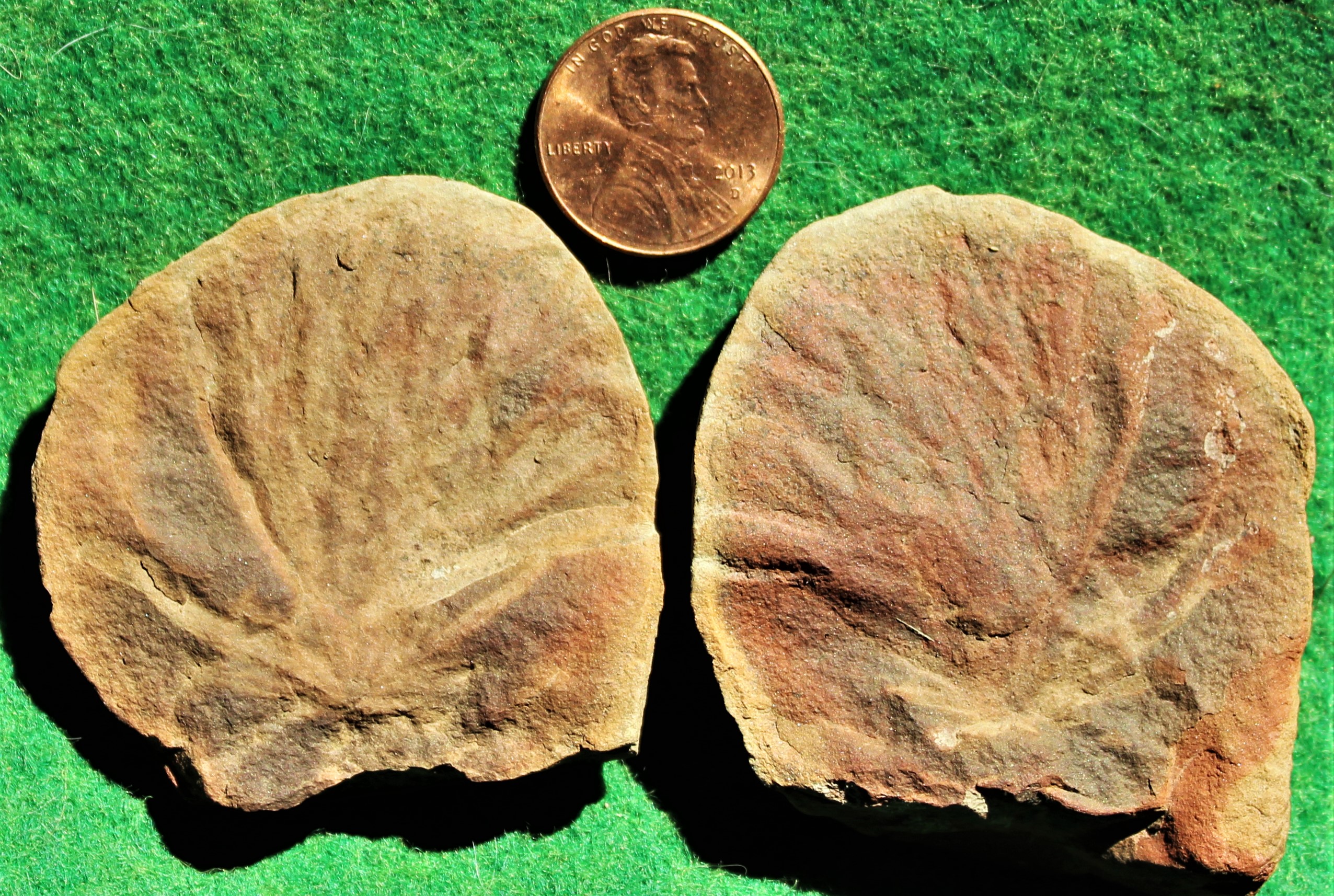
Fossil Friday #101: Mazon Creek Aquatic Plants
Read more: Fossil Friday #101: Mazon Creek Aquatic PlantsThis is the “Fossil Friday” post #101. Expect this to be a somewhat regular feature of the website. We will post any fossil pictures you send in to esconi.info@gmail.com. Please include a short description or story. Check the #FossilFriday Twitter hash tag for contributions from around the world! The last section of “A Comprehensive Guide to the Fossil Flora of Mazon Creek” is called “Possible Aquatic Plant” on Page 249. There’s a couple of species of Rhacophyllum are shown. They are categorized due to traits common to aquatic plants. Pit 11 is mostly known for the animal fossils found there,…
-

Throwback Thursday #103: Field Trip to Jacob’s Geodes 2007
Read more: Throwback Thursday #103: Field Trip to Jacob’s Geodes 2007This is Throwback Thursday #103. In these, we look back into the past at ESCONI specifically and Earth Science in general. If you have any contributions, (science, pictures, stories, etc …), please send them to esconi.info@gmail.com. Thanks! Back when the MAPS show was at Western Illinois University in Macomb, IL, there would be an annual field trip to Jacob’s Geodes. They are still there and you can still collect geodes on their property. Back then, they charged you by the bucket… $10 if I remember correctly, might be more now. Today’s Throwback Thursday is a look back at the spring…

ESCONI Gem, Mineral, and Fossil Show
Most Recent Post
- PBS Eons: The Chaotic Race to Name T. rex
 PBS Eons has a new episode. This one is about the controversial history of the name Tyrannosaurus rex.
- About ESCONI
- Around the Web
- Calendar of Events
- Code of Ethics and Conduct
- ESCONI Books for Sale
- ESCONI Gem, Mineral, and Fossil Show
- ESCONI in the News
- ESCONI Videos
- Field Trips
- Flashback Friday
- Fossil Friday
- Mazon Creek
- Mazon Monday
- Member Spotlight
- Membership Information
- Reference Material
- Throwback Thursday
- Trilobite Tuesday
Field trips require membership, but visitors are welcome at all meetings!
| Friday, April 10th | General Meeting – 8:00 PM via Zoom. Jessica Hull will present “Life in the Devonian Period, The Age of Fishes.” |
| Saturday, April 11th | Junior Study Group Meeting – 2:00 PM, in person at the College of DuPage Technical Education Center (TEC) Building – Room 1038A (Map). Katherine Howard will present on Sand and Sediment Collecting. Specifics of this meeting are available from Scott Galloway, 630-670-2591, gallowayscottf@gmail.com. |
| Saturday, April 18th | Paleontology Study Group – 7:30 PM via Zoom and in person at the College of DuPage, TEC, Room 1038B (Map). Keith Robitschek will present “Digging the Marl of the Lance Formation.” |
| No meeting this month | Mineralogy Study Group |
| No meeting this month | Junior Study Group |