
-
Earth was stressed before dinosaur extinction
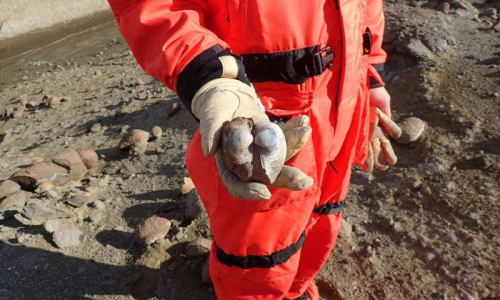
Read more: Earth was stressed before dinosaur extinctionPhys.org has an interesting story about the extinction of the dinosaurs. A new study, led by researchers from Northwestern University, shows that the chemistry of fossilized clam and snail shells changed greatly in the years leading up to the K-Pg mass extinction event. This change is likely due to a large influx of carbon into the oceans which was caused by the long-term volcanic eruptions that formed the Deccan Traps. The Deccan Traps are a 200,000 square mile volcanic province located in modern day India. Find all the detail in a paper published in the journal Geology. New evidence gleaned…
-

480-million-year-old fossils reveal sea lilies’ ancient roots
Read more: 480-million-year-old fossils reveal sea lilies’ ancient rootsPhys.org has a story about the origin of crinoids. Tom Guensburg, research associate at the Field Museum in Chicago, is the lead author of a paper in the Journal of Paleontology, that describes Athenacrinus browneri. This new fossil shows evidence that is key to how sea lilies evolved from the earliest known echinoderms, which lived up to 515 million years ago. You might remember Tom spoke to ESCONI about crinoid origins back in September 2018. Sea lilies, despite their name, aren’t plants. They’re animals related to starfish and sea urchins, with long feathery arms resting atop a stalk that keeps…
-
Alfred Wegener, Beyond the Drift Dispute
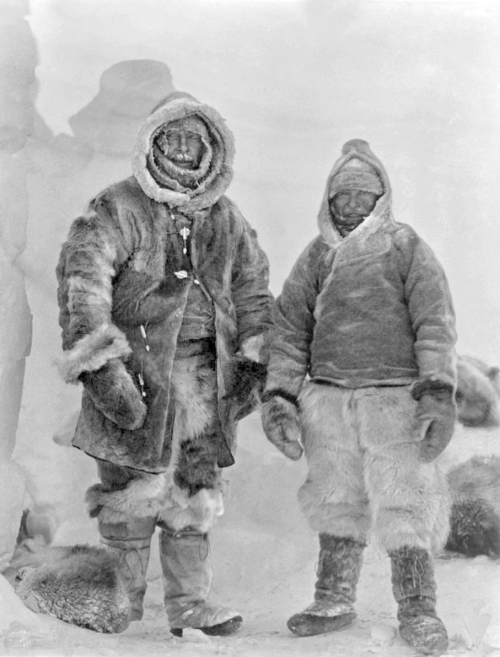
Read more: Alfred Wegener, Beyond the Drift DisputeThe podcast “The Stuff You Missed In History Class” has a great episode about Alfred Wegener. Wegener, who came up with a theory similar to plate tectonics back in the years before World War I, had a very interesting career. Here are just a few highlights. Check it out! Alfred Wegener had a HUGE career outside of his ideas around what we now understand as plate tectonics, which had both detractors and supporters. He did important and respected work that touched on multiple disciplines. Tracy’s Research: “Alfred Wegener Introduces the Concept of Continental Drift.” Science and Its Times, edited by…
-

Early meat-eating dinosaur revealed via spectacular fossil
Read more: Early meat-eating dinosaur revealed via spectacular fossilNational Geographic has a story about a new dinosaur discovery. This new dinosaur, named Gnathovorax cabreirai, dates to about 230 million years ago during the Triassic Period. It represents one of the earliest dinosaurs ever found. This discovery was made near the town of Sao Joao do Polesine in southern Brazil. Details can be found in a new paper in the journal PeerJ. SÃO PAULO, BRAZIL Paleontologist Rodrigo Muller was working in a nearby town in 2014 when his team members started sending him photos of the remarkable fossils. The animal died in a flood plain, allowing sediment from a…
-
New Cretaceous-Period Mammal Unveiled
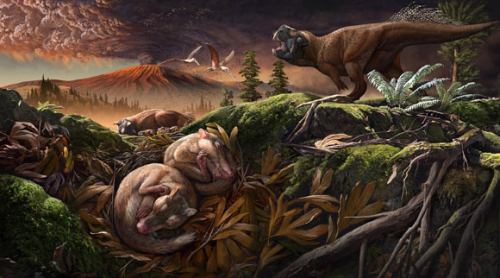
Read more: New Cretaceous-Period Mammal UnveiledSci-News has a story about a new mammal that lived along side the dinosaurs during the Mesozoic Era. The animal, named Origolestes lii, is part of the famous Jehol Biota, which dates to the Cretaceous Period 133 to 120 million years ago. This biota was a terrestrial and freshwater ecosystem found across the Chinese provinces of Liaoning, Hebei, and Inner Mongolia. Origolestes is important as it shed lights on the final step in the evolution of the mammalian middle ear. Detail can be found in a paper published in the journal Science. “While modern mammals owe their keen sense of…
-
Did a million years of rain jump-start dinosaur evolution?
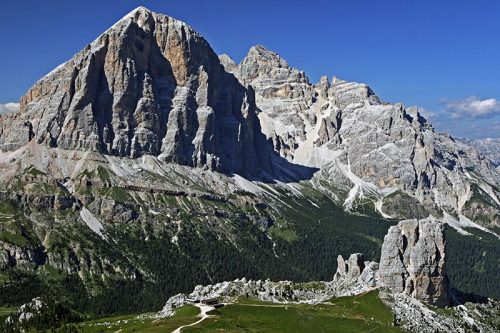
Read more: Did a million years of rain jump-start dinosaur evolution?Nature has an interesting post about a spell of wet weather in the middle Triassic that may have spurred the evolution of the dinosaurs. This wet spell occurred for about a million years about 232 million years ago. The evidence for the very wet period (pluvial episode) is contained in Triassic rocks from the Carnian age. These rocks have been found in Germany, the United States, the Himalayas, and other places. The origins of the dinosaurs coincided with this wet period and may have helped them to rise to the dominance they enjoyed in the Jurassic and Cretaceous periods. Alastair…
-
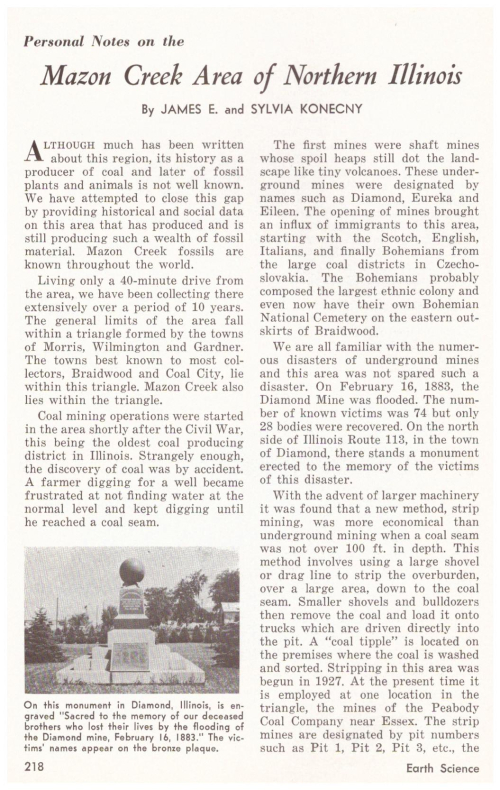
ESCONI Flashback Friday #30: Jim and Sylvia Konecny
Read more: ESCONI Flashback Friday #30: Jim and Sylvia KonecnyAs part of the celebration of ESCONI’s 70th Anniversary, here is Flashback Friday post #30. If you have pictures or stories to contribute, please send them over to esconi.info@gmail.com. Thanks! Jim and Sylvia Konecny were very active in the early days of ESCONI. Jim held a few posts on the ESCONI board, including president from 1966 to 1968. Eventually, they moved to Arizona. A few years ago, they donated a large portion of their collection of Mazon Creek, Ordovician, and Silurian fossils to the Field Museum.
-

ESCONI Events December 2019
Read more: ESCONI Events December 2019Field trips require membership, but visitors are welcome at all meetings! Fri, Dec 6th ESCONI Holiday Party, 5:30 PM Cozymels in Wheaton Fri, Dec 6th ESCONI General Meeting, 8:00 PM College of Dupage – Tech Ed (TEC) Building, Room 1038A (Map) – Topic: “Microsites to Macro-inferences a Multiscale Approach to Analyzing Dinosaur Paleoecology” by Dr. Thomas Cullen a Postdoctoral Research Scientist at the Field Museum
-
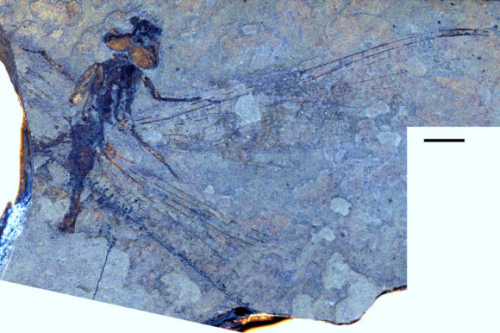
Paleontologists Find Fossils of Six New Dragonfly Species
Read more: Paleontologists Find Fossils of Six New Dragonfly SpeciesSci-News has a post about the discovery of 6 new species of fossil dragonflies. These animals lived about 50 million years ago during the Eocene epoch. The fossils were found in the Okanagan Highlands, whih is an elevated hilly plateau area in British Columbia, Canada and the state of Washington. All the details are in a paper which was published in the journal The Canadian Entomologist. Dr. Bruce Archibald, a paleontologist at Simon Fraser University, and Royal BC Museum dragonfly expert Robert Cannings examined nine rare dragonfly fossils from the site of McAbee in British Columbia and from the town…
-
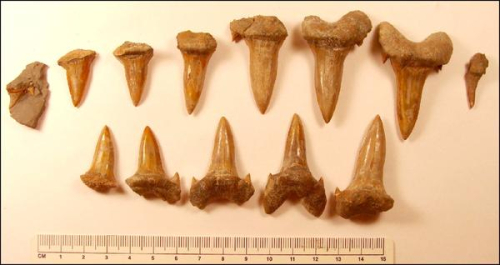
A Kansas Find Reveals A 17-foot, Previously Unknown, Long-Extinct Shark Species
Read more: A Kansas Find Reveals A 17-foot, Previously Unknown, Long-Extinct Shark SpeciesNPR has a story about the discovery of a new species of shark from Kansas. This animal, Cretodus, lived about 91 million years ago in the Western Interior Seaway. It measured about 17 feet long. Read all the details in a paper published in the Journal of Vertebrate Paleontology. GARDEN CITY, Kansas — Paleontologist Mike Everhart had found a rib from a plesiosaur — an ancient ocean reptile — on the Ringneck Ranch in north-central Kansas in 2009. He returned in early spring 2010 searching for more bones. Everhart brought a friend, Gail Pearson, and Pearson’s friend Fred Smith. Both men…
-
Reminder: ESCONI Holiday Party December 6th, 2019, 5:30 PM at Cozymel’s in Wheaton
Read more: Reminder: ESCONI Holiday Party December 6th, 2019, 5:30 PM at Cozymel’s in WheatonAn artist’s depiction of the extinct giant, frond-shaped organisms known as rangeomorphs. Credit: Reid Psaltis The 2019 ESCONI Holiday Dinner is December 6, 2019, starting at 5:30 PM at Cozymel's in Wheaton. We will be ordering off the menu. As in the past few years, there will be door prizes given away. Please RSVP to Dave at fossil54@att.net
-
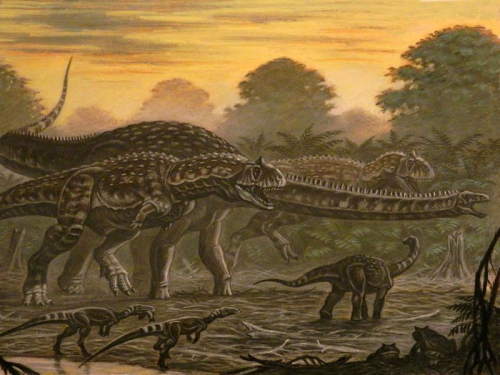
Flesh-Ripping Dinosaurs Replaced Their Teeth Multiple Times a Year
Read more: Flesh-Ripping Dinosaurs Replaced Their Teeth Multiple Times a YearThe Smithsonian has a story about tooth replacement in theropod dinosaurs. A new study published in the journal PLOS ONE has found that Majungasaurus probably replaced its teeth every 56 days. This is faster than the previous highest tooth replacement rate which was about 100 days in Jurassic carnivores Allosaurus and Ceratosaurus. This new rate is about 14 times faster than Tyrannosaurus rex, which is thought to replace it’s teeth about once every 2 years. These rate were based on the number of shed teeth found for each species. Like all toothy dinosaurs, prehistoric carnivores replaced their teeth throughout their…
-
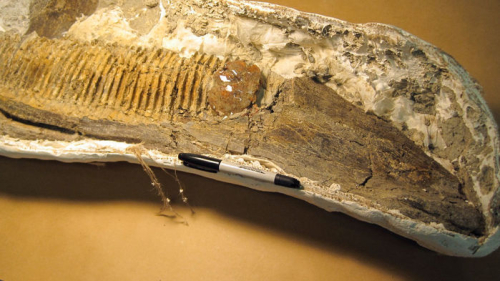
‘Remarkable’ fossil features an insect trapped in amber, stuck to a dinosaur jaw
Read more: ‘Remarkable’ fossil features an insect trapped in amber, stuck to a dinosaur jawScience has a post about a special fossil insect. The ‘remarkable’ fossil consists of sap-sucking aphids trapped in amber and stuck to the jawbone of a duck-billed dinosaur. It was discovered in 2010 in Dinosaur Provincial Park in Alberta, Canada. All the detail are in a paper publish in the journal Science. The “remarkable” two-for-one fossil would have been preserved in an incredibly unlikely chain of events, the researchers write today in Scientific Reports. The paleontologists believe that after the Prosaurolophus hadrosaur died—and the flesh had decayed off its jawbone—it washed into a river. There, a blob of sticky resin from either a redwood…
-

PBS Eons: Why Male Mammoths Lost the Game
Read more: PBS Eons: Why Male Mammoths Lost the GameThere’s a new episode of PBS Eons. This one is about male mammoths and their dangerous and mostly solitary existence. Woolly mammoths, our favorite ice age proboscidean, disappeared from Europe and North America at the end of the last ice age, about 10,000 years ago. Today, we’ve teamed up with TierZoo to solve one of the mysteries about these charismatic megafauna: why do most remains of mammoths found in the fossil record turn out to be male? Thanks to TierZoo for helping us out! https://www.youtube.com/tierzoo And thanks to pixel artist Template88 for their excellent work as well: https://twitter.com/Template88
-
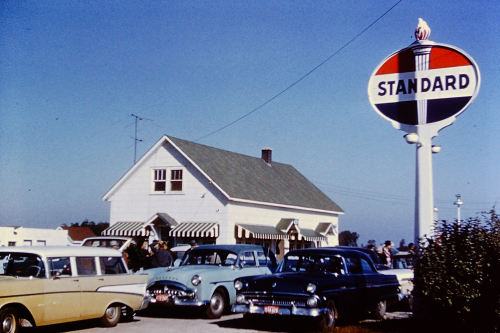
ESCONI Flashback Friday #29: Braidwood Field Trip on September 27th, 1959
Read more: ESCONI Flashback Friday #29: Braidwood Field Trip on September 27th, 1959As part of the celebration of ESCONI’s 70th Anniversary, here is Flashback Friday post #29. If you have pictures or stories to contribute, please send them over to esconi.info@gmail.com. Thanks! Here are some photos from a Braidwood Field Trip on September 27th, 1959. This was an annual field trip, which included multiple clubs. Check out the old cars and again the bare spoil pile hills! These spoil piles were relatively fresh when you consider this was 60 years ago and they were maybe 20-30 years old at the time. Meeting at gas station Braidwood, IL Braidwood, IL area Strip mine…
-
Happy Thanksgiving!
Read more: Happy Thanksgiving!Here’s a great segment on how we know birds are dinosaurs from the PBS Youtube series “It’s Okay To Be Smart” Eating turkey this holiday season? Chowing down on a roast chicken? You’re eating a dinosaur! Entertain your family and friends with a little science lesson this year, and show them why bird bones tell us that birds are actually living dinosaurs. Comparative anatomy of dinosaurs and chicken – HHMI https://www.hhmi.org/biointeractive/c…
-
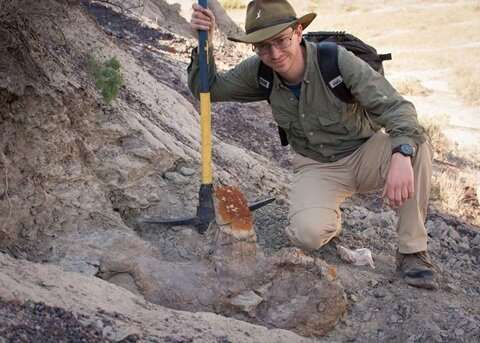
Dinosaur skull turns paleontology assumptions on their head
Read more: Dinosaur skull turns paleontology assumptions on their headPhys.org has a piece about a well-preserved Styracosaurus skull which is enlightening paleontologist to the morphological variability of the species. The skull was not symmetrical and has implications as to how we should identify new (and currently known) species of dinosaurs, especially ceratopsians. Details are in a paper published in the journal Cretaceous Research. The skull was discovered by Scott Persons in 2015, then a graduate student in the Department of Biological Sciences, during an expedition in the badlands northwest of Dinosaur Provincial Park. Nicknamed Hannah, the dinosaur was a Styracosaurus—a horned dinosaur over five metres in length with a fan of long horns. UAlberta paleontologists led by…
-
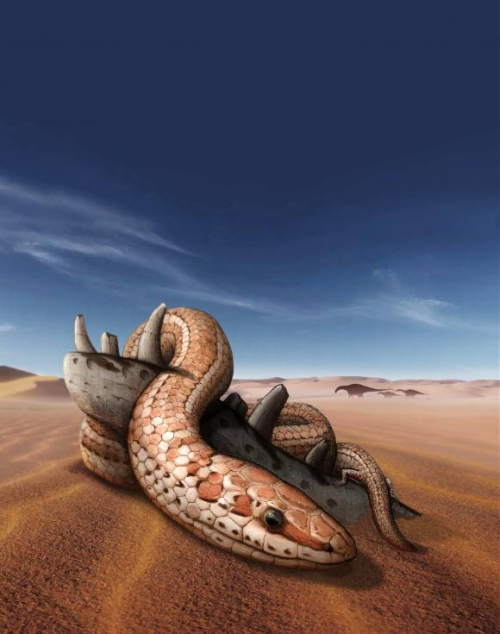
Cretaceous Legged Snake Fossils Shed New Light on Evolution of Modern Snake Body Plan
Read more: Cretaceous Legged Snake Fossils Shed New Light on Evolution of Modern Snake Body PlanSci-News has a story about the evolution of snakes. A 3-D preserved snake fossil from about 100 million years ago shows compelling clues as to the evolution of snake. This animal, called Najash rionegrina, still had legs and jugal (cheek) bones. The specimens were found in northern Patagonia, Argentina. Details can be found in a paper published in the November 20th, 2019 issue of the journal Science Advances. The evolution of the snake body has captivated researchers for a long time, representing one of the most dramatic examples of the vertebrate body’s ability to adapt. But a limited fossil record…
-
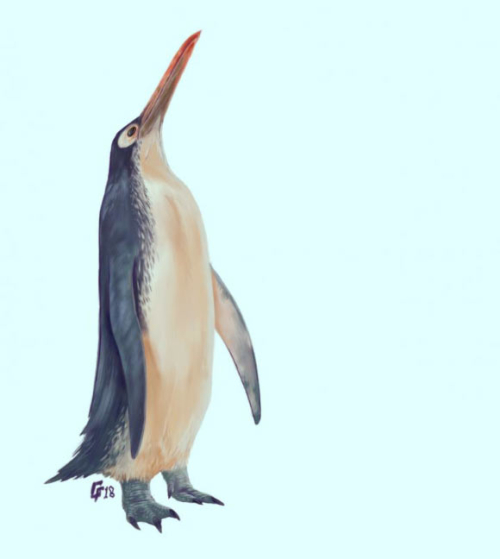
Paleontologists Unearth Another Giant Penguin in New Zealand
Read more: Paleontologists Unearth Another Giant Penguin in New ZealandSci-News has a story about a new giant penguin from New Zealand. The animal, which lived around 27 million years ago during the Oligocene Period, joins a growing list of giant penguins from New Zealand. This list include the genera Kairuku, Pachydyptes, Palaeeudyptes, and Kumimanu. This new one belongs to the genus Kauruku. The details were reported at the 79th Meeting of the Society of Vertebrate Paleontology in Brisbane, Australia on October 9th, 2019. New Zealand is a key area for understanding the ancient history of penguins. Fossils found there range in age from Paleocene up to Pleistocene, constituting a…
-

The Complete Story of the November 13, 1909 Cherry, Illinois Mine Disaster that killed 259 men
Read more: The Complete Story of the November 13, 1909 Cherry, Illinois Mine Disaster that killed 259 menThere’s an interesting page about the Cherry Mine Disaster over on “Digital Reseach Library of Illinois History Journal”. It has a little bit of everything, including many pictures. It was posted a few years ago on the 108th anniversary of the event. We just passed the 110th back on November 13th. The whole event is a fascinating story and this page does a great job telling it. The St. Paul Coal Company, which owned the Cherry, Illinois mine, opened in 1905 to supply coal for the trains of its controlling company, the Chicago, Milwaukee, and St. Paul Railroad. On November 13, 1909,…

ESCONI Gem, Mineral, and Fossil Show
Most Recent Post
- PBS Terra: The Cascadia Megaquake Is Inevitable. And It Will Reshape America Forever
 PBS Terra has an interesting new video. This one covers the history, science, and future of the Cascadia Subduction Zone in the Pacific Northwest.
- About ESCONI
- Around the Web
- Calendar of Events
- Code of Ethics and Conduct
- ESCONI Books for Sale
- ESCONI Gem, Mineral, and Fossil Show
- ESCONI in the News
- ESCONI Videos
- Field Trips
- Flashback Friday
- Fossil Friday
- Mazon Creek
- Mazon Monday
- Member Spotlight
- Membership Information
- Reference Material
- Throwback Thursday
- Trilobite Tuesday
Field trips require membership, but visitors are welcome at all meetings!
| Friday, April 10th | General Meeting – 8:00 PM via Zoom. Jessica Hull will present “Life in the Devonian Period, The Age of Fishes.” |
| Saturday, April 11th | Junior Study Group Meeting – 2:00 PM, in person at the College of DuPage Technical Education Center (TEC) Building – Room 1038A (Map). Katherine Howard will present on Sand and Sediment Collecting. Specifics of this meeting are available from Scott Galloway, 630-670-2591, gallowayscottf@gmail.com. |
| Saturday, April 18th | Paleontology Study Group – 7:30 PM via Zoom and in person at the College of DuPage, TEC, Room 1038B (Map). Keith Robitschek will present “Digging the Marl of the Lance Formation.” |
| Friday, April 24th | MAPS Expo XLVII – Springfield, IL. |
| Saturday, April 25th | MAPS Expo XLVII – Springfield, IL. |
| Sunday, April 26th | MAPS Expo XLVII – Springfield, IL. |
| No meeting this month | Mineralogy Study Group |