
-

Man Keeps Rock For Years, Hoping It’s Gold. It Turned Out to Be Far More Valuable #meteorite
Read more: Man Keeps Rock For Years, Hoping It’s Gold. It Turned Out to Be Far More Valuable #meteoriteScienceAlert has a post about a valuable find in Australia. It seems that David Hole found a rock he hoped would be gold. It wasn’t, but as it turns out it was more valuable than gold! In 2015, David Hole was prospecting in Maryborough Regional Park near Melbourne, Australia. Armed with a metal detector, he discovered something out of the ordinary – a very heavy, reddish rock resting in some yellow clay. He took it home and tried everything to open it, sure that there was a gold nugget inside the rock – after all, Maryborough is in the Goldfields…
-
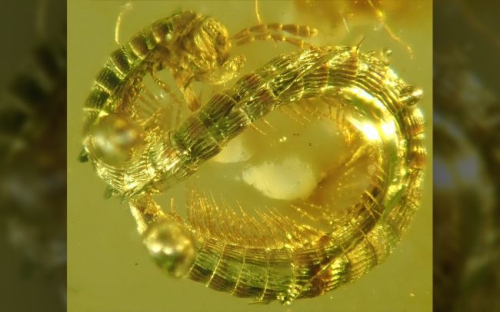
LiveScience: The 100 Best Science Photos of 2019
Read more: LiveScience: The 100 Best Science Photos of 2019Live Science has an interesting post, which includes 100 awesome science photos from 2019. Check it out… a great way to relax on New Years Day! Happy New Year from us at ESCONI! About 99 million years ago, a Cretaceous millipede scampered over the forest floor in what is now Southeast Asia, avoiding being squished by neighboring dinosaurs. But the millipede, now called Burmanopetalum inexpectatum, did stumble into a sticky patch of sap, said researchers who found the tiny corpse entombed in the hardened form of that sap called amber.
-

SciNews: 305-Million-Year-Old Fossil Shows Parent Caring for Its Offspring
Read more: SciNews: 305-Million-Year-Old Fossil Shows Parent Caring for Its OffspringSciNews has a piece about an ancient synapsid with evidence that it cared for its young. The animal, called Dendromaia unamakiensis, lived about 305 million years ago in what is now Cape Breton Island, Nova Scotia. This find consists of both an adult and an associated juvenile which were found inside a fossilized tree stump. Evidence of behavior is rare in the fossil record, which is why this is a such a valuable find. The details of the discovery was published in a paper in the journal Nature Ecology & Evolution. “Parental care is a behavioral strategy where parents make…
-
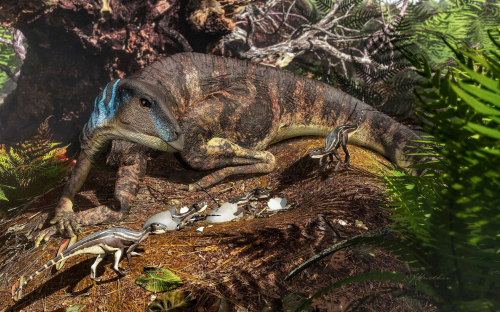
SciNews: Paleontologists Uncover Fossilized Remains of Baby Ornithopod Dinosaurs in Australia
Read more: SciNews: Paleontologists Uncover Fossilized Remains of Baby Ornithopod Dinosaurs in AustraliaSciNews has a story about the fossils of baby Ornithopod dinosaurs discovered in Australia. The animals are baby Weewarrasaurus pobeni dinosaurs, that lived about 100 million years ago during the middle Cretaceous period. Southeastern Australia, where these dinosaurs lived, was much closer to the South Pole at the time. These specimens reveal important insights into high-latitude breeding in Gondwana. A recent paper in journal Scientific Reports has all the details. The newly studied fossils belong to a species of small-bodied ornithopod dinosaur very similar to Weewarrasaurus pobeni. To estimate the individuals’ age, the researchers used growth rings in the dinosaur bones,…
-

FOSSIL Project Fall 2019 Newsletter
Read more: FOSSIL Project Fall 2019 NewsletterVolume 6, Issue 3, Fall 2019| FOSSIL Project Newsletter Fall 2019
-

NatGeo: Earth has had more major mass extinctions than we realized
Read more: NatGeo: Earth has had more major mass extinctions than we realizedNational Geographic has a story about Earth’s mass extinctions. The current biodiversity crisis is usually referred to as the “sixth mass extinction”. There is even a book by that name. Of the five previous extinctions, the worst was the one at the end of the Permian. In a paper in the journal Historical Biology, Michael Rampino and Shu-Zhong Shen argue that the end-Guadapulian extinction, which occurred 259 million years ago in the middle Permian, should be considered a major extinction event. In 1982, quantitative paleontologists Jack Sepkoski and David Raup at the University of Chicago took stock of the Earth’s…
-
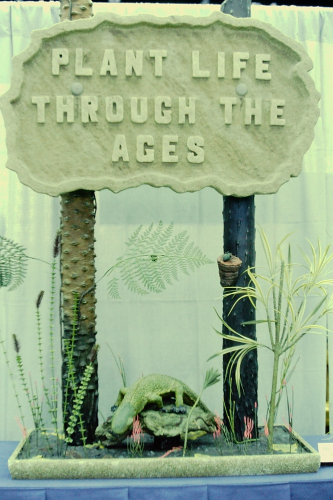
ESCONI Flashback Friday #33: Plant Life Through The Ages
Read more: ESCONI Flashback Friday #33: Plant Life Through The AgesAs part of the celebration of ESCONI’s 70th Anniversary, here is Flashback Friday post #33. If you have pictures or stories to contribute, please send them over to esconi.info@gmail.com. Thanks! The “Plant Life Through The Ages” display was created by ESCONI members during the 1950s. Here is a description from Kathy Dedina, who was president of ESCONI during the 1990s. “In 1964 Plant Life Through the Ages as exhibited for the first time at the Midwest Federation convention in Muskegon Michigan. Models of early plant life were created by members of the paleontology study group which was formed in 1954.…
-
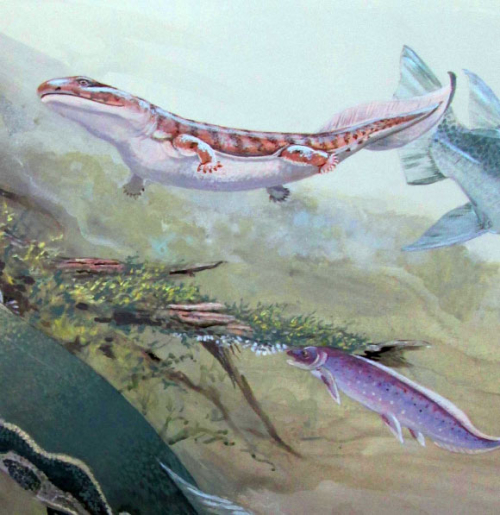
365-Million-Year-Old Lungfish Unearthed in South Africa
Read more: 365-Million-Year-Old Lungfish Unearthed in South AfricaSci-News has a story about a recently discovered Lungfish from South Africa. The new fish, called Isityumzi mlomomde, lived about 365 million years ago during the Devonian period in what is now modern day South Africa. Lungfish origins stretch back about 410 million years ago to the early Devonian. Details on this new find can be found in a paper published in the journal PeerJ. Lungfish (subclass Dipnoi) are a group of lobe-finned fish with their origins stretching back to the Early Devonian period, over 410 million years ago. They reached a peak of diversity and abundance throughout the Devonian with close to…
-

A ‘Jackalope’ of an ancient spider fossil deemed a hoax, unmasked as a crayfish
Read more: A ‘Jackalope’ of an ancient spider fossil deemed a hoax, unmasked as a crayfishPhys.org has a post about a crayfish masquerading as a spider. It seems someone painted legs on a poorly preserved crayfish fossil from the Lower Cretaceous Yixian Formation of China. You can read about their detective work in a paper published in the journal Paleoentomology. The locals sold the fossil to scientists at the Dalian Natural History Museum in Liaoning, China, who published a description of the fossil species in Acta Geologica Sinica, the peer-reviewed journal of the Geological Society of China. The Chinese team gave the spider the scientific name Mongolarachne chaoyangensis. But other scientists in Beijing, upon seeing the paper,…
-

In Defense of Plants: The Rise and Fall of the Scale Trees
Read more: In Defense of Plants: The Rise and Fall of the Scale TreesI recently ran into an interesting post on the blog “In Defense of Plants”. It’s called “The Rise and Fall of the Scale Trees”. If you collect or are familiar with Mazon Creek fossils, you probably have heard of Lepidodendron, Stigmaria, Psaronius, Cyperites. etc. You might even have a few of these fossils. Some of these are the species name for a plant part or even the name that denotes the whole specimen. Fossil plants are usually fragmentary and separate parts were given different names. As more fossils are found, associated parts help paleobotanists assemble whole plants. This post does…
-

World’s Oldest Fossil Forest Unearthed
Read more: World’s Oldest Fossil Forest UnearthedSciNews has a post about the oldest forest ever discovered. Located in Cairo, NY, near the Devonian fossil forest found near Gilboa, this forest has been dated to about 386 million years old, which is a couple million years older. Details can be found in a paper which was recently published in the journal Current Biology. “The Devonian period represents a time in which the first forest appeared on Earth,” said Binghamton University’s Professor William Stein. “The effects were of first order magnitude, in terms of changes in ecosystems, what happens on the Earth’s surface and oceans, carbon dioxide concentration…
-

PBS Eons: Life, Sex & Death Among the Dire Wolves
Read more: PBS Eons: Life, Sex & Death Among the Dire WolvesThere’s a new episode of PBS’s Eons. It’s about wolves and the La Brea Tar Pits in Los Angeles. This is not a Game of Thrones fan fiction episode. Dire wolves were real! And thousands of them died in the same spot in California. Their remains have taught us volumes about how they lived, hunted, died and way more about any animal’s sex life than you’d ever want to know.
-
ESCONI Flashback Friday #32: Collecting Mazon Creek Concretions In The 1950s and 1960s
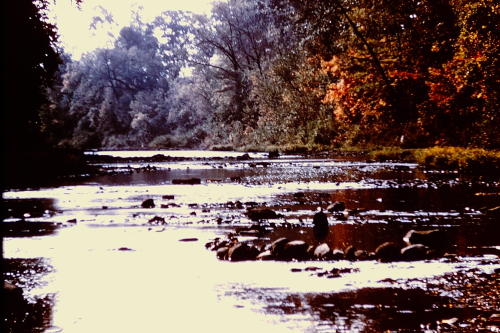
Read more: ESCONI Flashback Friday #32: Collecting Mazon Creek Concretions In The 1950s and 1960sAs part of the celebration of ESCONI’s 70th Anniversary, here is Flashback Friday post #32. If you have pictures or stories to contribute, please send them over to esconi.info@gmail.com. Thanks! Enjoy some old photos of the Coal City, Braidwood, and Wilmington area spoil piles in the 1950s and 1960s. It’s too bad some of those are aren’t still open for collecting! Mazon Creek Strip Mine, Peabody Coal Co. Fossil nodule on hill Krup shovel, Peabody Coal Co Strip area, Coal City, IL ESCONI lunch, Ceco Club, Coal City, Prepp, Sobolik, H&K Mathies, John & Dick Ade Nancy at Coal City…
-
ESCONI January 2020 General Meeting Michelle Wenz – Super Deep Diamonds from Juina, Brazil on January 10, 2020
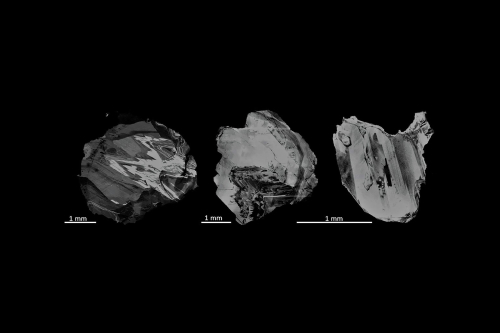
Read more: ESCONI January 2020 General Meeting Michelle Wenz – Super Deep Diamonds from Juina, Brazil on January 10, 2020Electron microscope images of diamonds from the Juína area of Brazil.Credit…Suzette Timmerman The speaker at our January 10, 2020 meeting will be Michelle Wenz, a PhD student from Northwestern University. She is working on an suite of superdeep diamonds from Juina, Brazil, many of which appear to have come from the 400-700 km depth range. Her research focus is on water, and deep-mantle water cycling. She developed a method using synchrotron radiation (X-rays) from the Advanced Photon Source at Argonne to image tomographically the location of inclusions inside the diamonds for single-crystal X-ray diffraction, also using the synchrotron X-rays (many…
-
43,900-Year-Old Cave Painting Portrays Part-Human, Part-Animal Beings
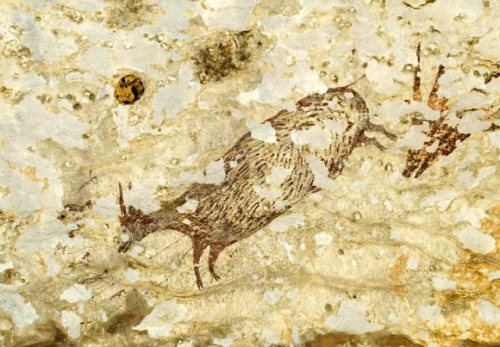
Read more: 43,900-Year-Old Cave Painting Portrays Part-Human, Part-Animal BeingsSciNews has a story about a very old cave painting discovered in Indonesia. Archaeologist excavating the limestone cave of Leang Bulu’ Sipong 4 on the Indonesian island of Sulawesi discovered a painting that is about 43,900 years old. The painting depicts a group of ‘therianthropes’, abstract beings which combine qualities of people and animals, hunting wild pigs and small buffalo-like animals with spears and ropes. This scene is now the earliest known instance of figurative art in the world. Details can be found in a recent paper published in the journal Nature. “The hunters represented in the ancient rock art…
-
Ancient ‘coal dragon’ is now the oldest parareptile ever found
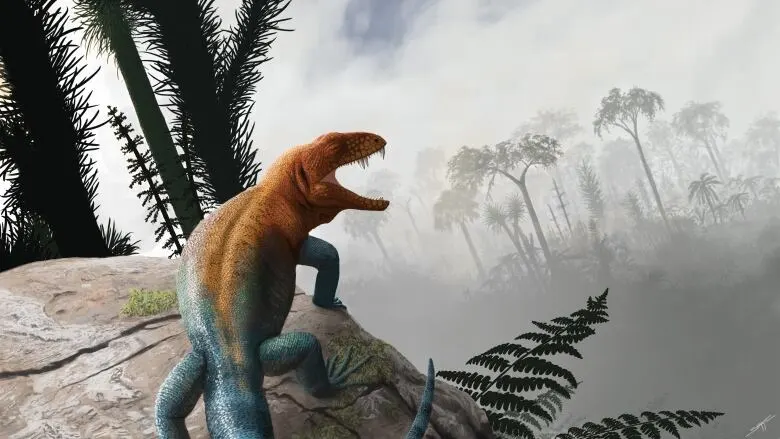
Read more: Ancient ‘coal dragon’ is now the oldest parareptile ever foundCBC has a story about an interesting new species of ancient parareptile. Named Carbonodraco lundi, this animal lived about 306 million years ago in what is now Linton, Ohio. This is the same time period as the famous fossils from Illinois’ Mazon Creek biota. The details were recently published in the journal Royal Society Open Science. The paper‘s lead author is Arjan Mann, a PhD candidate at Carleton University in Ottawa, Ontario, Canada. You may remember him from some recent posts about Mazon Creek animals in May 2019, June 2019, and August 2019. A unique fossil that is “literally a…
-

New Eocene-Period Whale Unearthed in Egypt
Read more: New Eocene-Period Whale Unearthed in EgyptSciNews has a story about a recently discovered whale from the Eocene of Egypt. Called Aegicetus gehennae, this ancient mammal give important clues in the evolution of whale locomotion. A team of paleontologists, including Professor Philip Gingerich of the University of Michigan, published the details in a recent paper in the journal PLoS ONE. Protocetidae (protocetids) are a group of semi-aquatic whales known from the middle Eocene epoch of Africa, Asia, North America, and South America. While living whales use their tails to propel themselves through the water, most protocetids were foot-powered swimmers. The newly-discovered protocetid, Aegicetus gehennae, was more fully aquatic…
-

Roy Plotnick: Existence Locates a Path
Read more: Roy Plotnick: Existence Locates a PathRoy Plotnick has a new post over on Medium. The post is about extinction… mass extinction. We have a roll in the current and a past extinction. Time for action! Mass extinctions and their causes are topics of intense interest. Nearly forty years after the 1980 paper on the end-Cretaceous impact, significant new research on it and on the resulting extinction continue to appear. Other mass extinctions, such as the ones at the end of the Ordovician and Permian, likewise are fertile areas for investigation. But what has become of equal interest to paleontologists is the aftermath of these cataclysmic…
-
PBS Eons: The Forgotten Story of the Beardogs
Read more: PBS Eons: The Forgotten Story of the BeardogsPBS Eons has a new eposide and it’s about Beardogs, otherwise known as Amphicyonids. Because of their strange combination of bear-like and dog-like traits, they’re sometimes confusingly called the beardogs. And even though you’ve never met one of these animals, the beardogs are key to understanding the history of an important branch of the mammal family tree.

ESCONI Gem, Mineral, and Fossil Show
Most Recent Post
- Ancient bees found nesting inside fossil bones in rare cave discovery
 Science Daily has a post about a recent paper that looked at novel bee nesting behavior. Researchers working on the Caribbean island of Hispaniola discovered a rare and unusual fossil interaction in a cave, ancient bees used fossilized bones as nesting sites.
- About ESCONI
- Around the Web
- Calendar of Events
- Code of Ethics and Conduct
- ESCONI Books for Sale
- ESCONI Gem, Mineral, and Fossil Show
- ESCONI in the News
- ESCONI Videos
- Field Trips
- Flashback Friday
- Fossil Friday
- Mazon Creek
- Mazon Monday
- Member Spotlight
- Membership Information
- Reference Material
- Throwback Thursday
- Trilobite Tuesday
Field trips require membership, but visitors are welcome at all meetings!
| Friday, April 10th | General Meeting – 8:00 PM via Zoom. Jessica Hull will present “Life in the Devonian Period, The Age of Fishes.” |
| Saturday, April 11th | Junior Study Group Meeting – 2:00 PM, in person at the College of DuPage Technical Education Center (TEC) Building – Room 1038A (Map). Katherine Howard will present on Sand and Sediment Collecting. Specifics of this meeting are available from Scott Galloway, 630-670-2591, gallowayscottf@gmail.com. |
| Saturday, April 18th | Paleontology Study Group – 7:30 PM via Zoom and in person at the College of DuPage, TEC, Room 1038B (Map). Keith Robitschek will present “Digging the Marl of the Lance Formation.” |
| Friday, April 24th | MAPS Expo XLVII – Springfield, IL. |
| Saturday, April 25th | MAPS Expo XLVII – Springfield, IL. |
| Sunday, April 26th | MAPS Expo XLVII – Springfield, IL. |
| No meeting this month | Mineralogy Study Group |