
-

PBS Eons: The Biggest Frog that Ever Lived
Read more: PBS Eons: The Biggest Frog that Ever LivedA new episode of PBS Eons is up over on Youtube. It’s about a huge frog from the Cretaceous! Untangling the origins of Beelzebufo — the giant frog that lived alongside the dinosaurs — turns out to be one of the most bedeviling problems in the history of amphibians.
-
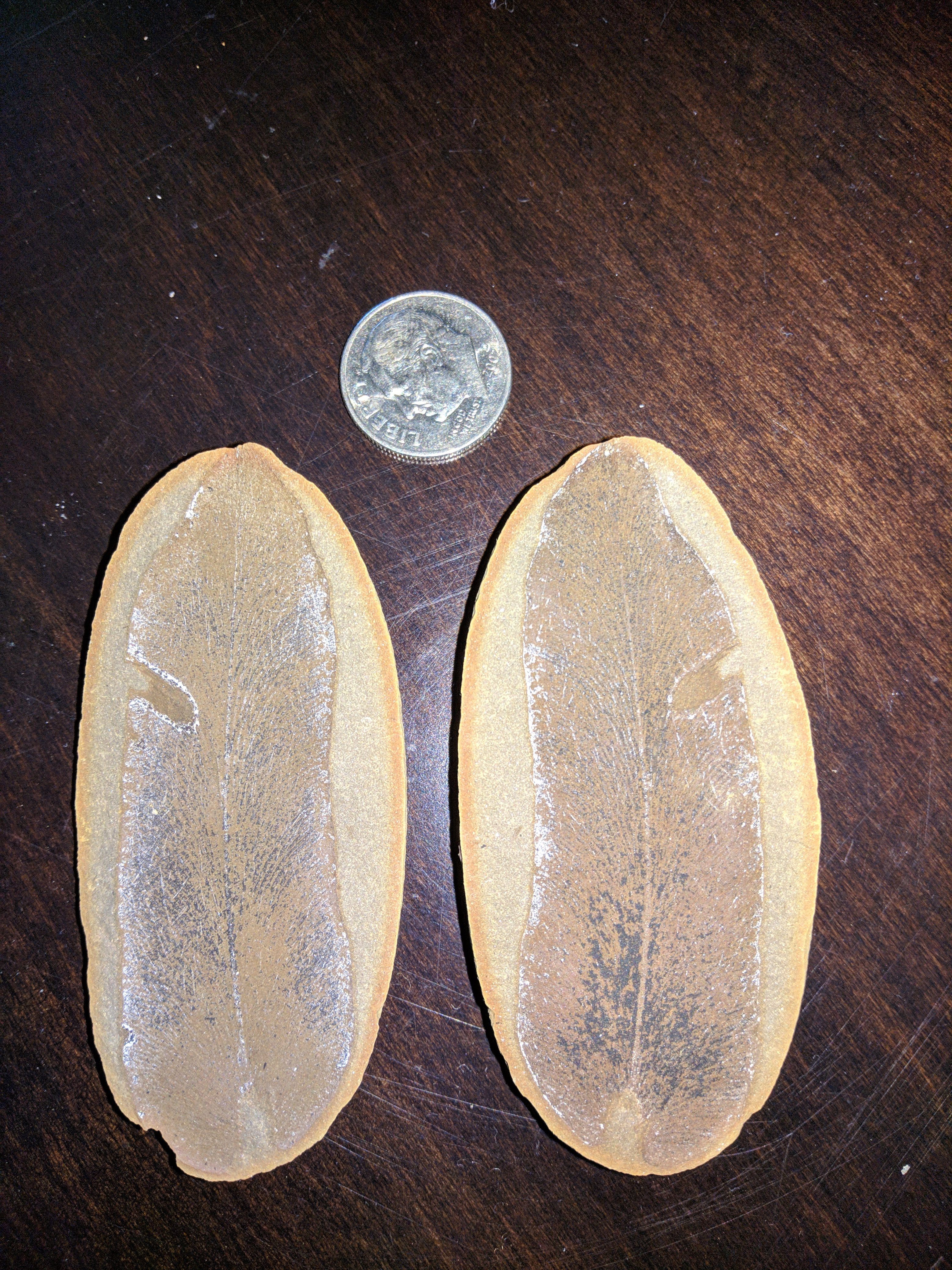
Fossil Friday #16: Macroneuropteris With Insect Damage
Read more: Fossil Friday #16: Macroneuropteris With Insect DamageThis is the “Fossil Friday” post #16. Expect this to be a somewhat regular feature of the website. We will post any fossil pictures you send in to esconi.info@gmail.com. Please include a short description or story. Check the #FossilFriday Twitter hash tag for contributions from around the world! —————————————————– Plant fossils with insect damage are fairly common in Mazon Creek, especially Macroneuropteris. It gives clues of behavior, which is typically rare in the fossil record. Here is a paper on this subject. Now… on to some examples… three leaves and a chunk of wood.
-
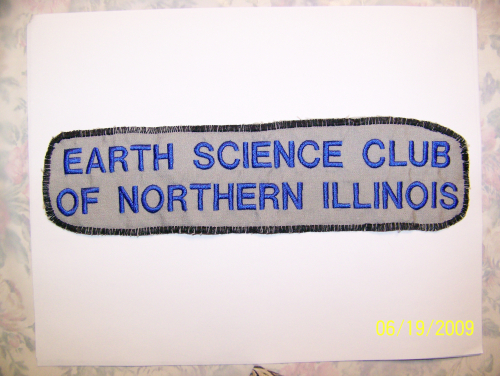
Throwback Thursday #17: Patches, Emblems, and Logos
Read more: Throwback Thursday #17: Patches, Emblems, and LogosThis is Throwback Thursday #17. In these, we look back into the past at ESCONI specifically and Earth Science in general. If you have any contributions, (science, pictures, stories, etc …), please send them to esconi.info@gmail.com. Thanks! Here are some ESCONI patches and logos through the years. The first few date to the 1960s. This one dates to the 1980s and was sent by John Liskey. Dave Liskey is his father and was the Junior Study Group Leader in the 1980s. Found in the warehouse. Most likely pre-1980. Irene Broede’s trilobite pin! I think that is the trilobite that Rob…
-
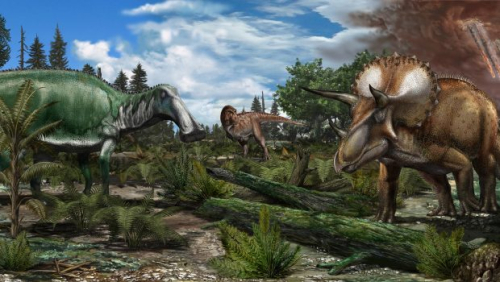
Palaeocast Episode 112: Extinction of the dinosaurs
Read more: Palaeocast Episode 112: Extinction of the dinosaursPalaeocast has an episode on the extinction of the dinosaurs. The episode is an interview with Dr Alessandro Chiarenza about some very thorough analysis that compares the Chicxulub asteroid event with the volcanic eruptions at the Deccan Traps. The paper detailing this analysis can be found in the journal Proceedings of the National Academy of Sciences. The end-Cretaceous (or K-Pg) extinction is one of the best known mass extinctions in Earth’s history, primarily because that is when non-avian dinosaurs disappeared. Although the popular idea is that an asteroid impact was what caused the extinction, the science hasn’t actually been that…
-
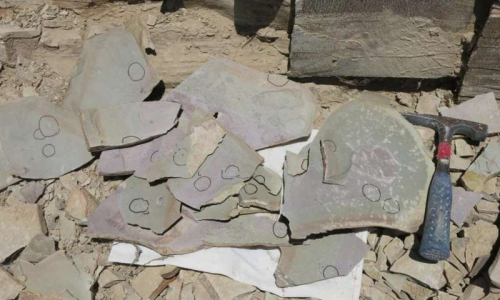
Trilobite Tuesday #16: Growing up trilobite
Read more: Trilobite Tuesday #16: Growing up trilobitePhys.org has an article about probably the most common trilobites, Elrathia kingii. The article is about new research that used this trilobite to understand the ontogeny of this iconic species. The research can be found in a paper in the journal Papers in Palaeontology. If you’ve ever held a trilobite fossil, seen one in a classroom, or walked by one in a store, chances are it was Elrathia kingii, one of the most common and well-recognized trilobites, and collected by the hundreds of thousands in western Utah. But despite the popularity of this species, scientists had not determined how it…
-

Mazon Monday #17: One Fish, Two Fish, Three Fish, Many Fish…
Read more: Mazon Monday #17: One Fish, Two Fish, Three Fish, Many Fish…This is Mazon Monday post #17. There are a few types of fish known in the Mazon Creek biota. And while, the classification has changed since the creature corner article on fish, which appeared in March 1989. It’s still interesting and instructive. Here is the text and a few drawings. The following two concretions are Esconichthys, sometimes referred to as the bladei. At times in the past, it was classified as a larval amphibian. Some now consider it as a larval fish. Although, it’s classification is open to further research. The next one is an awesome Rhabdoderma, which is a…
-

LiveScience: ‘Tiny bug slayer’ relative of dinosaurs and pterosaurs would have fit in the palm of your hand
Read more: LiveScience: ‘Tiny bug slayer’ relative of dinosaurs and pterosaurs would have fit in the palm of your handLiveScience has a story about a cousin to both dinosaurs and pterosaurs. Kongonaphon kely, meaning “tiny bug slayer”, lived about 237 million years ago, during the Triassic period, in what is now Madagascar. It was discovered in 1998, but just recently described in a paper that appeared in the journal Proceedings of the National Academy of Sciences. The pipsqueak’s fossils were discovered in the Morondava Basin of southwestern Madagascar in 1998 by a group of researchers, led by study co-researcher John Flynn, the Frick Curator of Fossil Mammals at the American Museum of Natural History (AMNH) in New York City…
-
PBS Eons: The Story of the Dino Stampede
Read more: PBS Eons: The Story of the Dino StampedeThere’s a new episode of PBS Eons. It’s about trace fossils and the how we can use them to understand what happened in the past. To try to solve the puzzle of Lark Quarry, experts have turned to a special subfield of paleontology — paleoichnology, or the study of trace fossils — to reconstruct exactly what happened on that spot, on that day, nearly 100,000 millennia ago.
-

Fossil Friday #15: Permian Trilobites From Kansas
Read more: Fossil Friday #15: Permian Trilobites From KansasThis is the “Fossil Friday” post #15. Expect this to be a somewhat regular feature of the website. We will post any fossil pictures you send in to esconi.info@gmail.com. Please include a short description or story. Check the #FossilFriday Twitter hash tag for contributions from around the world! On Tuesday, we had a post about the “Last Trilobites”. The Phillipsiidae was one of the trilobite families that made it through to the Permian in Kansas. Ameura and Ditomopyge are small species that cane be found in the rocks of the Flint Hills in northeastern Kansas. Complete specimens are fairly rare,…
-

Throwback Thursday #16: Membership Dues 1953
Read more: Throwback Thursday #16: Membership Dues 1953This is Throwback Thursday #16. In these, we look back into the past at ESCONI specifically and Earth Science in general. If you have any contributions, (science, pictures, stories, etc …), please send them to esconi.info@gmail.com. Thanks! Membership dues in 1953 were $2 for an active member and 75 cents for a junior member. If you were a non-resident it was $1.25. For non-resident, the thinking was you would receive the bulletin, but wouldn’t attend meetings and field trips. Dues were pro-rated based on when you joined. If you use 5% interest and project those dues forward 67 years, that…
-
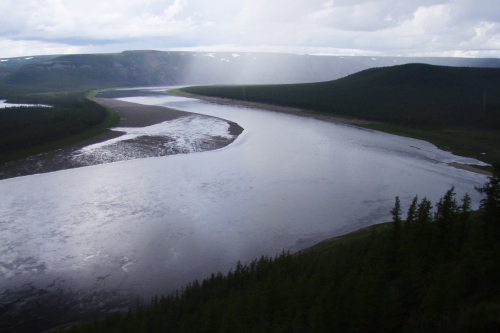
The Epic Siberian Journey to Solve a Mass Extinction Mystery
Read more: The Epic Siberian Journey to Solve a Mass Extinction MysteryWired has an article about research into the Permian-Triassic mass extinction event, which happened about 250 million years ago. Sometimes called “The Great Dying”, this event, which was really a series of events, took out about 70% of land species and more than 95% of marine species. The current theory about its cause is a runaway greenhouse driven by massive volcanic eruptions in what is now Siberia. The article is the story of Planetary scientist Lindy Elkins-Tantyon’s mission to find real hard evidence to prove it. SOME 250 MILLION years ago, the organisms of Earth were having a very bad time—the very worst time,…
-
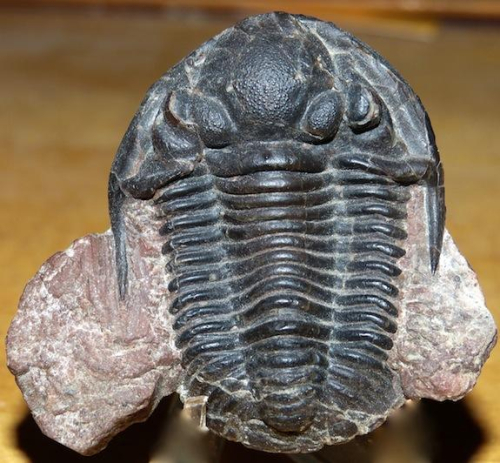
Trilobite Tuesday #15: The Last of the Trilobites
Read more: Trilobite Tuesday #15: The Last of the TrilobitesBoth the American Museum of Natural History and Trilobites.info have pages on “The Last Trilobites”. By the end of the Permian, trilobites had existed for nearly 300 million years. That stretch of time spread from the lower Cambrian to the mass extinction events at the end of the Permian. Their highest diversity was during the Ordovician. After that, they endured through multiple mass extinction events. Their diversity had dwindled by the end, with only a few families still around. It was the Permian mass extinction that took them out, along with more than 90% of all life on Earth at…
-

Mazon Monday #16: Adelophthalmus mazonensis
Read more: Mazon Monday #16: Adelophthalmus mazonensisThis is Mazon Monday post #16. Maybe it’s their size (early Devonian species could be almost three meters long!) or their similarity to scorpions (they’re called sea-scorpions) or their rarity (they are fairly scarce in the fossil record), it’s hard to say why, but Eurypterids were fascinating animals. There is currently only one known Mazon Creek species – Adelophthalmus mazonensis. It wasn’t very large… maybe a couple inches. But, it is very rare! George Langford had an entry for Adelophthalmus mazonensis. It can be found here. Here is the text of the Creature Corner article from September 1988. Adelophthalmus mazonensis…
-
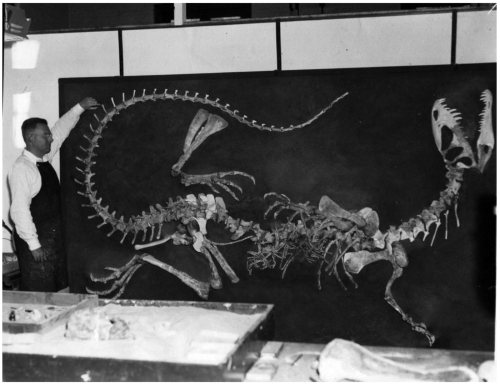
NatGeo: ‘Jurassic Park’ got almost everything wrong about this iconic dinosaur
Read more: NatGeo: ‘Jurassic Park’ got almost everything wrong about this iconic dinosaurNational Geographic has a post about the “best worst-known” dinosaur – Dilophosaurus. Adam Marsh, a paleontologist at the Petrified Forest National Park in Arizona, led an effort to redescribe Dilophosaurus. That paper was published recently in the Journal of Paleontology. Now, the new analysis includes two previously unstudied fossil specimens from Arizona, providing the first clear picture of what Dilophosaurus was like in life. Rather than a small dinosaur that relied on gimmicks such as venom and a neck frill to subdue its prey, Dilophosaurus was a powerful predator and one of the largest land animals in North America when it lived during the…
-
PBS Eons: How the Walrus Got Its Tusks
Read more: PBS Eons: How the Walrus Got Its TusksThere’s a new episode of PBS Eons. This one is about the walrus, where they came from and how they got their tusks. The rise and fall of ancient walruses, and how modern ones got their tusks, is a story that spans almost 20 million years. And while there are parts of the story that we’re still trying to figure out, it looks like tusks didn’t have anything to do with how or what these animals ate.
-

Fossil Friday #14: Kansas Brachiopods
Read more: Fossil Friday #14: Kansas BrachiopodsThis is the “Fossil Friday” post #14. Expect this to be a somewhat regular feature of the website. We will post any fossil pictures you send in to esconi.info@gmail.com. Please include a short description or story. Check the #FossilFriday Twitter hash tag for contributions from around the world! Brachiopods are very common fossils in the Paleozoic. They come in a variety of different forms. They Permian of Kansas (~290 million years ago) had a pretty large diversity with species like smooth Composita, to spiky pointed Spirifers, to larger Derbyia. These same fossils can be found in many deposits that range…
-
Throwback Thursday #15: “The Ravin” from 1951
Read more: Throwback Thursday #15: “The Ravin” from 1951This is Throwback Thursday #15. In these, we look back into the past at ESCONI specifically and Earth Science in general. If you have any contributions, (science, pictures, stories, etc …), please send them to esconi.info@gmail.com. Thanks! In the early years of ESCONI, back in the 1950s, there was at least one if not more poems in each issue of the bulletin. They generally said something about family, collecting, rocks, fossils, or even club life. You can find a class song back in 1967 (sung to the tune of “Chicago”) that we highlighted last year. Here is one in the…
-
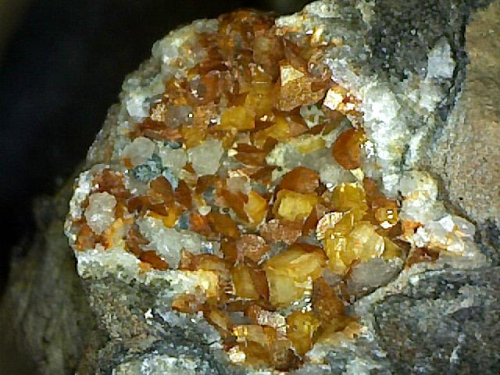
Crystals from the Maquoketa Formation
Read more: Crystals from the Maquoketa FormationUnfortunately, we don’t have enough mineral posts, but here’s one from ESCONI VP Dave Carlson about crystals in the Maquoketa Formation. If any has an article or information they’d like to contribute, please send us an email at esconi.info@gmail.com. I wanted to share pictures of some crystals found over the years at the Vulcan DeKalb quarry. The first picture shows a small, 1 cm vug in a piece of dark shale. The shale contains fossils of wide, flat bryozoans some of which have dissolved leaving space for crystals to grow. The vug contains clear, white, yellow and orange crystals of…
-

Trilobite Tuesday #14: AMNH The First Trilobites
Read more: Trilobite Tuesday #14: AMNH The First TrilobitesTrilobites were a very successful group of arthropods that existed on Earth from the early to middle Cambrian to the Permian mass extinction events. That’s a span of about 275 million years. By the end, there were just a few species left and the Permian extinction swept them away along with more than 90% of species on Earth at that time. But where did the trilobites come from and when did they emerge? The American Museum of Natural History has a page on the “First Trilobites”. It’s an interesting page, which names possible ancestors (Spriggina floundersi) and the oldest known species…
-
Mazon Monday #15: Mazon Creek at the Field Museum
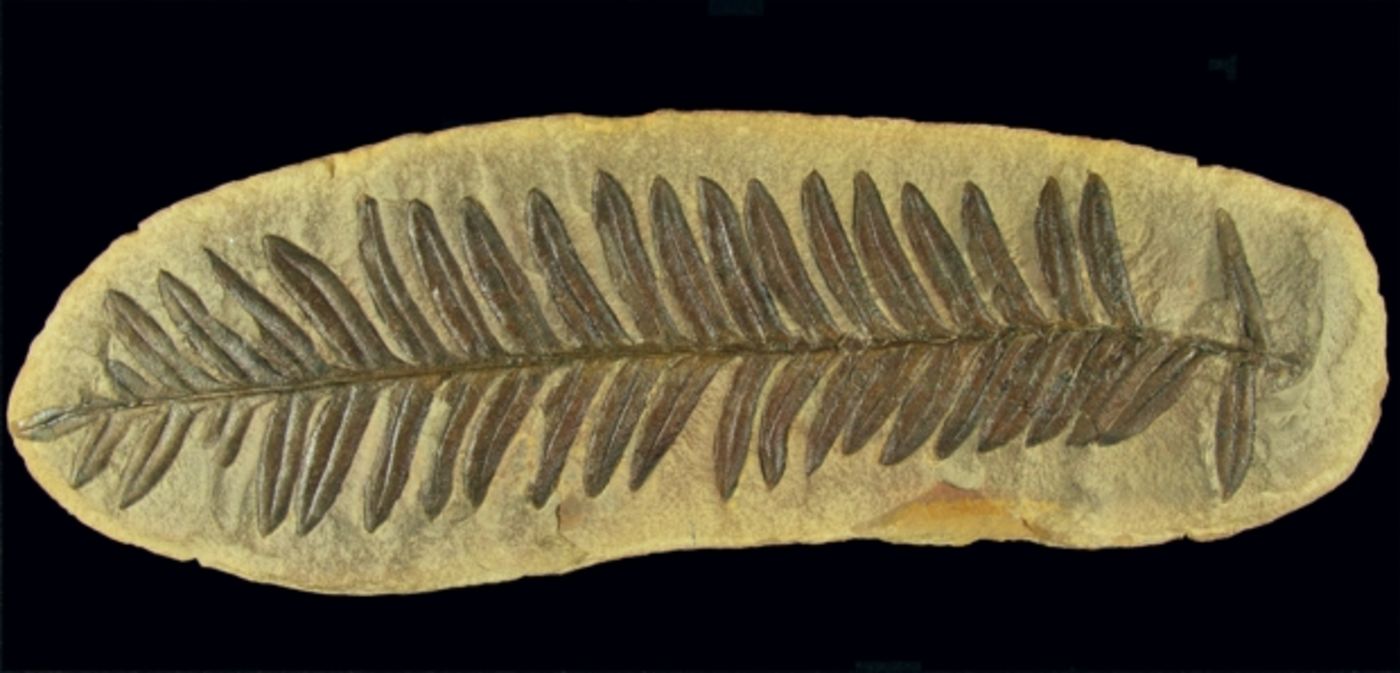
Read more: Mazon Monday #15: Mazon Creek at the Field MuseumThis is Mazon Monday post #15. The Field Museum has one of the most extensive collections of Mazon Creek specimens, both flora and fauna. The Field Museum has long been a big part of the study of this locality, with such historical giants as George Langford and Eugene Richardson working there. Currently, Jack Wittry works there. In 1673, the first coal found in the New World was reported from along the Illinois River near Utica in LaSalle County (Ledvina, 1997). In the mid-19th century, another important find was made in the same area; Middle Pennsylvanian aged fossils were discovered along one…

ESCONI Gem, Mineral, and Fossil Show
Most Recent Post
- ESCONI April 2026 General Meeting via Zoom – “Life in the Devonian Period, The Age of Fishes”
 The April 2026 General Meeting will be held on April 10th, 2026 at 8:00 via Zoom. At the meeting, Jessica Hull will present “Life in the Devonian Period, The Age of Fishes.” The Devonian Period was a crucial moment in the history of life. In this presentation, Jessica Hull will bring fossils to life by describing how they would have lived based on the most up to date research. Dunkleosteus fans won’t want to miss this!
- About ESCONI
- Around the Web
- Calendar of Events
- Code of Ethics and Conduct
- ESCONI Books for Sale
- ESCONI Gem, Mineral, and Fossil Show
- ESCONI in the News
- ESCONI Videos
- Field Trips
- Flashback Friday
- Fossil Friday
- Mazon Creek
- Mazon Monday
- Member Spotlight
- Membership Information
- Reference Material
- Throwback Thursday
- Trilobite Tuesday
Field trips require membership, but visitors are welcome at all meetings!
| Friday, April 10th | General Meeting – 8:00 PM via Zoom. Jessica Hull will present “Life in the Devonian Period, The Age of Fishes.” |
| Saturday, April 11th | Junior Study Group Meeting – 2:00 PM, in person at the College of DuPage Technical Education Center (TEC) Building – Room 1038A (Map). Katherine Howard will present on Sand and Sediment Collecting. Specifics of this meeting are available from Scott Galloway, 630-670-2591, gallowayscottf@gmail.com. |
| Saturday, April 18th | Paleontology Study Group – 7:30 PM via Zoom and in person at the College of DuPage, TEC, Room 1038B (Map). Keith Robitschek will present “Digging the Marl of the Lance Formation.” |
| Friday, April 24th | MAPS Expo XLVII – Springfield, IL. |
| Saturday, April 25th | MAPS Expo XLVII – Springfield, IL. |
| Sunday, April 26th | MAPS Expo XLVII – Springfield, IL. |
| No meeting this month | Mineralogy Study Group |