
-
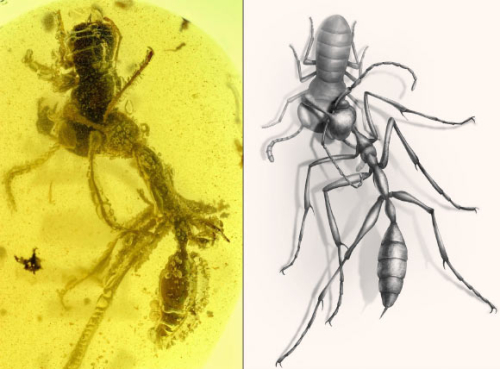
99-Million-Year-Old ‘Hell Ant’ Attack Captured in Amber
Read more: 99-Million-Year-Old ‘Hell Ant’ Attack Captured in AmberSciNews has a story about an interesting ant found in amber. Found in Burma, the “hell ant” (Ceratomyrmex ellenbergeri) lived during the Cretaceious Period about 78 million years ago. The “hell ants” due to their horn-like appendages on their head. Details can be found in a paper in the journal Current Biology. “Fossilized behavior is exceedingly rare, predation especially so,” said lead author Dr. Phillip Barden, a researcher in the Department of Biological Sciences at the New Jersey Institute of Technology and the Division of Invertebrate Zoology at the American Museum of Natural History. “As paleontologists, we speculate about the function of…
-
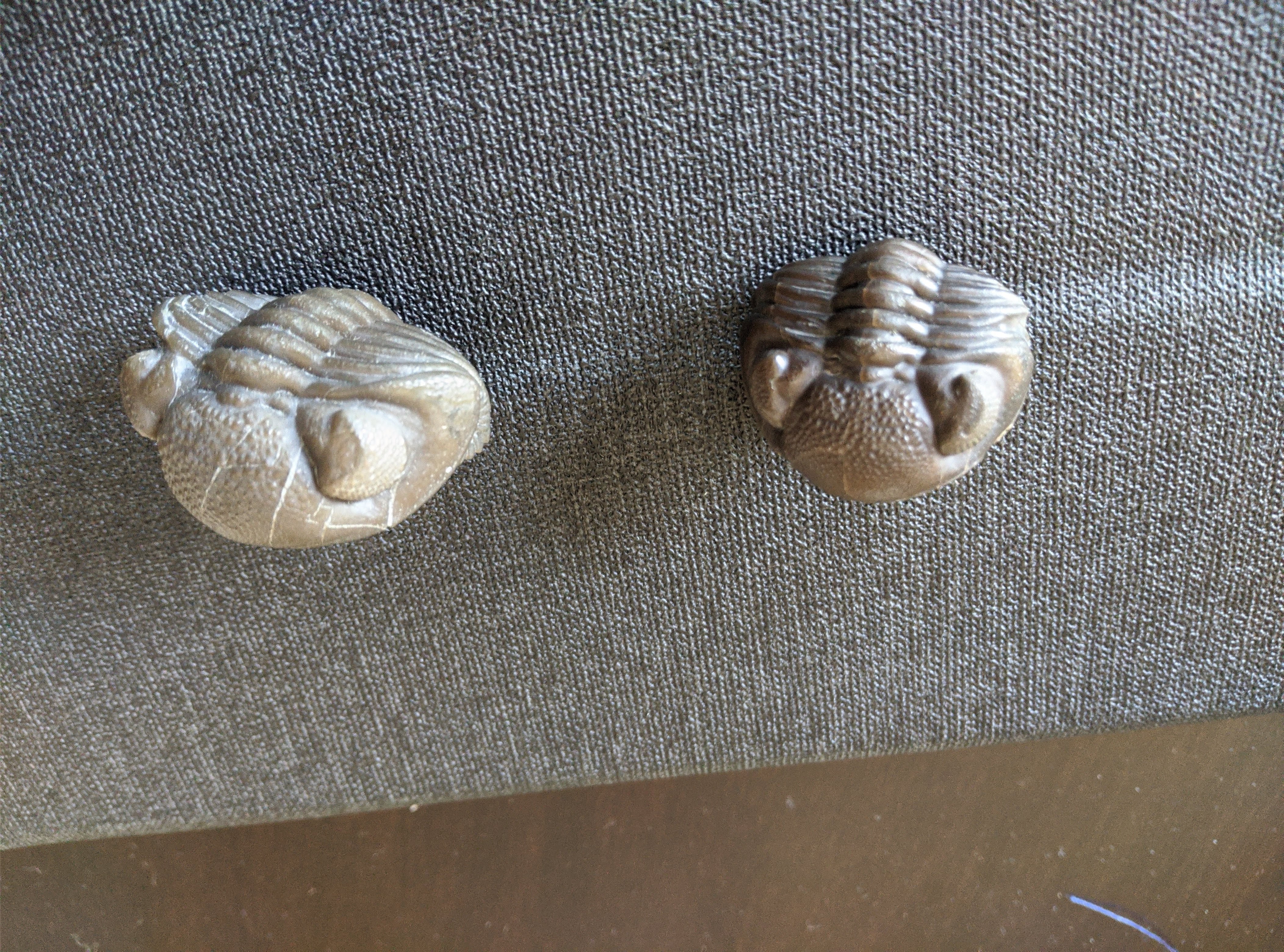
Fossil Friday #19: Phacops from Paulding, OH
Read more: Fossil Friday #19: Phacops from Paulding, OHThis is the “Fossil Friday” post #19. Expect this to be a somewhat regular feature of the website. We will post any fossil pictures you send in to esconi.info@gmail.com. Please include a short description or story. Check the #FossilFriday Twitter hash tag for contributions from around the world! There is a fossil park in Paulding, OH, where you can collect fossil specimens from the Silica Shale. You might remember we did a page about brachiopods from the Silica Shale in Ohio a few months ago. This park is a dump site of fossiliferous overburden shale from the La Farge Quarry…
-
Throwback Thursday #20: Rediscovering a Dinosaur Named Elmer
Read more: Throwback Thursday #20: Rediscovering a Dinosaur Named ElmerThis is Throwback Thursday #20. In these, we look back into the past at ESCONI specifically and Earth Science in general. If you have any contributions, (science, pictures, stories, etc …), please send them to esconi.info@gmail.com. Thanks! The Field Museum has a blog post about a dinosaur named for Elmer Riggs. Elmer the man, was the Field Museum’s first field paleontologist. He collected fossils on multiple continents (North and South America). He was employed by the Field Museum from 1899 until he retired in 1942. Although he found countless specimens for the museum, he is probably best known for presenting…
-

ESCONI/KGMS Field Trip to Cheney Limestone, Bellevue, MI – Saturday, September 12th, 2020
Read more: ESCONI/KGMS Field Trip to Cheney Limestone, Bellevue, MI – Saturday, September 12th, 2020There will be a field trip to the Cheney Limestone quarry near Bellevue, MI on September 12, 2020, from 10 AM to 3 PM (Eastern). This is a joint trip between ESCONI and the Kalamazoo Geological and Mineral Society (KGMS). There are 20 spots for ESCONI members. The rock formation at this quarry is the Bayport Limestone, Mississippian in age, in the Michigan Basin Both fossils and minerals can be found there. Typical fossils include brachiopods, corals, pelecypods and echinoderms, often coated with glauconite. Minerals include calcite, barite, pyrite, marcasite and chalcopyrite. Also rarely found are sphalerite, fluorite, celestine and…
-

Trilobite Tuesday #18: Early trilobites had stomachs
Read more: Trilobite Tuesday #18: Early trilobites had stomachsPhys.org has a story about some interesting details of trilobite digestion. A paper, published in 2017 in the journal PLOS ONE, revealed that trilobites had a stomach structure about 20 million years earlier than what had been known. The exceptionally preserved specimens of Palaeolenus lantenoisi used in the study lived about 514 million years ago during the Cambrian. They are shown to have both a crop and digestive glands. This study backs up some earlier research from Sweden. Trilobites are known to have have two body plans of their digestive system. One is a tube down the length of the body with lateral digestive glands. …
-
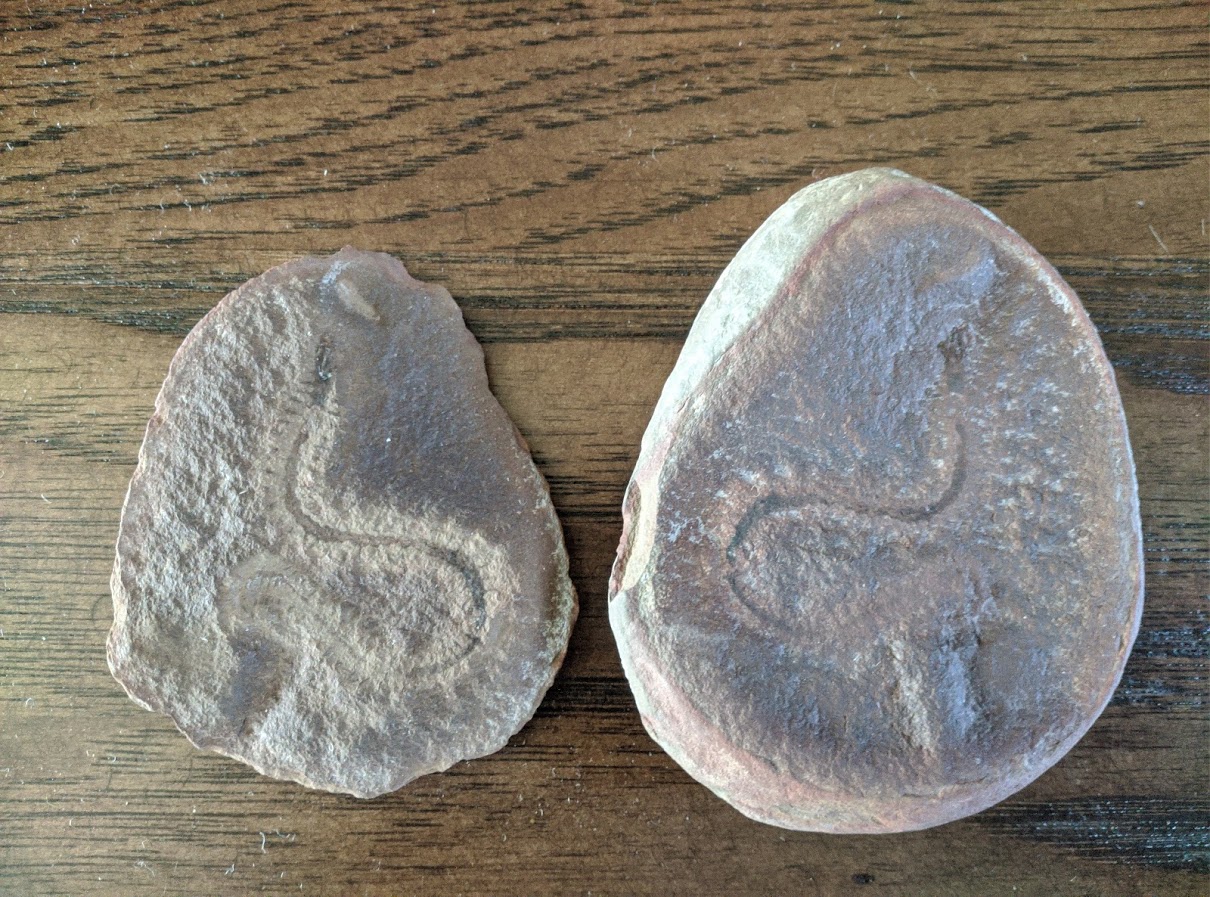
Mazon Monday #20: Fossil Preservation
Read more: Mazon Monday #20: Fossil PreservationThis is Mazon Monday post #20. What’s your favorite Mazon Creek fossil? Tell us at email:esconi.info@gmail.com. Back in 2017, Palaeocast posted a lecture called “Is a ‘one size fits all’ taphonomic model appropriate for the Mazon Creek” by Dr. Thomas Clements, of the University of Birmingham in the UK. You may remember Dr. Clements… he was part of a 2016 paper that looked at the preservation of the eyes of the Tullymonster to determine that it is a vertebrate. That study looked into the chemical makeup of the preservation of the eyes. More recently, he was co-author of “The Mazon…
-
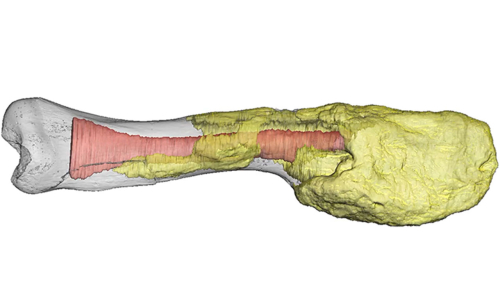
Doctors diagnose advanced cancer—in a dinosaur
Read more: Doctors diagnose advanced cancer—in a dinosaurScience Magazine has an article out of the Royal Ontario Museum about a malignant dinosaur bone. The dinosaur, Centrosaurus, lived about 76 million years ago in what is now Dinosaur Park in southern Alberta, Canada. It suffered from osteosarcoma of the fibula, which is a lower leg bone. In humans, osteosarcoma primarily attacks teens and young adults. Previously, other cases of tumors have been found in fossil skeletons, including osteosarcoma in a 240 million year old turtle. As to other diseases, arthritis is commonly found in fossil bones. It seems that nothing escapes the ravages of time… This deformed bone…
-

PBS Eons: The Dinosaur Who Was Buried at Sea
Read more: PBS Eons: The Dinosaur Who Was Buried at SeaThere’s a new episode of PBS Eons. This one is about an amazing specimen of Nodosaur discovered in Canada in 2011. It was found in a siderite concretion which formed in the ocean. Paleontologists have been studying nodosaurs since the 1830s, but nobody had ever found a specimen like Borealopelta before. The key to its exceptional preservation was where it ended up after it died and how it got there.
-
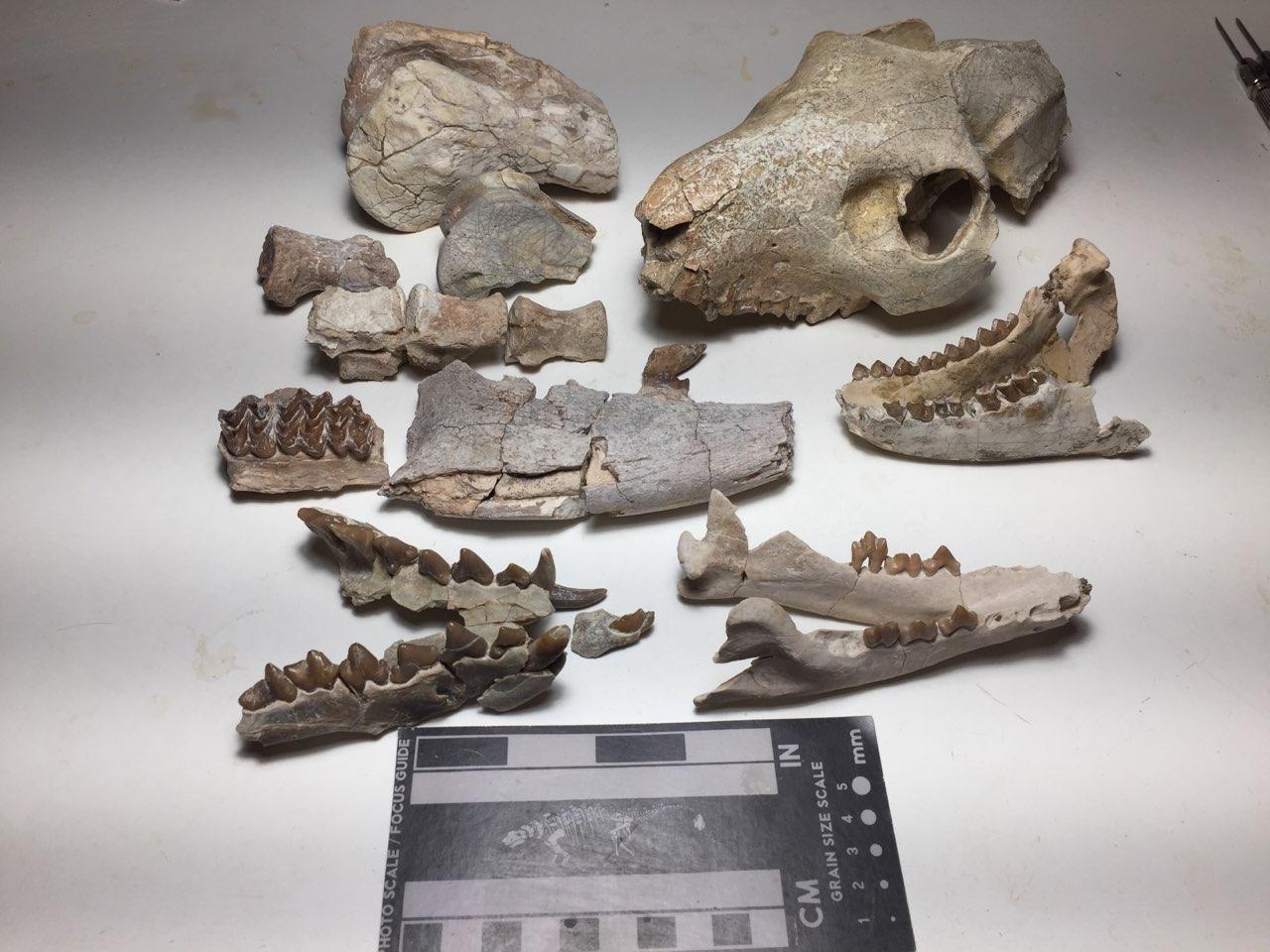
Fossil Friday #18: Oligocene Mammals
Read more: Fossil Friday #18: Oligocene MammalsThis is the “Fossil Friday” post #18. Expect this to be a somewhat regular feature of the website. We will post any fossil pictures you send in to esconi.info@gmail.com. Please include a short description or story. Check the #FossilFriday Twitter hash tag for contributions from around the world! These fossil pictures here were contributed by ESCONI Board Member Keith Robitschek. The fossils are of unidentified Oreodonts and Canids from the Oligocene epoch of what is now the White River Badlands of Wyoming. Keith found these this summer. What great finds! Congratulations, Keith! Oreodonts are extinct mammals. Their name means “mountain…
-
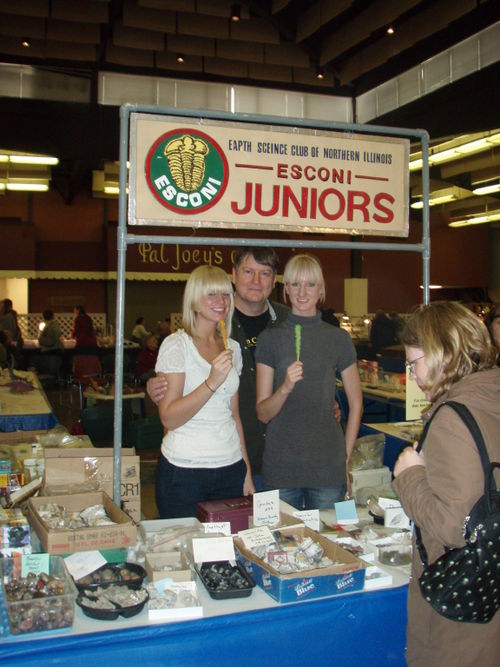
Throwback Thursday #19: ESCONI Show 2009
Read more: Throwback Thursday #19: ESCONI Show 2009This is Throwback Thursday #19. In these, we look back into the past at ESCONI specifically and Earth Science in general. If you have any contributions, (science, pictures, stories, etc …), please send them to esconi.info@gmail.com. Thanks! Here are some photos from the 2009 ESCONI Gem, Mineral, and Fossil Show. Wow, there’s a whole bunch of familiar faces! This is when the show was held at College of Dupage.
-
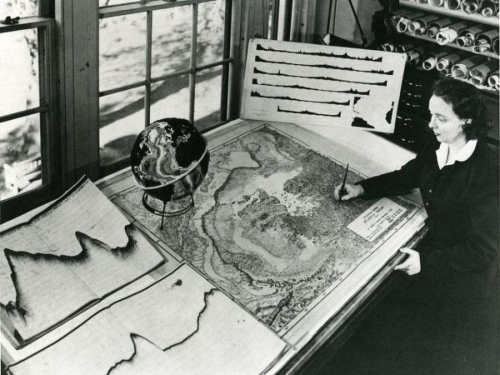
How Marie Tharp Changed Geology Forever
Read more: How Marie Tharp Changed Geology ForeverForbes has a story about Marie Tharp and her contributions to geology. During the International Geophysical Year 1857, Marie Tharp noticed a series of valleys and ridges in the middle Atlantic Ocean. These “lines” are essentially the mark of the sea floor spreading at the tectonic plate boundary, although at the time, the concept of plate tectonics was unknown. This evidence was proof that the continents moved… a basic key to understanding the history of life on our planet! At the time, the U.S. Navy was interested in mapping the seafloor, believed to be of strategic importance for future submarine…
-
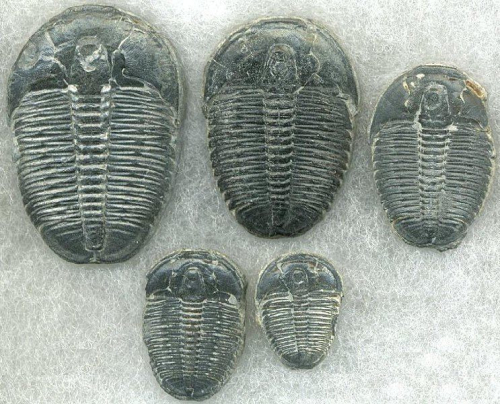
Trilobite Tuesday #17: The Cambrian Creatures That Grew Up Over the Course of 28 Bodies
Read more: Trilobite Tuesday #17: The Cambrian Creatures That Grew Up Over the Course of 28 BodiesAtlas Obscura has a story about Elrathia kingii. E. kingii is a very common trilobite found in the Cambrian rocks of Utah. This article is a great summary on how they lived and most importantly… how they grew. WITH ANY LUCK, HUMANS CHANGE a lot over the course of our time on Earth. As we grow out of our teeny onesies and our teenage styles, the aging process can feel a lot like shedding a past self. But other creatures literally do that: step out of their bodies and grow into a new one. For trilobites—marine arthropods that appeared in the…
-
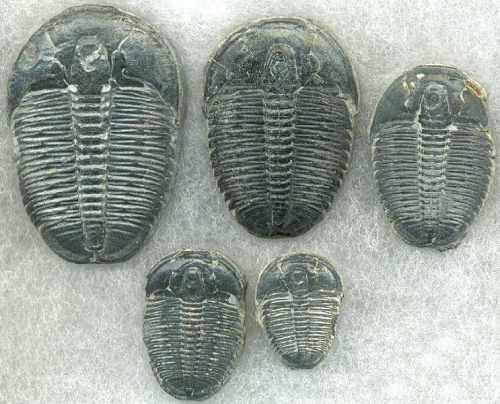
Trilobite Tuesday #17: The Cambrian Creatures That Grew Up Over the Course of 28 Bodies
Read more: Trilobite Tuesday #17: The Cambrian Creatures That Grew Up Over the Course of 28 BodiesAtlas Obscura has a story about Elrathia kingii. E. kingii is a very common trilobite found in the Cambrian rocks of Utah. This article is a great summary on how they lived and most importantly… how they grew. WITH ANY LUCK, HUMANS CHANGE a lot over the course of our time on Earth. As we grow out of our teeny onesies and our teenage styles, the aging process can feel a lot like shedding a past self. But other creatures literally do that: step out of their bodies and grow into a new one. For trilobites—marine arthropods that appeared in the…
-
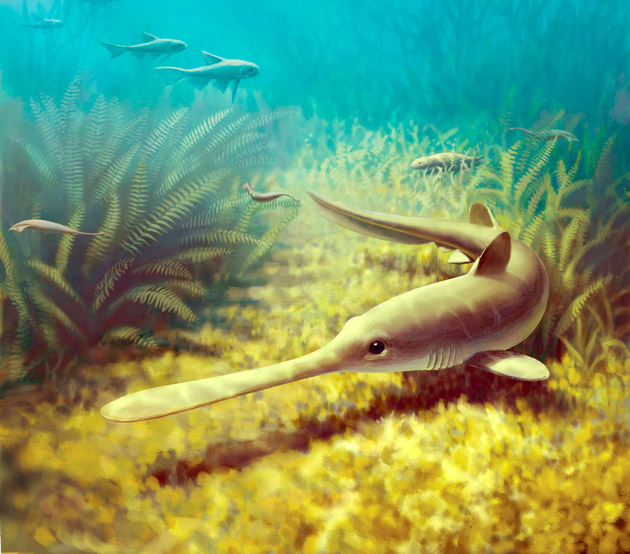
Mazon Monday #19: Bandringa rayi
Read more: Mazon Monday #19: Bandringa rayiThis is Mazon Monday post #19. What’s your favorite Mazon Creek fossil? Tell us at email:esconi.info@gmail.com. Would you believe that Illinois has a shark nursery? OK, it is about 307 million years old and the evidence resides in Mazon Creek fossil concretions. The first species, Bandringa rayi, was described in a paper published by Rainer Zangerl in the Field Museum’s journal Fieldiana back in 1969. The specimen used is the paper is the one pictured below, which is an absolutely awesome specimen! In 2014, Lauren Cole Sallan and Michael I. Coates was published a paper in the Journal of Vertebrate…
-

Palaeocast Episode 113: PBS Eons Host Kallie Moore
Read more: Palaeocast Episode 113: PBS Eons Host Kallie MooreHere’s a great Palaeocast podcast episode about a great YouTube channel, PBS Eons. The show is an interview with Kallie Moore, the Collections Manager at University of Montana Paleontology Center, who is one of the hosts of the show. Two of my favorite podcasts meet! With palaeontology as popular as it is you will never be short of content online, whether that be articles, blogs, podcasts (of which there are now many others you should also be listening to) or videos. This allows you, the public, to enjoy learning about past life on demand and in a format that best…
-

Sue the T. Rex gets life-like model to match skeleton
Read more: Sue the T. Rex gets life-like model to match skeletonThe SunTimes has a piece about a new exhibit at the Field Museum. It’s called “SUE in the Flesh” and features a life size model of SUE with a baby Edmontosaurus in her mouth. For two decades, Sue has drawn dinosaur lovers to the Field Museum so they can catch a glimpse of the largest and most complete Tyrannosaurus rex skeleton ever discovered. Now, museum-goers can walk up to a life-size model of what Sue would have looked like when alive. The 40-foot-long, 14-foot-tall “Sue in the Flesh” exhibit was unveiled at the museum’s Stanley Field Hall Thursday. The life-size…
-
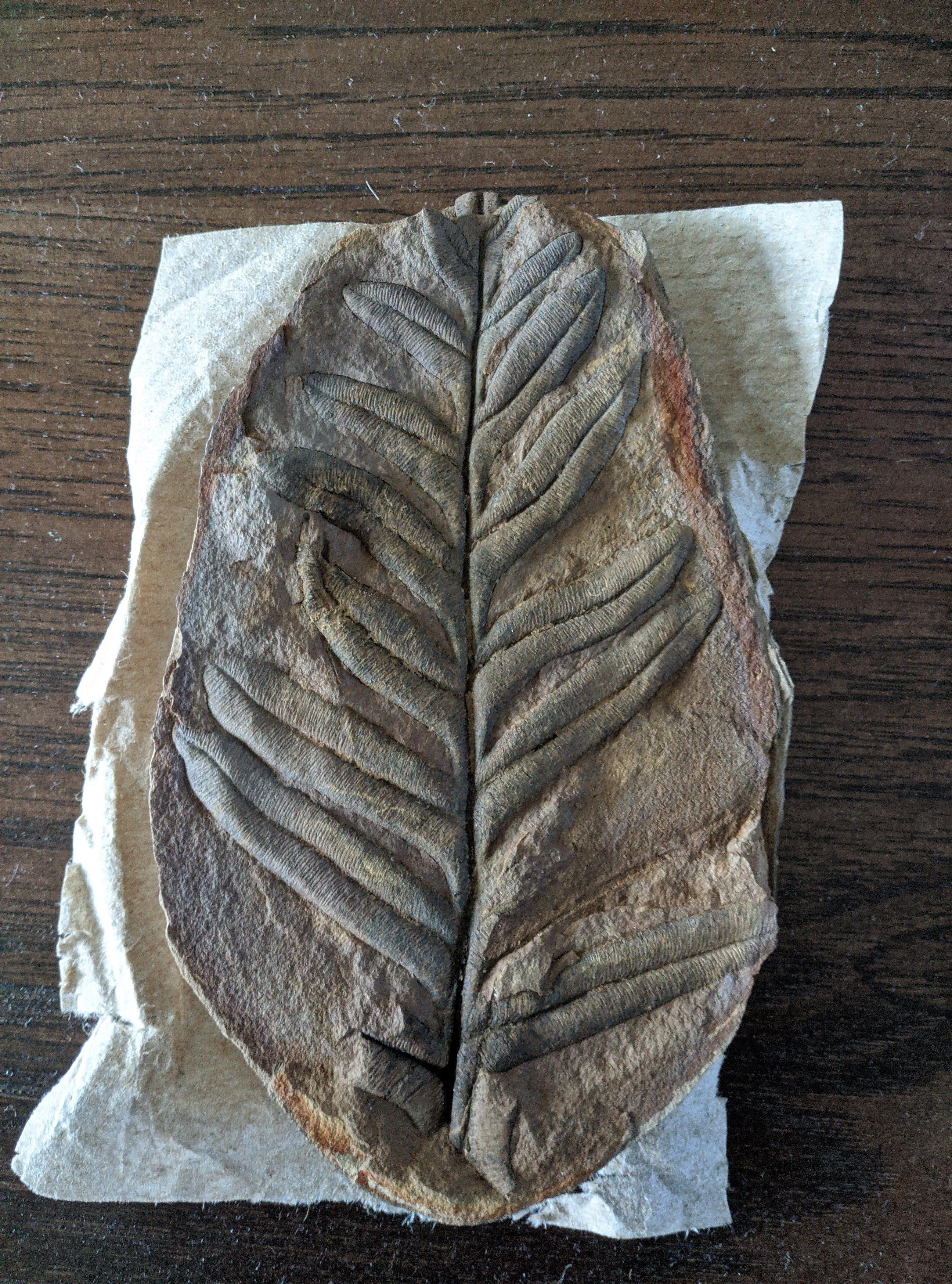
Fossil Friday #17: Mazon Creek Alethopteris serlii
Read more: Fossil Friday #17: Mazon Creek Alethopteris serliiThis is the “Fossil Friday” post #17. Expect this to be a somewhat regular feature of the website. We will post any fossil pictures you send in to esconi.info@gmail.com. Please include a short description or story. Check the #FossilFriday Twitter hash tag for contributions from around the world! What’s your favorite Mazon Creek plant fossil? Tell us at email:esconi.info@gmail.com. Here is a common favorite, Alethopteris serlii.
-

Throwback Thursday #18: Field Trip To Galena, IL August 8 – 9, 1959
Read more: Throwback Thursday #18: Field Trip To Galena, IL August 8 – 9, 1959This is Throwback Thursday #18. In these, we look back into the past at ESCONI specifically and Earth Science in general. If you have any contributions, (science, pictures, stories, etc …), please send them to esconi.info@gmail.com. Thanks! Here are some pictures from a field trip to Galena, IL that was held from August 8th to 9th, 1959. The cars in the background are really nice. Is that someone’s Nash?. Field trips were a huge family affair. There are multiple early ESCONI notables in these photos. John Ade would be president in the 1960s and his son Dick is there long…
-
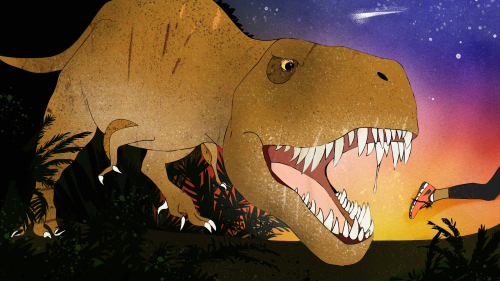
How to Outrun a Dinosaur
Read more: How to Outrun a DinosaurWired has an informative article about how to outrun a dinosaur. It goes to the heart of the issue… allometry, which is the study of the relationship of body size to shape, anatomy, physiology and ultimately behavior. And, partial spoiler, we’d probably be safer than you think against the likes of T-rex and similarly sized meat eaters. I’m reminded of the movie “In-Laws” from 1979 with Peter Falk, when he yells “Serpentine, Serpentine!” IF A MOUSE fell down a 1,000-foot mine shaft, the renowned evolutionary biologist JBS Haldane once proposed, the mouse would rise, shake the dust off itself, and scurry…
-
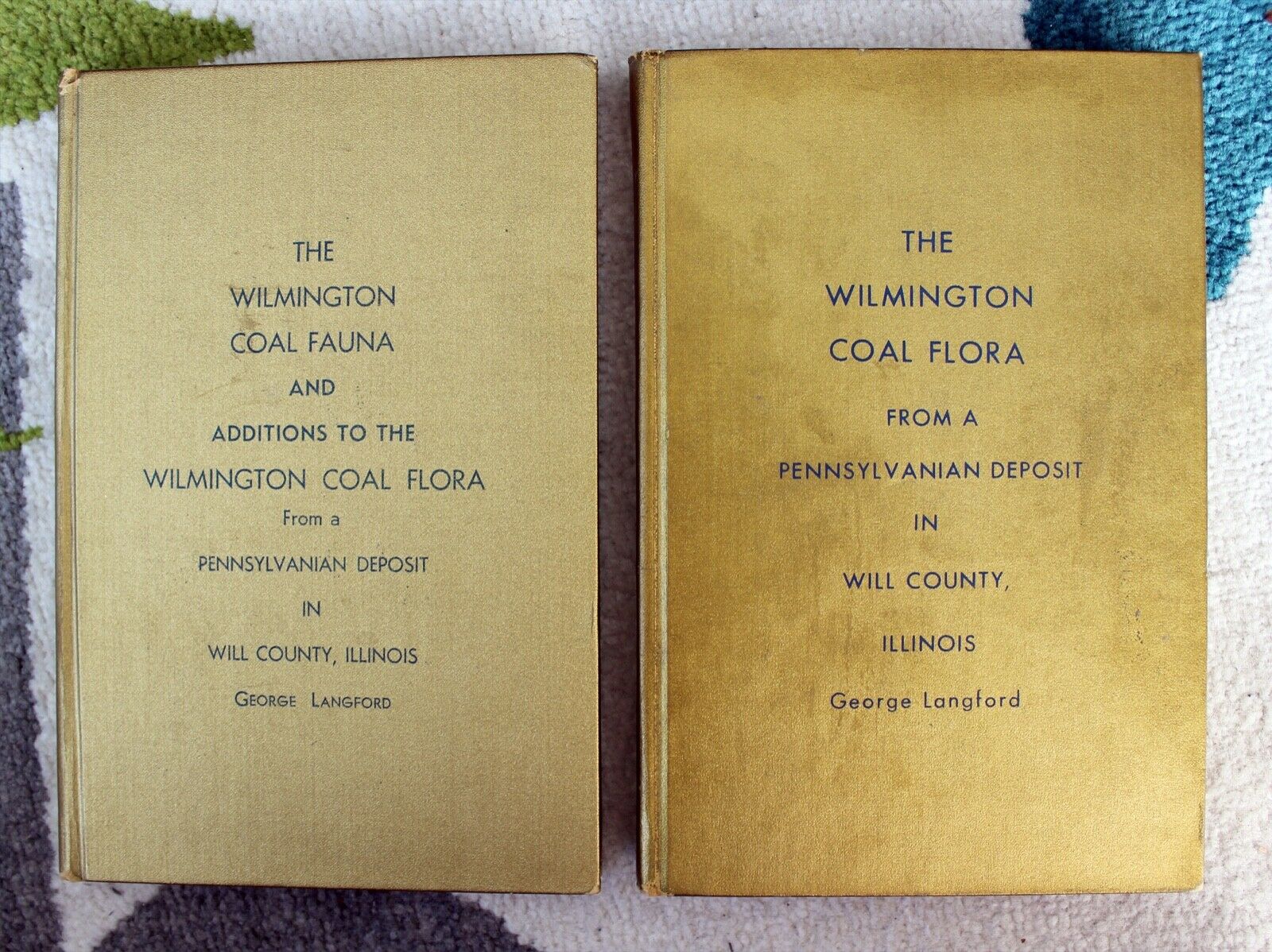
Mazon Monday #18: Langford Book Inscriptions
Read more: Mazon Monday #18: Langford Book InscriptionsThis is Mazon Monday post #18. Book inscriptions were much more common in the past. As owner of a book, which was a valuable possession. you might add your name to the inner cover. A recent Langford purchase by ESCONI member Roy Plotnick, reminded us of the historical significance of these inscriptions. Many of the books are signed by George. Please check your Langford books and send us anything interesting you might find. This is Roy’s book. It was presented to Mr. and Mrs. Lester Cunningham for a presentation they did on February 10th, 1961. And, here is information about…

ESCONI Gem, Mineral, and Fossil Show
Most Recent Post
- ESCONI April 2026 General Meeting via Zoom – “Life in the Devonian Period, The Age of Fishes”
 The April 2026 General Meeting will be held on April 10th, 2026 at 8:00 via Zoom. At the meeting, Jessica Hull will present “Life in the Devonian Period, The Age of Fishes.” The Devonian Period was a crucial moment in the history of life. In this presentation, Jessica Hull will bring fossils to life by describing how they would have lived based on the most up to date research. Dunkleosteus fans won’t want to miss this!
- About ESCONI
- Around the Web
- Calendar of Events
- Code of Ethics and Conduct
- ESCONI Books for Sale
- ESCONI Gem, Mineral, and Fossil Show
- ESCONI in the News
- ESCONI Videos
- Field Trips
- Flashback Friday
- Fossil Friday
- Mazon Creek
- Mazon Monday
- Member Spotlight
- Membership Information
- Reference Material
- Throwback Thursday
- Trilobite Tuesday
Field trips require membership, but visitors are welcome at all meetings!
| Friday, April 10th | General Meeting – 8:00 PM via Zoom. Jessica Hull will present “Life in the Devonian Period, The Age of Fishes.” |
| Saturday, April 11th | Junior Study Group Meeting – 2:00 PM, in person at the College of DuPage Technical Education Center (TEC) Building – Room 1038A (Map). Katherine Howard will present on Sand and Sediment Collecting. Specifics of this meeting are available from Scott Galloway, 630-670-2591, gallowayscottf@gmail.com. |
| Saturday, April 18th | Paleontology Study Group – 7:30 PM via Zoom and in person at the College of DuPage, TEC, Room 1038B (Map). Keith Robitschek will present “Digging the Marl of the Lance Formation.” |
| Friday, April 24th | MAPS Expo XLVII – Springfield, IL. |
| Saturday, April 25th | MAPS Expo XLVII – Springfield, IL. |
| Sunday, April 26th | MAPS Expo XLVII – Springfield, IL. |
| No meeting this month | Mineralogy Study Group |