
-

Throwback Thursday #24: Coal Mining History Around Coal City
Read more: Throwback Thursday #24: Coal Mining History Around Coal CityThis is Throwback Thursday #24. In these, we look back into the past at ESCONI specifically and Earth Science in general. If you have any contributions, (science, pictures, stories, etc …), please send them to esconi.info@gmail.com. Thanks! Over on the Coal City website, there’s a page on the history of Coal City. In the 1850’s, coal mining started in the area. In 1820, Peter Lansett, a Canadian trader, was just one of the few that populated the soon to be Coal City area. Lansett collected coal from the ground and sold it to local blacksmiths and farmers, who formerly burned…
-
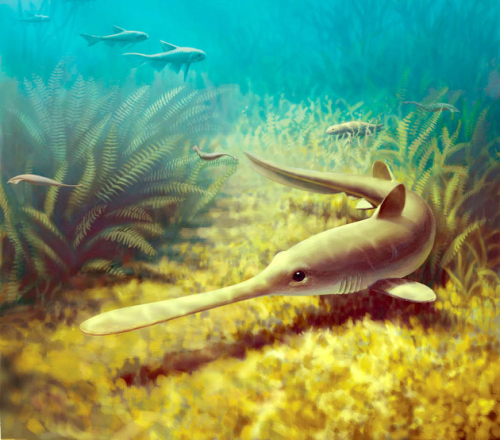
Reminder: ESCONI September 2020 General Meeting – September 11th, 2020 at 8:00 PM via Zoom – “Carboniferous Fossils Reveal How Fishes Evolve, and How They Don’t”
Read more: Reminder: ESCONI September 2020 General Meeting – September 11th, 2020 at 8:00 PM via Zoom – “Carboniferous Fossils Reveal How Fishes Evolve, and How They Don’t” -
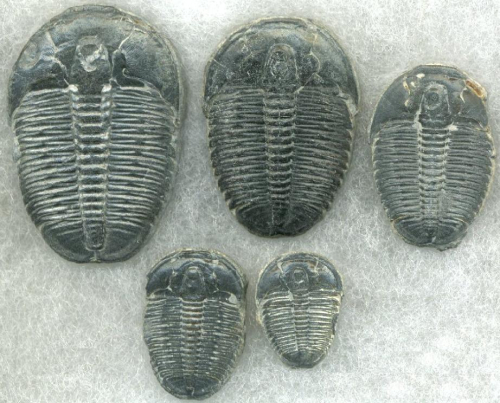
Trilobite Tuesday #22: Trilobites of the Wheeler Shale, Utah
Read more: Trilobite Tuesday #22: Trilobites of the Wheeler Shale, UtahTrilobites.info has a page about the trilobites of the Wheeler Shale in Utah. The Wheeler Shale dates to the Middle Cambrian, about 505 million years ago. The formation is known for a diverse group of soft bodied animals, many of which are the same taxa found in the Burgess Shale (508 million years ago). It is notable that the trilobite fauna of the Wheeler Shale, being a Middle Cambrian locality, is dominated by Ptychopariida, Corynexochida, and Agnostida. In addition to trilobites, there were other species of arachnomorph (trilobite-like clade) arthropods such as Naraoia. These trilobite-like arthropods demonstrate that the group from which trilobites arose was itself…
-

Mazon Monday #24: Euphoberia sp.
Read more: Mazon Monday #24: Euphoberia sp.This is Mazon Monday post #24. What’s your favorite Mazon Creek fossil? Tell us at email:esconi.info@gmail.com. Today’s species is Euphoberia sp., a millipede from the Mazon Creek biota. From Wikipedia, the free encyclopedia. Euphoberia is an extinct genus of millipede from the Pennsylvanian epoch of the Late Carboniferous, measuring up to 30 centimetres (12 in) in length.[1] Fossils have been found in Europe[2] and North America.[3] There has been uncertainty about the appropriate classification of Euphoberia since its description in 1868: it has been referred to as a centipede,[4] millipede, or a separate, independent group within the myriapods.[5][6] It is currently placed in the Archipolypoda, an extinct group of millipedes.[3] Several species described in the late 19th…
-
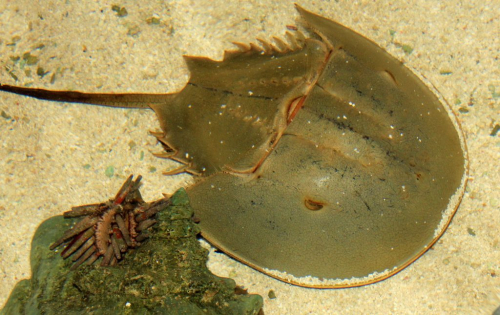
Palaeocast Episode 114: Horseshoe Crabs
Read more: Palaeocast Episode 114: Horseshoe CrabsThere’s a new episode of Palaeocast #114… Horseshoe Crabs. Everything you ever wanted to know about their past and present. The horseshoe crabs (Xiphosura) are a group of large aquatic arthropods known from the East coast of the USA, and the Southern and Eastern coasts of Asia. Despite their name, they are not actually crabs at all, but are chelicerates (the group containing spiders and scorpions). As a group, the horseshoe crabs possess an extremely long fossil record, reaching as far back as the Ordovician Period, some 480 million years ago. Since that time, they would appear to have undergone…
-
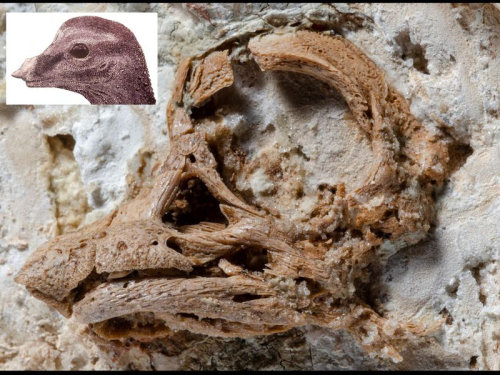
Smithsonian: Why This ‘Unicorn Baby Dinosaur’ Is the ‘Cutest,’ ‘Weirdest’ Ever
Read more: Smithsonian: Why This ‘Unicorn Baby Dinosaur’ Is the ‘Cutest,’ ‘Weirdest’ EverSmithsonian Magazine has a piece about the “cutest”, “weirdest” baby dinosaur ever. The embryo dinosaur is thought to be a Tapuiasaurus, a sauropod that grew to about 43 feet long. The egg was smuggled illegally out of Argentina about 20 years ago. Research published in the journal Current Biology has revealed some insights into the early development of sauropod dinosaurs. While newly studied fossil is puny—less than an inch and a half long—it was preserved in 3D, which allowed researchers to spot its unusual features, Will Dunham reports for Reuters. Unlike adult sauropod skulls, the embryonic fossil skull has a small…
-
Fossil Friday #21: Crinoid from Arkona, Ontario, Canada
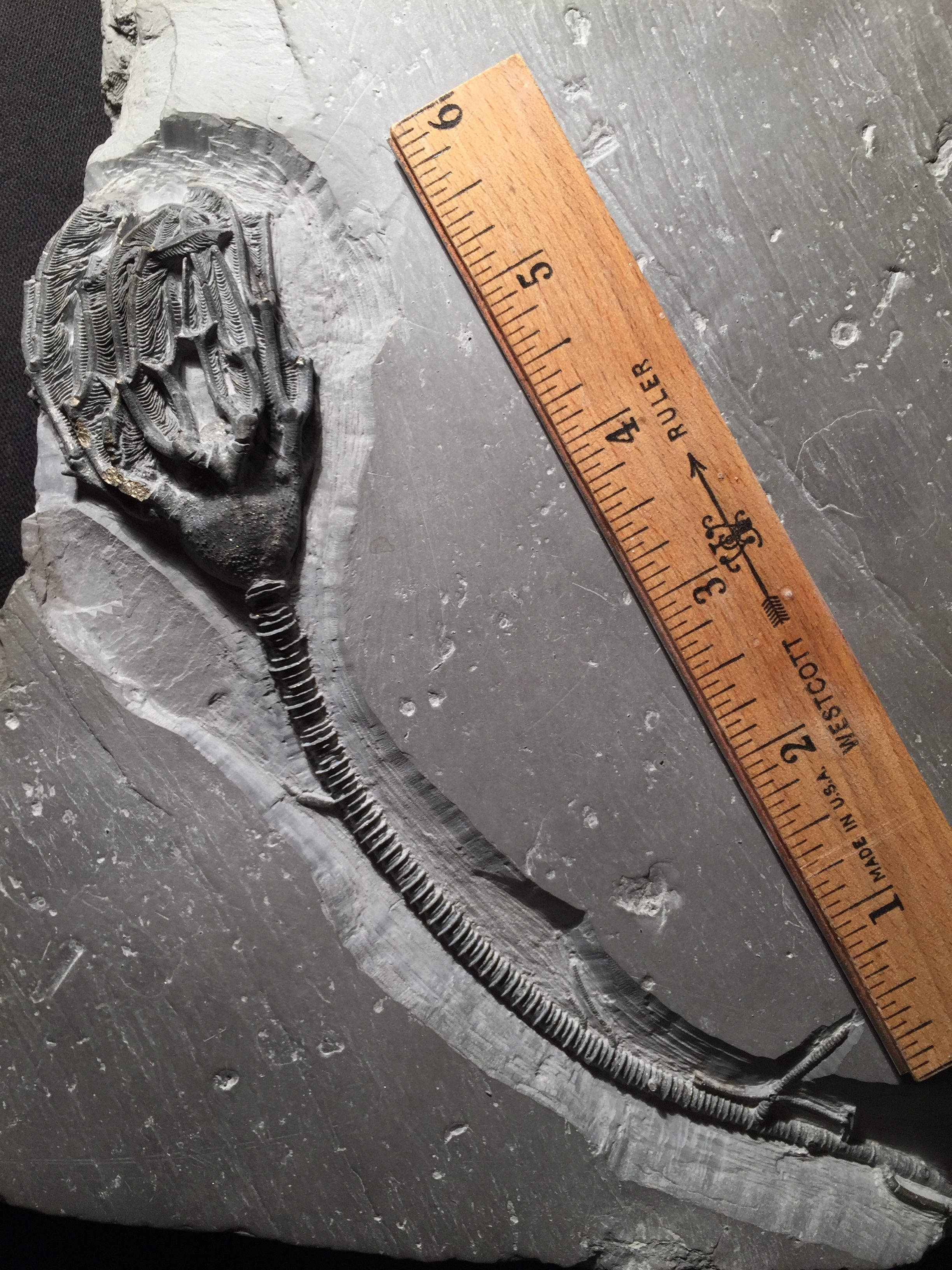
Read more: Fossil Friday #21: Crinoid from Arkona, Ontario, CanadaThis is the “Fossil Friday” post #21. Expect this to be a somewhat regular feature of the website. We will post any fossil pictures you send in to esconi.info@gmail.com. Please include a short description or story. Check the #FossilFriday Twitter hash tag for contributions from around the world! This week’s fossil is an excellent crinoid from either Arkona, Ontario, Canda or Sylvania, OH. The Arkona Shale dates to the Middle Devonian Period about 390 million years ago. It occurred at a similar time to the Silica Shale which outcrops near Sylvania, OH. Here is a paper that has many details…
-

Throwback Thursday #23: History of Coal Mining in Illinois
Read more: Throwback Thursday #23: History of Coal Mining in IllinoisThis is Throwback Thursday #23. In these, we look back into the past at ESCONI specifically and Earth Science in general. If you have any contributions, (science, pictures, stories, etc …), please send them to esconi.info@gmail.com. Thanks! Waynes World of History and Genealogy has a great series of pages on the history of coal mining in Illinois. There’s separate pages on mining itself, disasters in the mines, the miners and instpectors, data on how much coal was mined, and many, many, photos from all over the state. It’s easy to get lost in all the information! The first reference to…
-
ESCONI September 2020 General Meeting – September 11th, 2020 at 8:00 PM via Zoom – “Carboniferous Fossils Reveal How Fishes Evolve, and How They Don’t”
Read more: ESCONI September 2020 General Meeting – September 11th, 2020 at 8:00 PM via Zoom – “Carboniferous Fossils Reveal How Fishes Evolve, and How They Don’t”Reconstruction of Mazon Creek by John Megahan The speaker at our September 11th, 2020 general meeting will be Dr. Lauren Sallan from the University of Pennsylvania. Her presentation will be done via Zoom and will start at 9:00 PM. Dr. Sallan received her PhD from the University of Chicago in 2012. She was a co-author of the 2017 article that determined that the Tully Monster was not a vertebrate. She also works on Paleozoic ray-finned fishes and sharks. Here’s a link to her lab webpage, which includes links to her TED Talks: http://www.laurensallan.com/ We will send the…
-

Trilobite Tuesday #21: Pathology: Bites, Injuries & Healing
Read more: Trilobite Tuesday #21: Pathology: Bites, Injuries & HealingThe AMNH’s Trilobite Website has a page on trilobite injuries. Over the many years that trilobites existed and considering the many, many fossil specimens that have been (and will be) found, there had to be some with signs of predation. And, of those, there had to be some that got away from the predator. There were many threats to our little friends, Anomalocars, Euryperids, fish and even other trilobites are just a few. Judging by the variety of lethal-looking bite marks and healed injuries that frequently adorn their fossilized exoskeletons, it seems safe to say that life as a trilobite…
-

Mazon Monday #23: Interesting Pennsylvanian Fossil Sites: Crock Hey, Lancashire, UK
Read more: Mazon Monday #23: Interesting Pennsylvanian Fossil Sites: Crock Hey, Lancashire, UKThis is Mazon Monday post #23. What’s your favorite Mazon Creek fossil? Tell us at email:esconi.info@gmail.com. In Mazon Monday #10, we discussed localities where siderite preservation of Pennsylvanian fossils has been found. There were a few localities listed. Here is more information about the site called Crock Hey (also Crockhey). This site was located near Lancashire in England. It was a temporary coal pit. The pit was located between Liverpool and Manchester in the north of England. Just like Mazon Creek, fossils in this quarry are found in concretions of siderite. Many of the plants and animals are similar and even identical…
-
First complete dinosaur skeleton ever found is ready for its closeup at last
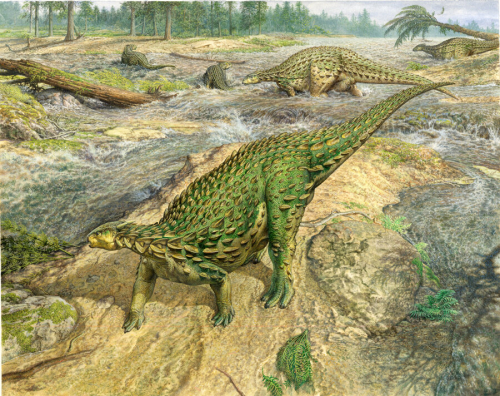
Read more: First complete dinosaur skeleton ever found is ready for its closeup at lastPhys.org has a story about a complete dinosaur found on west Dorset’s Jurassic Coast. The skeleton was collected 160 years ago was sent to Richard Owen at the British Museum. The animal lived around 193 million years ago during the early Jurassic Period. The new research was published in the journal Zoological Journal of the Linnean Society (2020). The first complete dinosaur skeleton ever identified has finally been studied in detail and found its place in the dinosaur family tree, completing a project that began more than a century and a half ago. The skeleton of this dinosaur, called Scelidosaurus,…
-

PBS Eons: The Oddest Couple in the Fossil Record
Read more: PBS Eons: The Oddest Couple in the Fossil RecordPBS Eons has a new episode over on Youtube. This one is about an interesting fossil of two early mammals that were entombed together for nearly 250 million years. To figure out how Thrinaxodon and Broomistega became entombed together, scientists looked at the burrow itself, along with their fossilized bones. And it looks like their luck ran out, when a behavior that usually would’ve helped them survive just didn’t work.
-

Fossil Friday #20: Blastoids!
Read more: Fossil Friday #20: Blastoids!This is the “Fossil Friday” post #20. Expect this to be a somewhat regular feature of the website. We will post any fossil pictures you send in to esconi.info@gmail.com. Please include a short description or story. Check the #FossilFriday Twitter hash tag for contributions from around the world! Today, we have a real treat… blastoids. These specimens were contributed by ESCONI Paleo Group Leader John Catalani. You might remember he sent along some Nautiloids for our first Fossil Friday. Enjoy! Blastoids are stemmed echinoderms with 18-21 major plates and hundreds to thousands of smaller plates. Adults were attached to the…
-
Throwback Thursday #22: Field Trip To Lutz Quarry Near Oshkosh, WI in 1954
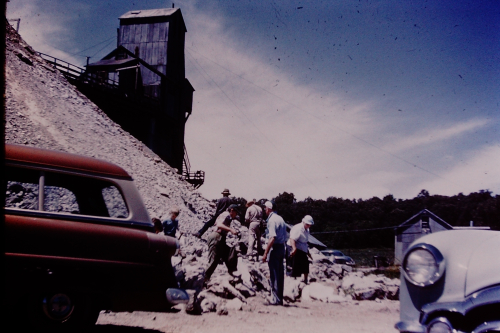
Read more: Throwback Thursday #22: Field Trip To Lutz Quarry Near Oshkosh, WI in 1954This is Throwback Thursday #22. In these, we look back into the past at ESCONI specifically and Earth Science in general. If you have any contributions, (science, pictures, stories, etc …), please send them to esconi.info@gmail.com. Thanks! These are pictures of a field trip to Lutz Quarry near Oskosh Wisconsin in 1954. Lutz Quarry had rocks from the Ordovician Period. The formations represented at the quarry were the Galena, Decorah, and Platteville Formations, which are part of the Sinnipee Group. The quarry was known for mineral collecting with interesting specimens of Marcasite, Pyrite, Calcite, and others present. The minerals were…
-

ESCONI Events September 2020
Read more: ESCONI Events September 2020Field trips require membership, but visitors are welcome at all meetings! Fri, Sept 11th ESCONI General Meeting 8:00 PM Zoom – Topic: “Carboniferous Fossils Reveal How Fishes Evolve, and How They Don’t” by Dr. Lauren Sallan from the University of Pennsylvania. Zoom link Sat, Sept 12th ESCONI Field Trip to Cheney Limestone in Bellevue, MI – This is a joint trip with Kalamazoo Geological and Mineral Society (KGMS). Details here. Sat, Sept 19th ESCONI Paleontology Meeting 7:30 PM Zoom – “Brag Night”, bring pictures to share. Zoom link. Sat, Sept 19th ESCONI Field Trip to Braceville, IL – 8 AM to…
-
Trilobite Tuesday #20: The Trilobite Papers
Read more: Trilobite Tuesday #20: The Trilobite PapersThe Trilobite Paper website has pdfs of the “Trilobite Papers 20” newsletters from August 2018 to February 2020. The newsletter is Fred Sundberg’s “reboot” of Rolf Ludvingsen’s international journal for and by trilobite paleontologists. The issues are published about every six months and are filled with everything trilobite. Rolf Ludvingsen was a paleontologist and author, that wrote many, many books on the subject. Check them out! One of the ongoing problems with lower and middle Cambrian trilobites (and most likely any aged trilobites) are the type species of genera are poorly known or represented by poorly preserved specimens. I have…
-
Mazon Monday #22: Pit 11
Read more: Mazon Monday #22: Pit 11This is Mazon Monday post #21. What’s your favorite Mazon Creek fossil? Tell us at email:esconi.info@gmail.com. Summer is passing into September and the temperature should should be cooling. Unfortunately, the overgrowth isn’t going to diminish until next spring. However, Pit 11 doesn’t close to fossil hunting until September 30th. So, It’s time to repeat this article about Mazon Creek on the Fossil Forum from last year. There’s even new information as the discussion has continued. The article was published in 2019, but it hasn’t changed at all. If you want to visit Pit 11 this year, get on out there, dress…
-
ESCONI September 2020 Paleo Meeting – September 19, 2020 – Brag Night!
Read more: ESCONI September 2020 Paleo Meeting – September 19, 2020 – Brag Night!September 19, 2020, Paleontology Study Group Meeting John A. Catalani We are going to have a Paleo Study Group meeting on Saturday Sept. 19 beginning at 7:30 p.m on Zoom. The plan is to have members present their fossil finds collected since the last “Brag Night” meeting of Sept. 2019. It would be best to present your finds in photograph form. The photos should be collected in a folder for ease of access. You can then show the photos in order by advancing to each in turn. Please limit the number of photos to 20 for each participant, so all…
-
Two giant gold nuggets worth $250,000 found in Australia
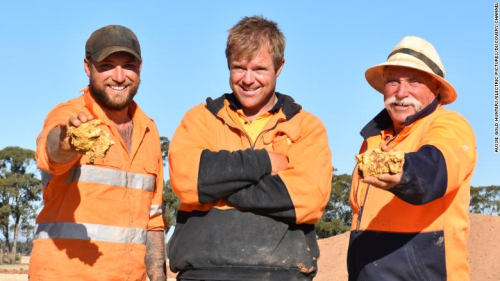
Read more: Two giant gold nuggets worth $250,000 found in AustraliaCNN has a story about the discovery of two giant gold nuggets. Collectively, the nuggets weigh about 7.7 lbs (3.5 kg) and are worth about $250,000. Gold diggers in southern Australia have found two huge nuggets worth $350,000 AUD ($250,000 USD) in historic goldfields. The pair of nuggets weigh in at a combined 3.5 kilograms (7.7 pounds) and were found on the same day near Tarnagulla in the state of Victoria, as shown on Thursday’s episode of “Aussie Gold Hunters” on the Discovery Channel. Prospectors Brent Shannon and his brother-in-law Ethan West found the nuggets in a matter of hours with the help…

ESCONI Gem, Mineral, and Fossil Show
Most Recent Post
- Mazon Monday #317: Pohlsepia Revisited — Not an Octopus After All
 A new paper “Synchrotron data reveal nautiloid characters inPohlsepia mazonensis, refuting a Palaeozoic origin for octobrachians” in the journal Proceedings of the Royal Society B Biological Sciences refutes the classification of Pohlsepia mazonensis as an octopus and reclassifies it as a soft-bodied nautiloid as Paleocadmus pohli.
- About ESCONI
- Around the Web
- Calendar of Events
- Code of Ethics and Conduct
- ESCONI Books for Sale
- ESCONI Gem, Mineral, and Fossil Show
- ESCONI in the News
- ESCONI Videos
- Field Trips
- Flashback Friday
- Fossil Friday
- Mazon Creek
- Mazon Monday
- Member Spotlight
- Membership Information
- Reference Material
- Throwback Thursday
- Trilobite Tuesday
Field trips require membership, but visitors are welcome at all meetings!
| Friday, April 10th | General Meeting – 8:00 PM via Zoom. Jessica Hull will present “Life in the Devonian Period, The Age of Fishes.” |
| Saturday, April 11th | Junior Study Group Meeting – 2:00 PM, in person at the College of DuPage Technical Education Center (TEC) Building – Room 1038A (Map). Katherine Howard will present on Sand and Sediment Collecting. Specifics of this meeting are available from Scott Galloway, 630-670-2591, gallowayscottf@gmail.com. |
| Saturday, April 18th | Paleontology Study Group – 7:30 PM via Zoom and in person at the College of DuPage, TEC, Room 1038B (Map). Keith Robitschek will present “Digging the Marl of the Lance Formation.” |
| Friday, April 24th | MAPS Expo XLVII – Springfield, IL. |
| Saturday, April 25th | MAPS Expo XLVII – Springfield, IL. |
| Sunday, April 26th | MAPS Expo XLVII – Springfield, IL. |
| No meeting this month | Mineralogy Study Group |