
-
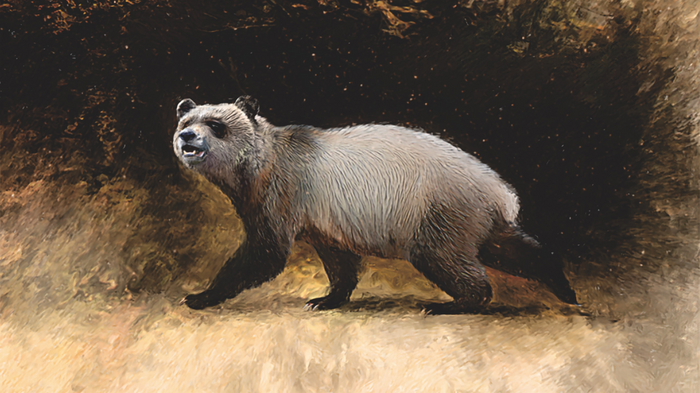
Europe’s last pandas were giant weaklings who couldn’t even eat bamboo
Read more: Europe’s last pandas were giant weaklings who couldn’t even eat bambooLiveScience has a story about European pandas. A new species of panda from Bulgaria called Agriarctos nikolovi lived about 10 million years ago. The fossil teeth show it had a vegetarian diet and would likely have struggled to eat bambo which is the main food of modern giant pandas, Ailuropoda melanoleuca. The research was published in the Journal of Vertebrate Paleontology. A pair of fossil teeth in a museum collection recently revealed when pandas last roamed Europe. When researchers examined the teeth, which had been kept in storage for around 40 years, they discovered that the fossils belonged to a…
-
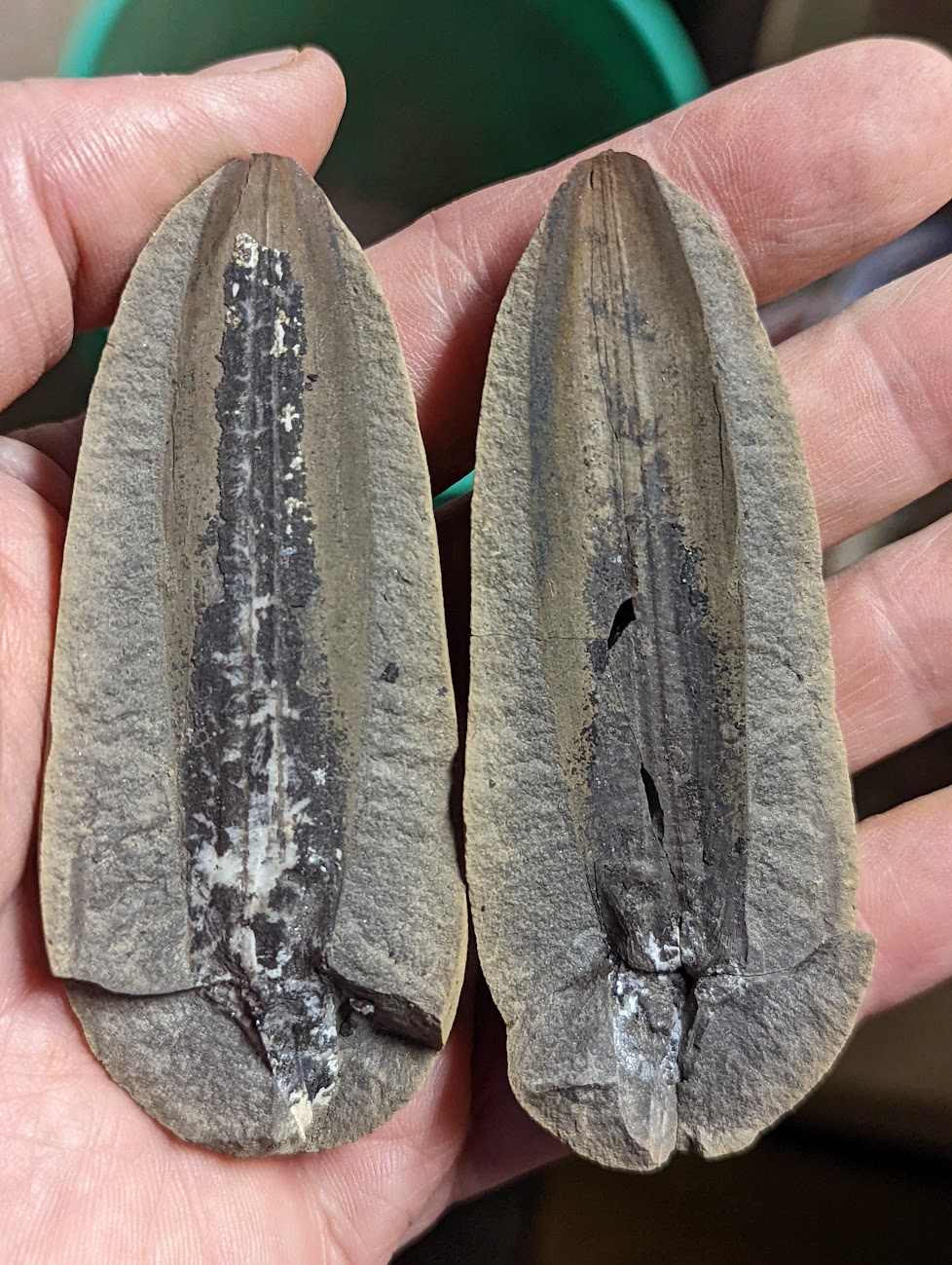
Mazon Monday #124: Lepidostrobophyllum majus
Read more: Mazon Monday #124: Lepidostrobophyllum majusThis is Mazon Monday post #124. What’s your favorite Mazon Creek fossil? Tell us at email:esconi.info@gmail.com. —————————————————– Lepidostrobophyllum majus is a cone bract. In modern plants, the woody pieces of a pine cone are the bracts. L. majus are the largest species found in the Mazon Creek biota. The cones these bracts were part of were Lepidodendron or Sigillaria, which were It was described way back in 1829 by Adolphe-Theodore Brongniart (1701-1876), who was a French paleontologist, considered by many to be the father of paleobotany. Lepidostrobophyllum majus appears on page 34 of “A Comprehensive Guide to the Fossil Flora…
-
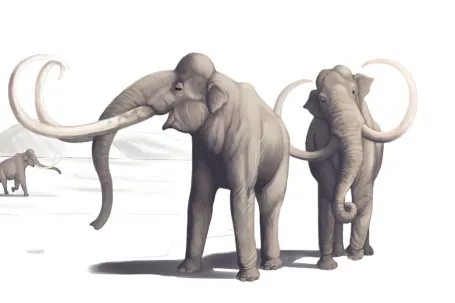
New Mexico mammoths among best evidence for early humans in North America
Read more: New Mexico mammoths among best evidence for early humans in North AmericaPhys.org has a story about early humans in North America. It’s long been thought that humans arrived in North America about 12,000 maybe 15000 years ago. There has been some spare evidence of a much earlier arrival, which was often played off as incorrect dating or just incorrect evidence. Now a team from the University of Texas at Austin has published a research that would push the date of arrive to at least 37,000 years ago! The paper appeared in the journal Frontiers in Ecology and Evolution. About 37,000 years ago, a mother mammoth and her calf met their end…
-

PBS Eons: Why Does Caffeine Exist?
Read more: PBS Eons: Why Does Caffeine Exist?PBS Eons has a new episode. This one is about the origins of caffeine and why it evolved. Today, billions of people around the world start their day with caffeine. But how and why did the ability to produce this molecule independently evolve in multiple, distantly-related lineages of flowering plants, again and again?
-

Fossil Friday #120: Kallidecthes richardsoni
Read more: Fossil Friday #120: Kallidecthes richardsoniThis is “Fossil Friday” post #120. Expect this to be a somewhat regular feature of the website. We will post any fossil pictures you send in to esconi.info@gmail.com. Please include a short description or story. Check the #FossilFriday Twitter hash tag for contributions from around the world! Got some cocktail sauce? For this week’s Fossil Friday, we have a large delicious Kallidecthes richardsoni shrimp from Pit 11. This one hails from Pit 11. K. richardsoni is named for Dr. Eugene Richardson Jr., Curator of Fossil Invertebrates at the Field Museum from the 1947 until 1983. It was described by Frederick…
-
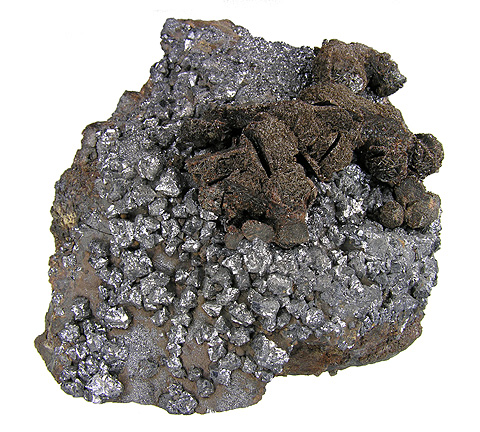
Throwback Thursday #122: Looking Back at ESCONI for August 2022
Read more: Throwback Thursday #122: Looking Back at ESCONI for August 2022This is Throwback Thursday #122. In these, we look back into the past at ESCONI specifically and Earth Science in general. If you have any contributions, (science, pictures, stories, etc …), please send them to esconi.info@gmail.com. Thanks! 25 Years Ago – August 1997 50 Years Ago – August 1972 70 Years Ago – August 1952
-

Ticks, Ticks, Ticks, Ticks, Ticks 2022!
Read more: Ticks, Ticks, Ticks, Ticks, Ticks 2022!It may be mid-summer, but the risk of tick bites and tick borne diseases is still among us. Here are some links to educate yourself against any potential problems. It’s been warm and late spring/early summer is the peak of tick season. With the nice weather, you will probably be spending more time outside looking for fossils, minerals, etc. in the woods, fields, and quarries. Or at least, that’s what we hope… after all, this is the ESCONI website. One creature you may encounter is a tick. Ticks are arthropods, that unfortunately are vectors for a number of serious diseases. …
-

Trilobite Tuesday #42: Trilobites’ growth may have resembled that of modern marine crustaceans
Read more: Trilobite Tuesday #42: Trilobites’ growth may have resembled that of modern marine crustaceansPhys.org has a story about trilobite growth. Research published in the journal Paleobiology shows that trilobites grew in a fashion similar to modern extant crustaceans. Data for the study came from exceptionally preserved trilobites from “Beechers Trilobite Bed” in upstate New York. For more information about “Beecher’s Trilobite Bed”, have a look at Trilobite Tuesday #5. In a paper published in the journal Paleobiology, researchers from the University of British Columbia and Uppsala University show that the Ordovician trilobite Triarthrus eatoni, some 450 million years ago, reached a length of just above 4 cm in about 10 years, with a growth…
-
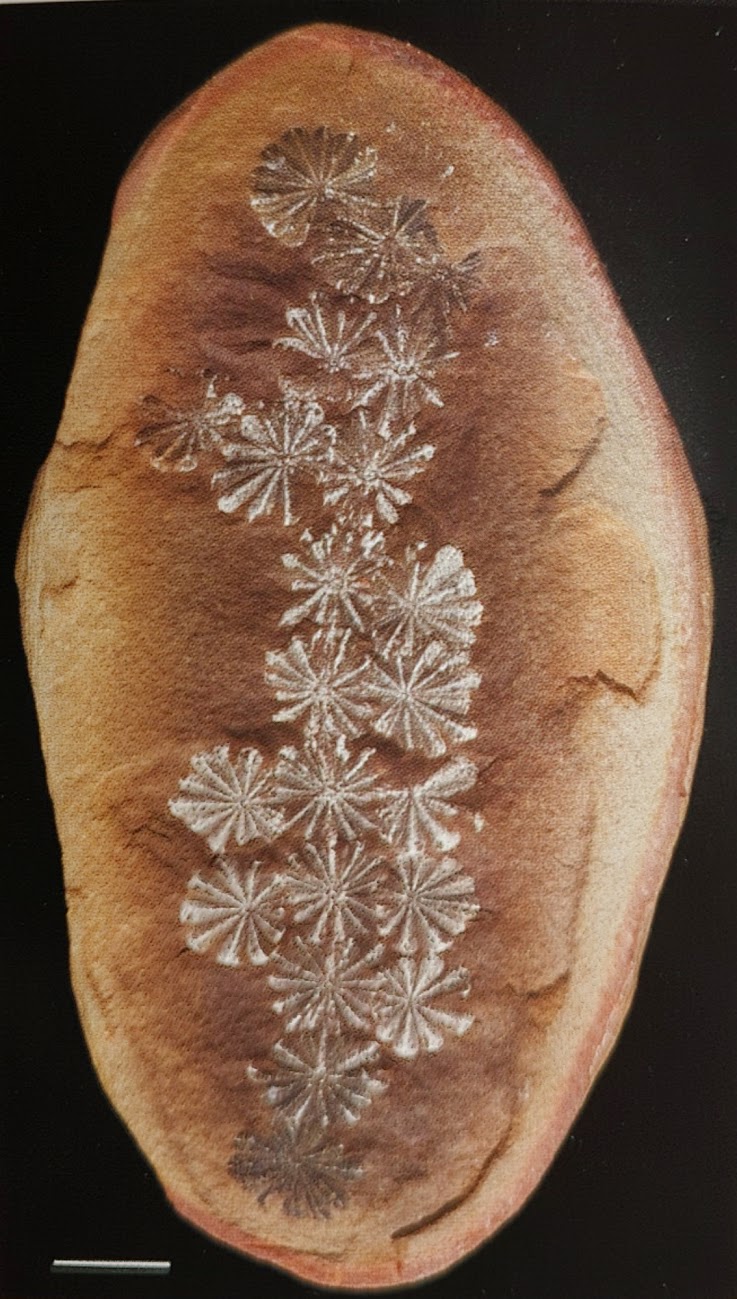
Mazon Monday #123: Annularia sphenophylloides
Read more: Mazon Monday #123: Annularia sphenophylloidesThis is Mazon Monday post #123. What’s your favorite Mazon Creek fossil? Tell us at email:esconi.info@gmail.com. —————————————————– Annularia is the extinct form genera given to the leaves of Calamites. Annularia sphenophylloides is a smaller variety. It was described in 1837 by August von Gutbier (1798-1866), a German paleontologist who described many Carboniferous plants from deposits in and around Germany. His name is also associated with various Permian animals like Parasaurus geintzi, which is an extinct species of pareiasaur, a plant eating parareptile. A. sphenophylloides was featured in Fossil Friday #119. Annularia sphenophylloides appears on Page 63 of “A Comprehensive Guide to…
-
Field Museum: Meet a Scientist: Chicago Fossils August 5th, 2022
Read more: Field Museum: Meet a Scientist: Chicago Fossils August 5th, 2022The Field Museum’s “Meet a Scientist” is looking at “Chicago Fossils” on August 5th, 2022. Learn what you can find on Chicago beaches and in nearby limestone exposures. That 430 million years ago Chicago was covered by a tropical sea with 300 foot tall reefs growing here. The evidence for this is the fossils we find in the rock around Chicago. Join a conversation with Paul Mayer, Fossil Invertebrate Collections Manager, and learn about Chicago fossils and rocks you can find on the beach. Scientists, researchers, and collections managers are behind the scenes every day, uncovering new information and taking care…
-
PBS Eons: How Plate Tectonics Transformed Los Angeles
Read more: PBS Eons: How Plate Tectonics Transformed Los AngelesPBS Eons has a new episode over on Youtube. This one is about the geology and paleontology of Los Angeles. Despite the profound changes we’ve made here in recent history, the epic saga of Los Angeles' natural history is still visible – and even striking – if you know where and how to look for it.
-

Fossil Friday #119: Annularia sphenophylloides
Read more: Fossil Friday #119: Annularia sphenophylloidesThis is “Fossil Friday” post #119. Expect this to be a somewhat regular feature of the website. We will post any fossil pictures you send in to esconi.info@gmail.com. Please include a short description or story. Check the #FossilFriday Twitter hash tag for contributions from around the world! This week, we have a sweet little Mazon Creek Annularia sphenophylloides. This little beauty comes from ESCONI member Ralph Jewell. Ralph has a new thread over on The Fossil Forum that will make you drool if you love Mazon Creek fossils. This thread is full of fossils from a collection he recently purchased from…
-

Throwback Thursday #121: The Chicago Portage
Read more: Throwback Thursday #121: The Chicago PortageThis is Throwback Thursday #121. In these, we look back into the past at ESCONI specifically and Earth Science in general. If you have any contributions, (science, pictures, stories, etc …), please send them to esconi.info@gmail.com. Thanks! Ever wonder why Chicago is Chicago? It’s all about a small piece of land now called the “Chicago Portage”. There’s even a historic site – The Chicago Portage National Historic Site. which is located in Lyons, IL in Portage Woods Forest Preserve at 47th Street near where the Old Route 66 crosses the Desplaines River. Welcome to the Chicago Portage, the birthplace of…
-
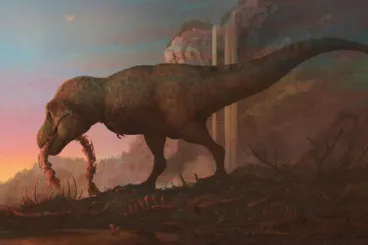
Splitting T. Rex Into 3 Species Becomes a Dinosaur Royal Rumble
Read more: Splitting T. Rex Into 3 Species Becomes a Dinosaur Royal RumbleThe New York Times Science column has a story about Tyrannosaurus rex. Back in February 2022, a paper in the journal Evolutionary Biology proposed that Tyrannosaurus rex is actually three distinct species – Tyrannosaurus rex, Tyrannosaurus imperator, and Tyrannosaurus regina. The paper pointed to differences like number of “incisor” teeth and whether the animal was gracile or robust as the distinguishing features. The proposal was met with much skepticism in the paleontology community. Now, we have a rebuttal, which also was published in the journal Evolutionary Biology. The authors of this paper include some of the most respected names in…
-

Sharks are older than the dinosaurs. What’s the secret to their success?
Read more: Sharks are older than the dinosaurs. What’s the secret to their success?Live Science has a shark story just in time for Shark Week. Yes, you read that correctly… sharks are much older than dinosaurs. Sharks evolved way back during the Ordovician Period, some 450 million years ago, while dinosaurs are relative youngsters at about 235 million years old. Sharks have made it though all the major mass extinctions. So, why have sharks, as a group, been so successful? One explanation could be that sharks are capable of modifying their physiology in response to environmental conditions, such as shrinking in size when temperatures increase. This capability enables species to quickly adapt to…
-
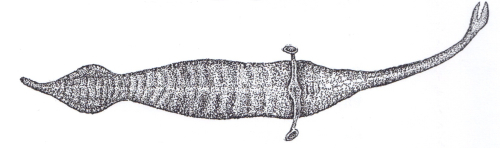
Mazon Monday #122: Mazon Creek Open House 2022 is October 15th, 2022
Read more: Mazon Monday #122: Mazon Creek Open House 2022 is October 15th, 2022This is Mazon Monday post #122. What’s your favorite Mazon Creek fossil? Tell us at email:esconi.info@gmail.com. —————————————————– Save the date! The Mazon Creek Open House is October 15th, 2022 from 9:00 AM to 4:00 PM at Cantigny Park in Wheaton, IL. The Mazon Creek Open House is returning for 2022! If you’ve been a Mazon Creek collector (or even just a passing fan), you may have heard of the Mazon Creek Open House. It was an annual affair, usually held in October at places as varied as the Burpee Museum, the Lizzadro Museum, and even the Elgin Public Library. There…
-
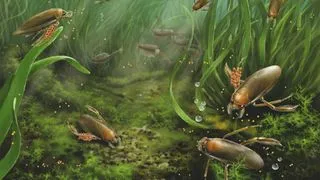
Jurassic insect wore eggs on its legs, fossils show
Read more: Jurassic insect wore eggs on its legs, fossils showLive Science has a story about a Jurassic insect discovery. Fossils show that a water bug that lived about 160 million years ago carried its eggs on its legs. The fossils were discovered in the Haifanggou Formation, a fossil-filled rock deposit near the village of Daohugou in northeastern China. A paper in the journal Proceedings of the Royal Society B: Biological Sciences has the details. In a study published Wednesday (July 13) in the journal Proceedings of the Royal Society B: Biological Sciences(opens in new tab), researchers analyzed nearly 160 fossilized Karataviella popovi, an extinct species of water bug with oar-like hind…
-

These Fins Were Made for Walking … and Then Swimming
Read more: These Fins Were Made for Walking … and Then SwimmingAn artist’s reconstruction of Qikiqtania wakei, in light green, and its larger cousin, Tiktaalik roseae.Credit…Alex Boersma The New York Times has a story about a newly described fish from the Devonian. Qikiqtania wakei lived about 375 million years ago during the Devonian Period in what is now Nunavut, an Arctic territory of Canada. It was discovered in 2004 by Dr. Neil Shubin. This animal is closely related to a tetrapod-like fish called Tiktaalik roseae, which Shubin detailed in a paper in 2006 and the book “Your Inner Fish” in 2008. Qikiqtaniais interesting because it seems to be an animal that…
-
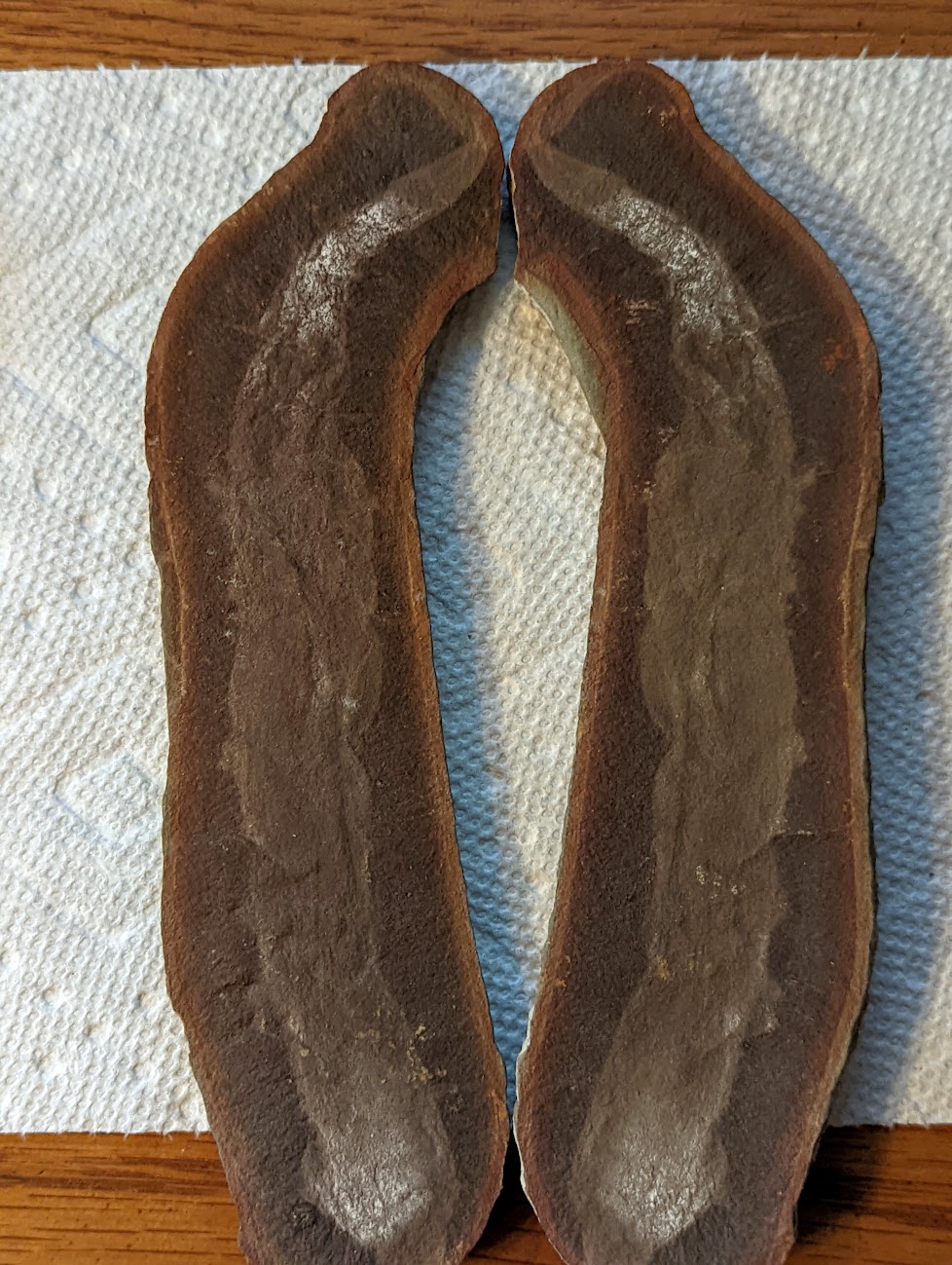
Fossil Friday #118: Tully Monster
Read more: Fossil Friday #118: Tully MonsterThis is “Fossil Friday” post #118. Expect this to be a somewhat regular feature of the website. We will post any fossil pictures you send in to esconi.info@gmail.com. Please include a short description or story. Check the #FossilFriday Twitter hash tag for contributions from around the world! For Fossil Friday this week, we have a very nice specimen of the Tully Monster from past President of ESCONI, Floyd Rogers. Floyd recently donated some fossils, minerals, and other assorted material, including an exquisite Mazon Creek insect wing, which might belong to an undescribed species. Stay tuned for more information. Tullymonstrum gregarium…
-

Throwback Thursday #120: What is “Earth Science”?
Read more: Throwback Thursday #120: What is “Earth Science”?This is Throwback Thursday #120. In these, we look back into the past at ESCONI specifically and Earth Science in general. If you have any contributions, (science, pictures, stories, etc …), please send them to esconi.info@gmail.com. Thanks! This Throwback Thursday is a look back at a column published in April 1952 called “What is “Earth Science”? It was written by William Allaway, the first Chairman on ESCONI. Dust-bowl, sinking water tables, city water supply, and flood control were the topics he touched upon. The water issues are still very relevant today. As surface water disappears, we are using up aquifers…

ESCONI Gem, Mineral, and Fossil Show
Most Recent Post
- Throwback Thursday #312: Ron Schinderle Donation
 Barb Schinderle stopped by ESCONI Show last month to drop off a donation of her late husband Ron’s fossils. Ron passed away in 2021. He was a long time ESCONI member and an avid fossil collector . He went on many ESCONI field trips. A group of us remember him fondly from our many trips to Pit 11 and Fossil Rock Campgrounds to collect Mazon Creek fossils.
- About ESCONI
- Around the Web
- Calendar of Events
- Code of Ethics and Conduct
- ESCONI Books for Sale
- ESCONI Gem, Mineral, and Fossil Show
- ESCONI in the News
- ESCONI Videos
- Field Trips
- Flashback Friday
- Fossil Friday
- Mazon Creek
- Mazon Monday
- Member Spotlight
- Membership Information
- Reference Material
- Throwback Thursday
- Trilobite Tuesday
Field trips require membership, but visitors are welcome at all meetings!
| Friday, April 10th | General Meeting – 8:00 PM via Zoom. Jessica Hull will present “Life in the Devonian Period, The Age of Fishes.” |
| Saturday, April 11th | Junior Study Group Meeting – 2:00 PM, in person at the College of DuPage Technical Education Center (TEC) Building – Room 1038A (Map). Katherine Howard will present on Sand and Sediment Collecting. Specifics of this meeting are available from Scott Galloway, 630-670-2591, gallowayscottf@gmail.com. |
| Saturday, April 18th | Paleontology Study Group – 7:30 PM via Zoom and in person at the College of DuPage, TEC, Room 1038B (Map). Keith Robitschek will present “Digging the Marl of the Lance Formation.” |
| Friday, April 24th | MAPS Expo XLVII – Springfield, IL. |
| Saturday, April 25th | MAPS Expo XLVII – Springfield, IL. |
| Sunday, April 26th | MAPS Expo XLVII – Springfield, IL. |
| No meeting this month | Mineralogy Study Group |