
-
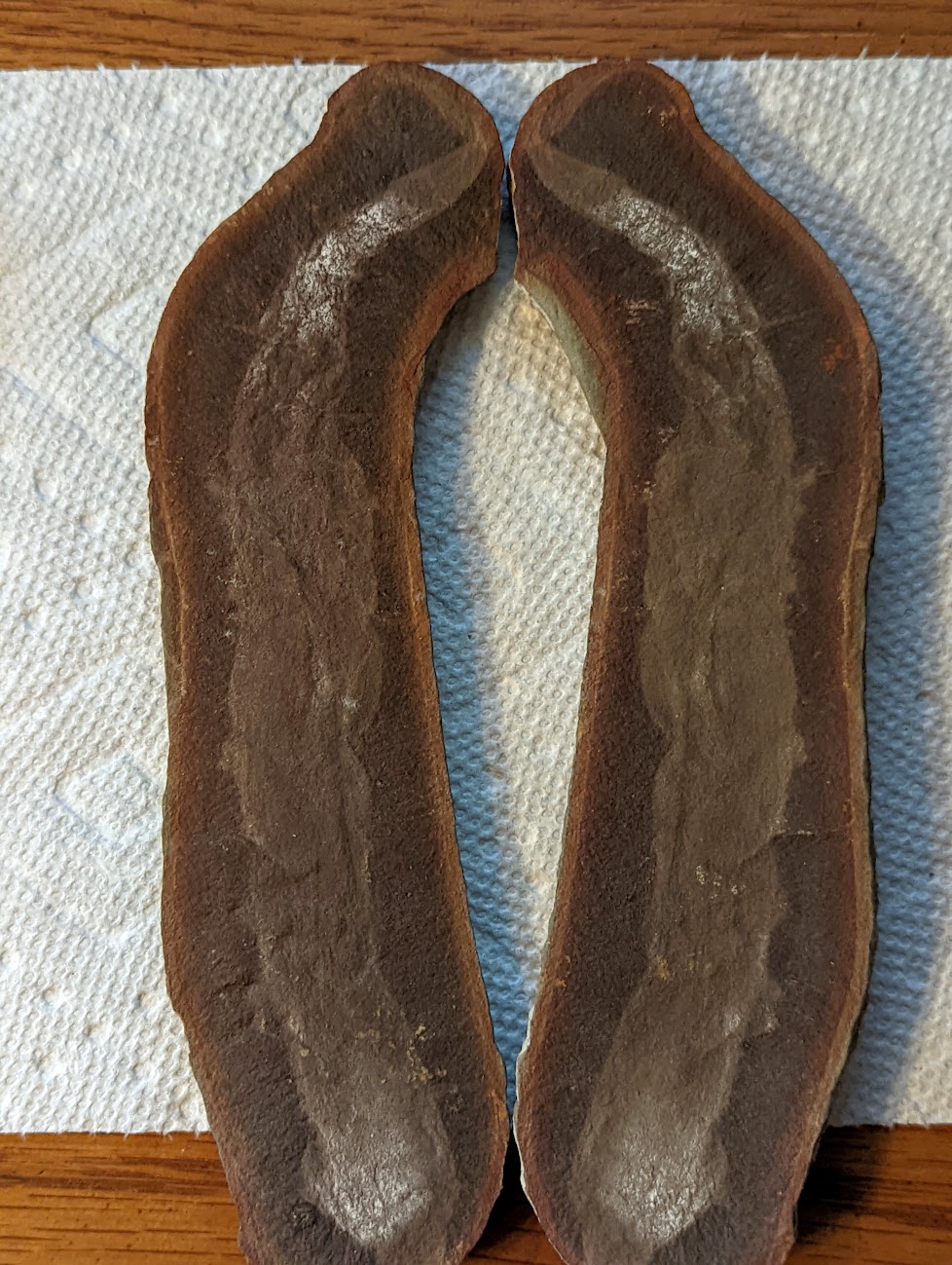
Fossil Friday #118: Tully Monster
Read more: Fossil Friday #118: Tully MonsterThis is “Fossil Friday” post #118. Expect this to be a somewhat regular feature of the website. We will post any fossil pictures you send in to esconi.info@gmail.com. Please include a short description or story. Check the #FossilFriday Twitter hash tag for contributions from around the world! For Fossil Friday this week, we have a very nice specimen of the Tully Monster from past President of ESCONI, Floyd Rogers. Floyd recently donated some fossils, minerals, and other assorted material, including an exquisite Mazon Creek insect wing, which might belong to an undescribed species. Stay tuned for more information. Tullymonstrum gregarium…
-

Throwback Thursday #120: What is “Earth Science”?
Read more: Throwback Thursday #120: What is “Earth Science”?This is Throwback Thursday #120. In these, we look back into the past at ESCONI specifically and Earth Science in general. If you have any contributions, (science, pictures, stories, etc …), please send them to esconi.info@gmail.com. Thanks! This Throwback Thursday is a look back at a column published in April 1952 called “What is “Earth Science”? It was written by William Allaway, the first Chairman on ESCONI. Dust-bowl, sinking water tables, city water supply, and flood control were the topics he touched upon. The water issues are still very relevant today. As surface water disappears, we are using up aquifers…
-
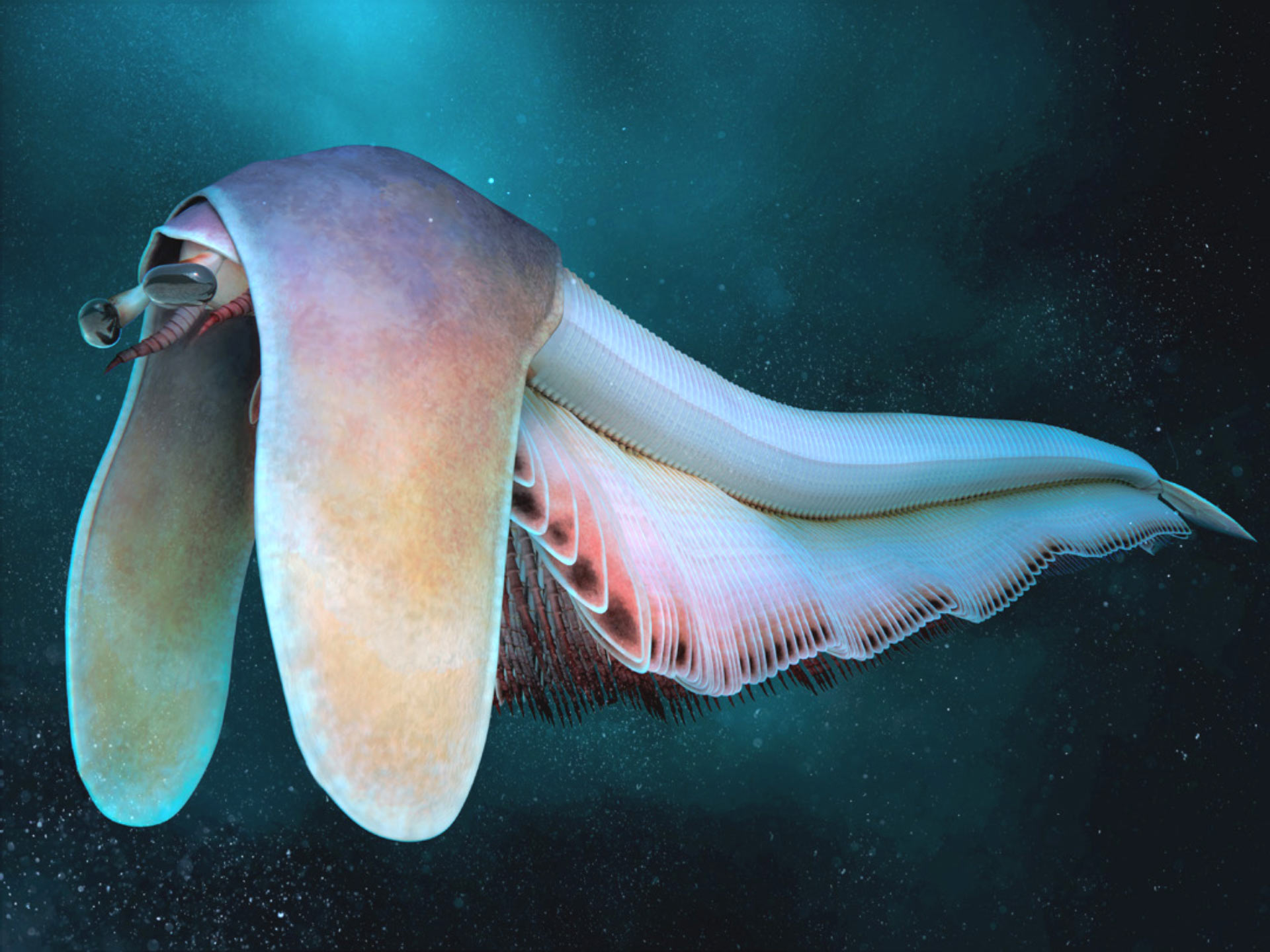
Cambrian Bivalved Arthropod Had Extremely Multisegmented Body
Read more: Cambrian Bivalved Arthropod Had Extremely Multisegmented BodySciNews has a story about a large bivalved arthropod from the Burgess Shale. This animal, Balhuticaris voltae, lived about 506 million years ago in what is now British Columbia, Canada. It is one of the largest known Cambrian arthropods and the largest bivalved arthropod every found. The new species was described in a paper in the journal Science. Eleven specimens of Balhuticaris voltae were collected from the Marble Canyon area of the famous Burgess Shale, a Cambrian-age fossil field in Canada. “Balhuticaris voltae is one of the biggest fully-preserved animals from the Burgess Shale and the Cambrian,” the scientists said. “The increasing ecological complexity of the…
-

Mazon Monday #121: Rhaphidiophorus hystrix
Read more: Mazon Monday #121: Rhaphidiophorus hystrixThis is Mazon Monday post #121. What’s your favorite Mazon Creek fossil? Tell us at email:esconi.info@gmail.com. —————————————————– Rhaphidiophorus hystrix is a polychaete worm. It was described by Ida Thompson in 1979 in the paper “Errant polychaetes (Annelida) from the Pennsylvanian Essex fauna of northern Illinois.”, which was published in the journal Palaeontographica Abteilung A Palaeozoologie-Stratigraphie. Abstract The Essex Fauna is the marine phase of the Maxon Creek beds; soft-bodied animals, including the polychaetes, are preserved as whole-body fossils in siderite concretions within the Francis Creek Shale. Descriptions of the polychaetes include details of the jaws, setae, prostomia, cuticles, and cirri.…
-
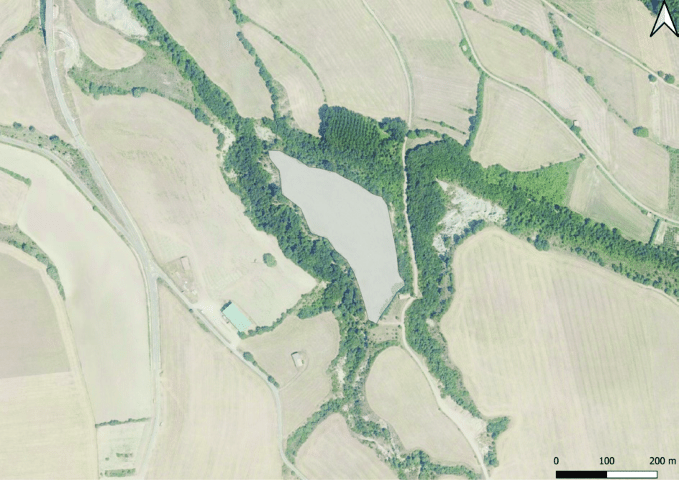
Researchers Have Discovered a Previously Unknown Roman City ‘of Monumental Proportions’ in Northern Spain
Read more: Researchers Have Discovered a Previously Unknown Roman City ‘of Monumental Proportions’ in Northern Spainartnet has a story about the discovery of a large unknown Roman city in Spain. An entire Roman city has been discovered by Archaeologists from the University of Zaragoza in Spain. The location is just outside the small town of Artieda in Aragon. The remains include stunning motifs of shells, scallops and seahorses. Hopefully, we will get more details of this discovery soon! Until now, researchers thought this 10-acre expanse was home to several separate archaeological sites, including the Hermitage of San Pedro and Rein. El Forau de la Tuta is the name for everything now, since the team realized…
-

PBS Eons: When Giant Millipedes Reigned
Read more: PBS Eons: When Giant Millipedes ReignedPBS Eons has a new episode. This one is about the giant millipede Arthropleura, which lived during the Carboniferous Period. Arthropleura fossils are rare and this is one of the largest and the oldest. This giant millipede was the largest known invertebrate to ever live on land. So how did it get so big??
-
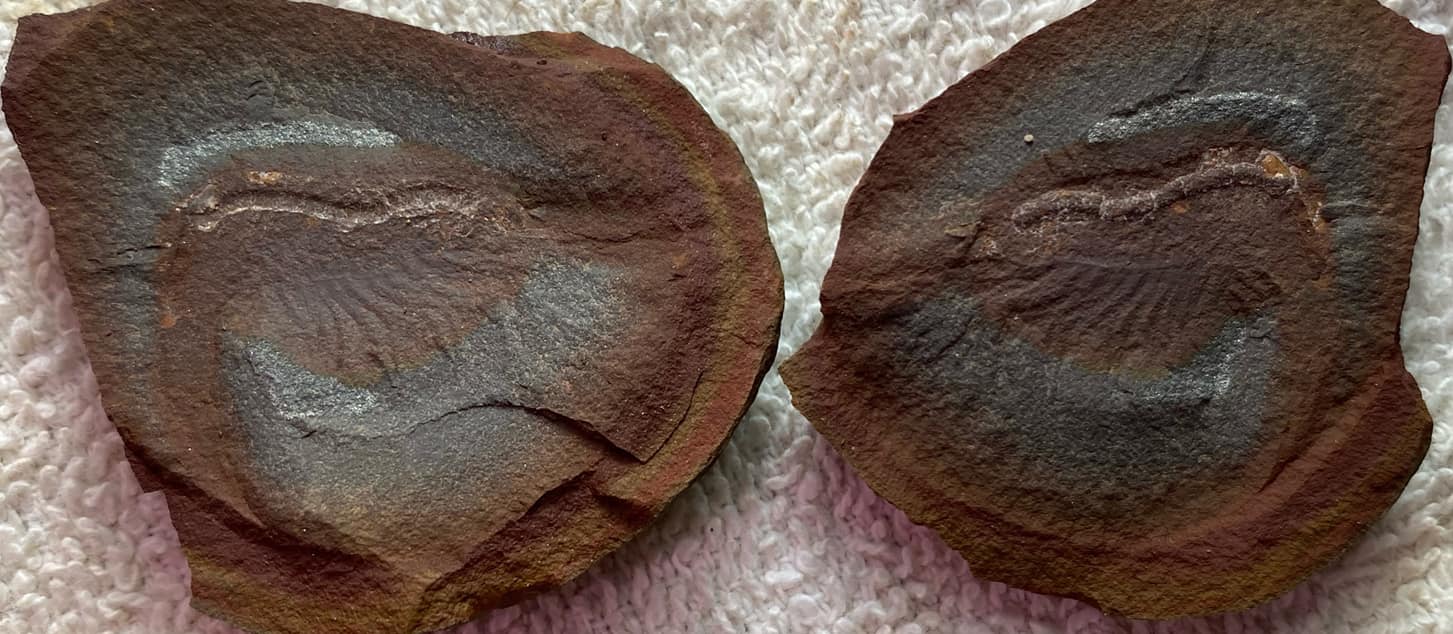
Fossil Friday #117: Lobatelson mclaughlinae
Read more: Fossil Friday #117: Lobatelson mclaughlinaeThis is the “Fossil Friday” post #117. Expect this to be a somewhat regular feature of the website. We will post any fossil pictures you send in to esconi.info@gmail.com. Please include a short description or story. Check the #FossilFriday Twitter hash tag for contributions from around the world! Today, we have a very nice Pit 11 Lobetelson mclaughlinae from ESCONI member Jake Fill. Jake says he collected it earlier this spring and opened it via Freeze/Thaw. The longer rostrum and the wider shape of the telson are the identifying features between it and Belotelson magister. L. mclaughlinae was described in 2006…
-
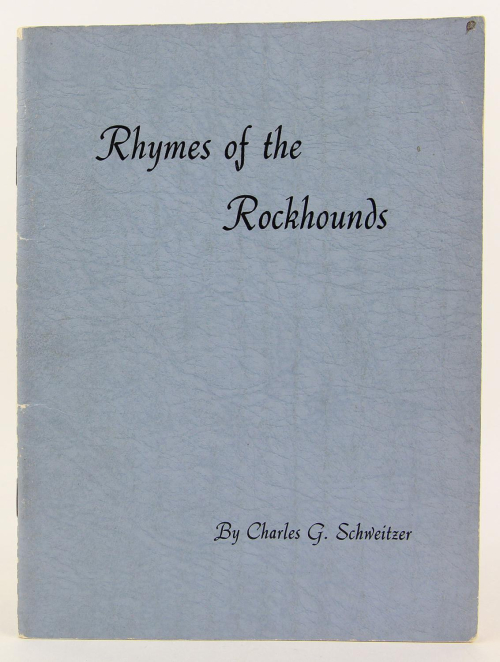
Throwback Thursday #119: Rockhounds vs Rockhogs
Read more: Throwback Thursday #119: Rockhounds vs RockhogsThis is Throwback Thursday #119. In these, we look back into the past at ESCONI specifically and Earth Science in general. If you have any contributions, (science, pictures, stories, etc …), please send them to esconi.info@gmail.com. Thanks! Today, we have another poem by Charles Schweitzer, who wrote the book “Rhymes of the Rockhounds”. The book is a collection of his rockhound poems from the 1950’s. We have featured a few of his other poems, see Throwback Thursday #98 for “The Rock I Threw Away”. Remember, share what you find and leave a few for the next guy or gal… Rockhounds…
-

Dinosaurs took over the planet because they could endure the cold, scientists say
Read more: Dinosaurs took over the planet because they could endure the cold, scientists sayLiveScience has a post about how dinosaurs came to dominate in the early Jurassic. It’s long been theorized that dinosaurs were better adapted to hot weather and so took over from their crocodillian cousins around the Triassic/Jurassic extinction event about 202 million years ago. Now, a paper in the journal Science Advances proposes that it was relative warm-bloodedness, feathers, and a high metabolism that allowed them to push crocodillians to the side. Dinosaurs took over the planet thanks to their surprising ability to endure freezing-cold temperatures, ancient footprints have revealed. The dinosaur tracks, stamped into the sandstone and siltstone of ancient lake…
-
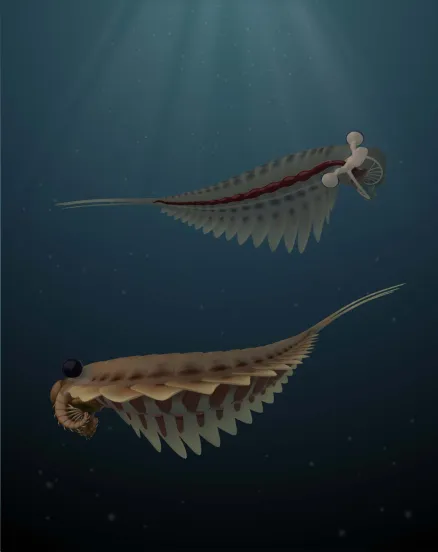
500-million-year-old fossilized brains of Stanleycaris prompt a rethink of the evolution of insects and spiders
Read more: 500-million-year-old fossilized brains of Stanleycaris prompt a rethink of the evolution of insects and spidersPhys.org has a story about fossilized brains…500 million year old brains. A recent paper from researchers at the Royal Ontario Museum in Toronto, Canada describes the fossilized brain in a species of Radiodont called Stanleycaris. The animal is related to Anomalocaris and distantly related to modern day spiders and insects. This amazing fossil was collected sometime in the 1980’s and 1990’s in a deposit of the Burgess Shale above the original Wolcott Quarry in British Columbia, Canada. Royal Ontario Museum revealed new research based on a cache of fossils that contains the brain and nervous system of a half-billion-year-old marine…
-

Mazon Monday #120: Lobetelson mclaughlinae
Read more: Mazon Monday #120: Lobetelson mclaughlinaeThis is Mazon Monday post #120. What’s your favorite Mazon Creek fossil? Tell us at email:esconi.info@gmail.com. —————————————————– Lobetelson mclaughlinae is one of the few remaining shrimp species we haven’t looked at. It was described in 2006 by Frederick Schram, who described many of the Mazon Creek crustaceans. The description was published in the paper “Lobetelson mclaughlinae, a new genus and species of belotelsonid malacostracan from the Pennsylvanian of the Mazon Creek area“. Lobetelson mclaughlinae n. gen., n. sp. from the well-known Mazon Creek faunas of the Pennsylvanian (Carboniferous) of northeastern Illinois, USA, shares features in common with Belotelson magister (Packard,…
-

ESCONI is now on Instagram!
Read more: ESCONI is now on Instagram!Come see us over on Instagram. Tell your friends! We have been posting there for about a month. There’s lots of photos, some of which are unique to Instagram. Also, check us out on Twitter. We’ve been there for a few years now. Links to our posts are posted to Twitter automatically.
-
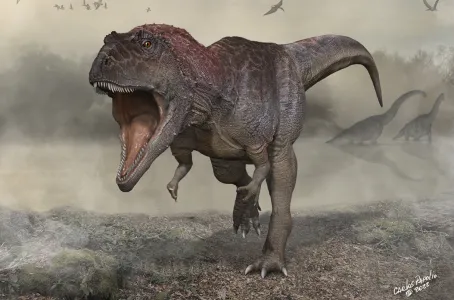
For dinos like T. rex, puny arms may have been the price of a giant head
Read more: For dinos like T. rex, puny arms may have been the price of a giant headScience.org has a story about the discovery of a new theropod dinosaur. This one is called Meraxes gigas, after a Targaryen dragon from Game of Thrones. It lived about 95 million years ago in what is now the Patagonian Desert of Argentina. It belonged to a family of theropod dinosaurs called Carcharodontosauridae. All the details can be found in a paper in the journal Cell Current Biology. In the rolling hills of Argentina’s Patagonian Desert, Juan Canale struck paleontological gold. Within half the length of a soccer pitch, his team discovered five dinosaur skeletons, including a new species that’s a Tyrannosaurus rex doppelgänger—the…
-

Fossil Friday #116: Waldon Shale Fossils
Read more: Fossil Friday #116: Waldon Shale FossilsThis is the “Fossil Friday” post #116. Expect this to be a somewhat regular feature of the website. We will post any fossil pictures you send in to esconi.info@gmail.com. Please include a short description or story. Check the #FossilFriday Twitter hash tag for contributions from around the world! We have some Silurian fossils from southern Indiana for Fossil Friday this week. Back on May 27th, 2022, ESCONI held a field trip at the St. Paul Quarry in St. Paul, IN., and for the Throwback Thursday that week, we looked back at a field trip to that quarry in 1990. ESCONI…
-

Throwback Thursday #118: Looking Back at ESCONI for July 2022
Read more: Throwback Thursday #118: Looking Back at ESCONI for July 2022This is Throwback Thursday #118. In these, we look back into the past at ESCONI specifically and Earth Science in general. If you have any contributions, (science, pictures, stories, etc …), please send them to esconi.info@gmail.com. Thanks! 25 Years Ago – July 1997 50 Years Ago – July 1972 70 Years Ago – July 1952
-
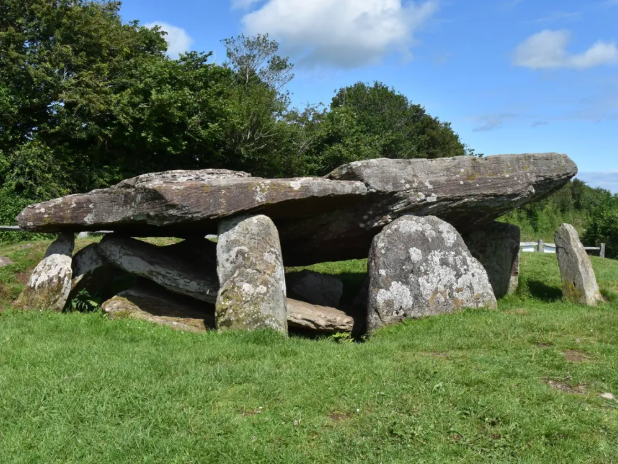
Archaeologists Begin First-Ever Excavation of Tomb Linked to King Arthur
Read more: Archaeologists Begin First-Ever Excavation of Tomb Linked to King ArthurSmithsonian Magazine has an interesting article about Arthur’s Stone. Researchers hope to find clues to who used the chambered tomb, was it the actual Neolithic Britons? According to popular lore, Arthur’s Stone, a roughly 5,000-year-old tomb in the West Midlands of England, boasts ties to King Arthur, the mythical leader of Camelot. One legend holds that Arthur found a pebble in his shoe while marching to battle and threw it aside, at which point it grew in size out of “pride [at] having been touched by [him],” per Atlas Obscura. Another story suggests that Arthur clashed with a giant whose elbows left massive impressions in the…
-

A Canine Companion So Nice It (Maybe) Evolved Twice
Read more: A Canine Companion So Nice It (Maybe) Evolved TwiceThe New York Times has a story about man’s (and woman’s) best friend. For a long time, we’ve wondered “where did dogs come from?”. Now, after research that has looked at 72 ancient wolf genes, we might finally know. It seems that two different lineages of ancient wolves contributed to the DNA of modern dogs. Research published in the journal Nature found that a population in Asia and a separate population in the Middle East or the surrounding area make up the ancestry of modern dogs. For years, one of the most confounding questions in science — alongside “What is…
-
Mazon Monday #119: Carboniferous Insects
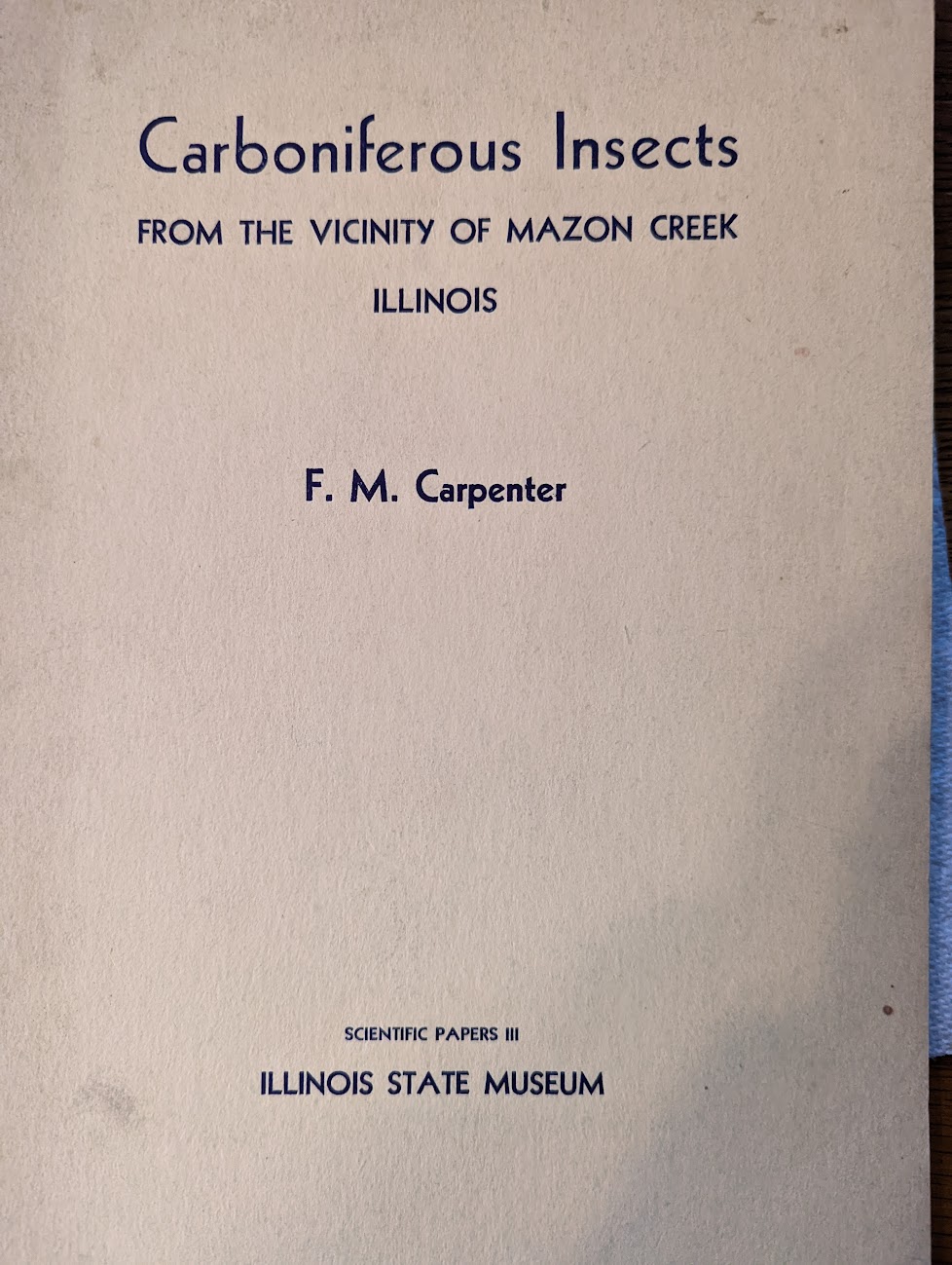
Read more: Mazon Monday #119: Carboniferous InsectsThis is Mazon Monday post #119. What’s your favorite Mazon Creek fossil? Tell us at email:esconi.info@gmail.com. —————————————————– In 1943, the Illinois State Museum published the first paper in a series that would form the basis of the third volume of the Scientific Papers of the Illinois State Museum. All of the papers in that volume entitled “Coal Age Fossils” (see Mazon Monday #80) addressed the Carboniferous nodules which occur near Mazon Creek in Illinois. This first paper was titled “Carboniferous Insects from the Vicinity of Mazon Creek Illinois”. It was written by F. M. Carpenter, who also wrote Chapter 14A…
-
Meet Psittacosaurus, The Dinosaur That Keeps on Giving
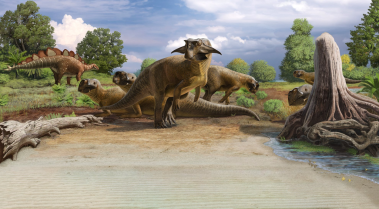
Read more: Meet Psittacosaurus, The Dinosaur That Keeps on GivingMax’ Blogo-Saurus has a fantastic post about Psittacosaurus. Psittacosaurus means “parrot lizard”, which comes from it’s beaked face. It is related to all ceratopian dinosaurs like Triceratops and is classified near the base of Marginocephalia. There are at least 12 species of Psittacosaurus. Their abundance in Asia during the Cretaceous Period has lead to the discovery of many non-avian dinosaur characteristics, like feathers, gastroliths, and social behavior. What is the most abundant dinosaur? If you guessed Psittacosaurus – a small horned dinosaur from across Asia – you are correct! While most dinosaurs have just one species, Psittacosaurus has twelve. Twelve! Having eleven more species…
-
PBS Eons: Giant Viruses Blur the Line Between Alive and Not
Read more: PBS Eons: Giant Viruses Blur the Line Between Alive and NotPBS Eons has a new episode. This one is about the evolution of giant viruses. In 2003, microbiologists made a huge discovery. One that would force us to reconsider a lot of what we thought we knew about the evolution of microbial life: giant viruses.

ESCONI Gem, Mineral, and Fossil Show
Most Recent Post
- PBS Terra: The Cascadia Megaquake Is Inevitable. And It Will Reshape America Forever
 PBS Terra has an interesting new video. This one covers the history, science, and future of the Cascadia Subduction Zone in the Pacific Northwest.
- About ESCONI
- Around the Web
- Calendar of Events
- Code of Ethics and Conduct
- ESCONI Books for Sale
- ESCONI Gem, Mineral, and Fossil Show
- ESCONI in the News
- ESCONI Videos
- Field Trips
- Flashback Friday
- Fossil Friday
- Mazon Creek
- Mazon Monday
- Member Spotlight
- Membership Information
- Reference Material
- Throwback Thursday
- Trilobite Tuesday
Field trips require membership, but visitors are welcome at all meetings!
| Friday, April 10th | General Meeting – 8:00 PM via Zoom. Jessica Hull will present “Life in the Devonian Period, The Age of Fishes.” |
| Saturday, April 11th | Junior Study Group Meeting – 2:00 PM, in person at the College of DuPage Technical Education Center (TEC) Building – Room 1038A (Map). Katherine Howard will present on Sand and Sediment Collecting. Specifics of this meeting are available from Scott Galloway, 630-670-2591, gallowayscottf@gmail.com. |
| Saturday, April 18th | Paleontology Study Group – 7:30 PM via Zoom and in person at the College of DuPage, TEC, Room 1038B (Map). Keith Robitschek will present “Digging the Marl of the Lance Formation.” |
| Friday, April 24th | MAPS Expo XLVII – Springfield, IL. |
| Saturday, April 25th | MAPS Expo XLVII – Springfield, IL. |
| Sunday, April 26th | MAPS Expo XLVII – Springfield, IL. |
| No meeting this month | Mineralogy Study Group |