
-

Scientists discover fossils of giant sea lizard that ruled the oceans 66 million years ago
Read more: Scientists discover fossils of giant sea lizard that ruled the oceans 66 million years agoPhys.org has a story about the discovery of a huge mosasaur in Morocco. It’s been named Thalassotitan atrox, and it probably preyed on other large marine reptiles like plesiosaurs, sea turtles, and even other mosasaurs. Mosasaurs are not dinosaurs, but actually are distant relatives of modern iguanas and monitor lizards. The research was published in the journal Cretaceous Research. Mosasaurs looked like a Komodo dragon with flippers instead of legs, and a shark-like tail fin. Mosasaurs became larger and more specialized in the last 25 million years of the Cretaceous, taking niches once filled by marine reptiles like plesiosaurs and…
-

PBS Eons: The Fungi That Turned Ants Into Zombies
Read more: PBS Eons: The Fungi That Turned Ants Into ZombiesPBS Eons has a new episode on Youtube. This one is about a fungus that can control ants. This fungus was actually manipulating ants’ movements, forcing them to do something they’d never ordinarily do, something strange, yet specific…
-

ESCONI Events September 2022
Read more: ESCONI Events September 2022Field trips require membership, but visitors are welcome at all meetings! Fri, Sept 9th ESCONI General Meeting 8:00 PM Zoom – Topic: “Paleozoic fishes of the Illinois Basin” by Dr. Ryan Shell Zoom link Sat, Sept 10th ESCONI Junior Meeting – 7:00 PM at College of DuPage – Topic: "Updating our Mazon Creek Collection and Tumbling Rocks" Specifics of this meeting are available from Scott Galloway, 630-670-2591, gallowayscottf@gmail.com. The meeting will be in person at the College of DuPage Tech Ed (TEC) Building, Room 1038A (Map). Sat, Sept 10th ESCONI Field Trip to Braceville, IL for Mazon Creek Fossils See…
-
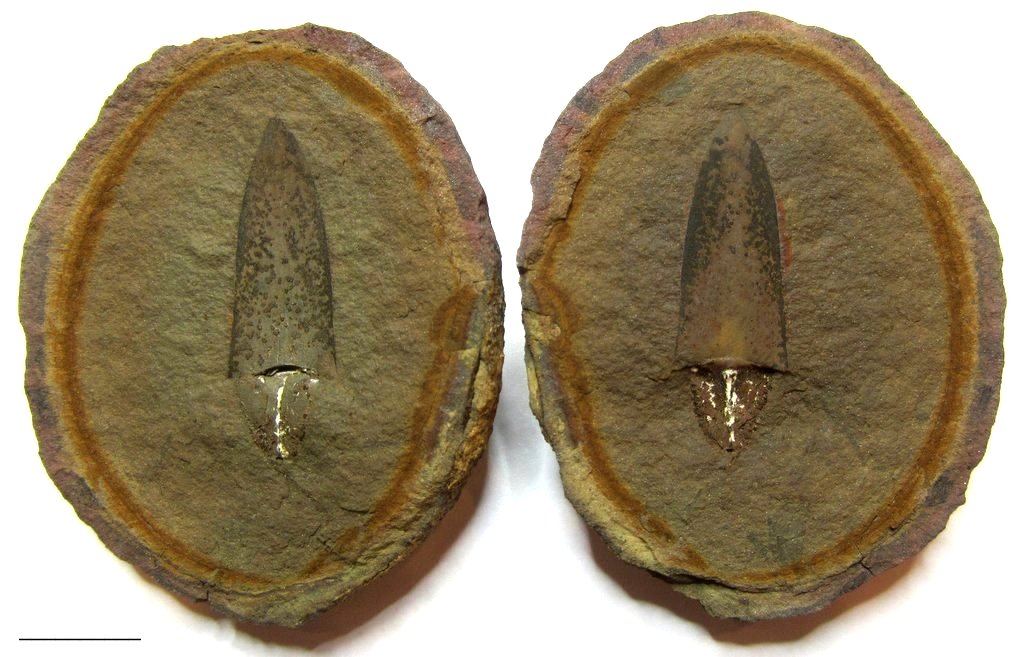
Fossil Friday #123: Lepidostrobophyllum lanceolatus
Read more: Fossil Friday #123: Lepidostrobophyllum lanceolatusThis is “Fossil Friday” post #123. Expect this to be a somewhat regular feature of the website. We will post any fossil pictures you send in to esconi.info@gmail.com. Please include a short description or story. Check the #FossilFriday Twitter hash tag for contributions from around the world! A stunning cone bract is up for Fossil Friday this week. This gorgeous specimen comes from ESCONI member Marie Angkuw, who has shared with us on a few previous occasions. The species here is Lepidostrobophyllum lanceolatus. Have a look on page 33 of “A Comprehensive Guide to the Fossil Flora of Mazon Creek”…
-
Throwback Thursday #125: ESCONI at the College of DuPage 1983
Read more: Throwback Thursday #125: ESCONI at the College of DuPage 1983This is Throwback Thursday #125. In these, we look back into the past at ESCONI specifically and Earth Science in general. If you have any contributions, (science, pictures, stories, etc …), please send them to esconi.info@gmail.com. Thanks! Who’s ready to get back to ESCONI meetings? We have the September 2022 General Meeting coming up on September 9th, 2022 at the College of DuPage. The very first ESCONI General Meeting at the College of DuPage occurred on Friday, September 9th, 1983. This was announced in the July/August 1983 edition of the ESCONI newsletter. Previously, most General Meetings were held at the…
-
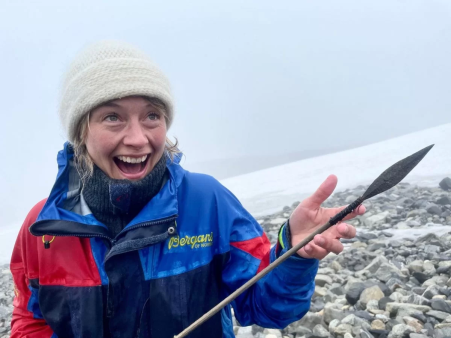
Glacier Archaeologists Find a 1300-Year-Old Arrow in Melting Ice
Read more: Glacier Archaeologists Find a 1300-Year-Old Arrow in Melting IceThe Archaeologist has a piece about the discovery of a 1300 year old arrow. The arrow was found during a research project on the Langfonne ice patch in the Jutunheimen Mountains in Norway. It dates to the Late Neolithic Age from about 2400 to 1750 BC. The Langfonne ice patch has shrunk 30% in the last 20 years due to climate change. The arrow was discovered in a collection of broken rock fragments between larger stones on the lower edge of the icefield. The team believes that the arrow was lost and deposited downslope by meltwater and that it has…
-

Eighty million years ago, western Kansas was ‘hell’s aquarium.’ Here’s what it can teach us today
Read more: Eighty million years ago, western Kansas was ‘hell’s aquarium.’ Here’s what it can teach us todayHigh Plains Public Radio (HPPR) has a story about Kansas during the Cretaceous Period. Eight million years ago, a good part of Kansas was covered by the Western Interior Seaway – a “shallow” sea. That sea teamed with life, including large mosasaurs, fish like Xyphactinus, sharks, and even giant clams. Circling above were pterosaurs like Pteronodon. One very famous fossil from western Kansas is called the “fish within a fish”, which resides in the Sternberg Museum in Hays, Kansas. The fossil features a large Xyphactinus fish with a smaller fish fossilized in its stomach. That’s when he dug up a…
-
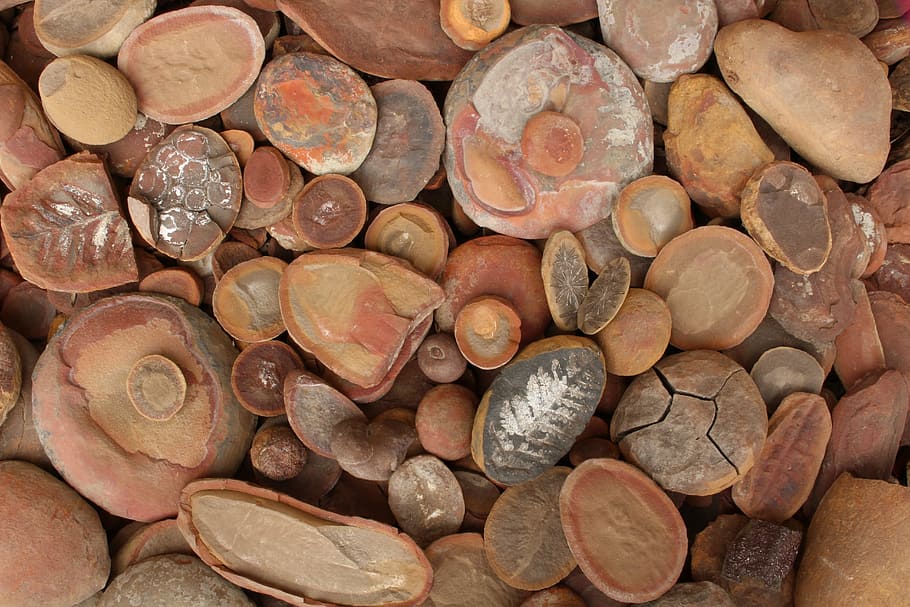
Mazon Monday #126: Relative Abundance of Different Mazon Creek Organisms
Read more: Mazon Monday #126: Relative Abundance of Different Mazon Creek OrganismsThis is Mazon Monday post #126. What’s your favorite Mazon Creek fossil? Tell us at email:esconi.info@gmail.com. —————————————————– There are good shapes and bad shapes, but at the end of the day – it’s what’s in the concretion that counts. Everyone wants to know what might be in the concretion they just found. It’s pretty well known that the northern Braidwood biota yields concretions that are more likely to have plant matter, while the southern Essex biota, being marine, is more likely to have animal fossils. Chapter 4B in the “Richardson’s Guide to the Fossil Fauna of Mazon Creek” shows the relative…
-
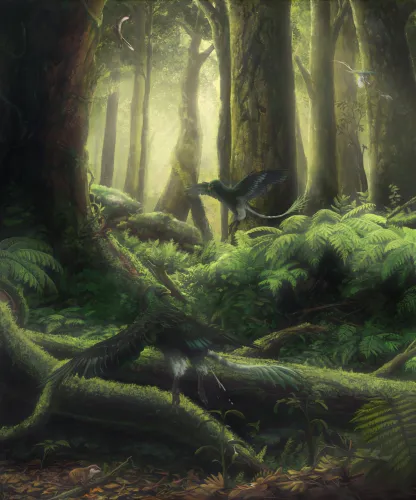
The early bird gets the fruit: Fossil provides earliest evidence of fruit-eating by any animal
Read more: The early bird gets the fruit: Fossil provides earliest evidence of fruit-eating by any animalPhys.org has a story about birds and fruit. Jingmai O’Connor of the Field Museum is co-writer of a paper (in the journal eLife) about the early bird Jeholornis, which is believed to lived on a diet of fruit about 120 million years ago during the Cretaceous Period. Jeholornis fossils have been found in China. “This is the oldest evidence of fruit-eating in any animal,” says Jingmai O’Connor, associate curator of fossil reptiles at the Field Museum in Chicago and co-author of the new eLife paper. “Fruits are an incredible resource that everybody’s familiar with, and the plants that produce them are everywhere, but it…
-
PBS Eons: How Whale Evolution Kind of Sucked
Read more: PBS Eons: How Whale Evolution Kind of SuckedPBS Eons has a new episode. This one is about the evolution of whales and how and when baleen appeared. Mystacodon is the earliest known mysticete, the group that, today, we call the baleen whales. But if this was a baleen whale, where was its baleen? Where did baleen come from? And how did it live without it?
-

Fossil Friday #122: Eldredgeops rana from Penn Dixie
Read more: Fossil Friday #122: Eldredgeops rana from Penn DixieThis is “Fossil Friday” post #122. Expect this to be a somewhat regular feature of the website. We will post any fossil pictures you send in to esconi.info@gmail.com. Please include a short description or story. Check the #FossilFriday Twitter hash tag for contributions from around the world! Today, we have a very nice Eldredgeops rana (formerly Phacops rana) from Penn Dixie Fossil Park and Nature Reserve in Blasdell, NY. This stunning specimen was discovered and prepared by ESCONI President Keith Robitschek. Penn Dixie is a former quarry, known for providing abundant fossil, including trilobites, brachiopods, crinoids, cephalopods, corals, bryozoans, and even…
-
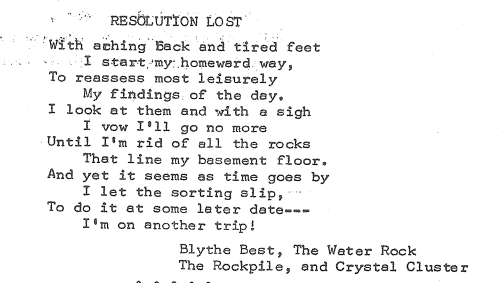
Throwback Thursday #124: Resolution Lost
Read more: Throwback Thursday #124: Resolution LostThis is Throwback Thursday #124. In these, we look back into the past at ESCONI specifically and Earth Science in general. If you have any contributions, (science, pictures, stories, etc …), please send them to esconi.info@gmail.com. Thanks! A poem from December 1970 is up for this week’s Throwback Thursday. It’s called “Resolution Lost”. It comes via a few other newsletters – “The Rockpile” newsletter for Midwest Mineralogical & Lapidary Society and “Crystal Cluster” newsletter for the Desplaines Valley Geological Society. There doesn’t seem to be any information about Blythe Best and The Water Rock. It’s easy to identify with the…
-

TRIP FULL!: ESCONI Field Trip to Danville, IL – Saturday, September 17th, 2022
Read more: TRIP FULL!: ESCONI Field Trip to Danville, IL – Saturday, September 17th, 2022This field trip is full. We are taking names for the waiting list. Danville Field Trip Rules Sept 17, 2022 An ESCONI field trip to the Danville Shale Pile for Pennsylvanian fossils is scheduled for Sept 17, 2022 starting at 10 AM. This is on private property and there is an attendance limit of 25 people. The gate will be secured once we are in and locked when we leave. Plan on being off the hill at 3 PM to give time for specimen identification and pictures. You must register to go on this trip. See rule 6 below for…
-

All the better to better eat you with: Dinosaurs evolved different eye socket shapes to allow stronger bites
Read more: All the better to better eat you with: Dinosaurs evolved different eye socket shapes to allow stronger bitesPhys.org has a story about the strength of a T-rex bite. A new study, published in the journal Communications Biology, looked at the shape of eye sockets to determine how it affected bite force. The skulls of about 500 different dinosaurs were analyzed and the researchers found that a circular eye socket was prone to higher stresses than the oval or “figure eight” shape of some top predators. Large dinosaur predators, such as Tyrannosaurus rex, evolved different shapes of eye sockets to better deal with high bite forces, new research has shown. While in many animals—and most dinosaurs—the eye socket…
-
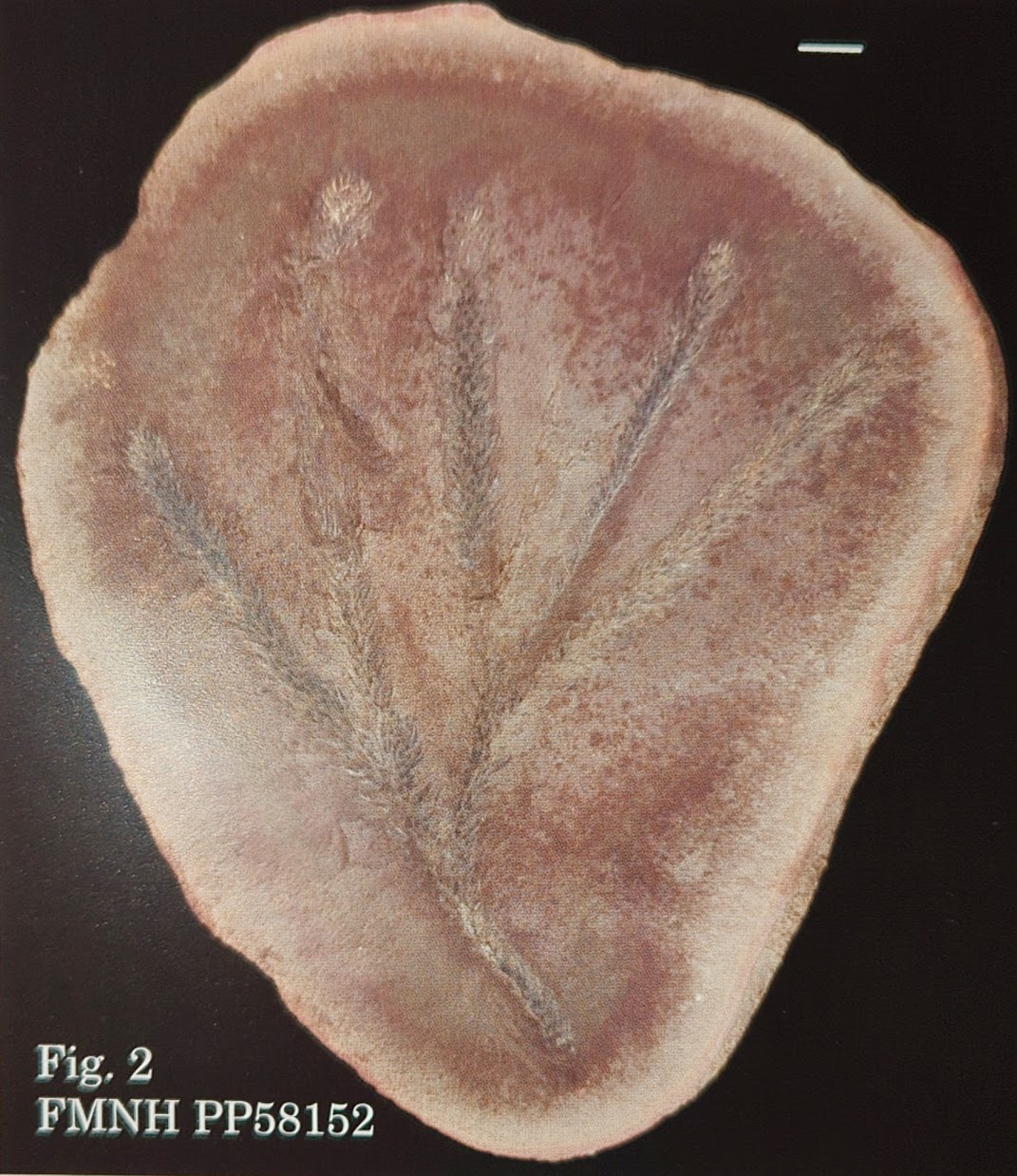
Mazon Monday #125: Lycopodites meekii
Read more: Mazon Monday #125: Lycopodites meekiiThis is Mazon Monday post #125. What’s your favorite Mazon Creek fossil? Tell us at email:esconi.info@gmail.com. —————————————————– Lycopodites meekii are foliaged lycophyte twigs. They were described in 1870 by Leo Lesquereux. L. meekii is probably the terminal branches of Bothrodendren minutifolium or a similar plant. These plants were herbaceous resembling the modern day Lycopodium, a club moss, having needle shaped leaves on small branches. They are related to Lepidodendron also known as scale trees. This group of extinct plants make up a significant portion of the plant matter in the Carboniferous coal deposits of Illinois. L. meekii appears on page 48…
-
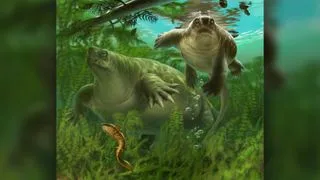
Mammal ancestor looked like a chubby lizard with a tiny head and had a hippo-like lifestyle
Read more: Mammal ancestor looked like a chubby lizard with a tiny head and had a hippo-like lifestyleLive Science has a article about an mammal ancestor. Lalieudorhynchus gandi lived about 265 million years ago in what is now the Lodève Basin in southern France. At that time, southern France was part of northeastern Pangaea. Mammals had not evolved as a group yet. L. gandi was described in a paper in the journal Paleo Vertebrata. Fossils of the unusual animal were first discovered in 2001 in the Lodève Basin in southern France, by study co-author and paleontologist Jörg Schneider, a professor in the Department of Paleontology and Stratigraphy at the University of Freiberg in Germany, and doctoral candidate Frank…
-
PBS Eons: Did An Ancient Pathogen Reshape Our Cells?
Read more: PBS Eons: Did An Ancient Pathogen Reshape Our Cells?PBS Eons has a new episode over on Youtube. This one is about the evolution of mammals and how we came to not have alpga-gal. There is one – and only one – group of mammals that doesn’t have alpha-gal: the catarrhine primates, which are the monkeys of Africa and Asia, the apes, and us.
-
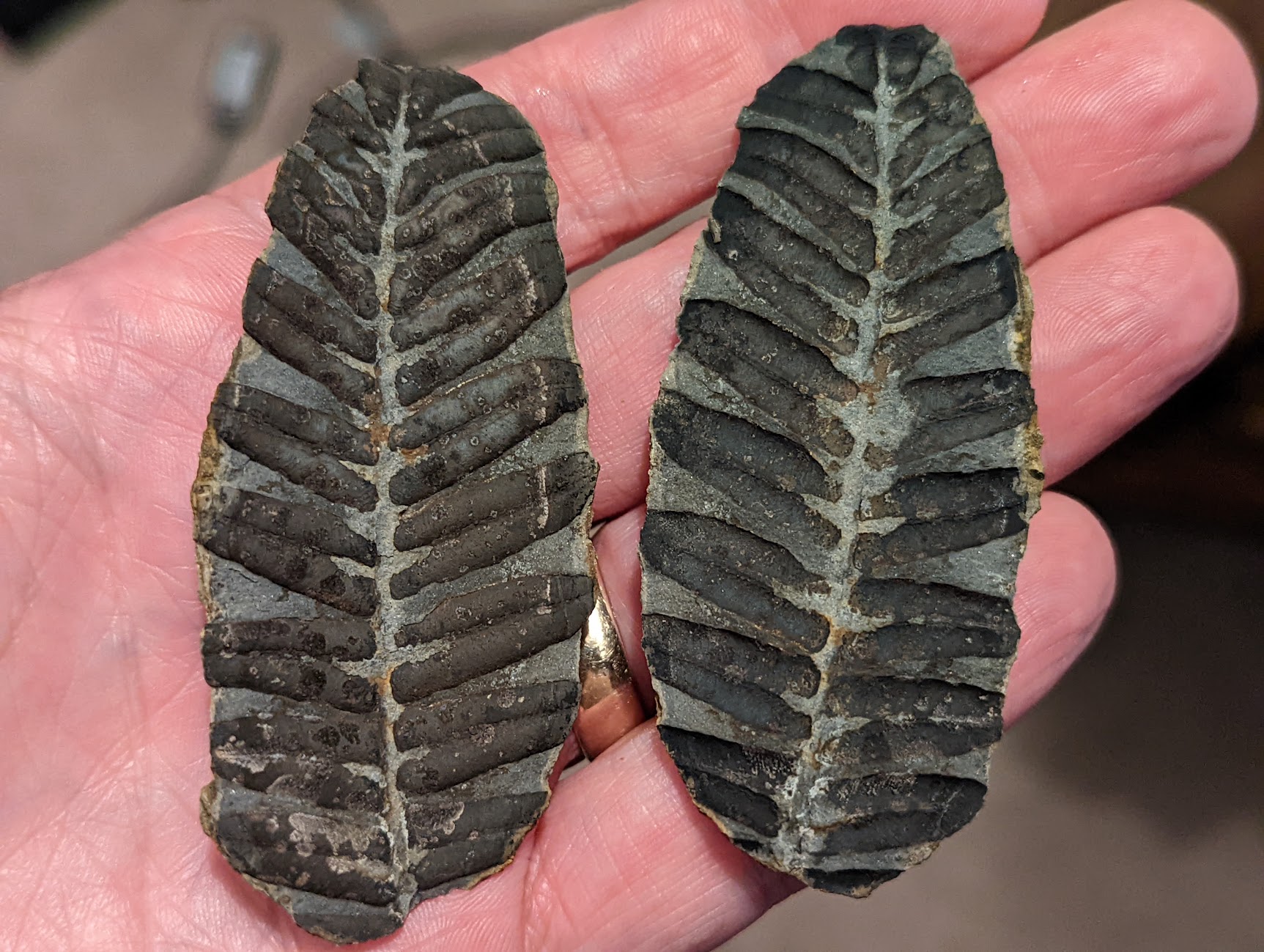
Fossil Friday #121: Alethopteris from Danville
Read more: Fossil Friday #121: Alethopteris from DanvilleThis is “Fossil Friday” post #121. Expect this to be a somewhat regular feature of the website. We will post any fossil pictures you send in to esconi.info@gmail.com. Please include a short description or story. Check the #FossilFriday Twitter hash tag for contributions from around the world! This week’s Fossil Friday post is an Alethopteris serlii from the ESCONI Danville spoil pile field trips. That spoil pile dates to the early 1900’s. The Dering Coal Company opened the mine to exploit the Herrin No. 6 coal. The shale in the spoil pile consists of mostly Energy Shale, which is about…
-
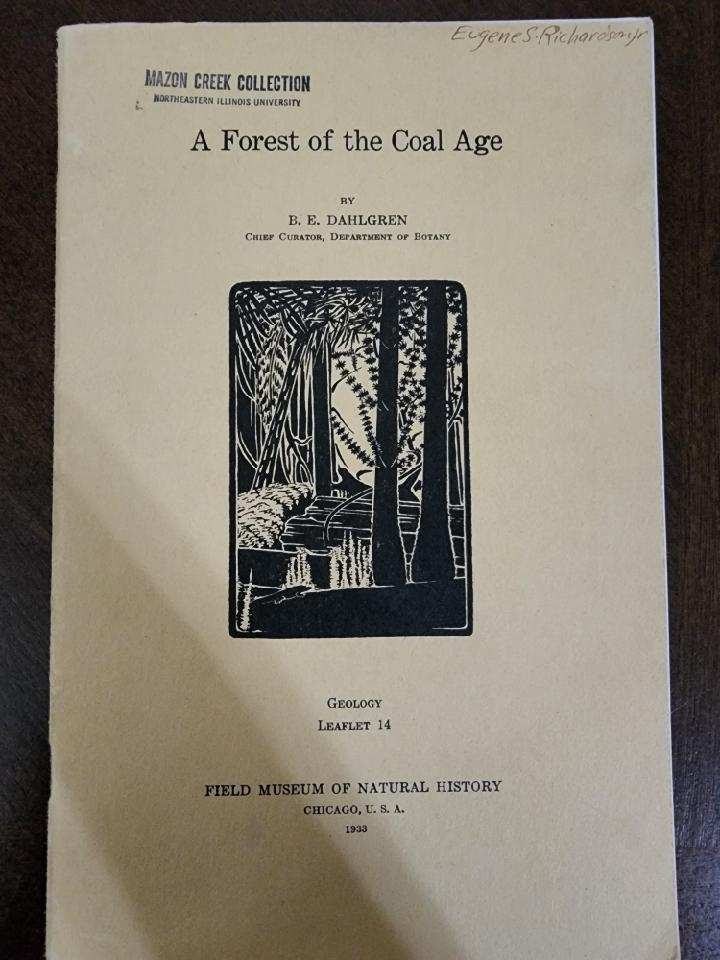
Throwback Thursday #123: Historical Documents
Read more: Throwback Thursday #123: Historical DocumentsThis is Throwback Thursday #123. In these, we look back into the past at ESCONI specifically and Earth Science in general. If you have any contributions, (science, pictures, stories, etc …), please send them to esconi.info@gmail.com. Thanks! In the past, we have highlighted historically important documents related to ESCONI and/or Mazon Creek. We posted about Langford book inscriptions in Mazon Monday #18, including books owned by John McLuckie, William Allaway, and Jim Konecny. All were influential people in ESCONI history. McLuckie and his wife had a significant fossil collection that made its way to the Smithsonian. Allaway was the founding…
-

TRIP FULL!: ESCONI Field Trip to Braceville, IL for Mazon Creek Fossils – Saturday, September 10th and Sunday September 11th, 2022
Read more: TRIP FULL!: ESCONI Field Trip to Braceville, IL for Mazon Creek Fossils – Saturday, September 10th and Sunday September 11th, 2022This field trip is full. We are taking names for the waiting list. Braceville Field Trip Rules – Sept 2022 The ESCONI field trips to Braceville for Mazon Creek fossils are set for Sept 10 and 11, 2022 from 9 AM to 3 PM. You can attend one or the other, but not both days. There is an attendance limit of 50 people each day. You must register to go on this trip. See rule 6 below for instructions. This is the only way to register. If you are sick, have any symptoms of Covid-19 or have recently tested positive,…

ESCONI Gem, Mineral, and Fossil Show
Most Recent Post
- Throwback Thursday #312: Ron Schinderle Donation
 Barb Schinderle stopped by ESCONI Show last month to drop off a donation of her late husband Ron’s fossils. Ron passed away in 2021. He was a long time ESCONI member and an avid fossil collector . He went on many ESCONI field trips. A group of us remember him fondly from our many trips to Pit 11 and Fossil Rock Campgrounds to collect Mazon Creek fossils.
- About ESCONI
- Around the Web
- Calendar of Events
- Code of Ethics and Conduct
- ESCONI Books for Sale
- ESCONI Gem, Mineral, and Fossil Show
- ESCONI in the News
- ESCONI Videos
- Field Trips
- Flashback Friday
- Fossil Friday
- Mazon Creek
- Mazon Monday
- Member Spotlight
- Membership Information
- Reference Material
- Throwback Thursday
- Trilobite Tuesday
Field trips require membership, but visitors are welcome at all meetings!
| Friday, April 10th | General Meeting – 8:00 PM via Zoom. Jessica Hull will present “Life in the Devonian Period, The Age of Fishes.” |
| Saturday, April 11th | Junior Study Group Meeting – 2:00 PM, in person at the College of DuPage Technical Education Center (TEC) Building – Room 1038A (Map). Katherine Howard will present on Sand and Sediment Collecting. Specifics of this meeting are available from Scott Galloway, 630-670-2591, gallowayscottf@gmail.com. |
| Saturday, April 18th | Paleontology Study Group – 7:30 PM via Zoom and in person at the College of DuPage, TEC, Room 1038B (Map). Keith Robitschek will present “Digging the Marl of the Lance Formation.” |
| Friday, April 24th | MAPS Expo XLVII – Springfield, IL. |
| Saturday, April 25th | MAPS Expo XLVII – Springfield, IL. |
| Sunday, April 26th | MAPS Expo XLVII – Springfield, IL. |
| No meeting this month | Mineralogy Study Group |