
-

Mazon Monday #140: Gilpichthys greenei
Read more: Mazon Monday #140: Gilpichthys greeneiThis is Mazon Monday post #140. What’s your favorite Mazon Creek fossil? Tell us at email:esconi.info@gmail.com. Thanks! Gilpichthys greenei was a jawless fish. They are fairly rare and associated with the Essex fauna of Pit 11. G. greenei was described in 1977 by David Bardack and Eugene Richardson in the paper “New agnathous fishes from the Pennsylvanian of Illinois” appearing in Fieldiana, Vol. 33, No. 26, publication 1261, pp. 489-510. It was named for Frank Greene long time Mazon Creek collector, who is also the namesake for Reticulomedusa greenei. G. greenei appears in Jack Wittry’s “The Fossil Fauna of Mazon Creek” on…
-

ESCONI Events December 2022
Read more: ESCONI Events December 2022Field trips require membership, but visitors are welcome at all meetings! Fri, Dec 2nd ESCONI General Meeting 8:00 PM Zoom – Topic: “The early diversification of birds: evidence from the Jehol avifauna” by Dr. Jingmai O’Connor from the Field Museum Zoom link Sat, Dec 10th ESCONI Holiday Lunch – 12:00 PM at Warren’s Ale House in Wheaton, IL. (Map). Sat, Dec 10th ESCONI Junior Meeting – 7:00 PM at College of DuPage – Topic: Step 4 for the Rock Tumblers and Holiday ideas from the Catal Hayuk Specifics of this meeting are available from Scott Galloway, 630-670-2591, gallowayscottf@gmail.com. The meeting will…
-
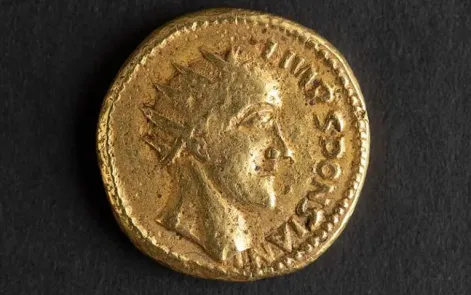
For years, experts said a Roman emperor wasn’t real. Scientists say a coin could prove otherwise
Read more: For years, experts said a Roman emperor wasn’t real. Scientists say a coin could prove otherwiseUSA Today has an interesting story about some Roman coins. The four coins were discovered in 1713 in what is now Romania. They depict three different people – one shows Emperor Gordian II and two show Emperor Phillip. The fourth coin is problematic as it bears the visage of Sponsian. Although there are other Sponsian coins in existence, he was not a Roman Emperor and so the coins were thought to be forgeries. However, recent research, published in the journal PLOS ONE, has come to a different conclusion. The coin has been authenticated using powerful microscopes. The coin was examined…
-
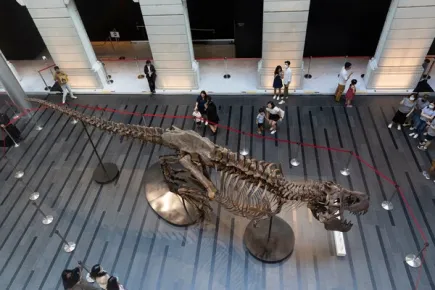
As Dinosaur Fossils Fetch Millions, There’s Many a Bone to Pick
Read more: As Dinosaur Fossils Fetch Millions, There’s Many a Bone to PickThe New York Times has an article about the canceled auction of Shen a Tyrannosaurus rex. Christie’s was scheduled to auction the dinosaur in November 2022, but canceled the event when questions emerged about how it had been described. Shen’s skeleton consists of 79 original bones, which was described as “54% complete by bone density”. This description was questioned by professional paleontologists as misleading. The missing parts of the skeleton are replicas of Stan’s fossil bones. Stan is a T. rex that was discovered by the Black Hill Institute back in the 1990’s. It sold in a Christie’s auction for…
-

Fossil Friday #136: Postcard from Holden Beach, North Carolina…
Read more: Fossil Friday #136: Postcard from Holden Beach, North Carolina…This is “Fossil Friday” post #136. Expect this to be a somewhat regular feature of the website. We will post any fossil pictures you send in to esconi.info@gmail.com. Please include a short description or story. Check the #FossilFriday Twitter hash tag for contributions from around the world! For this week’s port, we have a guest post from ESCONI member Marie Angkuw. She has contributed quite a few Fossil Friday posts, including a Fossil Friday #93 on the “Pyritized Ammonites from the Jurassic Coast of England”. Post card from Holden Beach, North Carolina… By Marie Angkuw In April 2022, a long-awaited…
-
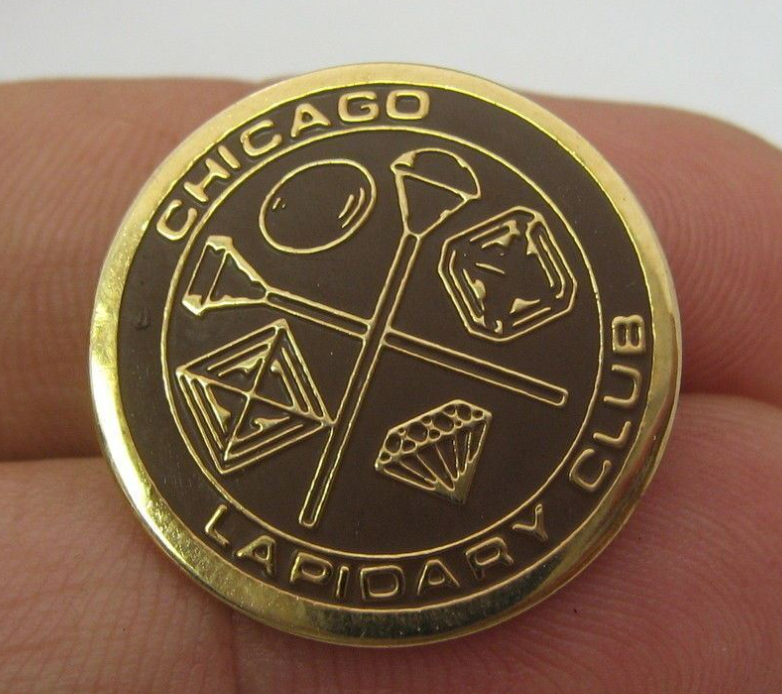
Throwback Thursday #138: Under Your Feet
Read more: Throwback Thursday #138: Under Your FeetThis is Throwback Thursday #138. In these, we look back into the past at ESCONI specifically and Earth Science in general. If you have any contributions, (science, pictures, stories, etc …), please send them to esconi.info@gmail.com. Thanks! Today, we have poem from the Chicago Lapidary Club, which doesn’t seem to exist anymore. There is a few photos of club pins online. The poem is attributed to R. Rindt and appeared in the October 1997 edition of the ESCONI newsletter. UNDER YOUR FEET Under your feet there’s a story to be told, Waiting in the form of rocks to unfold.The…
-
ESCONI Holiday Lunch Saturday, December 10th, 2022 at 12:00 PM at Warren’s Ale House in Wheaton
Read more: ESCONI Holiday Lunch Saturday, December 10th, 2022 at 12:00 PM at Warren’s Ale House in WheatonThe ESCONI Holiday Party has been moved from evening of December 2nd, 2022 to lunch on Saturday, December 10th, 2022. Lunch will be at Warren’s Ale House in Wheaton, IL. The original party was canceled by the restaurant. See you there!
-
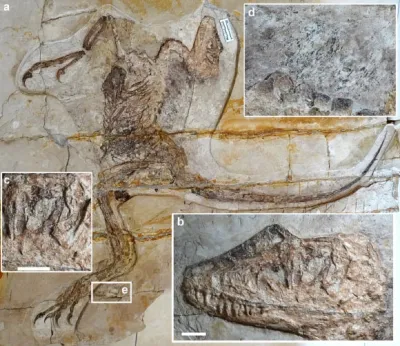
New Bird-Like Dinosaur Species Found with Remains of Frog in Its Stomach
Read more: New Bird-Like Dinosaur Species Found with Remains of Frog in Its StomachSciNews has an article about the discovery of a new bird-like dinosaur. Daurlong wangi lived between 130 and 120 million years ago during the Cretaceous Period in what in now China. It was a dromaeosaur of medium size bird-like dinosaur. The animal, part of the famous Jehol Biota, was described in a paper, which appeared in the journal Scientific Reports. “Dromaeosauridae is a clade of small- to mid-sized theropod dinosaurs known from the Cretaceous of both hemispheres,” said Dr. Xuri Wang from the Institute of Geology at the Chinese Academy of Geological Sciences and colleagues. “The Early Cretaceous Jehol Biota from north-eastern…
-
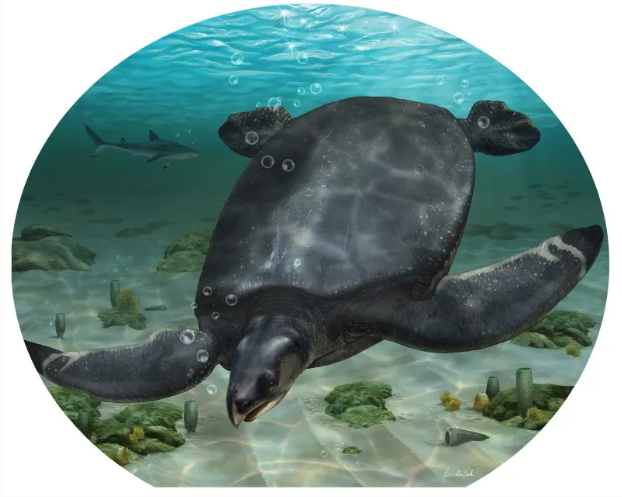
Scientists Unearth a Prehistoric Marine Turtle the Size of a Car
Read more: Scientists Unearth a Prehistoric Marine Turtle the Size of a CarSmithsonian Magazine has an article about a new fossil turtle. The animal, Leviathanochelys aenigmatica, lived during the Cretaceous Period about 72 million years ago in what is now Spain. It was discovered by a hiker in the Pyrenes mountains. The new species was described in a new paper, which appeared in the journal Scientific Reports. Researchers have unearthed the remains of a new species of gigantic marine turtle in northern Spain. Weighing about two tons and measuring 12 feet long, the prehistoric creature is the largest of its kind ever discovered in Europe. The find was completely accidental: A hiker…
-

Mazon Monday #139: Lepidocystis sp.
Read more: Mazon Monday #139: Lepidocystis sp.This is Mazon Monday post #139. What’s your favorite Mazon Creek fossil? Tell us at email:esconi.info@gmail.com. Thanks! For this week’s Mazon Monday, we have Lepidocystis sp., which is a type of spore packet associated with the cone genus Polysporia. Early Mazon Creek collectors referred to this as “cockroach egg sacs”. This is known to be false as Mazon Creek cockroaches are not cockroaches, but roachoid. Additionally, egg sacs in true cockroaches didn’t evolve until the late Mesozoic. Lepidocystis is considered uncommon. It was described in by Leo Lesquereux in 1879-1880. Lepidocystis sp. appears in Jack Wittry’s book “A Comprehensive Guide to…
-
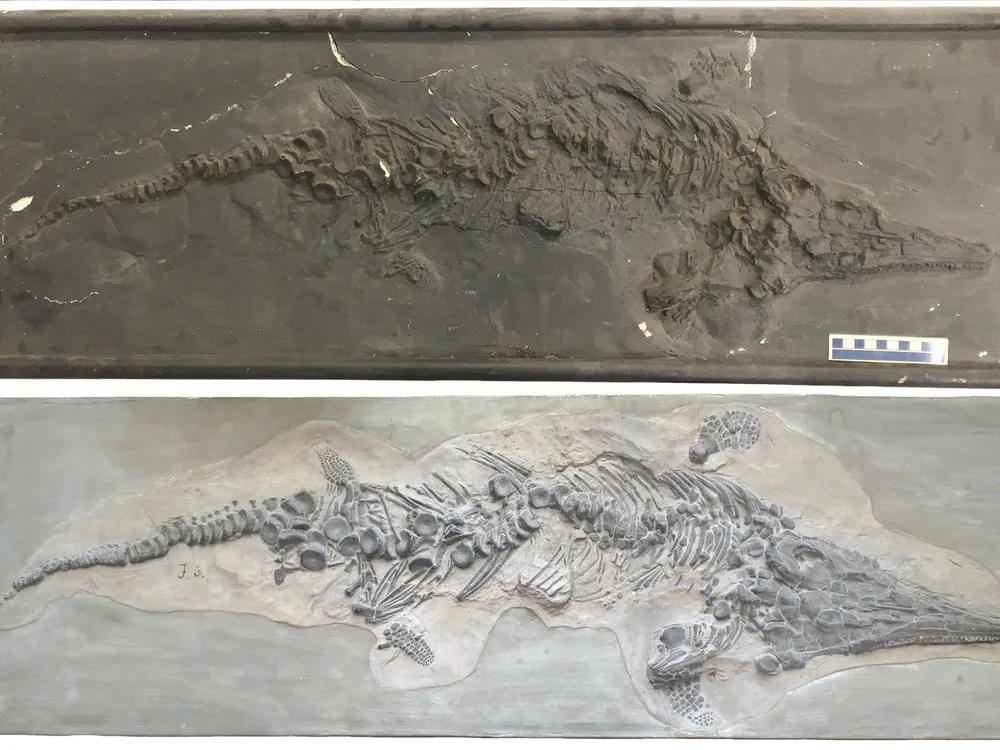
Scientists Find Plaster Copies of Fossil Destroyed by Nazis
Read more: Scientists Find Plaster Copies of Fossil Destroyed by NazisSmithsonian Magazine has a story about an interesting rediscovery. In 1818, Mary Anning discovererd one of most complete ichthyosaur skeletons ever found. The fossil eventually made its way to the Royal College of Surgeons in London, where it was destroyed in WW II by the Nazi bombing. There were a few drawing, but the fossil was thought lost forever. Recently, Dean Lomax a paleontologist at the University of Manchester in England, found two copies of the Anning specimen… one at Yale and the other in Berlin at the Natural History Museum. “Before the fame of the dinosaurs, ichthyosaurs were ‘the’…
-

PBS Eons: We Met Neandertals Way Earlier Than We Thought
Read more: PBS Eons: We Met Neandertals Way Earlier Than We ThoughtPBS Eons has a new episode. This one is about the missing Neandertal Y chromosome. My cousin did a DNA test the other month and was embarrassed about having a much higher amount of Neandertal DNA than the average European, but I told them about all the cool things I learned about them on this channel, like they were intelligent, and looked after the sick and it made my cousin feel a lot better about it.
-

Fossil Friday #135: It’s Got Belotelson Eyes…
Read more: Fossil Friday #135: It’s Got Belotelson Eyes…This is “Fossil Friday” post #135. Expect this to be a somewhat regular feature of the website. We will post any fossil pictures you send in to esconi.info@gmail.com. Please include a short description or story. Check the #FossilFriday Twitter hash tag for contributions from around the world! Who’s old enough to remember the Kim Carnes song “Bette Davis Eyes”? This weeks submission is a very nice Belotelson magister shrimp with what appears to be an eye. It’s all there with quite a bit of detail! You can learn more about B. magister in Mazon Monday #13. B. magister was described…
-
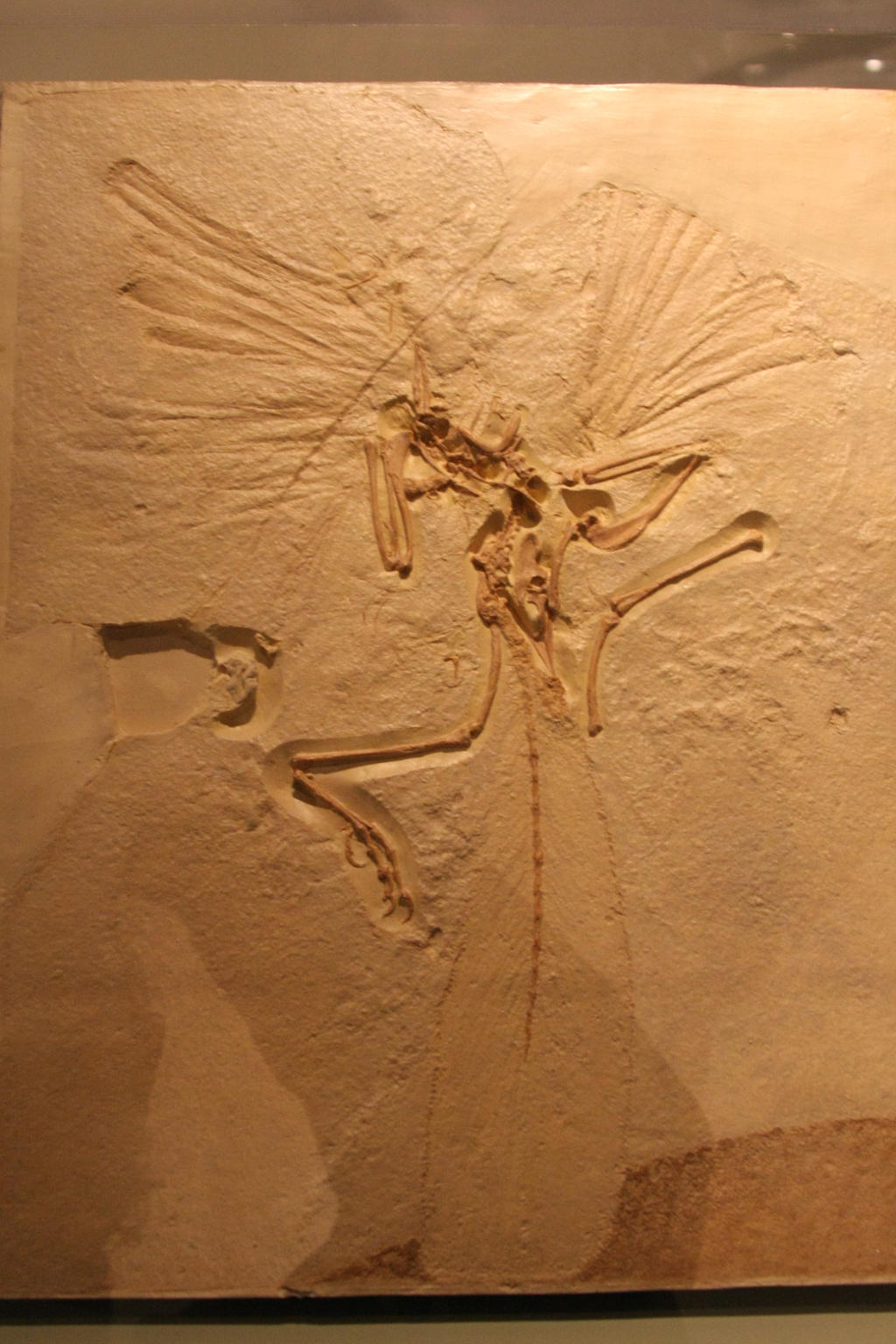
Throwback Thursday #137: Archaeopteryx in Chicago!
Read more: Throwback Thursday #137: Archaeopteryx in Chicago!This is Throwback Thursday #137. In these, we look back into the past at ESCONI specifically and Earth Science in general. If you have any contributions, (science, pictures, stories, etc …), please send them to esconi.info@gmail.com. Thanks! October 1997 was a huge month for the Field Museum. The annual meeting of the Society of Vertebrate Paleontology (SVP) was held there from October 8th-11th, 1997. This is an important meeting held each year. Jack Horner was named Acting President. He had just released his new book “Dinosaur Lives”. Oh… and Archaeopteryx was on display for the first and only time in…
-

Welsh ‘weird wonder’ fossils add piece to puzzle of arthropod evolution
Read more: Welsh ‘weird wonder’ fossils add piece to puzzle of arthropod evolutionPhys.org has a story about a new “weird wonder” from the Ordovician Period. This new animal is called Mieridduryn bonniae and is thought to be related to Opabinia, which is one of the iconic animals discovered in the Burgess Shale by Charles Walcott in 1909. Many of the Burgess Shale animals were termed “weird wonders” by the late Steven J. Gould in his 1989 book “Wonderful Life”. M. bonniae lived in what is now mid Wales (UK) near Llandrindod Wells. It was discovered during the COVID 19 lockdowns in a sheep field by by independent researchers and Llandrindod residents Dr. Joseph…
-
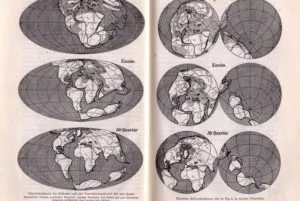
The theory of continental drift and how it changed the geosciences forever
Read more: The theory of continental drift and how it changed the geosciences foreverEGU Blogs has an informative page on continental drift. Originating with Alfred Wegener around 1912, continental drift seemed somewhat ridiculous at the time. How could something so large as a continent move?!? The evidence was there… matching geologic formations across oceans, mountain building, and sea floor spreading. There were no good explanations until Plate Tectonics in the 1960’s. German scientist Alfred Wegener spent most of his life defending a shocking theory: that all the world’s continents were once part of the same land mass before they drifted away. For many years after he passed, his theory continued to be shunned,…
-

Mazon Monday #138: The Konecnys on Mazon Creek Fossil Preparation
Read more: Mazon Monday #138: The Konecnys on Mazon Creek Fossil PreparationThis is Mazon Monday post #138. What’s your favorite Mazon Creek fossil? Tell us at email:esconi.info@gmail.com. Thanks! Jim and Sylvia Konecny were very active in ESCONI for many years. They held various board positions over the years with Jim serving as president in 1966. They were prolific fossil collectors, who donated a significant collection to the Field Museum back in 2019. Their collection spanned many time periods but had an emphasis on Mazon Creek. Here’s a few photos of them in 1993 leading tours of their collection after they moved to Arizona. They wrote quite a few articles for fossil enthusiast…
-

2023 ESCONI Gem, Mineral, and Fossil Show – March 18th – 19th, 2023
Read more: 2023 ESCONI Gem, Mineral, and Fossil Show – March 18th – 19th, 2023Save the date! The ESCONI Gem, Mineral, and Fossil Show for 2023 will be held on March 18th and 19th at the DuPage Fairgrounds in Wheaton, IL. This is the same place as last year. Here is a quick sneak peek of some auction items…
-
PBS Eons: How Plate Tectonics Gave Us Seahorses
Read more: PBS Eons: How Plate Tectonics Gave Us SeahorsesPBS Eons has a new episode on Youtube. This one is about the evolution of the seahorse. How did seahorses — one of the ocean’s worst swimmers — spread around the globe? And where did they come from in the first place? Thanks to Franz Anthony (http://franzanth.com) for the incredible syngnathid reconstructions used in this episode!

ESCONI Gem, Mineral, and Fossil Show
Most Recent Post
- Fossil of Pincer-Wielding Crawler Reveals Origins of Spiders, Scorpions and Others
 The Trilobites column over at the New York Times has a interesting story about the origin of chelicerates – spiders, scorpions, mites, horseshoe crabs, and others. Chelicerates are a diverse group of arthropods that consists of more than 120,000 known species. Member of this group are classified by having a pair of appendages called chelicerae. These appendages are adapted for various purposes like snatching prey, injecting venom, and even spinning silk.
- About ESCONI
- Around the Web
- Calendar of Events
- Code of Ethics and Conduct
- ESCONI Books for Sale
- ESCONI Gem, Mineral, and Fossil Show
- ESCONI in the News
- ESCONI Videos
- Field Trips
- Flashback Friday
- Fossil Friday
- Mazon Creek
- Mazon Monday
- Member Spotlight
- Membership Information
- Reference Material
- Throwback Thursday
- Trilobite Tuesday
Field trips require membership, but visitors are welcome at all meetings!
| Friday, April 10th | General Meeting – 8:00 PM via Zoom. Jessica Hull will present “Life in the Devonian Period, The Age of Fishes.” |
| Saturday, April 11th | Junior Study Group Meeting – 2:00 PM, in person at the College of DuPage Technical Education Center (TEC) Building – Room 1038A (Map). Katherine Howard will present on Sand and Sediment Collecting. Specifics of this meeting are available from Scott Galloway, 630-670-2591, gallowayscottf@gmail.com. |
| Saturday, April 18th | Paleontology Study Group – 7:30 PM via Zoom and in person at the College of DuPage, TEC, Room 1038B (Map). Keith Robitschek will present “Digging the Marl of the Lance Formation.” |
| No meeting this month | Mineralogy Study Group |
| No meeting this month | Junior Study Group |