
-

Throwback Thursday #50: Revisiting a Field Trip to Galena, IL August 8th-9th, 1959
Read more: Throwback Thursday #50: Revisiting a Field Trip to Galena, IL August 8th-9th, 1959This is Throwback Thursday #50. In these, we look back into the past at ESCONI specifically and Earth Science in general. If you have any contributions, (science, pictures, stories, etc …), please send them to esconi.info@gmail.com. Thanks! Back in Throwback Thursday #18, we recalled a field trip to Galena, IL on August 8th and 9th, 1959. After digging through the newsletters, we have the field trip announcement, the report, and a few more photos. John Ade, who would later become president of ESCONI, was the field trip chairman. They were hunting for minerals – Galena, Marcasite, Calcite, and Sphalerite. And,…
-

CBC: Bloodsucking-fish fossils overturn once-popular theory about our evolution
Read more: CBC: Bloodsucking-fish fossils overturn once-popular theory about our evolutionCBC Technology & Science has a story about fossil lampreys. New baby lamprey fossils found in South Africa have shed some light on the early evolution of vertebrates. The fossils date to the Devonian Period about 360 million years ago. Incredibly, there were hatchlings included with some of the specimens of the Priscomyzon. Babies are very rarely preserved in the fossil record. All the detail are in a paper published in the journal Nature. Lampreys are boneless, blood-sucking snake-like fish considered to be “living fossils” that have barely changed since they first arose during the Paleozoic era, more than 100…
-
Seminar at U of I via Zoom: “Rivers of Power: How an Ancient Force Still Rules Us All” – March 25, 2021 from 1:00 – 2:00 PM
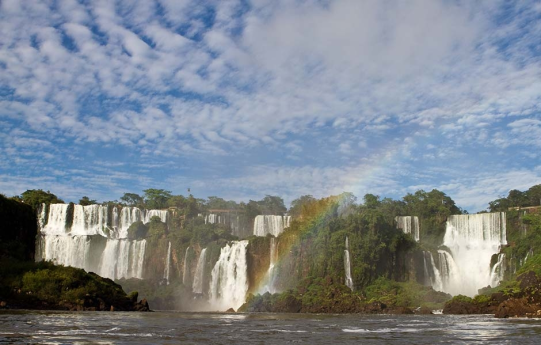
Read more: Seminar at U of I via Zoom: “Rivers of Power: How an Ancient Force Still Rules Us All” – March 25, 2021 from 1:00 – 2:00 PMThere will be a free seminar presented via Zoom by the Geography Dept at the University of Illinois on March 25, 2021 called “Rivers of Power: How an Ancient Force Still Rules Us All” by Laurence Smith of Brown University. Dr. Smith wrote the book “Rivers of Power: How a Natural Force Raised Kingdoms, Destroyed Civilizatioons, and Shapes Our World” “This talk will explore some of the many ways that humans have used rivers over time, and how we continue to do so today. Since our earliest cities established along the Tigris-Euphrates, Indus, Nile, and Yellow rivers, anthropogenic…
-
Phys.org: ‘Pompeii of prehistoric plants’ unlocks evolutionary secret: study
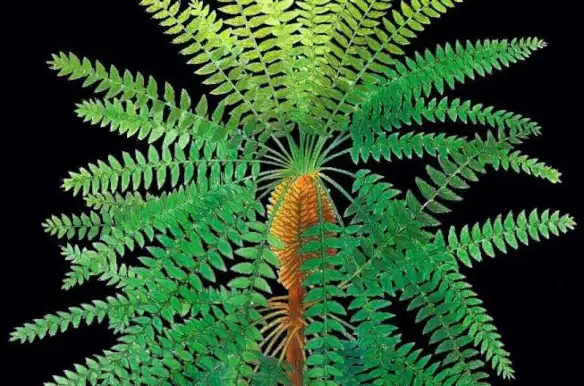
Read more: Phys.org: ‘Pompeii of prehistoric plants’ unlocks evolutionary secret: studyPhys.org has a story about some Pennsylvanian fossil plants from China. The species of plants, Paratingia wuhaia, which belong to a group called Noeggerathiales, were highly successful. They survived from about 325 million years ago in the Pennsylvanian Period until the Permian Mass Extinction about 251 million years ago. At one time, they were thought to be an evolutionary dead-end, but new research published in the journal Proceedings of the National Academy of Sciences (PNAS) details how they are actually a highly-evolved member of the group that became seed plants. Spectacular fossil plants preserved within a volcanic ash fall in…
-

Mazon Monday #51: Book – Leaves and Stems From Fossil Forests
Read more: Mazon Monday #51: Book – Leaves and Stems From Fossil ForestsThis is Mazon Monday post #51. What’s your favorite Mazon Creek fossil? Tell us at email:esconi.info@gmail.com. Before George Langford wrote his books, which were first published by Esconi Associates in 1958, Raymond E. Janssen wrote two books about Mazon Creek that saw widespread use as reference materiel for identification of fossils. The first book “Leaves and Stems from Fossil Forests” was published in 1939 by the Illinois State Museum, where it can still be purchased for $4. Its multiple printings speaks to its popularity. The book was volume 1 of a Popular Science Series published by the museum. ESCONI has…
-

NPR: Dinosaur-Killing Impact Came From Edge Of Solar System, New Theory Suggests
Read more: NPR: Dinosaur-Killing Impact Came From Edge Of Solar System, New Theory SuggestsNPR has a story about the extinction of the non-avian dinosaurs. New research from Harvard University proposes that a comet and not a meteor impacted in the Yucatan peninsula. The research is detailed in a paper that was published in the journal Scientific Reports. For decades, the prevailing theory about the extinction of the dinosaurs was that an asteroid from the belt between Mars and Jupiter slammed into the planet, causing cataclysmic devastation that wiped out most life on the planet. But new research out of Harvard University theorizes that the Armageddon-causing object came from much farther out than originally believed.…
-

PBS Eons: Our Bizarre, Possibly Venomous, Relative
Read more: PBS Eons: Our Bizarre, Possibly Venomous, RelativePBS Eons has a new episode. This one is about venomous mammals. Check out Bizarre Beasts’ episode on venomous mammals! https://youtu.be/22qAEKXe8Lo This video contains images and video of snakes and spiders. It’s possible Euchambersia possessed venom about 20 million years before the first lizards and over 150 million years before the first snakes evolved. We’ve teamed up Sarah Suta from Bizarre Beasts to explore the story of venomous mammals, both living and extinct. Thanks to Julio Lacerda (https://twitter.com/JulioTheArtist) and Dmitry Bogdanov for their wonderful illustrations featured throughout this episode! Special thanks to Julien Benoit for providing us with figures…
-
Fossil Friday #47: Roachoid!
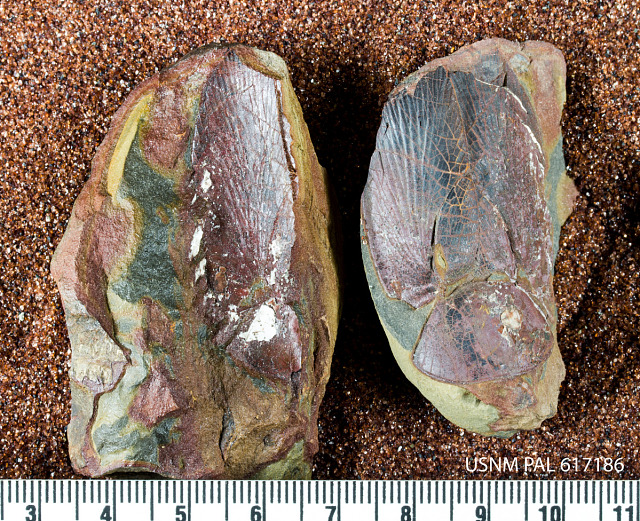
Read more: Fossil Friday #47: Roachoid!This is the “Fossil Friday” post #47. Expect this to be a somewhat regular feature of the website. We will post any fossil pictures you send in to esconi.info@gmail.com. Please include a short description or story. Check the #FossilFriday Twitter hash tag for contributions from around the world! —————————————————– Okay, don’t get put off from our fossil this week. It is a roachoid, but have you considered that maybe roaches are who you think they are… They’re fairly intelligent (for an insect). They have personalities. And, they might be conscious. Then, there’s the whole story about them inheriting the Earth…
-

Throwback Thursday #49: 2011 Gem, Mineral, and Fossil Show
Read more: Throwback Thursday #49: 2011 Gem, Mineral, and Fossil ShowThis is Throwback Thursday #49. In these, we look back into the past at ESCONI specifically and Earth Science in general. If you have any contributions, (science, pictures, stories, etc …), please send them to esconi.info@gmail.com. Thanks! It’s March and March is usually time for the ESCONI Gem, Mineral, and Fossil Show. We unfortunately had to cancel in 2020, but this year a scaled down version will be held October 9th, 2021. Today, let’s go back 10 years ago to the ESCONI Show. in 2011. That show was held on March 19th and 20th, 2011 at the College of DuPage,…
-
Reminder: ESCONI March 2021 General Meeting – March 12th, 2021 at 8:00 PM via Zoom – “The Big Hill Lagerstätte”
Read more: Reminder: ESCONI March 2021 General Meeting – March 12th, 2021 at 8:00 PM via Zoom – “The Big Hill Lagerstätte”The ESCONI March 2021 General Meeting is on March 12, 2021 at 8:00. The program will be presented via Zoom by Dr. James Lamsdell of West Virginia University. Dr. Lamsdell studies Paleozoic arthropods such as eurypterids and xiphosurans (horseshoe crabs and their relatives). He recently published on the fauna of the Ordovician “Big Hill” Lagerstatte in Upper Michigan. We posted about this locality and the paper back in December 2020. The University of Michigan has an interesting post about a new Lagerstatte, which was discovered in the Upper Peninsula of Michigan back in 2013. This fossil deposit dates to the Silurian Period…
-
Reminder – Lizzadro Museum Virtual Lecture March 20th, 2021 at 2 PM: Sharks at Mazon Creek by Jack Wittry
Read more: Reminder – Lizzadro Museum Virtual Lecture March 20th, 2021 at 2 PM: Sharks at Mazon Creek by Jack WittryJack Wittry, Collections Associate at the Field Museum and author of the Mazon Creek Fossil Flora and Fauna books, presents the Mazon Creek fossil shark nurseries and discusses the controversy surrounding this topic. His new book on Mazon Creek plants will be available for signing after the lecture. March 20th, 2021 at 2:00 PM 60 minutes – Virtual LectureAll Ages – Free programProgram will be on Zoom (password: lapidary)
-

Trilobite Tuesday #33: Some trilobites crushed their prey to death with their legs
Read more: Trilobite Tuesday #33: Some trilobites crushed their prey to death with their legsThe Science News column from the Natural History Museum in London has a story about trilobites. A new paper by Dr. Greg Edgecombe, a researcher at the museum who focuses on the evolutionary history of arthropods, about how some trilobites fed was published in the Royal Society B. Instead of teeth, it appears that these trilobites used their legs to crush and shred their prey before passing the food to their mouths. By studying modern horseshoe crabs, researchers have been able to build up a picture of how some extinct arthropods such as trilobites may have fed on hard-shelled prey.…
-

Mazon Monday #50: The Dancing Worm of Turkana
Read more: Mazon Monday #50: The Dancing Worm of TurkanaThis is Mazon Monday post #50. What’s your favorite Mazon Creek fossil? Tell us at email:esconi.info@gmail.com. Today, we have a real treat. Dr. Eugene Richardson was the Curator of Invertebrate Paleontology at the Field Museum of Natural History from the 1950s until his death in 1983. He had a huge influence on the research of Mazon Creek fossils, particularly the fauna. Dr. Richardson’s relationships with amateur collectors allowed him to see what was being found across the many localities and to photograph and sometimes receive a donation of unique specimens that needed further study. One of those specimens turned out…
-
NPR: Utah Considers State Park Named For Utahraptor Dinosaur
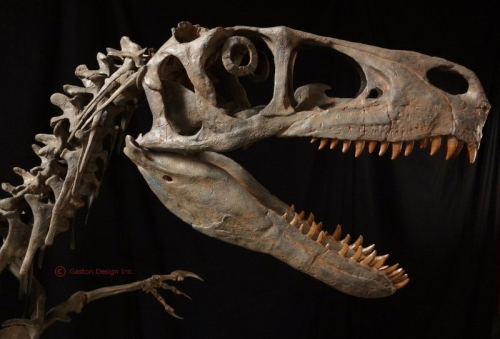
Read more: NPR: Utah Considers State Park Named For Utahraptor DinosaurNPR Morning Edition has a story about a new proposed State Park in Utah. The park, called Utahraptor State Park, would commemorate the discovery of a large block of Utahraptor fossils found back in 2001. The animals lived about 136 million years ago and would have looked similar to Deinonychus, but larger. Utah State paleontologist Jim Kirkland spoke with NPR. The proposal for Utahraptor State Park, approved by the state House last week and now moving through the Utah Senate, would create a park near the spot where a geology student found a bone sticking out of the sun-bleached ground…
-
Nature: Insects with 100 million-year-old dinosaur feathers are not ectoparasites
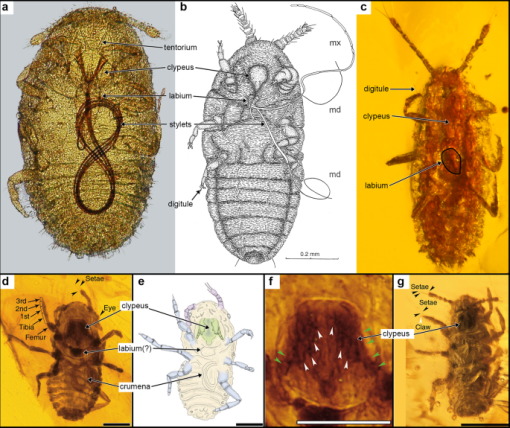
Read more: Nature: Insects with 100 million-year-old dinosaur feathers are not ectoparasitesNature has an open access paper which looked deeper into the discovery of insects found on dinosaur feathers preserved in amber. The amber was found in the Myanmar and dates to the mid-Cretaceous Period about 100 million years ago. The original paper “New insects feeding on dinosaur feather in mid-Cretaceous amber” was published in 2019. A recent article1 describes minute insects that are on or close to two feathers in two pieces of mid-Cretaceous (100 Ma) amber from Myanmar, and states that evidence “strongly suggest[s] that Mesophthirus is ectoparasitic”. The feathers are presumably from stem-group, feathered avialan dinosaurs. Despite the abundance of feathers in…
-
Fossil Friday #46: Elonichthys peltigerus
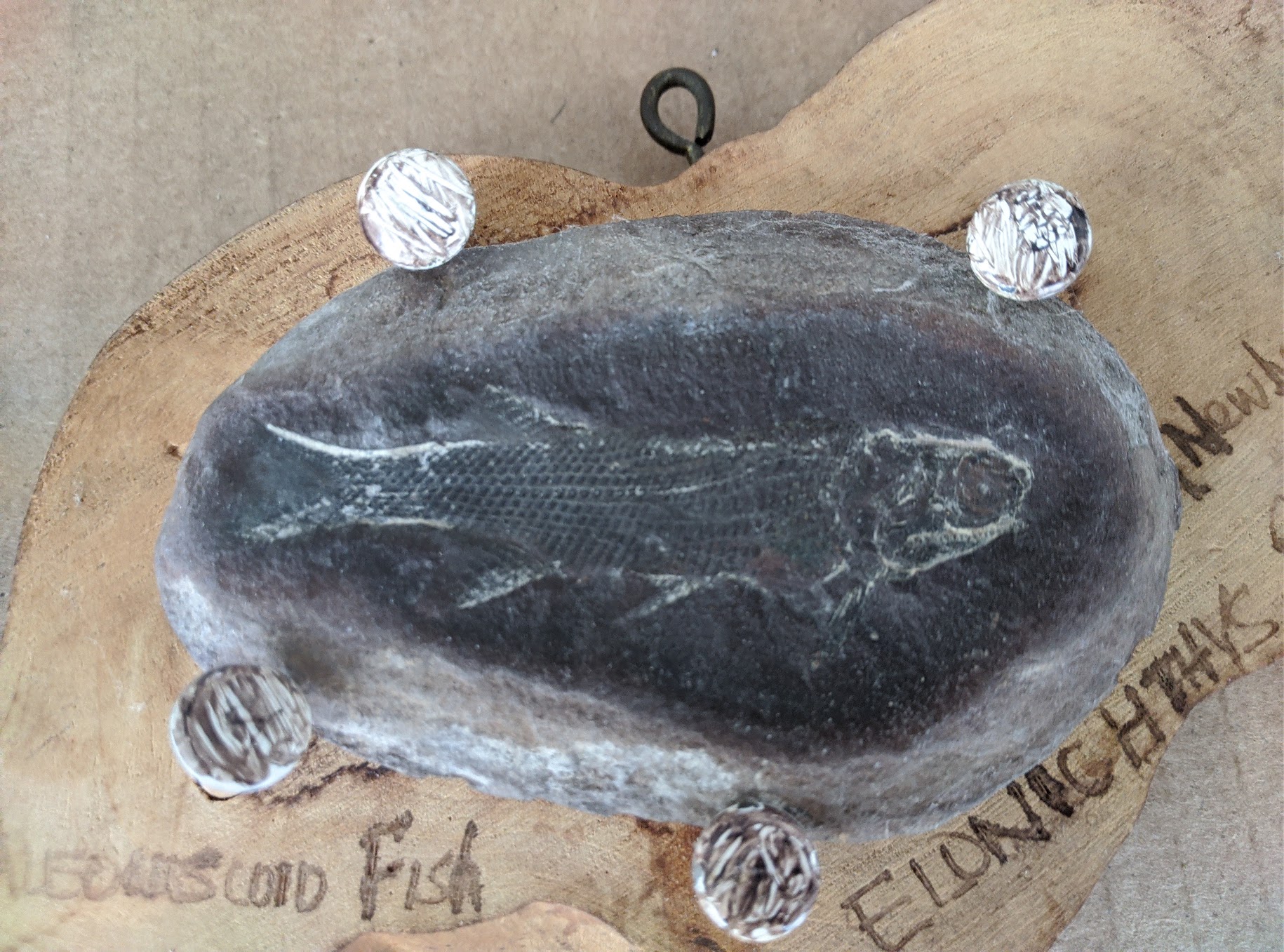
Read more: Fossil Friday #46: Elonichthys peltigerusThis is the “Fossil Friday” post #46. Expect this to be a somewhat regular feature of the website. We will post any fossil pictures you send in to esconi.info@gmail.com. Please include a short description or story. Check the #FossilFriday Twitter hash tag for contributions from around the world! This week, we have an absolutely stunning specimen of Elonichthys peltigerus, which is a species of fish from the Mazon Creek biota. As you may have guessed, it’s pretty rare, especially in this condition… have a look at the detail of those scales! This fossil was discovered by Peter Kruty many years…
-

Throwback Thursday #48: Looking Back at ESCONI for March 2021
Read more: Throwback Thursday #48: Looking Back at ESCONI for March 2021This is Throwback Thursday #48. In these, we look back into the past at ESCONI specifically and Earth Science in general. If you have any contributions, (science, pictures, stories, etc …), please send them to esconi.info@gmail.com. Thanks! 25 Years Ago – March 1996 50 Years Ago – March 1971
-
ESCONI March 2021 General Meeting – March 12th, 2021 at 8:00 PM via Zoom – “The Big Hill Lagerstätte”
Read more: ESCONI March 2021 General Meeting – March 12th, 2021 at 8:00 PM via Zoom – “The Big Hill Lagerstätte”The ESCONI March 2021 General Meeting is on March 12, 2021 at 8:00. The program will be presented via Zoom by Dr. James Lamsdell of West Virginia University. Dr. Lamsdell studies Paleozoic arthropods such as eurypterids and xiphosurans (horseshoe crabs and their relatives). He recently published on the fauna of the Ordovician “Big Hill” Lagerstatte in Upper Michigan. We posted about this locality and the paper back in December 2020. The University of Michigan has an interesting post about a new Lagerstatte, which was discovered in the Upper Peninsula of Michigan back in 2013. This fossil deposit dates to the Silurian Period…
-
All Dinosaurs Considered: Looking Back at Prehistoric Illinois
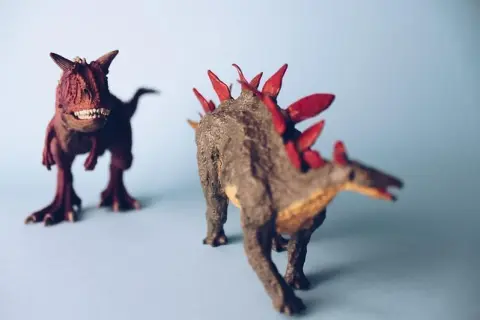
Read more: All Dinosaurs Considered: Looking Back at Prehistoric IllinoisNPR’s All Things Considered The 21st Show has a look back at prehistoric Illinois. They interview Paleontologists Joe Devera, Senior Paleontologist at the Illinois State Geological Survey and Jingmai O’Connor, Vertebrate Paleontologist and associate curator of Fossil Reptiles at the Field Museum in Chicago about what might Illinois looked like during the time of the dinosaurs. You can play the show as a podcast. An observant 8 year old NPR listener from Minneapolis pointed out what he saw as a big issue with NPR’s oldest news program, All Things Considered. People haven’t been talking about the dinosaurs. Leo’s observation lead NPR to…
-

Mazon Monday #49: Mazon Creek Fossils Honoring Collectors
Read more: Mazon Monday #49: Mazon Creek Fossils Honoring CollectorsThis is Mazon Monday post #49. What’s your favorite Mazon Creek fossil? Tell us at email:esconi.info@gmail.com. Since the beginning, amateur fossil collectors have played a huge role in the science and research of Mazon Creek. Joseph Even, Joseph C. Carr, Samuel S. Strong, and Homer Hill were some of the earliest amateur collectors of Mazon Creek fossils back in the mid 1800’s. They and others did much to popularize the fossils and the locality. The document used to register the Benson Farm in Morris as a historical landmark has some interesting early historical information. If you are at all interested…

ESCONI Gem, Mineral, and Fossil Show
Most Recent Post
- Throwback Thursday #313: Who Was DuPage? How the River and County Were Named
 The BeHistoric channel on Youtube has a fascinating video about the history behind the name of the DuPage River and DuPage County.
- About ESCONI
- Around the Web
- Calendar of Events
- Code of Ethics and Conduct
- ESCONI Books for Sale
- ESCONI Gem, Mineral, and Fossil Show
- ESCONI in the News
- ESCONI Videos
- Field Trips
- Flashback Friday
- Fossil Friday
- Mazon Creek
- Mazon Monday
- Member Spotlight
- Membership Information
- Reference Material
- Throwback Thursday
- Trilobite Tuesday
Field trips require membership, but visitors are welcome at all meetings!
| Friday, April 10th | General Meeting – 8:00 PM via Zoom. Jessica Hull will present “Life in the Devonian Period, The Age of Fishes.” |
| Saturday, April 11th | Junior Study Group Meeting – 2:00 PM, in person at the College of DuPage Technical Education Center (TEC) Building – Room 1038A (Map). Katherine Howard will present on Sand and Sediment Collecting. Specifics of this meeting are available from Scott Galloway, 630-670-2591, gallowayscottf@gmail.com. |
| Saturday, April 18th | Paleontology Study Group – 7:30 PM via Zoom and in person at the College of DuPage, TEC, Room 1038B (Map). Keith Robitschek will present “Digging the Marl of the Lance Formation.” |
| Friday, April 24th | MAPS Expo XLVII – Springfield, IL. |
| Saturday, April 25th | MAPS Expo XLVII – Springfield, IL. |
| Sunday, April 26th | MAPS Expo XLVII – Springfield, IL. |
| No meeting this month | Mineralogy Study Group |