
-
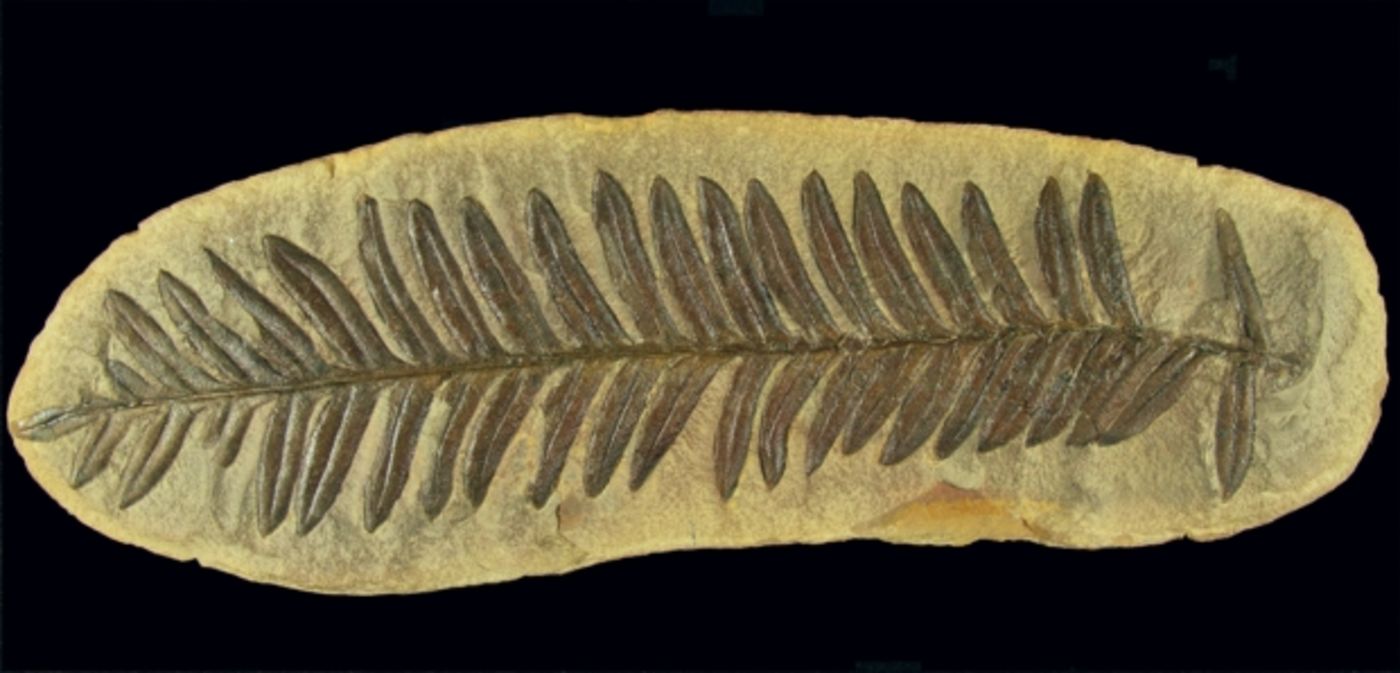
Mazon Monday #57: Alethopteris serlii
Read more: Mazon Monday #57: Alethopteris serliiThis is Mazon Monday post #57. What’s your favorite Mazon Creek fossil? Tell us at email:esconi.info@gmail.com. —————————————————– If you’ve seen one, you know that Alethopteris serlii can have breathtaking beauty. Whether from the Mazon River or one of the other more terrestrial localities, like its sister taxa Alethopteris sullivantii, it is generally bold in preservation. Recall, we looked at A. sullivantii back in Mazon Monday #37. Alethopteris serlii is common. It is a seed fern (Pteridospermatophyta). They first show up in the fossil record during the late Devonian and went extinct during the late Cretaceous Period. Fossil specimens are typically…
-
Paleo Nerds #32: The Hot Blooded Dinosaur Revolutionary with Bob Bakker
Read more: Paleo Nerds #32: The Hot Blooded Dinosaur Revolutionary with Bob BakkerThe podcast Paleo Nerds has the last show the their second season up. Their guest is “Dinosaur Heretic” Bob Bakker. Bob is always interesting! I heard him in person at Paleofest a number of years ago and really enjoyed it. We saved the best for last! Would you like to spend over an hour with one of the greatest paleontologists of our time? Well, now you can! Episode #32 of Paleo Nerds: a Prehistoric Podcast features the one and only Dinosaur Heretic Bob Bakker AKA Dr. Bob. Dr. Bob became interested in paleontology after stumbling upon a Life Magazine containing…
-

PBS Eons: How To Survive the Little Ice Age
Read more: PBS Eons: How To Survive the Little Ice AgeThere’s a new episode of PBS Eons. Instead of northern Europe, this one looks at the little ice age in North America and how people survived. Nunalleq, a village in what’s today southwest Alaska, seemed to have thrived during the Little Ice Age. How did this village manage to survive and prosper during this time period? And what caused this period of climate change in the first place? Check out the Nunalleq Archaeology Project’s incredible educational resource: http://www.seriousanimation.com/nunal… as well as their blog: https://nunalleq.wordpress.com/
-
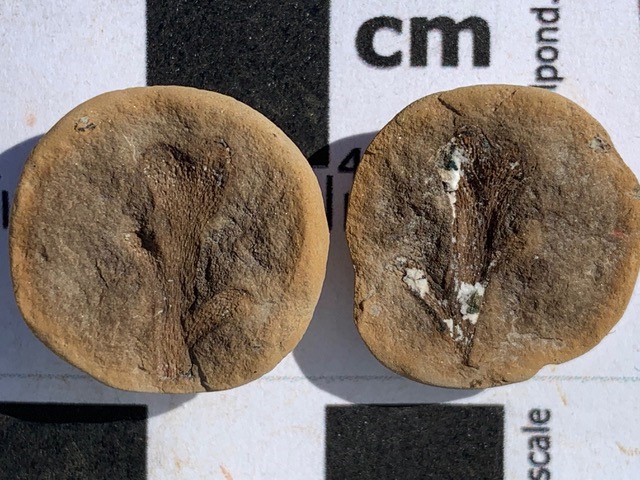
Fossil Friday #53: Kankakeea grundyi
Read more: Fossil Friday #53: Kankakeea grundyiThis is the “Fossil Friday” post #53. Expect this to be a somewhat regular feature of the website. We will post any fossil pictures you send in to esconi.info@gmail.com. Please include a short description or story. Check the #FossilFriday Twitter hash tag for contributions from around the world! A Mazon Creek fossil from Pit 11 is in the spotlight for this week. We have an interesting contribution from ESCONI member Chris Berg. He found this on his one trip to Pit 11 this spring. The species of this Y-shaped fossil is Kankakeea grundyi. It’s thought to be a vegetative reproductive…
-
-
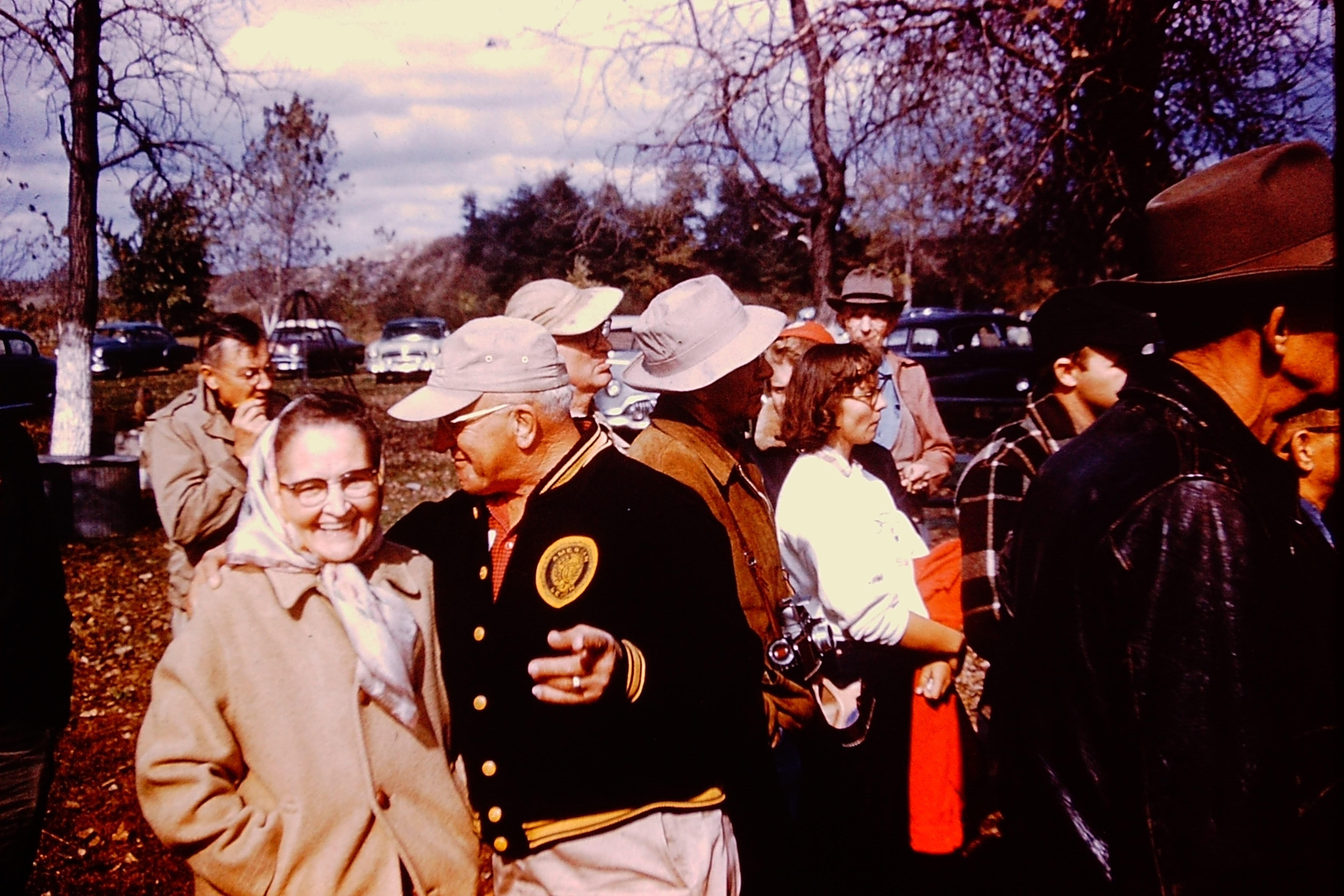
Throwback Thursday #55: John and Lucy McLuckie
Read more: Throwback Thursday #55: John and Lucy McLuckieThis is Throwback Thursday #55. In these, we look back into the past at ESCONI specifically and Earth Science in general. If you have any contributions, (science, pictures, stories, etc …), please send them to esconi.info@gmail.com. Thanks! A giant in the history Mazon Creek fossil collecting and early ESCONI member, John McLuckie and his wife Lucy were known for their spectacular fossil collection. He is pictured on the left in the photo above at George Langford Night in June 1958. He and his wife sponsored many fossil collecting trips to Braidwood for ESCONI and other rock clubs during the 1950’s…
-
Roy Plotnick: Alien technology on Earth!
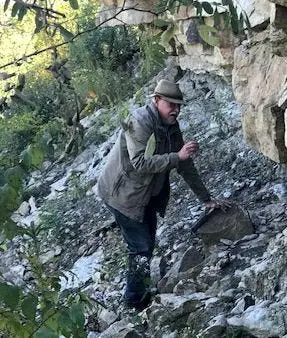
Read more: Roy Plotnick: Alien technology on Earth!Roy Plotnick has a new post over on Medium. In this one, he ponders the possibility of alien life and whether it could have visited Earth… I had not been able to get out into the field for months, so on the first warm day of spring, I headed to a nearby outcrop of Ordovician rocks, one I had visited several times before and always yielded some interesting fossils. For hours I contentedly hammered away, stopping every once in a while to examine the surface of a slab to see what it contained. Trilobites were especially exciting. Bang! Bang! Clink!…
-

SciNews: New Species of Duck-Billed Dinosaur Unearthed in New Mexico
Read more: SciNews: New Species of Duck-Billed Dinosaur Unearthed in New MexicoSciNews has an article about a new dinosaur discovery. The animal, a duck-billed dinosaur called Ornatops incantatus, lived about 80 million years ago during the Cretaceous Period in what is now modern day New Mexico. A paper in the journal PeerJ has all the details. Its partial skeleton, including part of the skull, was found at a single locality in the Menefee Formation in San Juan County, New Mexico. “The Menefee Formation represents one of the most promising frontiers for exploring the early evolution of major dinosaur groups in Laramidia, the Upper Cretaceous landmass consisting of Mexico, the western United States, western…
-
Mazon Monday #56: Didontogaster cordylina
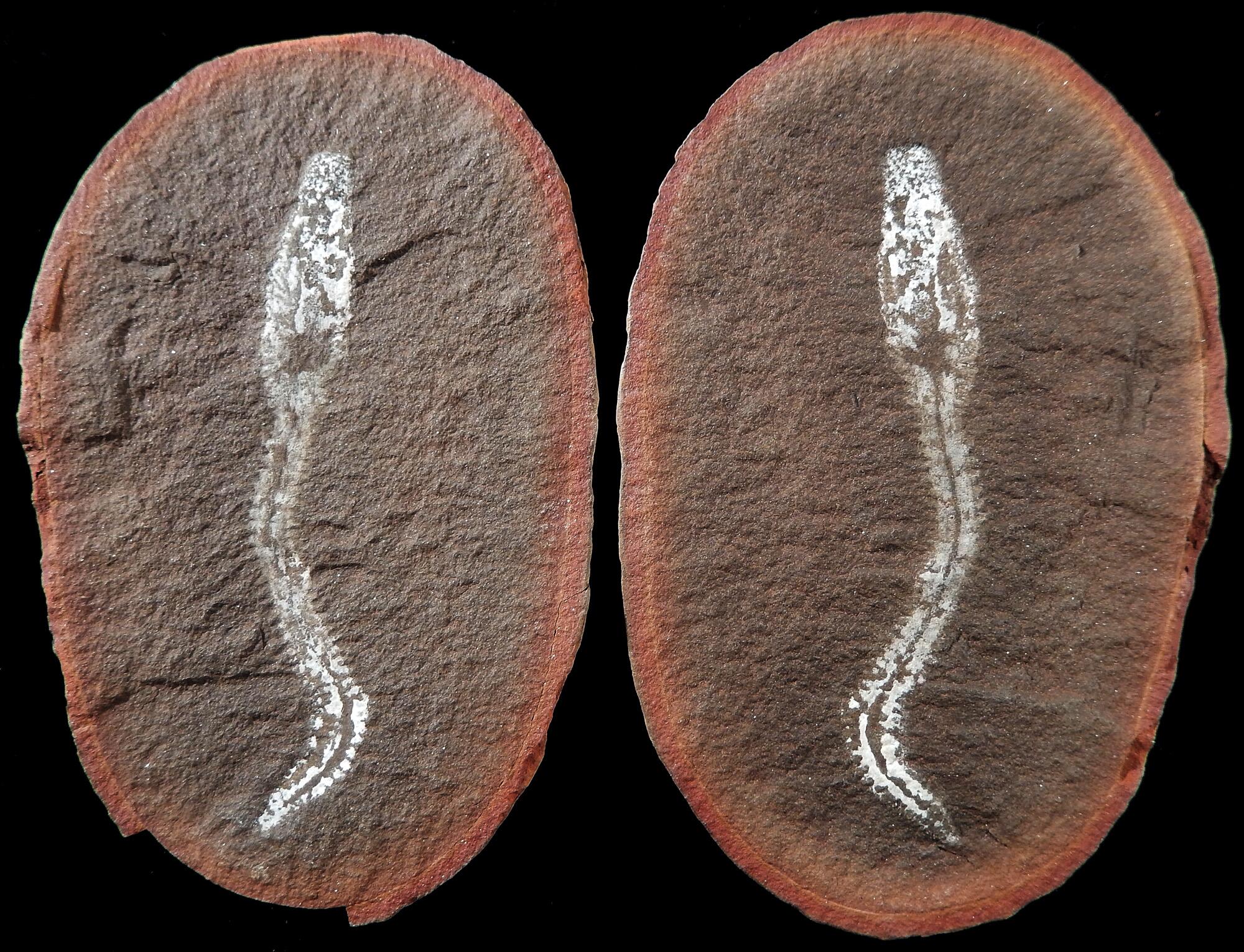
Read more: Mazon Monday #56: Didontogaster cordylinaThis is Mazon Monday post #56. What’s your favorite Mazon Creek fossil? Tell us at email:esconi.info@gmail.com. —————————————————– The first format descriptions of the Polychaete worms of the Mazon Creek biota didn’t happen until 1979. One of the first was Didontogaster cordylina, commonly known as the tummy tooth worm. D. cordylina was described by Ida Thompson in 1979. Ida Thompson is also famous for writing the National Audubon Society Field Guide to North American Fossils. A book that has been in print since at least 1994. The book “ESCONI Keys to Mazon Creek Animals” has a nice write up about Polychaete…
-
Unique Bone Structure Helped Long-Necked Pterosaurs Fly
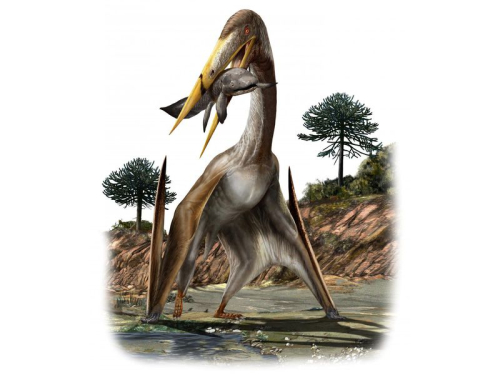
Read more: Unique Bone Structure Helped Long-Necked Pterosaurs FlySmithsonian Magazine has an interesting article about the largest pterosaurs. These animals were very large with the wingspans of small plaines (8 meters) and necks as long as a giraffe (1.5 meters). A recent paper (April 14th, 2021) in Science Magazine details how these animals supported their large head and necks with a novel spoke like structure inside their bones. The azhdarchid group of pterosaurs were some of the largest animals ever to fly. The giant reptiles lived between 66 million and 225 million years ago, and their unusual proportions—big heads at the end of long, inflexible necks—have long puzzled…
-
NYT: How Many Tyrannosaurus Rexes Ever Lived on Earth? Here’s a New Clue
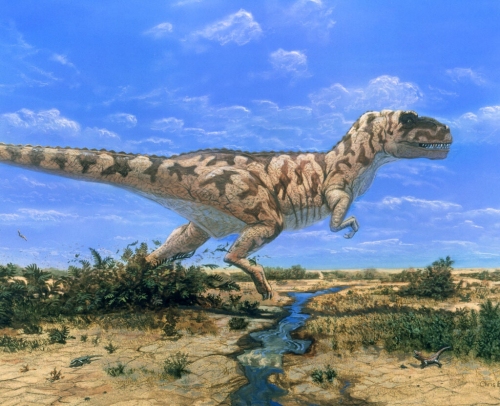
Read more: NYT: How Many Tyrannosaurus Rexes Ever Lived on Earth? Here’s a New ClueThe New York Tmes has a story about how many Tyrannosaurus rex ever lived. Actually, this story showed up in numerous places.. SciTechDaily, USA Today, NBC, etc. Apparently, it’s big news that about 2.5 billion total T rex roamed the Earth during the time their species existed! The original paper appeared in the journal Science. Before they were killed off by a meteor that hit Earth 66 million years ago, some 20,000 adults of the iconic ferocious dinosaur predator — Tyrannosaur rex — roamed North America at any given time, researchers have calculated. That’s not a precise number, and the correct…
-
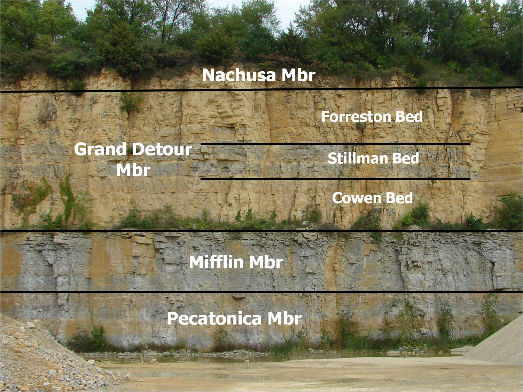
ESCONI March 2021 Paleontology Meeting – April 17th, 2021 at 7:30 PM via Zoom – “Analysis of the Mifflin Member of the Platteville Formation”
Read more: ESCONI March 2021 Paleontology Meeting – April 17th, 2021 at 7:30 PM via Zoom – “Analysis of the Mifflin Member of the Platteville Formation”SATURDAY – APRIL 17 – 7:30 PM Central Time (US & Canada) Topic: “Analysis of the Mifflin Member of the Platteville Formation” Presented by: John Catalani, ESCONI Member Join Zoom Meetinghttps://us02web.zoom.us/j/84740566864?pwd=aG9hbU5wUCtHenI0Tmt5NTN1S2VJZz09 Meeting ID: 847 4056 6864Passcode: 569922 One tap mobile+13126266799,,84740566864#,,,,*569922# US (Chicago)+13017158592,,84740566864#,,,,*569922# US (Washington DC) Dial by your location+1 312 626 6799 US (Chicago)+1 301 715 8592 US (Washington DC)+1 929 205 6099 US (New York)+1 669 900 6833 US (San Jose)+1 253 215 8782 US (Tacoma)+1 346 248 7799 US (Houston) Meeting ID: 847 4056 6864Passcode: 569922 Find your local number: https://us02web.zoom.us/u/km0uOF8Mt
-

Fossil Friday #52: Fossil Wood
Read more: Fossil Friday #52: Fossil WoodThis is the “Fossil Friday” post #52. Expect this to be a somewhat regular feature of the website. We will post any fossil pictures you send in to esconi.info@gmail.com. Please include a short description or story. Check the #FossilFriday Twitter hash tag for contributions from around the world! Fossil wood can be very different from what is found in modern plants. Lepidodenron and other distinctive wood can be common in some of the Mazon Creek localities. Today, we have a couple interesting wood specimens from ESCONI member Andy Jansen. Andy also serves as Librarian and Treasurer of ESCONI. These were…
-
Throwback Thursday #54: Better To Be A Rockhound
Read more: Throwback Thursday #54: Better To Be A RockhoundThis is Throwback Thursday #54. In these, we look back into the past at ESCONI specifically and Earth Science in general. If you have any contributions, (science, pictures, stories, etc …), please send them to esconi.info@gmail.com. Thanks! This poem appeared in the November 1958 edition of the ESCONI newsletter. The El Paso Mineral and Gem Society is still alive and kicking…. since 1947, which is 2 years before the founding of ESCONI. Unfortunately, no mention of their newsletter, Harry Zollars, or “Agate Pete”. The poem is a little morbid at times, but the message is clear – enjoy nature and…
-
Video: ESCONI March 2021 General Meeting – “The Big Hill Lagerstätte”
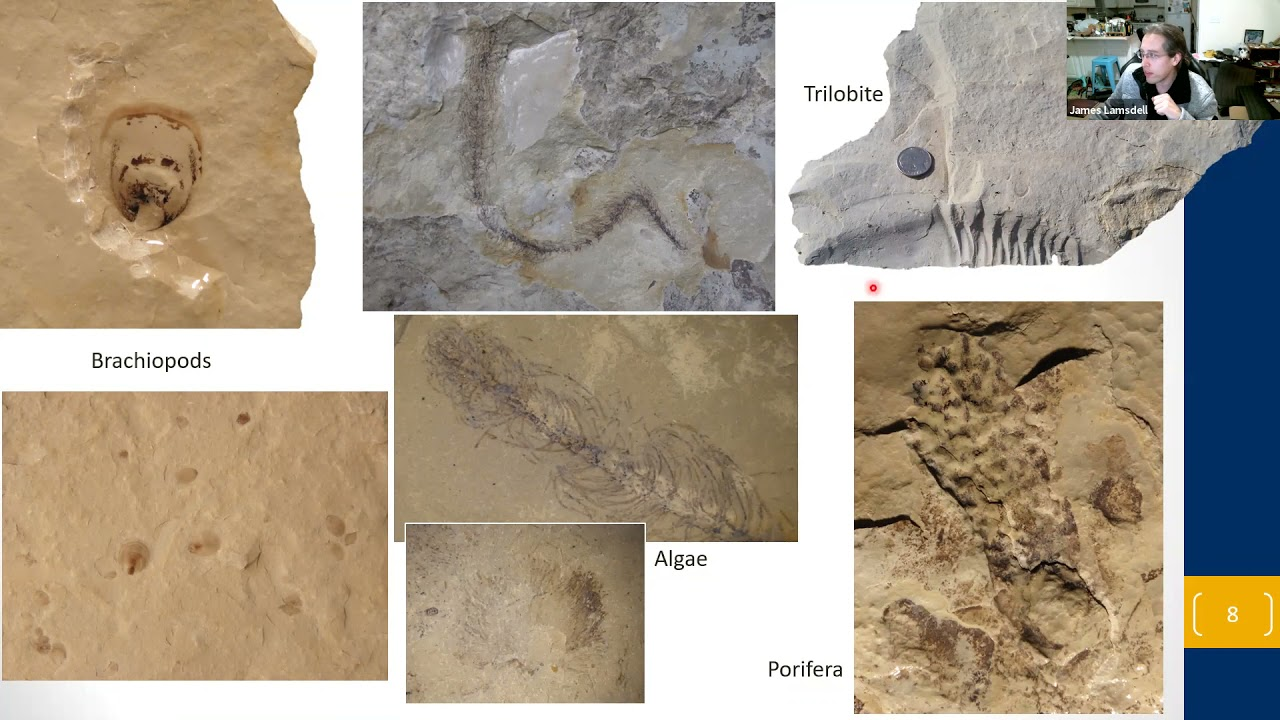
Read more: Video: ESCONI March 2021 General Meeting – “The Big Hill Lagerstätte”The ESCONI March 2021 General Meeting is on March 12, 2021 at 8:00. The program will be presented via Zoom by Dr. James Lamsdell of West Virginia University. Dr. Lamsdell studies Paleozoic arthropods such as eurypterids and xiphosurans (horseshoe crabs and their relatives). He recently published on the fauna of the Ordovician “Big Hill” Lagerstatte in Upper Michigan. We posted about this locality and the paper back in December 2020. The University of Michigan has an interesting post about a new Lagerstatte, which was discovered in the Upper Peninsula of Michigan back in 2013. This fossil deposit dates to the Silurian Period about 430…
-

Illinois Needs a State Rock!
Read more: Illinois Needs a State Rock!A fifth grade class in Burr Ridge, IL says that Illinois needs a State Rock! After speaking with a group knowledgeable experts – amazing educators, rock enthusiasts, geologists and scientists, they’ve narrowed it down to three choices… Sandstone, Dolostone, and Limestone. You can help them by voting and commenting on their page. A fifth grade class in Burr Ridge, IL began researching rocks and noticed our state does not have a rock as an Illinois symbol. That got them even more curious…What if we contact people to find out what would be a good choice? This started as a simple…
-

Mazon Monday #55: Neuropteris inflata
Read more: Mazon Monday #55: Neuropteris inflataThis is Mazon Monday post #55. What’s your favorite Mazon Creek fossil? Tell us at email:esconi.info@gmail.com. For this week, we have a somewhat uncommon form of Neuropteris… Neuropteris inflata. These leaves look very similar to Macroneuropteris scheuchzerii. And, could be taken for a large specimen. However, these are however different than M. scheuchzerii and are missing the characteristic “hairs”. Neuropteris inflata appears in “A Comprehensive Guide to the Fossil Flora of Mazon Creek” on page 205. Neuropteris inflata Lesquereux, 1866 1866. Neuropteris inflata Lesquereux: p. 431. pl. 37, fig. 21879-0. Neuropteris inflata Lesquereux: p. 86, pl. 7, figs. 2-4a1958. Neuropteris…
-
Smithsonian: Tiny Fossils, Big Insight; How We Can Use Fossil Pollen to Understand Earth’s Climate History
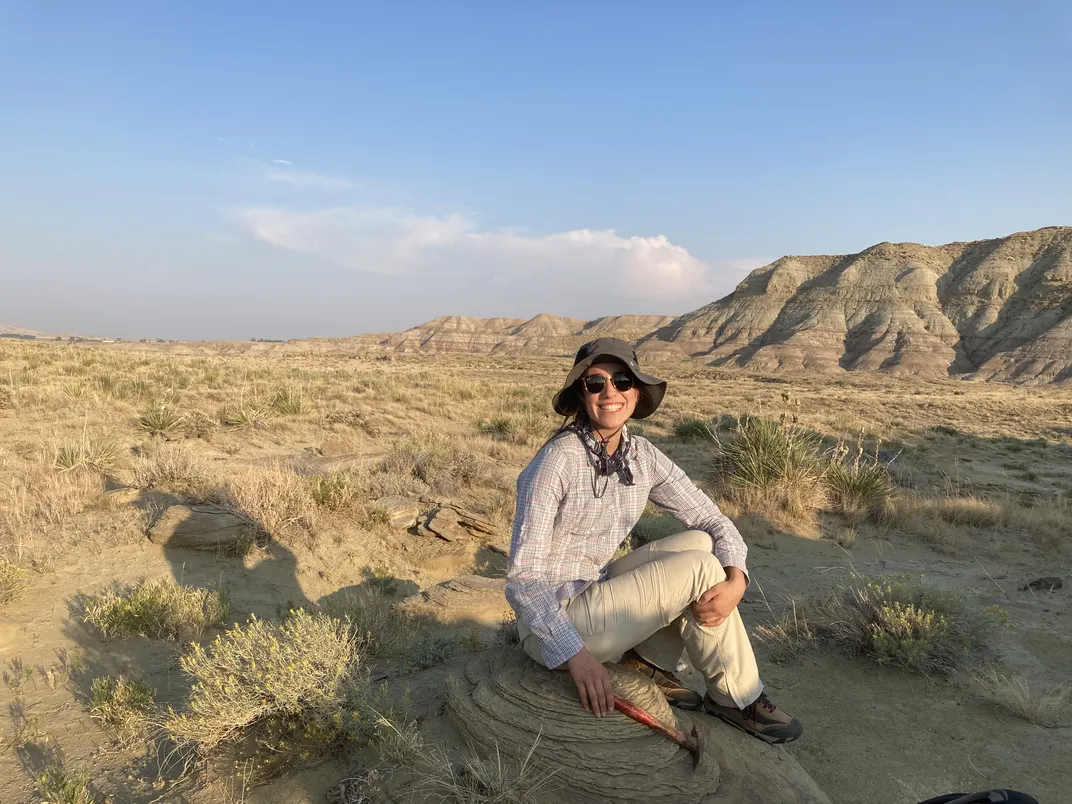
Read more: Smithsonian: Tiny Fossils, Big Insight; How We Can Use Fossil Pollen to Understand Earth’s Climate HistorySmithsonian Magazine has a piece about fossil pollen. Microscopic fossil of pollen millions of years old gives insight into the climate many years ago. The natural world has always fascinated me, starting with the days of my youth exploring the bushland surrounding my childhood home, collecting flowers and rocks and being curious about their growth and formation. My passion for the outdoors continued to develop through time as did my desire to explore the world and its evolution. As a Postdoctoral Research Fellow in the Department of Paleobiology at the National Museum of Natural History (NMNH), I am currently generating data helping us to…
-
PBS Eons: How Chilis Got Spicy (and Why We Love the Burn)
Read more: PBS Eons: How Chilis Got Spicy (and Why We Love the Burn)PBS Eons has a new episode, which is about chili peppers. It looks at how and why they got hot? And, why do we love it… Today, chilis are the most widely cultivated spice crop in the world – grown everywhere from their native home in the Americas to Europe, Africa, and Asia. But how and why did chilis evolve this weird, fiery trick in the first place? And why did we learn to love that spicy burn?
-

Fossil Friday #51: Clam-clam
Read more: Fossil Friday #51: Clam-clamThis is the “Fossil Friday” post #51. Expect this to be a somewhat regular feature of the website. We will post any fossil pictures you send in to esconi.info@gmail.com. Please include a short description or story. Check the #FossilFriday Twitter hash tag for contributions from around the world! Today, we have a couple specimens of Mazonomya mazonensis or colloquially known as clam-clam. We covered Mazonomya back in Mazon Monday #25. For a long time, this species was misidentified as Edmondia. In 2011, it was redescribed by Jack Bowman Bailey of Western Illinois University. Our first specimen is from Braceville and…

ESCONI Gem, Mineral, and Fossil Show
Most Recent Post
- Happy Earth Day 2026!
 For more information see the Earth Day website.
- About ESCONI
- Around the Web
- Calendar of Events
- Code of Ethics and Conduct
- ESCONI Books for Sale
- ESCONI Gem, Mineral, and Fossil Show
- ESCONI in the News
- ESCONI Videos
- Field Trips
- Flashback Friday
- Fossil Friday
- Mazon Creek
- Mazon Monday
- Member Spotlight
- Membership Information
- Reference Material
- Throwback Thursday
- Trilobite Tuesday
Field trips require membership, but visitors are welcome at all meetings!
| Friday, April 10th | General Meeting – 8:00 PM via Zoom. Jessica Hull will present “Life in the Devonian Period, The Age of Fishes.” |
| Saturday, April 11th | Junior Study Group Meeting – 2:00 PM, in person at the College of DuPage Technical Education Center (TEC) Building – Room 1038A (Map). Katherine Howard will present on Sand and Sediment Collecting. Specifics of this meeting are available from Scott Galloway, 630-670-2591, gallowayscottf@gmail.com. |
| Saturday, April 18th | Paleontology Study Group – 7:30 PM via Zoom and in person at the College of DuPage, TEC, Room 1038B (Map). Keith Robitschek will present “Digging the Marl of the Lance Formation.” |
| Friday, April 24th | MAPS Expo XLVII – Springfield, IL. |
| Saturday, April 25th | MAPS Expo XLVII – Springfield, IL. |
| Sunday, April 26th | MAPS Expo XLVII – Springfield, IL. |
| No meeting this month | Mineralogy Study Group |