
-

A Milwaukee Suburb Is Full of Ultrarare Fossils
Read more: A Milwaukee Suburb Is Full of Ultrarare FossilsHakai Magazine has a story about a special fossil deposit in Waukesha, Wisconsin. The deposit dates to the Ordovician Period about 440 million years ago. It was discovered in 1984 by amateur paleontologists Jerry Gunderson and Ron Meyer. They found fossilized soft tissue why splitting open rocks from a thin layer called the Brandon Bridge Formation. They realized they had come across something ultra-rare and donated their finds to the University of Wisconsin Geology Museum. These fossils offer an unparalleled glimpse into the Silurian, a geological period during which Earth’s climate stabilized, plants conquered land, and fish developed jaws. “There’s…
-

Mazon Monday #60: Annularia inflata
Read more: Mazon Monday #60: Annularia inflataThis is Mazon Monday post #60. What’s your favorite Mazon Creek fossil? Tell us at email:esconi.info@gmail.com. —————————————————– This week, we are looking at a species of Annularia. Annularia is actually the foliage of a plant called Calamites. Calamites is classified as a Sphenopsid, which is a primitive vascular plant characterized by jointed ribbed stems and small leaves usually in whorls at distinct stem nodes. Its closest living relative are the horsetails. In life, the plant would have looked something like this, with some individual plants reaching tens of meters tall. The following text is from “A Comprehensive Guide to the Fossil…
-

Trip Full! ESCONI Field Trip to Danville Shale Pile Fossils – Saturday, June 5th, 2021
Read more: Trip Full! ESCONI Field Trip to Danville Shale Pile Fossils – Saturday, June 5th, 2021Sorry, for now this trip is full! Danville Field Trip Rules An ESCONI field trip to the Danville Shale Pile for Pennsylvanian plant fossils is scheduled for June 5, 2021 from 10 AM to 3 PM. This is on private property and there is an attendance limit of 20 people. The gate will be secured once we are in and locked when we leave at 3 PM. You must register to go on this trip. See rule 7 below for instructions. This is the only way to register. If you are sick, have any symptoms of Covid-19 or have recently…
-

PBS Eons: When Trees Took Over the World
Read more: PBS Eons: When Trees Took Over the WorldPBS Eons has a new episode. This one is about the first “trees”… hint, they didn’t look like trees back then. 420 million years ago, the forest floor of what’s now New York was covered with a plant that didn’t look like a tree at all, except its roots were made of wood. Instead of looking up to learn about the evolution of trees, it turns out paleobotanists should’ve been looking down all along. A big thank you to Franz Anthony (http://franzanth.com), Julio Lacerda (https:twitter.com/JulioTheArtist), and Fabrizio de Rossi (https://www.facebook.com/ArtofFabrici…) for their excellent paleoart featured in this episode.
-
Fossil Friday #56: Braceville Mazon Creek Fossils
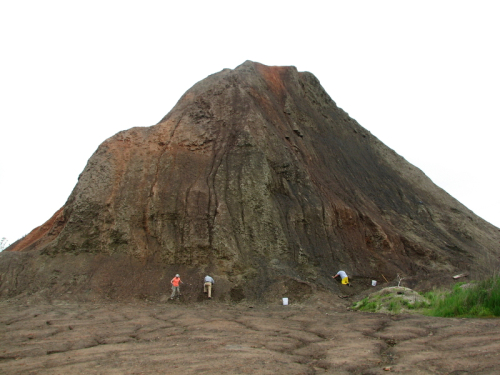
Read more: Fossil Friday #56: Braceville Mazon Creek FossilsThis is the “Fossil Friday” post #56. Expect this to be a somewhat regular feature of the website. We will post any fossil pictures you send in to esconi.info@gmail.com. Please include a short description or story. Check the #FossilFriday Twitter hash tag for contributions from around the world! This weekend, May 15th and 16th, 2021, ESCONI returns to the Braceville spoil pile to collect Mazon Creek fossils and concretions. Last fall, we had a couple posts to show what has been found there in the past – Fossil Friday #22 and Fossil Friday #23. Today, we are going to revisit…
-

Throwback Thursday #58: Looking Back At ESCONI For May 2021
Read more: Throwback Thursday #58: Looking Back At ESCONI For May 2021This is Throwback Thursday #58. In these, we look back into the past at ESCONI specifically and Earth Science in general. If you have any contributions, (science, pictures, stories, etc …), please send them to esconi.info@gmail.com. Thanks! This week we have a look back at ESCONI 25 and 50 years ago… May 1996 and May 1971. 25 Years Ago – May 1996 50 Years Ago – May 1971
-
ESCONI May 2021 General Meeting – May 14th, 2021 at 8:00 PM via Zoom – “Enigmatic worms from the Burgess Shale reveal a novel symbiosis”
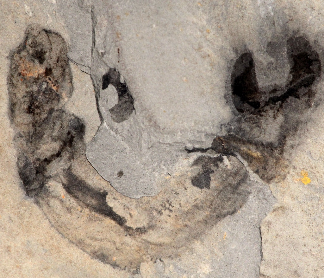
Read more: ESCONI May 2021 General Meeting – May 14th, 2021 at 8:00 PM via Zoom – “Enigmatic worms from the Burgess Shale reveal a novel symbiosis”ESCONI is inviting you to a scheduled Zoom meeting. We hope to see you there! The Zoom link is below. Date/Time: Friday, May 14, 2021 – 8:00 PM Central Time (US and Canada) Topic: “Enigmatic worms from the Burgess Shale reveal a novel symbiosis.” Presented by: Paleontologist, Dr. Karma Nanglu, of the Smithsonian Institution. Excerpt from 5/7/16 New York Times article: “Karma Nanglu, a paleobiologist and graduate student at the University of Toronto, was exploring the Burgess Shale Formation in the Canadian Rockies with his colleagues when they uncovered several fossilized tubes in slabs of rocks. Looking closer, they noticed that the cylinders weren’t…
-
Smithsonian: An Ode to the World’s Most Average Dinosaurs
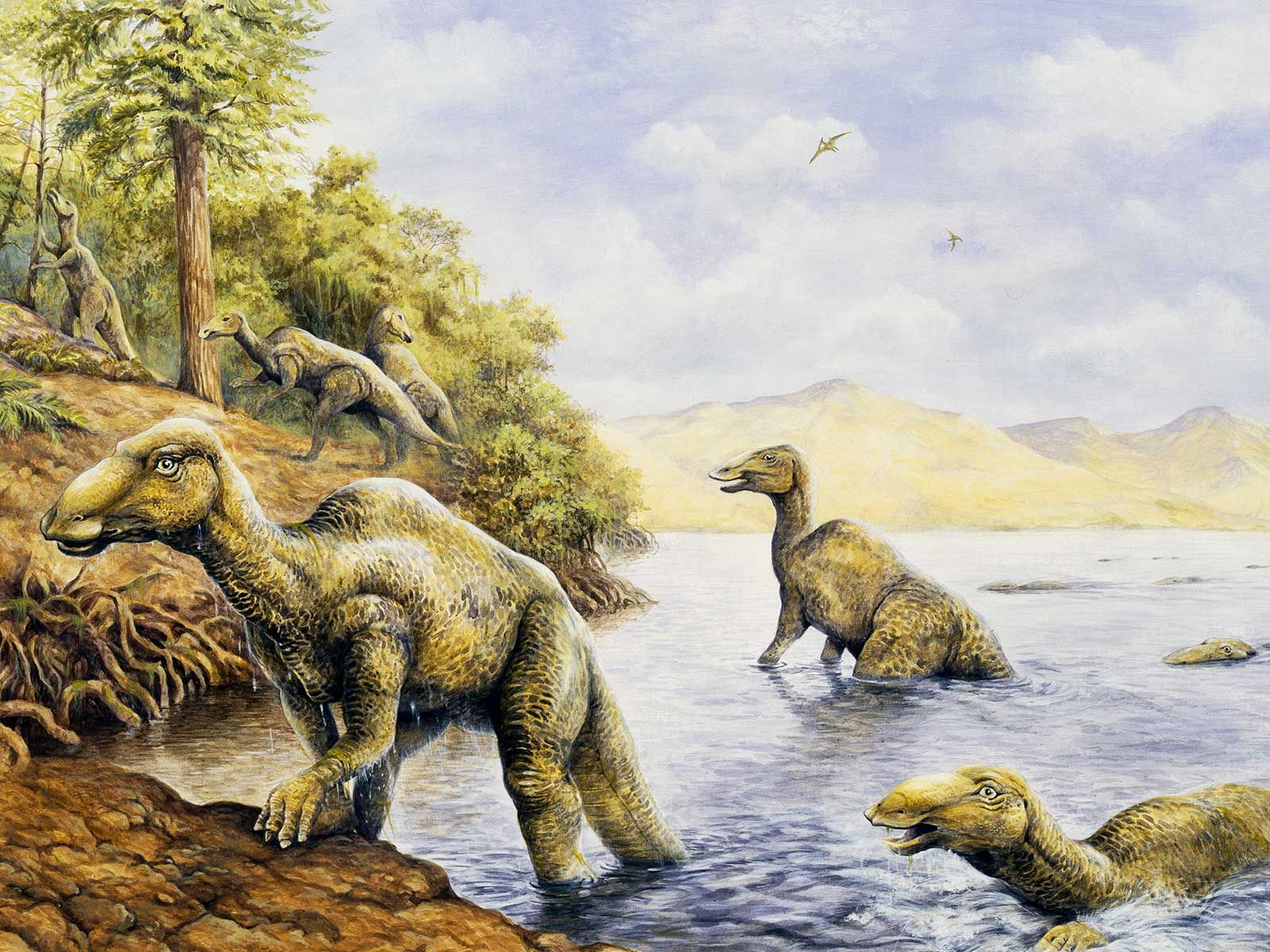
Read more: Smithsonian: An Ode to the World’s Most Average DinosaursSmithsonian Magazine has a story about the appreciation for the average dinosaur – a duckbilled dinosaur like Edmontosaurus. To truly understand the dinosaurs, one needs to look past the flashy and embrace the average as that is where the true clues to what life was like back in the Mesozoic. Out of all these impressive dinosaur species, however, what was average-sized for a dinosaur? Drawing from a data set of 584 dinosaurs, Campione notes, most non-avian dinosaurs had a mass of about 7,700 pounds. That’s a pretty big animal, somewhere between modern-day rhinos and elephants. But that wasn’t uncommon in…
-
Phys.org: Fossil of ancient squid eating a crustacean while being eaten by an ancient shark
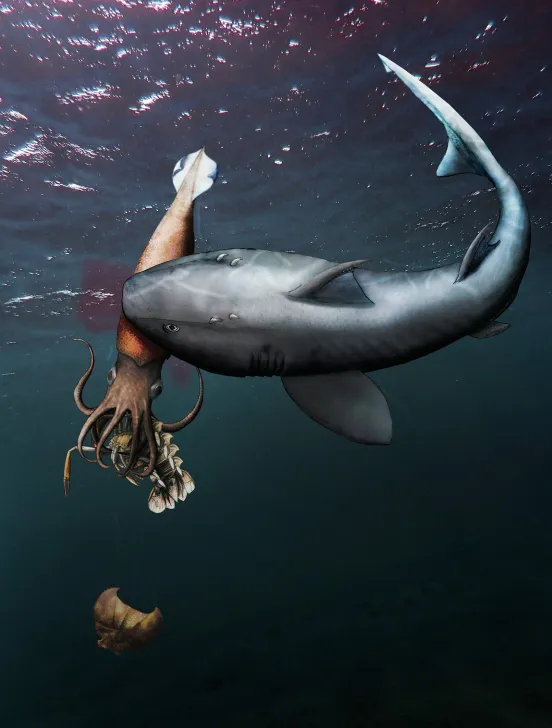
Read more: Phys.org: Fossil of ancient squid eating a crustacean while being eaten by an ancient sharkPhys.org has a story about a very strange and rare fossil. It’s sort of the turducken of the fossil world. In this case, researchers described a fossil, which dates to the Jurassic Period about 180 million years ago, of a belemnite eating a crustacean, which was in turn being eaten by a shark. The description is in a paper which was published in the Swiss Journal of Palaeontology. A team of researchers has discovered a fossil they are describing as a leftover fall event in which one creature was in the process of eating another creature that was not consumed.…
-
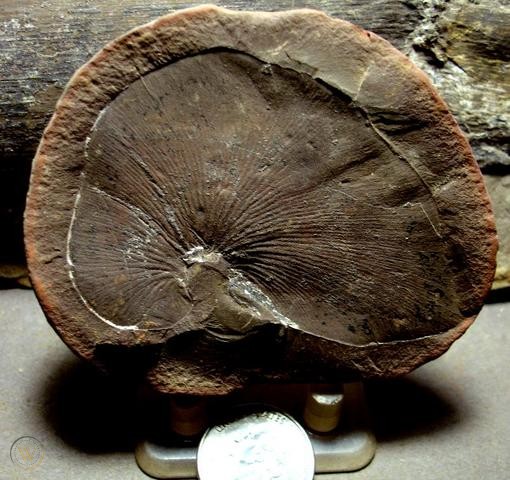
Mazon Monday #59: Cyclopteris orbicularis
Read more: Mazon Monday #59: Cyclopteris orbicularisThis is Mazon Monday post #59. What’s your favorite Mazon Creek fossil? Tell us at email:esconi.info@gmail.com. —————————————————– This week, we visit an interesting plant fossil called Cyclopteris orbicularis, which is a circular leaf associated with the seed ferns Laveineopteris, Neuropteris, Reticulopteris, Odontopteris, and Macroneuropteris. The Cyclopteris leaves are attached to the lower parts of the pinnate fronds and the trunk of axis of the plant. C. obicularis was first described in 1831 by Adolphe-Theodore Brongniart, widely considered the father of Paleobotany. Cyclopteris sp. appears in the book “Keys to Identify Pennsylvanian Fossil Plants of the Mazon Creek Area”, which was…
-
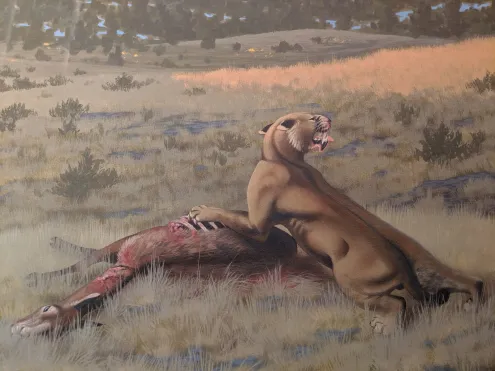
Nature: Newly Identified Species of Saber-Toothed Cat Was So Big It Hunted Rhinos in America
Read more: Nature: Newly Identified Species of Saber-Toothed Cat Was So Big It Hunted Rhinos in AmericaNature as an article about the identification of a new species of large saber-toothed cat. The animal, Machairodus lahayishupup, lived between 5 and 9 million years ago in North America. It’s larger than its ancient relative Smilodon, weighing in around 600 pounds or larger. The research has been published in the Journal of Mammalian Evolution. A total of seven M. lahayishupup fossil specimens, including upper arms and teeth, were analyzed and compared with other species to identify the new felid, with the fossils collected from museum collections in Oregon, Idaho, Texas, and California. “One of the big stories of all of this is that…
-
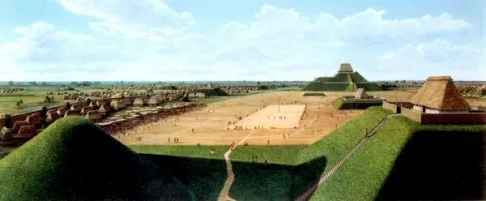
Cahokia: What Doomed a Sprawling City Near St. Louis 1,000 Years Ago?
Read more: Cahokia: What Doomed a Sprawling City Near St. Louis 1,000 Years Ago?The New York Times has a story about Cahokia, which was a Native American city in pre-Columbian times. Cahokia was located near Collinsville, IL across the Mississippi River from what is now St. Louis, MO. It rose around 1050 CE and reached its zenith around 1100 CE. At its apex with a population of 20,000, it was larger than both contemporaneous London and Paris. Dr. Caitlin Rankin, an archaeologist at the University of Illinois at Urbana-Champaign, did some recent excavations to uncover why it had disappeared by 1350 CE. Her research was published in the May/June issue of Geoarchaeology. It…
-
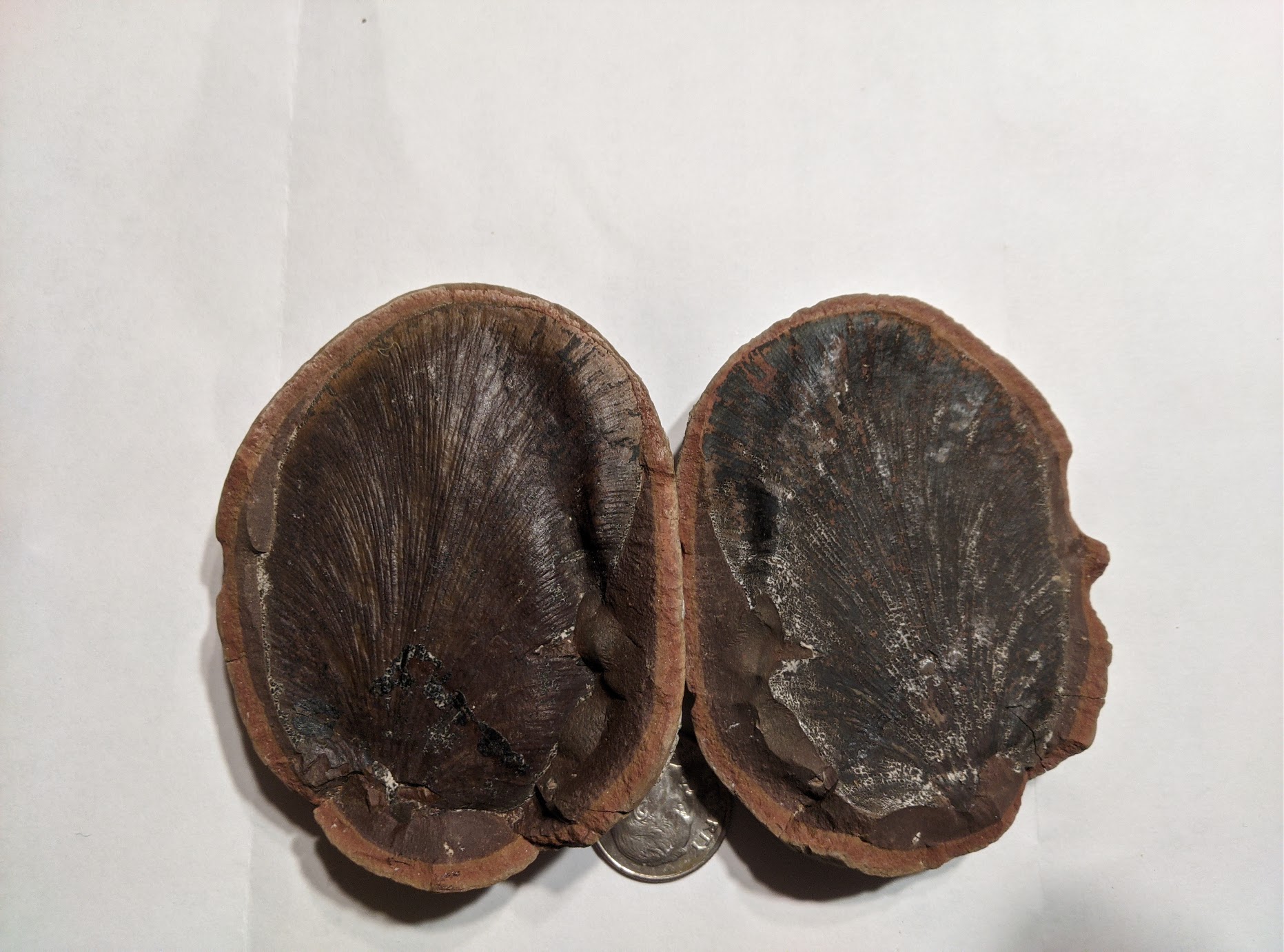
Fossil Friday #55: Cyclopteris trichomanoides
Read more: Fossil Friday #55: Cyclopteris trichomanoidesThis is the “Fossil Friday” post #55. Expect this to be a somewhat regular feature of the website. We will post any fossil pictures you send in to esconi.info@gmail.com. Please include a short description or story. Check the #FossilFriday Twitter hash tag for contributions from around the world! Today, we visit another Mazon Creek plant fossil, Cyclopteris trichomanoides. Cyclopteris is associated with various seed ferns, like Neuropteris, Macroneuropteris, Leveineopteris, and others. It was possibly attached to the lower parts of the pinnate fronds and the trunk of axis of the plant. This fossil concretion belongs to ESCONI member Rich Holm.
-

Throwback Thursday #57: Loch Ness Outdone: Rediscovery of the Coelacanth
Read more: Throwback Thursday #57: Loch Ness Outdone: Rediscovery of the CoelacanthThis is Throwback Thursday #57. In these, we look back into the past at ESCONI specifically and Earth Science in general. If you have any contributions, (science, pictures, stories, etc …), please send them to esconi.info@gmail.com. Thanks! Youtube has many good videos. Some are regular series. One of my favorites to watch during my workout is “The History Guy”. In it, the host covers many events in history from science to politics to wars to cars and many things in between. Late last week, there was an episode that needs to be included here. It’s called “Loch Ness Outdone: Rediscovery…
-
ESCONI Field Trip to Danville Shale Pile Fossils – Saturday, June 5th, 2021
Read more: ESCONI Field Trip to Danville Shale Pile Fossils – Saturday, June 5th, 2021Danville Field Trip Rules An ESCONI field trip to the Danville Shale Pile for Pennsylvanian plant fossils is scheduled for June 5, 2021 from 10 AM to 3 PM. This is on private property and there is an attendance limit of 20 people. The gate will be secured once we are in and locked when we leave at 3 PM. You must register to go on this trip. See rule 7 below for instructions. This is the only way to register. If you are sick, have any symptoms of Covid-19 or have recently tested positive, DO NOT COME. Everyone MUST…
-
Deinonychus Changed Our Understanding of Dinosaurs
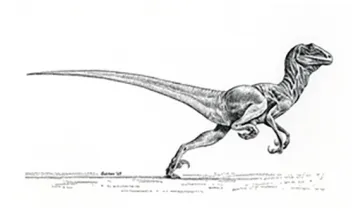
Read more: Deinonychus Changed Our Understanding of DinosaursSciTechDaily has an interesting story about how the discovery of Deinonychus changed our view of dinosaurs. John Ostrom found the first Deinonychus back in 1960’s. In 1969, he published a paper describing Deinonychus, which means “terrible claw”. That paper raised many questions about current assumptions about dinosaurs and refueled the debate on which animals birds evolved from. Academics used to tease paleontologists, saying that while dinosaurs appeal to children, they won’t answer the important evolutionary questions. Yale’s John Ostrom (1928-2005) proved them wrong. Fifty years ago, in Feb. 1969, Ostrom, then an assistant professor of geology and geophysics at Yale,…
-

Mazon Monday #58: Arthropleura sp.
Read more: Mazon Monday #58: Arthropleura sp.This is Mazon Monday post #58. What’s your favorite Mazon Creek fossil? Tell us at email:esconi.info@gmail.com. —————————————————– Arthropleura is a genus of extinct millipedes. Their size ranged from about 0.3 meters to about 2.5 meters long. They are the largest known land invertebrates. Fossils are known from North America and Scotland, and are thought to have lived during the Carboniferous Period through to the early Permian Period (345 to 295 million years ago). At one time, Arthropleura was thought to an active predator, but due to the lack of preserved mouths, which could be an indicator that their mouth parts…
-
PBS Eons: When Crocs Thrived in the Seas
Read more: PBS Eons: When Crocs Thrived in the SeasThere’s a new episode of PBS Eons. This one is about some ferocious crocodiles that lived in the oceans during the Jurassic and Cretaceous. Check out Animal IQ: https://youtu.be/BXqGkPhU2VE While dinosaurs were dominating the land, the metriorhynchids were thriving in the seas. But taking that plunge wasn’t easy because it takes a very special set of traits to fully dedicate yourself to life at sea.
-
Fossil Friday #54: Assortment of Mississippian Fossils – Anna, IL
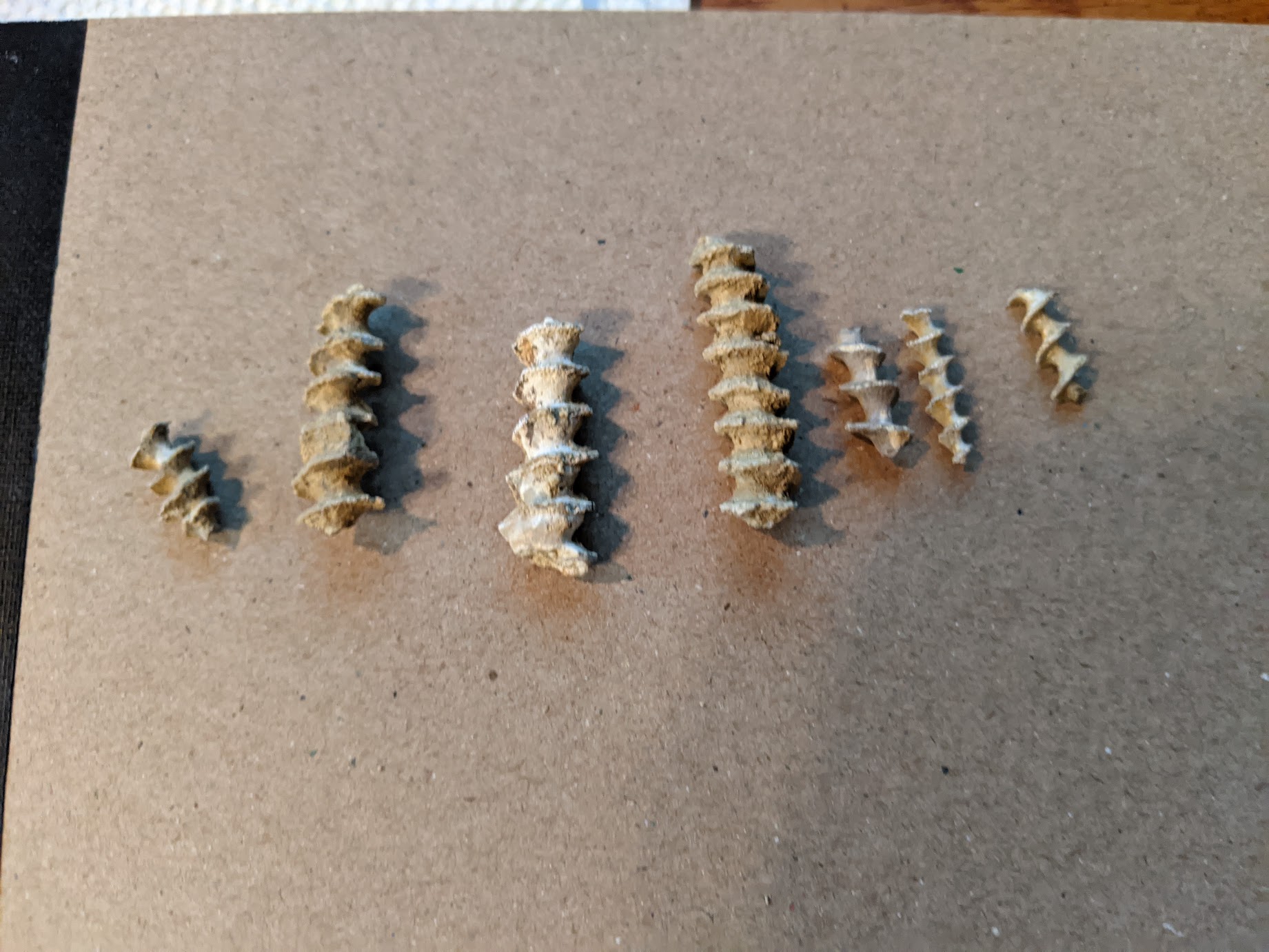
Read more: Fossil Friday #54: Assortment of Mississippian Fossils – Anna, ILThis is the “Fossil Friday” post #54. Expect this to be a somewhat regular feature of the website. We will post any fossil pictures you send in to esconi.info@gmail.com. Please include a short description or story. Check the #FossilFriday Twitter hash tag for contributions from around the world! —————————————————– This week we have some fossils from a road cut near Anna, IL in southern Illinois. These fossils came out of the Haney Shale, which dates to the Mississippian Period. These fossils are part of the donation made by Peter and Paul Kruty earlier this year. Thanks again, guys! Horn Corals…
-
Throwback Thursday #56: “ESCONI”
Read more: Throwback Thursday #56: “ESCONI”This is Throwback Thursday #56. In these, we look back into the past at ESCONI specifically and Earth Science in general. If you have any contributions, (science, pictures, stories, etc …), please send them to esconi.info@gmail.com. Thanks! Time for another poem from the past. This was published in the June 1970 edition of the newsletter. It was written by Beverly June Meininger, who was a non-resident ESCONI member living in Oxford, Wisconsin. It has an interesting structure, using the individual letters in ESCONI. “ESCONI” Escape from our weary daily toil.Eager for fellowship and for fun.Enjoyment as our hands sift thru…

ESCONI Gem, Mineral, and Fossil Show
Most Recent Post
- Early Triassic Cyclidan Crustacean Had Powerful Jaws
 Sci-News has an article about a distinctive, but enigmatic, group of arthropods called Cyclidans. Cyclidans appeared during the Carboniferous and hung around until the Late Cretaceous.
- About ESCONI
- Around the Web
- Calendar of Events
- Code of Ethics and Conduct
- ESCONI Books for Sale
- ESCONI Gem, Mineral, and Fossil Show
- ESCONI in the News
- ESCONI Videos
- Field Trips
- Flashback Friday
- Fossil Friday
- Mazon Creek
- Mazon Monday
- Member Spotlight
- Membership Information
- Reference Material
- Throwback Thursday
- Trilobite Tuesday
Field trips require membership, but visitors are welcome at all meetings!
| Friday, April 10th | General Meeting – 8:00 PM via Zoom. Jessica Hull will present “Life in the Devonian Period, The Age of Fishes.” |
| Saturday, April 11th | Junior Study Group Meeting – 2:00 PM, in person at the College of DuPage Technical Education Center (TEC) Building – Room 1038A (Map). Katherine Howard will present on Sand and Sediment Collecting. Specifics of this meeting are available from Scott Galloway, 630-670-2591, gallowayscottf@gmail.com. |
| Saturday, April 18th | Paleontology Study Group – 7:30 PM via Zoom and in person at the College of DuPage, TEC, Room 1038B (Map). Keith Robitschek will present “Digging the Marl of the Lance Formation.” |
| Friday, April 24th | MAPS Expo XLVII – Springfield, IL. |
| Saturday, April 25th | MAPS Expo XLVII – Springfield, IL. |
| Sunday, April 26th | MAPS Expo XLVII – Springfield, IL. |
| No meeting this month | Mineralogy Study Group |