
-
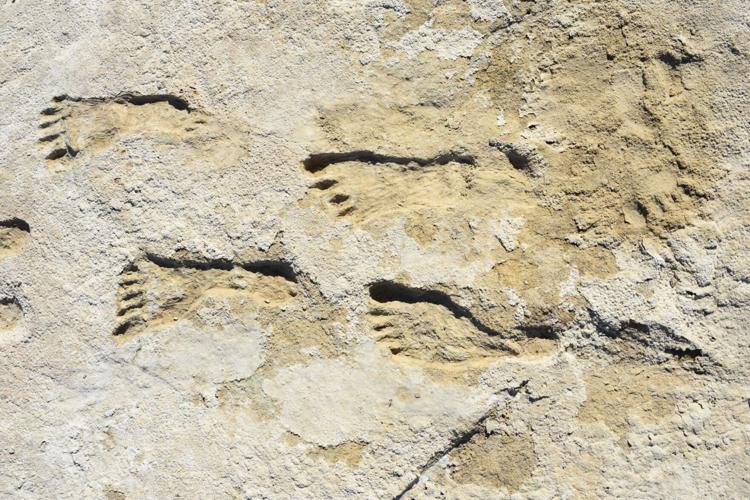
University of Arizona study confirms New Mexico fossils may be earliest evidence of humans in Americas
Read more: University of Arizona study confirms New Mexico fossils may be earliest evidence of humans in AmericasTuscon.com has a story about the oldest evidence of human occupation in North America. A 2021 study from the University of Arizona revealed data that dated fossilized footprints from White Sands National Park to 23,000 year ago. This was controversial as the previously excepted oldest human evidence was 17,000 before present. Most of the criticism was associated with the use of grass seeds and pollen excavated at the site to determine the approximate age of the footprints. Now, a new study analyzed mud deposits surrounding the original dig site to arrive at a similar age. The research was published recently…
-
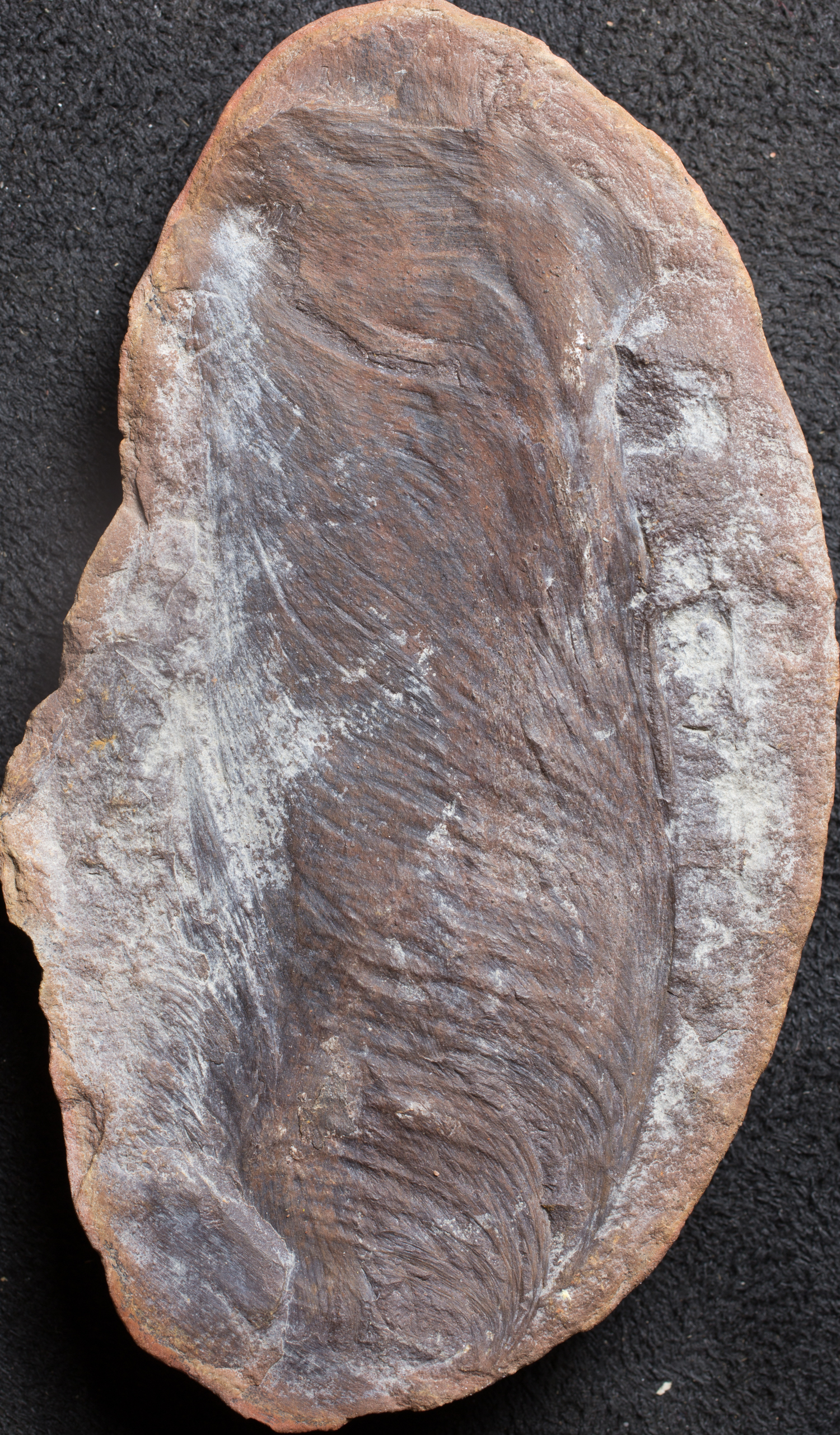
Mazon Monday #275: Rhacophyllum molle
Read more: Mazon Monday #275: Rhacophyllum molleThis is Mazon Monday post #275. What’s your favorite Mazon Creek fossil? Tell us at email:esconi.info@gmail.com. After Lesquereux (1870) Rhacophyllum molle is a wispy plant, underfined plant species described by Leo Lesquereux in 1870 as Hymenophyllites mollis. Later, he reclassified it as Rhacophyllum molle. He thought it was a type of aquatic plant. He reported to have found them in irregular masses growing on decaying woody matter. All known specimens are from the Mazon Creek area. Leo Lesquereux’s description, posted on George’s Basement. RHACOPHYLLUM MOLLE, Lesqx. Hymenophyllites mollis, Lesqx., Geol. Rept. of Ill., VI, p. 418, Pl. XVIII, f. 2-6. Filaments…
-

Video for ESCONI June 2025 General Meeting – “New discoveries in Inner Space Cavern reveal the animals of Ice Age Texas”
Read more: Video for ESCONI June 2025 General Meeting – “New discoveries in Inner Space Cavern reveal the animals of Ice Age Texas”The June 2025 General Meeting was held on June 13th, 2025 via Zoom. Our speaker was John A. Moretti of the Jackson School of Geosciences at The University of Texas at Austin. His topic was “New discoveries in Inner Space Cavern reveal the animals of Ice Age Texas“. Summary from John Moretti New discoveries in Inner Space Cavern reveal the animals of Ice Age Texas. John A. MorettiJackson School of Geosciences, The University of Texas at Austin (UT) Summary: Since its discovery in 1963, Inner Space Caverns has been famous for its rich abundance of Ice Age fossils. Those fossils…
-
PBS Eons: The Dinosaurs Too Big to Be Dinosaurs
Read more: PBS Eons: The Dinosaurs Too Big to Be DinosaursThere’s a new episode of PBS Eons on Youtube. This one is about big dinosaurs… really BIG dinosaurs. How did sauropods, uniquely large land animals, actually live, with their anatomy and physiology pushed to such extremes? Well, their unprecedented gigantism came with some equally massive costs…
-

Fossil Friday #270: Anthracomedusa turnbulli
Read more: Fossil Friday #270: Anthracomedusa turnbulliThis is the “Fossil Friday” post #270. Expect this to be a somewhat regular feature of the website. We will post any fossil pictures you send in to esconi.info@gmail.com. Please include a short description or story. Check the #FossilFriday Twitter hash tag for contributions from around the world! —————————————————– For this week, we have a beautiful Anthracomedusa turnbulli jellyfish from the Pit 11 locality of Mazon Creek. Anthracomedusa turnbulli was described by Ralph Johnson and Eugene Richardson, Jr. in 1968. Anthracomedusa turnbulli was named for Jim Turnbull, who was one of Richardson essential assistants in the field during the 1960s. It…
-

Throwback Thursday #270: Believe It Or Not
Read more: Throwback Thursday #270: Believe It Or NotThis is Throwback Thursday #270. In these, we look back into the past at ESCONI specifically and Earth Science in general. If you have any contributions, (science, pictures, stories, etc …), please send them to esconi.info@gmail.com. Thanks! email:esconi.info@gmail.com. We have a poem about collecting… collecting fossils. artifacts, minerals, and just rocks. It’s easy to over indulge and collect too much… is too much possible? That seems to be the subject of this poem and its tongue in cheek ending. The poem was penned by Peggy Allaway, daughter of Bill Allaway who was the first chairman of ESCONI. Peggy had quite…
-

PBS NOVA – Great Mammoth Mystery
Read more: PBS NOVA – Great Mammoth MysteryPBS NOVA just published the “Great Mammoth Mystery” on Youtube. Sir David Attenborough investigates a unique site in southern England where amateur fossil hunters uncovered giant mammoth bones and evidence of Neanderthals. A team of paleontologists and archaeologists soon discover that the site preserves rare evidence of the extinct beasts and early human inhabitants of Britain dating to over 200,000 years ago. What skills did the early humans have to help them survive during the Ice Age? How did they hunt and protect themselves against formidable creatures such as mammoths? With hands-on experiments with replicas of Neanderthal-era spears and stone…
-

ESCONI Rock, Mineral, and Fossil Swap – August 23rd, 2025 – DuPage County Fairgrounds
Read more: ESCONI Rock, Mineral, and Fossil Swap – August 23rd, 2025 – DuPage County FairgroundsESCONI will be holding a Rock, Mineral, and Fossil Swap on August 23rd, 2025 at the DuPage County Fairgrounds from 8:00 AM to 2:00 PM. Come on out!
-

Mazon Monday #274: George Langford Sr. Passes Away on June 16th, 1964
Read more: Mazon Monday #274: George Langford Sr. Passes Away on June 16th, 1964This is Mazon Monday post #274. What’s your favorite Mazon Creek fossil? Tell us at email:esconi.info@gmail.com. Recently, I ran across the letter from George Langford Jr. upon the death of his father – George Langford Sr. The letter is the subject of this post and follows below. George Langford Sr. is giant in the history of Mazon Creek. Before Jack Wittry’s books, George’s books were the go-to source of information about Mazon Creek. George wrote three books about Mazon Creek fossils. The first was published in 1958 and the second in 1963. Unfortunately, the third was published well after his…
-
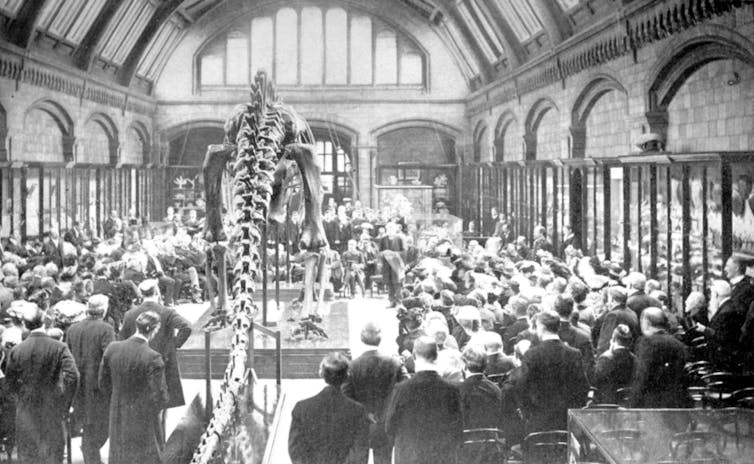
The Conversation: Why Dippy the dinosaur remains beloved, 120 years after arriving at the Natural History Museum
Read more: The Conversation: Why Dippy the dinosaur remains beloved, 120 years after arriving at the Natural History MuseumThe Conversation has an interesting piece about Dippy the Diplodocus carnegiei, who is the star of the Natural History in London. Dippy first went on display in 1905 at the Natural History Museum in London. Dippy arrived in London as part of a campaign for public education by the Scottish-American millionaire Andrew Carnegie (1835–1919). At that time, museums were looking for their place in the academic landscape. Dippy arrived in London in 1905 as part of a campaign for public education by the Scottish-American millionaire Andrew Carnegie (1835–1919). At the time, there was a debate in academic circles about the function of museums…
-
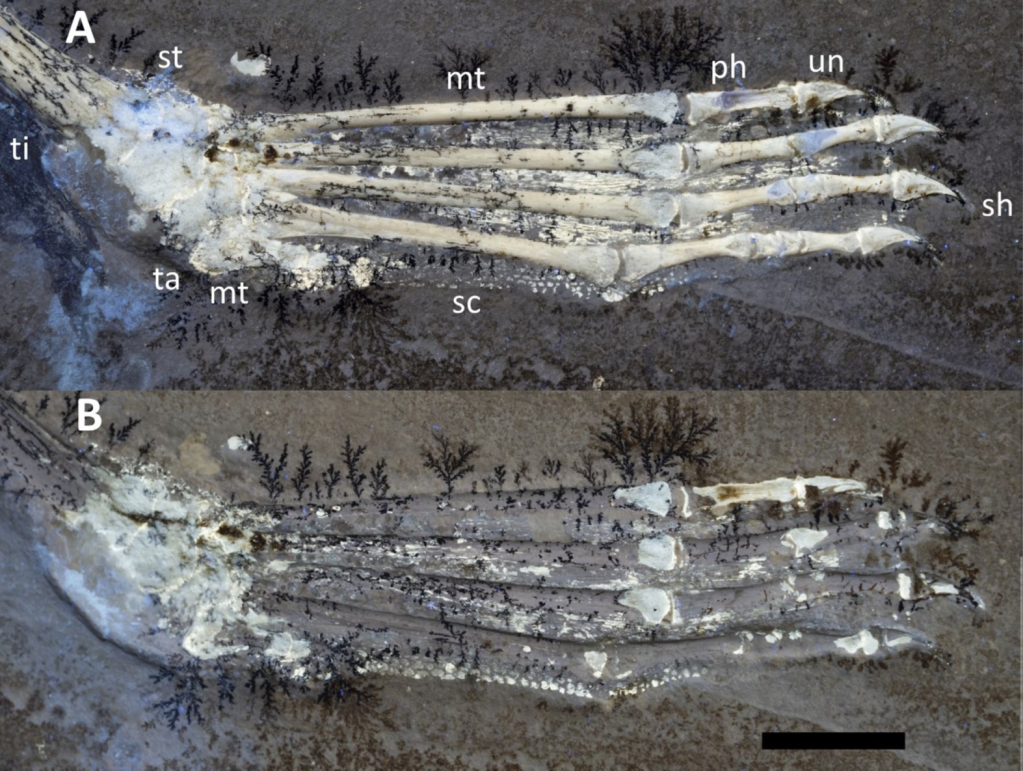
Soft tissue anatomy of pterosaur hands and feet – new information from Solnhofen region pterodactyloid specimens
Read more: Soft tissue anatomy of pterosaur hands and feet – new information from Solnhofen region pterodactyloid specimensDr. David Hone has announced new research with Rene’ and Bruce Lauer of the Lauer Foundation. The paper “Soft tissue anatomy of pterosaur hands and feet – new information from Solnhofen region pterodactyloid specimens” was published in the journal Lethaia and is open access. As part of my ongoing work tracking down various undescribed Pterodactylus and Rhamphorhynchus specimens, I’ve come across various large bits from Solnhofen beds sitting in museum collections. The really huge wings that I’ve seen, I actually wrote up with my then PhD student Ross Elgin a few years back, but we knew there were more out there, including isolated legs and…
-
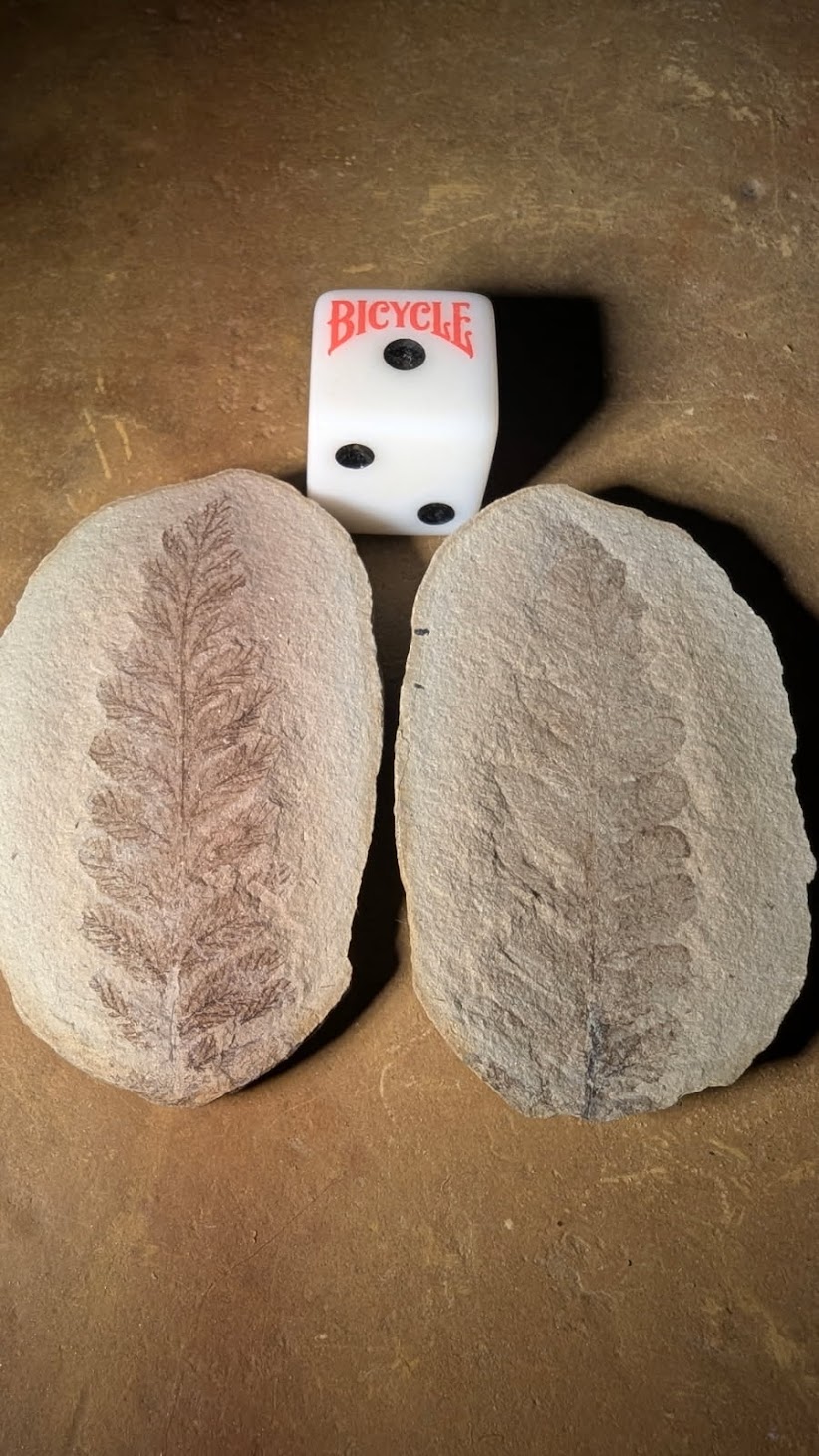
Fossil Friday #269: Crenulopteris subcrenulata
Read more: Fossil Friday #269: Crenulopteris subcrenulataThis is the “Fossil Friday” post #269. Expect this to be a somewhat regular feature of the website. We will post any fossil pictures you send in to esconi.info@gmail.com. Please include a short description or story. Check the #FossilFriday Twitter hash tag for contributions from around the world! —————————————————– This week, we have a stunning Crenulopteris subcrenulata (see Mazon Monday #152). C. subcrenulata is a somewhat common in Mazon Creek fern. Long misunderstood and misidentified, it has at times been mistaken for Pecopteris (Cyathocarpus) arborescens (arborea), Pecopteris (Cyathocarpus) hemitelioides, and Pecopteris (Diplazites) unita. It was first described by Leo Lesquereux in 1866 as Alethopteris crenulata in his “Report on the Fossil Plants…
-
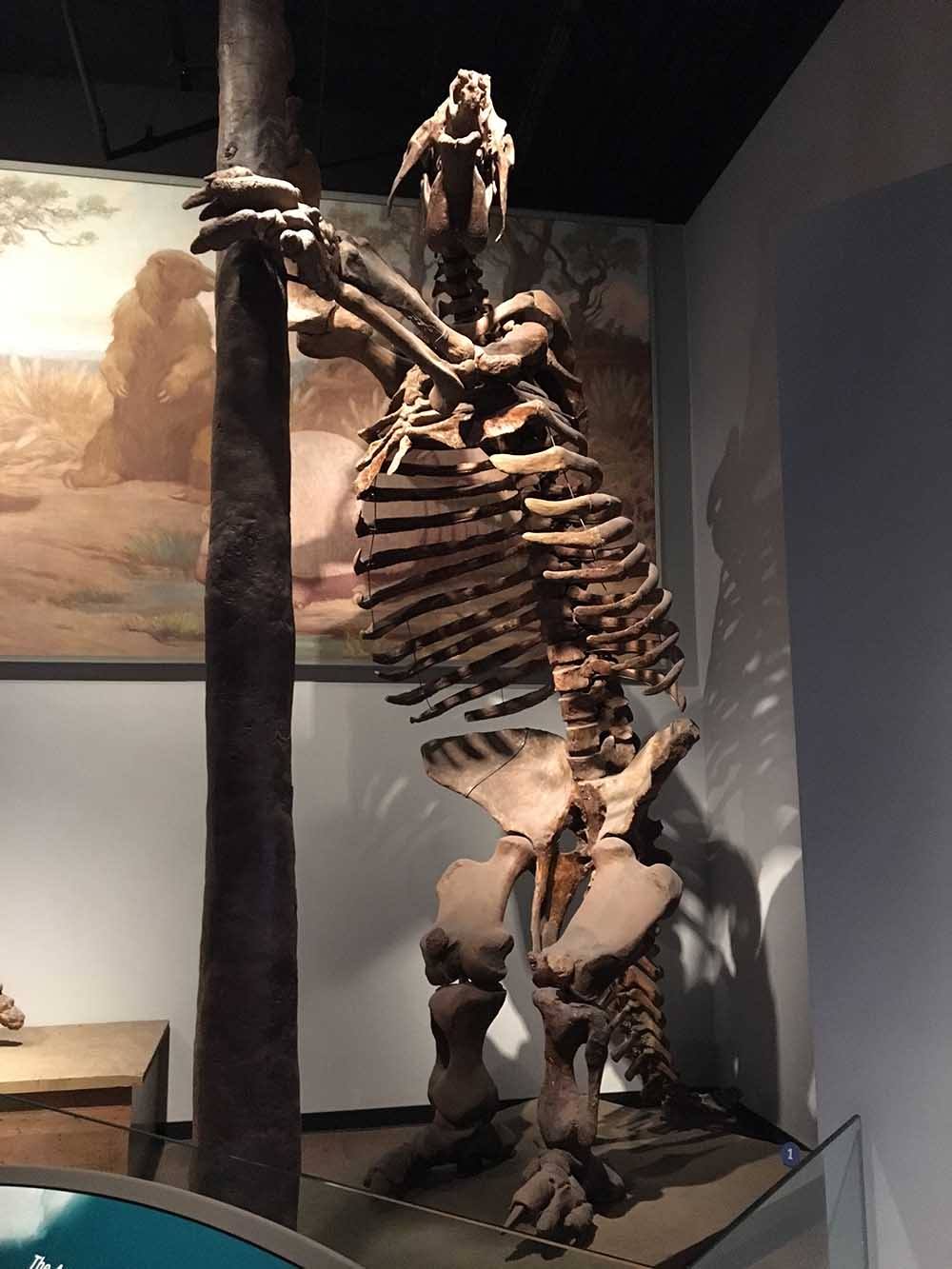
Throwback Thursday #269: Field Museum Megatherium
Read more: Throwback Thursday #269: Field Museum MegatheriumThis is Throwback Thursday #269. In these, we look back into the past at ESCONI specifically and Earth Science in general. If you have any contributions, (science, pictures, stories, etc …), please send them to esconi.info@gmail.com. Thanks! email:esconi.info@gmail.com. If you’ve been to the Field Museum in the last 100 years or so, you’ve invariably ran into the giant ground sloth Megatherium. It’s been displayed in a bunch of settings over the years, with its current home in Evolving Planet. The Field Museum has many photos of its journey from discovery to display. Excavation in Bolivia (photos courtesy of Elmer S.…
-
ESCONI June 2025 General Meeting – June 13th, 2025 – “New discoveries in Inner Space Cavern reveal the animals of Ice Age Texas”
Read more: ESCONI June 2025 General Meeting – June 13th, 2025 – “New discoveries in Inner Space Cavern reveal the animals of Ice Age Texas”The June 2025 General Meeting will be held at 8:00 PM CDT on June 13th, 2025 via Zoom. Our speaker is John A. Moretti of the Jackson School of Geosciences at The University of Texas at Austin. His topic is “New discoveries in Inner Space Cavern reveal the animals of Ice Age Texas“. Since its discovery in 1963, Inner Space Caverns has been famous for its rich abundance of Ice Age fossils. Those fossils represent mammoths, extinct horses, saber-tooth cats, and other animals that went extinct over 11,000 years ago. John has been exploring the Ice Age archive preserved in…
-
After years in the making, Utahraptor State Park opens for visitors
Read more: After years in the making, Utahraptor State Park opens for visitorsFrom Moab, Utah comes news that Utahraptor State Park is now open to visitors. MOAB, Utah — The first visitors have arrived at Utah’s newest state park that took years to create. “This is the first project in state history to take over 100 million years to complete!” Governor Spencer Cox joked at the opening of the new Utahraptor State Park. The new state park is named for the Utahraptor, a dinosaur species made famous because it’s what paleontologists say the “Jurassic Park” and “Jurassic World” movies based their velociraptors on. The park is rich with dinosaur fossils coming…
-

Mazon Monday #273: Neuropteris fimbriata
Read more: Mazon Monday #273: Neuropteris fimbriataThis is Mazon Monday post #273. What’s your favorite Mazon Creek fossil? Tell us at email:esconi.info@gmail.com. Neuropteris fimbriata is a seed fern. It has by found associated with Neuropters ovata and is considered a growth form of it. N. fimbriata was described in 1866 by one the founders of American paleobotany Leo Lesquereux (1806-1889). Lesquereux was a Swiss-born bryologist. He was a close friend of Louis Agassiz and followed him to the United States in 1848. He worked as a consultant on multiple state geological surveys (including Illinois and Indiana), where he pioneered the study of Paleozoic fossil flora. Probably…
-

150-Million-Year-Old Stegosaurus Skull Rewrites Dinosaur Evolution
Read more: 150-Million-Year-Old Stegosaurus Skull Rewrites Dinosaur EvolutionSciTechDaily has an article about a stegasaur skull discovered in Spain. Stegasaur skulls are rarely found due to the extreme fragility of their bone. This new speciec, Dacentrurus armatus, was found near Villar del Arzobispo Formation and is nearly complete. The rock formation dates to the late Jurassic about 150 million years ago. The research was published in the paper “New insights into the phylogeny and skull evolution of stegosaurian dinosaurs: An extraordinary cranium from the European Late Jurassic (Dinosauria: Stegosauria)” in the journal Vertebrate Zoology. Paleontologists from the Fundación Conjunto Paleontológico de Teruel-Dinópolis have made an exciting discovery. In…
-

ScienceNews: The first cicada concert was 47 million years ago
Read more: ScienceNews: The first cicada concert was 47 million years agoScienceNews has a story about the first cicada concert. Fossil cicadas from Messel Pit in Germany suggests the first singing cicadas date to the Eocene some 47 million years ago. The fossil of Eoplatypleura messelensis, was collected around 1986 and identified as a cicada in 1988. Unfortunately, the researchers didn’t realize it was the oldest singing cicada. The new research was published in the journal Scientific Reports. Jiang was surprised to find not one but two singing cicada fossils from the Eocene. The two adult female specimens were both preserved in oil shale, a fine-grained rock that locks in delicate details.…
-

Fossil Friday #268: Metasequoia Cone From Stonerose in Washington
Read more: Fossil Friday #268: Metasequoia Cone From Stonerose in WashingtonThis is the “Fossil Friday” post #268. Expect this to be a somewhat regular feature of the website. We will post any fossil pictures you send in to esconi.info@gmail.com. Please include a short description or story. Check the #FossilFriday Twitter hash tag for contributions from around the world! —————————————————– This week’s submission comes from Jim Chatters, who did an fascinating presentation entitled “Hoyo Negro: A Spectacular Natural Trap on Mexico’s Yucatan Peninsula” in October 2024. Jim is an archaeologist, who has studied human history of the Americas for many years. Here is an article about the discovery of a 13,000 year…
-

ESCONI Events for June 2025
Read more: ESCONI Events for June 2025Field trips require membership, but visitors are welcome at all meetings! Fri, June 13th ESCONI General Meeting – 8:00 PM via Zoom – Topic: “New discoveries in Inner Space Cavernreveal the animals of Ice Age Texas” by John A. Moretti of the Jackson School of Geosciences at The University of Texas at Austin Zoom link Sat, June 21st ESCONI Field Trip to Mt. Orab, Ohio for trilobites Details here Sat, June 21st ESCONI Paleontology Study Group – 7:30 PM via Zoom – Topic: “Taxonomic diversity and development of Late Carboniferous amphibamiforms from the Mazon Creek Lagerstätte” by Calvin So of…

ESCONI Gem, Mineral, and Fossil Show
Most Recent Post
- ESCONI at the Coal City Library!
 On June 4, ESCONI was at the Coal City Library to kick off summer with exhibits of fossils, geodes, and… Read more: ESCONI at the Coal City Library!
- About ESCONI
- Around the Web
- Calendar of Events
- Code of Ethics and Conduct
- ESCONI Books for Sale
- ESCONI Gem, Mineral, and Fossil Show
- ESCONI in the News
- ESCONI Videos
- Field Trips
- Flashback Friday
- Fossil Friday
- Mazon Creek
- Mazon Monday
- Member Spotlight
- Membership Information
- Reference Material
- Throwback Thursday
- Trilobite Tuesday
Field trips require membership, but visitors are welcome at all meetings!
| Friday, June 12th | General Meeting – 8:00 PM via Zoom. Adrienne Stroup of The Field Museum will present “At the Intersection of Art and Science: Outreach in Natural History Museums”. |
| Saturday, June 20th | Paleontology Study Group – 7:30 PM via Zoom. Lincoln Shoemaker will present “Factors controlling the distribution of Late Ordovician – Silurian crinoids.” |
| No meeting this month | Junior Study Group Meeting |
| No meeting this month | Mineralogy Study Group |