
-
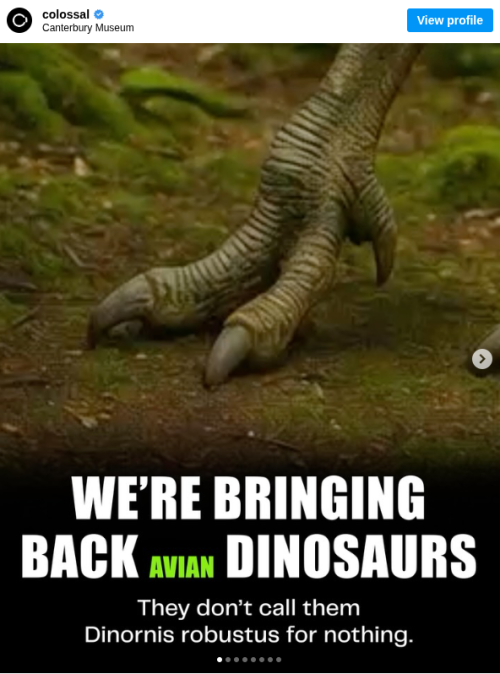
‘We’re bringing back avian dinosaurs’: De-extinction company claims it will resurrect the giant moa in next 10 years
Read more: ‘We’re bringing back avian dinosaurs’: De-extinction company claims it will resurrect the giant moa in next 10 yearsLiveScience has an interesting story about the biotech company Colossal Biosciences. The company is working to :”bring back” the giant moa. Dinornis robustus lived on the south island of New Zealand up until about 600 years ago. There were about nine separate species of moa all of which went extinct due to hunting pressure from modern humans. Colossal announced on Tuesday (July 8) that its scientists and local Indigenous partners will “bring back” the South Island giant moa (Dinornis robustus) through genetic engineering within the next 10 years. D. robustus stood up to 12 feet (3.6 meters) tall and was the largest of nine…
-

Start Your Rockin’ Collection – Saturday July 12 – at the Lizzadro Museum of Lapidary Art
Read more: Start Your Rockin’ Collection – Saturday July 12 – at the Lizzadro Museum of Lapidary ArtStart Your Rockin’ Collection – Saturday July 12 – at the Lizzadro Museum of Lapidary Art Did you know that ordinary looking rocks can hide dazzling crystal worlds inside? Geodes are nature’s hidden treasures – spherical, hollow wonders lined with sparkling crystals! Join us as we explore the fascinating theories behind how geodes form and discover where these natural marvels are found around the world. After the presentation, you’ll get to crack open your very own geode and uncover the mystery within! Bring your own rock hammer and an old sock to collect the pieces. Each participant receives two crack-open geodes. Lecture &…
-

Fossil Friday #273: Macroneuropteris scheuchzeri from Indiana
Read more: Fossil Friday #273: Macroneuropteris scheuchzeri from IndianaThis is the “Fossil Friday” post #273. Expect this to be a somewhat regular feature of the website. We will post any fossil pictures you send in to esconi.info@gmail.com. Please include a short description or story. Check the #FossilFriday Twitter hash tag for contributions from around the world! —————————————————– Today, we have a stunning 3D Macroneuropteris scheuchzeri. This fossil was collected near Terre Haute, Indiana in the spoils of the Chieftain #20 strip mine. Macroneuropteris scheuchzeri is a seed fern (Pteridospermatophyta), which is a group of plants that went extinct during the late Cretaceous Period. They first show up in the…
-

Throwback Thursday #273: Remembering Floyd Rogers
Read more: Throwback Thursday #273: Remembering Floyd RogersThis is Throwback Thursday #273. In these, we look back into the past at ESCONI specifically and Earth Science in general. If you have any contributions, (science, pictures, stories, etc …), please send them to esconi.info@gmail.com. Thanks! email:esconi.info@gmail.com. —————————————————– Will a heavy heart, we bring news of the passing of Floyd Rogers in South Africa. Betsy and Floyd Rogers were very active in ESCONI from 1978 until the early 2000s. Betsy passed away in 2021. Floyd served as president of ESCONI in 1991 and 1992. They both held board positions during the 1980s and 1990s and ESCONI Show Chair in…
-
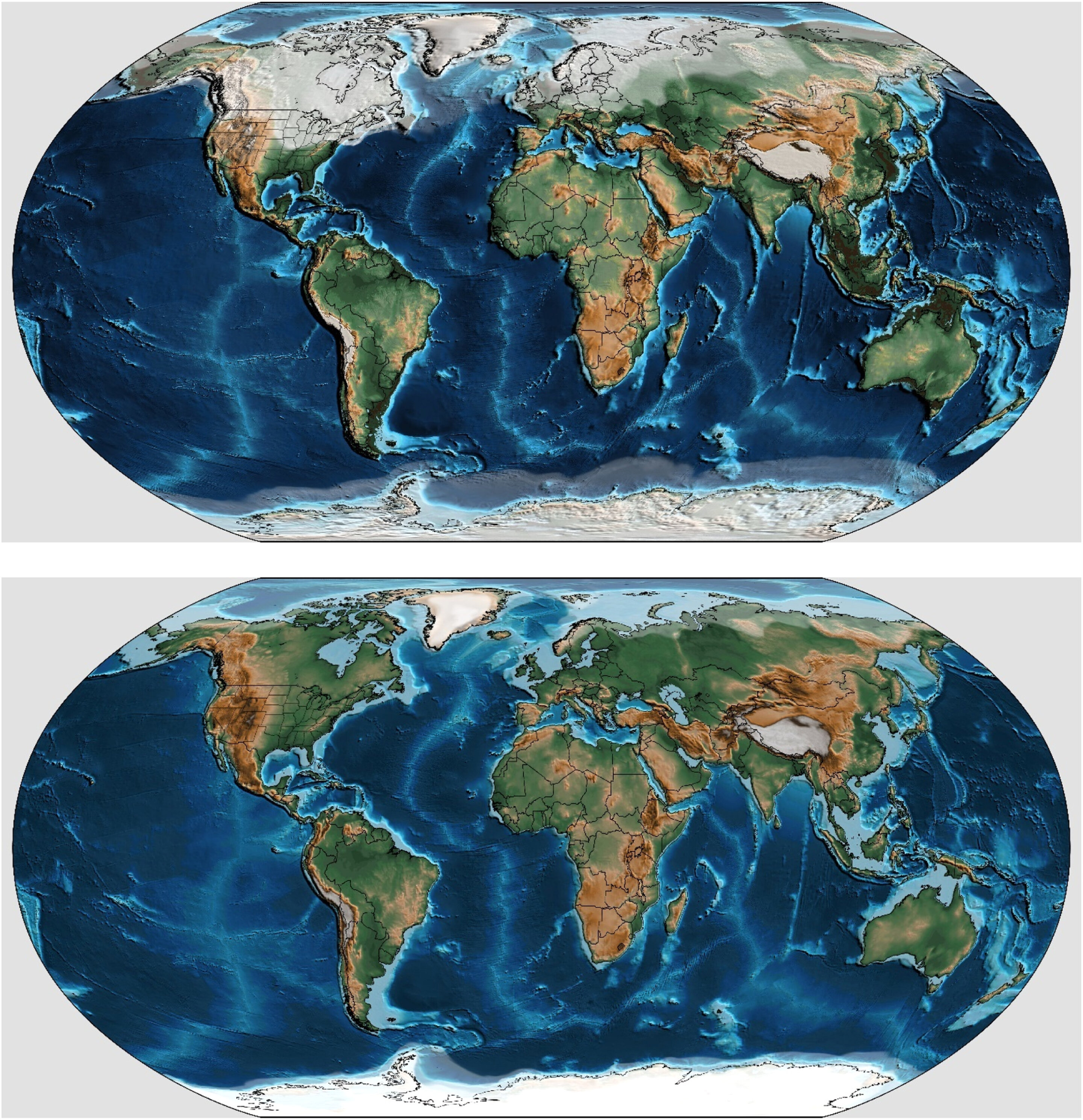
Scientists reconstruct 540 million years of sea level change in detail
Read more: Scientists reconstruct 540 million years of sea level change in detailPhys.org has a story about sea level over the last 540 million years. Sea level change is a hot topic in Earth Science. As the Earth warms, the level will increase due to melted ice and the expansion of water. A new paper “Phanerozoic orbital-scale glacio-eustatic variability” in the journal Earth and Planetary Science Letters, details the change over the last 540 million years. Looking deep into the history of the Earth, researchers can better understand the changes in the future. “Taking these rapid sea level variations into account is important for understanding the structure of the subsurface, and the applications to green…
-

Ferns: Lessons in Survival From the Earth’s Most Adaptable Plants
Read more: Ferns: Lessons in Survival From the Earth’s Most Adaptable PlantsHere’s a new paleobotany book “Ferns: Lessons in Survival From the Earth’s Most Adaptable Plants” that some of you might find interesting. Available at most online book stores including Amazon and Kobo. Welcome to the extraordinary world of ferns – plants that have survived since prehistoric times! Ferns are the most remarkable of plants, both complex and beautiful. Among Earth’s most ancient plants, their story reveals much about our planet’s history. Ferns embarks on an exhilarating 400-million-year journey through the world of these astounding plants. It explores how ferns first evolved, how they continuously adapted to their environment and survived every mass…
-

Mazon Monday #277: Sphenophyllales from the Mazon Creek flora (Upper Moscovian: Illinois, USA)
Read more: Mazon Monday #277: Sphenophyllales from the Mazon Creek flora (Upper Moscovian: Illinois, USA)This is Mazon Monday post #277. What’s your favorite Mazon Creek fossil? Tell us at email:esconi.info@gmail.com. Here’s a new paper “Sphenophyllales from the Mazon Creek flora (Upper Moscovian: Illinois, USA)” by some of our friends at the Field Museum, Yale, and the Smithsonian. It was published in the Biological Journal of the Linnean Society in June 2025. The paper describes a new species of Sphenophyllales cone, Hexaphyllostrobus negauneeana. Sphenophyllales are related to modern day horsetails and were part of the ground cover during the late Carboniferous. Abstract: Sphenophyllales is an extinct clade related to horsetails whose members were important ground-cover…
-
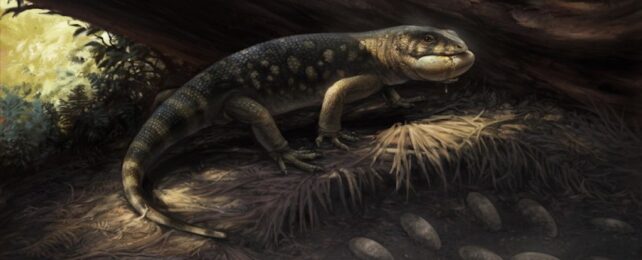
Scientists Discover ‘Goblin Prince’ That Roamed With Dinosaurs
Read more: Scientists Discover ‘Goblin Prince’ That Roamed With DinosaursScience Alert has a story about the redicovery of a key fossil in the back of a museum drawer. Discovered around 2006, this new species, Bolg amondol, is a fossil gila monster from Utah. It dates to the late Cretaceous. The name translates to “mound-headed goblin prince” in J.R.R. Tolkien‘s Elvish language. Hank Woolley, paleontologist at the Natural History Museum of Los Angeles County’s Dinosaur Institute, is the lead author of the paper “New monstersaur specimens from the Kaiparowits Formation of Utah reveal unexpected richness of large-bodied lizards in Late Cretaceous North America” in the journal Royal Society Open Science. A newly…
-
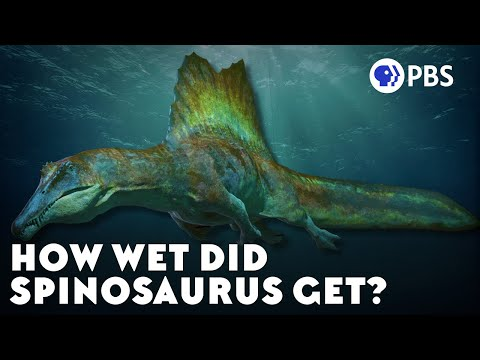
PBS Eons: Why Paleontologists Can’t Stop Fighting About Spinosaurus
Read more: PBS Eons: Why Paleontologists Can’t Stop Fighting About SpinosaurusPBS Eons has a new episode on Youtube. This one is about the controversy surrounding how Spinosaurus lived…. how much time did they spent in the water? What does it mean to be a “semi-aquatic” dinosaur? Was it wading in the shallows, or could it have been a skilled swimmer? Each scenario paints a very different picture of Spinosaurus, and the discovery of new fossils has paleontologists rethinking just how weird and watery this dinosaur was all over again.
-
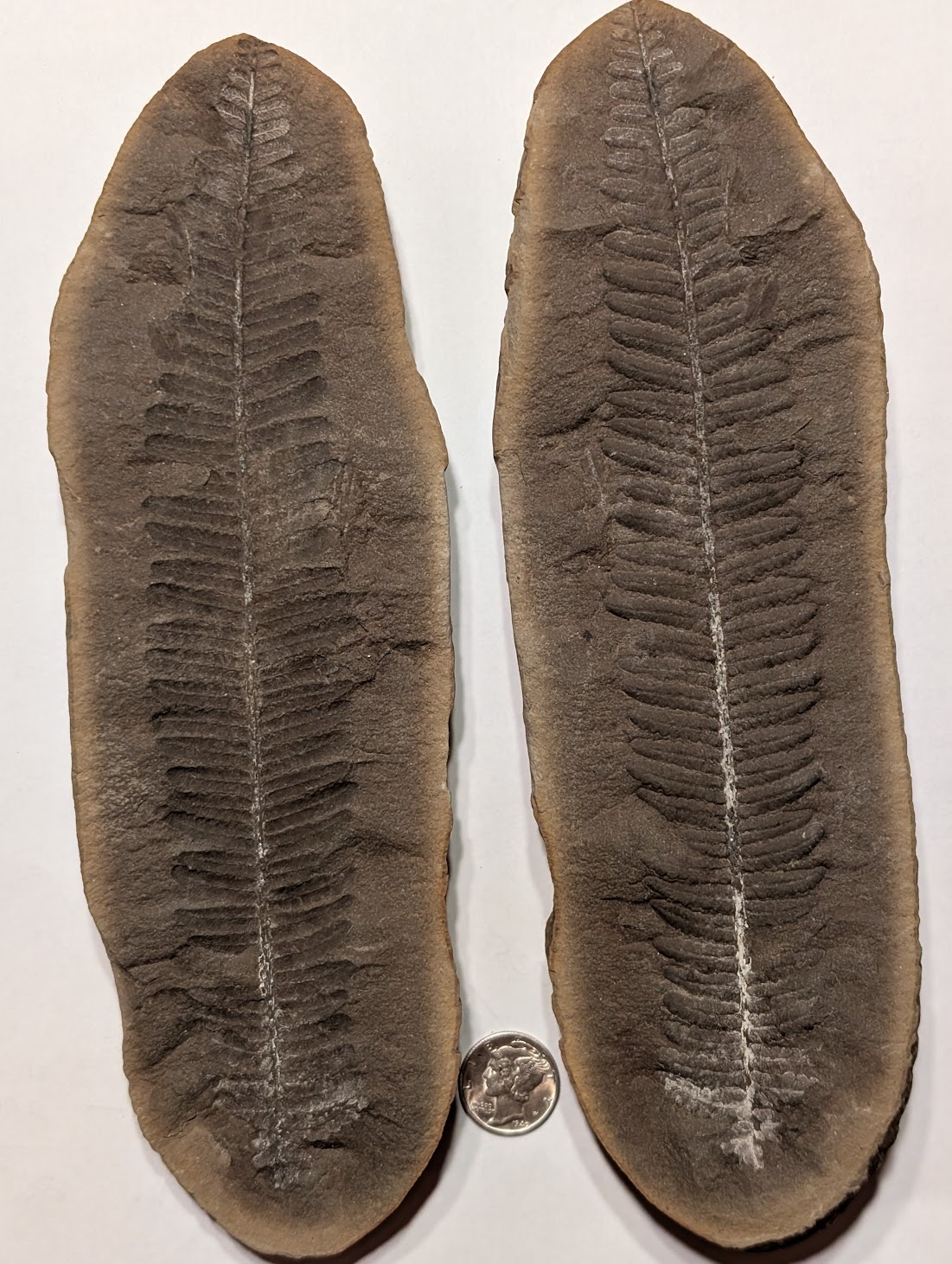
Fossil Friday #272: Crenulopteris acadica
Read more: Fossil Friday #272: Crenulopteris acadicaThis is the “Fossil Friday” post #272. Expect this to be a somewhat regular feature of the website. We will post any fossil pictures you send in to esconi.info@gmail.com. Please include a short description or story. Check the #FossilFriday Twitter hash tag for contributions from around the world! —————————————————– Crenulopteris acadica is one of the most common flora fossils found in the Mazon Creek biota. Some of the localities are absolutely full of it. C. acadica fossils can range in size from a few inches to over a foot. It is a true fern belonging to the group Filicopsida, which…
-

Throwback Thursday #272: Looking Back At ESCONI For July 2025
Read more: Throwback Thursday #272: Looking Back At ESCONI For July 2025This is Throwback Thursday #272. In these, we look back into the past at ESCONI specifically and Earth Science in general. If you have any contributions, (science, pictures, stories, etc …), please send them to esconi.info@gmail.com. Thanks! email:esconi.info@gmail.com. July and August are generally light months for ESCONI news. Get out there and collect for Brag Night in September! 25 Years Ago – July 2000 50 Years Ago – July 1975 70 Years Ago – July 1955
-

Wired: Paleontologist Answers Fossil Questions
Read more: Wired: Paleontologist Answers Fossil QuestionsWired magazine has an interesting new video up on Youtube. It’s question and answer with Paleontologist and Geologist Dr. Ken Lacovara. Paleontologist and Geologist Dr. Ken Lacovara joins WIRED to answer the internet’s burning questions about fossils. Can we extract dinosaur DNA from fossils? How is crude oil made from fossils? Where are the most common places to find fossils worldwide? How can you give yourself the best chance to become a fossil after you die? Did we ever find the crater from the asteroid that killed the dinosaurs? Answers to these questions and plenty more await on Fossil Support.…
-

PBS Terra: When Dinosaurs Conquered the Arctic
Read more: PBS Terra: When Dinosaurs Conquered the ArcticPBS Terra has a new episode on Youtube. This one is about the epic migrations of herds of Pachyrhinosaurus and Edmontosaurus to Alaska during Cretaceous summers. Very few dinosaurs made it as far North as the Arctic Circle. But two of those – Pachyrhinosaurus and Edmontosaurus – undertook an epic migration every year to reach the fertile grounds of the northern latitudes in summertime. This was far from an easy task. Deadly predators lurked nearby looking to pick off weaker members of this giant herd. But thanks to one incredible fossil in particular, with its soft tissue still intact, evidence…
-

Mazon Monday #276: Video for Cal So’s “Taxonomic diversity and development of Late Carboniferous amphibamiforms from the Mazon Creek Lagerstätte”
Read more: Mazon Monday #276: Video for Cal So’s “Taxonomic diversity and development of Late Carboniferous amphibamiforms from the Mazon Creek Lagerstätte”This is Mazon Monday post #276. What’s your favorite Mazon Creek fossil? Tell us at email:esconi.info@gmail.com. Cal So, Postdoctoral Scientist in the Research & Collections Department of The Field Museum, Chicago, gave us an informative presentation in June 2025. The title of his presentation was “Taxonomic diversity and development of Late Carboniferous amphibamiforms from the Mazon Creek Lagerstätte”. He spoke about the history and recent developments in the science of Mazon Creek amphibamiform temnospondyls. There’s still much more to learn! Summary: Late Paleozoic amphibamiform temnospondyls have a critical role in the research and discourse on the origin of lissamphibians. Previous…
-
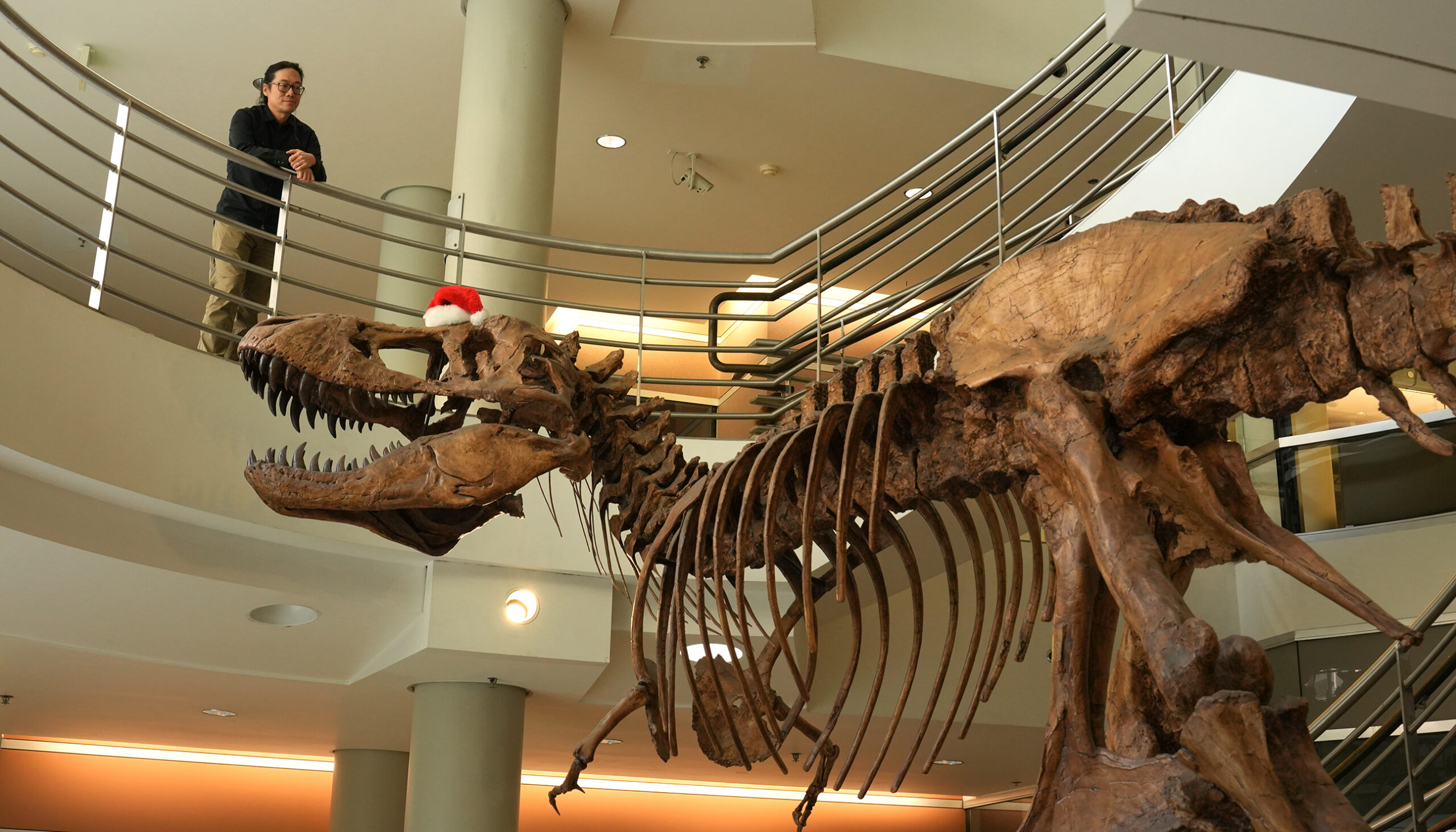
A T-Rex with feathers? Scientists say dinosaurs were likely different from what most of us picture
Read more: A T-Rex with feathers? Scientists say dinosaurs were likely different from what most of us pictureA story in the UC Berkeley News details how dinosaurs were probably much different than we have imagined. 50 years ago, scientists had a much differernt view of dinosaurs as slow, dumb animals. Then, came John Ostrom, Bob Bakker with their insights comparing dinosaurs to modern animals. Those viewpoints led to the Jurassic Park view of the dinosaur world. A Berkely Voices podcast was the basis of this story. You can find it here. For a long time, paleontologists thought that the famous, long-extinct apex predator, the Tyrannosaurus rex, may have chased its prey at high speeds. Children’s books and…
-
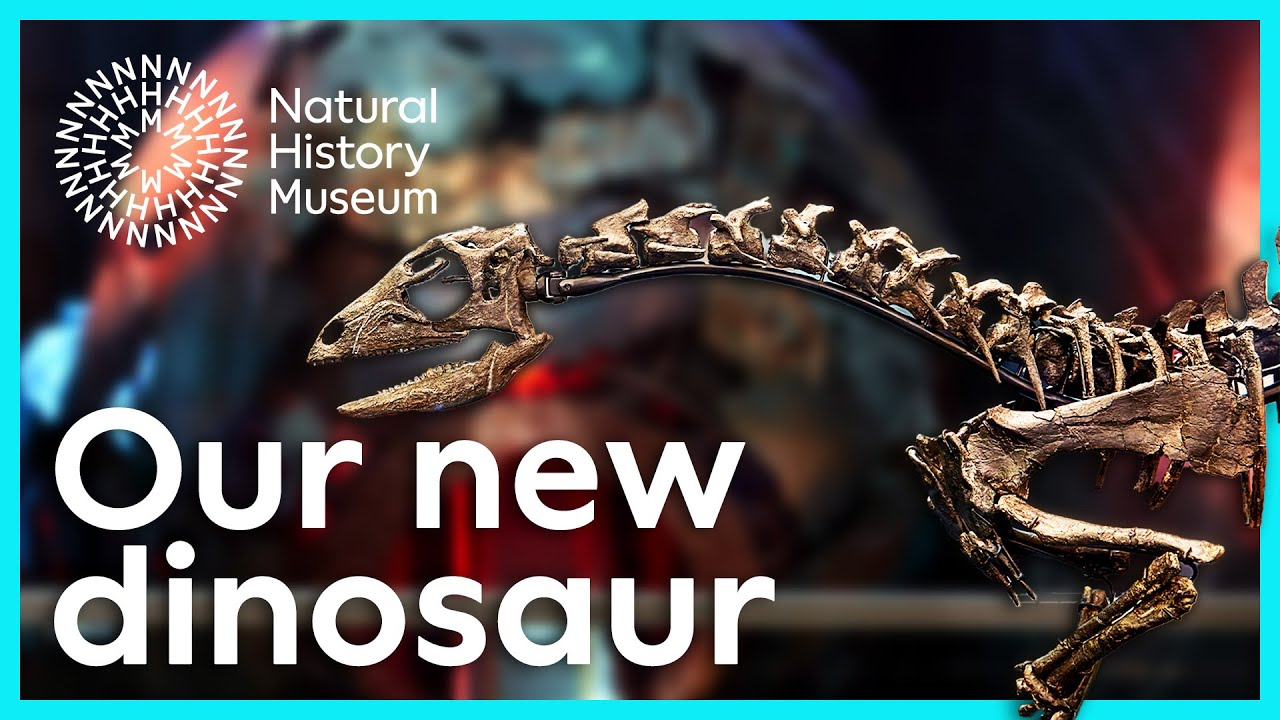
Natural History Museum: New dinosaur species on display in our Earth Hall
Read more: Natural History Museum: New dinosaur species on display in our Earth HallThe Natural History Museum in London has a new video on Youtube about their new dinosaur, Enigmacursor mollyborthwickae. Meet Enigmacursor mollyborthwickae, our new dinosaur! Now on display in our Earth Hall, Enigmacursor is a species new to science and would have roamed North America in the Late Jurassic 145-150 million years ago. Measuring only 1.5 metres in length, this small dinosaur would have run at the feet of giants like Diplodocus (such as Dippy) and Stegosaurus (like Sophie, who is Enigmacursor’s neighbour in the Museum’s Earth Hall). We head to the behind-the-scenes Fossil Reptiles collection to meet Professor Susannah Maidment,…
-

ESCONI Events for Summer 2025
Read more: ESCONI Events for Summer 2025Sat, Aug 23rd ESCONI Rock Swap – 8:00 AM to 2:00 PM – DuPage County Fairgrounds in Wheaton, IL Details
-
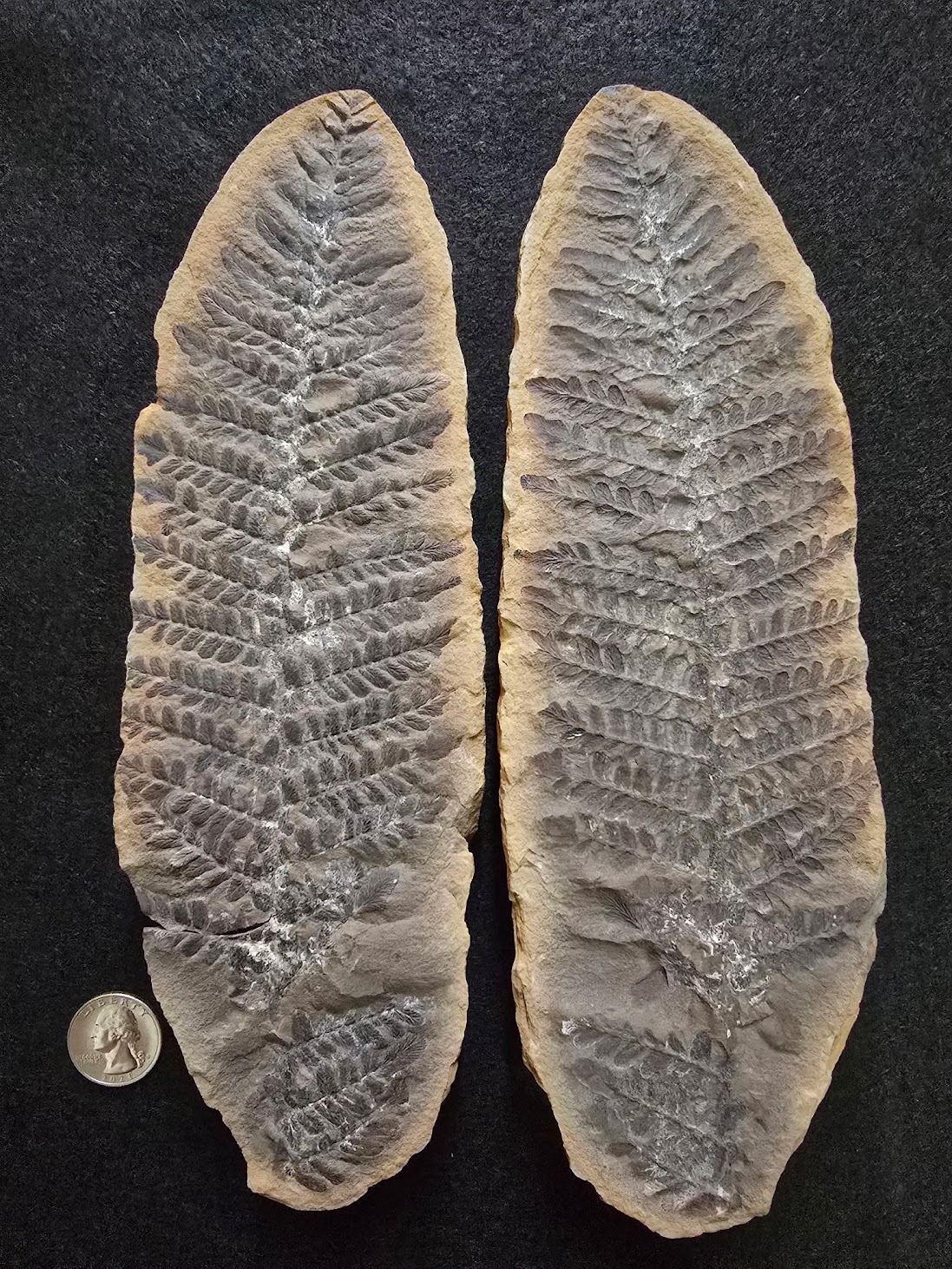
Fossil Friday #271: Laveiniopteris rarinervis
Read more: Fossil Friday #271: Laveiniopteris rarinervisThis is the “Fossil Friday” post #271. Expect this to be a somewhat regular feature of the website. We will post any fossil pictures you send in to esconi.info@gmail.com. Please include a short description or story. Check the #FossilFriday Twitter hash tag for contributions from around the world! —————————————————– This week we have a breathtaking specimen of Laveiniopteris rarinervis from Mazon Creek. L. rarinervis was described by Charles James Fox Bunbury in 1847. Bunbury (1809-1886) was the leading paleobotanist in Britain in the 1850’s. He published a series of papers on the fossil floras of the Carboniferous, Jurassic, and Neogene. Remember,…
-
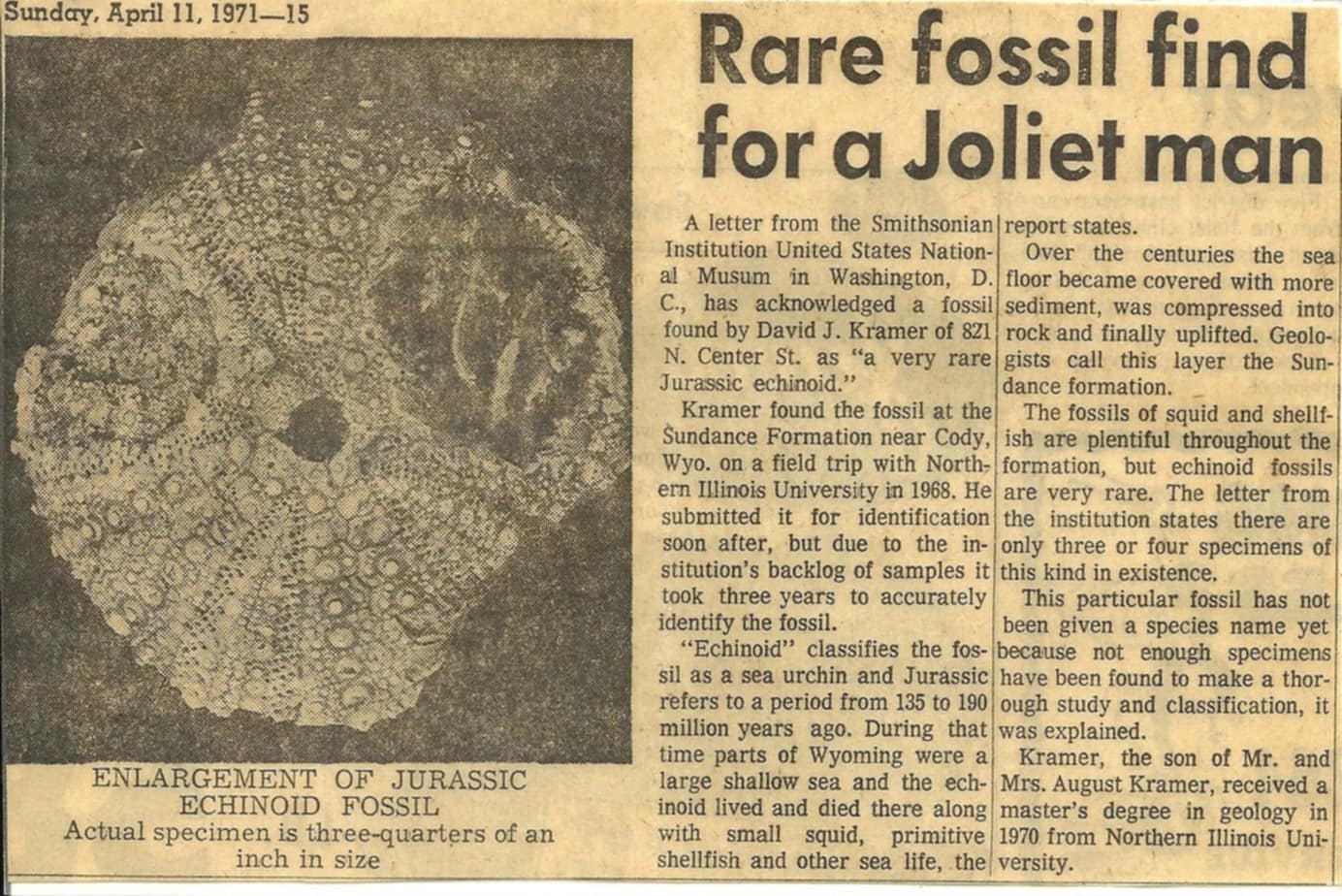
Throwback Thursday #271: Rare fossil find for Joliet man
Read more: Throwback Thursday #271: Rare fossil find for Joliet manThis is Throwback Thursday #271. In these, we look back into the past at ESCONI specifically and Earth Science in general. If you have any contributions, (science, pictures, stories, etc …), please send them to esconi.info@gmail.com. Thanks! email:esconi.info@gmail.com. I came across this story a few days ago in a Facebook post by Gus Kramer. Back in 1968, his brother David J. Kramer, who was a graduate degree student in Geology at Northern Illinois University, found a rare Jurassic echinod (sea urchin) in the Sundance Formation near Cody, Wyoming. He sent the fossil specimen into the Smithsonian National Museum of Natural History. …
-
Reptiles Alive! exhibit opens at Field Museum
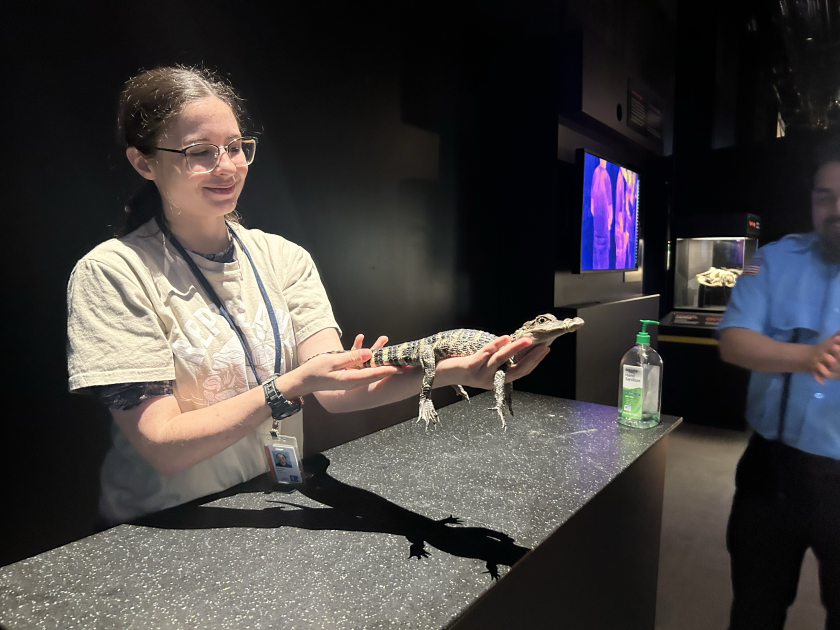
Read more: Reptiles Alive! exhibit opens at Field MuseumThe Field Museum has a new exhibit… Reptiles Alive! Explore the fascinating world of reptiles in this one-of-a-kind family-friendly exhibition! Combining original Field Museum science with live animals and engaging interactives, Reptiles Alive! offers an immersive experience into the lives of snakes, lizards, crocodiles, and more. Discover their habitats, adaptations, and the groundbreaking research of Dr. Sara Ruane. From June 20, 2025—April 5, 2026! Chicago Sun-Times article When he was a child, Robert Ruch would visit the Field Museum every weekend with his father and sister. Ruch, now 68, brings his granddaughter to a camp program at the museum. Friday, the last…

ESCONI Gem, Mineral, and Fossil Show
Most Recent Post
- ESCONI at the Coal City Library!
 On June 4, ESCONI was at the Coal City Library to kick off summer with exhibits of fossils, geodes, and… Read more: ESCONI at the Coal City Library!
- About ESCONI
- Around the Web
- Calendar of Events
- Code of Ethics and Conduct
- ESCONI Books for Sale
- ESCONI Gem, Mineral, and Fossil Show
- ESCONI in the News
- ESCONI Videos
- Field Trips
- Flashback Friday
- Fossil Friday
- Mazon Creek
- Mazon Monday
- Member Spotlight
- Membership Information
- Reference Material
- Throwback Thursday
- Trilobite Tuesday
Field trips require membership, but visitors are welcome at all meetings!
| Friday, June 12th | General Meeting – 8:00 PM via Zoom. Adrienne Stroup of The Field Museum will present “At the Intersection of Art and Science: Outreach in Natural History Museums”. |
| Saturday, June 20th | Paleontology Study Group – 7:30 PM via Zoom. Lincoln Shoemaker will present “Factors controlling the distribution of Late Ordovician – Silurian crinoids.” |
| No meeting this month | Junior Study Group Meeting |
| No meeting this month | Mineralogy Study Group |