
-

Throwback Thursday #268: Looking Back At ESCONI For June 2025
Read more: Throwback Thursday #268: Looking Back At ESCONI For June 2025This is Throwback Thursday #268. In these, we look back into the past at ESCONI specifically and Earth Science in general. If you have any contributions, (science, pictures, stories, etc …), please send them to esconi.info@gmail.com. Thanks! email:esconi.info@gmail.com. 25 Years Ago – June 2000 50 Years Ago – June 1975 70 Years Ago – June 1955
-

Dinopalooza Dino Derby at the Field Museum on June 7th, 2025
Read more: Dinopalooza Dino Derby at the Field Museum on June 7th, 2025This Saturday, June 7th, 2025 is Dinopalooza at the Field Museum. Find out more on the Dinopalooza webpage. Dinopalooza is back and bigger than ever! Come celebrate SUE at this Museum-wide dinosaur extravaganza featuring Field scientists sharing their work, paleoart crafts, face painting, special tours, and so much more! This year the Field Museum is partnering with iHeart Radio to bring Dino Derby to the Museum’s North Lawn! Dino Derby is a foot race for SUE wanna-bes to see who can win the title of SUEpreme speedster. Children are invited to race in their favorite dino-mite outfits! Be it their…
-
The Day The Dinosaurs Died : Up First from NPR
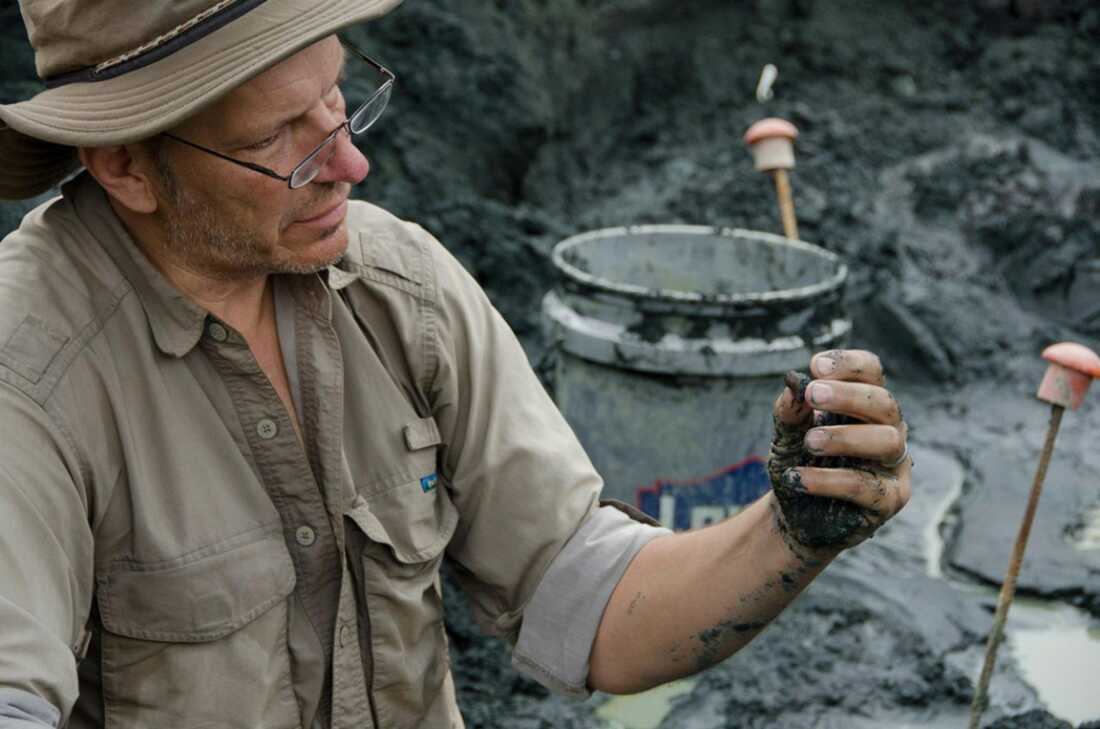
Read more: The Day The Dinosaurs Died : Up First from NPRNPR’s Up First has a story about the a New Jersey fossil hotspot… also the day the dinosaurs died. In 2007, paleontologist Ken Lacovara suspected he’d made a huge discovery in an unexpected spot. Tucked behind a Lowe’s hardware store in a strip mall in New Jersey he found one of the most intact fossil beds from 66 million years ago. Recently a new museum opened at the dig site, where visitors can learn more about the day an asteroid struck the earth, killing the dinosaurs, and even go hunting for their own fossils. Listen to the full episode on the TED Radio…
-

Mazon Monday #272: Annularia radiata
Read more: Mazon Monday #272: Annularia radiataThis is Mazon Monday post #272. What’s your favorite Mazon Creek fossil? Tell us at email:esconi.info@gmail.com. Annularia radiata is a very commonly found species of Annularia. Annularia was the foliage for Calamites sp., which is related to modern day horsetails. It is very similar to the larger Annularia inflata (Mazon Monday #60). It was named by Kaspar Maria von Sternberg (1761 – 1838) in 1820. Sternberg was a Bohemian theologian, minerologist, geologist, entomologist, and botanist. He is widely known as the “Father of Paleobotany”. The Linda Hall Library had a nice post about him for “Scientist of the Day” on January 6th, 2021.…
-
Harvard Scientists Solve 100-Year Mystery of Bizarre 508-Million-Year-Old Arthropod
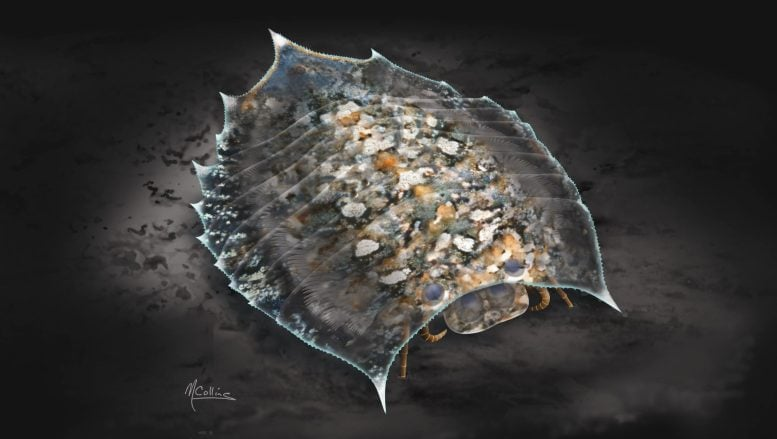
Read more: Harvard Scientists Solve 100-Year Mystery of Bizarre 508-Million-Year-Old ArthropodSciTechDaily has an article about the strange arthropod Helmetia expansa. H. expansa was discovered by Charles Doolittle Walcott in 1918 in the Burgess Shale. It was initially identifed as a crustacean, however, it was never described. A new paper, in the Journal of Systematic Palaeontology, describes Helmetia expansa as a concilitergans, a group closely related to trilobites. In a new study published in the Journal of Systematic Palaeontology, a team of Harvard researchers led by Sarah Losso, a postdoctoral fellow in the Department of Organismic and Evolutionary Biology, has now provided a formal description of Helmetia expansa. Their findings offer new…
-

Manitoba Museum: Introducing a NEW Fossil… from the Burgess Shale Comes Mosura fentoni”!
Read more: Manitoba Museum: Introducing a NEW Fossil… from the Burgess Shale Comes Mosura fentoni”!https://youtu.be/NiJFzNCbl98 Here is Dr. Joe Moysiuk, of the Manitoba Museum, introducting of a new fossil from the Burgess Shale… Mosura fentoni. There’s a new fossil in town! Meet “Mosura fentoni”. It was discovered by Curator of Palaeontology & Geology Dr. Joe Moysiuk, alongside colleagues from the ROM. Get to know this bizarre-looking little predator in this video with Dr. Moysiuk. Learn more about Mosura in the recent paper sharing the results of the study: https://royalsocietypublishing.org/doi/10.1098/rsos.242122
-
Fossil Friday #267: Annularia radiata
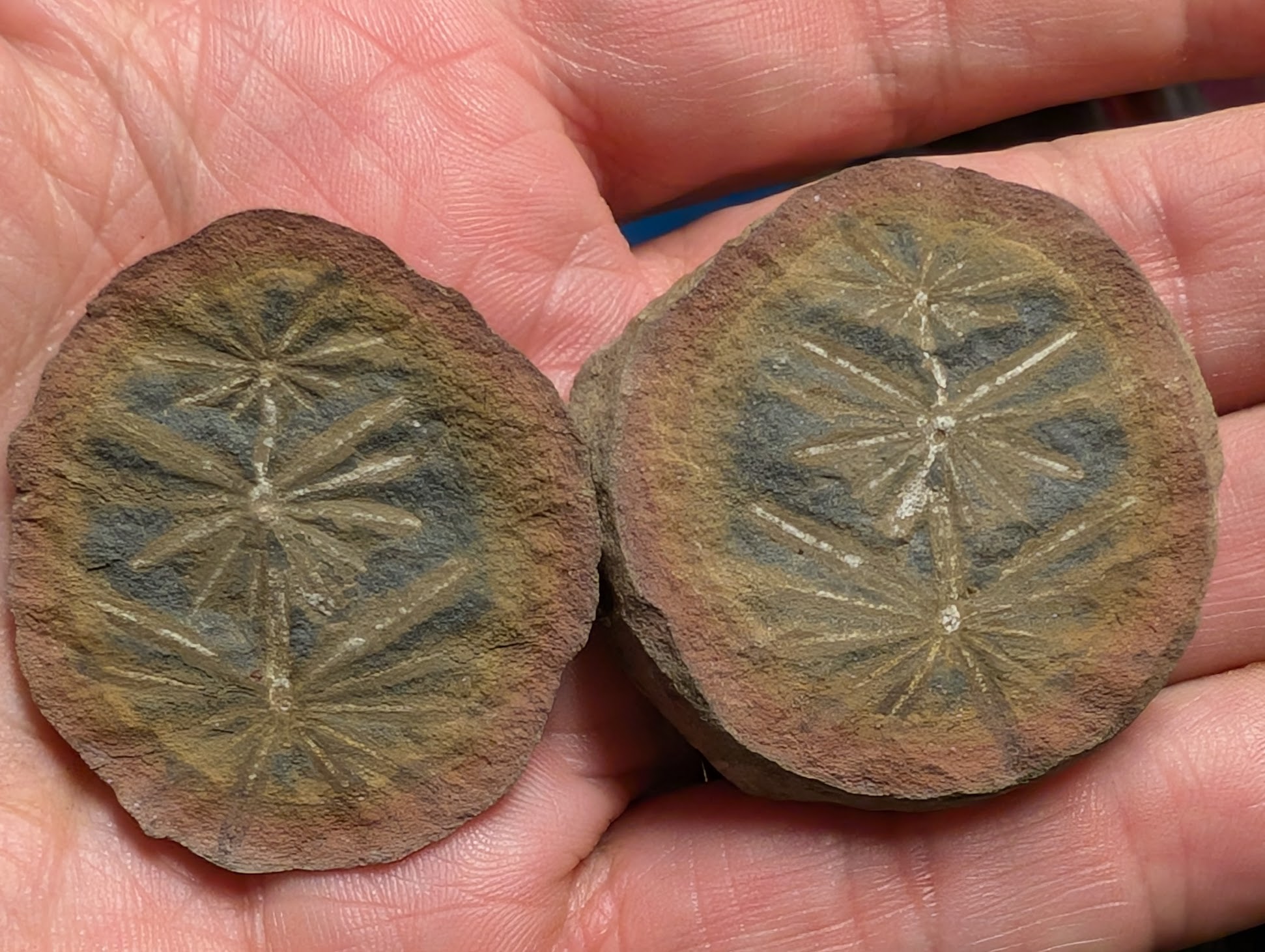
Read more: Fossil Friday #267: Annularia radiataThis is the “Fossil Friday” post #267. Expect this to be a somewhat regular feature of the website. We will post any fossil pictures you send in to esconi.info@gmail.com. Please include a short description or story. Check the #FossilFriday Twitter hash tag for contributions from around the world! —————————————————– We have a sweet little Annularia radiata from Mazon Creek for this week’s Fossil Friday. Annularia is the foliage for Calamites. Annularia radiata is very common in the terrestrial localities of the Mazon Creek fossil deposit. This specimen was collected from the Pit 3 locality in the spring of 2025. It…
-
Throwback Thursday #267: Old Cars
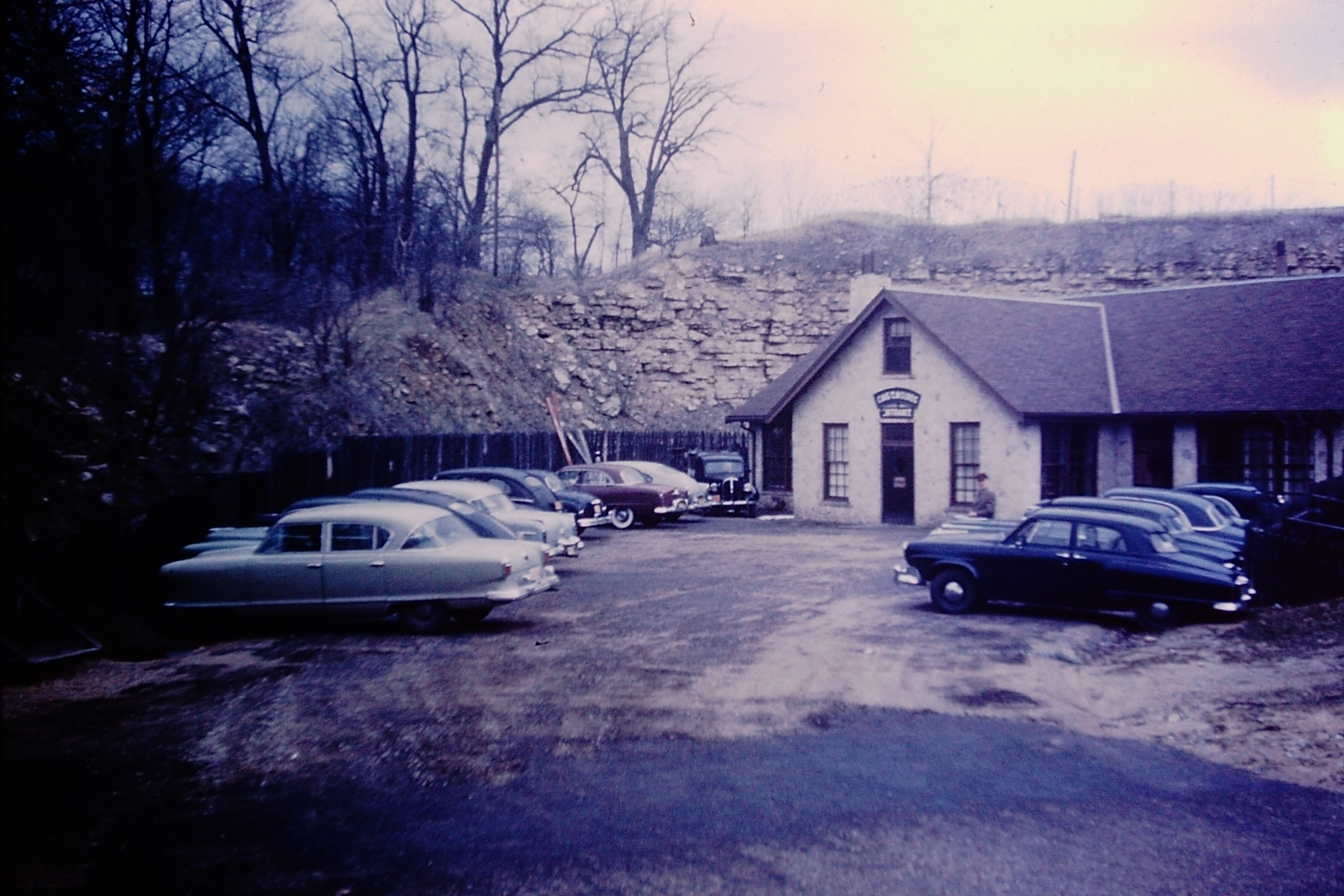
Read more: Throwback Thursday #267: Old CarsThis is Throwback Thursday #267. In these, we look back into the past at ESCONI specifically and Earth Science in general. If you have any contributions, (science, pictures, stories, etc …), please send them to esconi.info@gmail.com. Thanks! email:esconi.info@gmail.com. We have something a little different today. We post many old photos here and quite a few are from old field trips. Quite often, you can see interesting old cars in the background. Here is a nice sampling of old cars from the 1950s and a couple from the 1960s. This photo is labled as a 1953 field trip to a cave…
-
New Species of Jurassic Herbivorous Dinosaur Discovered in China
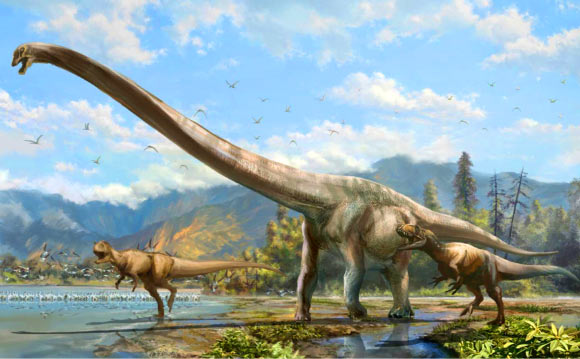
Read more: New Species of Jurassic Herbivorous Dinosaur Discovered in ChinaSciNews has a story about the discovery of a new species of eusauropod. Jinchuanloong niedu lived during the Middle Jurassic Period some 165 million years ago. The fossil bones were found near Jinchang city, Gansu province, northwestern China. The specimen includes of a nearly complete skull with mandible, five cervical vertebrae and 29 caudal vertebae. Sauropod skulls are very rare due to their fragility. Find more details in the paper published in the journal Scientific Reports. “Sauropod dinosaurs were gigantic quadrupedal herbivores, ranging from the Early Jurassic to Late Cretaceous, and have been found on all continents,” Dr. Ning Li…
-
Mazon Tuesday #271: Chicago Tribune: The world’s best-preserved fossils are right outside Chicago
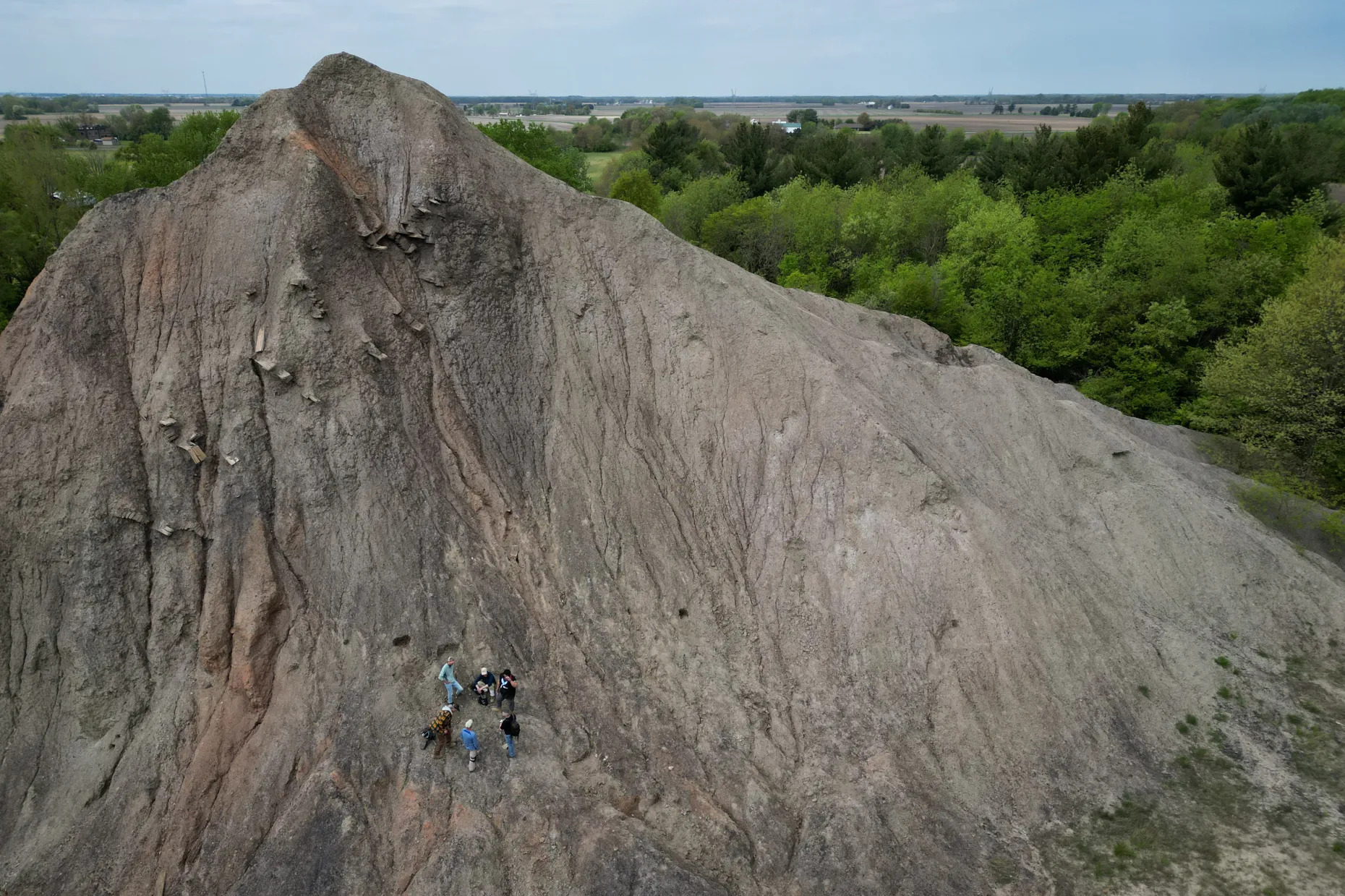
Read more: Mazon Tuesday #271: Chicago Tribune: The world’s best-preserved fossils are right outside ChicagoThis is Mazon Monday post #271. What’s your favorite Mazon Creek fossil? Tell us at email:esconi.info@gmail.com. We have a bonus Mazon Monday this week—though since this second post falls on a Tuesday, we’ll call it Mazon Tuesday. On Monday, May 26th, the Chicago Tribune published an article highlighting Mazon Creek, the Field Museum, and ESCONI—a combination we’re proud to see featured. The article is titled “The world’s best-preserved fossils are right outside Chicago. But there are no dinosaur bones at Mazon Creek.“ Earlier in May, on a beautiful spring day, Dr. Arjan Mann brought members of his lab and the…
-
Mazon Monday #270: Braceville Field Trip Report for Spring 2025
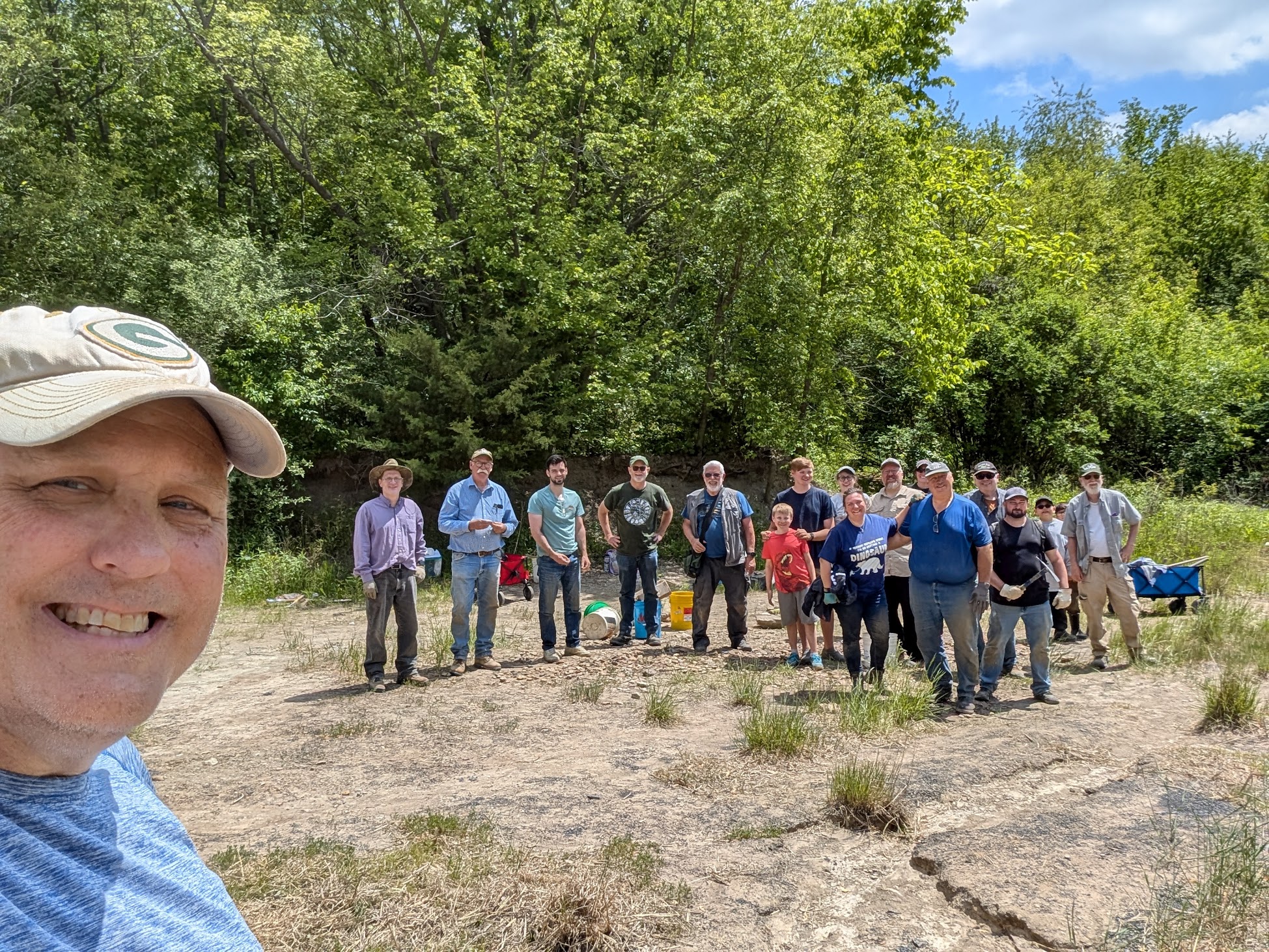
Read more: Mazon Monday #270: Braceville Field Trip Report for Spring 2025This is Mazon Monday post #270. What’s your favorite Mazon Creek fossil? Tell us at email:esconi.info@gmail.com. We had absolutely beautiful weather for both Saturday and Sunday, although it did get a little windy on Saturday. Attendance was excellent with very few no shows. Members who couldn’t make it, cancelled early to enable those on the waiting list to attend. We had a group of people from the Kalamazoo Geological & Mineral Society (KGMS). As usual, the Anderson’s shared some tasty donuts as everyone waited to go in. The posion ivy was out… or is that boxelder maple? The fossil pour…
-
Geologists Stumble Upon Remains of Giant ‘Sea Monster’ in Mississippi, Likely the Largest Mosasaur Ever Identified in the State
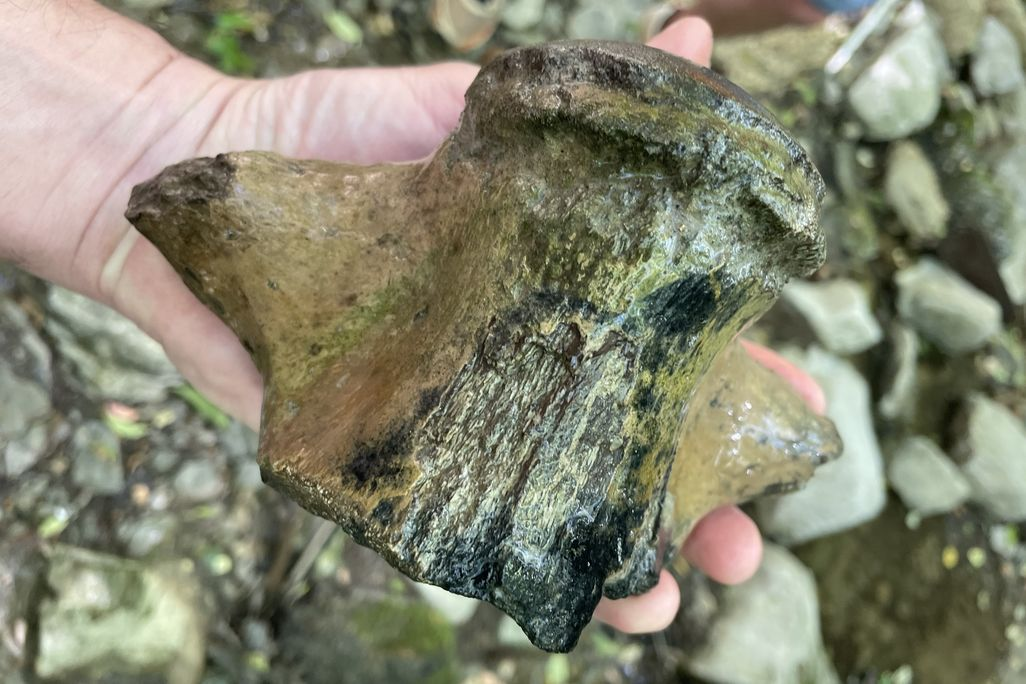
Read more: Geologists Stumble Upon Remains of Giant ‘Sea Monster’ in Mississippi, Likely the Largest Mosasaur Ever Identified in the StateSmithsonian Magazine has a story about the discovery of a very large mosasaur in Mississippi. The animal was about 30 feet long and lived about 66 million year ago. A single vertebra was more 7 inches wide. It was found sticking out of the mud of the Prarie Bluff Formation of Oktibbeha County in east-central Mississippi. It is believed to belong to a specimen of Mosasaurus hoffmannii, which is one of the largest known species of mosasaur. After the scientists carefully pulled the object from the sediment, they knew right away they’d found something special. It was a massive, fossilized mosasaur vertebra…
-
PBS Eons: Darwin’s Unexpected Final Obsession
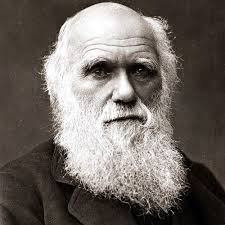
Read more: PBS Eons: Darwin’s Unexpected Final Obsessionhttps://youtu.be/hEkbSV8aYrs PBS Eons has a new episode. This one is about Charles Darwin and his quest to understand… worms. After having solved the small matter of evolution by natural selection – becoming one of the most famous scientists in the world in the process – Charles Darwin turned his focus to a different personal obsession… One that would be the final scientific side-quest of his long and storied life.
-
Fossil Friday #266: Latzelia primordialis
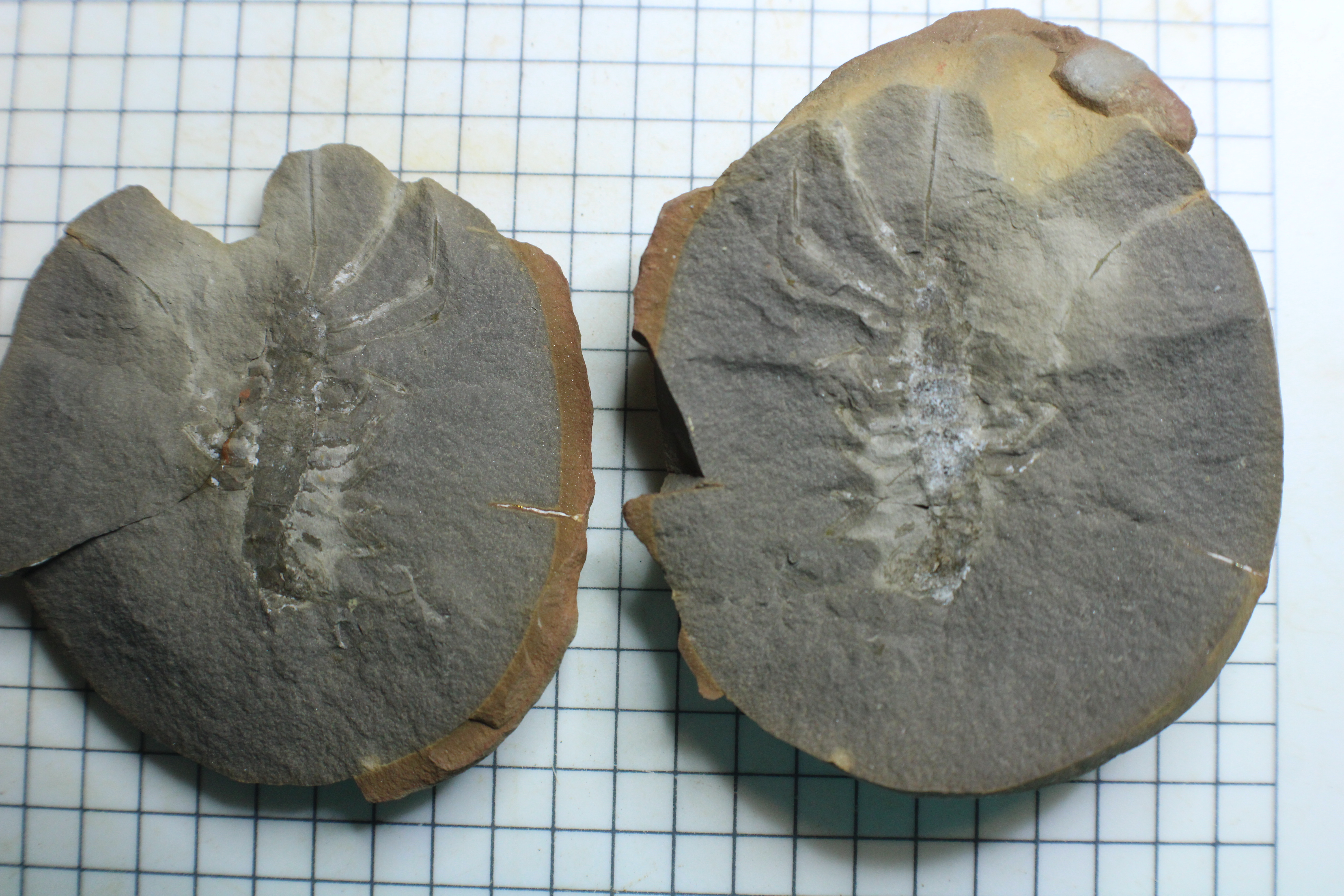
Read more: Fossil Friday #266: Latzelia primordialisAlan Keith sent us photos of his recent centipede find from Pit 11. He collected this concretion this spring on one of his trips up north from Texas. Centipedes are one of the rarest animals in the Mazon Creek fossil deposit. An estimate of occurrence for centipedes was about 3 in 287,000 concretions in the paper “Relative Abundance of Different Mazon Creek Organisms” by Gordon C. Baird and John L. Anderson, which was published in the “Richardson’s Guide to The Fossil Fauna of Mazon Creek”. For comparison, they found 13 spiders, 66 fish, and 107 horseshoe crabs in their survey.
-
Throwback Thursday #266: Braidwood Area Historical Society III
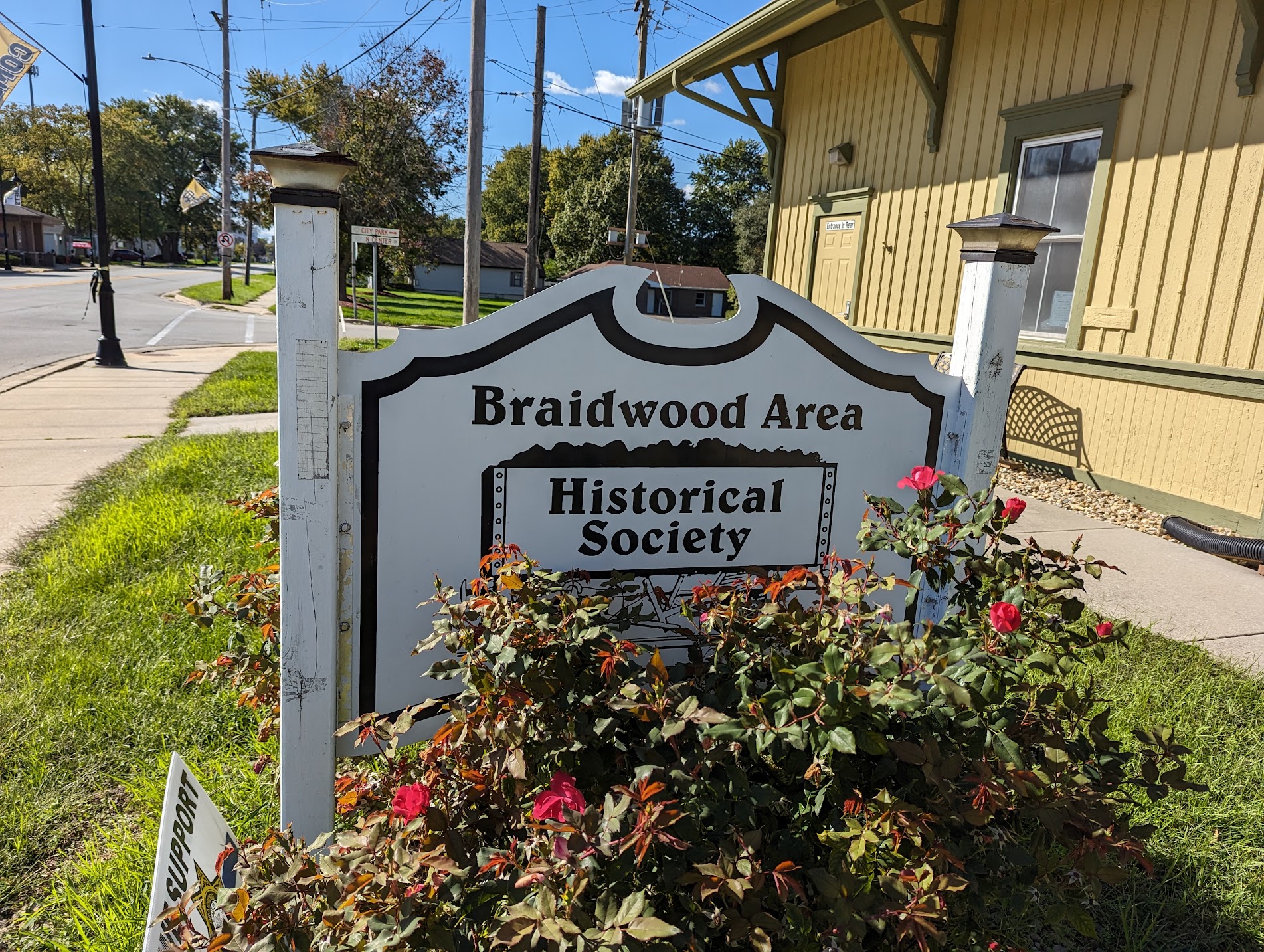
Read more: Throwback Thursday #266: Braidwood Area Historical Society IIIThis is Throwback Thursday #266. In these, we look back into the past at ESCONI specifically and Earth Science in general. If you have any contributions, (science, pictures, stories, etc …), please send them to esconi.info@gmail.com. Thanks! email:esconi.info@gmail.com. We visited the Braidwood Historical Society last weekend to drop of some more chunks of coal. They bag the coal up and sell it, mostly for Christmas. This was our third visit. Have a look at Throwback Thursday #183 and Throwback Thursday #214 for our previous stops there. Back in #214, we dropped off the very large chunk of coal found by…
-

Video for ESCONI Paleontology Meeting May 2025 – “Platteville Oncocerid Nautiloids: Living on the Mohawkian Sea Floor”
Read more: Video for ESCONI Paleontology Meeting May 2025 – “Platteville Oncocerid Nautiloids: Living on the Mohawkian Sea Floor”Topic: Platteville Oncocerid Nautiloids: Living on the Mohawkian Sea FloorPresenter: John Catalani Although many Ordovician nautiloid faunas are dominated by straight-shelled orthoconic forms, this is not true for the incredibly abundant and diverse Platteville fauna. The Platteville nautiloid fauna consists of 9+ Orders with the Oncocerida accounting for 50+% of the published species. I will analyze the environment and paleogeography of the Mohawkian Sea, home of the Platteville fauna. Faunal lists illustrate the classification of the Platteville nautiloid fauna and place the oncocerids in context. Comparison of the Oncocerida with the other Platteville nautiloid orders will illustrate the make-up of…
-

This Dinosaur Had Feathers and Probably Flew Like a Chicken
Read more: This Dinosaur Had Feathers and Probably Flew Like a ChickenThe New York Times has an article about the Chicago Archaeopteryx. The Field Museum unveiled the its Archaeopteryx in the Spring of 2024. Since then, the fossil has been revealing its secrets… some of them were published recently in the journal Nature. Archaeopteryx specimens have, “maybe more than any other fossil, changed the way that we see the world,” said Jingmai O’Connor, a paleontologist at the Field Museum in Chicago. Over 164 years, researchers have pored over every detail of available specimens, trying to puzzle out how birds came to fly. Therefore, you might expect that such a well-studied fossil…
-
Mazon Monday #269: Belotelson magister
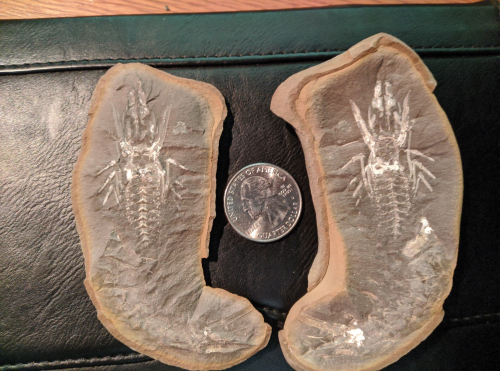
Read more: Mazon Monday #269: Belotelson magisterThis is Mazon Monday post #269. What’s your favorite Mazon Creek fossil? Tell us at email:esconi.info@gmail.com. Belotelson magister is the most common crustacean/shrimp fossil in the Mazon Creek biota. Fossil preservation of Belotelson magister varies with the most common presentation being a molt. It was described as Acanthotelson magister by Alpheus Spring Packard (1839-1905) in 1885 in “On the Syncarida, a hitherto undescribed synthetic group of extinct malacostracous Crustacea ; II.” He named it after the already erected Acanthotelson stimpsoni. Packard used a specimen from Mazon River sent to him by J.C. Carr of Morris, IL, who was a prolific…
-

Pokémon Fossil Museum is coming to the Field!
Read more: Pokémon Fossil Museum is coming to the Field!From the Field Museum: We’re thrilled to announce that the Pokémon Fossil Museum exhibition will make its North American debut at the Field Museum on May 22, 2026! This one-of-a-kind experience brings together the worlds of Pokémon and paleontology, inviting visitors to compare Fossil Pokémon like Tyrantrum and Archeops with real-world fossils, including SUE the T. rex. This interactive exhibition, which has been touring Japan since 2021, is making its international debut and is a must-see for fans of science, Pokémon, and everything in between. Featuring Excavator Pikachu, Pokémon Professors, and Field scientists, it’s a journey through time, imagination, and discovery…
-
PBS Terra: Earth’s Worst Mass Extinction is Actually a Warning
Read more: PBS Terra: Earth’s Worst Mass Extinction is Actually a WarningPBS Terra has a new video. This one is about the Permian Mass Extinction. There is a surprising natural wonder in the middle of the vast West Texas desert: a prehistoric ocean reef built from the remains of ancient sea life. This fossil-rich landscape tells the story of Earth’s most devastating mass extinction—and can help enlighten the climate threats we face today.

ESCONI Gem, Mineral, and Fossil Show
Most Recent Post
- ESCONI at the Coal City Library!
 On June 4, ESCONI was at the Coal City Library to kick off summer with exhibits of fossils, geodes, and… Read more: ESCONI at the Coal City Library!
- About ESCONI
- Around the Web
- Calendar of Events
- Code of Ethics and Conduct
- ESCONI Books for Sale
- ESCONI Gem, Mineral, and Fossil Show
- ESCONI in the News
- ESCONI Videos
- Field Trips
- Flashback Friday
- Fossil Friday
- Mazon Creek
- Mazon Monday
- Member Spotlight
- Membership Information
- Reference Material
- Throwback Thursday
- Trilobite Tuesday
Field trips require membership, but visitors are welcome at all meetings!
| Friday, June 12th | General Meeting – 8:00 PM via Zoom. Adrienne Stroup of The Field Museum will present “At the Intersection of Art and Science: Outreach in Natural History Museums”. |
| Saturday, June 20th | Paleontology Study Group – 7:30 PM via Zoom. Lincoln Shoemaker will present “Factors controlling the distribution of Late Ordovician – Silurian crinoids.” |
| No meeting this month | Junior Study Group Meeting |
| No meeting this month | Mineralogy Study Group |