
-

Fossil Shows a Sharp-Toothed Mammal That Thrived Among Dinosaurs
Read more: Fossil Shows a Sharp-Toothed Mammal That Thrived Among DinosaursThe New York Times’ Trilobites column has a piece about the discovery of a new mammal from the late Jurassic of England. It’s called Novaculadon mirabilis, from novacula, the Latin word for razor for its sharp teeth. The animal was about the size of a mouse and lived about 145 million years ago around what is now Dorset, England. At that time, Dorset was beach front property as it is today. You can find more details in the paper “A new multituberculate (Mammalia, Allotheria) from the Lulworth Formation (Cretaceous, Berriasian) of Dorset, England”, which was published in the Proceedings of the…
-
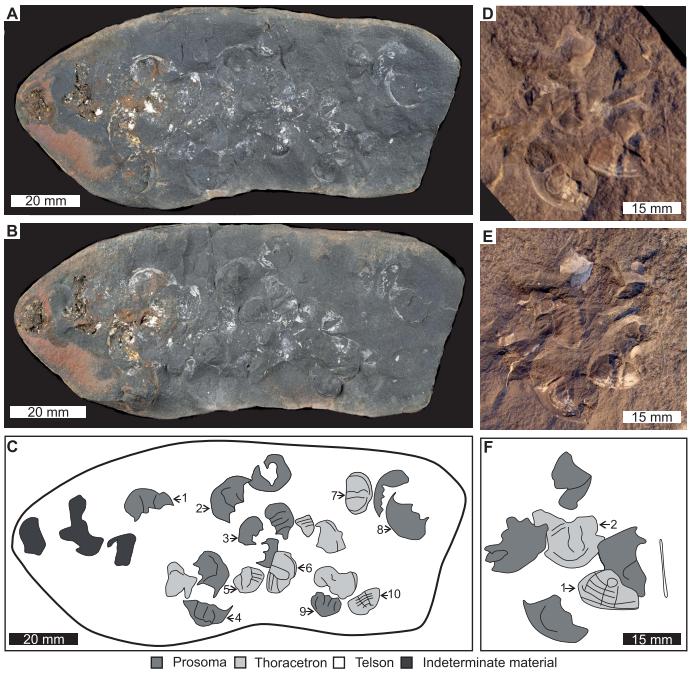
Mazon Monday #283: Mazon Creek bromalites evidence a specialized, xiphosurid-rich diet for Pennsylvanian predators
Read more: Mazon Monday #283: Mazon Creek bromalites evidence a specialized, xiphosurid-rich diet for Pennsylvanian predatorsThis is Mazon Monday post #283. What’s your favorite Mazon Creek fossil? Tell us at email:esconi.info@gmail.com. Another week, another new Mazon Creek paper,.. “Mazon Creek bromalites evidence a specialized, xiphosurid-rich diet for Pennsylvanian predators” was published in the journal Palaios. It was authored by Russell Bicknell, Julien Kimming, Andew Young, Bruce Lauer, Rene’ Lauer, and Victoria McCoy. Those are some familiar names for anyone that follows Mazon Creek. The paper takes a close look at some unusual Mazon Creek fossils, called bromalites. If you’re not familiar with the term, bromalites are fossils of stomach or intestinal contents. These can be…
-
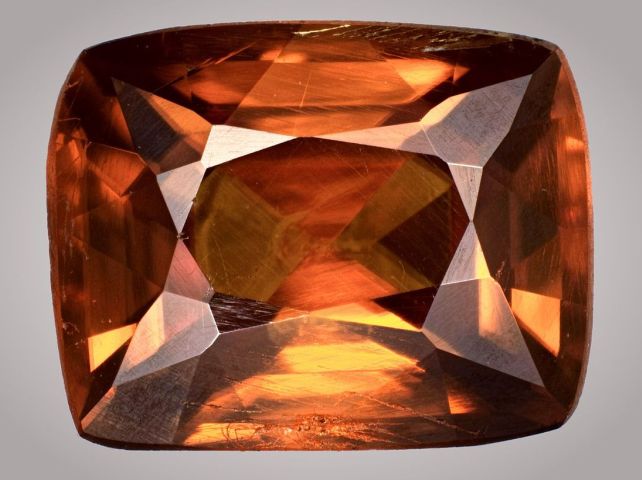
The World’s Rarest Mineral Is So Rare It’s Only Ever Been Found Once
Read more: The World’s Rarest Mineral Is So Rare It’s Only Ever Been Found OnceScience Alert has a story about the world’s rarest mineral. Kyawthuite is so rare there is only one known specimen. It was purchased at a market in Chaung-gyi in Myanmar by gemologist Kyaw Thu, who thought the raw gem was a mineral called scheelite. After cutting it, Kyaw realized it was something different. Unable to match the mineral with anything known, he sent it to the Gemological Institute of America (GIA) Laboratory in Bangkok, Thailand. There, mineralogists were able to relate the stone to synthetic BiSbO4 – bismuth antimonate – though with the formula Bi3+Sb5+O4, an arrangement never before found in nature.…
-

Lizzadro Museum “Exploring Gemstones: An Introduction to Gemology” Saturday August 16
Read more: Lizzadro Museum “Exploring Gemstones: An Introduction to Gemology” Saturday August 16Today at the Lizzadro Gemstones have dazzled humanity for centuries, symbolizing wealth, status, and personal expression. But what gives them their allure? Discover the science of gemology – the scientific journey into origins, properties, and mysteries of these natural treasures. Join Dr. Cigdem Lule for an introduction to the tools, techniques, and scientific scope of gemology. With strong interest, a series of in-depth workshops will be offered this winter, providing participants with practical experience using professional gemological equipment. 1:00 p.m. – 90-minutes – Students and AdultsRegular Museum Admission – Museum Members FreeReservations Recommended – Register at here
-
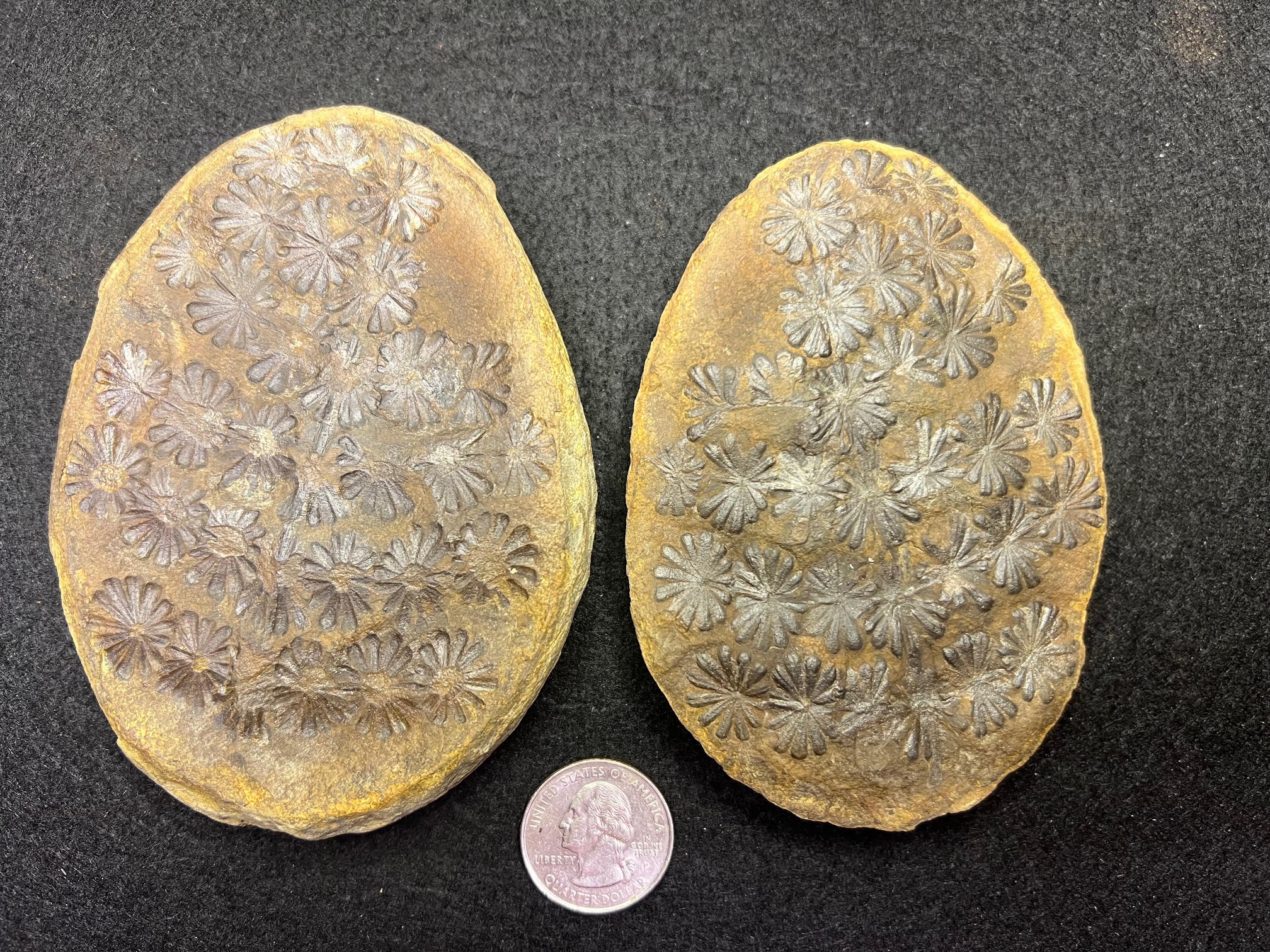
Fossil Friday #278: Annularia sphenophylloides
Read more: Fossil Friday #278: Annularia sphenophylloidesThis is the “Fossil Friday” post #278. Expect this to be a somewhat regular feature of the website. We will post any fossil pictures you send in to esconi.info@gmail.com. Please include a short description or story. Check the #FossilFriday Twitter hash tag for contributions from around the world! —————————————————– Today, we have another beautiful contribution from Jim Alann. This one is an absolutely radiant Annularia sphenophylloides. This specimen was collected by Clay Davis, who was an old timer that had a great eye for finding the some of the best fossils. Thanks for sharing, Jim! Annularia sphenophylloides is a smaller…
-
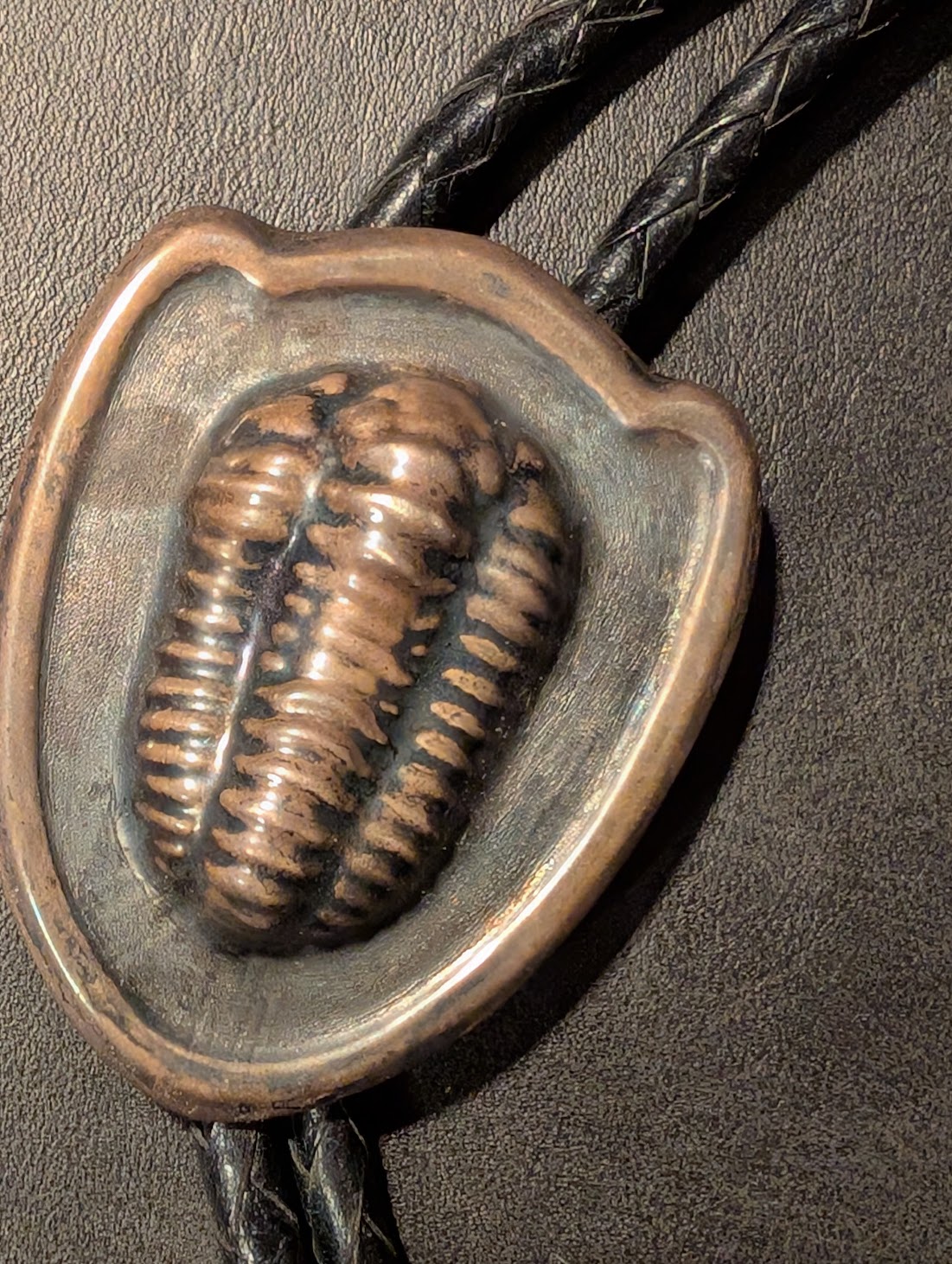
Throwback Thursday #278: Silver Tullies and Trilobites
Read more: Throwback Thursday #278: Silver Tullies and TrilobitesESCONI was more active in lapidary in the past. Until the early 2010s, there was a Lapidary Study Group. Sheila Bergmann was the study group chairman for many years. The pieces shown below are silver castings and silver plated from the Dave and Sheila Bergmann collection. There’s a few calymene trilobites and various tully monsters. The bola tie worn by the ESCONI president features a large trilobite on the clasp and a trilobite and a tully monster at the end of the tips.
-

Dinosaur teeth reveal some were picky eaters
Read more: Dinosaur teeth reveal some were picky eatersScience News has a story about dinosaurs, A new paper in the journal Palaeogeography, Palaeoclimatology, Palaeoecology reveals that some herbivorous dinosaurs were probably “picky” eaters. By analyzing calcium isotopes in 150-million-year-old tooth enamel, the authors determined the diet of these dinosaurs depended more on nutritional value and texture of their food than the size of the animal. “My big takeaway is that the herbivores had different diets, and it is likely that the parts of a plant that these animals eat [are] a more significant driver than height,” says Liam Norris, a paleontologist at the Texas Science & Natural History…
-
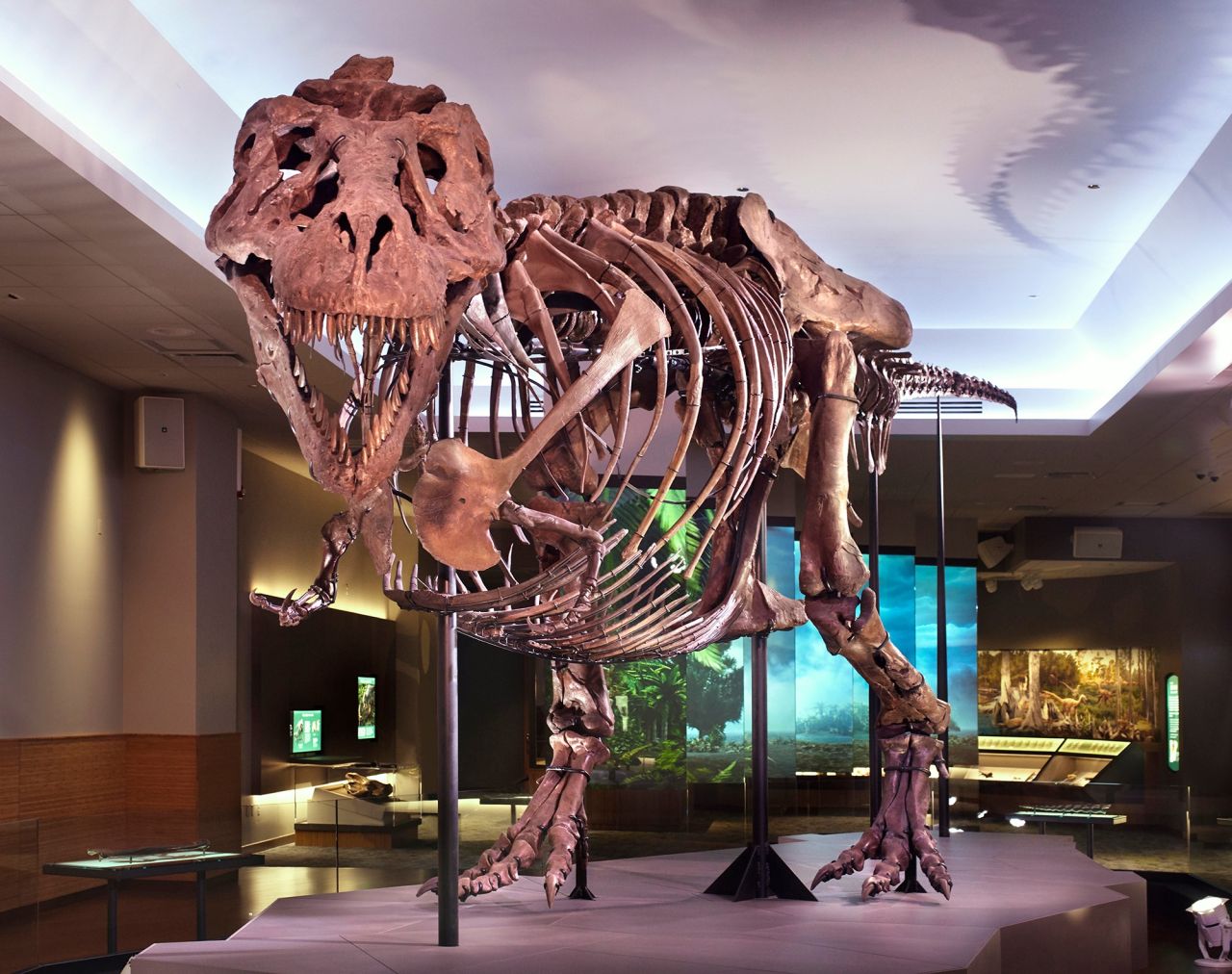
Happy 32nd Unearth Day, SUE!
Read more: Happy 32nd Unearth Day, SUE!To commemorate SUE’s 35th rebirthday, the Field Museum did this post on LinkedIn last week. On August 12, 1990, Sue Hendrickson unearthed SUE—the world’s largest and most complete T. rex fossil ever found. 🎊 Since then, SUE’s been on quite the journey: from a rocky resting place in South Dakota to the spotlight at the Field Museum, meeting millions of visitors. 🦖 Scientists around the world have studied SUE to dig deeper into how T. Rex lived 65 million years ago. 🦴 It’s safe to say that SUE has made an asteroid-sized impact, forever changing what we know about life…
-

Mazon Monday #282: Pit 11 Shutdown in 1974
Read more: Mazon Monday #282: Pit 11 Shutdown in 1974This is Mazon Monday post #282. What’s your favorite Mazon Creek fossil? Tell us at email:esconi.info@gmail.com. For the Braidwood, Wilmington, and Coal City area, 1974 marked the end of an era with the closure of the last operating coal mine—Peabody Coal Company’s Pit 11. The mine had been in operation since 1951, originally opened by the Northern Illinois Coal Company (NICC), which is also known simply as “the Northern.” Coal mining in the region began in 1864 when a water well unexpectedly struck coal at a depth of 65 feet. This seam, now known as the Coalchester Coal #2, proved…
-
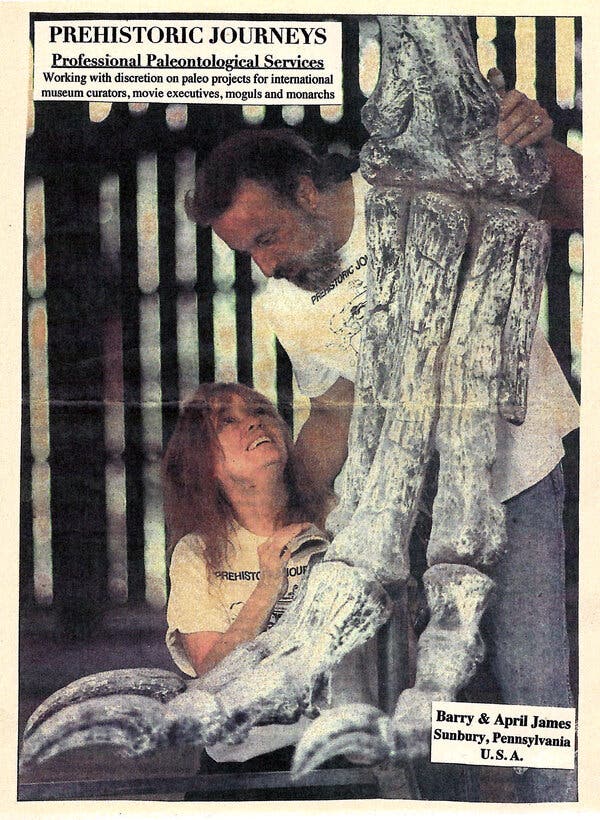
Their Last Love Token: A Dinosaur Rebuilt From Its Excavated Bones
Read more: Their Last Love Token: A Dinosaur Rebuilt From Its Excavated BonesThe New York Times has a story about the preparation of a special triceratops skeleton. It’s a love story with dinosaurs… The 159th skeleton to come across Barry James’s desk was potentially one of the largest triceratops ever found. A colleague, Craig Pfister, had telephoned James, a commercial paleontologist, from Wyoming to discuss the astounding collection of bones, possibly worth as much as $25 million. Would James come out of retirement to reconstruct it? The discovery fueled James and his wife, April, his business partner and soul mate for 37 years. For months, in what James described as “dino mania,”…
-

Making New T-Rex | Jurassic World Rebirth: Hatching a New Era Clip
Read more: Making New T-Rex | Jurassic World Rebirth: Hatching a New Era ClipSay what you will about the plot lines and stories in Jurassic Park, but the special effects can be… well special. Here is a fun clip about the “new” T-Rex in the latest iteration of the Jurassic Park franchise” Five years after the events of Jurassic World Dominion, the planet’s ecology has proven largely inhospitable to dinosaurs. Those remaining exist in isolated equatorial environments with climates resembling the one in which they once thrived. The three most colossal creatures within that tropical biosphere hold the key to a drug that will bring miraculous life-saving benefits to humankind,” reads the film’s…
-

Fossil Friday #277: Alethopteris sullivantii
Read more: Fossil Friday #277: Alethopteris sullivantiiThis is the “Fossil Friday” post #277. Expect this to be a somewhat regular feature of the website. We will post any fossil pictures you send in to esconi.info@gmail.com. Please include a short description or story. Check the #FossilFriday Twitter hash tag for contributions from around the world! —————————————————– Jim Alann recently sent us a photo of his personal favorite Mazon Creek plant find. The absolutely stunning specimen of Alethopteris sullivantii was collected from Cinder Ridge (NICC Pit 1) in 2005. Pit 1 was also known as the Greer School, which trained construction workers to operate heavy equipment. The area…
-

ESCONI Field Trip to Mount Orab for Trilobites – Saturday, September 13th, 2025
Read more: ESCONI Field Trip to Mount Orab for Trilobites – Saturday, September 13th, 2025ESCONI will have a field trip to Flat Run Fossils in Mt. Orab, Ohio on September 13th, 2025. Flat Run Fossils is a new pay-to-dig site in the famous Mt. Orab trilobite beds. For many years,thousands of gorgeous Flexicalymene and Isotelus trilobites have been collected from this area. Other possible finds include brachiopods, graptolites, cephalopods, and crinoids. You willcertainly walk away with trilobites – they are not hard to find! Trip details: To register for this trip, send Connor Puritz an email with the names of ESCONI members attending. His email address is connorpuritz@gmail.com. He will confirm via return email…
-
Throwback Thursday #277: Poem “Some of These Days”
Read more: Throwback Thursday #277: Poem “Some of These Days”This is Throwback Thursday #277. In these, we look back into the past at ESCONI specifically and Earth Science in general. If you have any contributions, (science, pictures, stories, etc …), please send them to esconi.info@gmail.com. Thanks! email:esconi.info@gmail.com. —————————————————– Here’s a poem from the November 1974 edition of the newsletter. You only have so much time on this mortal coil, so, get out and collect some rocks, minerals, fossils, gems… anything! Brag Night in September is coming up fast! This poem was taken from Cedar Valley Gems via the Fulton County Rock Hounders and appears to be by someone known…
-

Mazon Creek, Field Museum, and ESCONI in the News!
Read more: Mazon Creek, Field Museum, and ESCONI in the News!Mazon Creek, Field Museum, and ESCONI was in the news on multiple Chicago channels! FOX 32 CBS News NBC 5 Chicago One of the “world’s best fossil sites” is located just an hour outside of the Windy City, according to Chicago Field Museum researchers. Dr. Arjan Mann, assistant curator of early tetrapods at the Field Museum, leads a lab dedicated to studying fossils found at Mazon Creek State Park, which the museum calls a “biological treasure trove.” The researchers are now sharing their discoveries with the public. According to a museum news release, Mazon Creek saw large-scale coal mining in…
-

ESCONI Field Trip to Braceville, IL for Mazon Creek Fossils – Saturday, September 6th and Sunday, September 7th, 2025
Read more: ESCONI Field Trip to Braceville, IL for Mazon Creek Fossils – Saturday, September 6th and Sunday, September 7th, 2025Braceville Field Trip Rules for September 2025 The ESCONI field trips to Braceville for Mazon Creek fossils are set for September 6th and 7th, 2025 from 9 AM to 3 PM. You can attend one or the other, but not both days. There is an attendance limit of 50 people each day. You must register to go on this trip. See rule 6 below for instructions. This is the only way to register. If you are sick, have any symptoms of Covid-19 or have recently tested positive, DO NOT COME. Families are welcome, but the minimum age is 5 years old.…
-
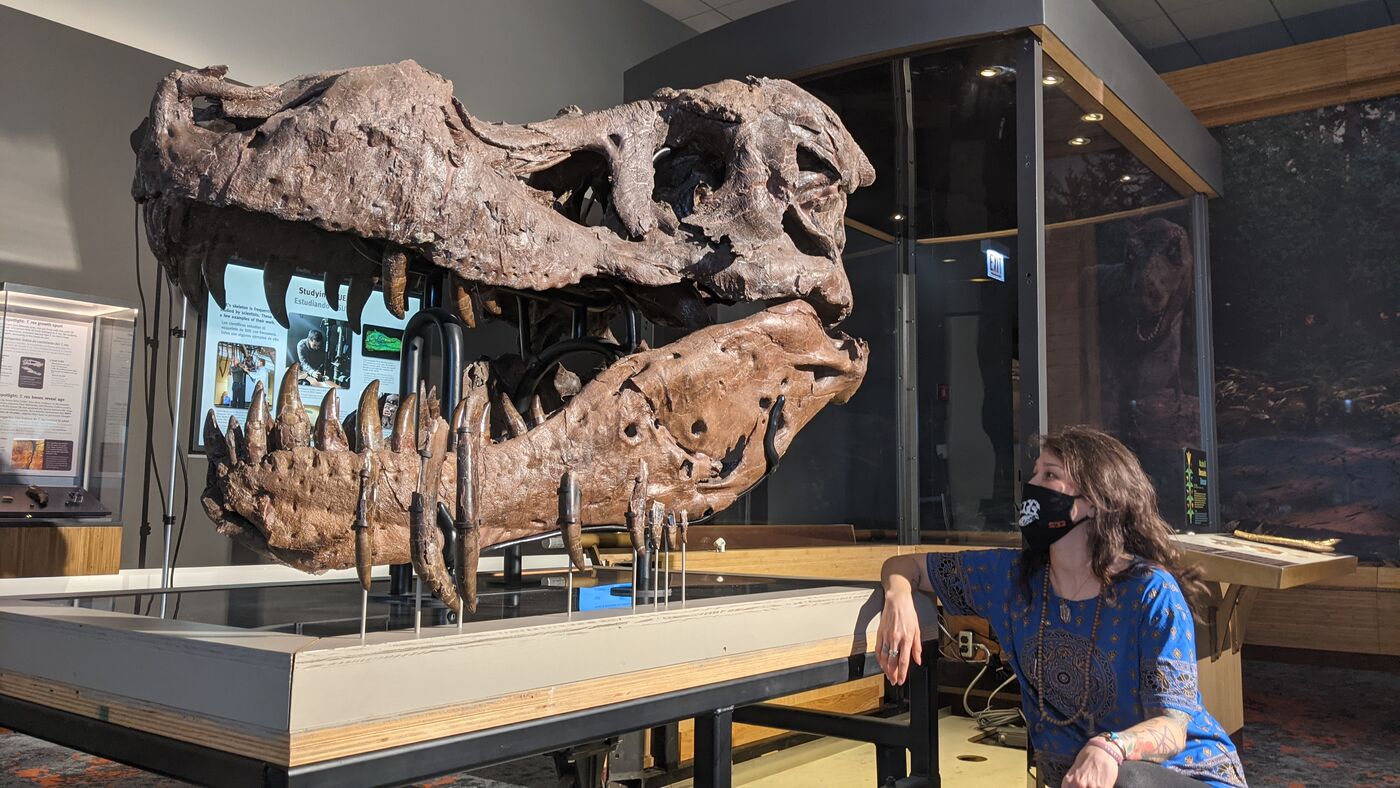
What caused the holes in SUE the T. rex ’s jaw? Probably not an infection
Read more: What caused the holes in SUE the T. rex ’s jaw? Probably not an infectionMedia for Press Release: What caused the holes in SUE the T. rex ’s jaw? Probably not an infection Photographer(s): Unspecified (c) (c) Unspecified This Field Museum Press Release link is a little old, but still very interesting. What caused the holes in the back of SUE’s jaw? SUE the T. rex is one of the most complete, best-preserved Tyrannosaurus rex specimens ever found. That level of preservation helps reveal details about SUE’s life. For instance, SUE lived to a ripe old age of about thirty-three, and in those years, suffered their fair share of injuries. SUE’s most mysterious ailment might be the holes…
-

Mazon Monday #281: 283,821 concretions, how do you measure the Mazon Creek?
Read more: Mazon Monday #281: 283,821 concretions, how do you measure the Mazon Creek?This is Mazon Monday post #281. What’s your favorite Mazon Creek fossil? Tell us at email:esconi.info@gmail.com. There’s quite a bit of Mazon Creek fossil research happening. Last week, we posted a paper that redescribed Palaeocampa (see Mazon Monday #280), some of our friends at the Field Museum had a paper about Sphenophyllales in June (see Mazon Mionday #277), Cal So did a presentation about amphibamiforms in June (see Mazon Monday #276), and Arjan Mann has more than a few things cooking… This week, we look at a new paper that reexamimes groundbreaking work on the environmental setting of the Mazon…
-

Archaeologists Keep Finding Massive Shoes at an Ancient Roman Fort—and They Have No Idea Why They’re So Big
Read more: Archaeologists Keep Finding Massive Shoes at an Ancient Roman Fort—and They Have No Idea Why They’re So BigSmithsonian Magazine has an article about the discovery of unexpectedly large shoes. The shoes were excavated from the Roman fort called Magna in northern England. The footware dates to the time of Hadrian's Wall. More than 30 shoes of varying sizes have been found at the fort and about 25% of them are "oversized". The largest of the old leather shoes measures more than 12.8 inches, about size 14 in the US. Thousands of shoes have been found at the nearby fort of Vindolanda with just 16 of 3,704 shoes measuring more than 11.8 inches long. Archaelogists are not sure…
-
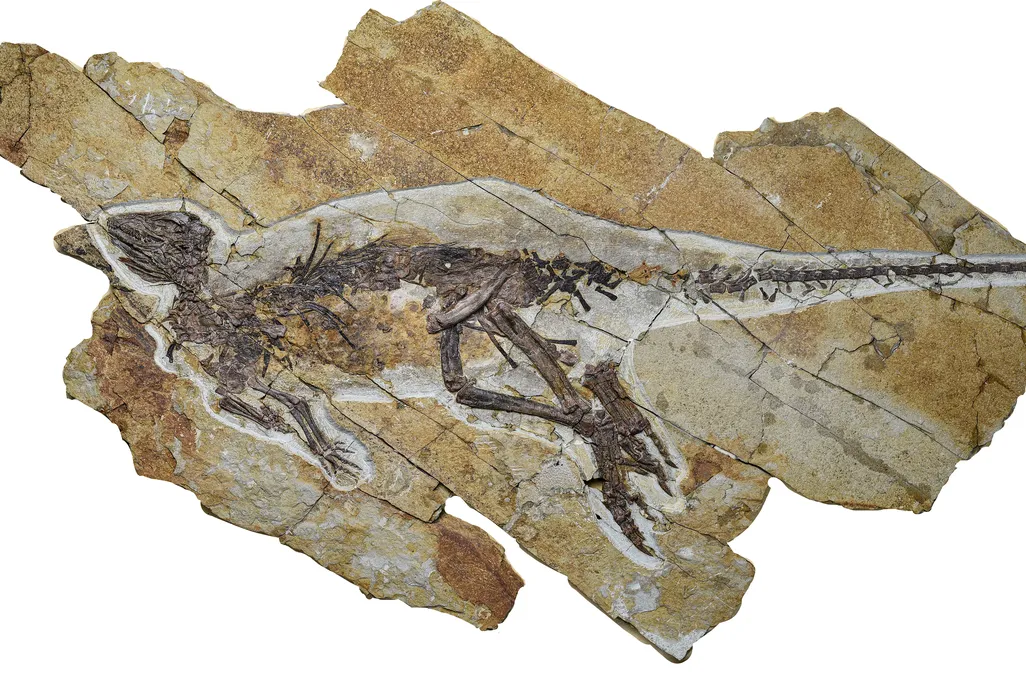
Rare Fossil Suggests Some Dinosaurs May Have Sounded Like Birds and Shared Similar Vocal Anatomy
Read more: Rare Fossil Suggests Some Dinosaurs May Have Sounded Like Birds and Shared Similar Vocal AnatomySmithsonian Magazine has a story about a new dinosaur that gives us clues on how dinosaurs sounded. Pulaosaurus qinglong lived about 163 million years ago in what is now Qinglong, a Chinese county in Hebei Province. The nearly complete animal was described in a paper in the journal PeerJ. The fossil includes its bony vocal organs, which are rarely preserved. These organs are similar to the vocal anatomy of modern birds. Today’s reptiles, in general, make sound using a larynx that contains cartilage. But modern birds’ vocal organ, called the syrinx, has both bone and cartilage components, allowing them to make complex…

ESCONI Gem, Mineral, and Fossil Show
Most Recent Post
- PBS Eons: Why Humanity Has Amnesia About Giant Sloths
 PBS Eons has a new episode. This one is about human interactions with the giant megafauna of the Pleistocene.
- About ESCONI
- Around the Web
- Calendar of Events
- Code of Ethics and Conduct
- ESCONI Books for Sale
- ESCONI Gem, Mineral, and Fossil Show
- ESCONI in the News
- ESCONI Videos
- Field Trips
- Flashback Friday
- Fossil Friday
- Mazon Creek
- Mazon Monday
- Member Spotlight
- Membership Information
- Reference Material
- Throwback Thursday
- Trilobite Tuesday
Field trips require membership, but visitors are welcome at all meetings!
| Friday, June 12th | General Meeting – 8:00 PM via Zoom. Adrienne Stroup of The Field Museum will present “At the Intersection of Art and Science: Outreach in Natural History Museums”. |
| Saturday, June 20th | Paleontology Study Group – 7:30 PM via Zoom. Lincoln Shoemaker will present “Factors controlling the distribution of Late Ordovician – Silurian crinoids.” |
| No meeting this month | Junior Study Group Meeting |
| No meeting this month | Mineralogy Study Group |