
-

Fossil Friday #281: Dasyleptus sp.
Read more: Fossil Friday #281: Dasyleptus sp.This is the “Fossil Friday” post #281. Expect this to be a somewhat regular feature of the website. We will post any fossil pictures you send in to esconi.info@gmail.com. Please include a short description or story. Check the #FossilFriday Bluesky/Twitter hash tag for contributions from around the world! Dasyleptus is an extinct genus of monurian insect. They are known from the Mazon Creek biota, other Carboniferous localities, and have been found in later deposits that date to the Permian. They get their name for the single tail spike. Their closest living relative today is the Silverfish. In fact, some recent research…
-
Throwback Thursday #281: Looking Back At ESCONI For September 2025
Read more: Throwback Thursday #281: Looking Back At ESCONI For September 2025A look back at September 1955, 1975, and 2000
-
ESCONI Field Trip to Bellevue, MI Quarry on Saturday, September 27th, 2025
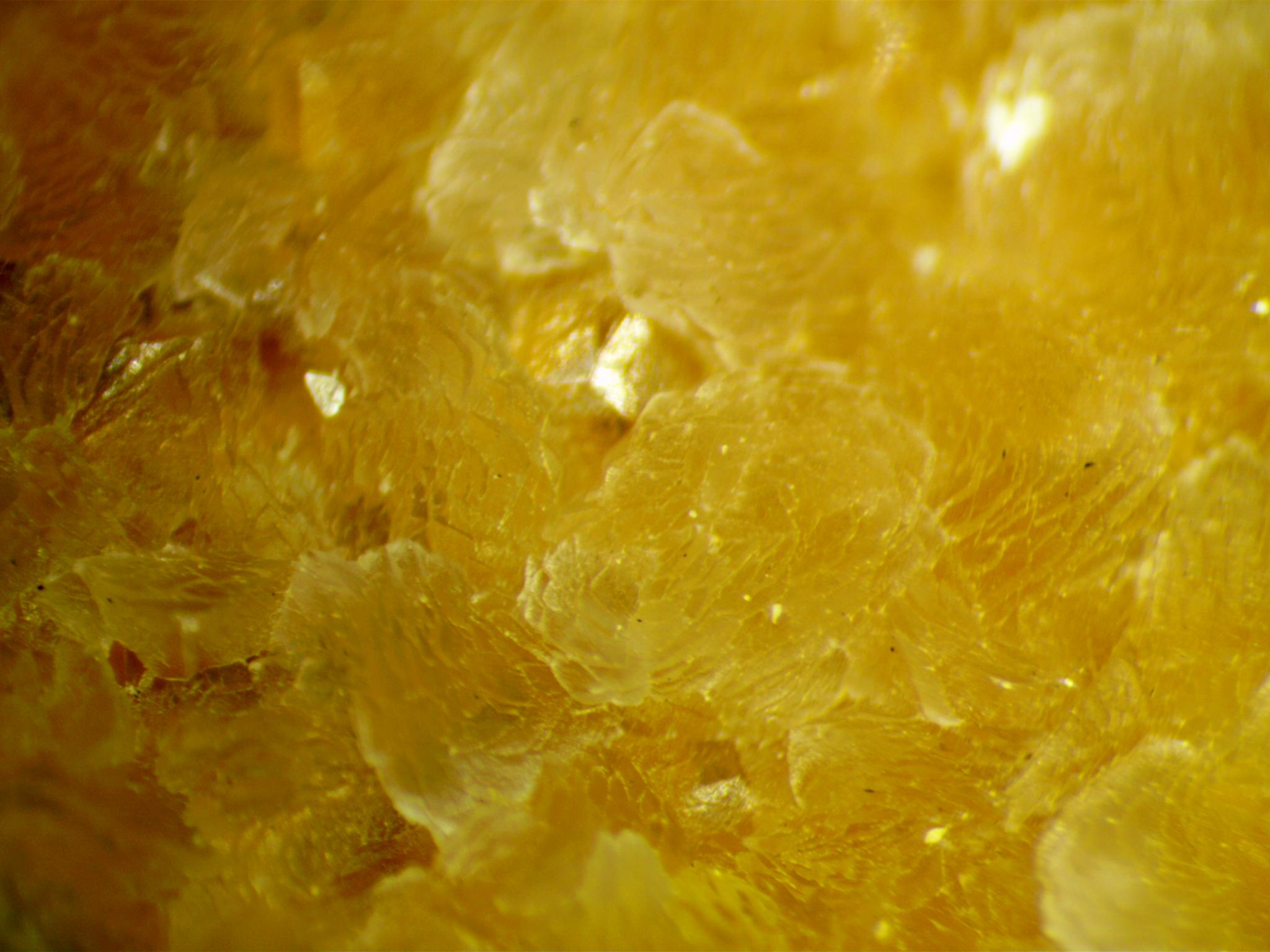
Read more: ESCONI Field Trip to Bellevue, MI Quarry on Saturday, September 27th, 2025A field trip to a quarry in Bellevue, MI is scheduled for Saturday, September 27th, 2025. This is a joint trip with the Kalamazoo Geological and Mineral Society (KGMS), and will be led by KGMS members. There is space for 15 ESCONI members. The trip will be from 9 AM ET to 3 PM ET. Note the time change for those coming from Illinois! The quarry exposes the Bayport Limestone (Mississippian/Lower Carboniferous). Minerals (calcite, pyrite, chalcopyrite, etc.) and fossils (coral, brachiopods, shark teeth, etc.) can be found. You must register to go on this trip. See rule 8 below for…
-

ESCONI Events for September 2025
Read more: ESCONI Events for September 2025You do not need to be a member to attend meetings Sat, Sep 6th and Sun, Sep 7th Field Trip – Braceville, IL for Mazon Creek Fosssils Fri, Sep 12th – 8:00 PM General Meeting – 8 PM – via Zoom Dr. Angela Cooper will be presenting “Cahokia Mounds State Historic Site.” Sat, Sep 13th – 7:00 PM Scott Galloway will present a program on meteorites. Specifics of this meeting are available from Scott Galloway, 630-670-2591, gallowayscottf@gmail.com. The meeting will be in person at the College of DuPage Technical Education Center (TEC) Building – Room 1038B (Map). Sat, Sep 13th Field Trip – Mount…
-

This Crocodile Relative Was One of Dinosaurs’ Most Fearsome Predators
Read more: This Crocodile Relative Was One of Dinosaurs’ Most Fearsome PredatorsThe New York Times’ Trilobite column has an interesting story about a fierce crocodile that lived alongside the dinosaurs during the Cretaceous Period about 72 million years ago. Kostensuchus measured about 11½ feet long and weighed 551 pounds. The fossils were found in March 2020 in Santa Cruz, a province in Argentina. The animal was described in a paper in the journal PLOS One. While North America and Asia had their share of Cretaceous crocodiles, they were mostly from families that had evolved a semiaquatic lifestyle. But crocodiles took a different trajectory in South America and Africa, where several families walked…
-
2025 Mazon Creek Fossil Day, October 11th, 2025 at the Coal City Library
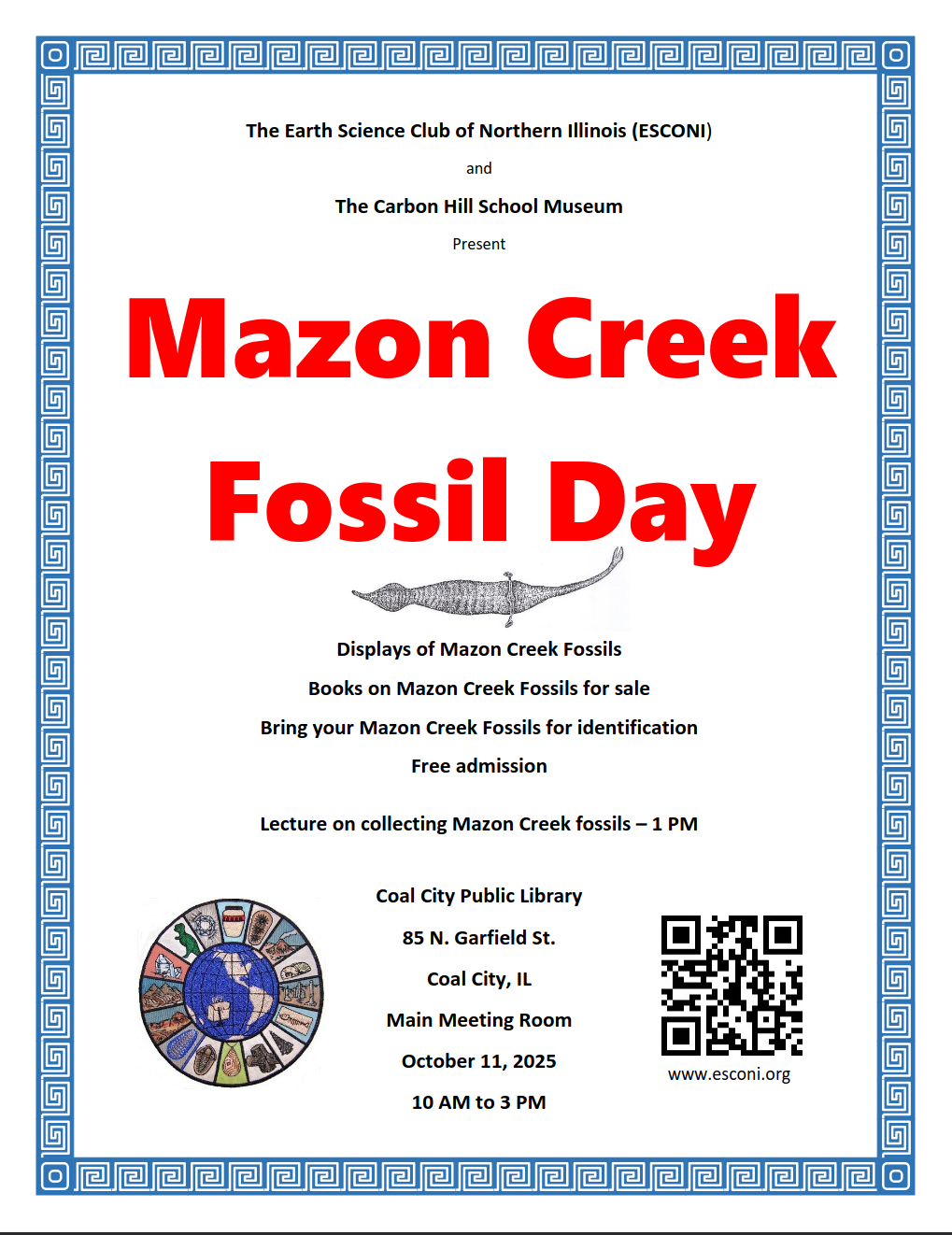
Read more: 2025 Mazon Creek Fossil Day, October 11th, 2025 at the Coal City LibraryThe 2025 Mazon Creek Fossil Day will be held on October 11th, 2025 at the Coal City Library from 10 AM to 3 PM. See you there! Previous events
-
Mazon Monday #285: Etacystis communis
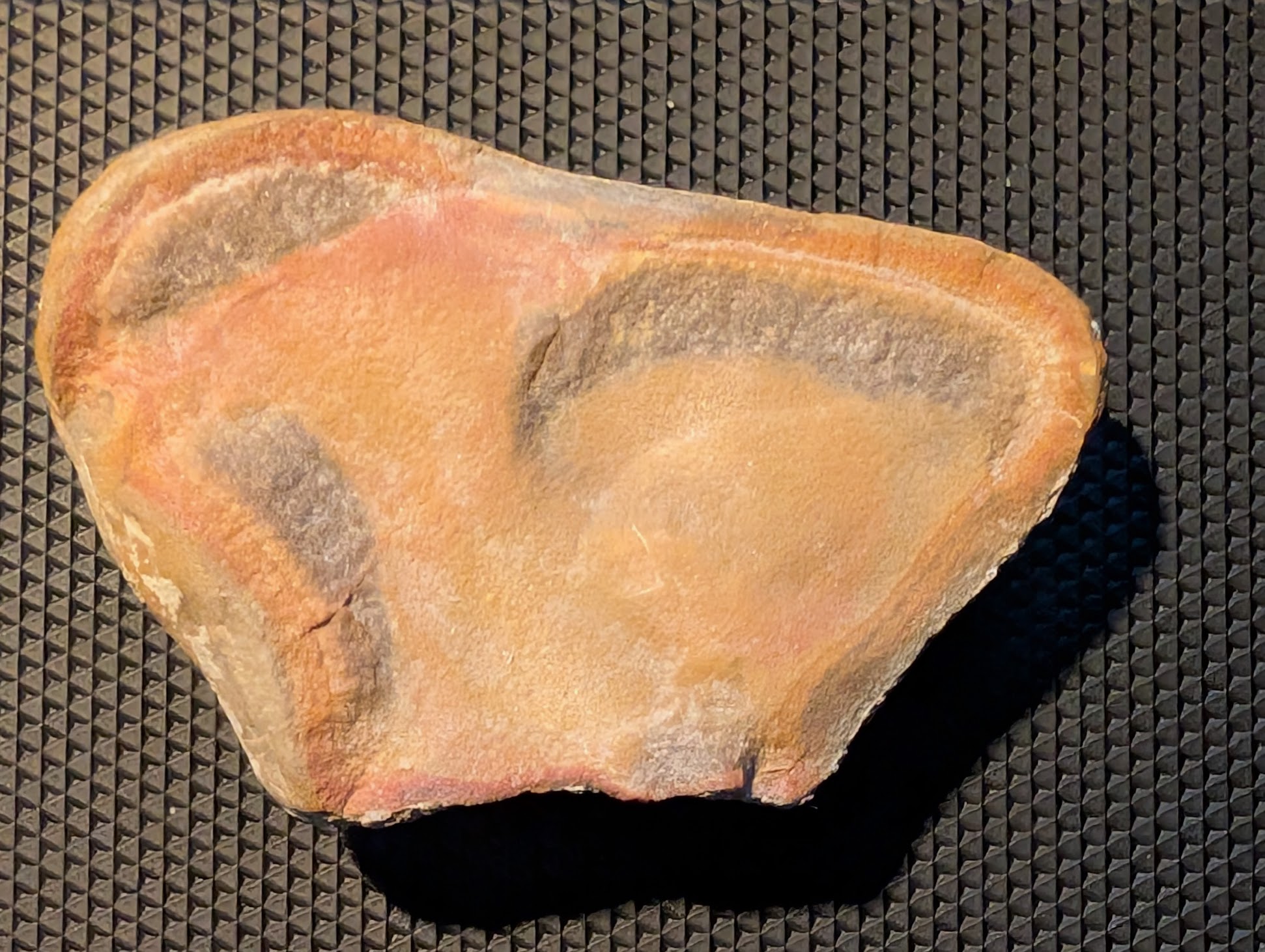
Read more: Mazon Monday #285: Etacystis communisThis is Mazon Monday post #285. What’s your favorite Mazon Creek fossil? Tell us at email:esconi.info@gmail.com. One of the more problematic animals from Mazon Creek is Etacystis communis, known as the Aitch or “H” animal by amateur collectors. It was described by Matthew Nitecki and Frederick Schram in “Etacystis communis, a fossil of uncertain affinities from the Mazon Creek fauna (Pennsylvanian of Illinois)”, which was published in the Journal of Paleontology. The authors did not assign it to a phylum. Researchers have suggested a hemichordate or hydrozoan affinity, however the animal is missing a stomochord. E. communis, a soft-bodied animal, is only known from…
-

Paleontologist Discovers First Known Silurian Horseshoe Crab
Read more: Paleontologist Discovers First Known Silurian Horseshoe CrabSciNews has an article about the discovery of a horseshoe crab fossil in the Silurian. Horseshoe crabs are known from the late Ordovician, but there was a gap of 80 million years from the Devonian. This animal, Ciurcalimulus discobolus, lived about 424 million years ago. It was collected by Samuel J. Ciurca in 1975 from the Kokomo Member of the Wabash Formation in Indiana. The fossil was described by Dr. James Lamdell in “The first Silurian horseshoe crab reveals details of the xiphosuran ground plan”, which was published in the journal Proceedings of the Royal Society B. In 2020, Mr. Lamdell did a presentation for ESCONI about the…
-

Field Museum: After the Age of Dinosaurs
Read more: Field Museum: After the Age of DinosaursThe Field Museum has a new exhibit that looks at the time after the non-avian dinosaurs went extinct during the K-Pg Event about 66 million years ago. How did the world recover? And, how long did it take? Chicago-based illustrator Jay Ryan created original artwork for the Field Museum’s “After the Age of Dinosaurs” exhibition.
-

ESCONI Field Trip to Danville Shale Pile Fossils – Saturday, September 27th, 2025
Read more: ESCONI Field Trip to Danville Shale Pile Fossils – Saturday, September 27th, 2025Danville Field Trip Rules for Saturday, September 27th, 2025 An ESCONI field trip to the Danville IL Shale Pile for Pennsylvanian fossils is scheduled for Saturday September 27, 2025 starting at 10 AM. This is on private property and there is an attendance limit of 25 people. The gate will be secured once we are in and locked when we leave. Plan on being off the hill at 3 PM to give time for specimen identification and pictures. You must register to go on this trip. See rule 6 below for instructions. This is the only way to register. If you are…
-
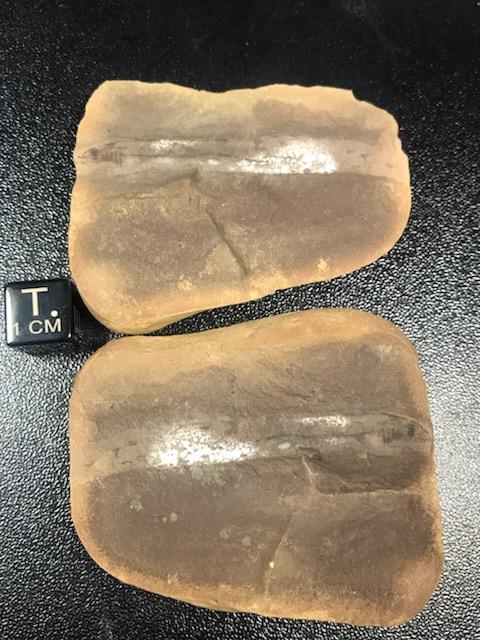
Fossil Friday #280: Mayomyzon pieckoensis
Read more: Fossil Friday #280: Mayomyzon pieckoensisThis is the “Fossil Friday” post #280. Expect this to be a somewhat regular feature of the website. We will post any fossil pictures you send in to esconi.info@gmail.com. Please include a short description or story. Check the #FossilFriday Bluesky/Twitter hash tag for contributions from around the world! Mayomyzon pieckoensis is an extinct species of lamprey found only in the Mazon Creek fossil biota. It was described in “First Fossil Lamprey: A Record from the Pennsylvanian of Illinois” by David Bardack and Rainer Zangerl. That paper was published in the jornal Science in 1968. M. pieckoensis was named for Ted and Helen Piecko. Helen…
-

Throwback Thursday #280: Braceville Trip 05/16/2009
Read more: Throwback Thursday #280: Braceville Trip 05/16/2009Here’s a great report from Andrew Young of the Braceville Field Trip on May 16th, 2009. Notice that the spoil pile is much bigger!
-
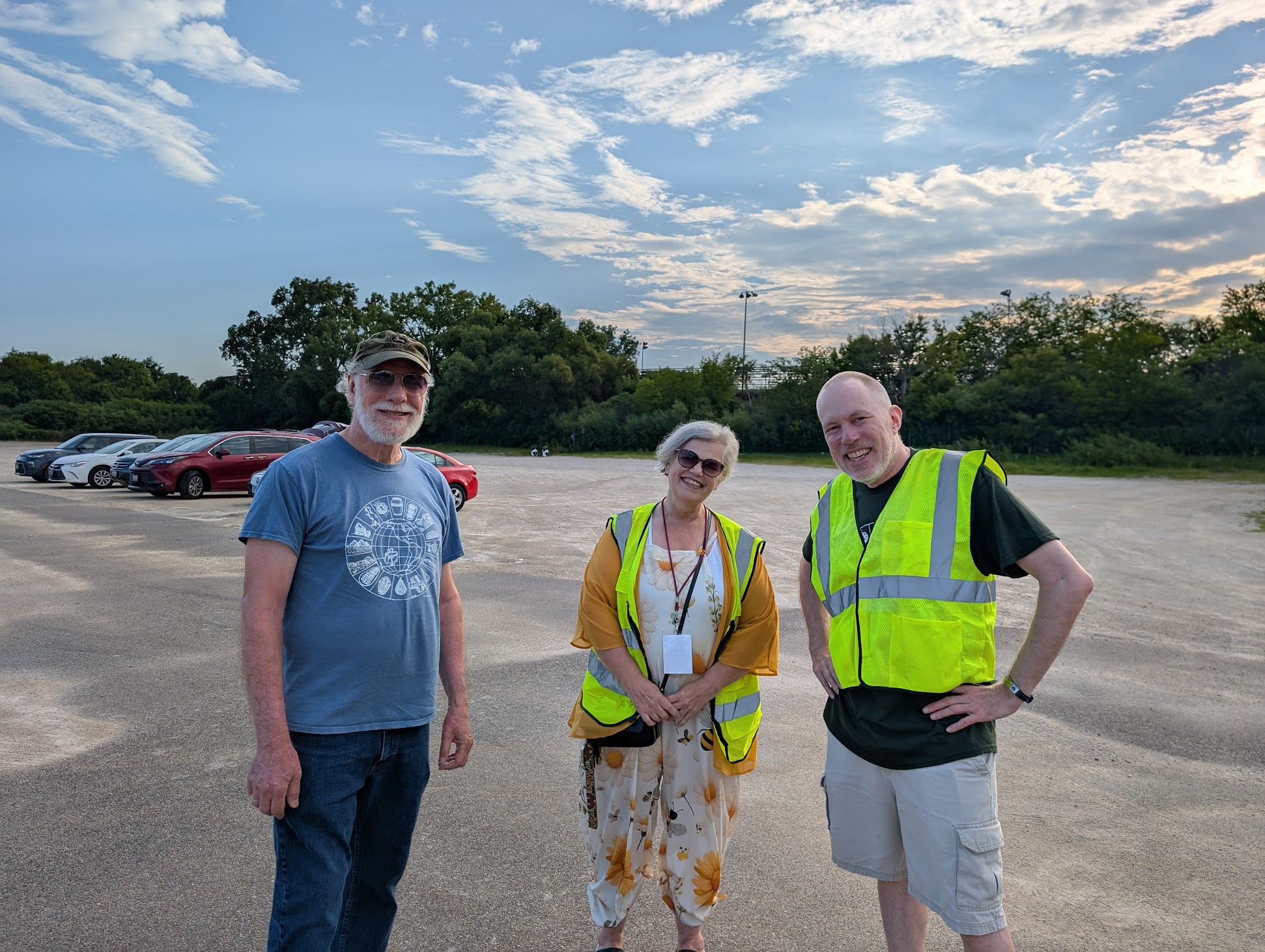
2025 ESCONI Rock, Mineral, and Fossil Swap Report
Read more: 2025 ESCONI Rock, Mineral, and Fossil Swap ReportWell, the 2025 ESCONI Rock, Mineral, and Fossil Swap is in the books. It was a huge success. This is the first time we have held this type event. Except for a little rain before setup, the weather was absolutely perfect… upper 70’s and partly cloudy. There were 19 swappers/sellers… all were selling something. We probably had a few hundred visitors thoughout the day. Plenty of nice rocks, beautiful minerals, interesting trilobites, and… of course… Mazon Creek fossils were available. Here are some photos from the event. Setup… The ESCONI Tables… Lots of smiling faces… Swapping… What do you have…
-
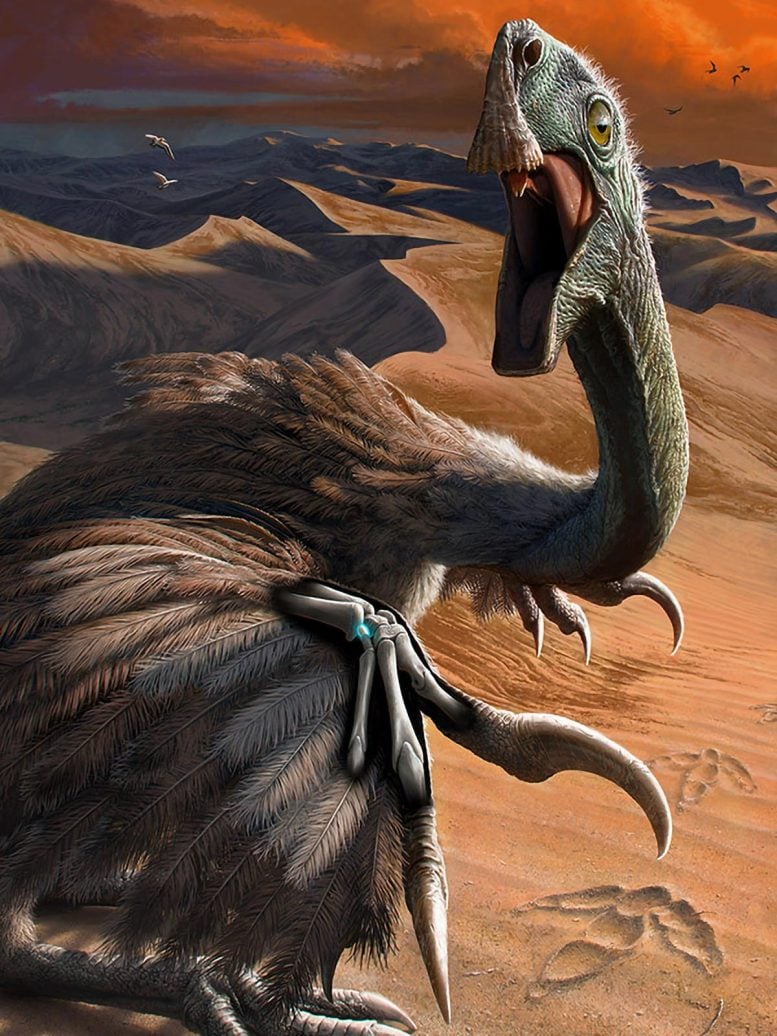
This Tiny Dinosaur Wrist Bone Could Rewrite the Origins of Flight
Read more: This Tiny Dinosaur Wrist Bone Could Rewrite the Origins of FlightSciTechDaily has a story that highlights a new dinosaur discovery that might rewrite the evolution of flight. New research by a team led by James Napoli, from the Department of Anatomical Sciences in the Renaissance School of Medicine at Stony Brook University, found that some theropod dinosaurs had a bird-like carpal bone, or pisiform. The existance of this write bone might shift views on how flight evolved. The research was published in the journal Nature. For a long time, scientists were uncertain about the identity of a particular carpal bone in the bird wrist, until it was confirmed to be the…
-
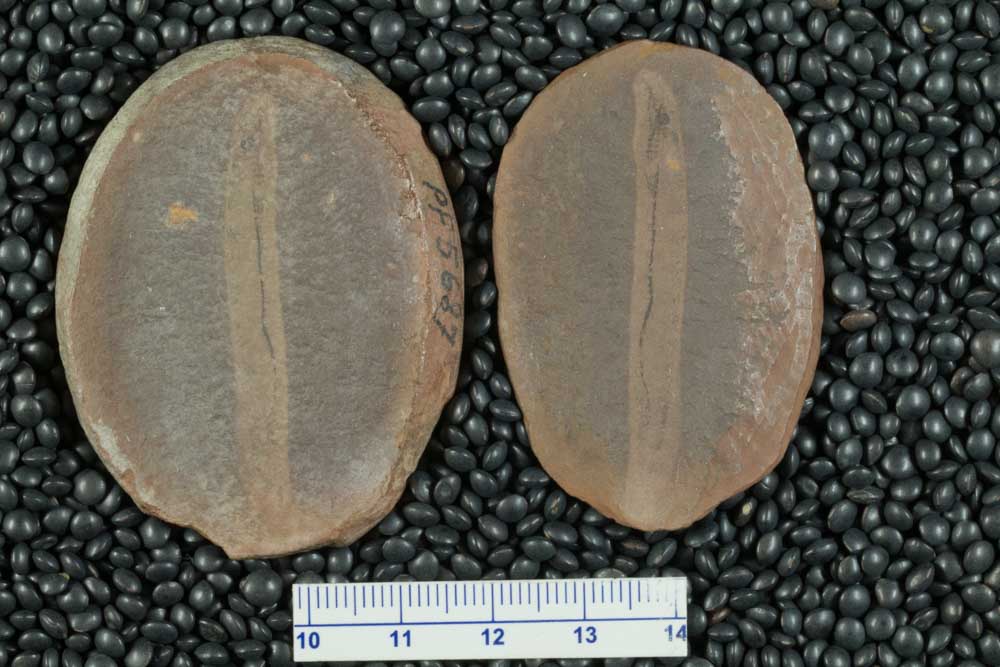
Mazon Monday #284: Mayomyzon pieckoensis
Read more: Mazon Monday #284: Mayomyzon pieckoensisMayomyzon pieckoensis is an extinct species of lamprey found in the Mazon Creek fossil biota. Pipiscius zangerli (see Mazon Monday #253) is also a lamprey from Mazon Creek. Lampreys are a group of jawless fish known for its funnel-like sucking mouth. There are about 38 modern species with maybe 7 extinct species currently classified. Genetic evidence suggests that lampreys are related to hagfish, another group of modern (and fossil) jawless fish. The earliest known lampreys date to the Late Devonian of South Africa about 360 million years ago.
-

Fossil Exhibit Transports Visitors To Prehistoric Will County
Read more: Fossil Exhibit Transports Visitors To Prehistoric Will CountyThe Isle a la Cache Museum in Romeoville, IL has a new exhibit “Souvenirs From the Silurian Sea: Fossils of Will County” opening on Wednesday, September 3rd, 2025. It’s a free exhibit that runs through November 30th, 2025. The museum is open Wednesday through Sunday from 10 AM to 4 PM. WJOL has a nice announcement. “This is a rare opportunity to see prehistoric life up close, not just in textbooks, but through real fossils found right here in Will County,” said Jen Guest, facility supervisor at Isle a la Cache. “It’s a surprising adventure for all ages.” Visitors will…
-

From Warehouse to Stardom!
Read more: From Warehouse to Stardom!From Warehouse to Stardom!by Katherine Howard and Jim BiglerMany years ago, Rusty Grenier, a member of ESCONI, built a Styracosaurus sculpture with his father. After his father died, Rusty donated the sculpture to ESCONI. It was stored at the ESCONI warehouse with care…its future undecided. In March 2025, Katherine Howard and Jim Bigler, both beaming with excitement, made the announcement…a forever home had been found for the amazing dinosaur sculpture…at the Ranch View Elementary School. Over the summer break, the sculpture was stored while a new addition was added to the school. On the first day of school, the students…
-
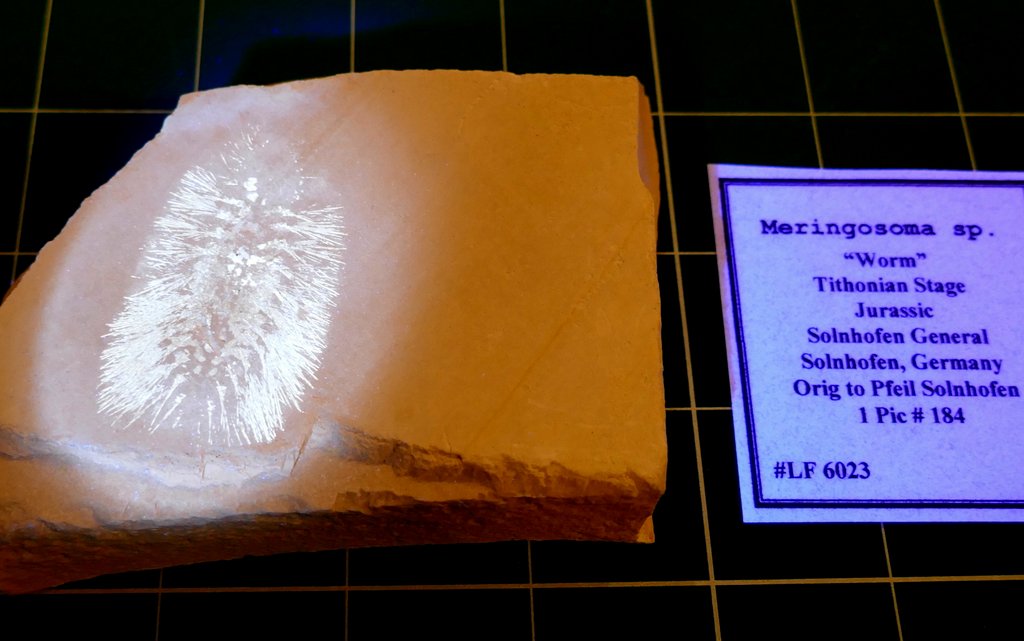
Fossil Friday #279: Meringosoma sp. from the Solnhofen
Read more: Fossil Friday #279: Meringosoma sp. from the SolnhofenThis is the “Fossil Friday” post #279. Expect this to be a somewhat regular feature of the website. We will post any fossil pictures you send in to esconi.info@gmail.com. Please include a short description or story. Check the #FossilFriday Twitter hash tag for contributions from around the world! This week’s featured fossil is a stunning polychaete worm — Meringosoma sp. It was collected from the renowned Solnhofen limestone in Bavaria, Germany. Dating to the Jurassic Period, around 155 million years ago, the Solnhofen formation represents a warm, shallow sea dotted with islands. The fossil assemblage from this site is remarkably…
-

Throwback Thursday #279: Vacation Conversation from 1951
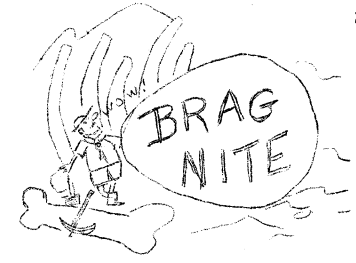
Read more: Throwback Thursday #279: Vacation Conversation from 1951Back in the 1950s and 1960s, the fall “Brag-Night” turned into the fall auction. The auction was used by folks to sell off extra material collected during summer vacations. Here is a “Brag-Night” drawing from September 1967. The “Brag-Night” for 2025 (renamed to “Show and Tell” is at 7:30 PM on September 20th, 2025 at the College of DuPage.
-
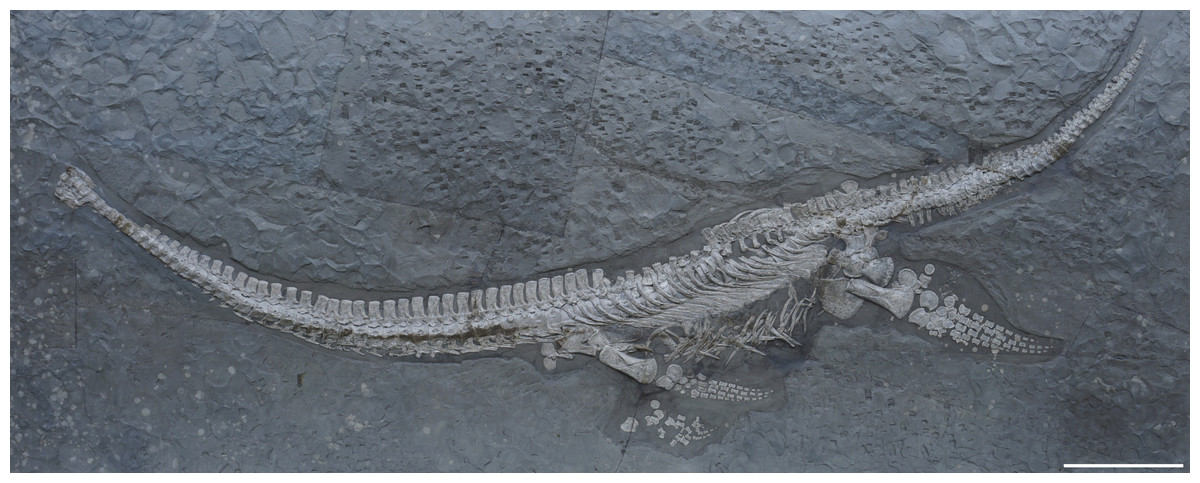
‘Most remarkable’ fossil of Jurassic sea monster from Germany is previously unknown species
Read more: ‘Most remarkable’ fossil of Jurassic sea monster from Germany is previously unknown speciesLiveScience has a story about a new species of plesiosaur. Plesionectes longicollum, which means to “long-necked near-swimmer”, lived during the early Toarcian age (183 million to 174 million years ago), which is the early Jurassic. The fossil specimen measures about 10 feet long and was found in 1978 from a quarry in Germany, part of the Posidonia Shale formation, known for its “exquisitely preserved fossils.” Details were published in the journal PeerJ. “This specimen has been in collections for decades, but previous studies never fully explored its distinctive anatomy,” study lead author Sven Sachs, a vertebrate paleontologist at the Natural History…

ESCONI Gem, Mineral, and Fossil Show
Most Recent Post
- PBS Eons: Why Humanity Has Amnesia About Giant Sloths
 PBS Eons has a new episode. This one is about human interactions with the giant megafauna of the Pleistocene.
- About ESCONI
- Around the Web
- Calendar of Events
- Code of Ethics and Conduct
- ESCONI Books for Sale
- ESCONI Gem, Mineral, and Fossil Show
- ESCONI in the News
- ESCONI Videos
- Field Trips
- Flashback Friday
- Fossil Friday
- Mazon Creek
- Mazon Monday
- Member Spotlight
- Membership Information
- Reference Material
- Throwback Thursday
- Trilobite Tuesday
Field trips require membership, but visitors are welcome at all meetings!
| Friday, June 12th | General Meeting – 8:00 PM via Zoom. Adrienne Stroup of The Field Museum will present “At the Intersection of Art and Science: Outreach in Natural History Museums”. |
| Saturday, June 20th | Paleontology Study Group – 7:30 PM via Zoom. Lincoln Shoemaker will present “Factors controlling the distribution of Late Ordovician – Silurian crinoids.” |
| No meeting this month | Junior Study Group Meeting |
| No meeting this month | Mineralogy Study Group |