-
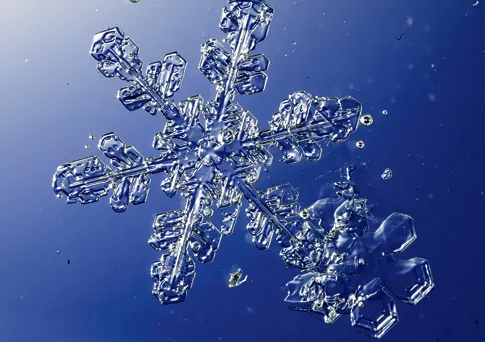
Throwback Thursday #295: Snowflake Collecting
Read more: Throwback Thursday #295: Snowflake CollectingYes, you read that correctly… Snowflake Collecting. Is that even possible? Well, ESCONI member Mark Blazek wrote this article for the January 1975 issue of the ESCONI newsletter.
-
ESCONI December 2025 General Meeting – “Fossils of the Comanche National Grasslands located in southeastern Colorado”
Read more: ESCONI December 2025 General Meeting – “Fossils of the Comanche National Grasslands located in southeastern Colorado”The ESCONI December 2025 General Meeting will be held on December 12th, 2025 at 8:00 PM via Zoom. The presenter is Steve Miller of the Western Interior Paleontological Society (WIPS). His topic is “Fossils of the Comanche National Grasslands located in southeastern Colorado”. Fossils of the Comanche National Grasslands located in southeastern Colorado The area offers access to the rocks and fossils of the first major cycle of marine deposition of the Cretaceous Western Interior Seaway. WIPS has explored the canyons, prairies, arroyos, cut banks, and deformed features which expose rocks from the Dakota Sandstone through the Smoky Hill Chalk.…
-
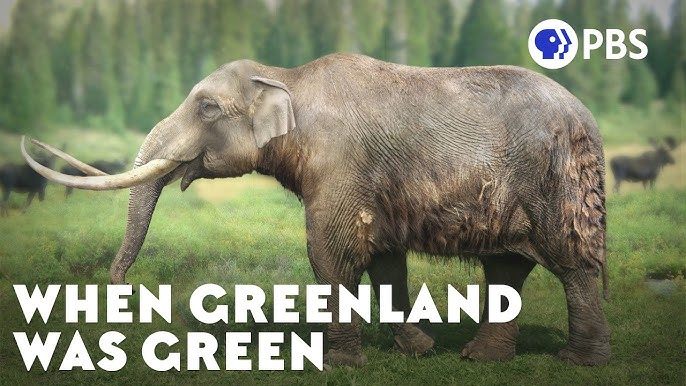
PBS Eons: What Was Greenland Like When it Was Green
Read more: PBS Eons: What Was Greenland Like When it Was GreenPBS Eons has a new episode. This one is about 2 million year old DNA from Greenland. It made the front page of the New York Times. Ancient DNA over 2 million years old, retrieved from the frozen dirt of Greenland. It reached back further in time than many scientists used to think was even theoretically possible. And it contained the genetic ghost of an /entire ecosystem/ – one that has no counterpart in today’s world and one that we had /no idea/ even existed. It told of a time when Greenland was green…and how we might borrow genes from…
-
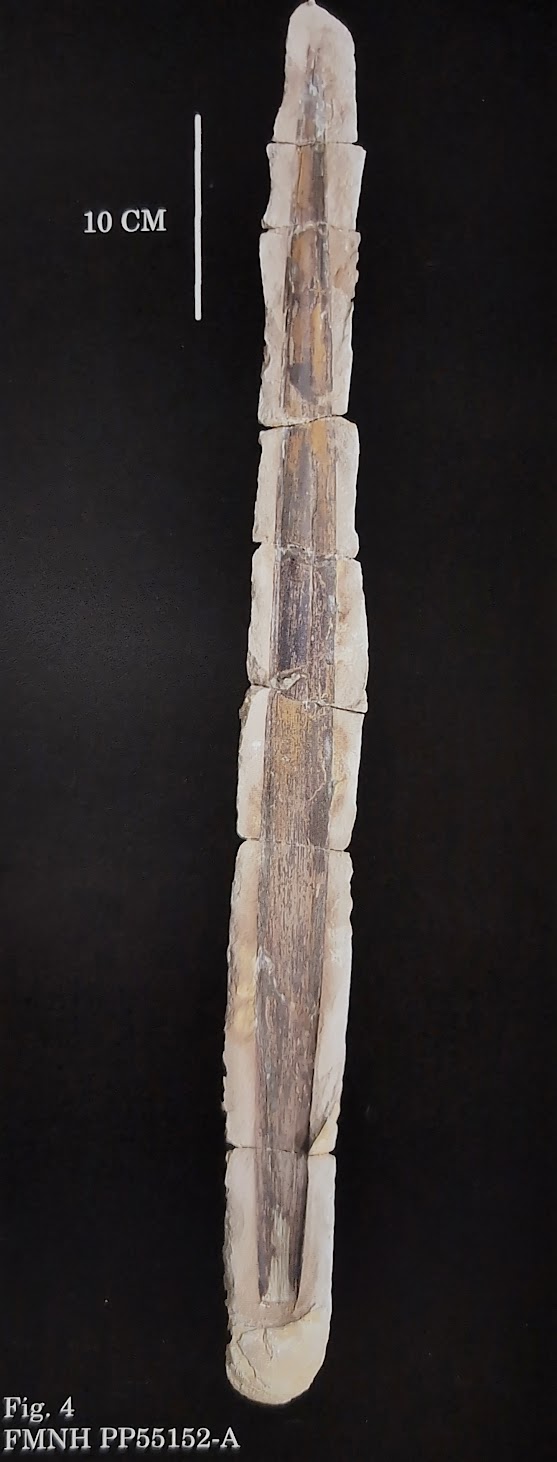
Mazon Monday #299: Cordaites borassifolius
Read more: Mazon Monday #299: Cordaites borassifoliusThis is Mazon Monday post #299. What’s your favorite Mazon Creek fossil? Tell us at email:esconi.info@gmail.com. Cordaites borassifolius is an extinct genus of early gymnosperms. Cordaites probably grew maybe 100 feet tall in the drier areas of the Carboniferous swamps. They had stilt-like roots, forming forests similar to modern day mangroves. Cordaites is relatively rare in the Mazon Creek biota with only one known species. Cordaites are believed to be closely related to conifers, although the exact relationship is unclear. They look quite different, but do share some key features, such as secondary wood in their trunks and clustered ovules and pollen in…
-

Photos from the 2025 ESCONI Holiday Luncheon
Read more: Photos from the 2025 ESCONI Holiday LuncheonThe 2025 ESCONI Holiday Luncheon was held on December 6th, 2025 at Warren’s Ale House in Wheaton, IL. We had a nice turnout. President Chris Berg had a very nice speech to highlight where we are and where we are headed for 2026. It was a very special day as we awarded an honorary membership to John and Kathy Catalani (yes, spelled correctly this time!). We thanked them for their many years of service to the club. John told us a very nice story about Andy and Jo Hay. It was also good to see Keith back in Chicago. We…
-
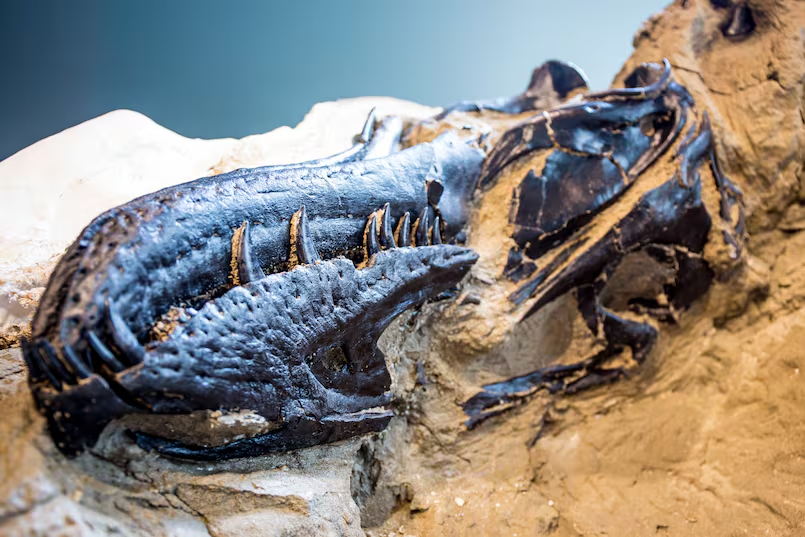
CBC Radio’s Quirks & Quarks… Smaller tyrannosaur solves decades-long debate about the T. Rex
Read more: CBC Radio’s Quirks & Quarks… Smaller tyrannosaur solves decades-long debate about the T. RexCBC Radio’s Quirks & Quarks has a great segment about Nanotyrannus. There’s an interview with James Napoli of Stony Brook University, who was coauthor on “Nanotyrannus and Tyrannosaurus coexisted at the close of the Cretaceous”, which was published in the journal Nature. Small tyrannosaur fossils belonging to a dinosaur about half the size and a tenth of the mass of other Tyrannosaurus rex fossils have been puzzling scientists for years. A new study, co-led by James Napoli at Stony Brook University, has finally revealed that they’re not just young T. Rexes, as was previously suspected, but an entirely new species. The research was…
-
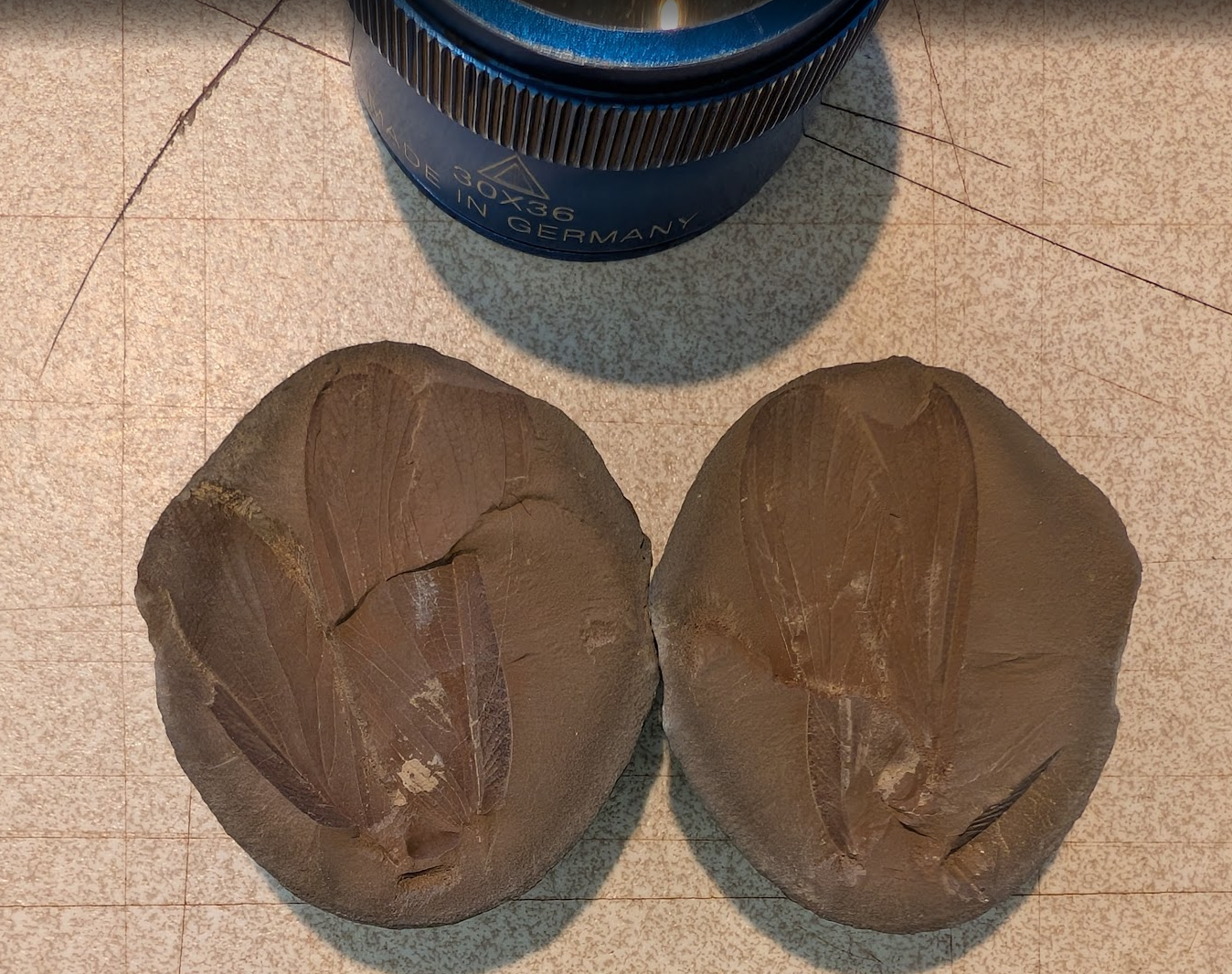
Fossil Friday #294: Phenopterum briggsi
Read more: Fossil Friday #294: Phenopterum briggsiThis is the “Fossil Friday” post #294. Expect this to be a regular feature of the website. We will post fossil pictures you send in to esconi.info@gmail.com. Please include a short description or story. Check the #FossilFriday Bluesky/Twitter hash tag for contributions from around the world! Phenopterum briggsi is a grylloblattidan species of insect from the Stephanian (Late Carboniferous) deposit of Montceau-les-Mines in southeastern France. It was described by Olivier Bethoux in 2010 in the paper “Description of a new grylloblattidan insect from Montceau-les-Mines (Late Carboniferous; France) and definition of Phenopterum Carpenter, 1950″. Have a look at Mazon Monday #294 for…
-

Throwback Thursday #294: Looking Back At ESCONI For December 2025
Read more: Throwback Thursday #294: Looking Back At ESCONI For December 2025A look back at December 1955, 1975, and 2000
-

ESCONI 2026 Gem, Mineral, and Fossil Show – March 21st and 22nd, 2026
Read more: ESCONI 2026 Gem, Mineral, and Fossil Show – March 21st and 22nd, 2026The ESCONI 2026 Gem, Mineral, and Fossil Show will be held on March 21st and 22nd, 2026 at the DuPage County Fairgrounds.
-
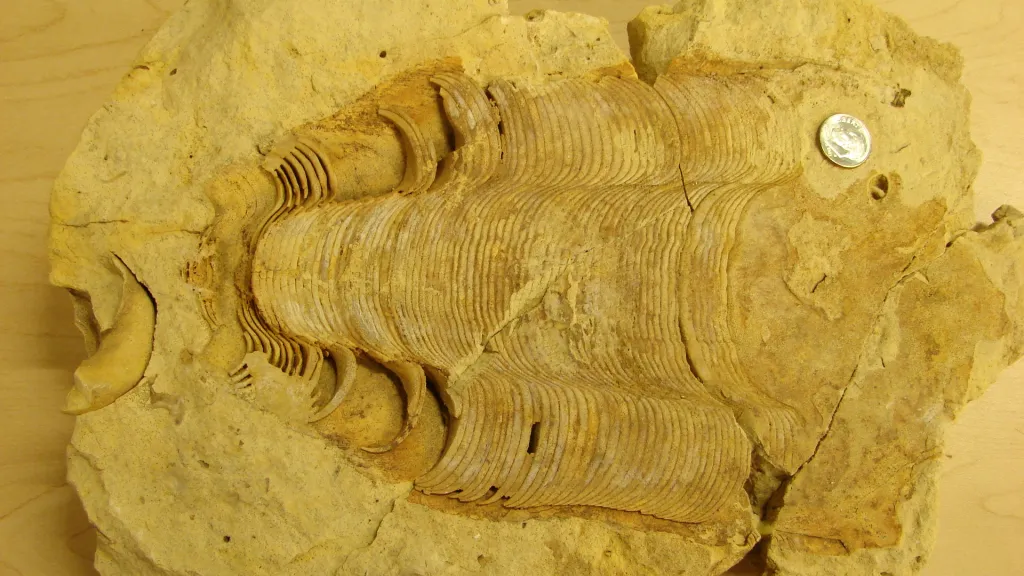
Video for ESCONI November 2025 Paleontology Study Group Meeting – “Gonioceras: A Most Unusual Cephalopod”
Read more: Video for ESCONI November 2025 Paleontology Study Group Meeting – “Gonioceras: A Most Unusual Cephalopod”The November 2025 Paleontology Study Group Meeting was held on November 15th, 2025 via Zoom. John Catalani presented “Gonioceras: A Most Unusual Cephalopod”. The diversity of nautiloid shell shapes in the Upper Ordovician of central Laurentia is remarkable. However, one shape is often missing from lists of shell shapes and that is the so-called “flat-fish” form of Gonioceras. This program begins with a discussion of the stratigraphy, paleogeography, and areal distribution of Ordovician rocks in the mid-west including the Mohawkian Sea that dominated the interior of Laurentia during the Late Ordovician. Following this introduction, the origin of cephalopods and the amazing…
-

Mazon Monday #298: The Freeze/Thaw Method
Read more: Mazon Monday #298: The Freeze/Thaw MethodThis is Mazon Monday post #298. What’s your favorite Mazon Creek fossil? Tell us at email:esconi.info@gmail.com. With winter arriving this weekend, it’s the perfect time to set out a few containers of Mazon Creek concretions and let nature do the work. Many collectors take advantage of the season’s freeze/thaw cycles to speed up the opening process, by placing buckets or smaller containers of nodules gathered throughout the year outside to weather naturally in the cold of winter. We’ve done a few posts about the freeze/thaw method. Mazon Monday #77 is “Care and Feeding of Your Mazon Creek Concretions”. The post covers…
-

This Fossil Is Rewriting the Story of How Plants Spread across the Planet
Read more: This Fossil Is Rewriting the Story of How Plants Spread across the PlanetScientific American Magazine has an interesting story about the spread of terrestrial plants during the Early Devonian Period. A paper in the journal Science Advances looked at the origin of lichens. Did they appear before or after the rise of vascular plants? Lichens, which are a composite organism resulting from a symbiotic relationship between a fungus and an alga or cyanobacterium, may have lead the way for terrestrial plants by helping prepare the ground so the plants could absorb vital soil nutrients. Around 410 million years ago, terrestrial life was relatively simple. There were no forests or prairies—land was largely dominated by…
-
PBS Eons: How We Figured Out an Asteroid Killed the Dinosaurs
Read more: PBS Eons: How We Figured Out an Asteroid Killed the DinosaursPBS Eons has a post about the extinction of the non-avian dinosaurs. The story of how we discovered it happened is a great example of how science works. 66 million years ago a giant space rock crashed into our planet and killed the dinosaurs. In the span of just four decades, we’ve gone from not knowing there was a space rock at all to knowing exactly where that planet-killer came from.
-

Fossil Friday #293: Mazon Creek Lepidodendron Cones from the River
Read more: Fossil Friday #293: Mazon Creek Lepidodendron Cones from the RiverThis is the “Fossil Friday” post #293. Expect this to be a regular feature of the website. We will post fossil pictures you send in to esconi.info@gmail.com. Please include a short description or story. Check the #FossilFriday Bluesky/Twitter hash tag for contributions from around the world! We have a couple rare and beautiful cones from the Mazon River for this week’s Fossil Friday. They are both of the genus Lepidostrobus (see Mazon Monday #202), which are reproductive organs from lepidodendron trees. The Lepidostrobus genus was erected in 1828 by Adolphe-Theodore Brongniart (1801 – 1876), who was a French paleontologist, considered by many…
-
Throwback Thursday #293: Field Museum – Charles Knight
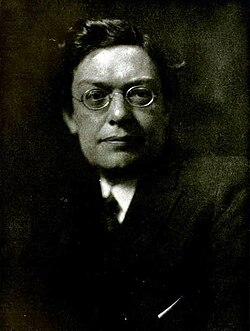
Read more: Throwback Thursday #293: Field Museum – Charles KnightThis is Throwback Thursday #293. In these, we look back into the past at ESCONI specifically and Earth Science in general. If you have any contributions, (science, pictures, stories, etc …), please send them to esconi.info@gmail.com. Thanks! email:esconi.info@gmail.com. The Field Museum has an interesting Photo Archive page about Charles Knight. Knight was an American wildlife and paleoartist during the early 1900s. He is probably best known for his many detailed paintings of dinosaurs and prehistoric life created for multiple major museums in the United States. His iconic painting of a battle between Tyrannosaurus rex and Triceratops horridus was created in 1927…
-

ESCONI Events for December 2025
Read more: ESCONI Events for December 2025Field trips require membership, but visitors are welcome at all meetings! Sat, Dec 6th Holiday Luncheon– 12:00 Noon at the Warren’s Ale House, 51 Town Square, Wheaton, IL Please RSVP to the following email: RSVPtoESCONI@outlook.com Fri, Dec 12th General Meeting – 8:00 PM – Zoom link Steve Miller, of the Western Interior Paleontological Society (WIPS), will be presenting on fossils of the Comanche National Grasslands located in southeastern Colorado. No meeting this month Junior Study Group No meeting this month Mineralogy Study Group No meeting this month Paleontology Study Group
-

National Geographic: New Natural History Museum Abu Dhabi features two fighting T. rexes
Read more: National Geographic: New Natural History Museum Abu Dhabi features two fighting T. rexesNational Geographic has a story about the new Natural History Museum Abu Dhabi, which opened on November 22nd, 2025. The videos for the story are stunning. It huge with not one, but four sauropods on display. They have two T-rexes, which are displayed fighting. The museum also documents the natural history of the region and hopes to inspire the next generation of scientists. The Natural History Museum Abu Dhabi (NHMAD) opens its doors to the public on November 22, joining the ranks of legendary institutions—New York’s American Museum of Natural History, Pittsburgh’s Carnegie Museum of Natural History, London’s Natural History Museum—dedicated to telling the…
-
Video for ESCONI November 2025 General Meeting – “Mammals of Illinois’ Ice Ages”
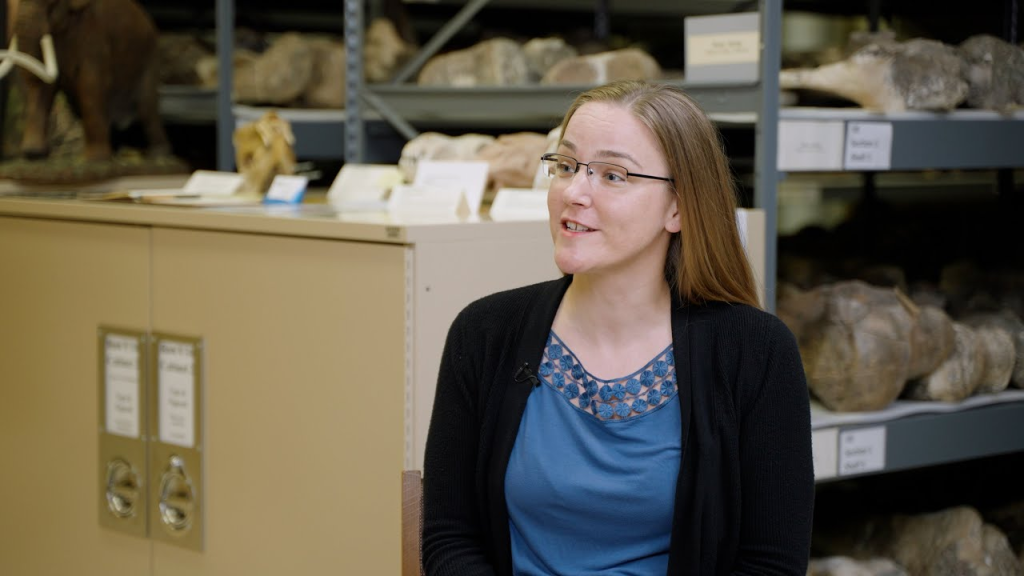
Read more: Video for ESCONI November 2025 General Meeting – “Mammals of Illinois’ Ice Ages”The November 2025 General Meeting was held on Friday, November 14th, 2025 via Zoom. Melissa Pardi, Curator of Geology at the Illinois State Museum, presented “Mammals of Illinois’ Ice Ages”. Did you know that Illinois used to have elephants? During the last ice age, North America was home to a wide variety of large, now extinct, mammals. Come hear about fossil finds in Illinois and what they can teach us about the giants that used to live in our backyards.
-
Mazon Monday #297: Pit 11 Coal Mining Artifact
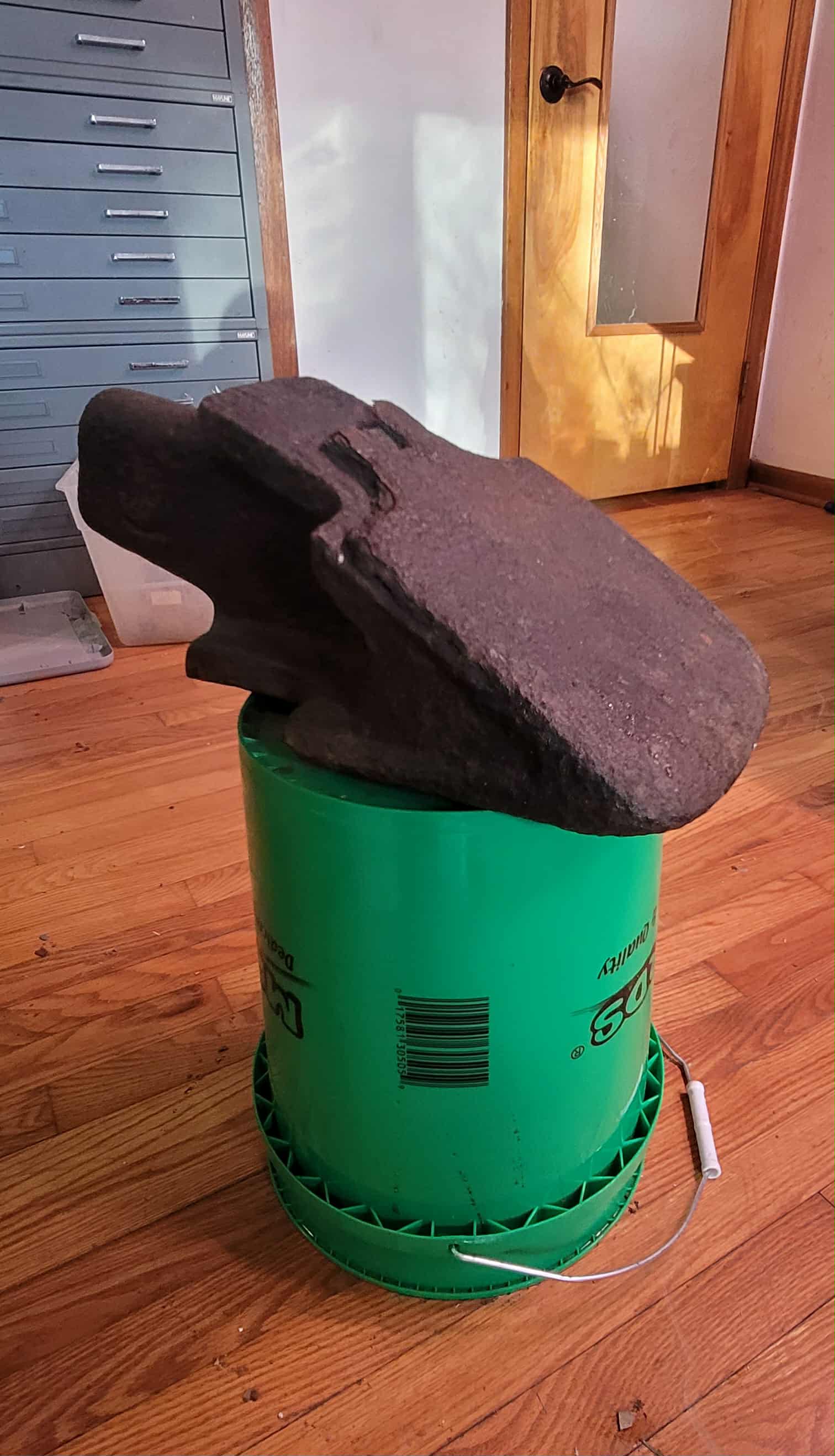
Read more: Mazon Monday #297: Pit 11 Coal Mining ArtifactThis is Mazon Monday post #297. What’s your favorite Mazon Creek fossil? Tell us at email:esconi.info@gmail.com. We often focus on the beautiful fossils found in the Mazon Creek deposit, but sometimes overlook the rich history that surrounds them. Coal mining played a central role in shaping the Wilmington, Braidwood, and Coal City area, from the deep shaft mines of the mid-1800s to the massive strip mining operations of the 20th century. Coal truly touched the lives of everyone in the region. Recently, ESCONI member Jake Fill, who’s always finding something interesting, shared some photos on Facebook of a coal mining artifact…
-

Reminder: ESCONI 2025 Holiday Luncheon
Read more: Reminder: ESCONI 2025 Holiday LuncheonESCONI’s Holiday LuncheonSaturday, December 6, 2025 – 12:00 noonWarren’s Ale House, 51 Town Square, Wheaton. (Just north of Danada Square East)Website for Warren’s Ale House with Map & Menu:https://warrensalehouse.com/contact-us/RSVP: RSVPtoESCONI@outlook.com

ESCONI Gem, Mineral, and Fossil Show
Most Recent Post
- ESCONI April 2026 General Meeting via Zoom – “Life in the Devonian Period, The Age of Fishes”
 The April 2026 General Meeting will be held on April 10th, 2026 at 8:00 via Zoom. At the meeting, Jessica Hull will present “Life in the Devonian Period, The Age of Fishes.” The Devonian Period was a crucial moment in the history of life. In this presentation, Jessica Hull will bring fossils to life by describing how they would have lived based on the most up to date research. Dunkleosteus fans won’t want to miss this!
- About ESCONI
- Around the Web
- Calendar of Events
- Code of Ethics and Conduct
- ESCONI Books for Sale
- ESCONI Gem, Mineral, and Fossil Show
- ESCONI in the News
- ESCONI Videos
- Field Trips
- Flashback Friday
- Fossil Friday
- Mazon Creek
- Mazon Monday
- Member Spotlight
- Membership Information
- Reference Material
- Throwback Thursday
- Trilobite Tuesday
Field trips require membership, but visitors are welcome at all meetings!
| Friday, April 10th | General Meeting – 8:00 PM via Zoom. Jessica Hull will present “Life in the Devonian Period, The Age of Fishes.” |
| Saturday, April 11th | Junior Study Group Meeting – 2:00 PM, in person at the College of DuPage Technical Education Center (TEC) Building – Room 1038A (Map). Katherine Howard will present on Sand and Sediment Collecting. Specifics of this meeting are available from Scott Galloway, 630-670-2591, gallowayscottf@gmail.com. |
| Saturday, April 18th | Paleontology Study Group – 7:30 PM via Zoom and in person at the College of DuPage, TEC, Room 1038B (Map). Keith Robitschek will present “Digging the Marl of the Lance Formation.” |
| Friday, April 24th | MAPS Expo XLVII – Springfield, IL. |
| Saturday, April 25th | MAPS Expo XLVII – Springfield, IL. |
| Sunday, April 26th | MAPS Expo XLVII – Springfield, IL. |
| No meeting this month | Mineralogy Study Group |