
-

Spinosaurus relative longer than a pickup truck stalked Thailand’s rivers 125 million years ago
Read more: Spinosaurus relative longer than a pickup truck stalked Thailand’s rivers 125 million years agoLiveScience has a story about a spinosaur that lived in Thailand 125 million years ago, during the early Cretaceous Period. The animal was about 25 feet long (7-8 meters) and likely ate the fish that swam in the rivers. The new dinosaur has yet to be named and was discovered in the Sam Ran locality of the Khok Kruat rock formation in northeastern Thailand. “This discovery from Thailand helps us better understand what spinosaurines looked like and how they evolved in Asia,” Adun Samathi, an assistant professor at the Walai Rukhavej Botanical Research Institute and Mahasarakham University in Thailand, told Live…
-

Ancient oceans were ruled by super predators unlike anything today
Read more: Ancient oceans were ruled by super predators unlike anything todayScienceDaily has a story about the top predators of the past. Researchers from McGill University looked at Colombia’s Paja Formation, which dates to the early Cretaceous Period, some 122 million years ago. That formation preserves the ancient marine ecosystem, which had a very complex food chain, more so than the modern oceans. The paper was published in the journal Zoological Journal of the Linnean Society. Trophic levels describe an organism’s position in a food chain based on how it gets energy and nutrients. Put simply, they explain who eats whom within an ecosystem. In today’s oceans, food chains typically reach only…
-

Mazon Monday #302: The Wreck of the 5560
Read more: Mazon Monday #302: The Wreck of the 5560This is Mazon Monday post #302. What’s your favorite Mazon Creek fossil? Tell us at email:esconi.info@gmail.com. The Marion Power Shovel Company was an American company that designed, manufactured, and built steam shovels, power shovels, blast hole drills, excavators, and dragline excavators. The company was headquartered in Marion, Ohio and operated from 1884 to 1997, when it was acquired by its competitor Bucyrus International, Inc. Marion-built shovels and other products were among the best known trade names in earth moving equipment during the twentieth century. Marion’s large and small steam shovels were used by building contractors, railroads, and the US Army Corps…
-

Giant sea monsters lived in rivers at the end of the dinosaur age
Read more: Giant sea monsters lived in rivers at the end of the dinosaur ageScienceDaily has a story about mosasaurs. It seems that giant mosasaurs didn’t just live in the oceans… they also prowled rivers. A large tooth found in a North Dakota deposit along with a Tyrannosaurus rex tooth and a jawbone from a crocodylian revealed an isotope signature consistent with a live in fresh water. See the paper “King of the Riverside” in the journal BMC Zoology. The tooth was uncovered in 2022 from a river deposit in North Dakota. It was found alongside a tooth from a Tyrannosaurus rex and a jawbone from a crocodylian, in a region already known for…
-
An Engine of Fossil Discovery Fights Its Own Extinction
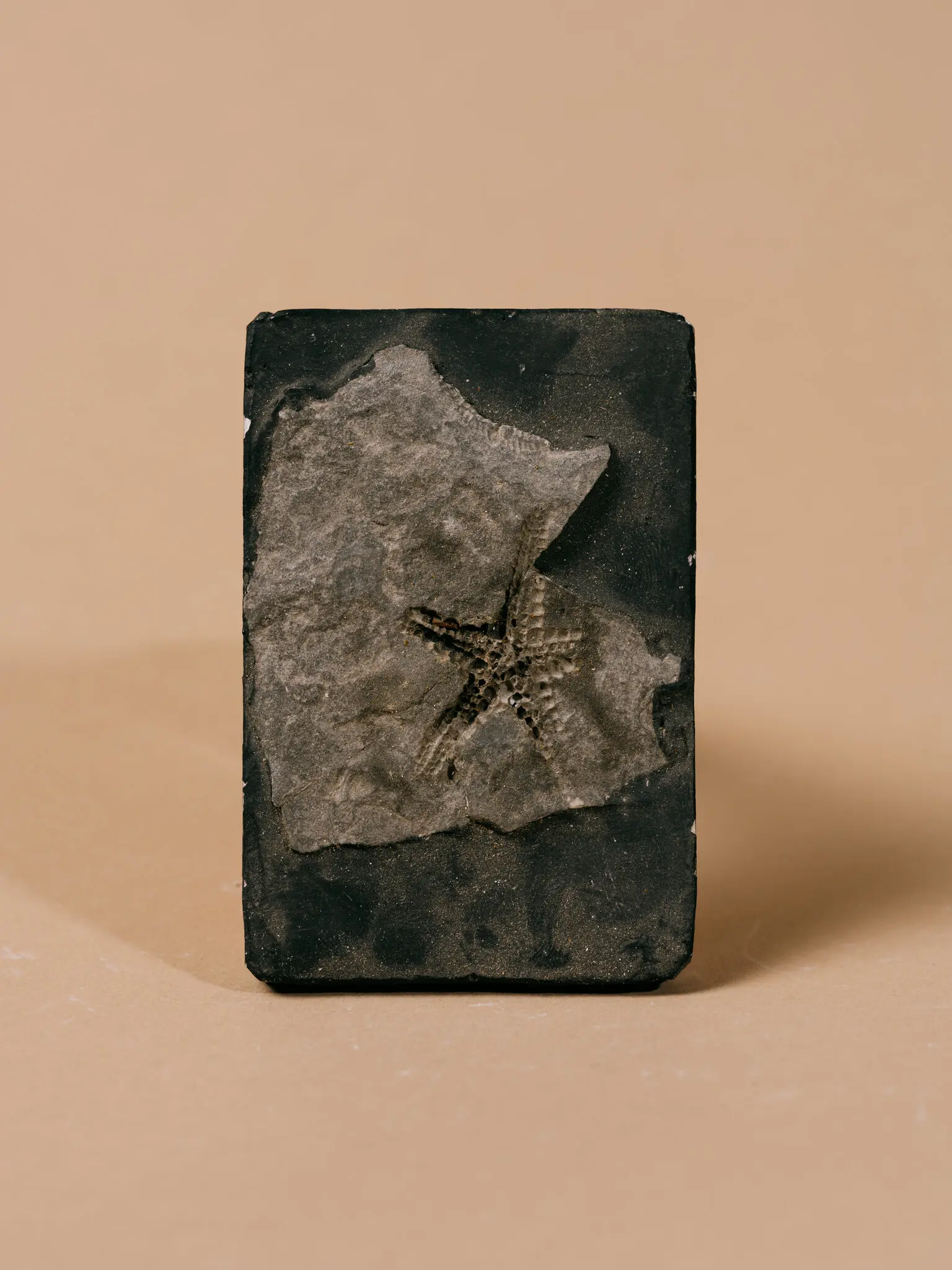
Read more: An Engine of Fossil Discovery Fights Its Own ExtinctionThe New York Times has a story about the financial troubles at the Museum of the Earth and the Paleontological Research Institution in Ithaca, N.Y. The institution was establish almost 100 years ago and has amassed one of the largest collections of fossils in North America. “No one has ever experienced trying to rehouse a collection like this,” said Warren Allmon, the director of the institution and a professor of paleontology at Cornell University. “If we had to close, there would be no one institution that could take all the collection.” For decades, the museum has relied on a single,…
-
Fossil Friday #297: Alethopteris serlii
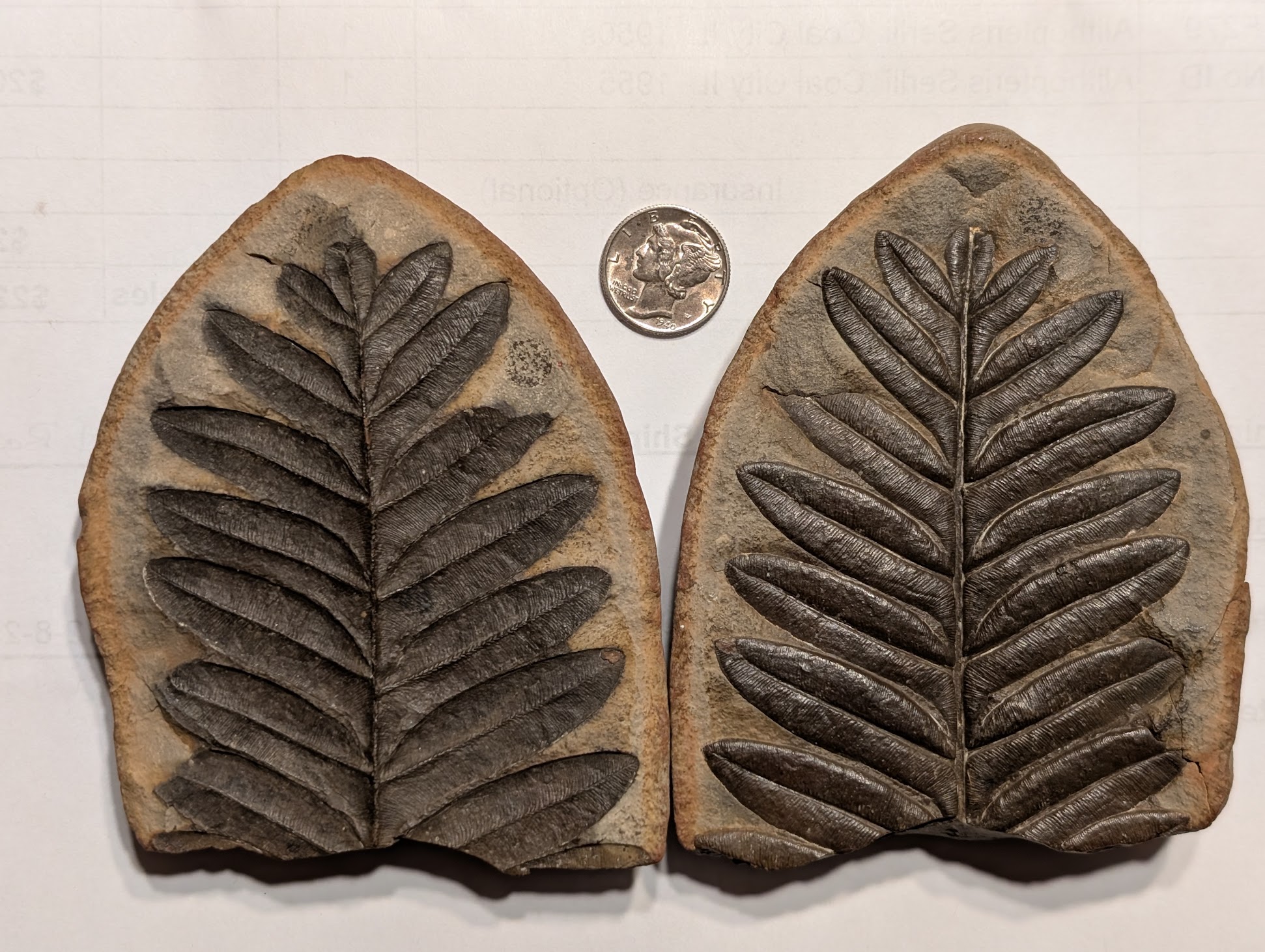
Read more: Fossil Friday #297: Alethopteris serliiThis is the “Fossil Friday” post #297. Expect this to be a regular feature of the website. We will post fossil pictures you send in to esconi.info@gmail.com. Please include a short description or story. Check the #FossilFriday Bluesky/Twitter hash tag for contributions from around the world! This week’s Fossil Friday is a favorite of many Mazon Creek collectors. Alethopteris serlii was a seed fern that existed during the Carboniferous Period. It is commonly found in the Mazon Creek terrestrial deposits. It was described by Alexandre Brongniart (1770-1847) in 1836. Brongniart was a French chemist, mineralogist, geologist, paleontologist, and zoologist. He had…
-
Throwback Thursday #297: Season’s Greetings from the Langfords!
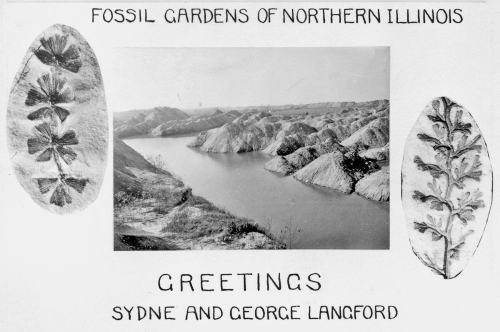
Read more: Throwback Thursday #297: Season’s Greetings from the Langfords!In 1939, their Christmas card included a photo of the “Fossil Gardens of Northern Illinois”. The picture is a view of the strip mines about 1 mile south of Wilmington, IL, at a place that was not far from where Cinder Ridge Golf Course is today.
-
2026 ESCONI Gem, Mineral, and Fossil Show – Preview #1: Tully Monsters
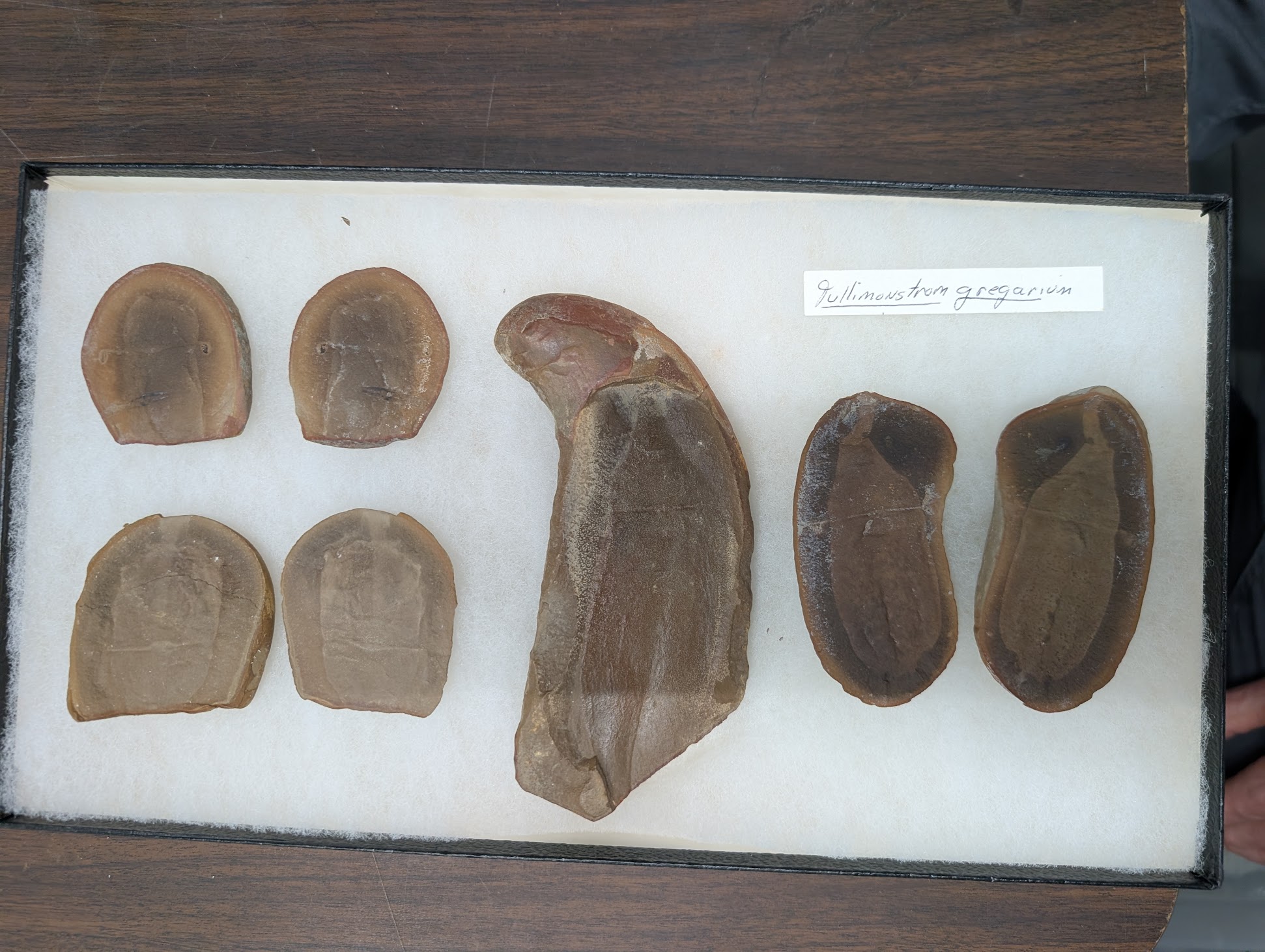
Read more: 2026 ESCONI Gem, Mineral, and Fossil Show – Preview #1: Tully MonstersThis is the preview post #1 for the 2026 ESCONI Gem, Mineral, and Fossil Show Live Auction. The ESCONI Gem, Mineral, and Fossil Show for 2026 will be held on March 21th and 22nd at the DuPage Fairgrounds in Wheaton, IL, which is the same location as last year. All details can be found here. Ok, how about an early Christmas present? This is grouping of Tullymonsters (what do you call a herd of Tullymonsters???) in a Riker mount. This mounting displays four specimens, three with part and counterpart. The single is a large detailed fossil. The auction for this…
-

50 Insane Geography Facts About Illinois (You Won’t Believe)
Read more: 50 Insane Geography Facts About Illinois (You Won’t Believe)Here’s a way to educate yourself about Illinois geography. This video is from the Across the Globe channel on Youtube. Illinois isn’t just cornfields, Chicago traffic, and deep-dish pizza, it’s one of the strangest states in America, and it’s hiding some of the wildest secrets in the entire Midwest. In this video, we reveal 50 unbelievable facts about Illinois that will completely change how you see the Prairie State. From ancient oceans buried under its cornfields to sand so pure it powers modern technology, this is the real Illinois you’ve never heard about before.
-

Mazon Monday #301: Cordaianthus ovatus
Read more: Mazon Monday #301: Cordaianthus ovatusThis is Mazon Monday post #301. What’s your favorite Mazon Creek fossil? Tell us at email:esconi.info@gmail.com. Cordaianthus ovatus is thought to be the fertile structure for Cordaites borassifolius (see Mazon Monday #299), an extinct genus of early gymnosperms. Cordaites probably grew to more than 100 feet tall in swampy conditions, forming forests similar to modern day mangroves. Cordaianthus ovatus was originally named Schutzia bracteata by Leo Lesquereux in 1870. He later renamed it to Cordaianthus ovatus in 1880. Lesquereux, a Swiss-born bryologist, is widely considered one of the fathers of American paleobotany. One of his best known works is the book “Atlas to…
-

“Bones Almost on Top of Each Other” – Extraordinary Dinosaur Fossil Site Discovered in the Hațeg Basin
Read more: “Bones Almost on Top of Each Other” – Extraordinary Dinosaur Fossil Site Discovered in the Hațeg BasinSciTechDaily has a story about an extraordinary dinosaur fossils site in Transylvania. The Hateg Basin is famous for its dinosaur fossils. The site dates to the late Cretaceous Period, some 72 million years ago. So far, thousands of fossils have been found, including bones of amphibians, turtles, crocodiles, dinosaurs, pterosaurs, and mammals. A recent paper in the journal PLOS ONE documents the site. “Detailed study of the rocks at the K2 site indicates that a small lake once existed here, which was periodically fed by flash floods carrying animal carcasses. As the flow of the rivers slowed rapidly upon entering the…
-

PBS Eons: When a Tiny Land Bridge Triggered an Ice Age
Read more: PBS Eons: When a Tiny Land Bridge Triggered an Ice AgeThere’s a new episode of PBS Eons. This one is about the origin of Panama and how it changed the world. On land, the Isthmus of Panama kicked off possibly the greatest natural experiment in the history of life on Earth. In the water, this narrow strip of land did something completely different: it divided. And that division would have a much bigger effect on the planet than the land connection ever did.
-

Fossil Friday #296: Roachoid Wing from the Creek
Read more: Fossil Friday #296: Roachoid Wing from the CreekThis is the “Fossil Friday” post #296. Expect this to be a regular feature of the website. We will post fossil pictures you send in to esconi.info@gmail.com. Please include a short description or story. Check the #FossilFriday Bluesky/Twitter hash tag for contributions from around the world! This beautiful roachoid wing was collected from the Mazon River by Chris Berg… the esteemed president of ESCONI. We call them roachoids, because true roaches don’t show up in the fossil record until the late Jurassic. Roachoids have been found in Pit 11 and most of the Amazon Creek terrestrial deposits. Roachoids are the…
-

ESCONI Events for January 2026
Read more: ESCONI Events for January 2026Field trips require membership, but visitors are welcome at all meetings! Saturday, Jan 3rd Mineralogy Study Group – 7:30 PM via Zoom “Critical Minerals: What are they and Opportunities in Illinois” presented by Dr. Jared Freiburg of the Illinois State Geological Survey. Friday, Jan 9th General Meeting – 8:00 PM via Zoom Jean-Pierre Cavigelli, Tate Geological Museum, Casper College, will present “Fossil Birds of Wyoming” Saturday, Jan 10th Junior Study Group – 6:30 PM, Topic TBA Specifics of this meeting are available from Scott Galloway, 630-670-2591, gallowayscottf@gmail.com. The meeting will be in person at the College of DuPage Technical Education Center (TEC)…
-

Throwback Thursday #296: More Don Auler Mineral Slab Paintings
Read more: Throwback Thursday #296: More Don Auler Mineral Slab PaintingsDon was a very good artist. He did the artwork for the “Creature Corner” and ESCONI “Keys” books. He also was known for doing little painting on various mineral slabs. His paintings were integrated will the mineral colors and grain.
-

Archaeologists Find Oldest Evidence of Fire-Making
Read more: Archaeologists Find Oldest Evidence of Fire-MakingIn his New York Times column, Carl Zimmer discusses evidence for the oldest usage of fire-making. A paper published in the journal Nature, reports that a group of Neanderthals used flint and pyrite to make fires about 400,000 years ago in what is now eastern England. This was something they did repeatedly over the course of generations. Previously, the oldest accepted date for fire-making was around 50,000. “A lot of people had a hunch that they were making fire at this date,” said Nick Ashton, an archaeologist at the British Museum and an author of the study. “But now we…
-

Possible ancient artifacts are found in a B.C. thrift shop — and archeology scholars are on the case
Read more: Possible ancient artifacts are found in a B.C. thrift shop — and archeology scholars are on the caseThe Conversation has a story about a chance discovery in a thrift shop. The owner of Thrifty Boutique in Chilliwack, B.C. reached out to the archaeologists at Simon Fraser University in the spring of 2024. The owner wanted to know if some ancient artifacts had historical significance. Turns out the objects in question date to late antiquity or the medieval period. An unusual email arrived in the inbox of a faculty member at the department of archeology at Simon Fraser University in the spring of 2024. This email was from a thrift shop, Thrifty Boutique in Chilliwack, B.C. — unlike the many…
-
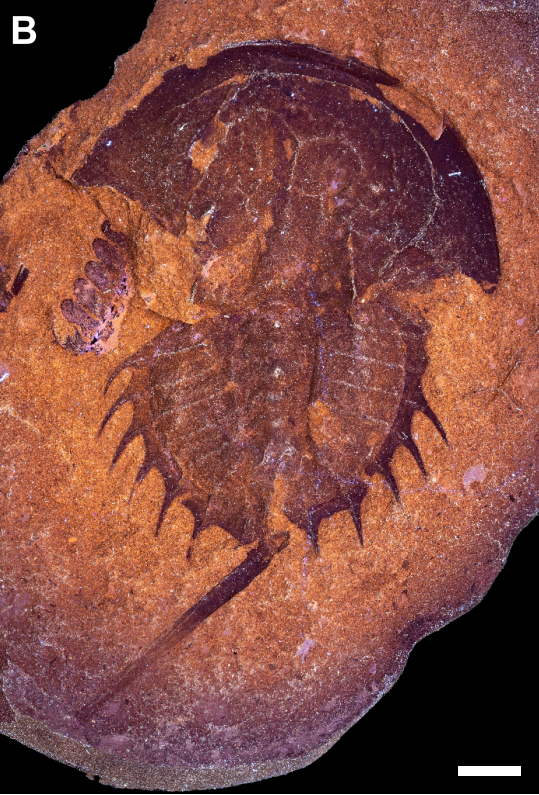
Mazon Monday #300: Mazon Creek horseshoe crab fossil shows evidence of ancient algal or parasitic infestation
Read more: Mazon Monday #300: Mazon Creek horseshoe crab fossil shows evidence of ancient algal or parasitic infestationThis is Mazon Monday post #300. What’s your favorite Mazon Creek fossil? Tell us at email:esconi.info@gmail.com. The Lauer Foundation just won’t let the Mazon Creek horseshoe crabs alone… first it was Euproops danae remains in bromalites (see Mazon Monday #283), now they’ve found evidence of ancient algal or parasitic infestation in another Euproops danae fossil from the Mazon Creek biota. The paper “Unique, dimple-like exoskeletal structures suggest syn-vivo infestations in Late Carboniferous horseshoe crabs” was published in the journal Biology Letters. The authors are familiar to anyone interested in Mazon Creek science – Russell Bicknell, Jason Dunlop, Andrew Young, Bruce Lauer, Rene’…
-

Video for ESCONI December 2025 General Meeting – “Fossils of the Comanche National Grasslands located in southeastern Colorado”
Read more: Video for ESCONI December 2025 General Meeting – “Fossils of the Comanche National Grasslands located in southeastern Colorado”The ESCONI December 2025 General Meeting was held on December 12th, 2025 at 8:00 PM via Zoom. The presenter was Steve Miller of the Western Interior Paleontological Society (WIPS). His topic is “Fossils of the Comanche National Grasslands located in southeastern Colorado”. Fossils of the Comanche National Grasslands located in southeastern Colorado The area offers access to the rocks and fossils of the first major cycle of marine deposition of the Cretaceous Western Interior Seaway. WIPS has explored the canyons, prairies, arroyos, cut banks, and deformed features which expose rocks from the Dakota Sandstone through the Smoky Hill Chalk. Learn…
-
ESCONI Board Members for 2026
Read more: ESCONI Board Members for 2026President: Chris Berg 1st. Vice President: Katherine Howard 2nd. Vice President: Keith Robitschek Recording Secretary: Valerie Anderson Treasurer: Andrew Jansen Publicity: Jeff Allen Librarian: Andrew Jansen Curator: Chris Cozart Historian: Richard Holm Field Trip Chairman: Jeremy Zimmerman Assistant Field Trip Chairman: Connor Puritz Editor: Melanie Berg Circulation: Rose Jansen Past President: Phil Anderson Membership: Rose Jansen Show Chairman: Phil Anderson MWF Liaison Representative: Dave Carlson Web Administrator: Richard Holm Study Groups and Activities: (Non-Board Positions) Archaeology Study Group Chair: Open Junior Study Group Chair: Scott Galloway Lapidary Study Group Chair: Open Mineralogy Study Group Chair: Dave Carlson Paleontology Study Group Chair: John Catalani Delegates To CGMA: Eric…

ESCONI Gem, Mineral, and Fossil Show
Most Recent Post
- Throwback Thursday #312: Ron Schinderle Donation
 Barb Schinderle stopped by ESCONI Show last month to drop off a donation of her late husband Ron’s fossils. Ron passed away in 2021. He was a long time ESCONI member and an avid fossil collector . He went on many ESCONI field trips. A group of us remember him fondly from our many trips to Pit 11 and Fossil Rock Campgrounds to collect Mazon Creek fossils.
- About ESCONI
- Around the Web
- Calendar of Events
- Code of Ethics and Conduct
- ESCONI Books for Sale
- ESCONI Gem, Mineral, and Fossil Show
- ESCONI in the News
- ESCONI Videos
- Field Trips
- Flashback Friday
- Fossil Friday
- Mazon Creek
- Mazon Monday
- Member Spotlight
- Membership Information
- Reference Material
- Throwback Thursday
- Trilobite Tuesday
Field trips require membership, but visitors are welcome at all meetings!
| Friday, April 10th | General Meeting – 8:00 PM via Zoom. Jessica Hull will present “Life in the Devonian Period, The Age of Fishes.” |
| Saturday, April 11th | Junior Study Group Meeting – 2:00 PM, in person at the College of DuPage Technical Education Center (TEC) Building – Room 1038A (Map). Katherine Howard will present on Sand and Sediment Collecting. Specifics of this meeting are available from Scott Galloway, 630-670-2591, gallowayscottf@gmail.com. |
| Saturday, April 18th | Paleontology Study Group – 7:30 PM via Zoom and in person at the College of DuPage, TEC, Room 1038B (Map). Keith Robitschek will present “Digging the Marl of the Lance Formation.” |
| Friday, April 24th | MAPS Expo XLVII – Springfield, IL. |
| Saturday, April 25th | MAPS Expo XLVII – Springfield, IL. |
| Sunday, April 26th | MAPS Expo XLVII – Springfield, IL. |
| No meeting this month | Mineralogy Study Group |