
-
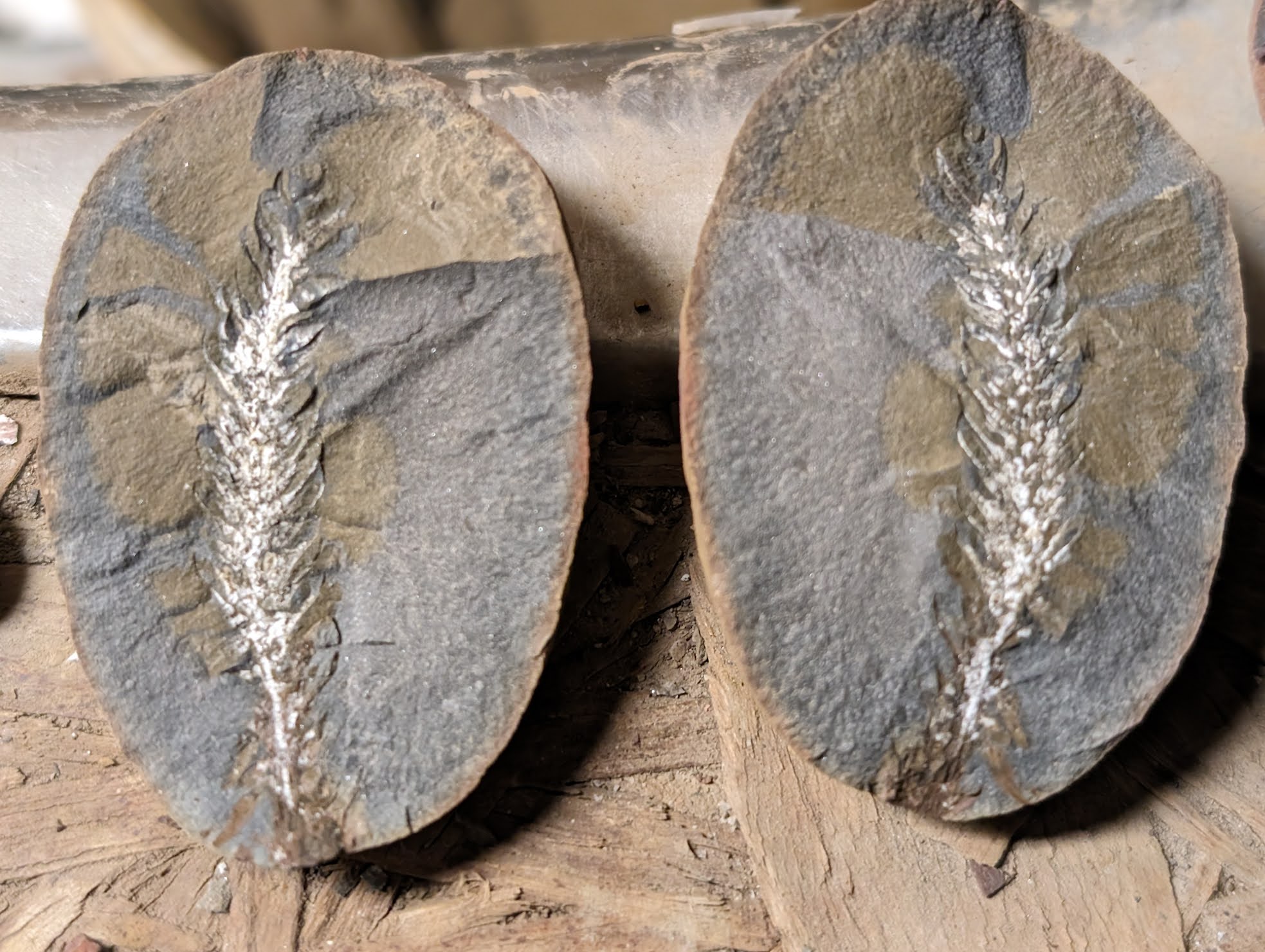
Fossil Friday #196: Calamostachys from Mazon Creek
Read more: Fossil Friday #196: Calamostachys from Mazon CreekThis is the “Fossil Friday” post #196. Expect this to be a somewhat regular feature of the website. We will post any fossil pictures you send in to esconi.info@gmail.com. Please include a short description or story. Check the #FossilFriday Twitter hash tag for contributions from around the world! Today, we have another Mazon Creek plant fossil. Calamostachys is the cone portion of Calamites. This Langford diagram which details the parts of Calamites. The round seed like part of these cones are actually sporagia, which Calamites used to reproduce. Calamites is a horsetail. Its closest living relative is Equisetum, which is an extant species…
-
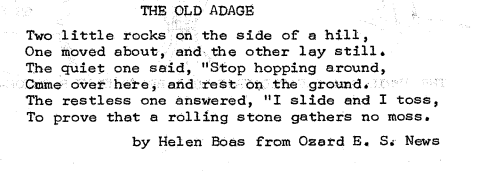
Throwback Thursday #197: The Old Adage
Read more: Throwback Thursday #197: The Old AdageThis is Throwback Thursday #197. In these, we look back into the past at ESCONI specifically and Earth Science in general. If you have any contributions, (science, pictures, stories, etc …), please send them to esconi.info@gmail.com. Thanks! This weeks Throwback comes from March 1971. It’s a little poem called “The Old Adage. It comes from the “Ozard E. S. News”. That is probably a misspelling of “Ozark Earth Science News”, which is the newsletter for the Ozark Earth Science Club in Mountain Home, AR. A club that appears to be alive and well. They held a Rock, Gem, and Mineral…
-
ESCONI January 2024 Paleontology Study Group Meeting – Saturday, January 20th, 2024 at 7:30 PM via Zoom – “Publishing a New Fossil Find: Our Journey in Cyclocystoids (Echinodermata)”
Read more: ESCONI January 2024 Paleontology Study Group Meeting – Saturday, January 20th, 2024 at 7:30 PM via Zoom – “Publishing a New Fossil Find: Our Journey in Cyclocystoids (Echinodermata)”The January 2024 Paleontology Study Group Meeting will be held on January 20th, 2024 at 7:30 PM via Zoom. The presenters are ESCONI member Asa Kaplan and Terry Frank of Missouri Fossil Hunter. They will be speaking about their experiences publishing a new fossil find. The new find was a cyclocystoid (Echinodermata). Cyclocystoid are odd looking and poorly understood echinoderms. They are known from the Ordovian through Devonian periods. Topic: “Publishing a New Fossil Find: Our Journey in Cyclocystoids (Echinodermata)” by ESCONI member Asa Kaplan and Terry Frank of Missouri Fossil Hunter Time: Jan 20, 2024 07:30 PM Central Time…
-
ESCONI 2024 Gem, Mineral, and Fossil Show! March 16th and 17th, 2024
Read more: ESCONI 2024 Gem, Mineral, and Fossil Show! March 16th and 17th, 2024Earth Science Club of Northern Illinois ESCONI 2024 Gem, Mineral and Fossil Show March 16th and 17th, 2024 Dealers, Demonstrators, Displays, Live and Silent Auctions,Book Sales, Kid’s Korner, Geode Splitting Free Parking! Free Admission! DuPage County Fairgrounds2015 Manchester Rd.Wheaton, IllinoisSaturday 10 AM to 5 PMSunday 10 AM to 4 PMwww.esconi.org Download Show Poster 2024 Dealer List Exclusive InspirationsFossil HutGrabYourRocksLavin’s GemsRock StarsRock’s RocksMineral MinerRockhound Mike MineralsSouthwest TreasuresMichael’s Mineral Exchange
-
41st Mid-Continent Paleobotanical Colloquium 2024 (MPC) at the Field Museum April 12-14, 2024
Read more: 41st Mid-Continent Paleobotanical Colloquium 2024 (MPC) at the Field Museum April 12-14, 2024The Field Museum in Chicago is hosting the 41st Mid-Continent Paleobotanical Colloquium 2024 (MPC) from April 12th to 14th. Details can be found on Fabiany Herrera’s PaleoLab website. 41st Mid-Continent Paleobotanical Colloquium 2024 (MPC) & Sir Peter Crane’s 70th Birthday Symposium April 12-14, 2024 – Field Museum Chicago, IL Important Deadlines Registration: February 28th, 2024, 11:59 PST (USA). Abstract Submission: March 30th, 2024, 11:59 PST (USA). Student Travel Grant application: February 28th, 2024, 11:59 PST (USA). The program includes presentations on Friday and Saturday, a celebration of Sir Peter Crane’s 70th birthday on Friday night, and a Mazon Creek field…
-

Mazon Monday #199: The Enigmatic Tully Monster (or the Lesser Orm of Mazon Creek)
Read more: Mazon Monday #199: The Enigmatic Tully Monster (or the Lesser Orm of Mazon Creek)This is Mazon Monday post #199. What’s your favorite Mazon Creek fossil? Tell us at email:esconi.info@gmail.com. Today, we a have strange, enigmatic tale of the Tully Monster. It’s a tale of wonder…. of wonder why it was written and can this be real? In 1969, the book “The Great Orm of Loch Ness: A Practical Inquiry into the Nature and Habits of Water-monsters” by F.W. Holiday was published by W. W. Norton and Co. It’s about the Loch Ness monster and the…. Tully Monster. Having read the description of Tullymonstum gregarium and noting there wasn’t a classification for the “beastie”,…
-

New Species of Giant Tyrannosaur Discovered in New Mexico
Read more: New Species of Giant Tyrannosaur Discovered in New MexicoSciNews has news of a new species of Tyrannosaur. This one is called Tyrannosaurs mcraeensis. It was described from fossils found in the Hall Lake Formation of New Mexico. This is most likely a sister species of Tyrannosaurus rex. which existed about 3 to 5 million years before T. rex. The paper “A giant tyrannosaur from the Campanian–Maastrichtian of southern North America and the evolution of tyrannosaurid gigantism” was published in the journal Scientific Reports. The newly-identified species, Tyrannosaurus mcraeen, lived in what is now the United States between 71 and 73 million years ago, or between 5 and 7 million…
-

ESCONI January 2024 Junior Meeting – CANCELED
Read more: ESCONI January 2024 Junior Meeting – CANCELEDDUE TO WEATHER CONDITIONS, COLLEGE OF DUPAGE IS CLOSED TODAY; THEREFORE, THE JUNIORS MEETING FOR TONIGHT, JANUARY 13, IS CANCELLED. THE NEXT MEETING WILL BE FEBRUARY 10, 2024. THANK YOU FOR YOUR UNDERSTANDING. WE APOLOGIZE FOR ANY INCONVENIENCE THIS MAY CAUSE.
-
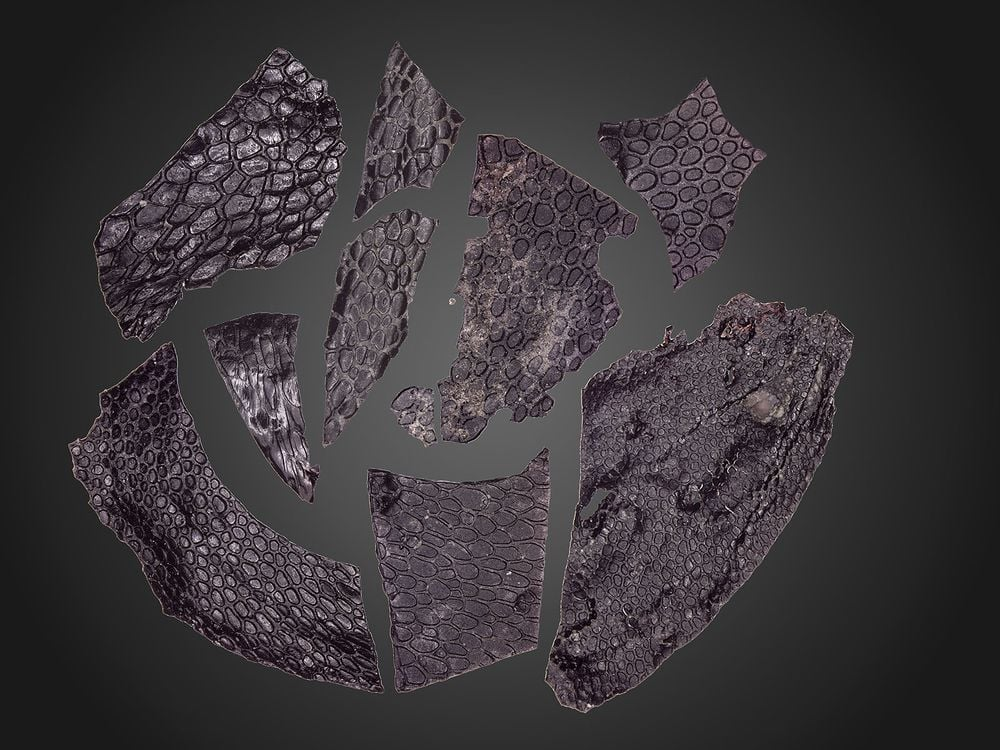
This 288-Million-Year-Old Fossilized Scrap of Skin Is the World’s Oldest
Read more: This 288-Million-Year-Old Fossilized Scrap of Skin Is the World’s OldestSmithsonian Magazine has an article about the discovery of the old fossilized skin. The specimen belonged to a lizard-like reptile that lived about 288 million years ago during the Permian Period. It was found in a cave near Richards Spur, Oklahoma. This specimen represents the oldest known preserved skin. The previous record was about 130 million years younger. More detail can be found in the paper published in the journal Current Biology. Paleontologists have been going back to Richards Spur for years. “It’s an exceptional locality,” says study author and University of Toronto paleontologist Ethan Mooney. Hundreds of millions of…
-
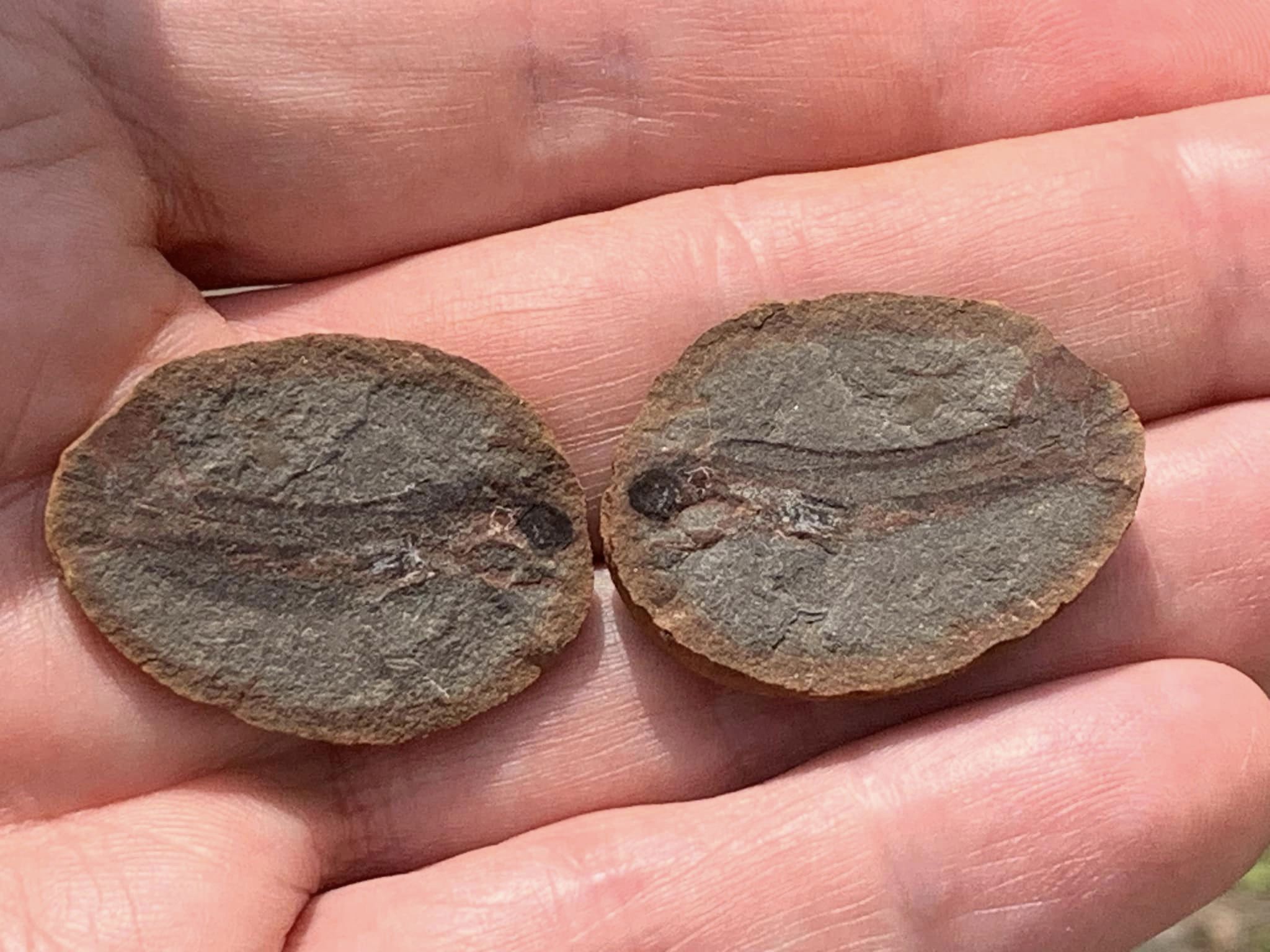
Fossil Friday #195: Acanthodes beecheri
Read more: Fossil Friday #195: Acanthodes beecheriThis is the “Fossil Friday” post #195. Expect this to be a somewhat regular feature of the website. We will post any fossil pictures you send in to esconi.info@gmail.com. Please include a short description or story. Check the #FossilFriday Twitter hash tag for contributions from around the world! For this week’s Fossil Friday, we have a sweet little Acanthodes beecheri the Pit 11 locality of Mazon Creek. Acanthodes is an extinct genus of spiny shark. Fossils have been found in Europe, North America, and Australia. Their geologic range is from the Middle Devonian until the Lower Permian. This is the second A.…
-
Throwback Thursday #196: Field Museum Photos – Columbian Museum of Chicago
Read more: Throwback Thursday #196: Field Museum Photos – Columbian Museum of ChicagoThis is Throwback Thursday #196. In these, we look back into the past at ESCONI specifically and Earth Science in general. If you have any contributions, (science, pictures, stories, etc …), please send them to esconi.info@gmail.com. Thanks! Today, we look back at the Columbian Museum of Chicago, which is now called the Field Museum. It opened it’s doors in June 2nd, 1894. That was one year after the Columbian Exposition. The Columbian Exposition ran from May 1st, 1893 to October 30th, 1893. It had 27,300,000 visitors. Considering that at the time, the population of the US was about 66 million,…
-

PBS Eons: How Ancient Microbes Rode Bug Bits Out to Sea
Read more: PBS Eons: How Ancient Microbes Rode Bug Bits Out to SeaPBS Eons has a new episode. This one is about the evolution of microbes and how it might be connected to the evolution of the chiton exoskeletons of arthropods. Tiny exoskeleton fragments may have allowed some of the most important microbes in the planet’s history to set sail out into the open ocean and change the world forever.
-
ESCONI January 2024 General Meeting – Friday, January 12th, 2024 at 8:00 PM via Zoom – “The Age of Fishes”
Read more: ESCONI January 2024 General Meeting – Friday, January 12th, 2024 at 8:00 PM via Zoom – “The Age of Fishes”The January 2024 General Meeting will be held on Friday, January 12th, 2024 at 8:00 PM. It will be presented by Matt Friedman, Professor/Director Museum of Paleontology, University of Michigan, Department of Earth and Environmental Sciences. Topic: ESCONI General Meeting 8:00 PM – Topic: “The Ages of Fishes” Time: Jan 12, 2024 08:00 PM Central Time (US and Canada) Join Zoom Meeting https://us02web.zoom.us/j/84229996616?pwd=K1J0bFdwN3dMUnFnYmNsaE5FMmNEQT09″ Meeting ID: 842 2999 6616 Passcode: 610411 One tap mobile +13092053325,,84229996616#,,,,*610411# US +13126266799,,84229996616#,,,,*610411# US (Chicago) Dial by your location Meeting ID: 842 2999 6616 Passcode: 610411 Find your local number: https://us02web.zoom.us/u/kZbuybluV
-
Mazon Monday #198: Priapulites konecniorum
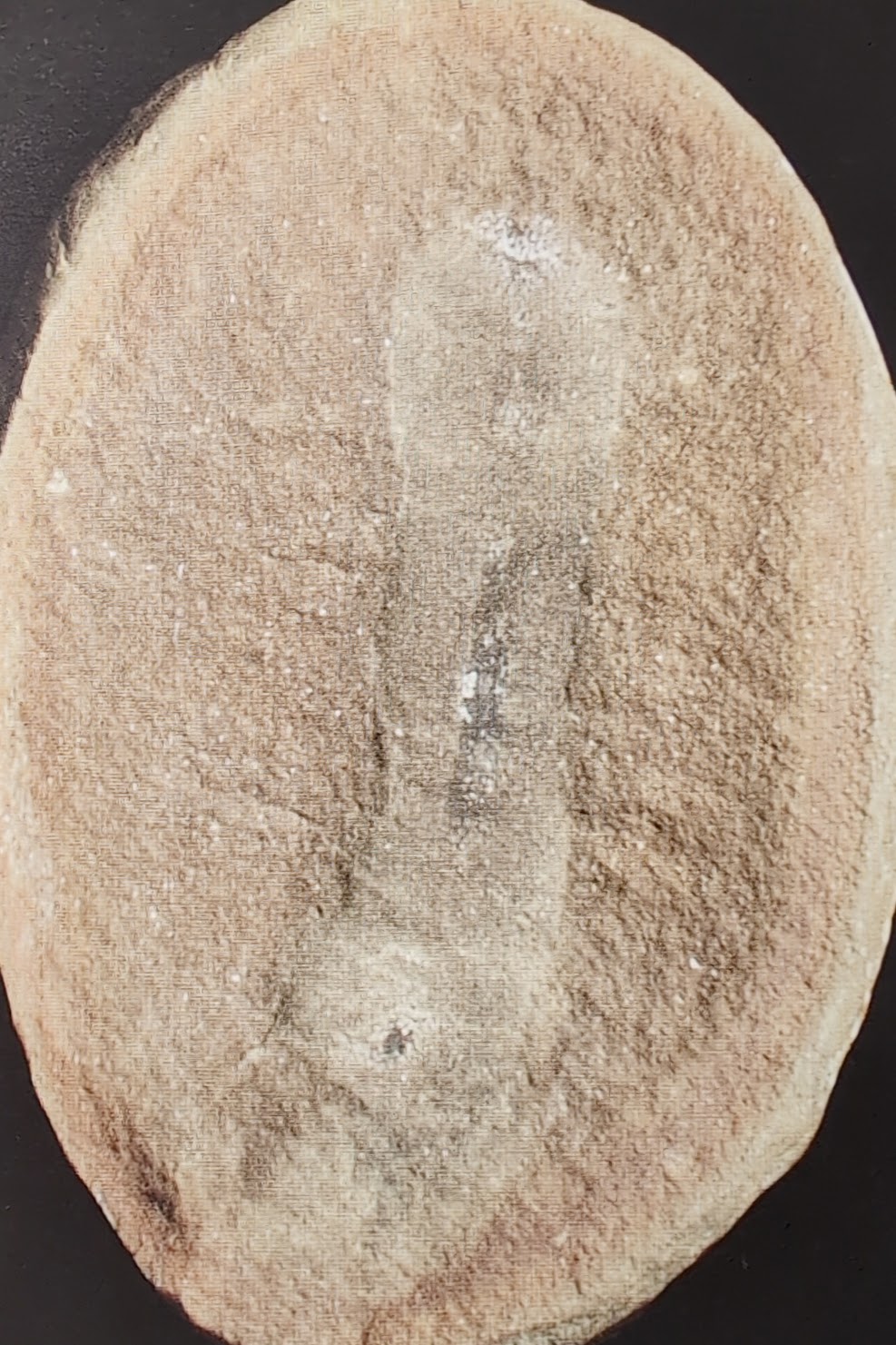
Read more: Mazon Monday #198: Priapulites konecniorumThis is Mazon Monday post #198. What’s your favorite Mazon Creek fossil? Tell us at email:esconi.info@gmail.com. Priapulites konecniorum is an extinct species of priapulid worm. Priapulida is a phylum of unsegmented marine worms. The name relates to the Greek god of fertility. Due to their shape and their extensible proboscis, they are sometimes referred to as “penis worms”. P. konecniorum is a rare fossil find; specimens are mostly known from Pit 11. P. konecniorum was described in 1973 by Frederick Schram in “Pseudocoelomates and a nemertine from the Illinois Pennsylvanian“, which was published in the Journal of Paleontology. Abstract Four species…
-
The “Dolomite Problem” – Scientists Resolve 200-Year-Old Geology Mystery
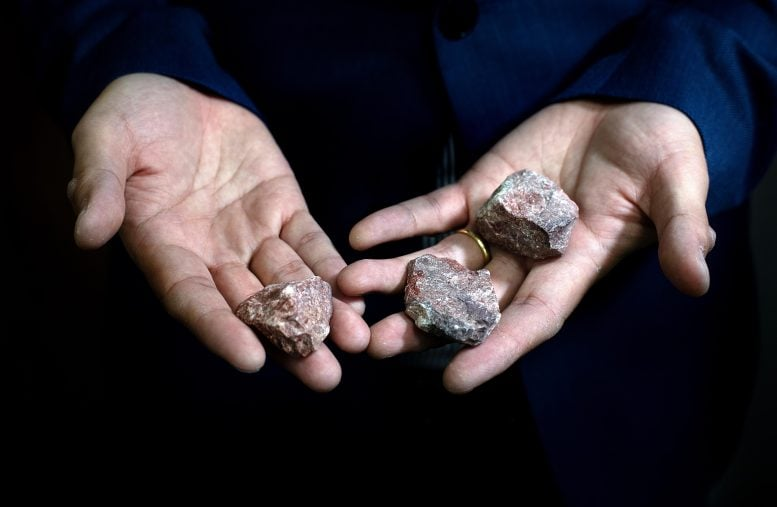
Read more: The “Dolomite Problem” – Scientists Resolve 200-Year-Old Geology MysterySciTechDaily has a story about dolomite. Researchers at the University of Michigan have published new research that solves the “Dolomite Problem”. The paper “Dissolution enables dolomite crystal growth near ambient conditions” appeared in the journal Science. Until now, scientists have been unsuccessful creating dolomite in the laboratory. Understanding this process should allow for the creation of new high tech materials. For two centuries, scientists have failed to grow a common mineral in the laboratory under the conditions believed to have formed it naturally. Now, a team of researchers from the University of Michigan and Hokkaido University in Sapporo, Japan have finally pulled it off,…
-

New research shows ‘juvenile’ T. rex fossils are a distinct species of small tyrannosaur
Read more: New research shows ‘juvenile’ T. rex fossils are a distinct species of small tyrannosaurPhys.org has an article about Nanotyrannus lancensis. A paper in the journal Fossil Studies proposes that N. lancensis is a distinct species of tyrannosaur and not a juvenile T. rex. The first skull of Nanotyrannus was found in Montana in 1942, but for decades, paleontologists have gone back and forth on whether it was a separate species, or simply a juvenile of the much larger T. rex. Dr. Nick Longrich, from the Milner Centre for Evolution at the University of Bath, and Dr. Evan Saitta, from the University of Chicago, have re-analyzed the fossils, looking at growth rings, the anatomy of…
-

Fossil Friday #194: Asterophyllites equisetiformis from Indiana
Read more: Fossil Friday #194: Asterophyllites equisetiformis from IndianaThis is the “Fossil Friday” post #194. Expect this to be a somewhat regular feature of the website. We will post any fossil pictures you send in to esconi.info@gmail.com. Please include a short description or story. Check the #FossilFriday Twitter hash tag for contributions from around the world! Today, we have a nice Asterophyllites equisetiformis from the Pennsylvanian deposits near Terre Haute, Indiana. The concretions is that area come from the Dugger Formation, which sits atop the Springfield coal member. The Dugger Formation is the uppermost formation in the Carbondale Group. The coal member of the Dugger Formation has been…
-
Throwback Thursday #195: Looking Back At ESCONI for January 2024
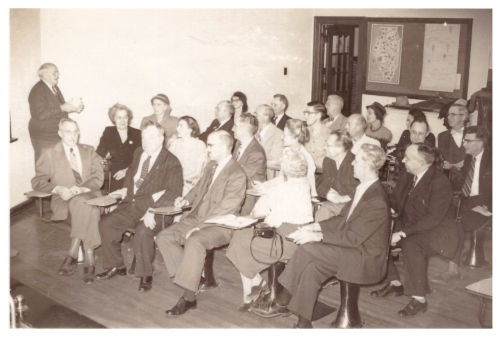
Read more: Throwback Thursday #195: Looking Back At ESCONI for January 2024This is Throwback Thursday #195. In these, we look back into the past at ESCONI specifically and Earth Science in general. If you have any contributions, (science, pictures, stories, etc …), please send them to esconi.info@gmail.com. Thanks! Geology Class 1953 at Downers Grove High School 25 Years Ago – January 1999 50 Years Ago – January 1974 70 Years Ago – January 1954
-
Video for ESCONI December 2023 General Meeting – “Ancient Forest Pests: Plant-Insect Interactions in the Fossil Record”
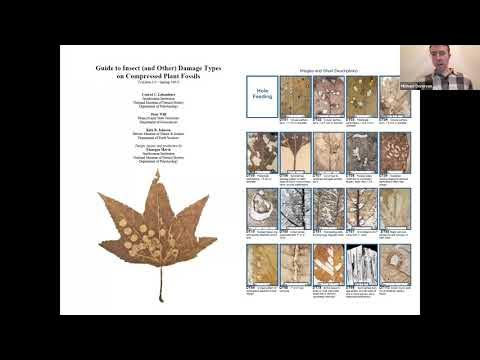
Read more: Video for ESCONI December 2023 General Meeting – “Ancient Forest Pests: Plant-Insect Interactions in the Fossil Record”The December 8, 2023 General Meeting presentation was held via Zoom. It was presented by Michael Donovan, Collections Manager, Paleobotany at the Field Museum will present “Ancient Forest Pests: Plant-Insect Interactions in the Fossil Record”. Plants and insects are the most diverse multicellular organisms on Earth, and their abundant interactions are fundamental components of ecosystems on land. Plant-feeding insects are highly sensitive to environmental disturbances, including past extinction events and climate change. In this talk, I will discuss my research examining how major environmental changes affected ancient insect and plant biodiversity and biogeography, and how those changes have shaped modern…
-

Shark Teeth from the Bond Formation in northern Illinois
Read more: Shark Teeth from the Bond Formation in northern IllinoisThe journal Kentiana has a paper about fossil shark teeth from the Bond Formation in northern Illinois. The title of the paper is “First records of the chondrichthyans Heslerodus and Ossianodus from the Upper Pennsylvanian LaSalle Limestone (Bond Formation) of northern Illinois”. Kentiana is an open access journal associated with the Center for Paleontology, the Illinois Natural History and State Geological surveys, and academic departments at the University of Illinois at Urbana-Champaign.

ESCONI Gem, Mineral, and Fossil Show
Most Recent Post
- 49th Annual CGMA Show – May 23rd and 24th, 2026
 The 49th Annual CGMA Show will be held May 23rd and 24th, 2026 at the Expo Center of the Kane County Fairgrounds.
- About ESCONI
- Around the Web
- Calendar of Events
- Code of Ethics and Conduct
- ESCONI Books for Sale
- ESCONI Gem, Mineral, and Fossil Show
- ESCONI in the News
- ESCONI Videos
- Field Trips
- Flashback Friday
- Fossil Friday
- Mazon Creek
- Mazon Monday
- Member Spotlight
- Membership Information
- Reference Material
- Throwback Thursday
- Trilobite Tuesday
Field trips require membership, but visitors are welcome at all meetings!
| Friday, April 10th | General Meeting – 8:00 PM via Zoom. Jessica Hull will present “Life in the Devonian Period, The Age of Fishes.” |
| Saturday, April 11th | Junior Study Group Meeting – 2:00 PM, in person at the College of DuPage Technical Education Center (TEC) Building – Room 1038A (Map). Katherine Howard will present on Sand and Sediment Collecting. Specifics of this meeting are available from Scott Galloway, 630-670-2591, gallowayscottf@gmail.com. |
| Saturday, April 18th | Paleontology Study Group – 7:30 PM via Zoom and in person at the College of DuPage, TEC, Room 1038B (Map). Keith Robitschek will present “Digging the Marl of the Lance Formation.” |
| Friday, April 24th | MAPS Expo XLVII – Springfield, IL. |
| Saturday, April 25th | MAPS Expo XLVII – Springfield, IL. |
| Sunday, April 26th | MAPS Expo XLVII – Springfield, IL. |
| No meeting this month | Mineralogy Study Group |