
-

Meet Bustingorrytitan shiva, New Gigantic Titanosaur from Argentina
Read more: Meet Bustingorrytitan shiva, New Gigantic Titanosaur from ArgentinaSciNews has a story about the discovery of yet another titanosaur from Argentina. This one is called Bustingorrytitan shiva and it lived about 95 million years ago in what is now Patagonia during the Late Cretaceous Period. This particular discovery consists of a fairly complete specimen and three other partial skeletons. Read more about it in a paper in the journal Acta Palaeontologica Polonica. “Five species, four of which inhabited Patagonia, would have reached body masses of 50 tons or more: Patagotitan mayorum, Argentinosaurus huinculensis, Notocolossus gonzalezparejasi, not from Patagonia but from the Neuquén Basin, Puertasaurus reuili, and Dreadnoughtus schrani.” “However, only one of these, Dreadnoughtus…
-

CBC Quirks & Quarks: Megalodon was enormous — but perhaps less husky than we’d thought
Read more: CBC Quirks & Quarks: Megalodon was enormous — but perhaps less husky than we’d thoughtCBC Radio’s Quirks & Quarks has a segment about megalodon. A new paper in the journal Palaeontologia Electronica reveals that may not have been as robust as previously thought. The extinct shark megalodon was likely the largest predatory shark to ever swim the oceans, but a new reconstruction suggests it was not quite the behemoth we thought it was. Scientists had assumed it was beefy and thick like a modern great white shark, but a new study says the evidence suggests it was a slim, sleek killer. Philip Sternes, a PhD candidate at the University of California, Riverside in the…
-
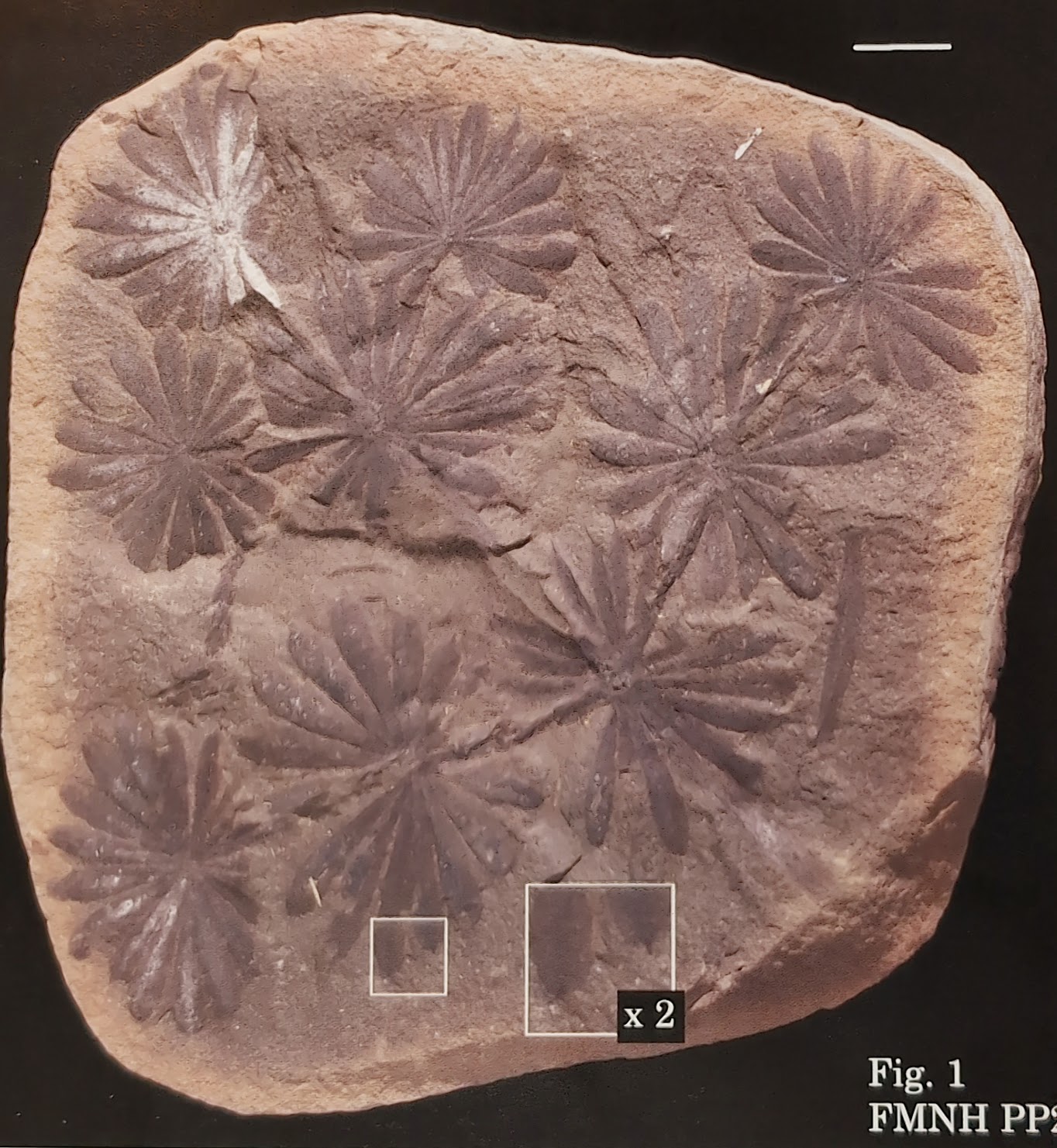
Mazon Monday #201: Annularia latifolia
Read more: Mazon Monday #201: Annularia latifoliaThis is Mazon Monday post #201. What’s your favorite Mazon Creek fossil? Tell us at email:esconi.info@gmail.com. Annularia latifolia is one of the rarer forms of Annularia. It was named in 1862 by John William Dawson (1820-1899), a Canadian geologist. He was a professor of Geology at McGill University in Montreal. He described fossil plants from the Silurian, Devonian, and Carboniferous. He is considered one of the founders of the science of paleobotany. From Wikipedia: From 1855 to 1893 he was professor of geology and principal of McGill University in Montreal, an institution which under his influence attained a high reputation. In 1859…
-
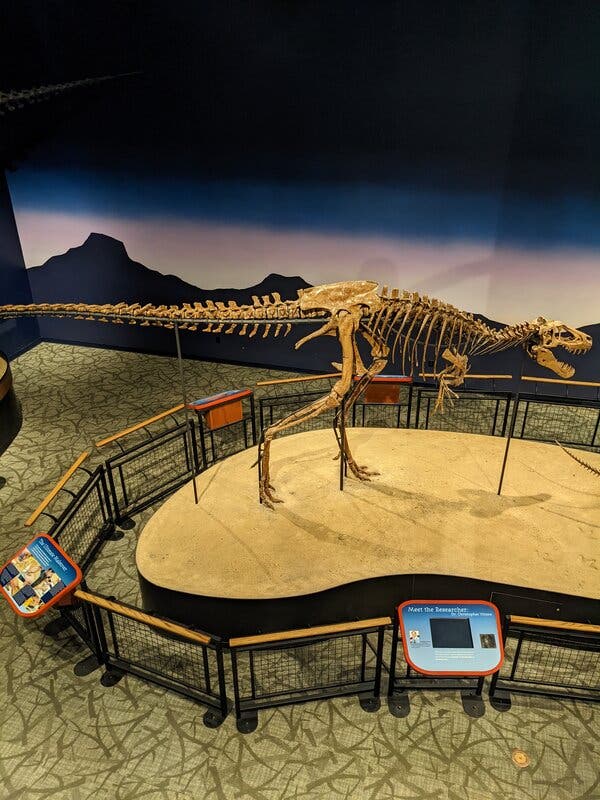
What’s in a Name? The Battle of Baby T. Rex and Nanotyrannus
Read more: What’s in a Name? The Battle of Baby T. Rex and NanotyrannusThe New York Times has a story about the debate of juvenile Tyrannosaurus rex vs Nanotyrannus. The debate has continued for years but was recently revived by the potential sale of a “rare juvenile Tyrannosaurus rex skeleton” by the David Aaron gallery. The dispute has produced reams of scientific research and decades of debate, polarizing paleontologists along the way. Now, with dinosaur fossils increasingly fetching eye-popping prices at auction, the once-esoteric dispute has begun to ripple through auction houses and galleries, where some see the T. rex name as a valuable brand that can more easily command high prices. “It’s ultimately a quite in-the-weeds question of the taxonomy and…
-

PBS Eons: Our Most Mysterious Extinct Cousins
Read more: PBS Eons: Our Most Mysterious Extinct CousinsThere's a new episode of PBS Eons. Paranthropus robustus and related species lived and evolved along side of us around 1 – 2 million years ago. What happened to them? There was a group of hominins, those creatures more closely related to us than to chimpanzees, that did take a different, parallel journey from our ancestors. Our paths ran beside each other – and potentially even crossed at times – but while ours led us here, theirs led to extinction."
-

Fossil Friday #197: Odontopteris subcuneata from Mazon Creek
Read more: Fossil Friday #197: Odontopteris subcuneata from Mazon CreekThis is the “Fossil Friday” post #19t. Expect this to be a somewhat regular feature of the website. We will post any fossil pictures you send in to esconi.info@gmail.com. Please include a short description or story. Check the #FossilFriday Twitter hash tag for contributions from around the world! For this week, we have a seed fern from the Mazon Creek fossil deposit. Odontopteris subcuneata has been found on the same plant with Macroneuropteris scheuchzerii and thus been classified as a heteromorph (a derivation from the usual form) and placed info synonymy with M. scheuchzerii. O. subcuneata was described by Charles James Fox…
-
Throwback Thursday #198: My Very First Fossil
Read more: Throwback Thursday #198: My Very First FossilThis is Throwback Thursday #198. In these, we look back into the past at ESCONI specifically and Earth Science in general. If you have any contributions, (science, pictures, stories, etc …), please send them to esconi.info@gmail.com. Thanks! Does anyone know a Tim Mistele (Histele?) who would have been 9 in November 1973? We have a nice little story of him finding his first fossil at the World Famous Pit 11 Mazon Creek locality. He participated in a field trip in April 1971. Unfortunately, he didn’t mention what it was?!? Can’t seem to find a Pit 11 trip in April 1971,…
-
Chicago Rocks & Minerals Society’s 73nd Annual Silent Auction – March 9th, 2024
Read more: Chicago Rocks & Minerals Society’s 73nd Annual Silent Auction – March 9th, 2024The Chicago Rocks & Minerals Society is holding our 73rd annual silent auction on Saturday, March 9, 2024, from 6 to 9 p.m., plus a special live auction of high-end items at the end. Chicago Rocks & Minerals Society’s 73nd Annual Silent Auction Saturday, March 9, 2024 6 to 9 p.m. St. Peter’s United Church of Christ 8013 Laramie Ave., Skokie, IL (Across the street from the public library on Oakton) Plus a special live auction of High-end specimens during the last half-hour! The first table closes at 6:30 p.m. Bid on minerals, fossils, crystals, geodes, gemstones, handmade jewelry, rough rock,…
-

Dinosaur World Thrilled Over Allosaurus Found In Wyoming’s Jurassic Mile
Read more: Dinosaur World Thrilled Over Allosaurus Found In Wyoming’s Jurassic MileCowboy State Daily has a story about the discovery of an Allosaurs. Paleontologists from the Children’s Museum of Indianapolis have been digging in the Jurassic Mile near Shell, WY since 2017. Back in 2020, while clearing overburden from a quarry that had bones from two giant long-necked sauropods, they discovered a chunk of dinosaur bone which turned out to be articulated legs and feet from an Allosaurus. As they dug deeper, they found even more of the dinosaur. The bones are being prepared in the museum back in Indianapolis. Everyone gets excited about a new dinosaur skeleton, but paleontologists are…
-
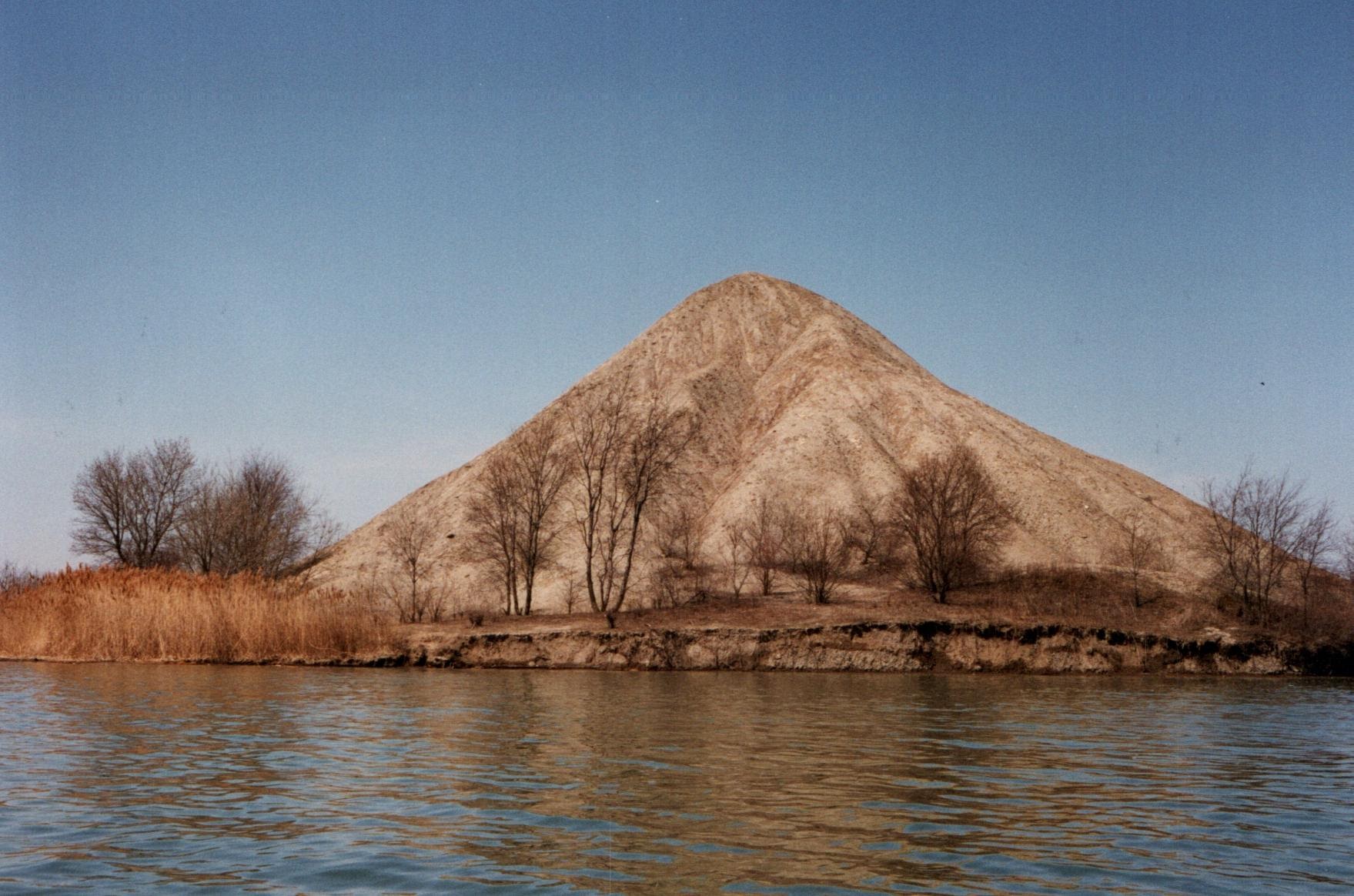
Mazon Monday #200: Field Trip to Pit 11 on April 2nd, 1995
Read more: Mazon Monday #200: Field Trip to Pit 11 on April 2nd, 1995This is Mazon Monday post #200. What’s your favorite Mazon Creek fossil? Tell us at email:esconi.info@gmail.com. Just to whet your appetite for collecting Pit 11 in March, here’s a little look back at a field trip to Pit 11 on April 2nd, 1995. Here is the announcement. There was a trip to Goose Lake Prairie State Park on April 1st. Captains Bealis Giddings and Dave Bergmann Torino Hill… looking not as eroded. The road to ESCONI Hills ESCONI Hills A look back from ESCONI Hills These photos were provided by John Good. John was president of ESCONI in the early…
-

Sad News – Long-time member Joan Bledig has passed away
Read more: Sad News – Long-time member Joan Bledig has passed awayIt is with great sadness that we announce the passing of one of our most devoted members in the club family. Joan Bledig was known to many of us as a friend, a fossil enthusiast, and a hard-working collaborator on many ESCONI projects including the most recent Mazon Creek books. She was present at nearly all club meetings, as well as on “warehouse days,” and could be seen on the stage writing up specimen tickets during the ESCONI spring fair. In addition to her dedicated work for ESCONI, Joan volunteered hundreds of hours of her time for organizations such as…
-
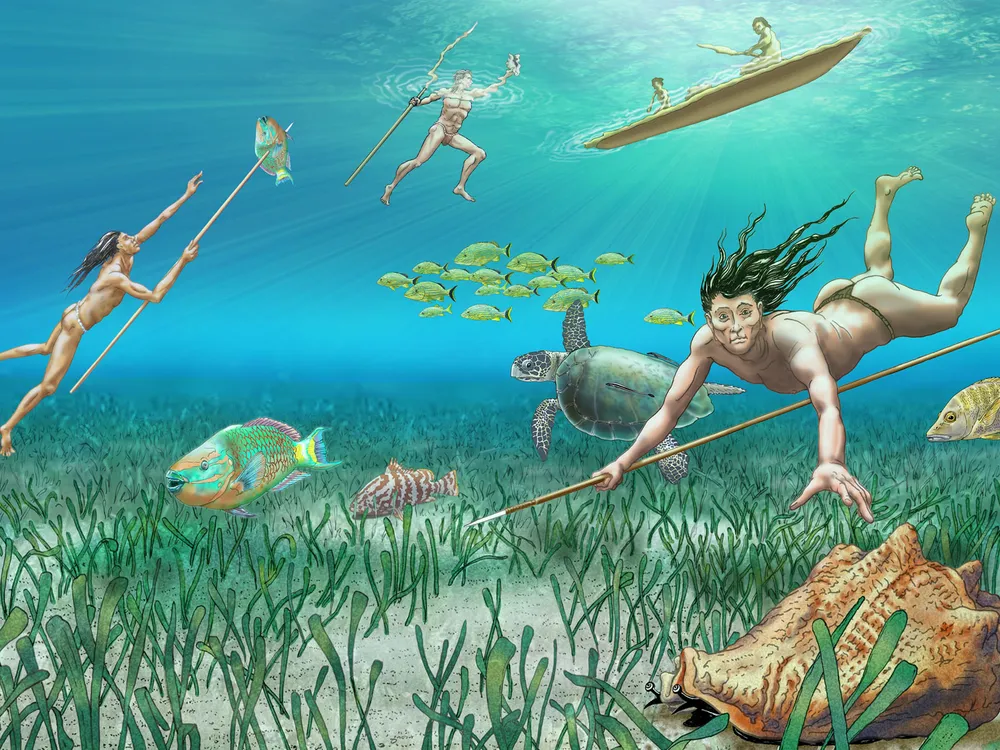
How Archaeologists Are Unearthing the Secrets of the Bahamas’ First Inhabitants
Read more: How Archaeologists Are Unearthing the Secrets of the Bahamas’ First InhabitantsSmithsonian Magazine has a piece about the first inhabitants of the Bahamas. Until recently, not much was known of the Lukku-Cairi, who settled in the Bahamas around 700 C.E. The name Lukki-Caira means “people of the islands”. They are now referred to as the Lucayans and were part of a greater Caribbean civilization called the Tainos. A new book “Lucayan Legacies: Indigenous Lifeways in the Bahamas and Turks and Caicos Islands” by Joanna Ostapkowicz, an archaeologist at the University of Oxford, looks to describe and document the Lucayans. In 2007, Pateman participated in an excavation at Preacher’s Cave on the Bahamian island…
-
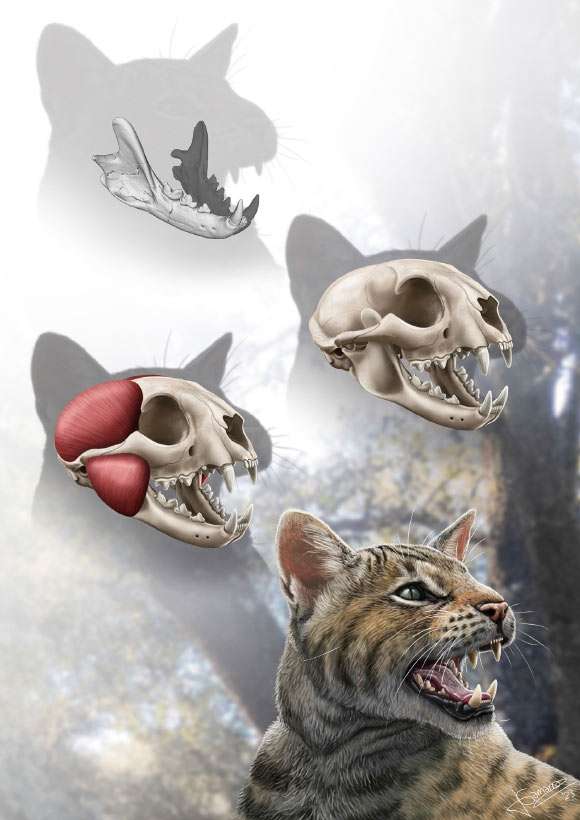
New Prehistoric Cat Species Discovered in Spain
Read more: New Prehistoric Cat Species Discovered in SpainSciNews has a post about the discovery of a new species of ancient cat. Magerifelis peignei lived about 15.5 million years ago during the Miocene epoch in what is now Spain. It was discovered in 2007 near Madrid at Príncipe Pío-2, which was then a recently discovered fossil locality. The description was published recently in the journal Vertebrate Paleontology. The specimen is very well preserved, showing the complete hemimandible, as well as all the teeth except the incisors. It is so complete and in such a good state of preservation that it provides information of great interest for carrying out…
-
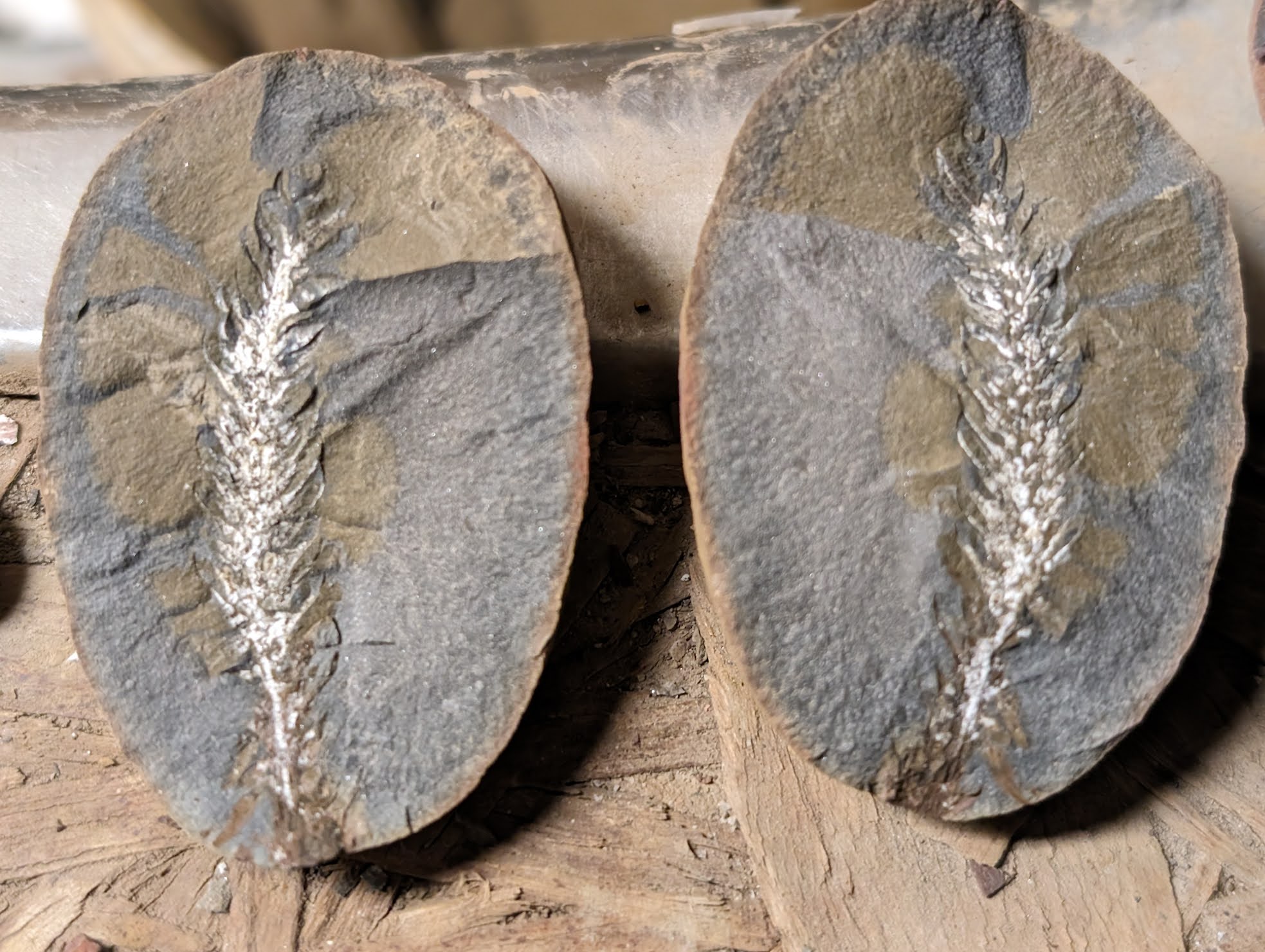
Fossil Friday #196: Calamostachys from Mazon Creek
Read more: Fossil Friday #196: Calamostachys from Mazon CreekThis is the “Fossil Friday” post #196. Expect this to be a somewhat regular feature of the website. We will post any fossil pictures you send in to esconi.info@gmail.com. Please include a short description or story. Check the #FossilFriday Twitter hash tag for contributions from around the world! Today, we have another Mazon Creek plant fossil. Calamostachys is the cone portion of Calamites. This Langford diagram which details the parts of Calamites. The round seed like part of these cones are actually sporagia, which Calamites used to reproduce. Calamites is a horsetail. Its closest living relative is Equisetum, which is an extant species…
-
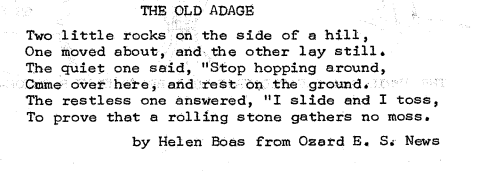
Throwback Thursday #197: The Old Adage
Read more: Throwback Thursday #197: The Old AdageThis is Throwback Thursday #197. In these, we look back into the past at ESCONI specifically and Earth Science in general. If you have any contributions, (science, pictures, stories, etc …), please send them to esconi.info@gmail.com. Thanks! This weeks Throwback comes from March 1971. It’s a little poem called “The Old Adage. It comes from the “Ozard E. S. News”. That is probably a misspelling of “Ozark Earth Science News”, which is the newsletter for the Ozark Earth Science Club in Mountain Home, AR. A club that appears to be alive and well. They held a Rock, Gem, and Mineral…
-
ESCONI January 2024 Paleontology Study Group Meeting – Saturday, January 20th, 2024 at 7:30 PM via Zoom – “Publishing a New Fossil Find: Our Journey in Cyclocystoids (Echinodermata)”
Read more: ESCONI January 2024 Paleontology Study Group Meeting – Saturday, January 20th, 2024 at 7:30 PM via Zoom – “Publishing a New Fossil Find: Our Journey in Cyclocystoids (Echinodermata)”The January 2024 Paleontology Study Group Meeting will be held on January 20th, 2024 at 7:30 PM via Zoom. The presenters are ESCONI member Asa Kaplan and Terry Frank of Missouri Fossil Hunter. They will be speaking about their experiences publishing a new fossil find. The new find was a cyclocystoid (Echinodermata). Cyclocystoid are odd looking and poorly understood echinoderms. They are known from the Ordovian through Devonian periods. Topic: “Publishing a New Fossil Find: Our Journey in Cyclocystoids (Echinodermata)” by ESCONI member Asa Kaplan and Terry Frank of Missouri Fossil Hunter Time: Jan 20, 2024 07:30 PM Central Time…
-
ESCONI 2024 Gem, Mineral, and Fossil Show! March 16th and 17th, 2024
Read more: ESCONI 2024 Gem, Mineral, and Fossil Show! March 16th and 17th, 2024Earth Science Club of Northern Illinois ESCONI 2024 Gem, Mineral and Fossil Show March 16th and 17th, 2024 Dealers, Demonstrators, Displays, Live and Silent Auctions,Book Sales, Kid’s Korner, Geode Splitting Free Parking! Free Admission! DuPage County Fairgrounds2015 Manchester Rd.Wheaton, IllinoisSaturday 10 AM to 5 PMSunday 10 AM to 4 PMwww.esconi.org Download Show Poster 2024 Dealer List Exclusive InspirationsFossil HutGrabYourRocksLavin’s GemsRock StarsRock’s RocksMineral MinerRockhound Mike MineralsSouthwest TreasuresMichael’s Mineral Exchange
-
41st Mid-Continent Paleobotanical Colloquium 2024 (MPC) at the Field Museum April 12-14, 2024
Read more: 41st Mid-Continent Paleobotanical Colloquium 2024 (MPC) at the Field Museum April 12-14, 2024The Field Museum in Chicago is hosting the 41st Mid-Continent Paleobotanical Colloquium 2024 (MPC) from April 12th to 14th. Details can be found on Fabiany Herrera’s PaleoLab website. 41st Mid-Continent Paleobotanical Colloquium 2024 (MPC) & Sir Peter Crane’s 70th Birthday Symposium April 12-14, 2024 – Field Museum Chicago, IL Important Deadlines Registration: February 28th, 2024, 11:59 PST (USA). Abstract Submission: March 30th, 2024, 11:59 PST (USA). Student Travel Grant application: February 28th, 2024, 11:59 PST (USA). The program includes presentations on Friday and Saturday, a celebration of Sir Peter Crane’s 70th birthday on Friday night, and a Mazon Creek field…
-

Mazon Monday #199: The Enigmatic Tully Monster (or the Lesser Orm of Mazon Creek)
Read more: Mazon Monday #199: The Enigmatic Tully Monster (or the Lesser Orm of Mazon Creek)This is Mazon Monday post #199. What’s your favorite Mazon Creek fossil? Tell us at email:esconi.info@gmail.com. Today, we a have strange, enigmatic tale of the Tully Monster. It’s a tale of wonder…. of wonder why it was written and can this be real? In 1969, the book “The Great Orm of Loch Ness: A Practical Inquiry into the Nature and Habits of Water-monsters” by F.W. Holiday was published by W. W. Norton and Co. It’s about the Loch Ness monster and the…. Tully Monster. Having read the description of Tullymonstum gregarium and noting there wasn’t a classification for the “beastie”,…
-

New Species of Giant Tyrannosaur Discovered in New Mexico
Read more: New Species of Giant Tyrannosaur Discovered in New MexicoSciNews has news of a new species of Tyrannosaur. This one is called Tyrannosaurs mcraeensis. It was described from fossils found in the Hall Lake Formation of New Mexico. This is most likely a sister species of Tyrannosaurus rex. which existed about 3 to 5 million years before T. rex. The paper “A giant tyrannosaur from the Campanian–Maastrichtian of southern North America and the evolution of tyrannosaurid gigantism” was published in the journal Scientific Reports. The newly-identified species, Tyrannosaurus mcraeen, lived in what is now the United States between 71 and 73 million years ago, or between 5 and 7 million…

ESCONI Gem, Mineral, and Fossil Show
Most Recent Post
- ESCONI April 2026 General Meeting via Zoom – “Life in the Devonian Period, The Age of Fishes”
 The April 2026 General Meeting will be held on April 10th, 2026 at 8:00 via Zoom. At the meeting, Jessica Hull will present “Life in the Devonian Period, The Age of Fishes.” The Devonian Period was a crucial moment in the history of life. In this presentation, Jessica Hull will bring fossils to life by describing how they would have lived based on the most up to date research. Dunkleosteus fans won’t want to miss this!
- About ESCONI
- Around the Web
- Calendar of Events
- Code of Ethics and Conduct
- ESCONI Books for Sale
- ESCONI Gem, Mineral, and Fossil Show
- ESCONI in the News
- ESCONI Videos
- Field Trips
- Flashback Friday
- Fossil Friday
- Mazon Creek
- Mazon Monday
- Member Spotlight
- Membership Information
- Reference Material
- Throwback Thursday
- Trilobite Tuesday
Field trips require membership, but visitors are welcome at all meetings!
| Friday, April 10th | General Meeting – 8:00 PM via Zoom. Jessica Hull will present “Life in the Devonian Period, The Age of Fishes.” |
| Saturday, April 11th | Junior Study Group Meeting – 2:00 PM, in person at the College of DuPage Technical Education Center (TEC) Building – Room 1038A (Map). Katherine Howard will present on Sand and Sediment Collecting. Specifics of this meeting are available from Scott Galloway, 630-670-2591, gallowayscottf@gmail.com. |
| Saturday, April 18th | Paleontology Study Group – 7:30 PM via Zoom and in person at the College of DuPage, TEC, Room 1038B (Map). Keith Robitschek will present “Digging the Marl of the Lance Formation.” |
| Friday, April 24th | MAPS Expo XLVII – Springfield, IL. |
| Saturday, April 25th | MAPS Expo XLVII – Springfield, IL. |
| Sunday, April 26th | MAPS Expo XLVII – Springfield, IL. |
| No meeting this month | Mineralogy Study Group |