
-
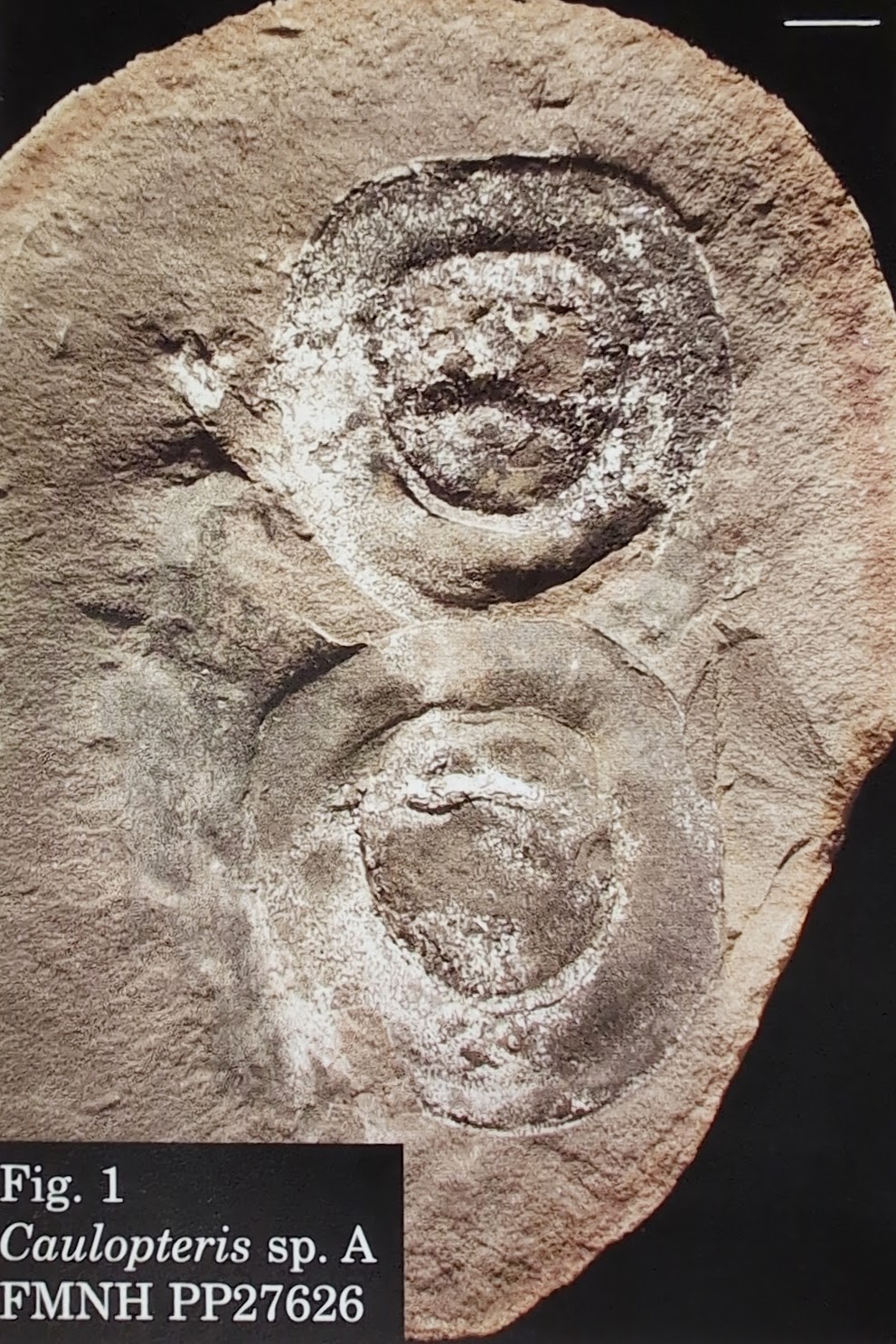
Mazon Monday #204: Caulopteris sp.
Read more: Mazon Monday #204: Caulopteris sp.This is Mazon Monday post #204. What’s your favorite Mazon Creek fossil? Tell us at email:esconi.info@gmail.com. Caulopteris sp. are the branch scars of the tree fern Psaronius. Psaronius is an extinct genus of marattialean tree fern. The genus Psaronius is used to describe both the tree trunk and the whole plant. Psaronius tree fern fossils are found from the Carboniferous through the Permian. The foliage of the various species would have been the fronds Pecopteris, Crenulopteris, Sphenopteris, Astrotheca, among others. It might seem odd that individual plant parts have different species names. Paleobotany follows a system called form genera. Form genera is…
-
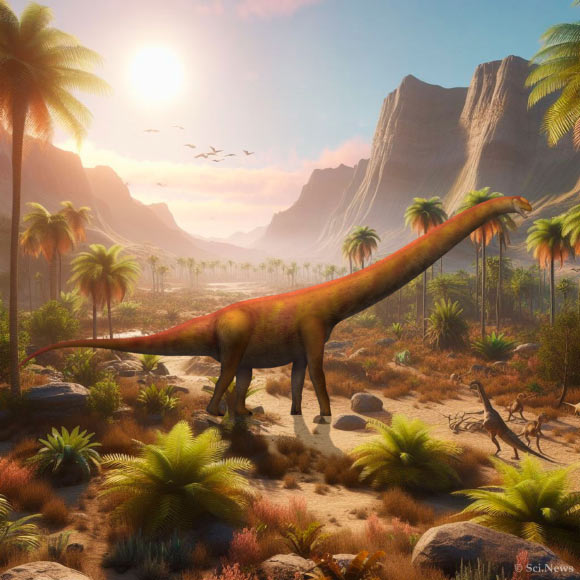
New Species of Titanosaur Unearthed in China
Read more: New Species of Titanosaur Unearthed in ChinaSciNews has a story about the discovery of a new Titanosaur. The animal, Jiangxititan ganzhouensis, lived between 72 and 66 million years ago during the Cretaceous Period. The fossils were found in the Nanxiong Formation near Tankou Town in Ganzhou City, the Chinese province of Jiangxi, which is commemorated in the name. J. ganzhouensis is a sauropod dinosaur and belongs to the Titanosauria dinosaur clade. Details can be found in the paper “A New Titanosaurian Sauropod from the Upper Cretaceous of Jiangxi Province, Southern China” in the journal Historical Biology. Jiangxititan ganzhouensis represents the second sauropod species from the Nanxiong Formation. “The…
-

When Whales Could Walk | Full Documentary | NOVA | PBS
Read more: When Whales Could Walk | Full Documentary | NOVA | PBSPBS Nova has posted the full documentary "When Whales Could Walk" on Youtube. Whales had legs… What?!? In Egypt’s Sahara Desert, massive skeletons with strange skulls and gigantic teeth jut out from the sandy ground. This fossil graveyard, millions of years old, is known as the “Valley of the Whales.” Now, paleontologists have unearthed a whole new species of ancient whale dating to 43 million years ago, and this predator wasn’t just able to swim – it also had four legs and could walk. Follow scientists as they search for new clues to the winding evolutionary path of mammals that…
-
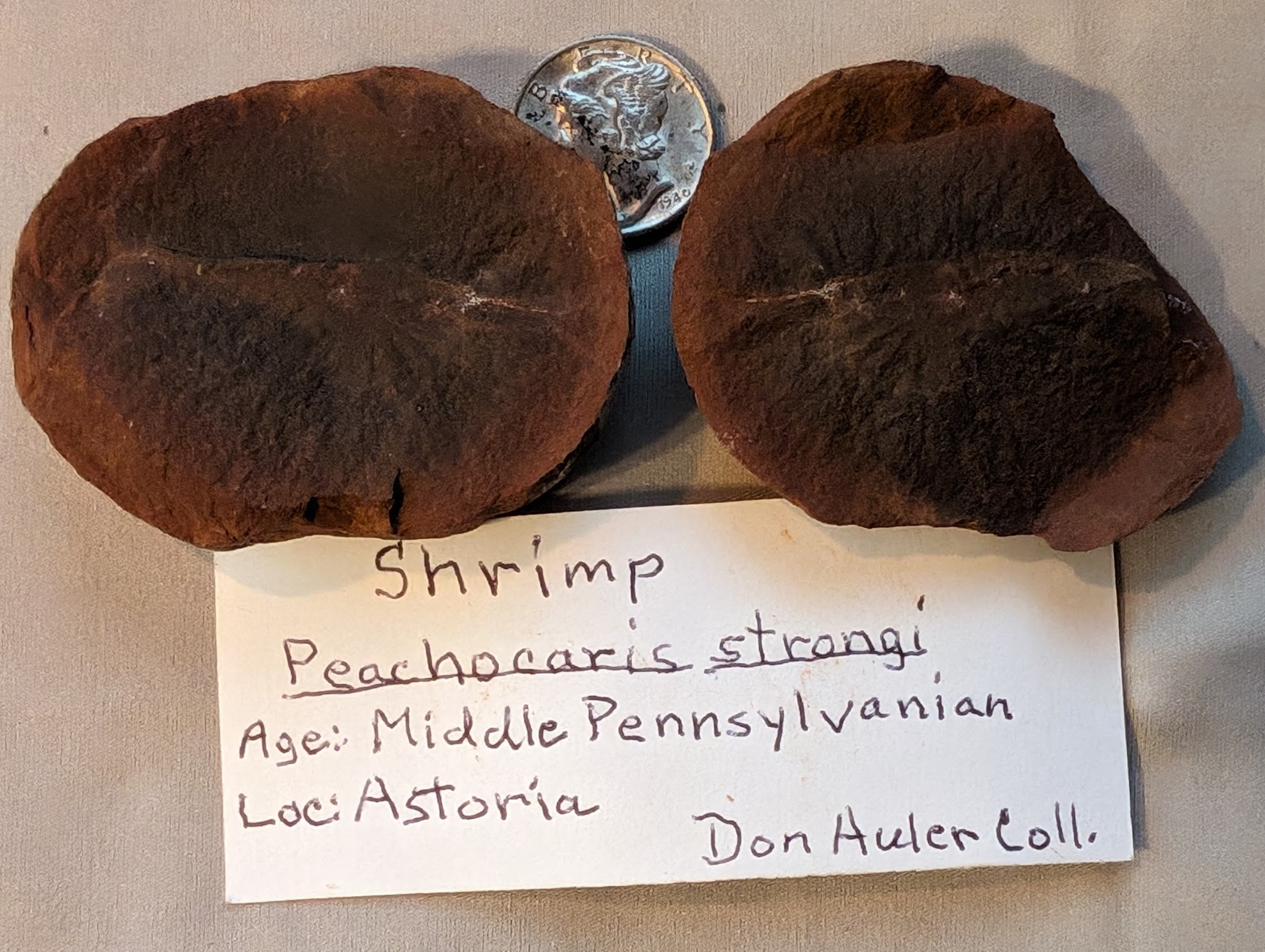
Fossil Friday #200: Peachocaris strongi
Read more: Fossil Friday #200: Peachocaris strongiThis is Mazon Monday post #200. What’s your favorite Mazon Creek fossil? Tell us at email:esconi.info@gmail.com. Thanks! If you thought, “Oh… another Mazon Creek fossil for Fossil Friday”… You’d be wrong. This special little fossil shrimp is Peachocaris strongi. It hails from the old Astoria locality in western Illinois. Fossils from Astoria came from the Sunspot Mine. The locality was known for shrimp fossils, which were very common. The deposit features the same animals as Mazon Creek, including Tully Monsters, which is known from just three localities, Pit 11 (Braidwood), Morris, and Astoria. Although widely separated from the common Mazon exposures,…
-
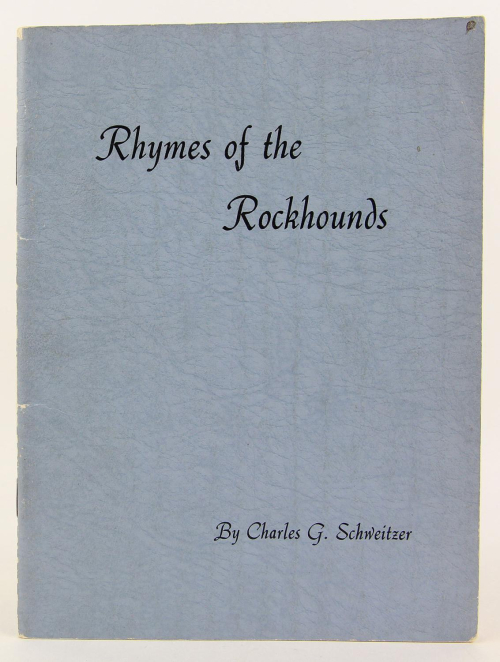
Throwback Thursday #201: He Gave Me A Rock
Read more: Throwback Thursday #201: He Gave Me A RockThis is Throwback Thursday #201. In these, we look back into the past at ESCONI specifically and Earth Science in general. If you have any contributions, (science, pictures, stories, etc …), please send them to esconi.info@gmail.com. Thanks! We’ve featured the poems of Charles Schweitzer a few times in the past. In Throwback Thursday #59, we looked at “The Rock Pile”, TBT #73 was “The Rockhound’s Wish”, and TBT #98 was “The Rock I Threw Away”. Most recently was TBT #177 “The Rockhounds Creed”. All of these appear in his book of poems titled “Rhymes of the Rockhounds”, which was published in the mid 1950’s.…
-
Paleontologists Discover Two New Shark Species From Fossils in Mammoth Cave National Park
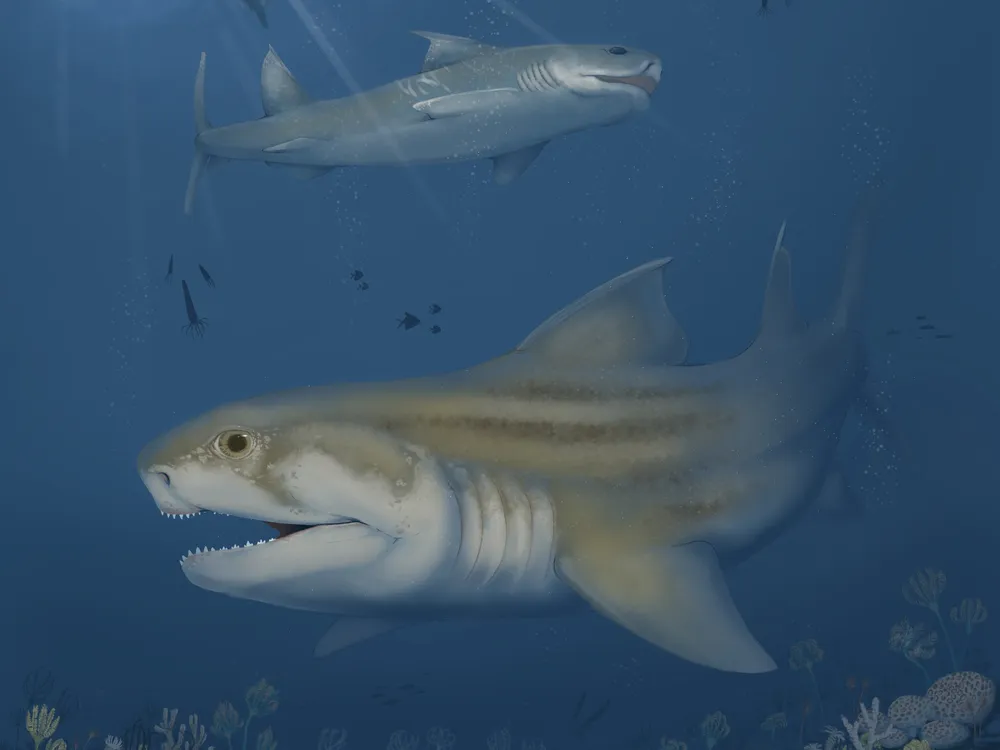
Read more: Paleontologists Discover Two New Shark Species From Fossils in Mammoth Cave National ParkSmithsonian Magazine has a story about a new fossil discovery. Two new shark species from the Carboniferous have been described from Mammoth Cave National Park in Kentucky. Troglocladodus trimblei and Glikmanius careforum lived during the Carboniferous Period some 325 million yerars ago. Both measured about 10 to 12 feet long. The paper “Sharks in the dark: Paleontological resource inventory reveals multiple successive Mississippian Subperiod cartilaginous fish (Chondrichthyes) assemblages within Mammoth Cave National Park, Kentucky” was published in eScolarship, Open Access Publications from the University of California. “These are active predators, really fast-swimming, catching other decent-sized fish, and in the case of Glikmanius,…
-
2024 ESCONI Gem, Mineral, and Fossil Show – Preview #1!
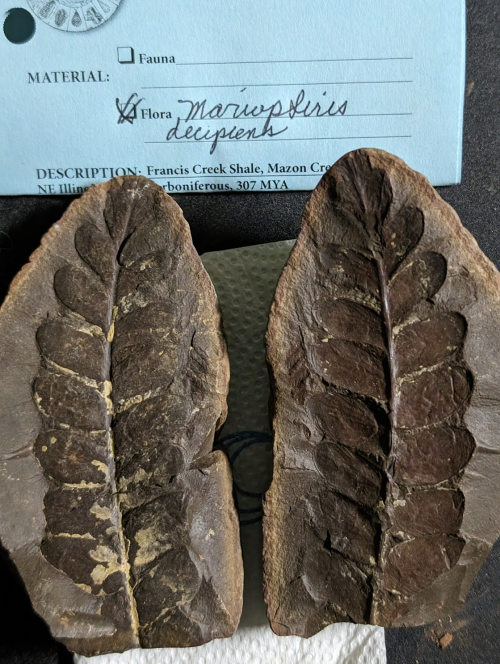
Read more: 2024 ESCONI Gem, Mineral, and Fossil Show – Preview #1!This is the preview post #1 for the 2024 ESCONI Gem, Mineral, and Fossil Show Live Auction. The ESCONI Gem, Mineral, and Fossil Show for 2024 will be held on March 16th and 17th at the DuPage Fairgrounds in Wheaton, IL, which is the same location as last year. All details can be found here. Yes, time to kick off the previews for the 2024 ESCONI Gem, Mineral, and Fossil Show. We have a bunch to get through and the show is coming up fast! This is a sweet Mariopteris decipiens from Mazon Creek (see Mazon Monday #108) This specimen…
-
Mazon Monday #203: Creature Corner – Fossil Jackpot
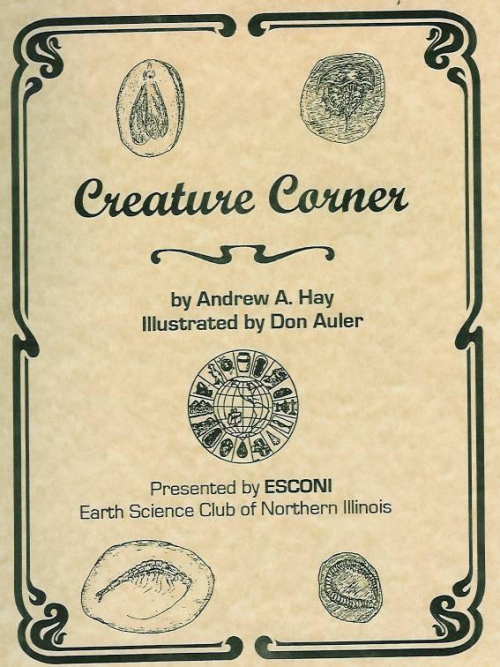
Read more: Mazon Monday #203: Creature Corner – Fossil JackpotThis is Mazon Monday post #203. What’s your favorite Mazon Creek fossil? Tell us at email:esconi.info@gmail.com. Andy Hay was a long time ESCONI member. He joined in 1976 and was a member to the very end. For many years, he wrote the Creature Corner column for the ESCONI newsletter. Many of those articles were compiled into the Creature Corner book, published in 2001. Unfortunately, his April 1994 “Fossil Jackpot” was not one of those articles. In that article, Andy speaks about the number of concretions that have been collected and processed. He also touches on how likely you are to find…
-
Fragments of Asteroid With Mystery Origin Are Found Outside Berlin
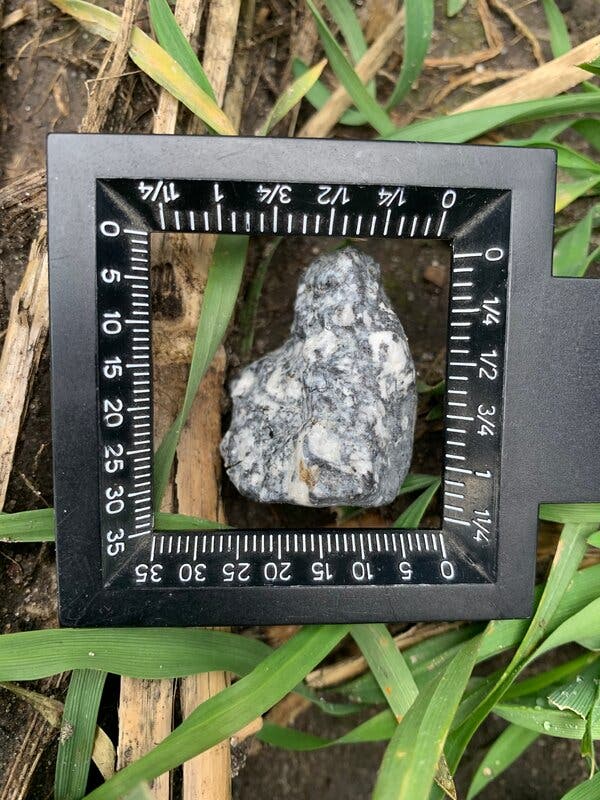
Read more: Fragments of Asteroid With Mystery Origin Are Found Outside BerlinThe New York Times has a story about a meteorite with mysterious origins. A little after midnight on January 21st, 2024, a small meteor struck the Earth at Ribbeck, a village just outside Berlin, Germany. There was no damage. The meteor, probably less than three feet in diameter, was first spotted by Krisztián Sárneczky, a Hungarian astronomer, three hours before it hit Earth’s atmosphere. By Thursday, searchers had located 20 fragments. Researchers at the Natural History Museum in Berlin analyzed the minerals in the fragments using an electron microprobe. That revealed that the rocks appeared to be aubrites. It was…
-

PBS Eons: Animals Might Be Much Older Than We Thought
Read more: PBS Eons: Animals Might Be Much Older Than We ThoughtPBS Eons has a new episode. This interesting video is about the origin of complex life. When did animals first show up? How long before the Cambian Explosion did complex life arrive on Earth. What are animal-like fossils doing in rocks a billion years old, and what does that mean for our understanding of their evolution and geologic time itself? Turns out, there might've been a long, slow-burning fuse that ultimately ignited the Cambrian Explosion.
-
Fossil Friday #199: Macroneuropteris scheuchzeri
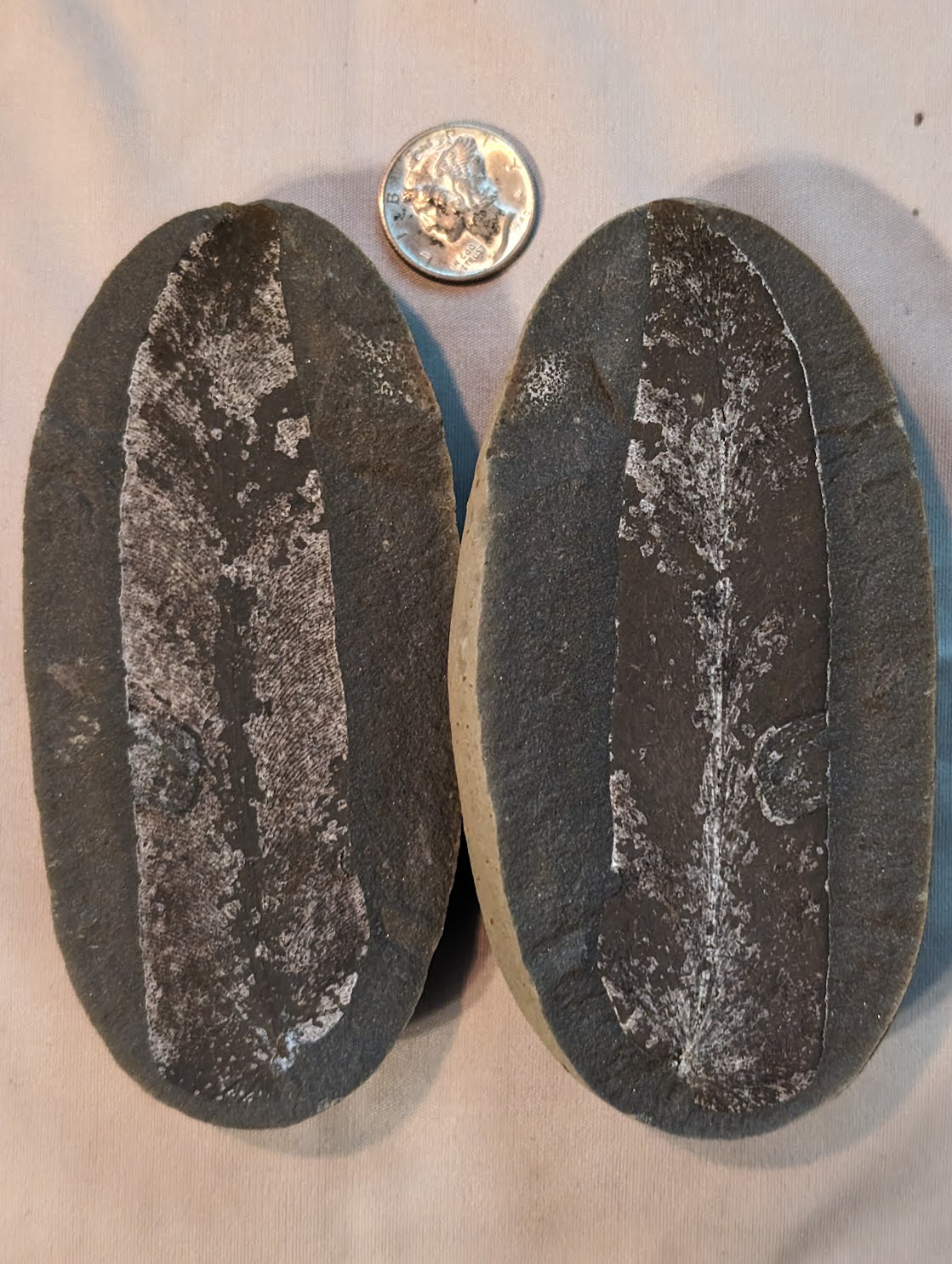
Read more: Fossil Friday #199: Macroneuropteris scheuchzeriThis is Mazon Monday post #199. What’s your favorite Mazon Creek fossil? Tell us at email:esconi.info@gmail.com. Thanks! We have a nice Macroneuropteris scheuchzeri from the Mazon Creek fossil deposit for this week’s Fossil Friday. M. scheuchzeri is a seed fern (Pteridospermatophyta), which is a group of plants that went extinct during the late Cretaceous Period. They first show up in the fossil record during the late Devonian. Specimens are large and tongue shaped. The namesake for M.scheuchzeri is Johann Jakob Scheuchzer, a Swiss physician and natural scientist in the 1700’s. M. scheuchzeri is fairly common, but can be extremely common is some localities such as…
-
Throwback Thursday #200: Field Museum – Terror Birds
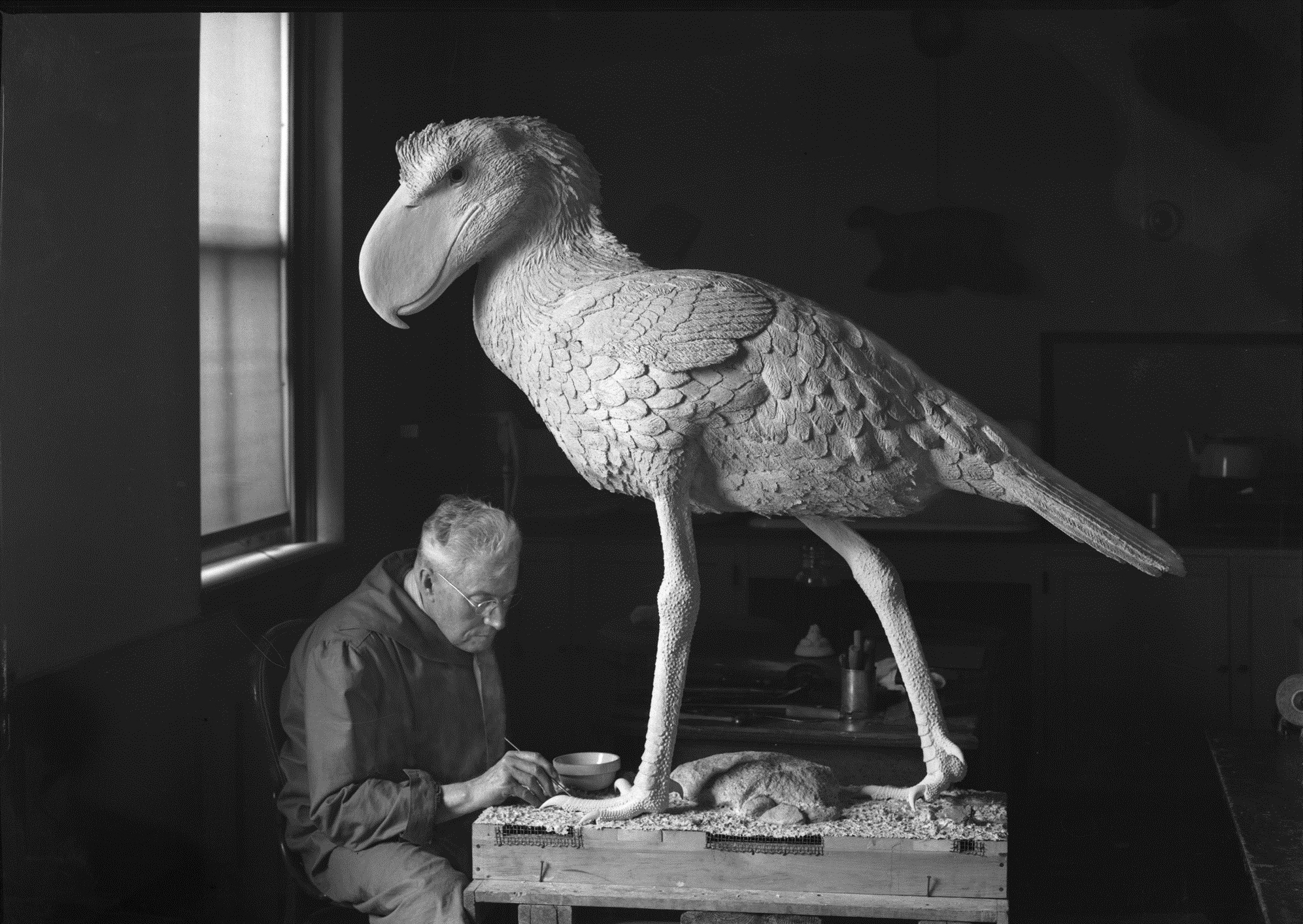
Read more: Throwback Thursday #200: Field Museum – Terror BirdsThis is Throwback Thursday #200. In these, we look back into the past at ESCONI specifically and Earth Science in general. If you have any contributions, (science, pictures, stories, etc …), please send them to esconi.info@gmail.com. Thanks! Terror Birds, phorusrhacids, were large carnivorous flightless birds, that lived until a few million years ago. They are famed for their large hooked beaks and a presumed taste for meat. For a long time, they were the largest predators in South America. Fossil evidence shows they later migrated to North America, with fossils from Texas dated at 5 million years ago. This newspaper…
-

380-Million-Year-Old Fossils of Air-Breathing Tetrapod Fish Found in Australia
Read more: 380-Million-Year-Old Fossils of Air-Breathing Tetrapod Fish Found in AustraliaSciNews has a story about the discovery of a Devonian tetrapodomorph fish in Australia. Harajicadectes zhumini lived about 380 million years ago near what is now central Australia. The animal was described in the paper “A new stem-tetrapod fish from the Middle–Late Devonian of central Australia” in the journal Vertebrate Paleontology. “Tetrapodomorpha comprises the limbed tetrapods and their closest fish relatives, whose earliest record is from the Pragian of China,” Dr. Choo and co-authors said. “The group diversified greatly in both marine and freshwater habitats during the Middle-to-Late Devonian while giving rise to several distinct lineages, including the earliest limbed tetrapods.”…
-

Rare 3D fossils show that some early trees had forms unlike any you’ve ever seen before
Read more: Rare 3D fossils show that some early trees had forms unlike any you’ve ever seen beforePhys.org has a story about the discovery of an amazingly preserved “tree” from New Brunswick, Canada. The fossils, which date to about 350 million years ago during the Mississippian Period, consist of multiple specimens with one preserving how the “leaves” were distributed in the crown of the tree. Usually, just the trunk of trees are fossilized in-situ, it is quite rare to see one preserved in such detail. Sanfordiacaulis densifolia was named for the quarry owner, Laurie Sanford. All the details can be found in the paper “Enigmatic fossil plants with three-dimensional, arborescent-growth architecture from the earliest Carboniferous of New Brunswick, Canada”,…
-
Mazon Monday #202: Lepidostrobus
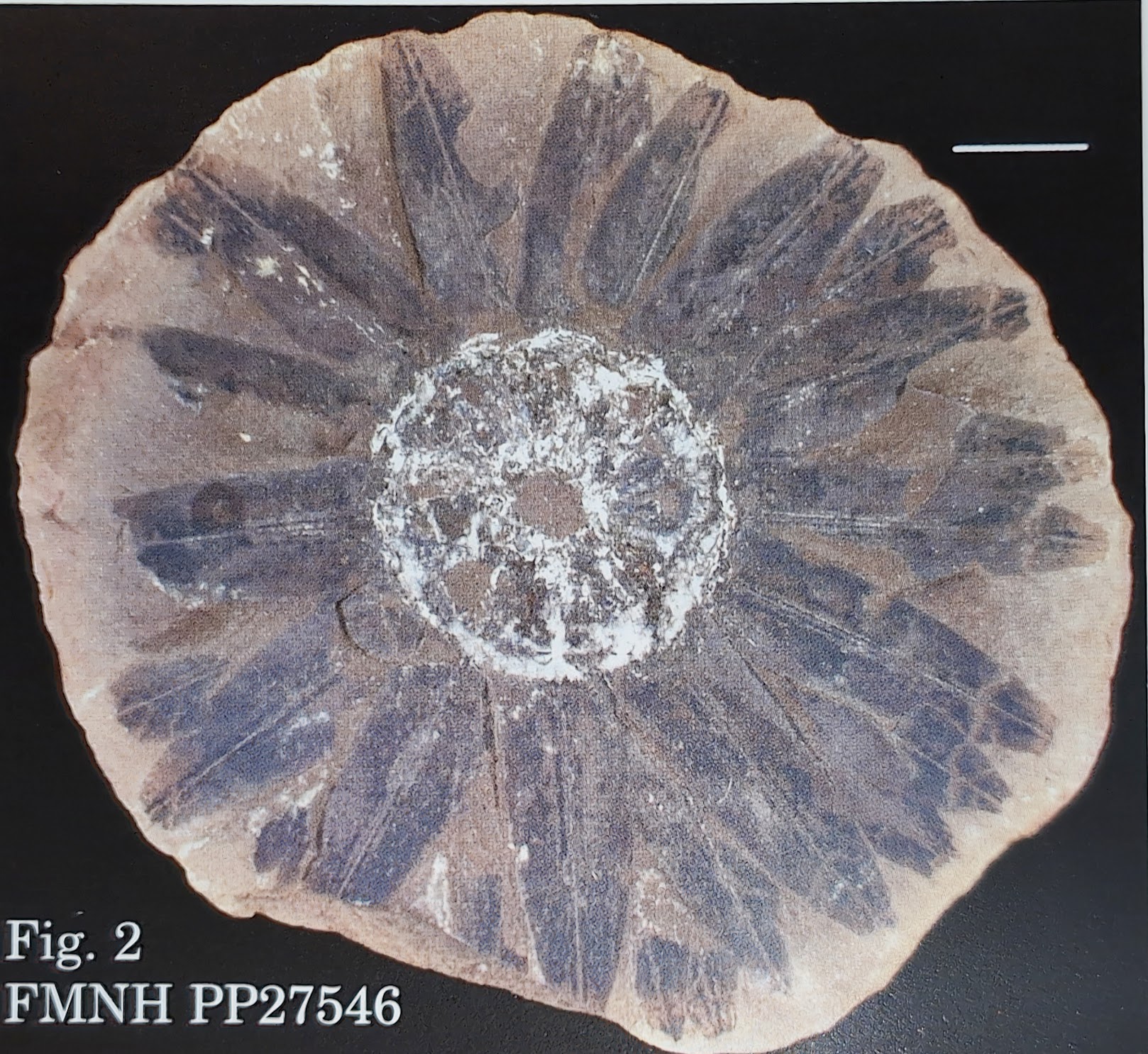
Read more: Mazon Monday #202: LepidostrobusThis is Mazon Monday post #202. What’s your favorite Mazon Creek fossil? Tell us at email:esconi.info@gmail.com. Lepidostrobus is a cone from lepidodendron tree. It was named in 1828 by Adolphe-Theodore Brongniart (1801 – 1876), who was a French paleontologist, considered by many to be the father of paleobotany. He also named Lepidostrobophyllum which are the individual cone bracts of which Lepidostrobus is the whole reproductive organ. Principle parts of a lepidodendron tree from George’s Basement. Lepidostrobus represents a large diverse group of related cone species, including Lepidostrobus ornatus, Lepidostrobus hastatus, Lepidostrobus aldrichii, Lepidostrobus lancifolius, and Lepidostrobus foliaceus. Other related species…
-
A Stunningly Well-Preserved 600-Year-Old Gauntlet Is Found in Switzerland
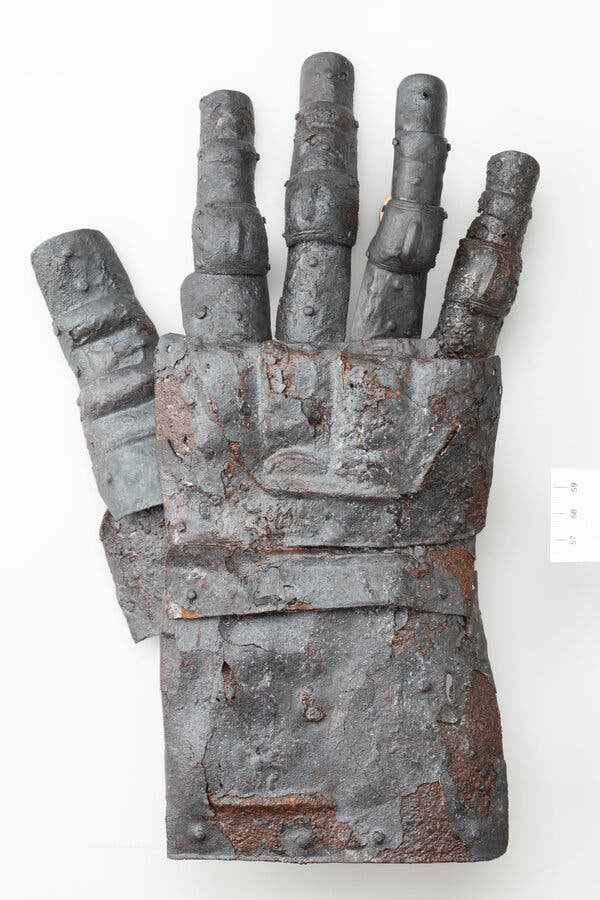
Read more: A Stunningly Well-Preserved 600-Year-Old Gauntlet Is Found in SwitzerlandThe New York Times has an article about the discovery of medieval armor in Switzerland. The stunningly preserved gauntlet dates to the 14th century. It was found near Kyburg Castle, northeast of Zurich. Excavators made the discovery in 2022 prior to construction work that would have destroyed any artifacts at the site, which was a medieval town. A hammer, tongs, tweezers, and keys were also found. Those artifacts probably indicate blacksmith work was performed in the area. The gauntlet would likely have been worn by a medieval soldier or a knight, but so far it’s unclear who wore it and…
-

Archaeologists Discover 1,700-Year-Old Jade Mask Inside the Tomb of a Maya King
Read more: Archaeologists Discover 1,700-Year-Old Jade Mask Inside the Tomb of a Maya KingSmithsonian Magazine has a story about the discovery in a Mayan mask in Guatemala. The jade artifact dates to about 350 C.E and is made of jade. The site near Chochkitam, Guatemala is a Mayan tomb, which also held rare mollusk shells, carvings, and other funeral offerings. The archaeological site, known as Chochkitam, is located in the dense rainforests of Petén, a region of northern Guatemala. Researchers have known about the area for about 100 years, but no formal excavations have occurred until recently. Looters have stolen many of the artifacts at the site. “A discovery like this is a bit…
-

Fossil Friday #198: Smithixerxes juliarum
Read more: Fossil Friday #198: Smithixerxes juliarumThis is Mazon Monday post #198. What’s your favorite Mazon Creek fossil? Tell us at email:esconi.info@gmail.com. Thanks! We have a very rare little gem from Mazon Creek for our Fossil Friday this week. Smithixerxes juliarum is one of the rarest of Mazon Creek animals. It belongs to a group of extinct arthropods called the euthycarcinoids. They lived from the Cambrian to the Triassic. Euthycarcinoids may have been amphibious. Smithixerxes juliarum was described by Frederick Schram and W. D. Ian Rolfe in the paper “New Euthycarcinoid Arthropods from the Upper Pennsylvanian of France and Illinois”, which was published in the Journal of…
-

Throwback Thursday #199: Looking Back At ESCONI For February 2024
Read more: Throwback Thursday #199: Looking Back At ESCONI For February 2024This is Throwback Thursday #199. In these, we look back into the past at ESCONI specifically and Earth Science in general. If you have any contributions, (science, pictures, stories, etc …), please send them to esconi.info@gmail.com. Thanks! 25 Years Ago – February 1999 50 Years Ago – February 1974 70 Years Ago – February 1954
-

ESCONI Events February 2024
Read more: ESCONI Events February 2024Field trips require membership, but visitors are welcome at all meetings! Fri, Feb 9th ESCONI General Meeting 8:00 PM – Topic: “Photographing Rock Art in Illinois and Missouri: A visual journey into the sacred, the unknown, andthe creation of the universe” by Mike Chervinko, author of Prehistoric and Natural Wonders ofSouthern Illinois Zoom link Sat, Feb 10th ESCONI Junior Meeting – 6:30 PM at College of DuPage – Topic: “The earth’s processes, including the rock cycle” Specifics of this meeting are available from Scott Galloway, 630-670-2591, gallowayscottf@gmail.com. The meeting will be in person at the College of DuPage Tech Ed (TEC)…

ESCONI Gem, Mineral, and Fossil Show
Most Recent Post
- ESCONI April 2026 General Meeting via Zoom – “Life in the Devonian Period, The Age of Fishes”
 The April 2026 General Meeting will be held on April 10th, 2026 at 8:00 via Zoom. At the meeting, Jessica Hull will present “Life in the Devonian Period, The Age of Fishes.” The Devonian Period was a crucial moment in the history of life. In this presentation, Jessica Hull will bring fossils to life by describing how they would have lived based on the most up to date research. Dunkleosteus fans won’t want to miss this!
- About ESCONI
- Around the Web
- Calendar of Events
- Code of Ethics and Conduct
- ESCONI Books for Sale
- ESCONI Gem, Mineral, and Fossil Show
- ESCONI in the News
- ESCONI Videos
- Field Trips
- Flashback Friday
- Fossil Friday
- Mazon Creek
- Mazon Monday
- Member Spotlight
- Membership Information
- Reference Material
- Throwback Thursday
- Trilobite Tuesday
Field trips require membership, but visitors are welcome at all meetings!
| Friday, April 10th | General Meeting – 8:00 PM via Zoom. Jessica Hull will present “Life in the Devonian Period, The Age of Fishes.” |
| Saturday, April 11th | Junior Study Group Meeting – 2:00 PM, in person at the College of DuPage Technical Education Center (TEC) Building – Room 1038A (Map). Katherine Howard will present on Sand and Sediment Collecting. Specifics of this meeting are available from Scott Galloway, 630-670-2591, gallowayscottf@gmail.com. |
| Saturday, April 18th | Paleontology Study Group – 7:30 PM via Zoom and in person at the College of DuPage, TEC, Room 1038B (Map). Keith Robitschek will present “Digging the Marl of the Lance Formation.” |
| Friday, April 24th | MAPS Expo XLVII – Springfield, IL. |
| Saturday, April 25th | MAPS Expo XLVII – Springfield, IL. |
| Sunday, April 26th | MAPS Expo XLVII – Springfield, IL. |
| No meeting this month | Mineralogy Study Group |