
-
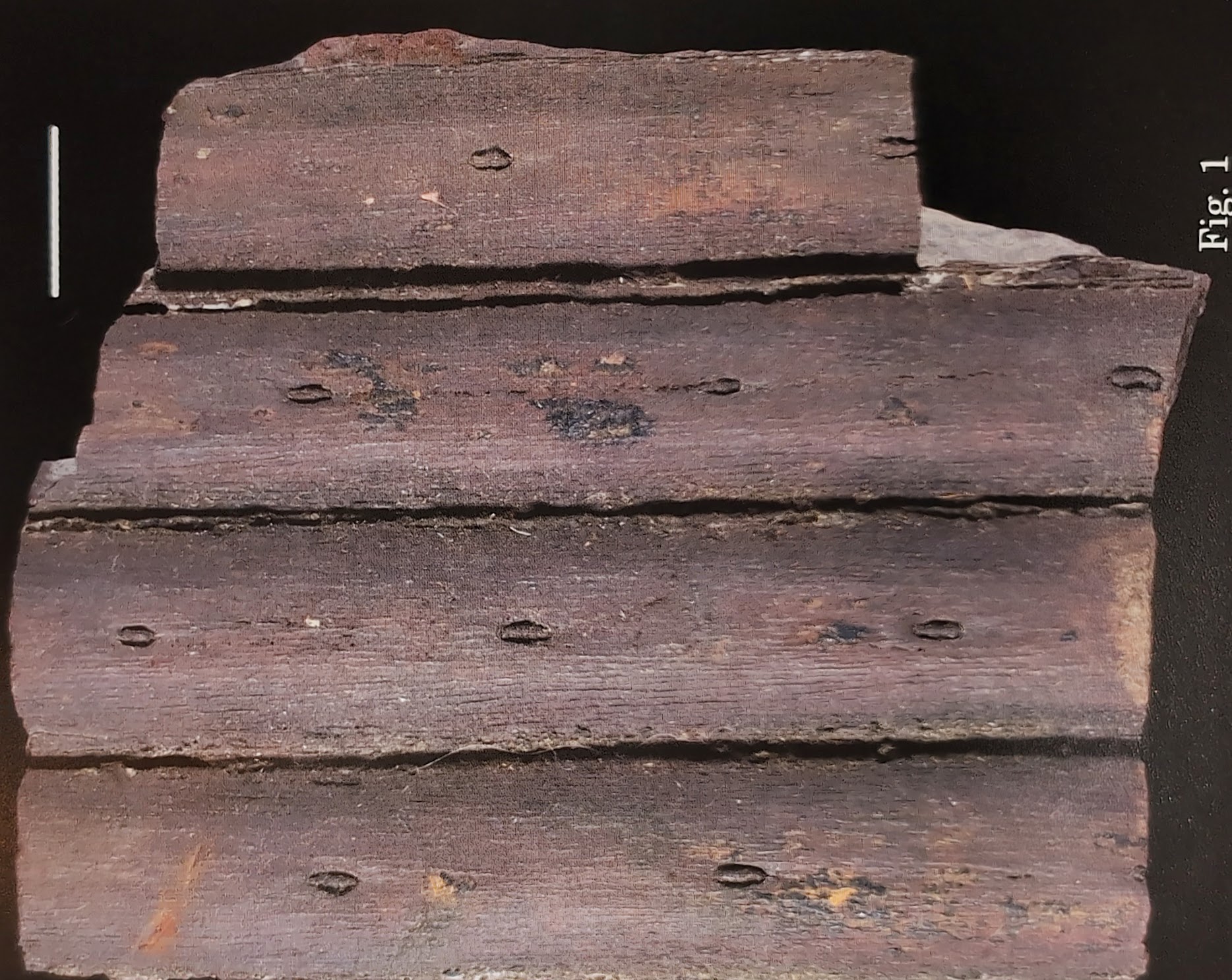
Mazon Monday #216: Syringodendron Bark
Read more: Mazon Monday #216: Syringodendron BarkThis is Mazon Monday post #216. What’s your favorite Mazon Creek fossil? Tell us at email:esconi.info@gmail.com. Syringodendron sp. is the inner bark of a undetermined Sigillaria. It’s considered rare in Mazon Creek. Syringodendron is thought to be Sigillaria trunk before fossilization. The impressions that run vertically are called Parichnos scars. When there are double impressions side-by-side, they are sometimes referred to as “hare’s trails”. Syringodendron sp. was named by Kaspar Maria von Sternberg (1761 – 1838) in 1820. Sternberg was a Bohemian theologian, minerologist, geologist, entomologist, and botanist. He is widely known as the “Father of Paleobotany”. The Linda Hall…
-
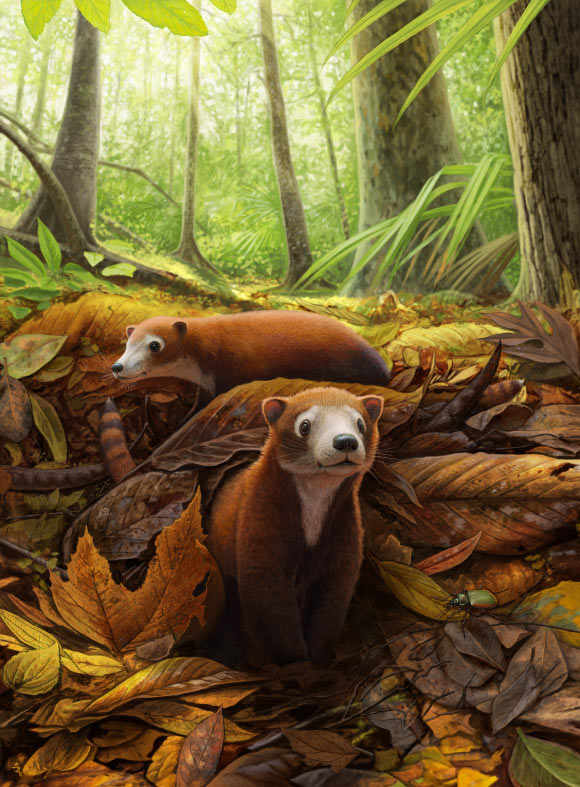
Newly-Discovered Species of Mammal Lived 610,000 Years after Dinosaur Extinction
Read more: Newly-Discovered Species of Mammal Lived 610,000 Years after Dinosaur ExtinctionSciNews has a story about the discovery of a new mammal from just after the end Cretaceous mass extinction. Militocodon lydae was found in the Corral Bluffs east of Colorado Spings, Colorado, within the Denver Basin. M. lydae was about the size of a chinchilla and likely omnivorous. It belongs to a group of mammals called the Periptychidae, which are the ancestors of modern day hoofed mammals, including deer, cows and pigs. Find more details in the paper, which was published in the Journal of Mammalian Evolution. Militocodon lydae provides important clues about the explosive diversification of mammals in the wake…
-
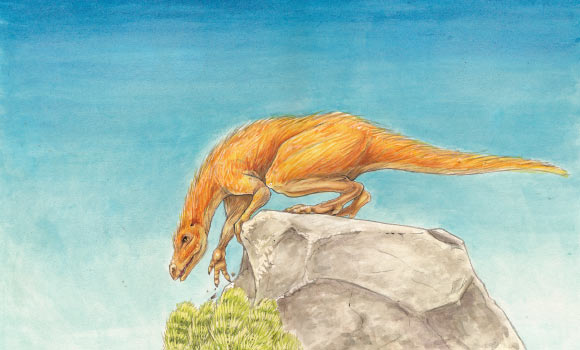
New Species of Jurassic Theropod Dinosaur Identified in England
Read more: New Species of Jurassic Theropod Dinosaur Identified in EnglandSciNews brings word of a new dinosaur discovered in England. Dornraptor normani lived about 200 million years ago in the early Jurassic Period, near what is now Dorset, England. The animal belongs to a group called the averostrans, which includes most theropod dinosaurs. The discovery was published in the paper “A new name for old bones: A reassessment of Early Jurassic theropod remains from Dorset, England” in the journal Palaeontologia Electronica. “Originally this material was referred to the early armored ornithischian taxon Scelidosaurus harrisonii, which had also been recovered from a Lower Jurassic Formation in Southern England,” the paleontologist wrote. “However,…
-
ESCONI May 2024 General Meeting – Friday, May 10th, 2024 at 8:00 PM via Zoom – “Endless Forms Most Beautiful: Evolution of Development”
Read more: ESCONI May 2024 General Meeting – Friday, May 10th, 2024 at 8:00 PM via Zoom – “Endless Forms Most Beautiful: Evolution of Development”The ESCONI General Meeting for May 2024 will be held on May 10th, 2024 at 8:00 PM vis Zoom. The topic is “Endless Forms Most Beautiful: Evolution of Development” by Matteo Fabbri of the Field Museum. The details are below. Matteo Fabbri is an Evolutionary Biologist. Here’s his page. I had the privilege to be part of more of a dozen fieldworks that spanned from North America, Europe, and Africa. My main focus has been on Triassic and Cretaceous rocks, which are key ages for the understanding of the origin and radiation of modern amniote groups. See my CV for…
-
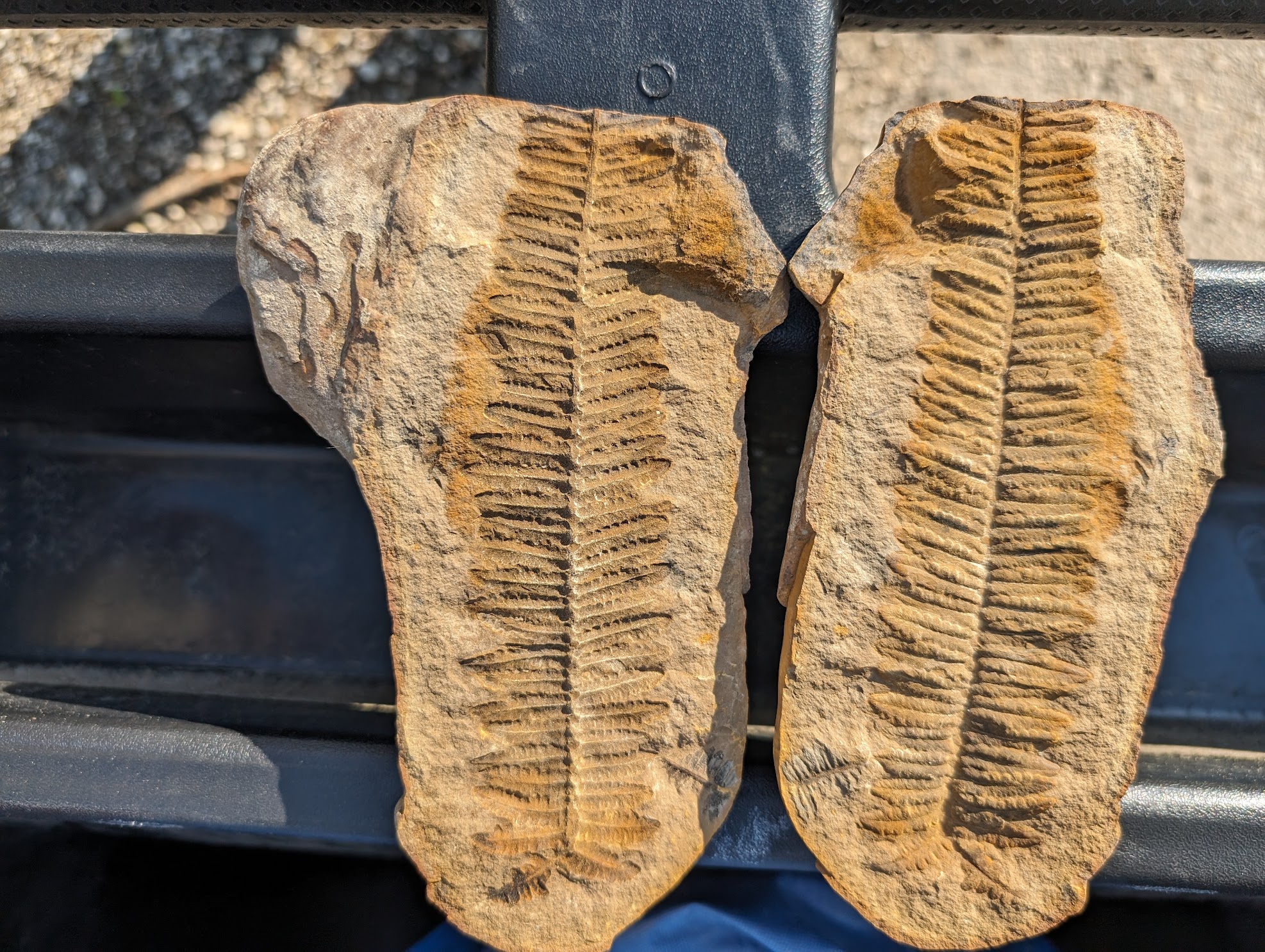
Fossil Friday #212: Mazon Creek Crenulopteris acadica
Read more: Fossil Friday #212: Mazon Creek Crenulopteris acadicaThis is the “Fossil Friday” post #212. Expect this to be a somewhat regular feature of the website. We will post any fossil pictures you send in to esconi.info@gmail.com. Please include a short description or story. Check the #FossilFriday Twitter hash tag for contributions from around the world! —————————————————– This week’s contribution comes from a very long time ESCONI member… Lil Magnussen. Lil joined ESCONI back in the 1960’s and rarely misses our Braceville field trips. You might remember, she let us post a very nice horseshoe crab in Fossil Friday #177. Her hobbies include beekeeping! And, she makes some very…
-
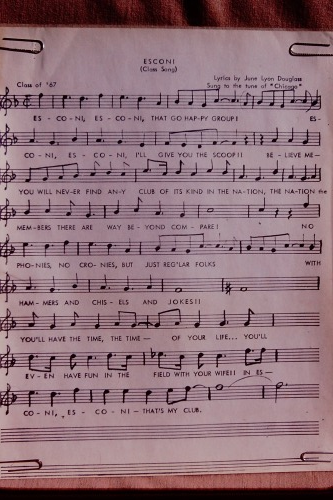
Throwback Thursday #213: ESCONI Class Song from 1967
Read more: Throwback Thursday #213: ESCONI Class Song from 1967This is Throwback Thursday #213. In these, we look back into the past at ESCONI specifically and Earth Science in general. If you have any contributions, (science, pictures, stories, etc …), please send them to esconi.info@gmail.com. Thanks! ——————————————————————————————- This was originally posted as Flashback Friday #20. It was part of the run up to ESCONI’s 70’s Anniversary in 2019. We are getting close to ESCONI’s 75th Anniversary later this year, so it’s time to revive a few of these posts. Here is a song composed by some ESCONI members way back in 1967. The lyrics are by June Lyon Douglass. It…
-
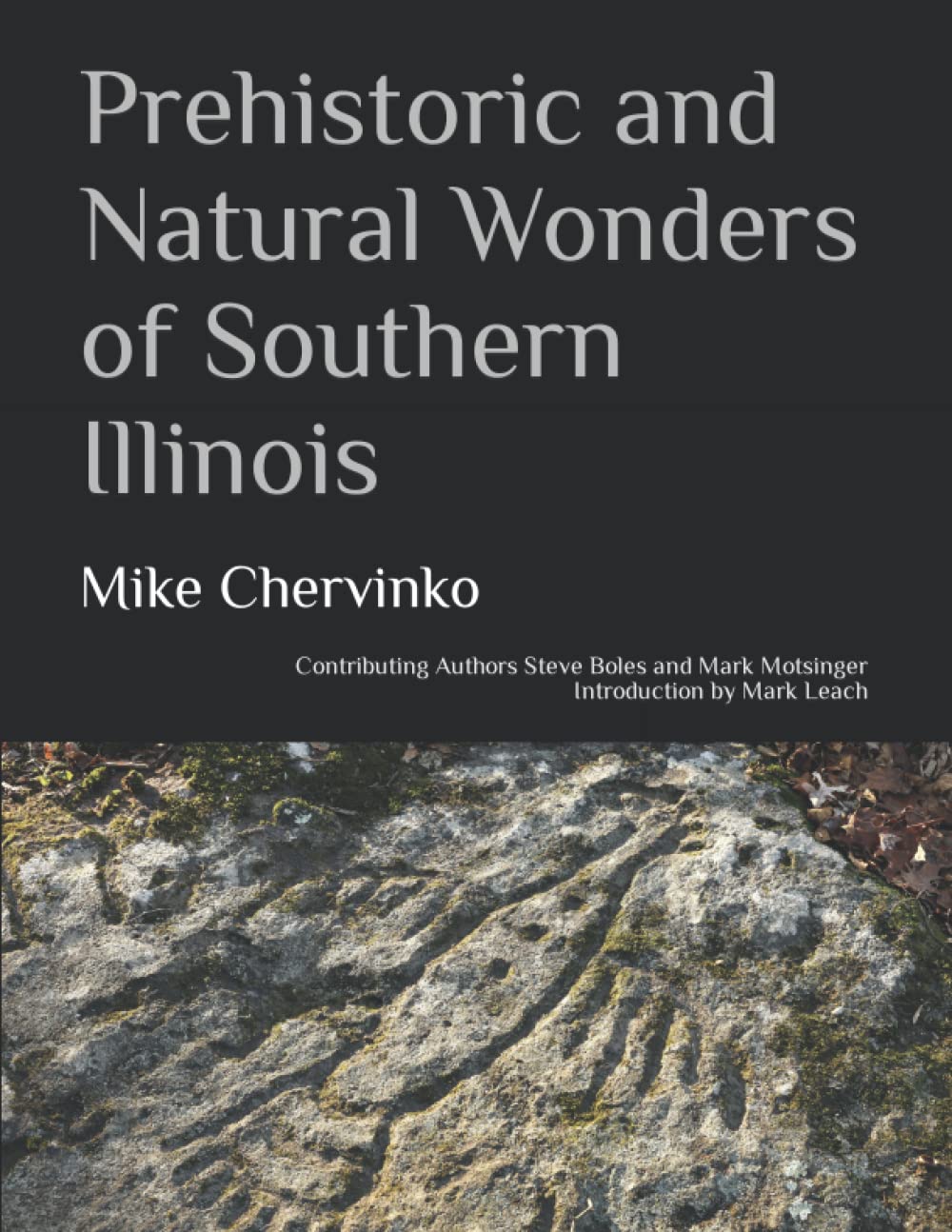
Video for ESCONI February 2024 – General Meeting, Topic: “Photographing Rock Art in Illinois and Missouri: A visual journey into the sacred, the unknown, and the creation of the universe”
Read more: Video for ESCONI February 2024 – General Meeting, Topic: “Photographing Rock Art in Illinois and Missouri: A visual journey into the sacred, the unknown, and the creation of the universe”The ESCONI February 2024 General Meeting was held on Friday, February 9th, 2024. The topic was “Photographing Rock Art in Illinois and Missouri: A visual journey into the sacred, the unknown, and the creation of the universe”. It was presented by Mike Chervinko. Mike is author of “Prehistoric and Natural Wonders of Southern Illinois”. The video is available on Youtube. When people think about Illinois, what usually comes to mind are cornfields, flat prairies, and Chicago. It’s hard to blame them because, for the most part, they’re right. However, the prairie state does hold a few surprises. Many of these…
-
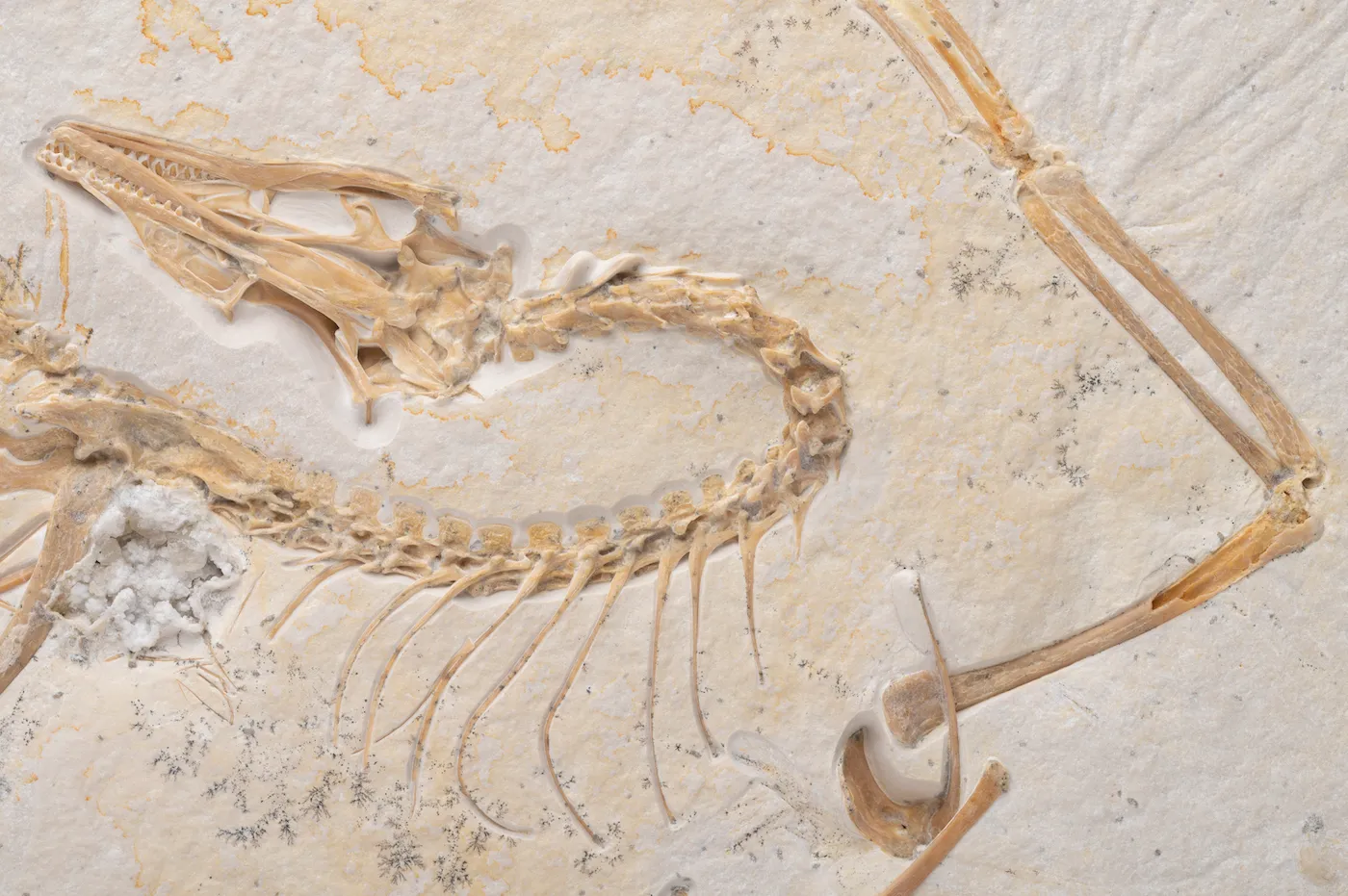
Field Museum: The Chicago Archaeopteryx!
Read more: Field Museum: The Chicago Archaeopteryx!The Field Museum is debuting its latest blockbuster specimen, the Chicago Archaeopteryx! With its first appearance in the Jurassic period 151 million years ago, Archaeopteryx is immensely significant due to it being the first “missing link” or transitional fossil that supported the Theory of Evolution. This small fossil also forged the link connecting dinosaurs and birds. Only 13 specimens of Archaeopteryx have been discovered, only 2 are on display in the Western Hemisphere, and 1 of those specimens is here at the Field Museum! The Chicago Archaeopteryx was discovered before 1990 and was privately owned before being acquired by the…
-
Mazon Monday #215 – Field Trip Report for the Danville Spoil Pile
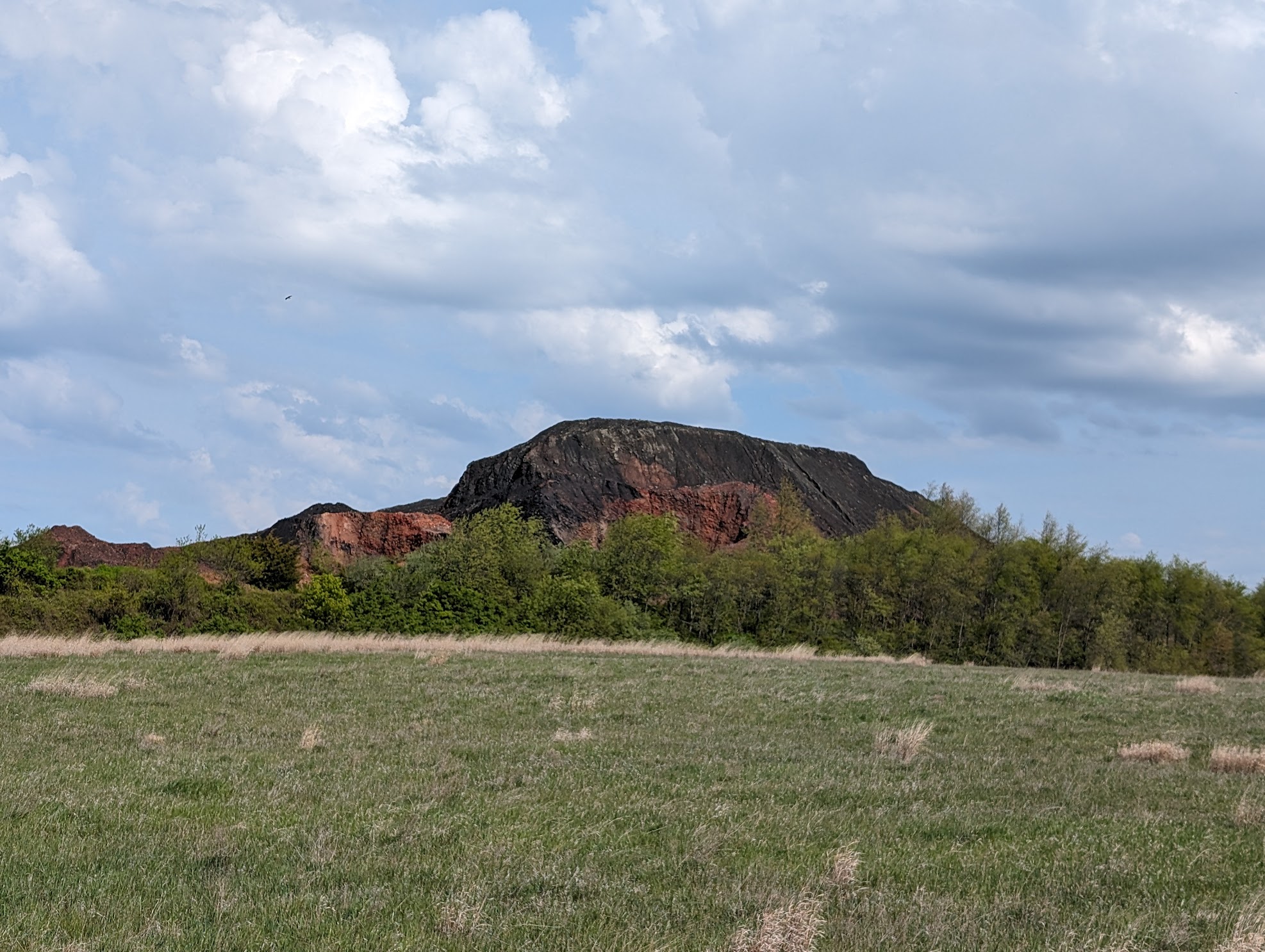
Read more: Mazon Monday #215 – Field Trip Report for the Danville Spoil PileThis is Mazon Monday post #215. What’s your favorite Mazon Creek fossil? Tell us at email:esconi.info@gmail.com. Despite the morning storm and intermittent rain on the way down, about 20 ESCONI members braved the weather and showed up for a very successful day of collecting Pennsylvanian fossils. Trips to this locality have been very popular, most trips filling up quickly. We did have a few cancellations this time, so get on the waiting list next time. It’s worth the 3 hour drive from the Chicago area, with nice fossils found on every trip. There’s always a chance for immediate gratification with…
-

PBS Eons: There’s No Single Cradle of Humankind
Read more: PBS Eons: There’s No Single Cradle of HumankindPBS Eons has a new episode. This one is about human origins. Where did our ancestors evolve? It would take decades for paleontologists to realize that maybe there wasn’t just one so-called “cradle of humankind,” and realize that maybe they’d been asking the wrong question all along.
-

ESCONI Field Trip to Napoleon, IN for Silurian/Ordovician Fossils – Saturday, June 1, 2024
Read more: ESCONI Field Trip to Napoleon, IN for Silurian/Ordovician Fossils – Saturday, June 1, 2024Cystoid from a field trip to Napoleon – from a University of Kentucky website. There will be a field trip for ESCONI members on Saturday, June 1, 2024, to the quarry just east of Napoleon, Indiana. We need to meet at the quarry entrance at 8:30 a.m. EDT. We have the chance to collect Silurian (Osgood Member of the Salamonie Dolomite) and possibly Ordovician rocks. Rules are as follows: To register for this field trip, send John an email with the number of members attending. His email address is: fossilnautiloid@aol.com. No phone calls please. Do NOT call the quarry. Hewill…
-
Fossil Friday #211: Lemont Calymene From the Past
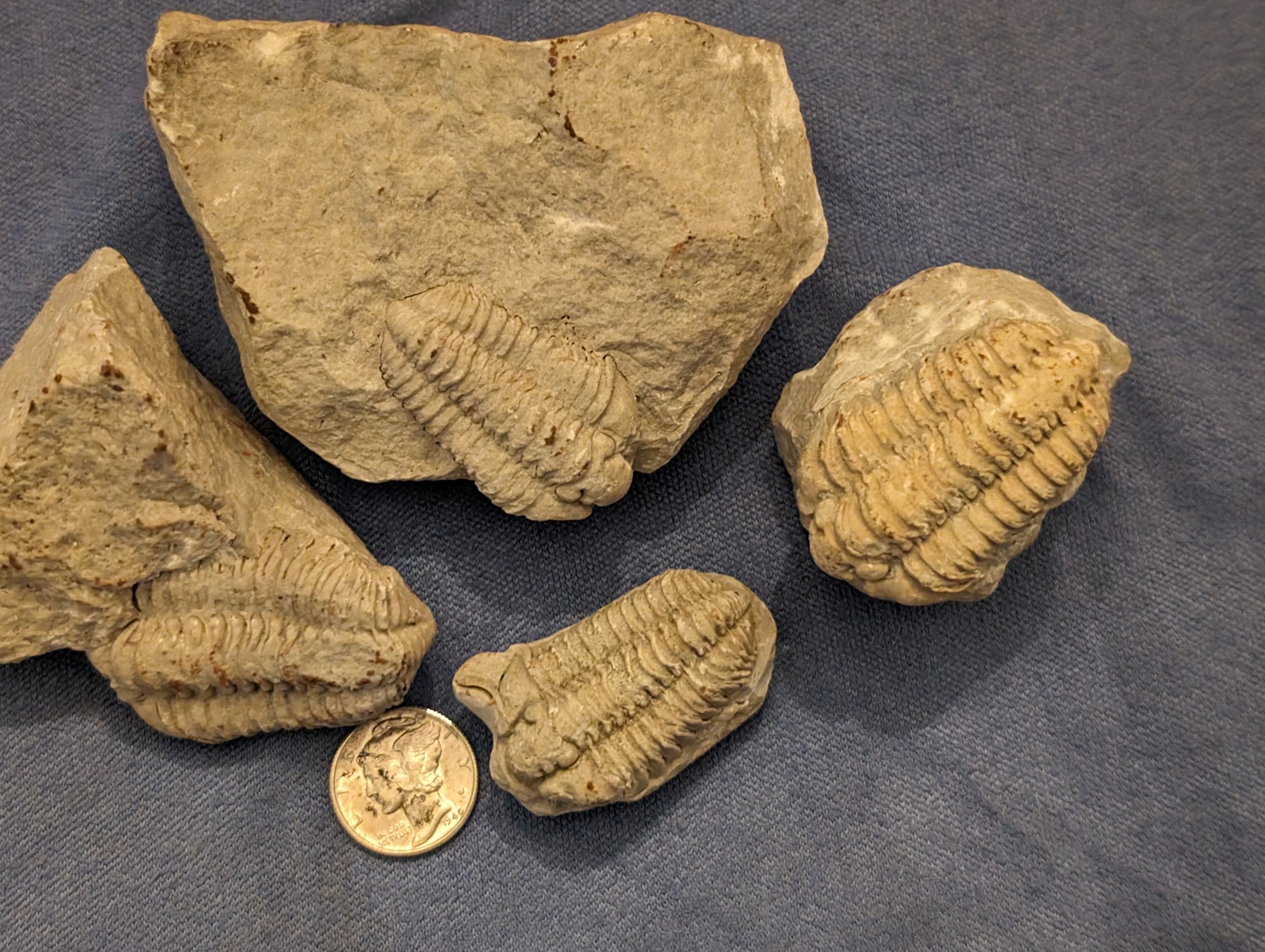
Read more: Fossil Friday #211: Lemont Calymene From the PastThis is the “Fossil Friday” post #211. Expect this to be a somewhat regular feature of the website. We will post any fossil pictures you send in to esconi.info@gmail.com. Please include a short description or story. Check the #FossilFriday Twitter hash tag for contributions from around the world! This week, we have a combination Throwback Thursday and Fossil Friday. We have some spectacular Calymeme celebra trilobites. These C. celebra lived about 425 million years ago during the Silurian Period. They were collected and prepared by the Wanda Boush (nee Lambert), who joined ESCONI in 1958. She worked with Jean Reynolds and…
-
Throwback Thursday #212: Looking Back at ESCONI for May 2024
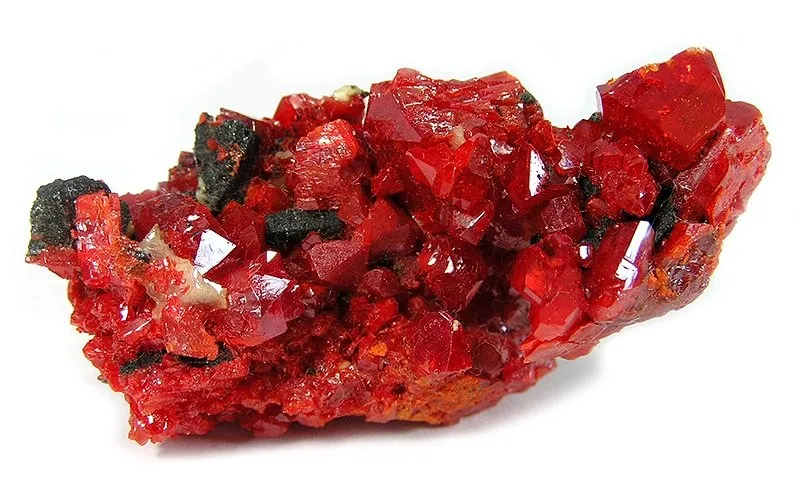
Read more: Throwback Thursday #212: Looking Back at ESCONI for May 2024This is Throwback Thursday #212. In these, we look back into the past at ESCONI specifically and Earth Science in general. If you have any contributions, (science, pictures, stories, etc …), please send them to esconi.info@gmail.com. Thanks! 25 Years Ago – May 1999 50 Years Ago – May 1974 70 Years Ago – May 1954
-
Can the Best Fossils Ever Found Answer the Biggest Dinosaur Question?
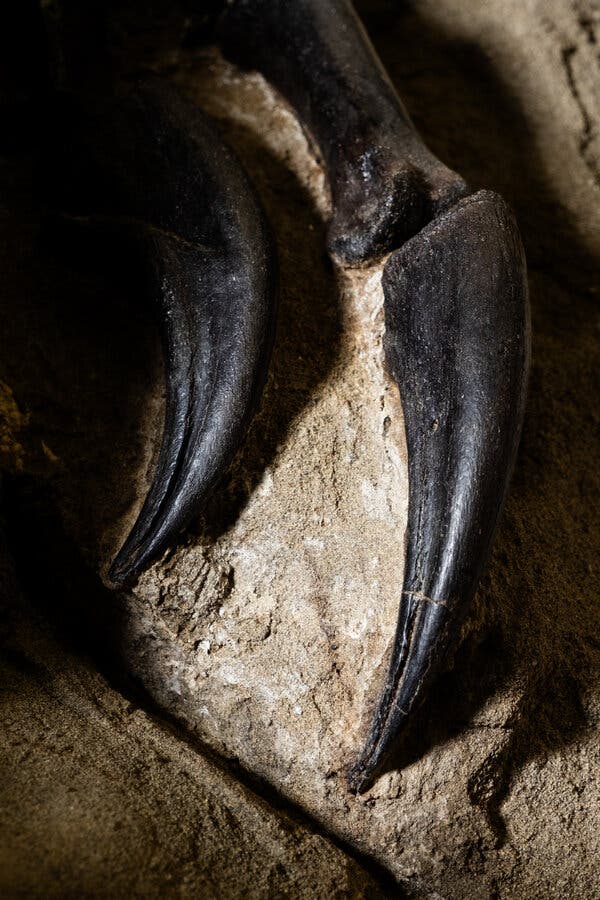
Read more: Can the Best Fossils Ever Found Answer the Biggest Dinosaur Question?The New York Times has a story about the “Dueling Dinosaurs”. This amazing fossil of a tyrannosaur and a Triceratops entangled in a block of sandstone by ranchers in 2006. After a protracted legal battle, the dinosaurs were purchased by the North Carolina Museum of Natural Sciences in Raleigh, North Carolina. They are the centerpiece of a new exhibit which opened on Saturday, April 27th, 2024. Meanwhile, paleontologists at the NCMNS are trying to determine what type of tyrannosaur preserved next to the Triceratops. But the real showstopper is a whole other animal — maybe literally. That’s because the exhibit…
-

ESCONI Events May 2024
Read more: ESCONI Events May 2024Field trips require membership, but visitors are welcome at all meetings! Sat, May 4th ESCONI Field Trip Braceville, IL for Mazon Creek Fossils – Full! Details can be found here. Sun, May 5th ESCONI Field Trip Braceville, IL for Mazon Creek Fossils – Full! Details can be found here. Fri, May 10th ESCONI General Meeting 8:00 PM – Topic: “Endless Forms Most Beautiful: Evolution of Development” by Matteo Fabbri of the Field Museum Zoom link Sat, May 11th ESCONI Junior Meeting – 6:30 PM at College of DuPage – Topic: “Fluorscent Minerals” Specifics of this meeting are available from Scott…
-

Paleontologists Discover Massive Dinosaur Tracks in China, Hinting at One of the Largest Known Raptors
Read more: Paleontologists Discover Massive Dinosaur Tracks in China, Hinting at One of the Largest Known RaptorsSmithsonian Magazine has a post about fossil tracks of one of the largest known raptors. The tracks were found on what was once a muddy river plain in what is now southwestern China. The dinosaur, named Fujianipus (meaning “foot of Fujian”) yingliangi, lived about 96 million years ago during the middle Cretaceous Period. The footprints were discovered during the winter of 2020 at a locality referred to as the Longxiang tracksite. The site measures nearly 17,000 square feet and contains more than 240 identifiable footprints. The discovery was announced in a paper in the journal iScience. “You know a raptor track when you…
-
Mazon Monday #214: Rhabdoderma exiguum
Read more: Mazon Monday #214: Rhabdoderma exiguumThis is Mazon Monday post #214. What’s your favorite Mazon Creek fossil? Tell us at email:esconi.info@gmail.com. Rhabdoderma exiguum is a species of Mazon Creek coelacanth. Coelacanths are lobe-finned fish, thought extinct since the Cretaceous. The first living coelacanth was discovered in 1938 off the coast of South Africa. There are now two known living species. Rhabdoderma exiguum was described by Charles R. Eastman (1868 – 1918) in 1902. Eastman was an American geologist and paleontologist, who specialized in fish. The paper “The Carboniferous Fish-Fauna of Mazon Creek, Illinois”, which was published in The Journal of Geology. He named it Coelacanthus…
-

Planet of the Rocks – May 25th and 26th, 2024 at the Kane County Fairgrounds
Read more: Planet of the Rocks – May 25th and 26th, 2024 at the Kane County FairgroundsChicagoland Gems & Minerals Association 47th Annual Show ● May 25th & 26th, 2024 Saturday, 10am-6pm ● Sunday, 10am-5pm Kane County Fairgrounds525 S. Randall RoadSt. Charles, IL 60174 Over 30 Dealers, Special Exhibits, Demonstrators,Kids Korner, Door Prizes, and Silent AuctionsFree Parking – Air Conditioned – Food Available Wholesale RoomRequires Current State Tax lD and Trade CredentialsSaturday, 10am – 6pm ● Sunday 10am – 3pm Adults $5, Seniors (62) and Students $3, Two-day Passes $8.Kids under 13, Scouts in Uniform, and Active Service Personnel w/ID, FREE. Visit our website at CGMAshow.comEmail us at mkuntz@cgmashow.com.
-
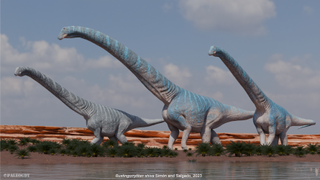
Enormous dinosaur dubbed Shiva ‘The Destroyer’ is one of the biggest ever discovered
Read more: Enormous dinosaur dubbed Shiva ‘The Destroyer’ is one of the biggest ever discoveredLiveScience has a story about a new dinosaur discovery. A huge titanosaur, Bustingorrytitan shiva, one of the largest land animals ever, has been found in Argentina. B. shiva had an estimated weight of 74 tons. It lived about 90 million years ago during the middle Cretaceous Period. The animal was described in a paper in the journal Acta Palaeontologica Polonica. The B. shiva discovery in the North Patagonia region of southern South America demonstrates that “megatitanosaurs” with gigantism in excess of 55 tons (50 metric tons) evolved separately within titanosaurs, according to study lead author María Edith Simón, a paleontologist who ran the B. shiva excavation. “In Patagonia, we are still at a…
-
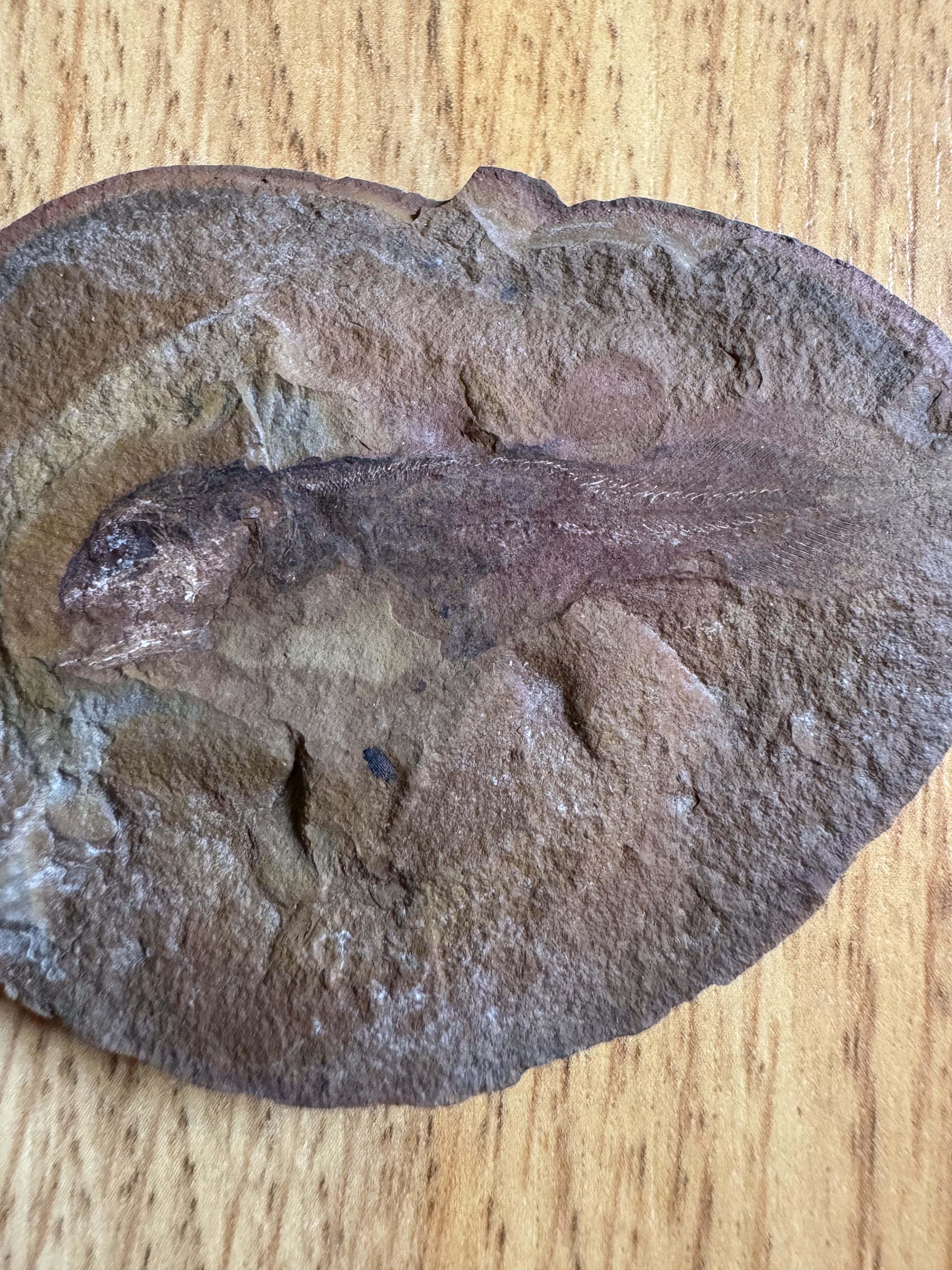
Fossil Friday #210: Rhabdoderma exiguum
Read more: Fossil Friday #210: Rhabdoderma exiguumThis is the “Fossil Friday” post #210. Expect this to be a somewhat regular feature of the website. We will post any fossil pictures you send in to esconi.info@gmail.com. Please include a short description or story. Check the #FossilFriday Twitter hash tag for contributions from around the world! —————————————————– For this week, we have a beautiful Rhabdoderma exiguum, which is a Mazon Creek coelacanth. Coelacanths are lobe-finned fish, thought extinct since the Cretaceous. The first living coelacanth was discovered in 1938 off the coast of South Africa. There are now two known living species. This spectacular specimen was found in…

ESCONI Gem, Mineral, and Fossil Show
Most Recent Post
- Throwback Thursday #312: Ron Schinderle Donation
 Barb Schinderle stopped by ESCONI Show last month to drop off a donation of her late husband Ron’s fossils. Ron passed away in 2021. He was a long time ESCONI member and an avid fossil collector . He went on many ESCONI field trips. A group of us remember him fondly from our many trips to Pit 11 and Fossil Rock Campgrounds to collect Mazon Creek fossils.
- About ESCONI
- Around the Web
- Calendar of Events
- Code of Ethics and Conduct
- ESCONI Books for Sale
- ESCONI Gem, Mineral, and Fossil Show
- ESCONI in the News
- ESCONI Videos
- Field Trips
- Flashback Friday
- Fossil Friday
- Mazon Creek
- Mazon Monday
- Member Spotlight
- Membership Information
- Reference Material
- Throwback Thursday
- Trilobite Tuesday
Field trips require membership, but visitors are welcome at all meetings!
| Friday, April 10th | General Meeting – 8:00 PM via Zoom. Jessica Hull will present “Life in the Devonian Period, The Age of Fishes.” |
| Saturday, April 11th | Junior Study Group Meeting – 2:00 PM, in person at the College of DuPage Technical Education Center (TEC) Building – Room 1038A (Map). Katherine Howard will present on Sand and Sediment Collecting. Specifics of this meeting are available from Scott Galloway, 630-670-2591, gallowayscottf@gmail.com. |
| Saturday, April 18th | Paleontology Study Group – 7:30 PM via Zoom and in person at the College of DuPage, TEC, Room 1038B (Map). Keith Robitschek will present “Digging the Marl of the Lance Formation.” |
| Friday, April 24th | MAPS Expo XLVII – Springfield, IL. |
| Saturday, April 25th | MAPS Expo XLVII – Springfield, IL. |
| Sunday, April 26th | MAPS Expo XLVII – Springfield, IL. |
| No meeting this month | Mineralogy Study Group |