
-
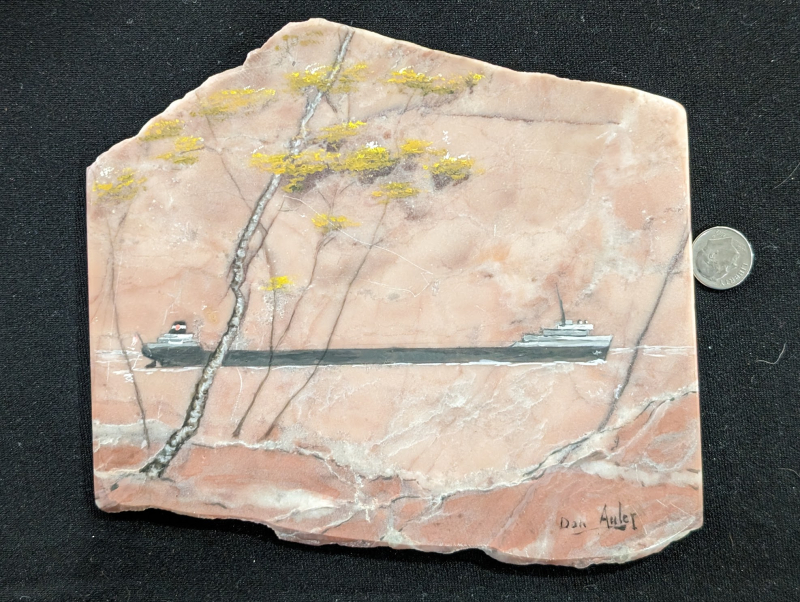
Throwback Thursday #211: Don Auler Paintings
Read more: Throwback Thursday #211: Don Auler PaintingsThis is Throwback Thursday #211. In these, we look back into the past at ESCONI specifically and Earth Science in general. If you have any contributions, (science, pictures, stories, etc …), please send them to esconi.info@gmail.com. Thanks! ——————————————————————————————- Who was Don Auler? He and his family joined ESCONI in March 1967. He and his wife Dorothy were very active with ESCONI all the way to the 2002, when Don passed away at the age of 84. Both of them served on the board of ESCONI in various capacities. They were a fixture at the annual ESCONI shows. Don and Andy…
-

Paleontologists unearth what may be the largest known marine reptile
Read more: Paleontologists unearth what may be the largest known marine reptilePhys.org has a story about the discovery of what might be the largest marine reptile ever found. A father and daughter, Justin and Ruby Reynolds from Braunton, Devon, found pieces of the jawbone of a huge ichthyosaur that lived about 202 million years ago during the Triassic Period. While hunting fossils on the beach at Blue Anchor, Somerset, Ruby found the first pieces of the fossil jaw. They contacted Dr. Dean Lomax, a paleontologist at The University of Manchester, an ichthyosaur expert. Dr. Lomax described the animal, Ichthyotitan severnensis, in a paper published in the journal PLoS ONE. Ichthyotitan is…
-
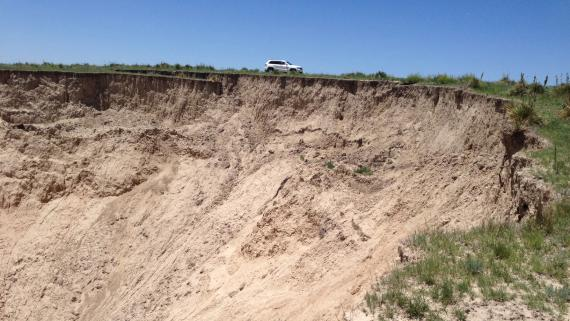
Geologic History of Kansas
Read more: Geologic History of KansasThe Kansas Geologic Survey has a new video over on Youtube. This one is on the geologic history of Kansas. We look at the geologic history of Kansas, which includes oceans, tropical rainforests, loads of salt, and glaciers. To learn more about the geologic history of Kansas, check out our educational website: https://geokansas.ku.edu/
-
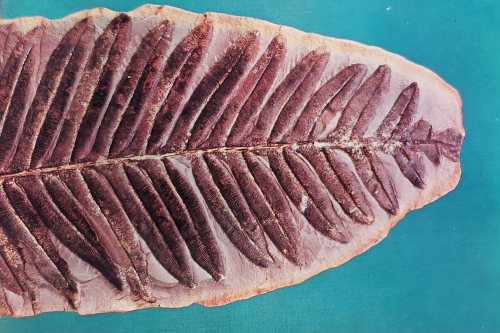
Mazon Monday #213: Postcards from Mazon Creek
Read more: Mazon Monday #213: Postcards from Mazon CreekThis is Mazon Monday post #213. What’s your favorite Mazon Creek fossil? Tell us at email:esconi.info@gmail.com. Deltiology is the study and collection of postcards. The name comes from Greek, δελτίον, deltion, diminutive of δέλτος, deltos, “writing tablet, letter”; and -λογία, -logia. Deltiology is a very popular type of collecting. People all around the world collect and trade both vintage and modern postcards. From Wikipedia The initial views on deltiology were somewhat different from the ones we have today. At the beginning of the 20th century, it was believed that only a postcard that had been mailed, and thus “fulfilled its function”, could be a worthy…
-

You Can Visit the World’s Largest Continuous Dinosaur Trackway, Now on Protected Public Land
Read more: You Can Visit the World’s Largest Continuous Dinosaur Trackway, Now on Protected Public LandSmithsonian Magazine has an article about a dinosaur trackway in Colorado. The track dates to about 150 million years ago during the Jurassic Period. 134 consecutive footprints trace out a sauropod dinosaur walking for a bit and then changing direction in a loop. The West Gold Hill Dinosaur Track site dates is located just west of Ouray, Colorado. Ouray is a small town in the San Juan Mountains of southwest Colorado with a population of around 1,000 residents. The United States Forest Service has purchased the land, 27 acres, and will preserve and protect what is the largest continuous dinosaur trackway…
-

PBS Eons: The Hazy Evolution of Cannabis
Read more: PBS Eons: The Hazy Evolution of CannabisPBS Eons has a new episode. This one is about the origin of Cannabis. How did such a strange plant like cannabis come to be in the first place? When and where did we first domesticate it? And why oh why does it get us high?
-
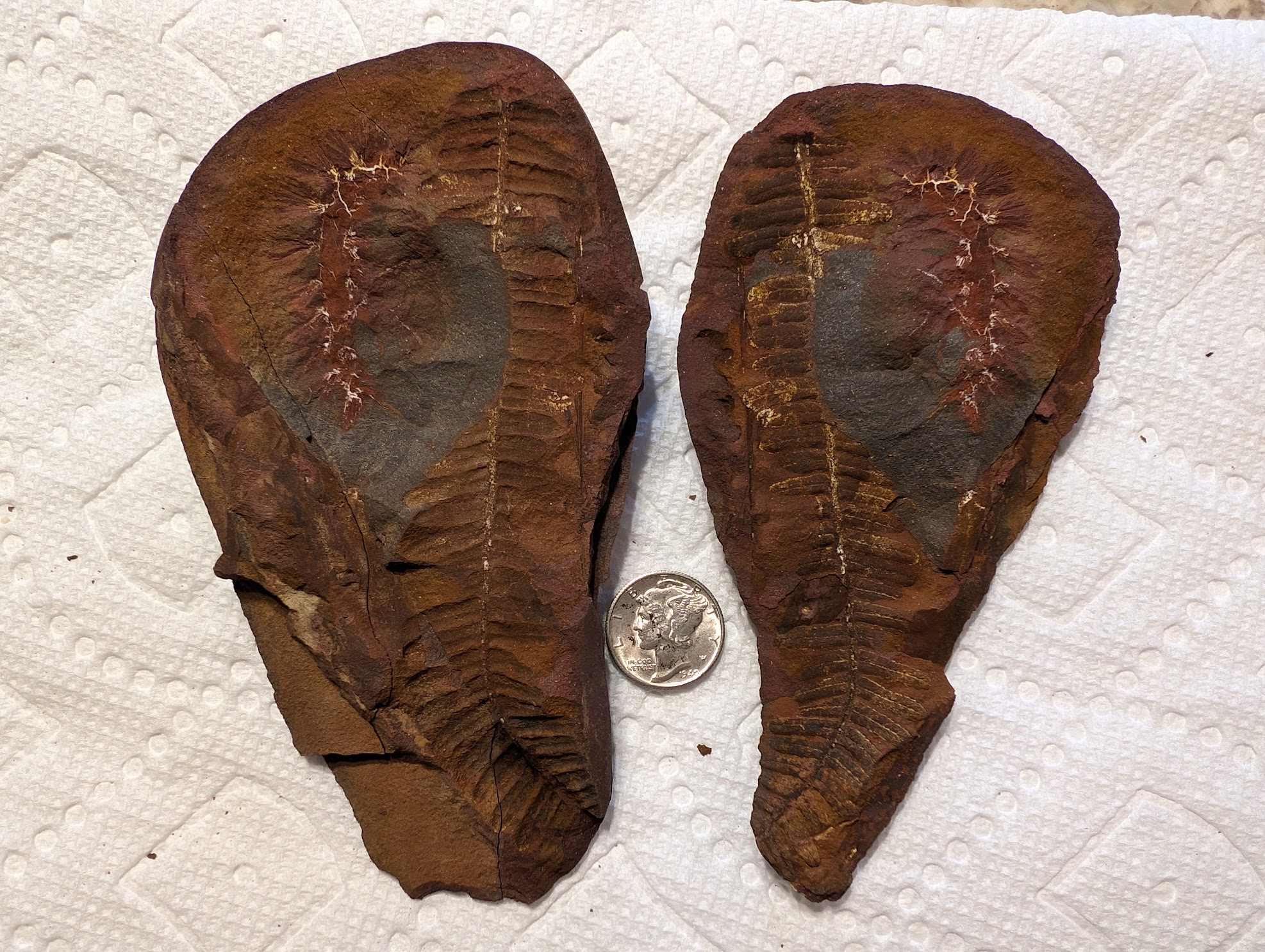
Fossil Friday #209: Palaeocampa anthrax
Read more: Fossil Friday #209: Palaeocampa anthraxThis is the “Fossil Friday” post #209. Expect this to be a somewhat regular feature of the website. We will post any fossil pictures you send in to esconi.info@gmail.com. Please include a short description or story. Check the #FossilFriday Twitter hash tag for contributions from around the world! For this week, we have the rarest of the Mazon Creek polychaete worms. Palaeocampa anthrax described by Fielding Bradford Meek (1817-1876) and Amos Henry Worthen (1813-1888) in “Notice of some new types of organic remains from the Coal Measures of Illinois” in 1865. Currently, it is thought to be related to a…
-
Throwback Thursday #210: A Rockhound
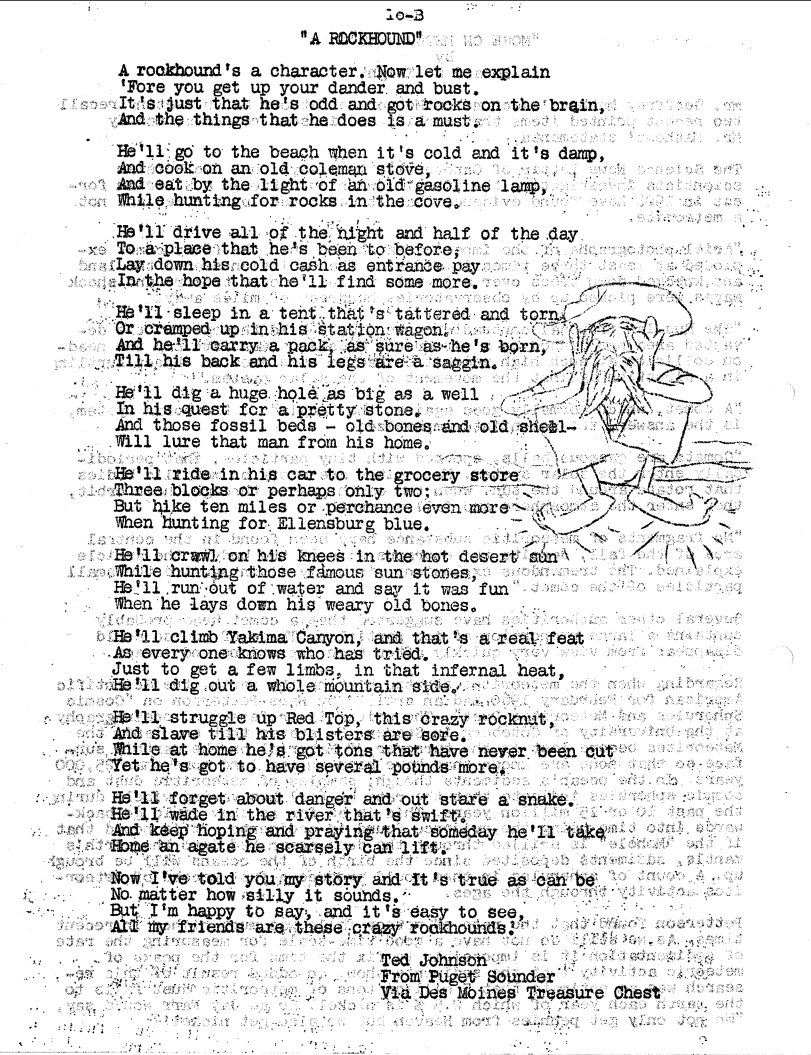
Read more: Throwback Thursday #210: A RockhoundThis is Throwback Thursday #210. In these, we look back into the past at ESCONI specifically and Earth Science in general. If you have any contributions, (science, pictures, stories, etc …), please send them to esconi.info@gmail.com. Thanks! This poem by Ted Johnson of the Puget Sounder appeared in the April 1962 edition of the ESCONI newsletter. Unfortunately, there doesn’t seem to be any information online about the Puget Sounder or the Des Moines Treasure Chest. If you know anything about these newsletters, please email us at esconi.info@gmail.com. “A ROCKHOUND” A rockhound’s a character. Now let me explain‘Fore you get up…
-

Ancient Foxes Lived and Died Alongside Humans
Read more: Ancient Foxes Lived and Died Alongside HumansThe New York Times Trilobites column has a story about domesticated foxes. A paper in the Royal Society Open Science describes evidence that foxes lived among people of early South American communities. “It appears to have been intentionally buried within this human cemetery,” said Ophélie Lebrasseur, a zooarchaeologist at the University of Oxford and an author of the new study. “It’s a practice that had been suggested before, but to actually find it is a nice surprise.” According to Dr. Lebrasseur, most archaeological traces of South American canids are usually isolated bones or teeth. But the nearly complete skeleton of…
-
ESCONI April 2024 Paleontology Meeting – Saturday, April 20th, 2024 at 7:30 PM Zoom – “Terror Birds”
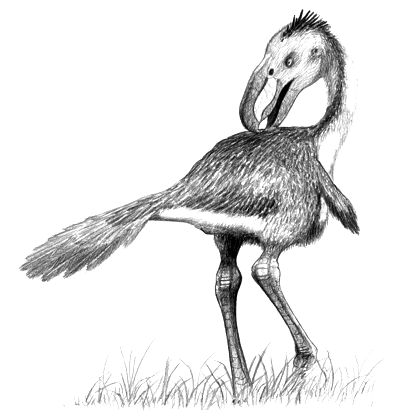
Read more: ESCONI April 2024 Paleontology Meeting – Saturday, April 20th, 2024 at 7:30 PM Zoom – “Terror Birds”The April 2024 will be held on April 20th, 2024 at 7:30 via Zoom. The presentation will be given by John Catalani. Abstract We begin with an explanation of the “Terror Birds” and their position in Geologic Time. The two major groups of these large cursorial birds are the Phorusrhacidae and the Gastornithidae. The first group was the longest lasting and, until the very end, lived in South America, at that time an isolated continent. With the appearance of the Panamanian Land Bridge and the Great American Biotic Interchange, the last “Terror Bird” took up residence in the, mostly, southeastern…
-
Mazon Monday #212: Aphlebia crispa
Read more: Mazon Monday #212: Aphlebia crispaThis is Mazon Monday post #212. What’s your favorite Mazon Creek fossil? Tell us at email:esconi.info@gmail.com. We have a very rare plant for this week’s post. Aphlebia crispa is a leafy plant that was lettuce-like in appearance. It had wide distribution as it’s found in fossil deposits throughout England, Europe, and North America. Aphlebia is thought to be associated with ferns attached to the rachis of many species of Pecopteris and Sphenopteris. The name Aphlebia is derived from the Greek “phleb-“, meaning vein, and “a-“, meaning without. A. crispa was described by Christian August von Gutbier (1798-1866) in 1835. Gutbier was a German paleontologist…
-

Uncovering the Secrets of Colombia’s Rich Fossil Deposits
Read more: Uncovering the Secrets of Colombia’s Rich Fossil DepositsSmithsonian Magazine has a piece about Columbia’s rich fossil deposits. The formation of the Andes Mountain, about 72 million years ago, revealed many marine fossils from the Cretaceous Period. Ammonites—extinct marine cephalopods with distinctive coiled shells—are embedded in walls, floors and roads all across town. Locals and visitors often find fossils when walking unpaved roads and hiking the trails around Villa de Leyva. Before former President Juan Manuel Santos signed a 2018 decree protecting the country’s paleontological heritage, street vendors sold fossils to passing tourists. During the Lower Cretaceous, between 100 million and 145 million years ago, this region of…
-

Volcano Comedy Show – Thursday, April 18th, 2024
Read more: Volcano Comedy Show – Thursday, April 18th, 2024Ben Miller is bringing his Volcano Comedy Show to Chicago on Thursday, April 18th, 2024. The show will be held at the Lincoln Lodge in Chicago from 7:30 to 9:00 PM. What happens when a comedian walks into a volcano? In 2023, Ben Miller was the artist in residence at Hawai’i Volcanoes National Park, the first ever stand-up comedian ever selected. This was probably a terrible idea on their part. Come watch this show where scientist turned stand-up comedian Ben Miller explores volcanology, entomology, Hawaiian history, cats, cookies, and more. And yes that photo is real. Ben has made people laugh in…
-
Fossil Friday #208: Mamayocaris jaskoskii
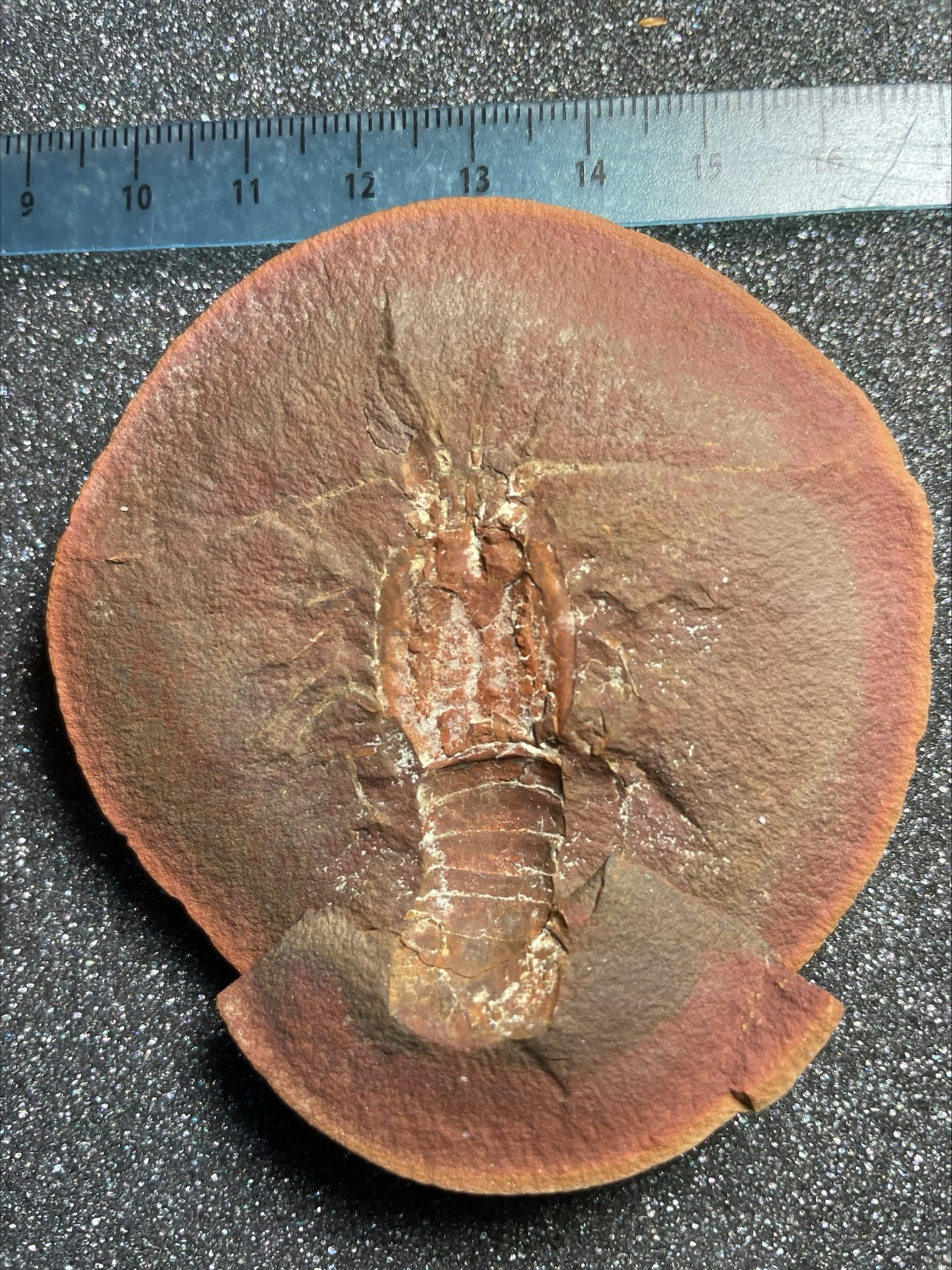
Read more: Fossil Friday #208: Mamayocaris jaskoskiiThis is the “Fossil Friday” post #208. Expect this to be a somewhat regular feature of the website. We will post any fossil pictures you send in to esconi.info@gmail.com. Please include a short description or story. Check the #FossilFriday Twitter hash tag for contributions from around the world! This week’s contribution comes from Pat Kelly, who stopped by to say hello at the ESCONI Gem, Mineral, and Fossil Show back in March. He’s been collecting at Pit 11 with his daughter for a few years. He had a bit of luck last year when he found a very nice Mamayocaris…
-
ESCONI April 2024 General Meeting – Friday, April 12th, 2024 at 8:00 PM via Zoom – “Ice age mammals from the frozen North”
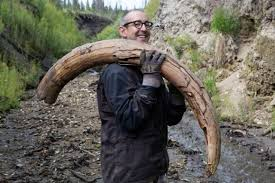
Read more: ESCONI April 2024 General Meeting – Friday, April 12th, 2024 at 8:00 PM via Zoom – “Ice age mammals from the frozen North”The ESCONI General Meeting for April 2024 will be held on Friday, April 12th, 2024 at 8:00 PM zia Zoom. The topic of the presentation is “Ice age mammals from the frozen North“. It will be given by Yukon Paleontologist Grant Zazula. Ever since the Klondike Gold Rush of 1898, Yukon miners in search of shiny gold nuggets have uncovered the spectacular remains of ice age mammals. This presentation will feature the phenomenal record of ice age mammals and paleo-environments recovered in the wilds of northwest Canada, including spectacular permafrost preserved animal mummies. Collaboration between gold miners, local First Nations…
-
Throwback Thursday #209: Tony Sobolik, I Remember…….
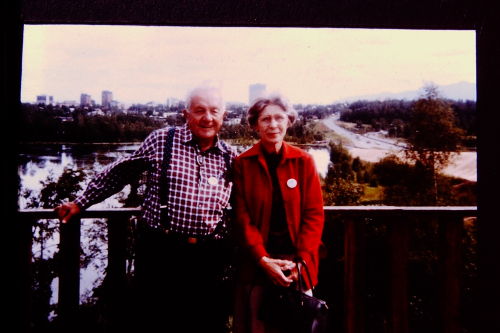
Read more: Throwback Thursday #209: Tony Sobolik, I Remember…….This is Throwback Thursday #209. In these, we look back into the past at ESCONI specifically and Earth Science in general. If you have any contributions, (science, pictures, stories, etc …), please send them to esconi.info@gmail.com. Thanks! This was originally posted as Flashback Friday #10. It was part of the run up to ESCONI’s 70’s Anniversary in 2019. We are getting close to ESCONI’s 75th Anniversary later this year, so it’s time to revive a few of these posts. Here is an article entitled “I Remember…………” by Anton “Tony” Sobolik that appeared in the 40th Anniversary issue of the newsletter…
-
Newly discovered fossil of giant turtle is named after Stephen King novel character
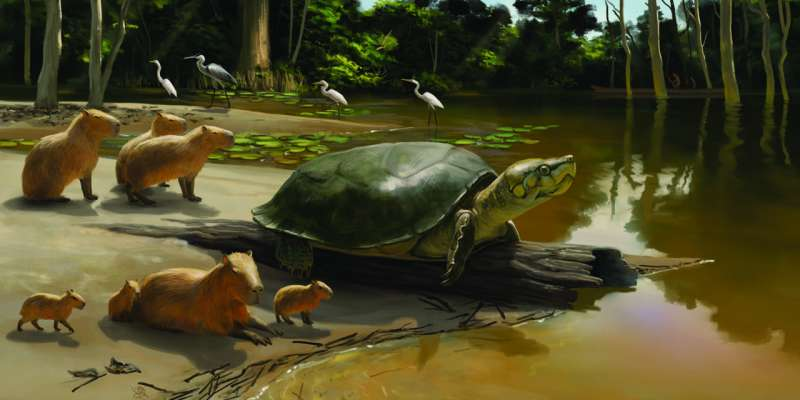
Read more: Newly discovered fossil of giant turtle is named after Stephen King novel characterPhys.org has a story about a new described giant turtle from the Brazilian Amazon. The new species, Peltocephalus maturin, lived during the late Pleistocene, between 40,000 an 9,000 years ago. It was described by Dr. Gabriel S. Ferreira from the Senckenberg Center for Human Evolution and Paleoenvironment at the University of Tübingen. The name P. maturin comes from Maturin,” a fictional character created by best-selling author Stephen King. The turtle was described in a paper published in the journal Biology Letters. With a maximum shell length of 140 centimeters, the Asian narrow-headed softshell turtle (Chitra chitra) together with the approximately 110-centimeter-long South American…
-

Titanosaurs were the biggest land animals Earth’s ever seen − these plant-powered dinos combined reptile and mammal traits
Read more: Titanosaurs were the biggest land animals Earth’s ever seen − these plant-powered dinos combined reptile and mammal traitsThe Conversation has an interesting article about Titanosaurs. It’s written by Kristina Curry Rogers a Professor of Biology and Geology at Macalester College in Saint Paul, Minnesota. She studies titanosaurs, which are a group of sauropod dinosaurs. Titanosaurs originated by the Early Cretaceous Period, nearly 126 million years ago, at a time when many of the Earth’s landmasses were much closer together than they are today. Over the next 75 million to 80 million years, the continents slowly separated, and titanosaurs drifted along with the changing formations, becoming distributed worldwide. There were nearly 100 species of titanosaurs, making up more than 30% of known sauropod…
-
Mazon Monday #211: Mariopteris wilmingtonense
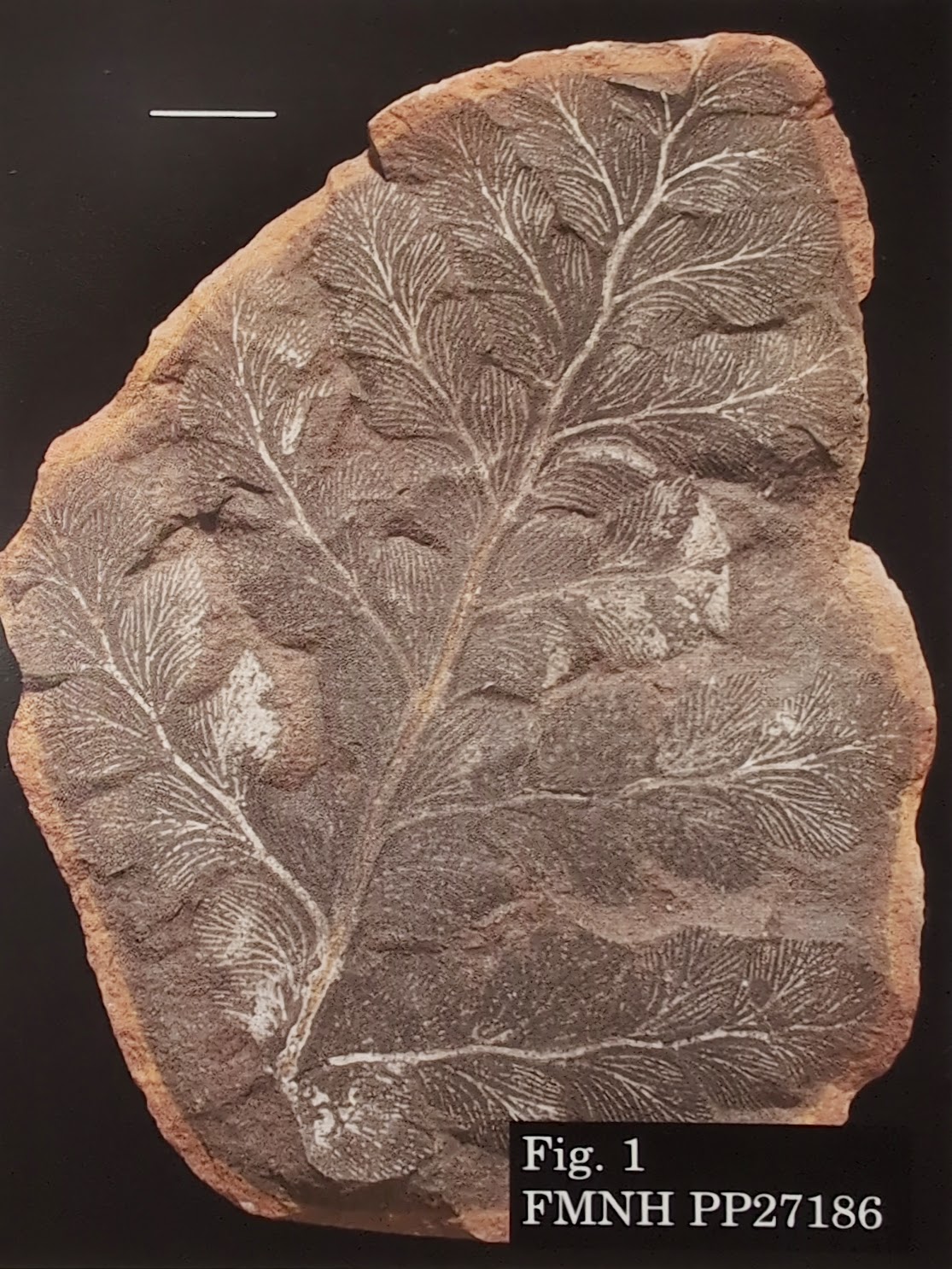
Read more: Mazon Monday #211: Mariopteris wilmingtonenseThis is Mazon Monday post #211. What’s your favorite Mazon Creek fossil? Tell us at email:esconi.info@gmail.com. Mariopteris wilmingtonense is a rare and beautiful variety of Mariopteris found only in Mazon Creek. It was described by George Langford Sr. in 1958 in his first Mazon Creek book “The Wilmington Coal Flora From a Pennsylvanian Deposit in Will County, Illinois”. Langford designates it as a new species on pages 264-265. 1, 2. Mariopteris wilmingtonense. new species. Fig. 1 is the positive half of the two nodular impressions. It is not flattened, and the pinnae are more or less buried in the…
-
New Jurassic Shuotheriid Species Sheds Light on Early Evolution of Mammaliaforms
Read more: New Jurassic Shuotheriid Species Sheds Light on Early Evolution of MammaliaformsLive Science has a story about a new Jurassic mammaliaform. Feredocodon chowi lived during the Jurassic in what is now China. It’s a Shuotheriid, which is a group of mammal-like animals that have long been problematic as to where they fit into the mammalian family tree. Their unique dental characteristics make them hard to classify. A new paper in the journal Nature describes F. chowi and its classification. Professor Vickers-Rich and her colleagues examined pseudotribosphenic teeth of a new Jurassic shuotheriid, Feredocodon chowi, represented by two skeletal specimens. They were able to more fully analyze the dental structures using a variety…

ESCONI Gem, Mineral, and Fossil Show
Most Recent Post
- Throwback Thursday #312: Ron Schinderle Donation
 Barb Schinderle stopped by ESCONI Show last month to drop off a donation of her late husband Ron’s fossils. Ron passed away in 2021. He was a long time ESCONI member and an avid fossil collector . He went on many ESCONI field trips. A group of us remember him fondly from our many trips to Pit 11 and Fossil Rock Campgrounds to collect Mazon Creek fossils.
- About ESCONI
- Around the Web
- Calendar of Events
- Code of Ethics and Conduct
- ESCONI Books for Sale
- ESCONI Gem, Mineral, and Fossil Show
- ESCONI in the News
- ESCONI Videos
- Field Trips
- Flashback Friday
- Fossil Friday
- Mazon Creek
- Mazon Monday
- Member Spotlight
- Membership Information
- Reference Material
- Throwback Thursday
- Trilobite Tuesday
Field trips require membership, but visitors are welcome at all meetings!
| Friday, April 10th | General Meeting – 8:00 PM via Zoom. Jessica Hull will present “Life in the Devonian Period, The Age of Fishes.” |
| Saturday, April 11th | Junior Study Group Meeting – 2:00 PM, in person at the College of DuPage Technical Education Center (TEC) Building – Room 1038A (Map). Katherine Howard will present on Sand and Sediment Collecting. Specifics of this meeting are available from Scott Galloway, 630-670-2591, gallowayscottf@gmail.com. |
| Saturday, April 18th | Paleontology Study Group – 7:30 PM via Zoom and in person at the College of DuPage, TEC, Room 1038B (Map). Keith Robitschek will present “Digging the Marl of the Lance Formation.” |
| Friday, April 24th | MAPS Expo XLVII – Springfield, IL. |
| Saturday, April 25th | MAPS Expo XLVII – Springfield, IL. |
| Sunday, April 26th | MAPS Expo XLVII – Springfield, IL. |
| No meeting this month | Mineralogy Study Group |